
Russia Can’t Fix Its Aircraft Carrier, Let Alone Build A Blue-Water Navy
After years of delays and rising costs, Russian officials suspended work on the country’s only aircraft carrier, the Admiral Kuznetsov, in July 2025.
By early 2026, the ship was widely considered to be finished, with analysts and observers noting that the eight-year refit, which cost hundreds of millions of dollars and potentially as much as $1 billion, had ultimately failed to put the ship back into service.
The Kuznetsov is not just another aging warship, though. It’s far more important than that: it is Russia’s only aircraft carrier, and it has not deployed operationally since 2017.
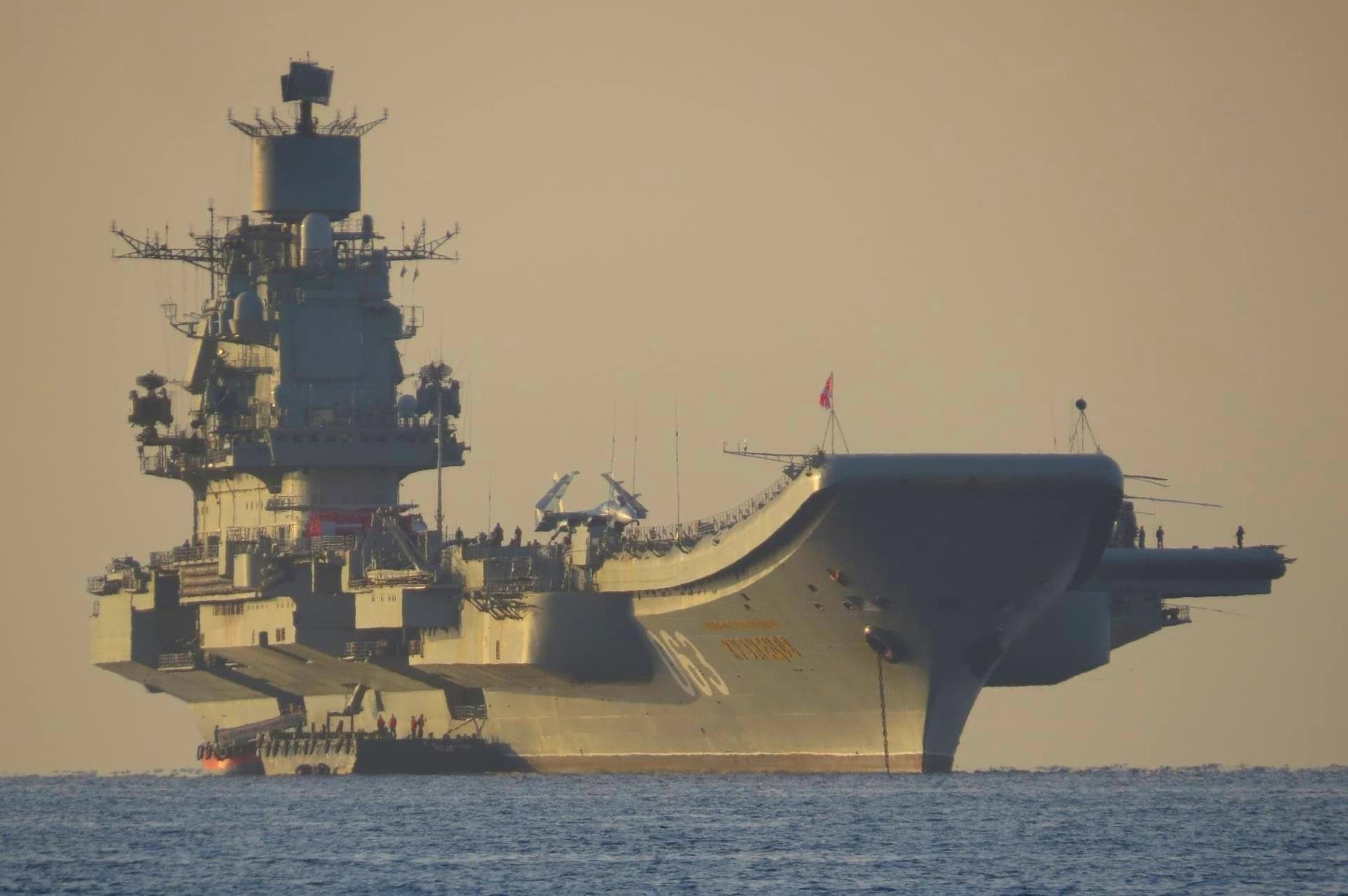
Aircraft Carrier Admiral Kuznetsov. Image Credit: Creative Commons.
At a time when Moscow continues to talk about operating a blue-water navy and building vessels to help project power beyond its immediate region, the loss – or the permanent sidelining – of its only carrier exposes a deep, structural problem. Russia cannot maintain the most complex naval platform it already has.
What Aircraft Carrier Admiral Kuznetsov Was Built To Do
The Admiral Kuznetsov is a product of late Soviet naval doctrine and is not an attempt to mirror American carrier power, as Beijing is today.
Laid down in 1982, launched in 1985, and later commissioned in 1991, it entered service just as the Soviet Union collapsed, leaving Russia with a flagship that it could barely sustain.
From the outset, this was not a conventional carrier. Officially designated a heavy aircraft-carrying cruiser, the ship was designed to combine an air wing with heavy missile armament.
By technically classifying the vessel as a cruiser, the Soviet Union could move it through the Turkish Straits under the Montreux Convention, a 1936 international agreement that gave Turkey control over naval access between the Mediterranean and Black Sea.
Under conditions of the deal, aircraft carriers could not pass through the strait – even if they were operated by great Black Sea powers like Russia.
The “cruiser” had a very specific mission, too. Rather than global power projection, Kuznetsov was built to support “bastion” defense – protecting Soviet ballistic missile submarines operating in the Barents Sea.
That required providing air cover to surface groups rather than launching sustained strike campaigns.
The design reflects those priorities, too: it uses a ski-jump launch system instead of catapults, limiting aircraft payloads and sortie rates. Its air wing has historically included the Su-33 and MiG-29K fighters, but in relatively small numbers compared to American carriers.
Unusually, though, it also carries heavy anti-ship missiles – specifically, P-700 Granit systems – making it part carrier and part strike cruiser. It was a convenient way to get around the restrictions in the Turkish Straits, but it was also a very real distinction.
Those design features, however, were plagued by poor propulsion. Unlike U.S. nuclear carriers, the Kuznetsov relies on conventional oil-fired boilers, which have proven unreliable throughout its service life. That single design choice would ultimately define much of its history, too.
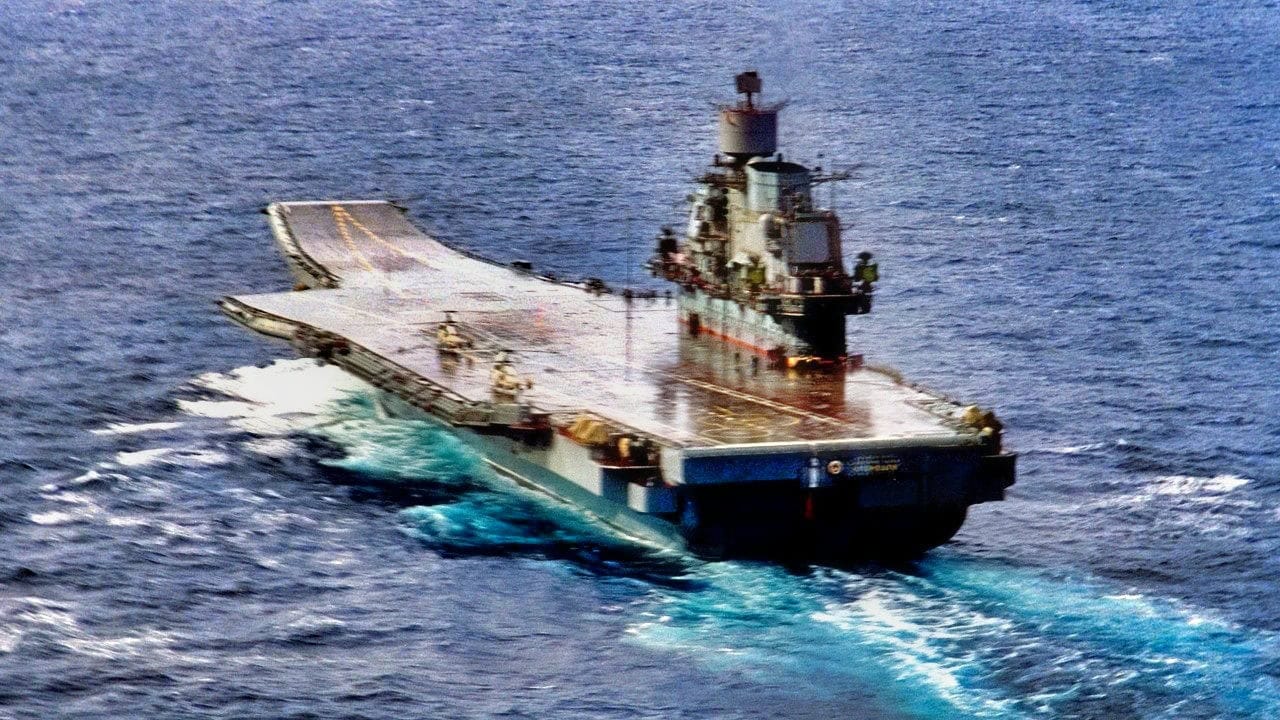
Admiral Kuznetsov Aircraft Carrier Russia. Image Credit: Creative Commons.
Constant Breakdowns and Embarrassments
Long before its current overhaul – which we’ll get into – the Admiral Kuznetsov had already developed a reputation as one of the least reliable major warships in service. The most visible problem, as mentioned, was its propulsion system. The ship’s boilers have repeatedly broken down, forcing it to operate with escort tugs on deployments in case it loses power at sea. Russian naval planners routinely assigned tug support because of that risk.
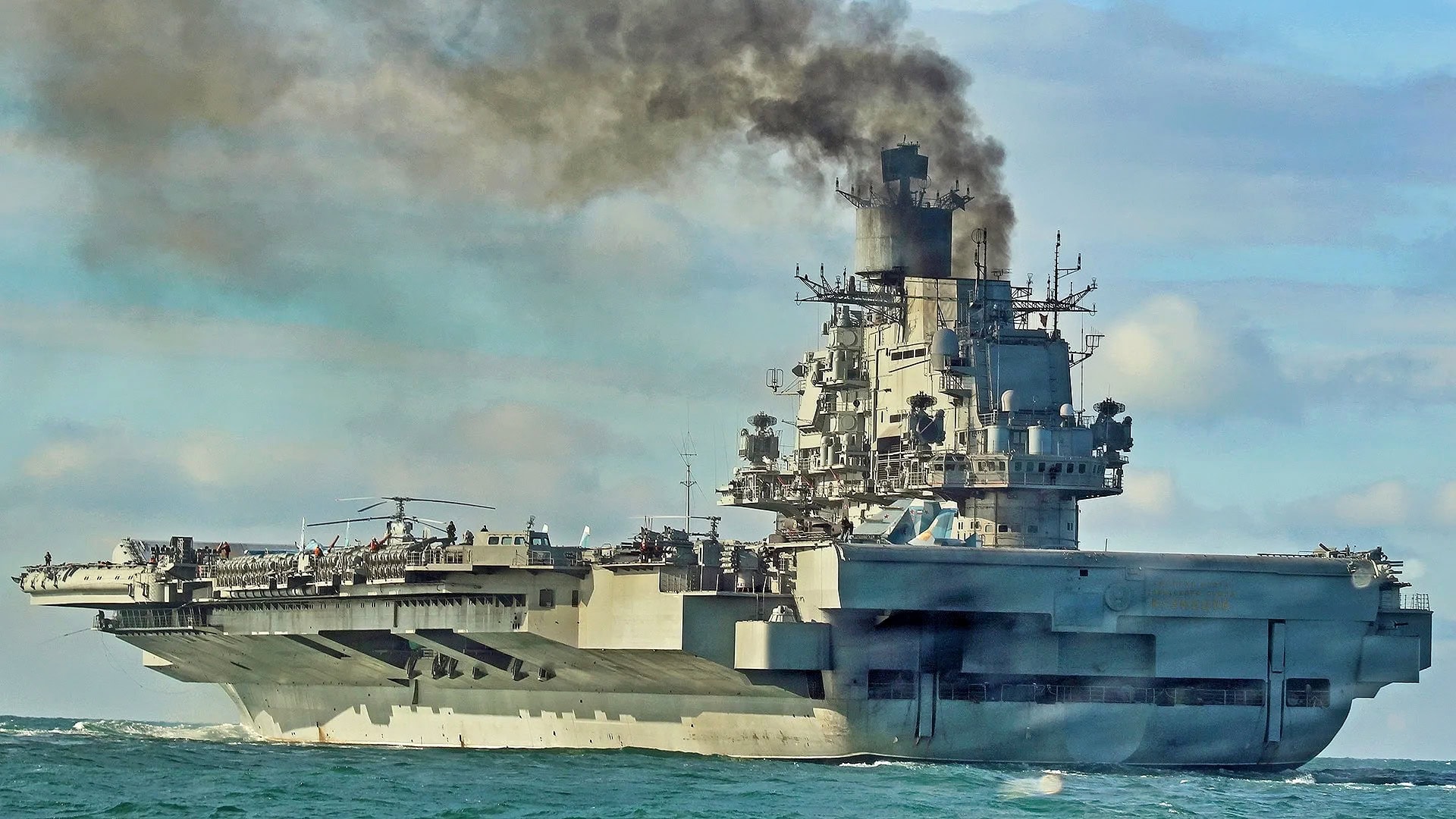
In 2016, during its deployment to Syria, those concerns became reality. This was the carrier’s first real combat mission, and it ended in failure. As it transited the English Channel, moving between England and France, the ship emitted thick black smoke – a result of an inefficient and struggling fuel combustion system. The scenes were widely reported in Western European media, and particularly in the United Kingdom.
“The Admiral Kuznetsov attracted the most attention, looking like a Second World War battleship, with clouds of black smoke billowing from its funnels. A fighter jet was clearly visible on the deck, glistening in the sunshine,” The Guardian reported at the time.
The deployment also exposes some operational weaknesses, as the carrier lost two aircraft in the past few weeks. A MiG-29K crashed after running out of fuel while waiting to land due to a malfunctioning arrestor cable system. A Su-33 was then lost when an arresting wire snapped during landing. Those two aircraft were, therefore, not lost in combat but as a result of system failures on one of Russia’s most important naval vessels.
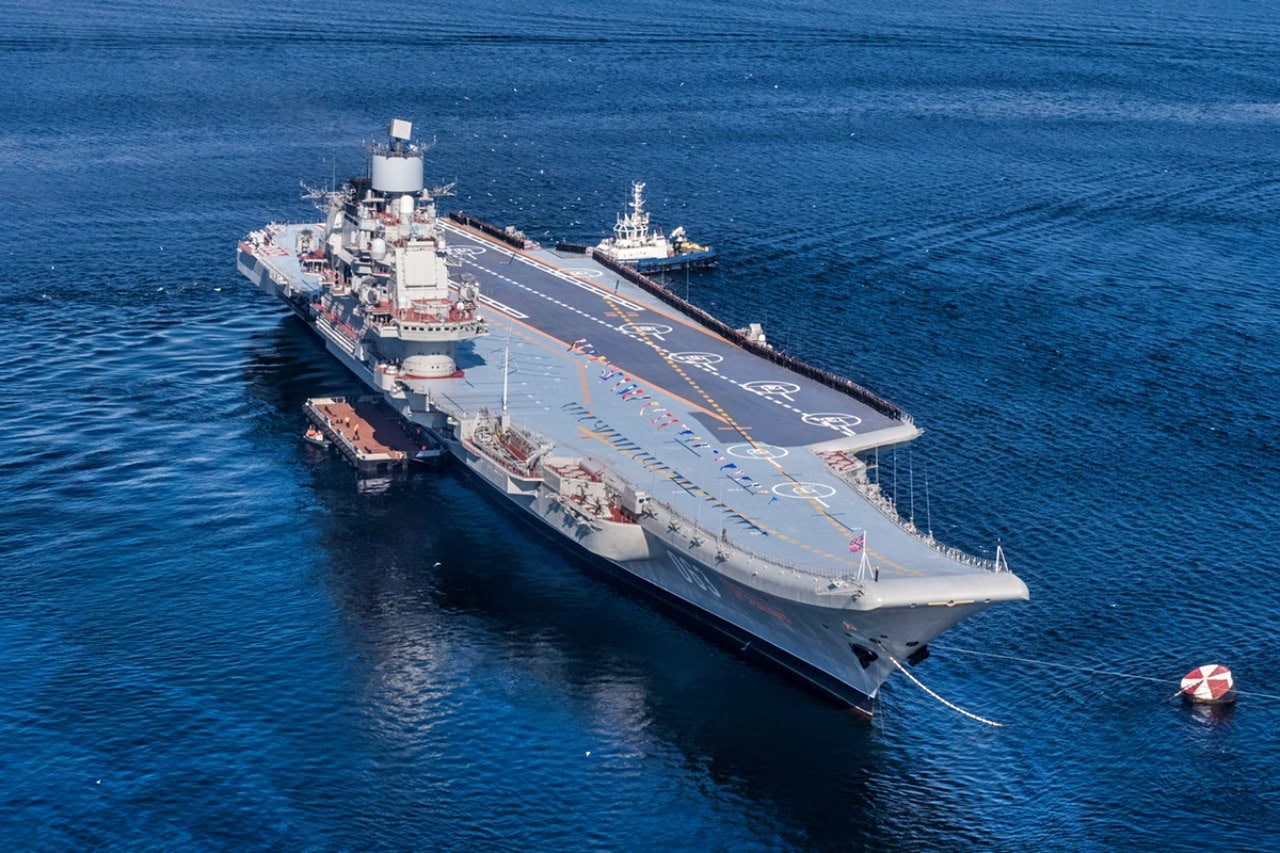
Aircraft Carrier Admiral Kuznetsov from Russian Navy.
Even outside of high-profile deployment, the ship has a poor operational record. It has spent long periods inactive, with maintenance cycles frequently stretching far beyond what should be expected of a frontline carrier. And by the time it entered refit in 2017, it was notorious for being difficult and extensive to maintain.
Admiral Kuznetsov: The Refit That Went Wrong
Kuznetsov’s operational history is controversial enough, but the modernization effort is arguably even worse for Russia. The ship entered a major refit in 2017, intended to extend its service life and upgrade key systems, but the process turned into a series of major industrial failures.
The first came in October 2018, when the PD-50 floating dry dock – one of the largest in Russia – sank while the carrier was undergoing repairs. A power outage caused the dock to lose ballast control, leading to a catastrophic collapse.
During the incident, a crane then fell onto the flight deck, punching a large hole in the ship.
The PD-50 was a critical piece of infrastructure, and its loss complicated repairs further for years afterwards.
The following year, in December 2019, a major fire broke out on board during welding work. The fire spread through the internal compartments of the ship, killing several personnel and injuring others while causing millions of dollars in damage.
Incredibly, those were not isolated incidents. By 2025, Russian media and officials had effectively acknowledged the series of disasters by announcing that modernization work had been suspended altogether.
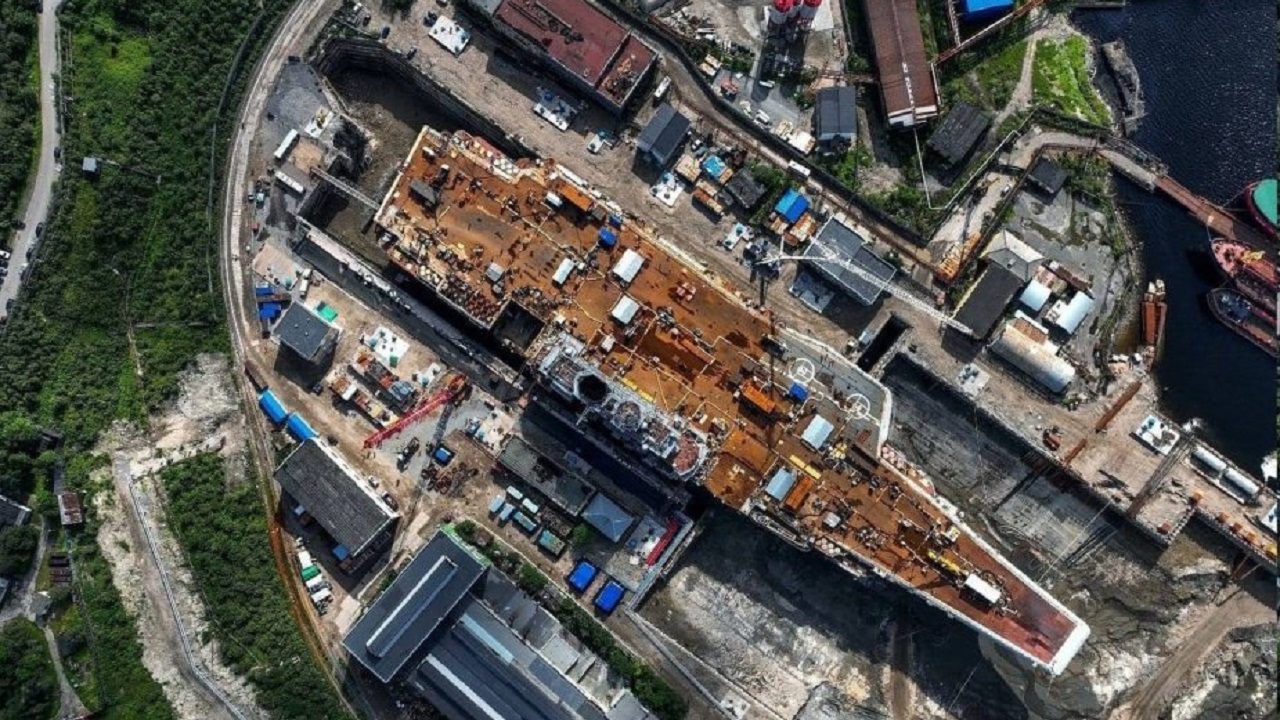
Russian aircraft carrier Admiral Kuznetsov (Picture source: Creative Commons.)
It is estimated that tens of billions of rubles – more than $1 billion USD – were spent on the entire project, pouring valuable resources and time into a project that ultimately failed to return the ship to operational status. And while that was going on, structural problems were becoming increasingly obvious.
Sanctions against Russia complicated access to components, with shipyard capacity proving insufficient, and reports of corruption within the shipbuilding sector further undermined progress.
In 2021, the director of Shupyard No. 10 in Polyarny was arrested for allegedly stealing 45 million rubles allocated to the Kuznetsov refit. The refit didn’t just fail to modernize the ship or return it to operational status, but it exposed the limits of Russia’s naval industrial base – and things haven’t got much better since.
Can Russia Really Build A Blue-Water Navy?
Despite the problem, Russia continues to talk about building a global navy. Plans for future carriers, such as the long-discussed Project 23000E “Shtorm,” have periodically surfaced alongside proposals for large, nuclear-powered vessels intended to rival Western designs.
Those plans, however, are little more than writing on paper.
In reality, Russia has struggled to maintain even its existing fleet. The Kuznetsov has not sailed since 2017 and is now widely expected to be decommissioned or scrapped after years of failed repairs.
If that happens, Russia will become the only permanent member of the UN Security Council without an operational aircraft carrier.
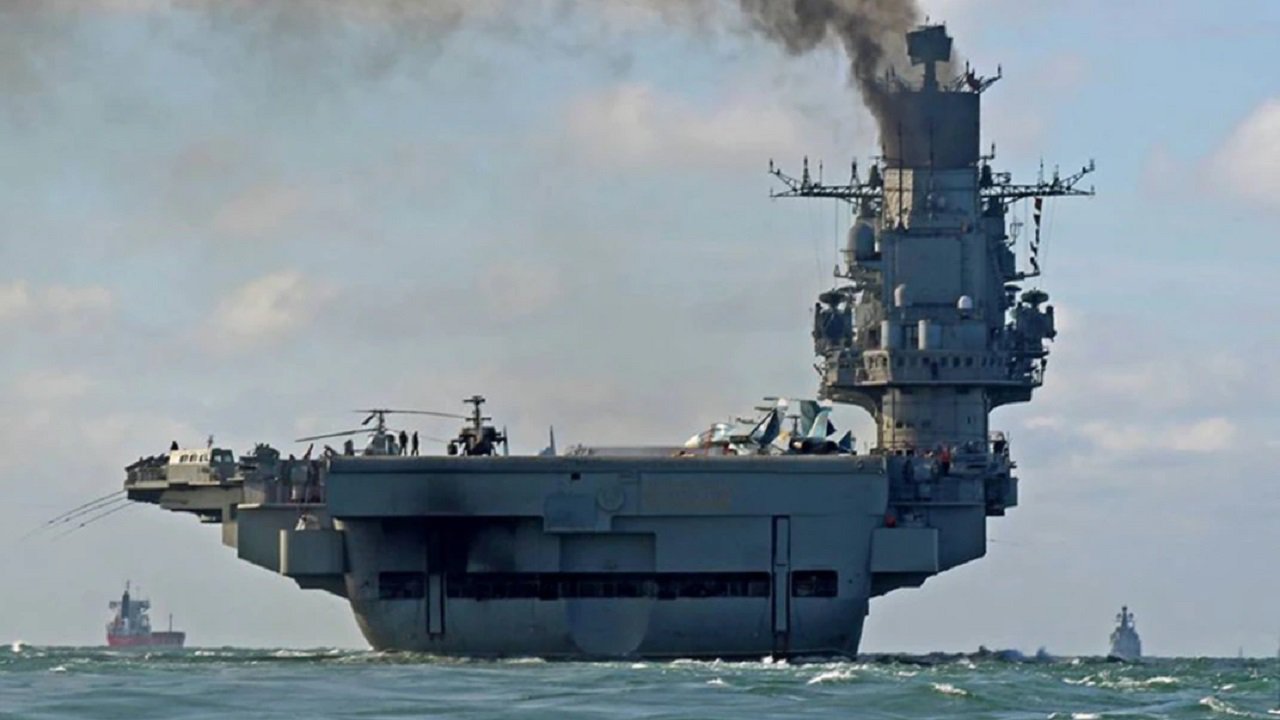
Admiral Kuznetsov Aircraft Carrier. Image Credit: Creative Commons.
The war in Ukraine has forced Moscow to prioritize immediate military needs over long-term naval modernization, further complicating matters. Resources have been redirected, and even personnel from the carrier’s air wing have reportedly been reassigned.
At the same time, Russia has struggled to operate effectively even in nearby waters, with its Black Sea Fleet having faced repeated losses in recent years.
Russia can just about project power regionally, but globally, the prospects don’t look promising.
About the Author: Jack Buckby
Jack Buckby is a British researcher and analyst specialising in defence and national security, based in New York. His work focuses on military capability, procurement, and strategic competition, producing and editing analysis for policy and defence audiences. He brings extensive editorial experience, with a career output spanning over 1,000 articles at 19FortyFive and National Security Journal, and has previously authored books and papers on extremism and deradicalisation.