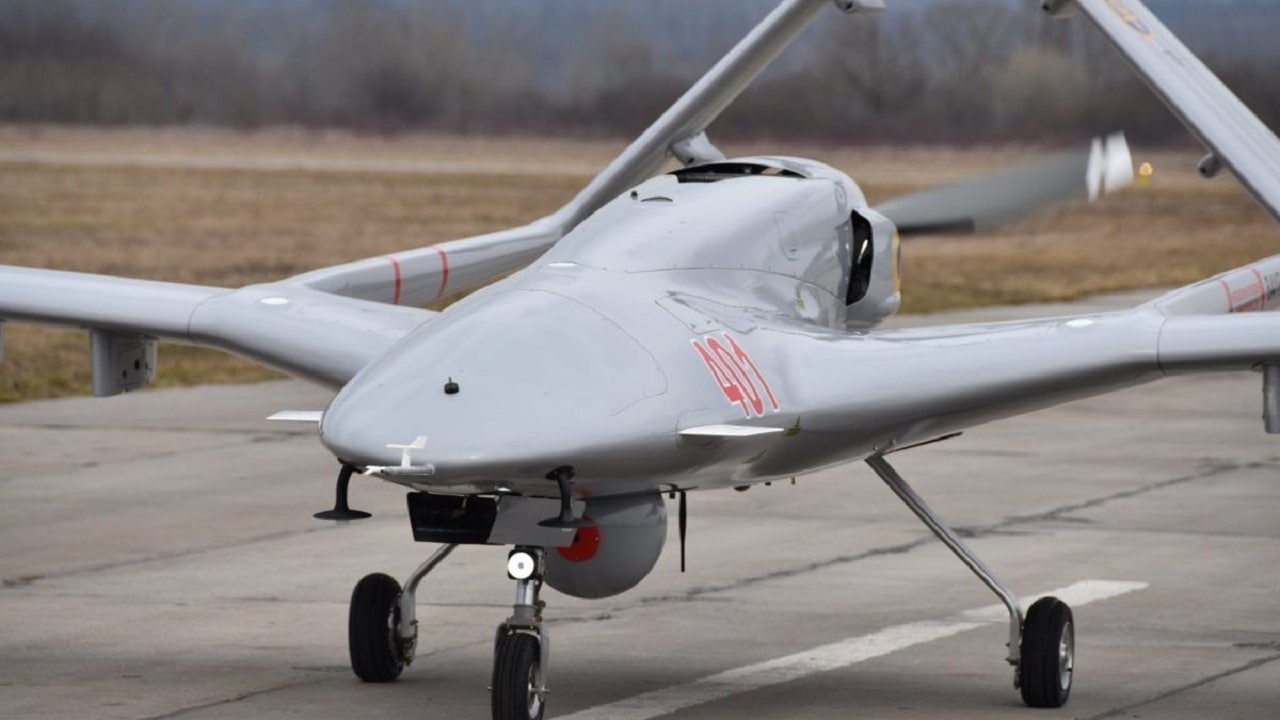
The Ukraine War Is The First Drone War. And Kyiv Is Proving To Be a Drone Powerhouse No One Expected
In retrospect, it is easy to see how drone warfare has become the focal point of the Russia-Ukraine war.
Unmanned systems can cost as little as $500 and come in all shapes, sizes, and capabilities.
It is no exaggeration to say that drones are also the most game-changing development in modern warfare since the laser-guided bomb was invented. They also may end up being the most mass-produced, low-cost munition in memory.
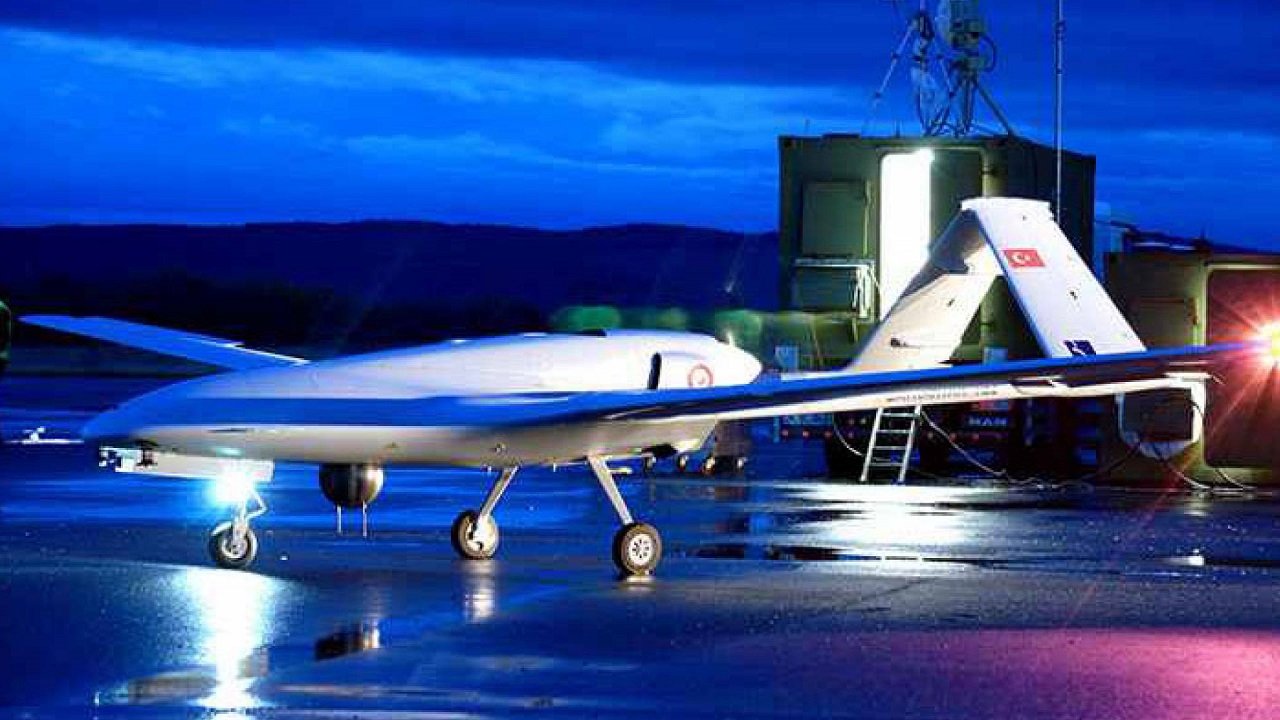
TB2 drone similar to the one fighting in Ukraine.
In May 2023, the Royal United Services Institute (RUSI) released a report showing that Ukraine’s armed forces were burning through around 10,000 drones per month.
That rate was largely attributable to Russian electronic warfare (EW) systems. While the figure may not be exact, the number is nonetheless an indication that drones are now a dominant factor on the battlefield.
Today, it is no longer possible to sustain an effective operational tempo without large numbers and many types of unmanned vehicles.
That is mostly good news to the nations that operate well-funded military establishments based on state-of-the-art defense technologies.
Yet it can also be bad news for the same nations. By using smaller aerial weapons in great numbers, less-advanced nations can wreak the kind of havoc on their adversaries that previously could be accomplished only with combat aircraft.
Ukraine is the perfect example. The country operates a fleet of Soviet-era aircraft, along with a small number of used Western aircraft, including the French-made Dassault Mirage 2000 and earlier U.S. F-16 models. In almost all respects, they are outnumbered and outclassed by Russian aviation.
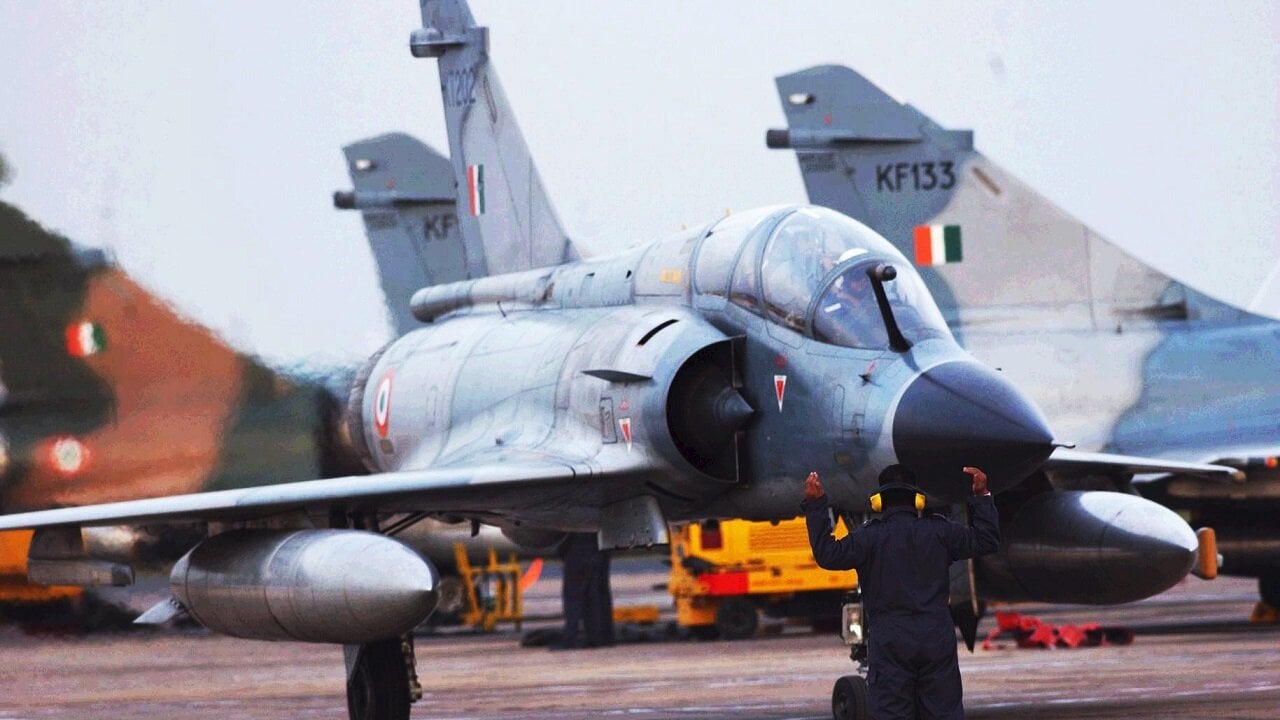
Mirage 2000. Image Credit: Creative Commons.
Yet Ukraine has managed to cause considerable damage to strategically important sites in Russia, and at locations well behind the front lines.
In March, three days of Ukrainian drone attacks on ports and refineries in Russia’s Leningrad region damaged facilities to such a degree that one industry analyst called these strikes “the most serious threat” to Russia’s oil exports since the beginning of the Kremlin’s full-scale invasion of Ukraine.
The attacks began on March 23 with drone strikes on the Baltic port of Primorsk. Those were followed up two days later with strikes on another key oil export terminal at Ust-Luga. Following that strike, on March 26, another Ukrainian drone assault hit one of Russia’s largest refineries in the Kirishi district.
One of the earliest examples of how drones usurped the combat roles of manned aircraft—and a harbinger of what was to come later—happened in the early days of the war in the Black Sea. Using a combination of aerial drones, sea drones, and Ukraine’s indigenously designed anti-ship missiles, the Russian Black Sea fleet was largely driven from this body of water by a country with no navy of its own.
As the Polish defense publication Defence24 reported late last month, “when Russian forces openly attacked Ukraine on 24 February 2022, the Russian Black Sea Fleet was assigned three primary tasks: to provide fire support for ground operations (using missiles and artillery fire), to gain control over the Black Sea, and to conduct an amphibious landing operation near Odesa.
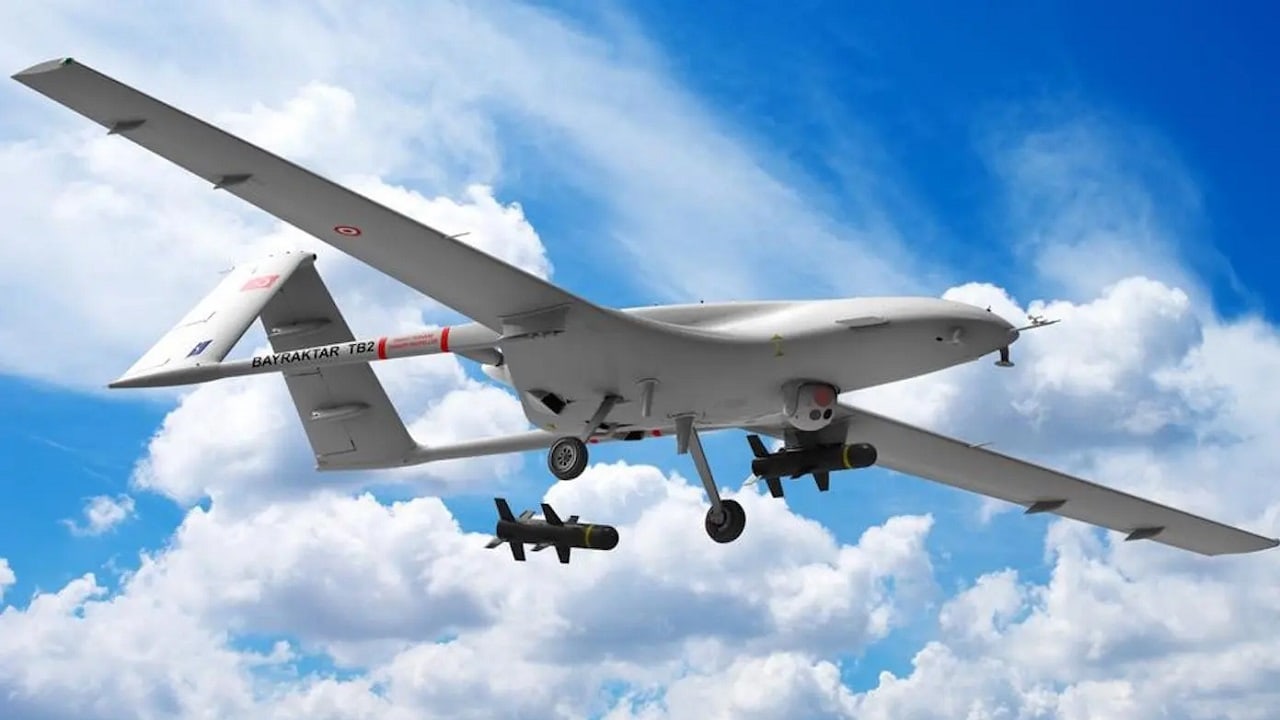
TB2 Drone. Image Credit: Creative Commons.
“The Russians failed to fully accomplish any of these objectives, and the Russian Navy quickly became more of a liability than an asset.”
“Importantly, it was not Ukrainian warships that stood in the way of these goals—because there were essentially none. The greater problem for the Russians turned out to be the Black Sea Fleet itself, which, apart from its submarines, was completely unfit for operations in the Black Sea.”
“The issue was not only that Russian ships were technologically outdated compared to their Western counterparts, but also that they were in poor technical condition. Any words of criticism were drowned out by pro-Russian enthusiasts of massive vessels bristling with antennas, gun barrels, and missile launchers.”
As RUSI pointed out almost three years ago, operating thousands of cheap drones is more sustainable than trying to maintain the availability of a few expensive fighter jets, which are the assets normally employed against an enemy’s naval fleet.
An aging maritime force that relies on weapon systems and the “gunboat diplomacy” operations of a bygone era does not stand a chance against a nation with the innovative capacity in the drone industry that Ukraine has demonstrated from the earliest days of the conflict.
All-Domain Warfare
The most dramatic effects of drone warfare—and the aspects that have received the most attention from open-source reporting—have been long-range attacks on Russian facilities 1,000 miles from the frontlines; large-scale special forces attacks on airbases and bomber aircraft, as seen in the June 2025 Operation Spiderweb; and the destruction of Russian submarines still sitting in drydock.
As the Ukrainian publication Defense Express pointed out in a December 2025 article, the decisive factor in the drones’ success against Russian submarines was not just the initial damage, but “Russia’s lack of repair capabilities for submarines in the Black Sea. The Russian Navy is currently unable to conduct full-scale submarine repairs in the region.”
Whereas such operations are occasional, success is visible daily in the ground war between the two nations, particularly in heavily contested areas such as the Donbas.
It is not by accident that RUSI’s May 2023 report is titled “Meatgrinder: Russian Tactics in the Second Year of Its Invasion of Ukraine.” The report examines several aspects of the war and evaluates the Russian military’s use of armor, infantry, and air power.
Drones play a role in all these domains, but even in the second year of the conflict, Moscow’s approach was already devolving into what are called meat assaults—sending massive numbers of troops against Ukrainian positions and hoping that Kyiv’s units would run out of bullets before Russia would run out of bullet-catchers.
In the week of March 23, Russian forces in theater suffered more than 6,000 casualties in four days during a renewed offensive that used these same “human wave” attacks. Ukraine’s military successfully beat them back, thanks largely to the use of drones.
“The enemy tried to break through the defensive formations of our troops in several strategic directions at once … In total, the enemy conducted 619 assault actions during these four days,” Ukrainian Army Commander General Oleksandr Syrskyi said in a statement on Monday; he described the Russian operations as “a colossal pressure.”
The Institute for the Study of War has since confirmed that, by intelligent use of its personnel backed up by drones, the Ukrainian military is forcing Russian forces to choose between defending against Ukrainian counterattacks and allocating manpower and equipment for offensive operations elsewhere on the frontline. Moscow lacks the resources at this point to do both.
And with the increasing capabilities of Ukraine’s drone warfare, Russian losses are climbing.
In January, at the World Economic Forum in Davos, Ukrainian President Volodymyr Zelenskiy stated that Russian fatalities have increased from 14,000 per month to 35,000 per month over the past year. He added that, although Russia currently mobilizes 40–43,000 troops per month, it has begun losing up to 45,000 when all factors are included.
“Of those 43,000, about 10–15 percent desert, and there are wounded as well. …You can see that their army is no longer growing, thanks to our drone technologies and drone operators,” Zelenskyy noted.
“Russia’s redeployments to southern Ukraine in response to Ukrainian counterattacks are likely disrupting the Russian military command’s plans for the Spring-Summer 2026 offensive against the [Donetsk oblast] Fortress Belt,” ISW reported in its latest assessment of combat operations, in reference to Ukraine’s line of fortified cities in the eastern region of the country.
This past September, during an emergency meeting of the UN Security Council, Polish Foreign Minister Radosław Sikorski taunted the Russian delegation over Moscow’s repeated failures to take control of the Donbas region:
“Your three-day ‘special military operation’ can’t even conquer Donbas for 10 years now. But the potential for criminal, catastrophic Russian mistakes is still there. By ordering mobilization in 1914, you precipitated the start of World War I, which bled Europe white and led to your Bolshevik Revolution.
“By signing the Hitler-Stalin Pact, you helped launch World War II, the bloodiest in history. By Sovietizing Central Europe, you caused the Cold War.
“Don’t start another one. We are peaceful democracies who have studiously avoided actively joining your attempt to reconquer Ukraine. But we will not be intimidated,” he cautioned.
Concluding its assessment this past week, ISW writes that little has changed in the interim months.
“Russian forces have previously failed to conduct simultaneous offensives in different sectors of the front, and it is unlikely that they will be able to make significant efforts to advance in the Fortress Belt area while contending with Ukraine’s recent successes in the Hulyaipole and Oleksandrivka directions,” the report added.
The EW Dimension
Russia’s military has been trying, with limited success, to blunt the impact of Ukraine’s drone warfare through EW. Russia has been thought of in the past as one of the top five nations in the world in EW technology and capability.
But some of that reputation, say Ukraine EW specialists familiar with Russian designs, is due more to the immense power that Russia puts behind its EW signal transmissions—it is brute force rather than finesse, they say.
One of the Ukrainian firms that spoke to NSJ recalled that Russian ground-based EW employed against drones requires so much electrical wattage that “when the Russians manage to occupy a small town or a city they immediately bring in these big, mobile EW stations and attach them to the local power grids so that they have the endless electricity that they need. Their own portable diesel-powered generators are not enough for their purposes.”
Going back three years to the RUSI report, that document published some alarming numbers about the effectiveness of Russia’s EW strategy against Ukraine’s drone forces.
“Electronic warfare remains a critical component of the Russian way of fighting,” the report stated. “While there was an extremely high density of EW [Electronic Warfare] systems in Donbas in 2022, the VSRF [Russian Federation Armed Forces] now employ approximately one major EW system per 10 km of frontage, usually situated approximately 7 km from the frontline.
“These platforms are usually aimed at controlling and defeating UAVs [Uncrewed Air Vehicles – drones]…The Russian military is also continuing to make extensive use of navigational interference in the battle area as a form of electronic protection. This is contributing to a Ukrainian loss rate in UAVs of approximately 10,000 per month.”
Russian jamming and spoofing were causing significant losses—some 300 or more Ukrainian drones per day. EW was able to break radio control links to the drones, or disrupt and confuse their navigation systems, and cause them to crash.
Despite the high attrition rates, Ukraine has been able to maintain an increasing scale of drone production, partly by recruiting and training more qualified personnel. This has facilitated Ukraine’s rapid expansion of domestic production.
One of the keys to Ukraine’s success in this area has been to produce drones as disposable items. That contributes to the high loss rate, but also reduces the cost per unit. In parallel, the Ukrainian military has been integrating drones into its training programs and has focused on improving jamming immunity, as well as other methods to ensure survival in highly saturated EW environments.
“Russia lacks the level of innovation and the freedom of movement that Ukraine drone firms have continued to demonstrate,” said the director of one of the country’s medium-sized counter-drone firms. “It is one of our greatest advantages and one which the Russians are largely unable to duplicate.”
MORE – The Eurofighter Typhoon: Best Fighter in NATO?
MORE – The Ukraine War Is a Loss for Putin
About the Author: Reuben F. Johnson
Reuben F. Johnson has thirty-six years of experience analyzing and reporting on foreign weapons systems, defense technologies, and international arms export policy. Johnson is the Director of Research at the Casimir Pulaski Foundation. He is also a survivor of the Russian invasion of Ukraine in February 2022. He worked for years in the American defense industry as a foreign technology analyst and later as a consultant for the U.S. Department of Defense, the Departments of the Navy and Air Force, and the governments of the United Kingdom and Australia. In 2022-2023, he won two awards in a row for his defense reporting. He holds a bachelor’s degree from DePauw University and a master’s degree from Miami University in Ohio, specializing in Soviet and Russian studies. He lives in Warsaw.