
F-35 Crashed In The Nevada Desert, Pilot Safely Ejected. That Doesn’t Mean This Stealth Fighter Is a Failure
On Tuesday, about noon, a U.S. Air Force F-35A Lightning II fighter from Nellis Air Force Base, Nevada, crashed in the sprawling training complex surrounding the base, about 25 miles north of Indian Springs, service officials said.
The pilot suffered minor injuries and is being treated after safely ejecting from the aircraft.
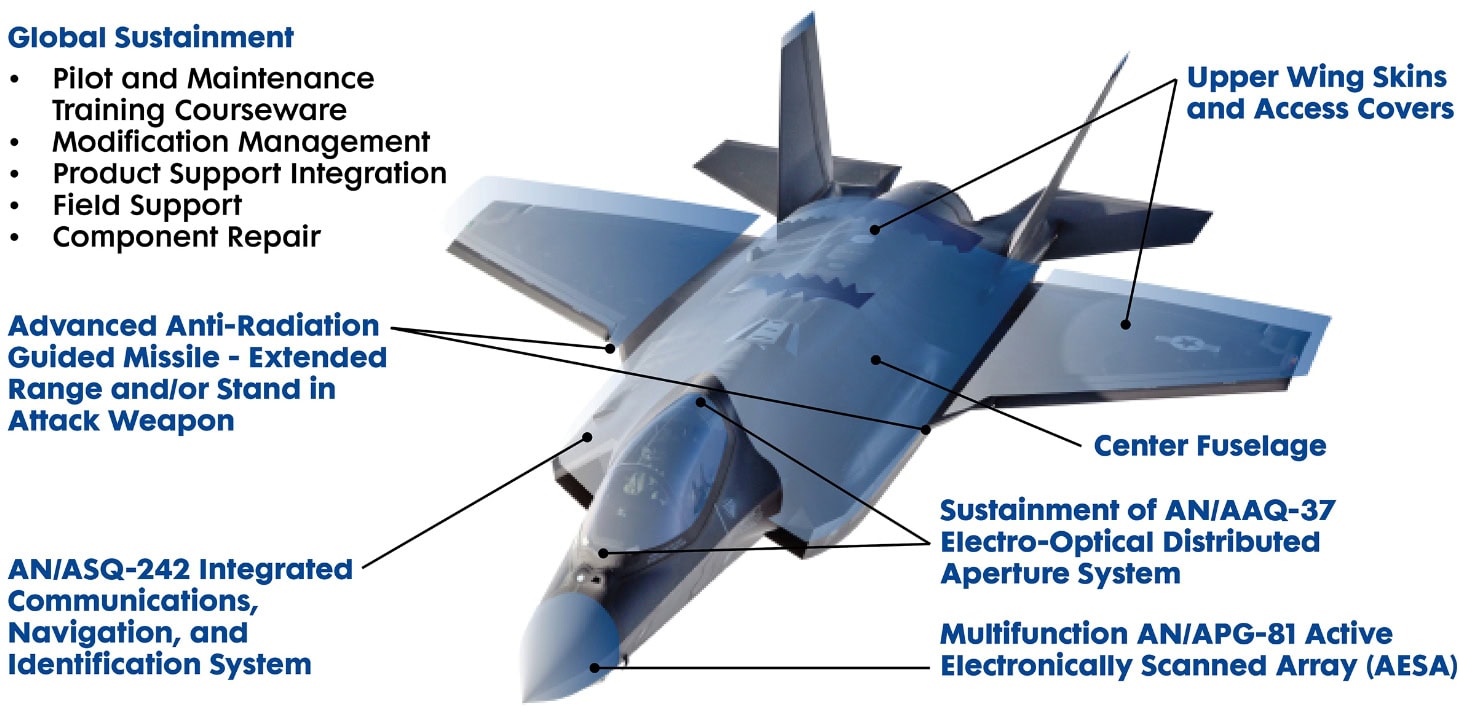
F-35 Fighter. Image Credit: Industry Handout.
Initial reports from KSNV News 3 stated, “The U.S. military is searching for a pilot who had to eject from an aircraft over Southern Nevada on Tuesday, sources tell News 3… The aircraft reported trouble maneuvering around noon, according to sources.” KSNV News 3 subsequently reported that the pilot was found in good condition.
The Air Force’s 57th Wing at Nellis AFB issued a statement late on Tuesday afternoon.
“An F-35 from Nellis AFB crashed north of Las Vegas today. The incident occurred approximately 25 miles northeast of Indian Springs, Nevada, within the controlled airspace and restricted federal property of the Nevada Test & Training Range.
“Emergency responders are on-scene, and there is no impact to populated areas. The pilot is safe and being treated for minor injuries. The safety of our personnel and the community remains our top priority.
“We will provide additional information as it becomes available.”
Nellis AFB and Creech AFB Are Training Hubs For USAF Aircraft
“The 57th Wing, which oversees the major USAF installation near Las Vegas, said the incident occurred within the Nevada Test and Training Range, a large complex of restricted airspace covering some 5,000 square miles and over 2.9 million acres of land, Air and Space Forces wrote.
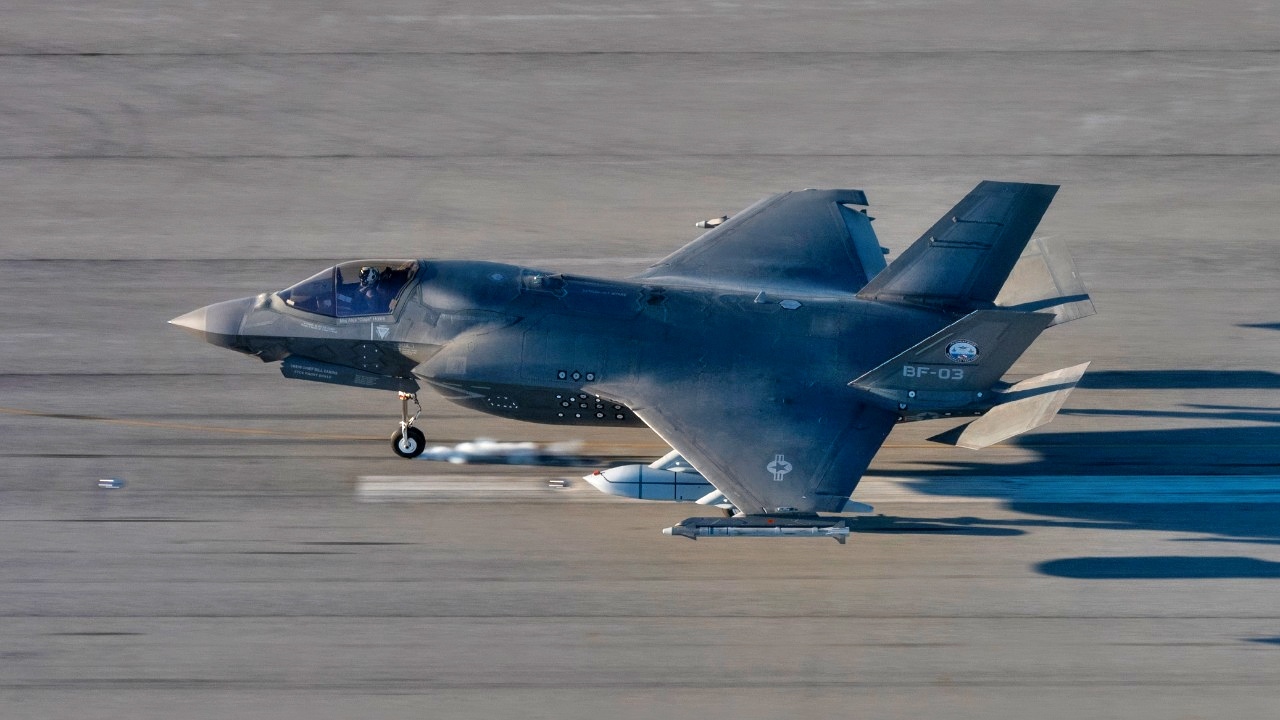
NAS PATUXENT RIVER, Md. — An F-35 Lightning II test pilot conducts the first flight test to certify the F-35B short takeoff and vertical landing variant of the fighter aircraft for carrying the AGM-158C Long-Range Anti-Ship Missile (LRASM). As part of ongoing weapon integration efforts, the Pax River F-35 Integrated Test Force (Pax ITF) team for the first time flew test flights Jan. 14 with two AGM-158 loaded on external stations. LRASM is a defined near-term solution for the Offensive Anti-Surface Warfare (OASuW) air-launch capability gap that will provide flexible, long-range, advanced, anti-surface capability against high-threat maritime targets. The Pax River ITF’s mission is to effectively plan, coordinate, and conduct safe, secure, and efficient flight test for F-35B and C variants, and provide necessary and timely data to support program verification / certification and fleet operational requirements.
TWZ posted that “F-35s are major tenants of the base, for weapons tests and tactics development tasks and aggressor duties, and visiting F-35s frequent the base for training and exercises.”
“The NTTR provides simulated threats, weapons ranges, and airspace for aircraft to hone tactics and supports major exercises such as Red Flag.”
While the 57th Wing posted that the accident occurred within the NTTR, the statement that it occurred 25 miles north of Indian Springs would put it within the confines of Creech AFB, which is a major remotely piloted aircraft base.
Now Social Media Will Question The F-35’s Safety Again
No aircraft has been questioned as closely and frankly, at times unfairly, as the F-35.
And, let’s face it, in today’s world of social media, negativity sells. It is a proven fact.
The F-35 is everyone’s favorite whipping boy when it comes to availability, capability, and when one happens to crash, which is not remotely as often as some would have you believe. The media has been quick to point out the F-35’s perceived weaknesses.
Last year, after an F-35 crashed in Alaska, one headline posted “TIMELINE – F-35 fighter jets: 11 crashes in 7 years raise alarm over safety.” This would give the reader the impression that the F-35 crashes too often. The facts tell a completely different story.
Alex Hollings of Airpower wrote last October, a piece on how “often” the F-35 crashed.
“You’ll often see people claiming that the F-35 crashes often, for instance, despite having one of the best safety records of any fighter in the modern era. In fact, the F-35 averages just 1.6 crashes for every 100,000 hours these jets spend in the sky – less than half of the F-16’s lifetime average of 3.55 crashes per 100,000 flight hours.
“Yet, headlines about F-35 crashes drive lots of traffic, and today, most people don’t recall the F-16’s troubled early years between 1975 and 1993, when the legendary Viper suffered more than double the branch average for aircraft losses.
“In fact, between fiscal years 1988 and 1994, an average of 17 F-16 airframes were lost per year, for an average of 4.21 airframes lost per 100,000 flight hours.”
Are there legitimate criticisms of the F-35 program? Of course there are.
But much of social media is driven by sensationalistic half-truths.
The Great “Availability Myth” Of The F-35
When it comes to availability, there are too many articles to count that always mention availability rates. And the consensus opinion always points to the aircraft’s failings. But it just isn’t so.
The 96-page Government Accountability Office report that many articles refer to clearly states, “The analysis projected that if DOD achieved planned depot capacity, the air vehicle availability rates of the F-35B and F-35C would be close to 65 percent, while the air vehicle availability rate of the F-35A would be close to 75 percent.”
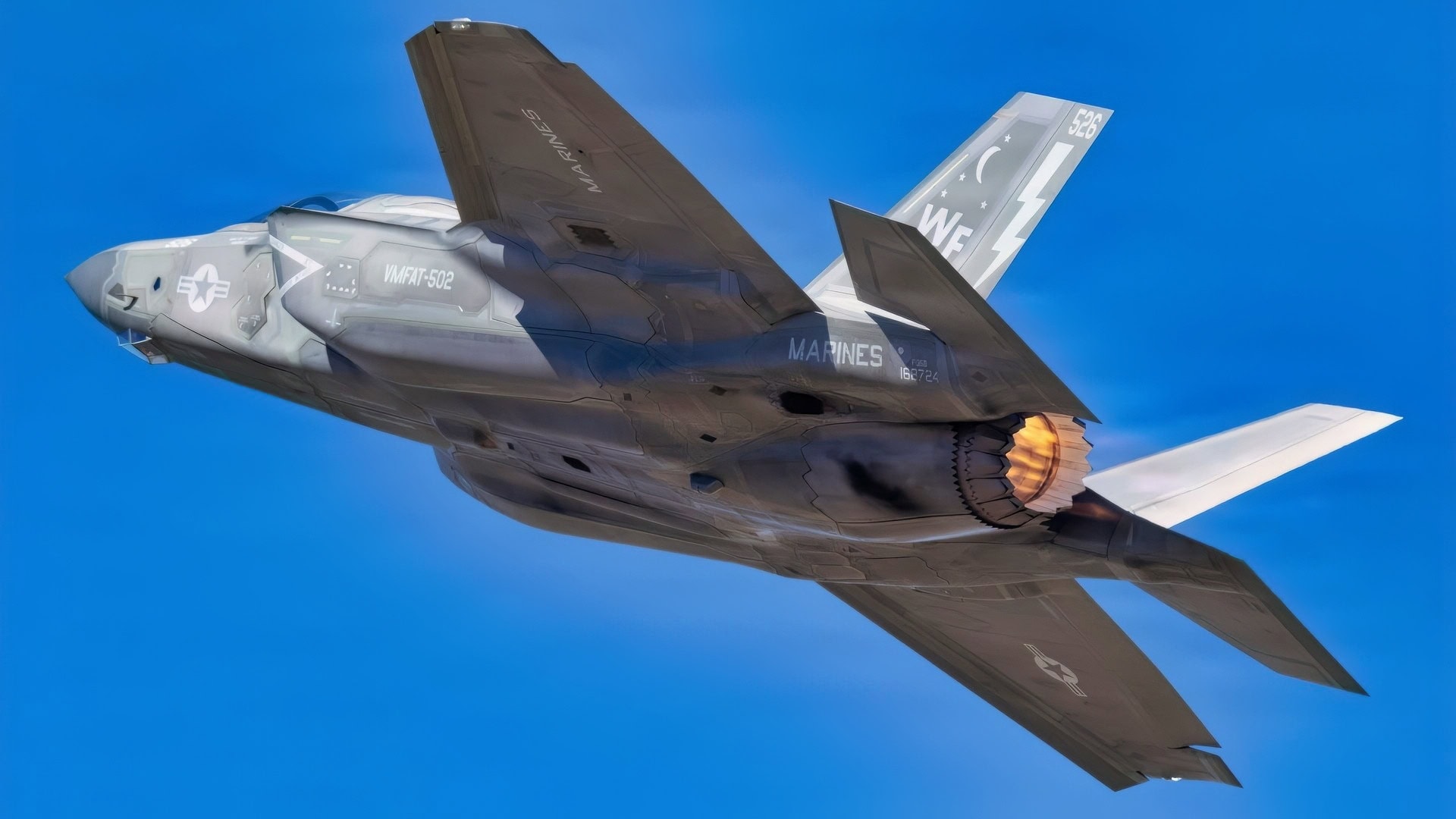
A U.S. Marine Corps F-35B Lightning II lights its afterburner and climbs during the Luke Days 2026 airshow, Saturday, March 21, 2026, at Luke Air Force Base, Arizona. The Marine Corps F-35B Lightning II demonstration showcases the maneuverability and advanced technology of a fifth-generation fighter. Demonstrations like this reflect the cutting-edge capabilities that allow the joint force to maintain air superiority in modern combat operations. (U.S. Air National Guard Photo by Tech. Sgt. Hampton Stramler)
So, it isn’t an aircraft problem, but a lack of maintenance facilities, which is not where the issues are perceived.
The F-35’s Combat Record Speaks For Itself
Much has been made of the rumors that the F-35 isn’t as capable as previously thought. This was especially true when Iran claimed to have tracked and shot down Israeli F-35I Adir variants during the past year. All of it was typical Iranian outright lies.
The Israelis launched hundreds of sorties and flew over Tehran in daylight without losing an aircraft. The US airstrikes on Iran’s nuclear sites were also conducted with F-35s, F-22s, and B-2s without a loss as well.
One F-35 was damaged in the airstrikes that have been ongoing since February 28, probably by ground fire, where the pilot was wounded and had to make an emergency landing. If a missile had hit it, the aircraft probably would have crashed. However, no one knows, and it is just speculation.
That’s one F-35 aircraft damaged in over 7,000 combat sorties.
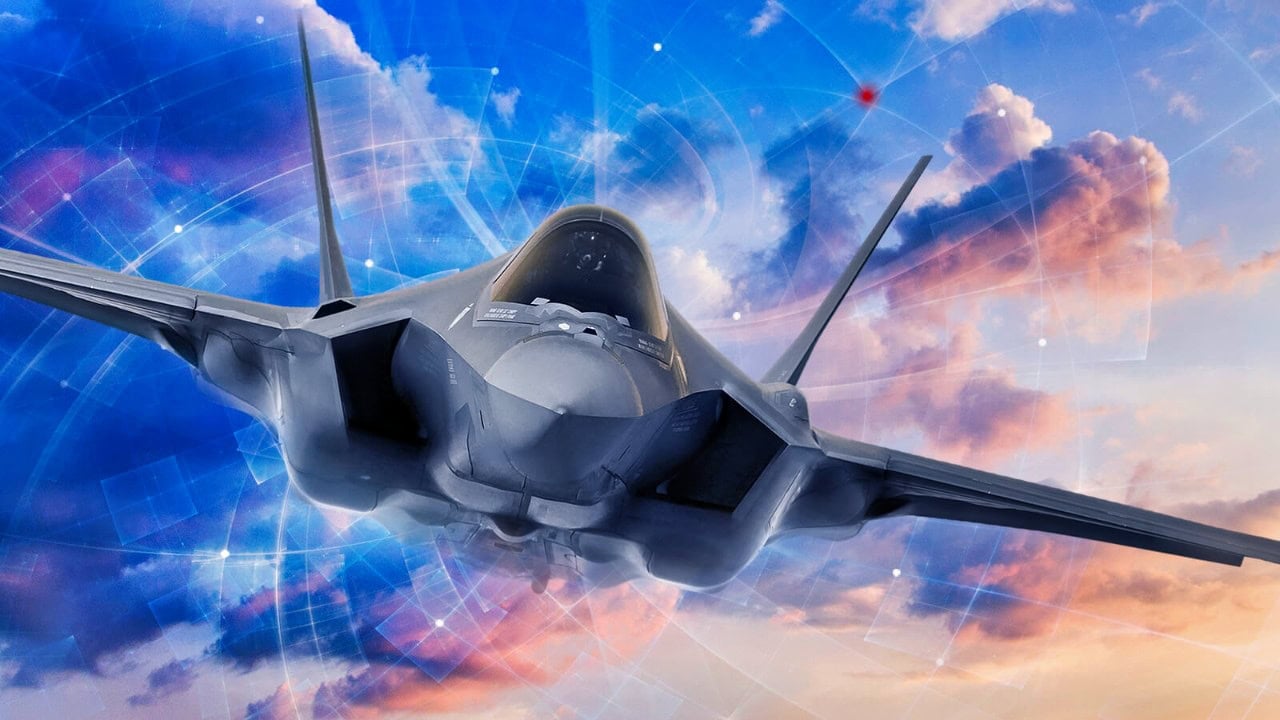
F-35 fighter. Image Credit: BAE systems.
ASF wrote, “What makes the current campaign particularly significant is the scale of operations relative to the absence of losses. U.S. Central Command has stated that coalition forces have struck thousands of targets inside Iran—exceeding 7,800 aimpoints over the course of the campaign to date. This level of activity necessarily implies thousands of combat sorties flown within range of Iranian surface-to-air missile systems.”
Flying combat missions and completing the requisite combat training to prepare for them is inherently dangerous.
The Air Force has always struck the right balance between pushing the envelope in training and minimizing combat losses.
It is not an easy task. Accidents will occur, and machines will break down. But the safety record of its fighter aircraft remains quite high.
About the Author: Steve Balestrieri
Steve Balestrieri is a National Security Columnist. He served as a US Army Special Forces NCO and Warrant Officer. In addition to writing on defense, he covers the NFL for PatsFans.com and is a member of the Pro Football Writers of America (PFWA). His work was regularly featured in many military publications.