
One Engine Change Helped Wpn World War II — The Rolls-Royce Merlin Turned a Mediocre P-51 Mustang Into a 440 MPH Bomber Escort That Destroyed the Luftwaffe
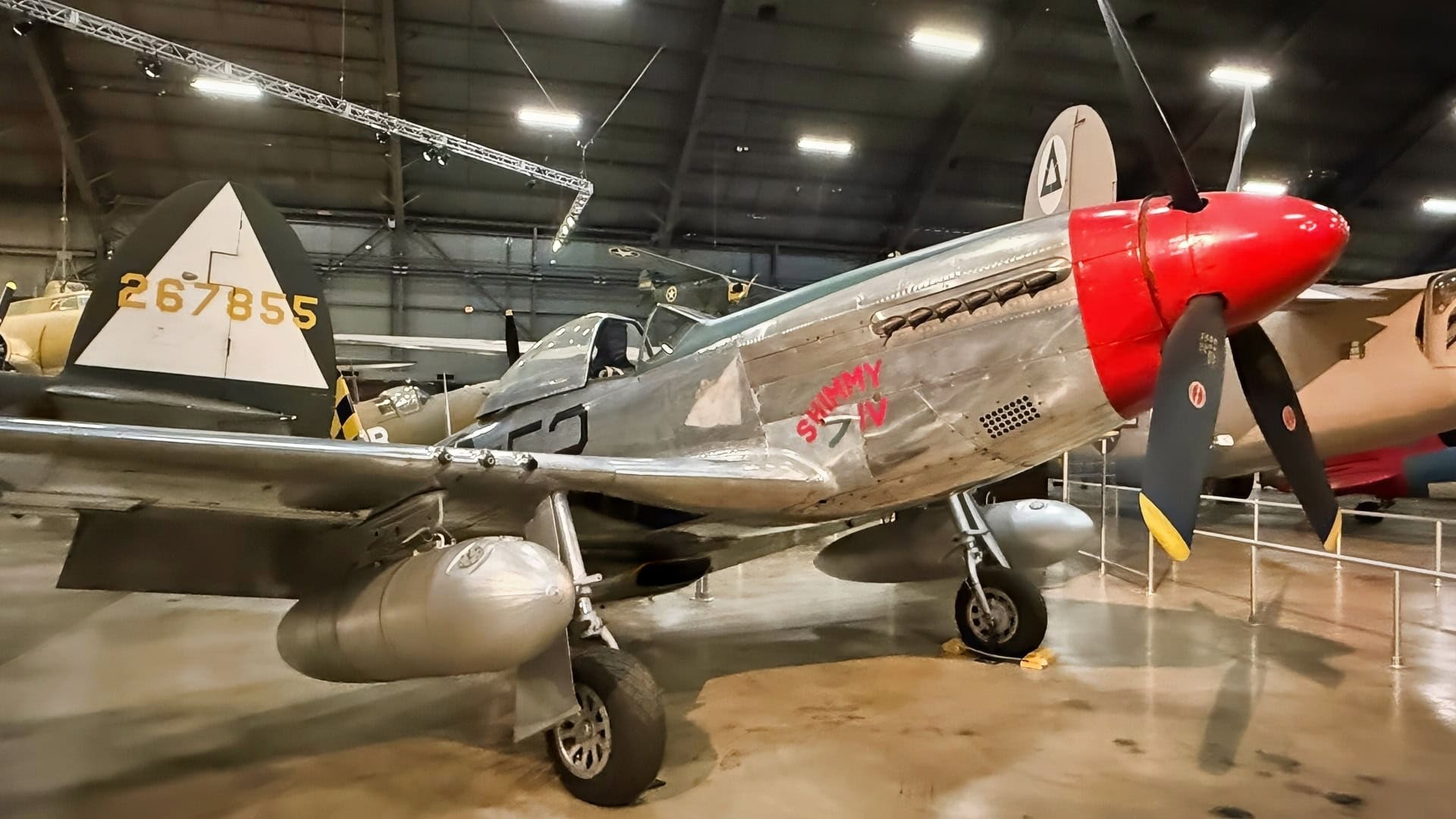
There is a strong (though not universal) consensus for that the North American Aviation (NAA; sadly now defunct) P-51D Mustang was the best fighter plane of World War II, and understandably so, as it was able to escort Allied heavy bombers for the entire round trip to and from the industrial heart of Axis capitals in Berlin and Tokyo alike, thus hastening the war’s end.
But that success didn’t happen overnight. As you savvy readers can guess by the “D” part of the plane’s alphanumeric designation, it took three less-than-wholly successful variants of the Mustang before they finally got it right.
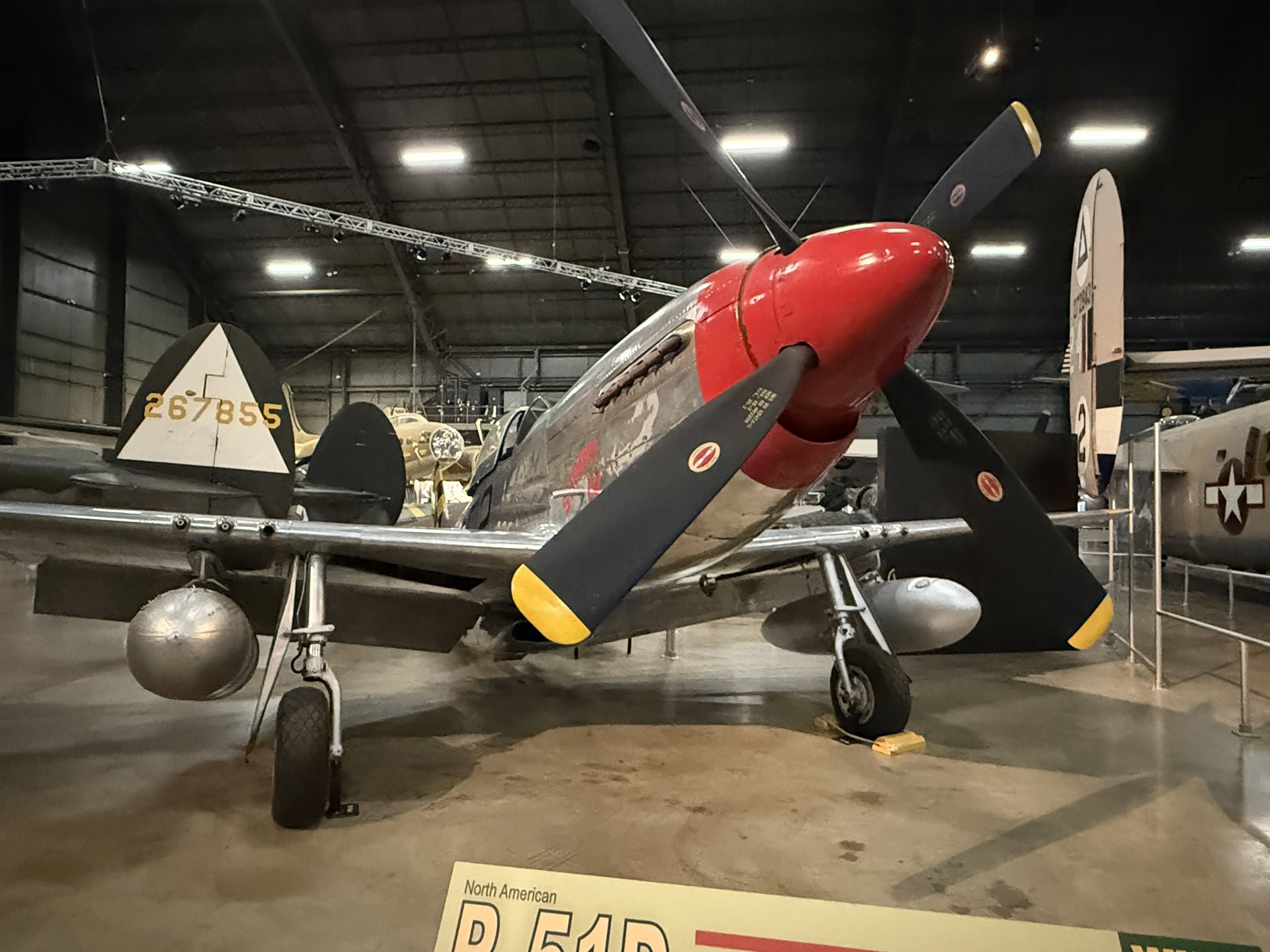
P-51D Mustang 19FortyFive.com Image
And if it weren’t for the Rolls-Royce Merlin engine, even the P-51D probably wouldn’t have earned its game-changing legendary status.
Accordingly, we now take a look at the saga of the various P-51 engines and their trials & tribulations en route to ascending the lofty throne of King of WWII Fighter Planes.
P-51 Mustang Initial History
The first iteration of the Mustang made its maiden flight on October 26, 1940, and it made its official operational debut in January 1942 (one month after the United States of America officially entered WWII in the wake of the Pearl Harbor raid), not with the U.S. Army Air Forces (USAAF), but rather with Great Britain’s Royal Air Force (RAF) as one of the perks of the Lend-Lease Act.
The XP-51B prototype first flew in November 1942 and entered production in June of the following year; the P-51C followed shortly thereafter.
Between prototypes and production models, roughly 5,322 airframes of the initial trio of Mustang models were built.
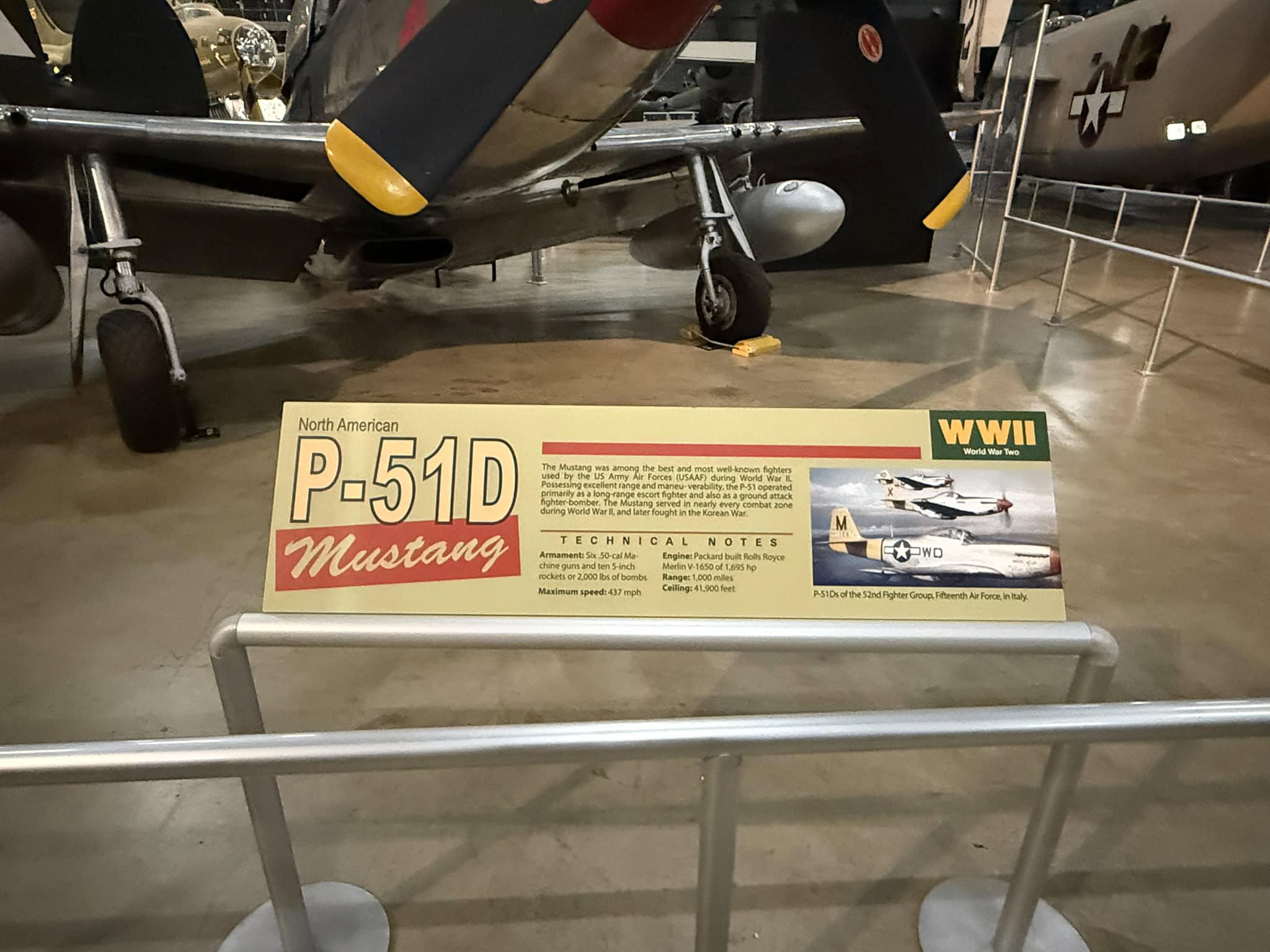
P-51D Mustang 19FortyFive.com Image
Those versions used the liquid-cooled Allison V-710 engine, which wasn’t necessarily a poor quality engine per se, mind you, but it definitely had its shortcomings; it had limited high-altitude performance, restricting the fighter to operations below 15,000 ft (4,572 m)
Enter the D Model…and Rolls-Royce Merlin Engine (and Other Improvements)
As noted by the info page for the Military Aviation Museum in Virginia Beach, Virginia, the Allison engine “prompted the British to experiment with the design, swapping out the V-1710 for their more capable Rolls-Royce Merlin. This engine-airframe combination proved to be a game changer, providing the Mustang with a top speed of over 400 mph and vastly improved high-altitude performance.”
To be more specific, that game-changing engine was the Packard V-1650 Merlin, a version of the Rolls-Royce Merlin aircraft engine, license-built in the US by the Packard Motor Car Company (which was founded in 1899 and went defunct in 1962.
This was a 12-cylinder liquid-cooled engine that generated 1,490 hp (1,110 kW) at 3,000 rpm and 1,720 hp (1,280 kW) at war emergency power (WEP).
In addition, the V-1650 boosted the Mustang’s max airspeed to 440 mph (710 km/h, 383 kn).
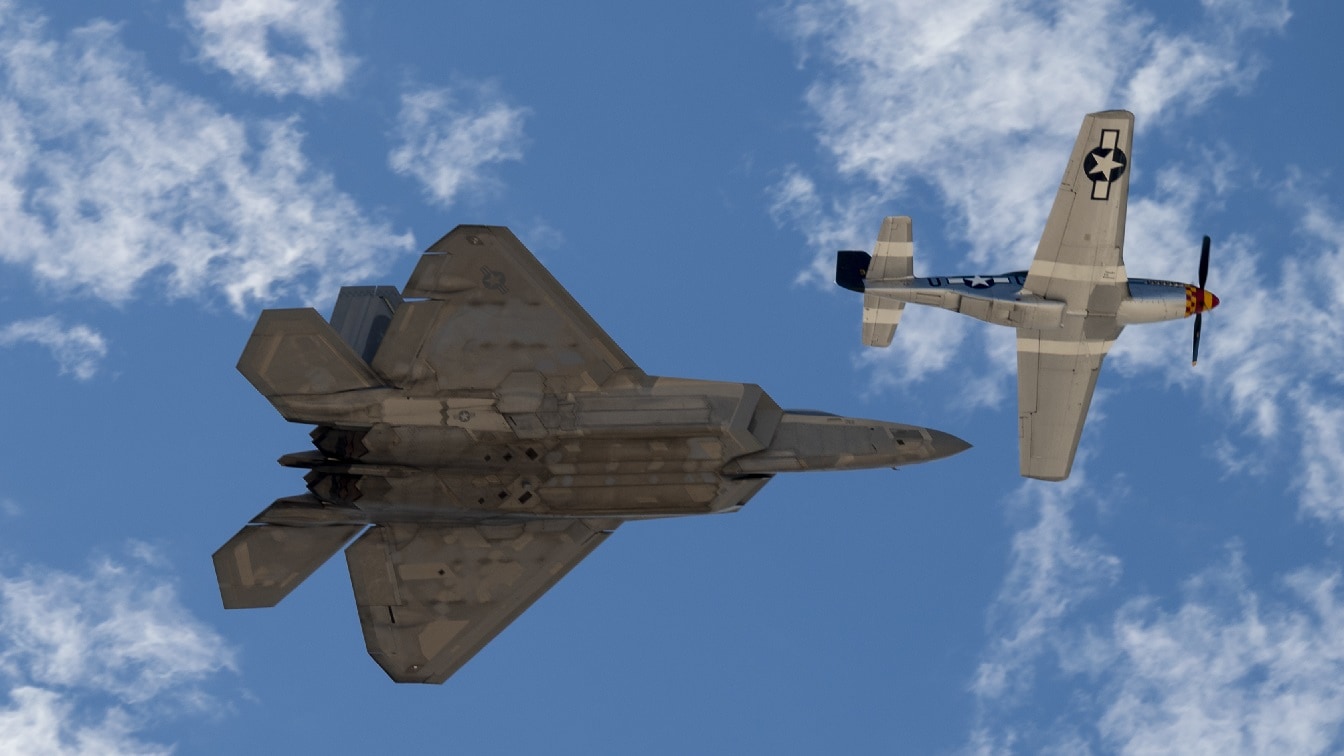
A P-51D Mustang and F-22 Raptor participate in a traditional “Heritage Flight” during the 2022 Marine Corps Air Station Miramar Air Show at MCAS Miramar, San Diego, California, Sept. 24, 2022. The theme for the 2022 MCAS Miramar Air Show, “Marines Fight, Evolve and Win,” reflects the Marine Corps’ ongoing modernization efforts to prepare for future conflicts. (U.S. Air Force photo by Adam Bowles)
NOTE: WEP was a throttle setting that first appeared on American WWII warplanes that produced more than 100% of the engine’s normal rated power for a limited time, often about five minutes; as the verbiage suggests, it was to be used only in dire situations.
In addition to the more powerful engine, the P-51D also benefited from an improved gunsight, the K-14 gyroscope gunsight, which was also employed by another top-notch WWII American fighter, the Republic P-47 Thunderbolt.
What made the K-14 so deadly accurate was that when the pilot adjusted it, it automatically provided the correct lead and showed the target’s range.
This was especially helpful for the deflection shooting required for the wing-mounted guns of the Mustang and T-Bolt (as opposed tp to the nose-mounted guns of the P-38 Lightning, P-39 Airacobra, and P-40 Warhawk)…Interestingly, the K-14 contained two sights: The compensating sight and an ordinary fixed electrical sight; in the latter, a cross was substituted for the pipper.
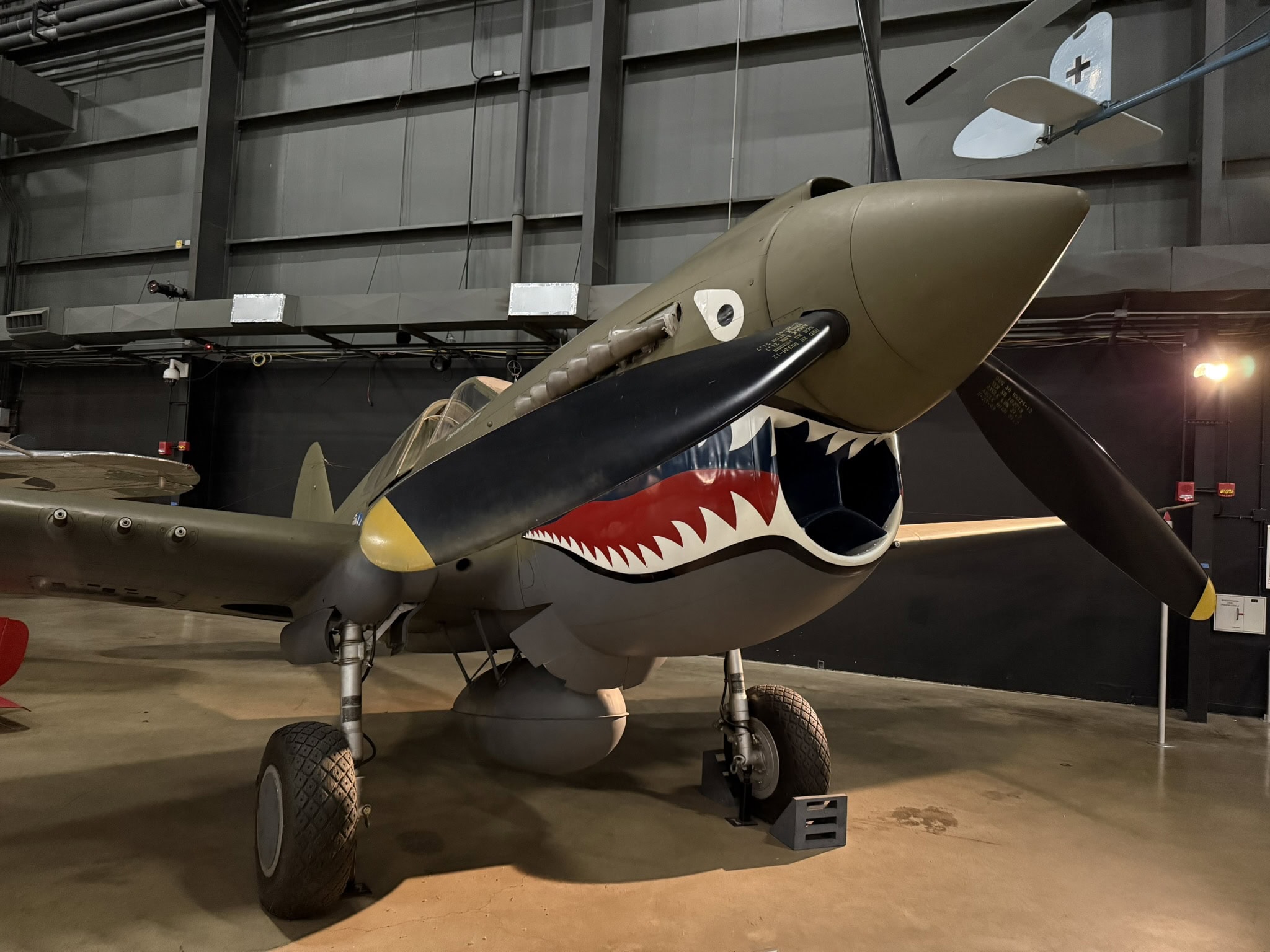
P-40E 19FortyFive.com Image.
Yet another upgrade to the P-51D was the Plexiglas “bubble” canopy, which vastly improved the pilots’ all-around vision and, needless to say, their ability to see enemies behind and in front of them, thus greatly improving the Mustang pilots’ chances of survival.
The End Results?
Very desirable end results indeed (unless you were an Axis sympathizer or appeaser, of course).
Before the upgraded Mustang variant arrived on-scene, the 8th Air Force’s bomber units experienced a horrific 77 percent overall casualty rate between 1942 and 1944.
The P-51D completely reversed that trend; as the renowned military historian Sir Max Hastings states in his 1985 book “Victory in Europe: D-Day to V-E Day In Full Color,” “The bomber offensive had been frustrated in its hope of destroying German aircraft in their factories.
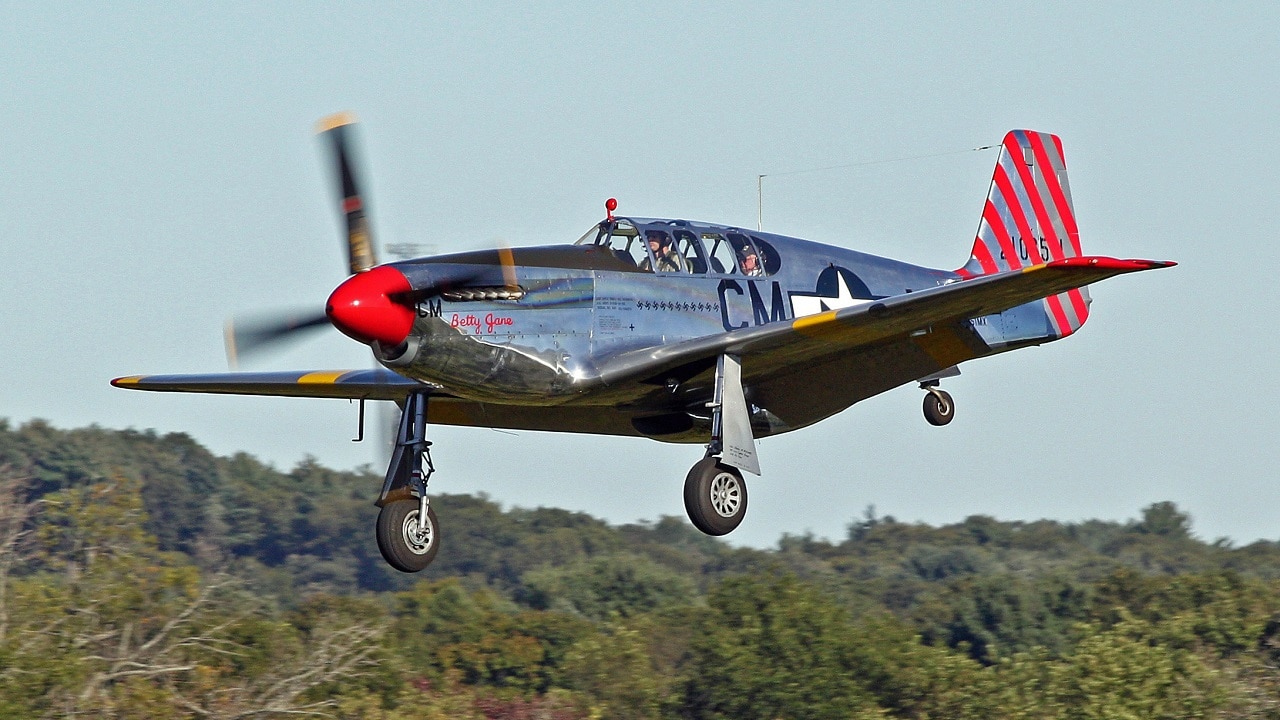
P-51 Mustang. Image Credit: Creative Commons.
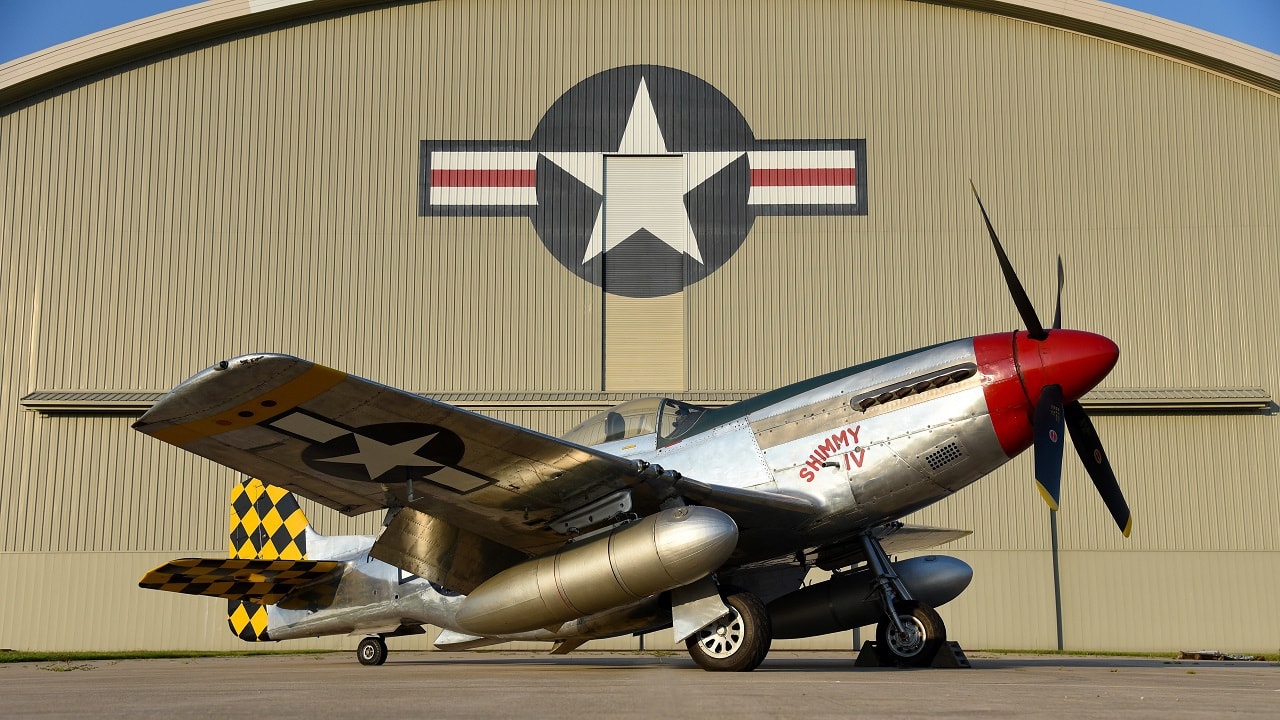
The Mustang was among the best and most well-known fighters used by the U.S. Army Air Forces during World War II. Possessing excellent range and maneuverability, the P-51 operated primarily as a long-range escort fighter and also as a ground attack fighter-bomber. The Mustang served in nearly every combat zone during WWII, and later fought in the Korean War.
But when the American Mustang long-range escort fighter was launched into the skies over Germany in the first months of 1944, it achieved extraordinary success in destroying the Luftwaffe in the air.”
Thus it came to pass that the Mustang earned its legendary status, as its pilots were credited with destroying nearly 5,000 Axis aircraft in WWII. Arguably the most famous of these Mustang drivers was Chuck Yeager, who bagged 11.5 Luftwaffe warplanes, including a Messerschmitt 262 Schwalbe (“Swallow”) jet fighter…and went on to an even greater claim to fame after the war by becoming the first human being to break the sound barrier (albeit in a Bell X-1 rocket plane, not a P-51).
All Hail, King Mustang!
About the Author: Christian D. Orr, Defense Expert
Christian D. Orr is a Senior Defense Editor. He is a former Air Force Security Forces officer, Federal law enforcement officer, and private military contractor (with assignments worked in Iraq, the United Arab Emirates, Kosovo, Japan, Germany, and the Pentagon). Chris holds a B.A. in International Relations from the University of Southern California (USC) and an M.A. in Intelligence Studies (with a concentration in Terrorism Studies) from American Military University (AMU). He is also the author of the book “Five Decades of a Fabulous Firearm: Celebrating the 50th Anniversary of the Beretta 92 Pistol Series,” the second edition of which was recently published.