
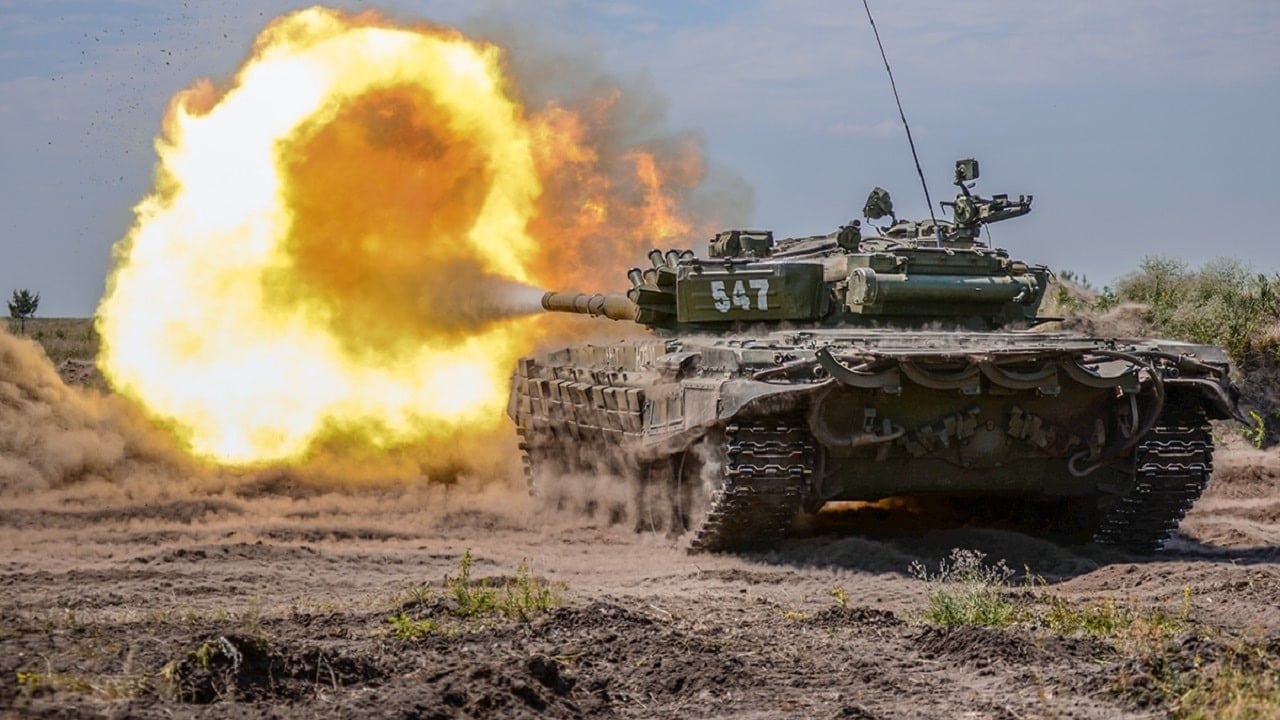
How Many T-72 Tanks Have Been Destroyed in Ukraine?
Back in the heady days of the Cold War, the Soviet-made T-72 was one of the most feared and respected main battle tanks (MBTs) in the world.
However, the T-72’s reputation has taken a hard hit—both literally and figuratively — since then, starting with the 1991 Persian Gulf War, aka Operation Desert Storm (which coincidentally took place the same calendar year as the Cold War ended with the collapse of the Soviet Union).
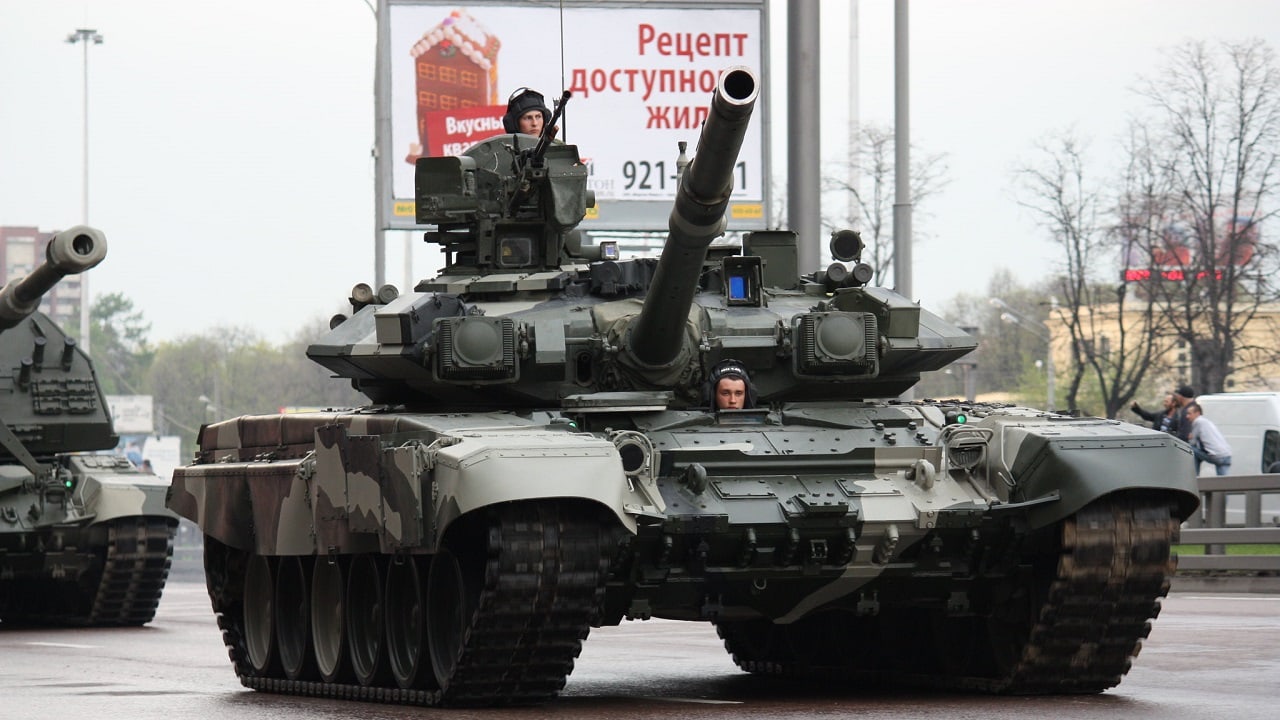
The T-90 is a Russian main battle tank (MBT) derived from the T-72, and is currently the most modern tank in service with the Russian Ground Forces and Naval Infantry. The successor to the T-72BM, the T-90 uses the tank gun and 1G46 gunner sights from the T-80U, a new engine, and thermal sights. Protective measures include Kontakt-5 ERA, laser warning receivers, the EMT-7 electromagnetic pulse (EMP) creator for the destruction of magnetic mines and the Shtora infrared ATGM jamming system. It is designed and built by Uralvagonzavod, in Nizhny Tagil, Russia.
The tarnished tank has lost even more luster in the seemingly never-ending Russia-Ukraine War.
So then, exactly how many T-72s have “died” in that conflict?
For Whom the Bell Tolls: Tracking & Tallying the T-72’s Death Toll
We need to caveat this segment by noting that perfectly accurate stats are hard to come by, since the official media outlets of Russia and Ukraine alike have a propensity for fudging their numbers (as the old cynical saying goes, “Truth is the first casualty of war.”)
It also should be remembered that, although most of the focus has been on Russian MBT losses, Ukraine has also been using the T-72, and therefore the latter’s losses also need to be factored in for the sake of objectivity, fairness, and balance.
That said, there are various educated estimates we can draw upon to figure out T-72 deaths in the four-year-old war:
–Oryx, an open-source website that collates visually documented equipment losses on the Ukrainian and Russian sides, reports 396 T-72 losses for Ukraine vs. 1,815 dead T-72s for Russia.
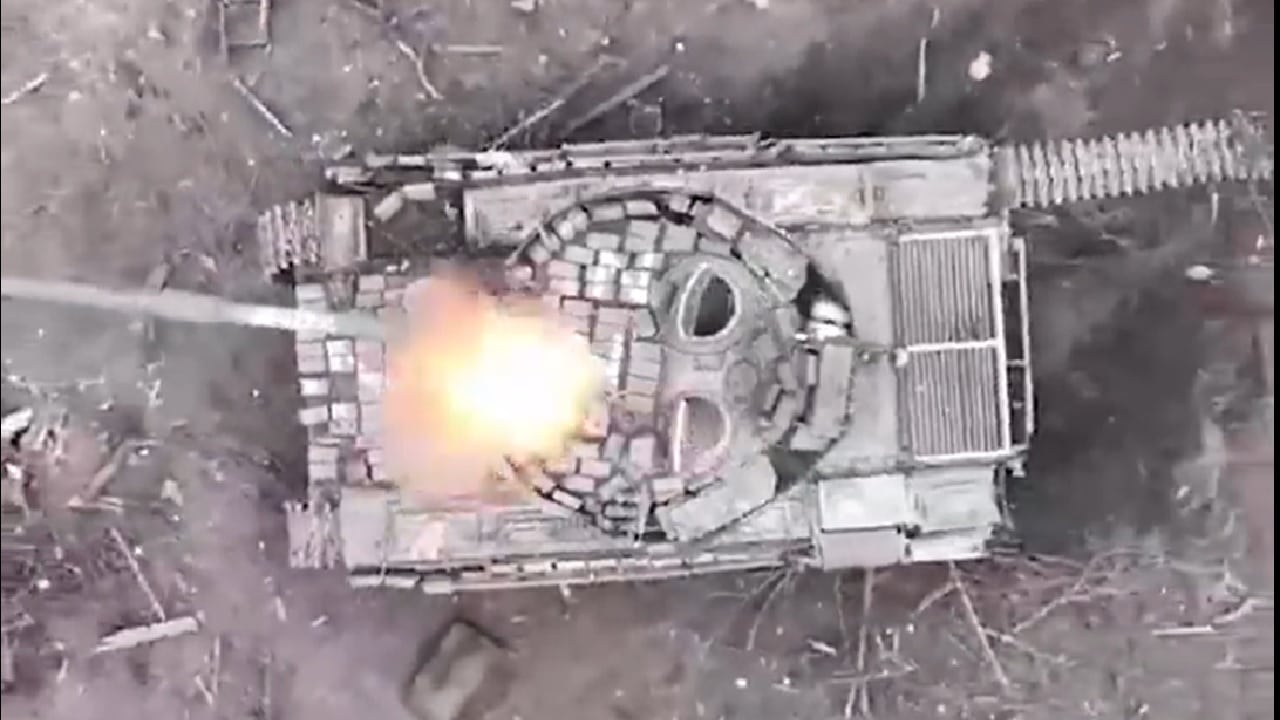
T-72 Attacked by Ukraine. Image Credit: Social Media Screenshot.
-Former Forbes writer David Axe came up with an estimate of 1,200 T-72s destroyed (a figure also cited by the ever-savvy Dr. Brent M. Eastwood).
What’s also telling is the sobering stats on the remaining stocks of MBTs. Back on September 6, 2025, Olivia Richman wrote a highly informative article for SlashGear titled “How Many Tanks Does Russia Have Left?”
Though not focused strictly on the T-72 (after all, Russia has been using multiple tank models, older and newer alike, in their desperate war effort).
The key takeaway from Richman’s article is “The exact number of tanks left in Russia’s arsenal is difficult to confirm, but The Insider estimates that there are currently around 2,000 tanks, 2,000 infantry fighting vehicles, and 3,000 armored personnel carriers left. This is roughly between 41% and 52% of the nation’s pre-war reserves left, most of which are in poor condition beyond repair.”
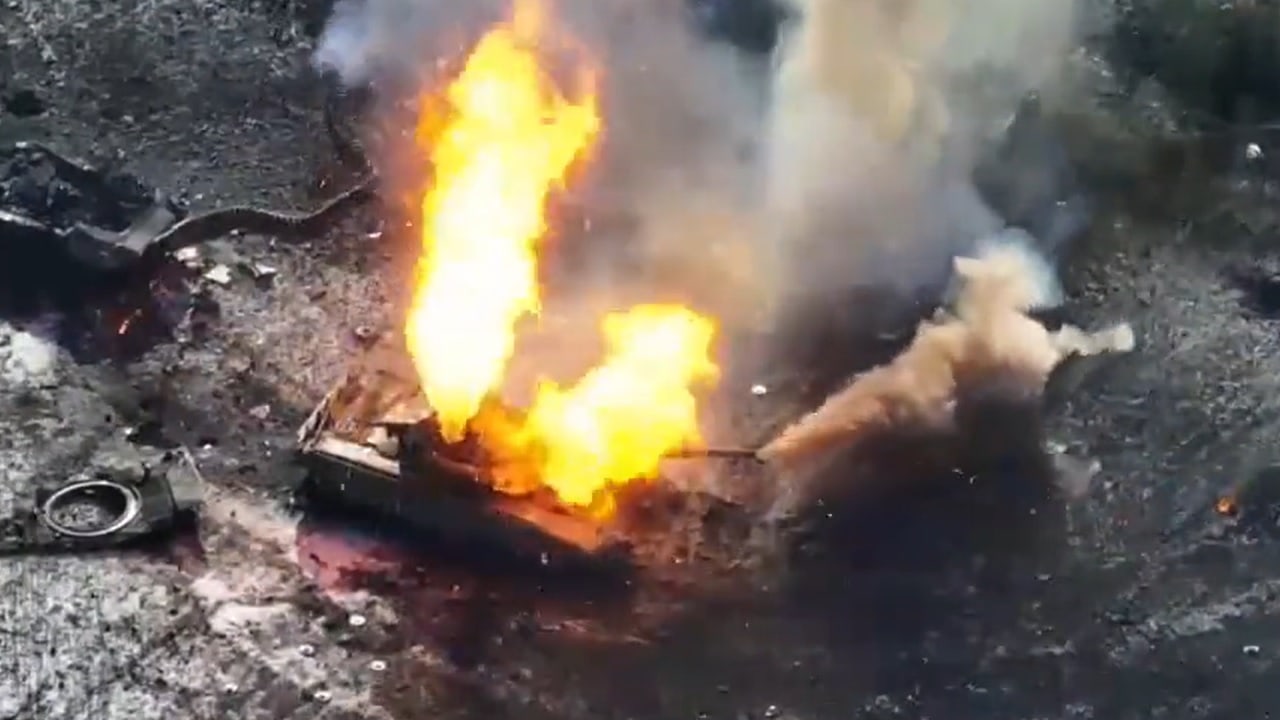
That rate of attrition is simply unsustainable.
What’s Eating the T-72?
One of the earliest and most celebrated killers of the T-72 (and Russian armor in general) was the Turkish-made Bayraktar TB2 drone.
There is no small irony regarding the Bayraktar’s country of origin, given the facts that on the one hand, Türkiye is a NATO member nation, while on the other hand, Turkish strongman Recep Tayyip Erdogan has been quite cozy and buddy-buddy with Vladimir Putin…and this despite the shootdown of a Russian Sukhoi Su-24 “Fencer” bomber by a Turkish F-16 (an American-made fighter jet no less) back in 2015!
However, the Russians eventually figured out how to counter the Bayraktar, which is why you don’t hear much about it nowadays.
However, there’s another weapon that’s continued to destroy T-72s, even as the TB2 has faded from the spotlight: the Javelin anti-tank missile system. What makes the Javelin so deadly is its ability to exploit the Russian MBT’s greatest weakness, the top of the turret.
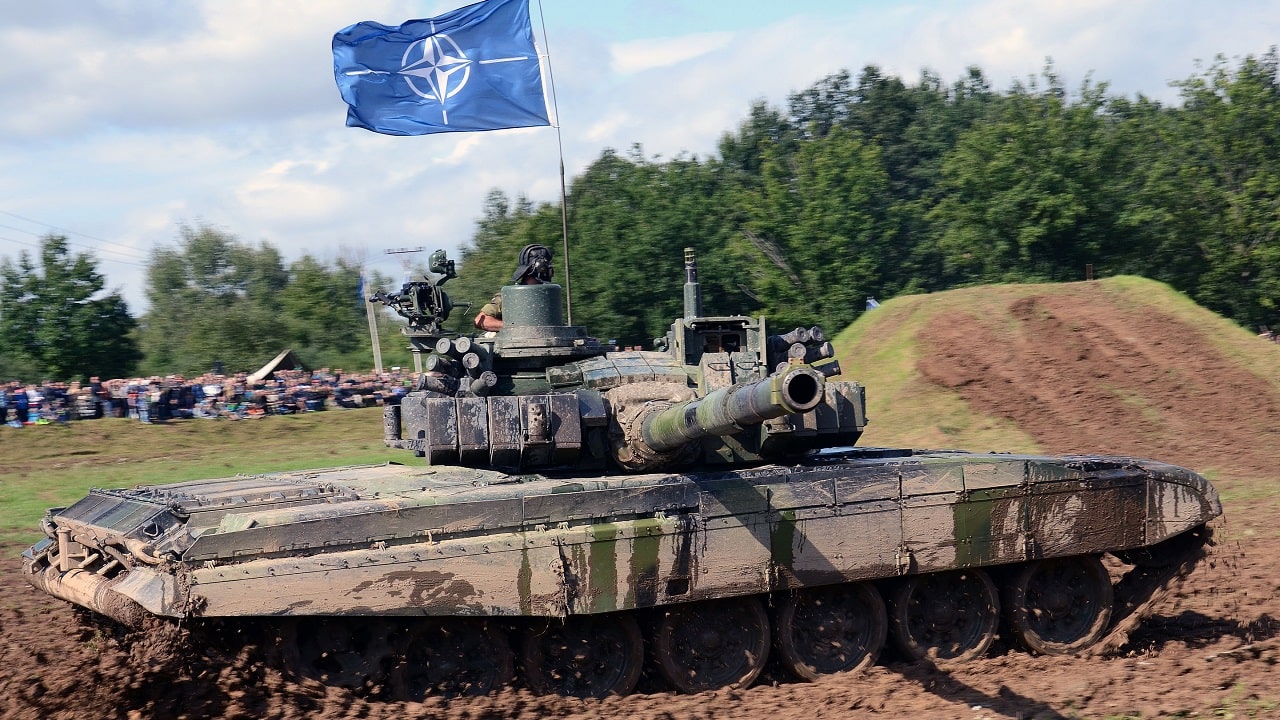
T-72 Tank Used by NATO. Image Credit: Creative Commons.
A single Ukrainian soldier can take advantage of the Javelin’s “fire and forget” system to launch the missile to a height above the tank, whereupon a precision-guided 5-inch shaped-charge warhead swoops down to hit the top of the tank. Russian efforts to protect the vehicle through improvisation, such as “cope cages,” have thus far proved futile.
The Why and the Wherefore of the T-72 Losses
So then, why has this once-vaunted tank become so vulnerable?
The biggest issue is the so-called “jack-in-the-box” design flaw: the shells are all placed in a ring within the turret, so when an enemy projectile hits the right spot, the ring of ammunition can quickly ‘cook off’ and ignite a chain reaction, blasting the turret off the tank’s hull in a devastating conflagration.
Additional factors that have made the T-72 so easy to kill:
-Shockingly light armor, with a shield that’s merely eight inches thick
-Comparatively slow, with a top speed of 37 miles per hour on paved roads (contrast this with the 45-mph max speed of the American-made M1 Abrams MBT)
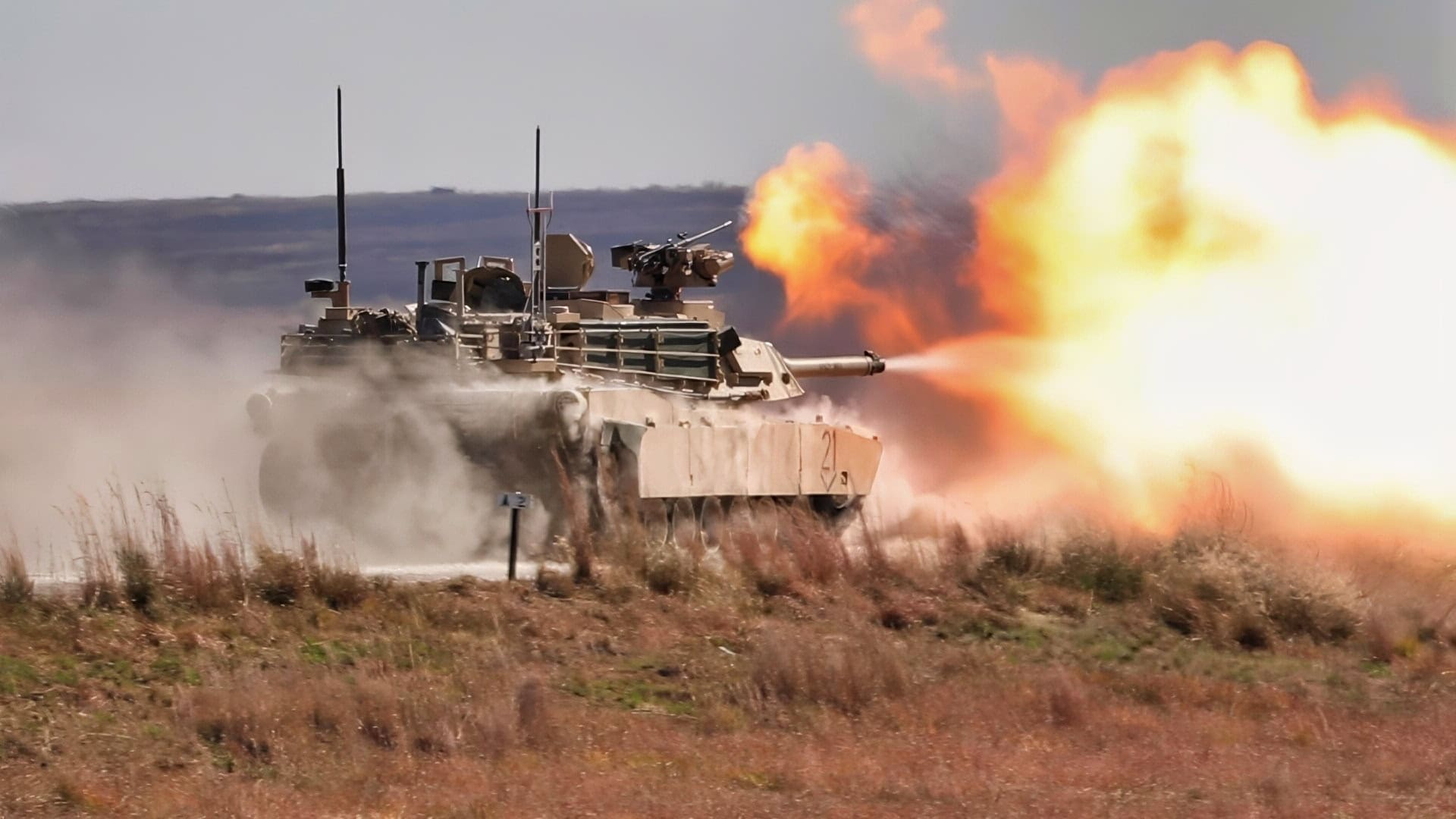
An M1A1 Abrams tank operated by Soldiers with the 2nd Battalion, 70th Armored Regiment, 2nd Armored Brigade Combat Team, 1st Infantry Division, fires while moving at the Douthit Gunnery Complex on Fort Riley, Kansas, Oct. 19, 2022. The tank crew was conducting gunnery for qualification. (U.S. Army photo by Sgt. Jared Simmons)
-An underpowered engine, which often leads to the tank getting stuck in the mud when temperatures thaw (shades of Nazi Germany’s Tiger tanks of WWII)
The T-72 Still Keeps Soldering On
Notwithstanding the T-72s ever-declining battlefield performance, given Russia’s unwillingness to deploy the newer and overhyped T-14 Armata due to the its exorbitant expenses and production problems, the Russian Army will basically had no chance but to continue to hurl its T-72s and its into the metaphorical borscht pot until that seemingly impossible pipe dream of a day when Vladimir Putin’s brutal so-called “special military operation” in Ukraine finally comes to an end.
Time will tell, which translates into Russian as “Vremya pocaget” and into Ukrainian as “Chas pokaze.”
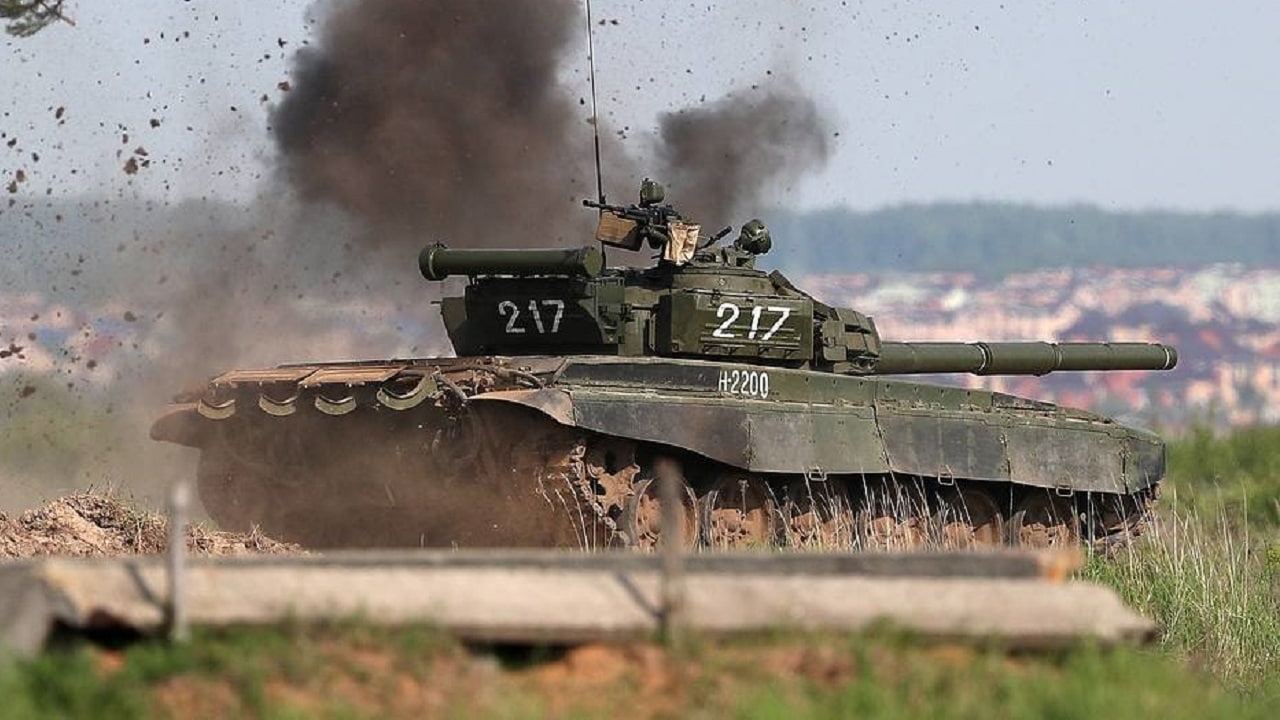
Russia’s T-72 tank drilling. Image Credit: Creative Commons.
About the Author: Christian D. Orr, Defense Expert
Christian D. Orr is a Senior Defense Editor. He is a former Air Force Security Forces officer, Federal law enforcement officer, and private military contractor (with assignments worked in Iraq, the United Arab Emirates, Kosovo, Japan, Germany, and the Pentagon). Chris holds a B.A. in International Relations from the University of Southern California (USC) and an M.A. in Intelligence Studies (with a concentration in Terrorism Studies) from American Military University (AMU). He is also the author of the book “Five Decades of a Fabulous Firearm: Celebrating the 50th Anniversary of the Beretta 92 Pistol Series,” the second edition of which was recently published.