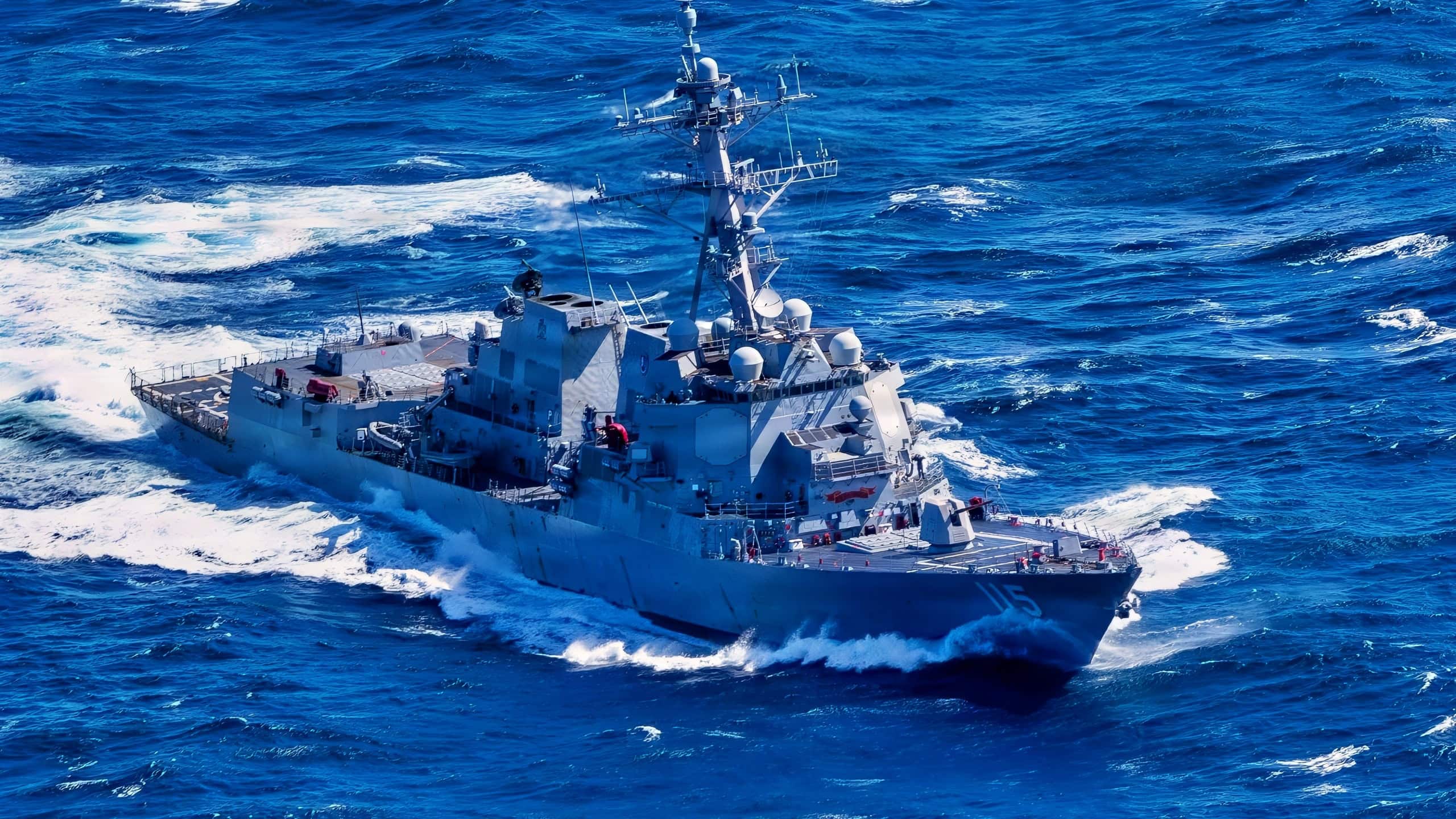
Iran Has Threatened to Mine the Entire Persian Gulf — The Houthis Could Extend Mining to the Red Sea and Bab el-Mandeb Strait
Just reports of mines are often sufficient to disrupt maritime traffic. Even if ship owners, crews, and insurers weren’t aware of the missile threat in the Strait of Hormuz, news reporting of sea mines in the narrow waters would likely be enough to stop commercial traffic that Iran didn’t direct through safe passages.
That goes for even the US Navy, too. A single, inexpensive mine can threaten a multi-billion-dollar warship, and no navy, regardless of technological superiority, can afford to ignore that.
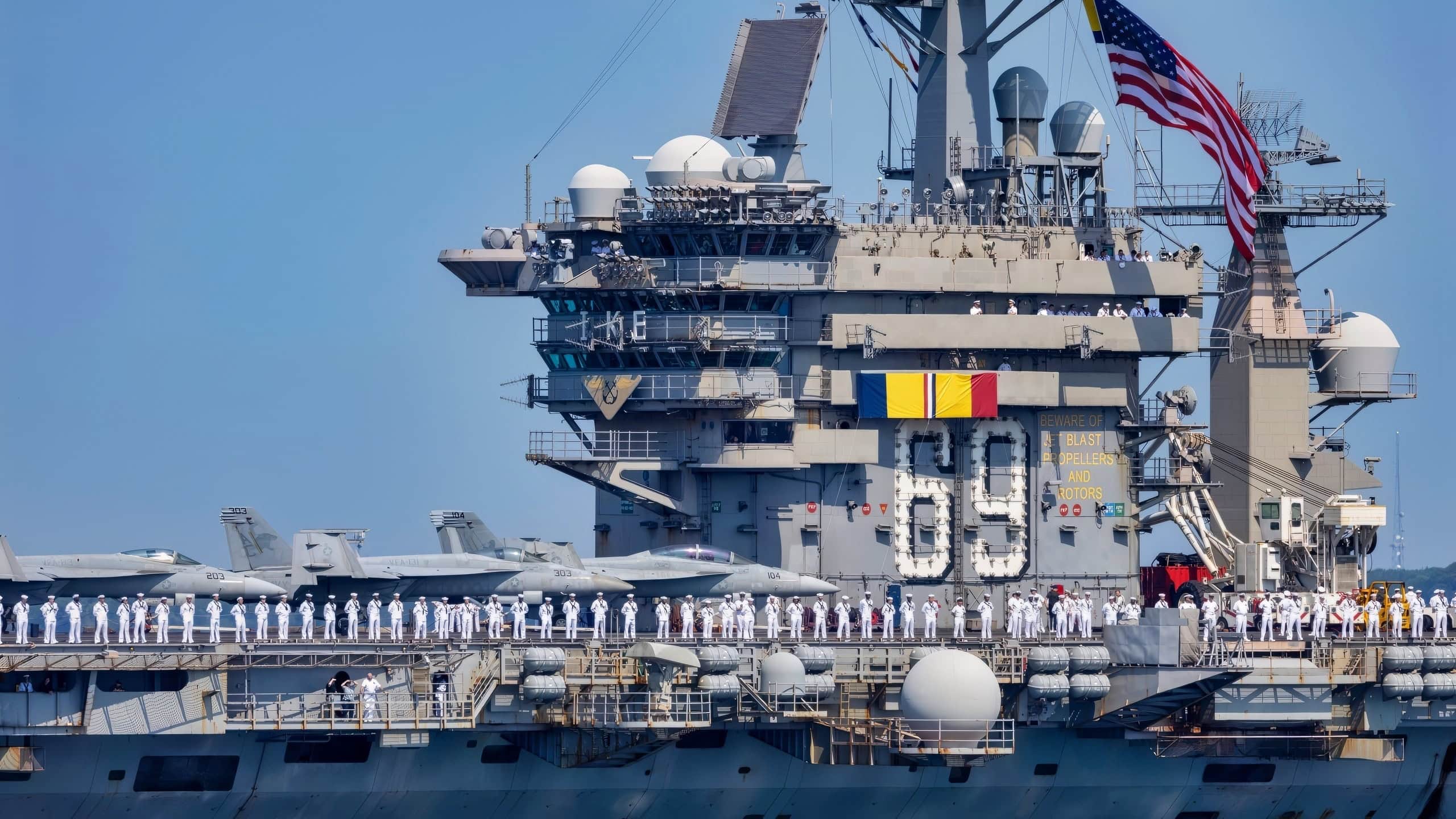
(July 14, 2024) The Nimitz-class aircraft carrier USS Dwight D. Eisenhower (CVN 69) returns to Naval Station Norfolk, July 14, 2024, concluding a nine-month deployment to the Atlantic. Eisenhower, the flagship of the Ike Carrier Strike Group, departed Norfolk October 14, 2023 to conduct a scheduled deployment to U.S. 5th and 6th Fleet area of operations in support of maritime security operations, theater security cooperation efforts, and enhanced vigilance activities operations with NATO Allies and Partners. (U.S. Navy Photo by Mass Communication Specialist 2nd Class Hunter Day)
Mine warfare doesn’t need to sink ships to succeed. It works by imposing unacceptable risk. So maritime access through the strait can be shaped less by firepower and more by caution, uncertainty, and slow responses of mine countermeasures forces. For this effect to endure, Iran will require the means to sustain it. To understand what comes next, we need to understand Iran’s mine warfare capability.
The country is assessed to have had a pre-war stock of 5,000 to 6,000 sea mines, though US and Israeli forces have destroyed some. Mines are classified by their positioning in the water (drifting on the surface, sitting on the bottom, or floating on or just under the surface while tethered to the bottom) and by how their charges are set off (by contact with a ship or detecting its proximity through some influence – sound, pressure, magnetism or a combination of these). Iran’s inventory includes ground influence, tethered contact, tethered influence and drifting mines.
Sea mines offer distinct advantages as a maritime weapon. They require little training or specialist support. They are easy to deploy: they can be placed in the water from civilian boats, small craft or submarines. And unlike many other naval weapons, they can be laid without direct combat interaction with an adversary, remaining dormant until activated by a passing vessel. These characteristics make mines some of the most cost-effective weapons available to a weaker and outmatched force.
Given the right conditions, they are difficult to counter. Their presence can complicate the tactical picture by restricting or denying access to naval forces and commercial shipping until countermeasures operations can be undertaken to ensure safe passage.
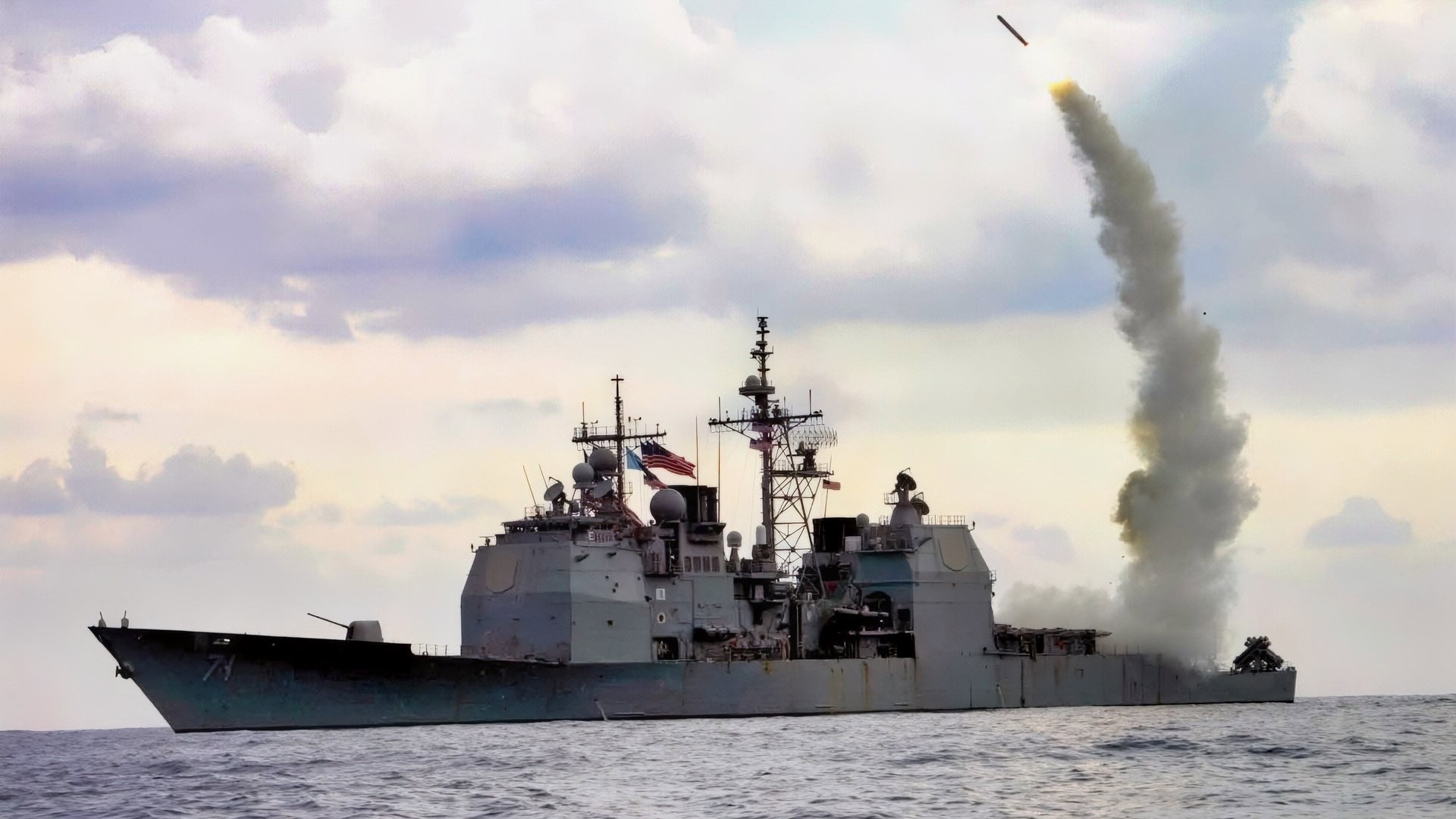
ABOARD USS CAPE ST. GEORGE (CG 71) AT SEA — A Tomahawk cruise missile launches from USS Cape St. George, operating in the eastern Mediterranean Sea in support of Operation Iraqi Freedom. (Photo by IS1 Kenneth Moll, USS Cape St. George) (Released by Sixth Fleet Public Affairs)
Mine countermeasures are methodical, resource-intensive processes. Recent efforts to modernise them have focused on keeping mine hunters and their crews outside the minefield by shifting detection and clearance to autonomous and uncrewed systems.
Advances in precision sonar have significantly improved the ability to detect and classify mine-like contacts, often at scale and from vessels operating well away from the mined area. However, while detection has increasingly moved to stand-off systems, the processes of identification and neutralisation are still somewhat tied to the mine hunters.
This creates a growing operational challenge. In confined and heavily trafficked waterways such as the Strait of Hormuz, conservative assumptions about safe stand-off distances can keep mine hunters tens of kilometres from suspected minefields. Autonomous vehicles may be able to search large areas, but confirming and neutralising individual contacts still requires fairly close-in action, often with remotely operated systems working at the limits of range, endurance and control.
The result is that clearance timelines can expand from days to weeks to even months, particularly when the extent of the mine threat is unknown. As these clearance timelines extend, the burden of protecting mine countermeasures forces from attack also grows. Warships must provide this protection.
Iran has threatened to expand sea mine operations throughout the Gulf if its coast or islands are attacked. As the war progresses, mining could extend into the Red Sea and Bab el Mandeb Strait through Iran’s proxies, the Houthi militants of Yemen.
The Houthis have used sea mines before. In 2017 they laid hundreds off the Yemeni coast to deter maritime operations by Saudi-led forces during the Yemeni conflict. Houthi participation in the current war is already expanding, with recent strikes against Israel.
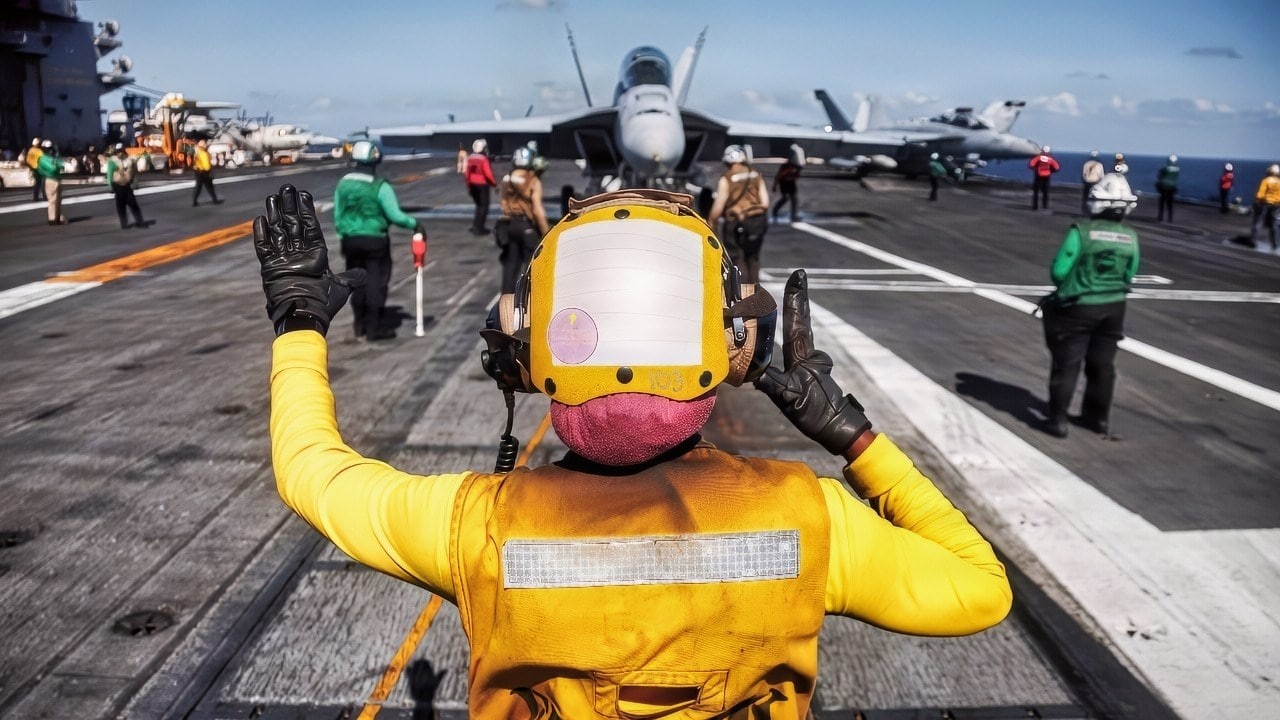
A U.S. Sailor signals to an F/A-18F Super Hornet aircraft, attached to Strike Fighter Squadron 213, on the flight deck of the world’s largest aircraft carrier, Ford-class aircraft carrier USS Gerald R. Ford (CVN 78), while underway in the Caribbean Sea, Feb. 5, 2026. U.S. military forces are deployed to the Caribbean in support of the U.S. Southern Command mission, Department of War-directed operations, and the president’s priorities to disrupt illicit drug trafficking and protect the homeland. (U.S. Navy photo)
If Iran’s objective is to increase disorder for its adversaries, it is likely to start laying sea mines throughout the Gulf. In this confined area, shipping density is high, and most approaches to ports and harbours are vulnerable to mining (or just declaration of mining). These include the waterways serving Bahrain, Iraq, Kuwait, Qatar, Saudi Arabia and the United Arab Emirates. Oman, too, could be targeted.
Shipping lanes in and out of those countries’ ports and harbours are well known to Iranian war planners. Shallow waters of these approaches are well suited to Iran’s influence ground mines, including the Maham-2, which is cylindrical, has an explosive capacity of 350 kg and can operate as deep as 50 metres, and the Maham-7 which is conical, contains 150 kg of explosive and can operate at 35 metres.
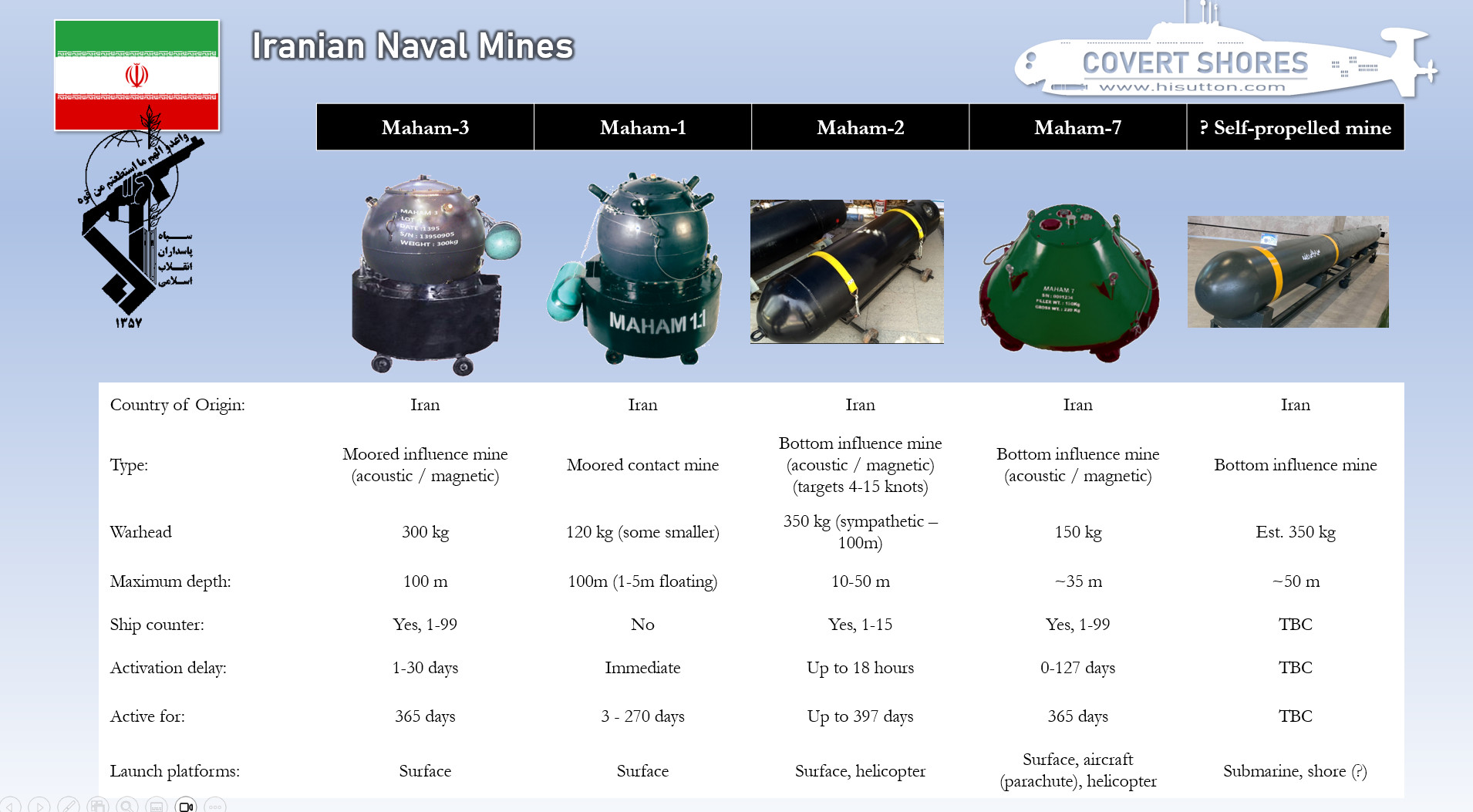
In deeper areas of the Gulf, Iran’s tethered mines would be effective. These can be tied to sea bottoms as deep as 100 metres. They would likely be used within established shipping lanes, anchorages and other high-traffic areas.
Iran could also deploy floating mines, which are set adrift and will move with currents and wind. Floating mines are inherently uncontrolled and pose a hazard to all shipping, including vessels from the nation that lays them.
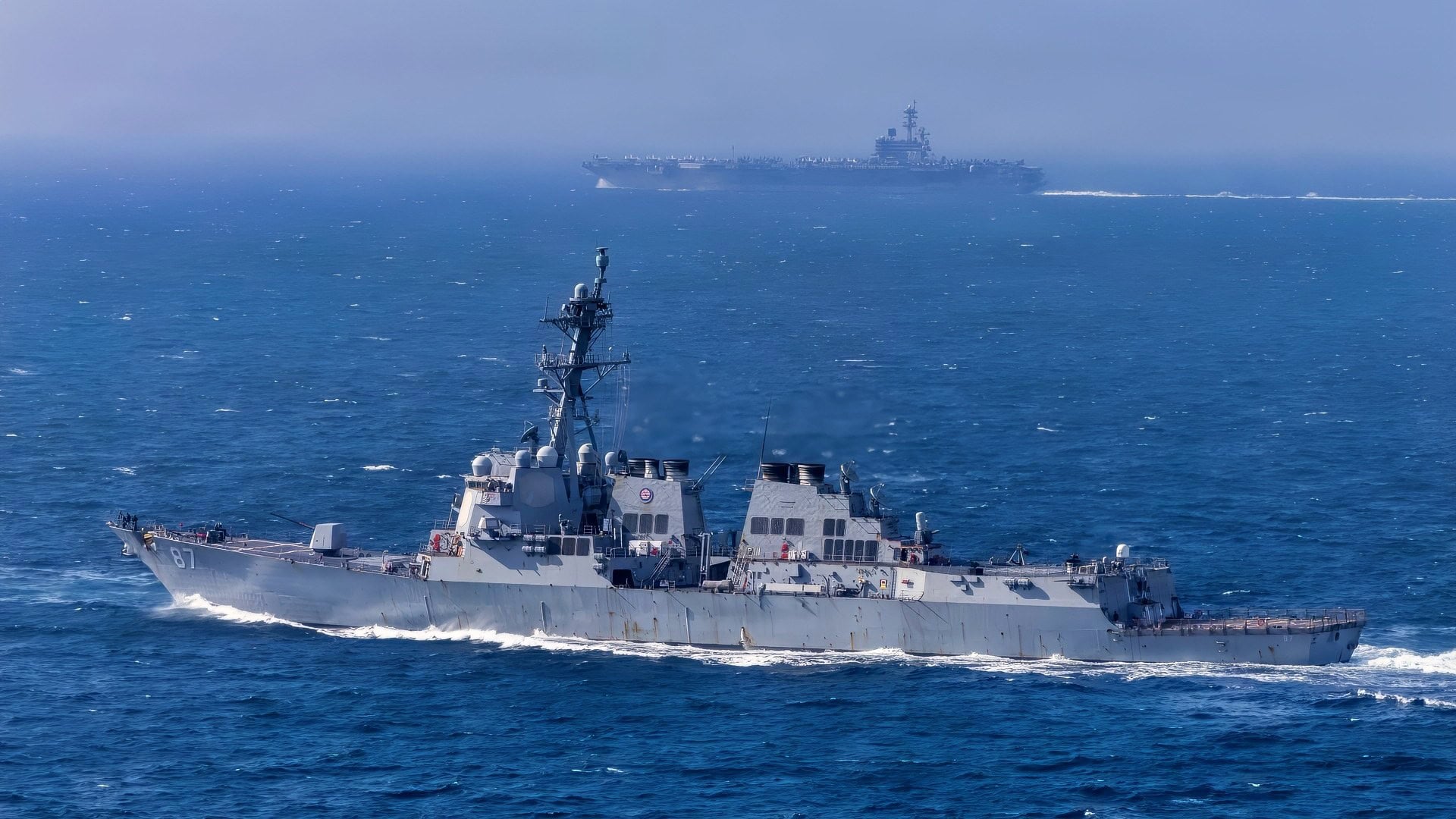
The Arleigh Burke-class guided-missile destroyer USS Mason (DDG 87) transits alongside the Nimitz-class aircraft carrier USS George H.W. Bush in the Atlantic Ocean, Feb. 21, 2026. The George H.W. Bush Carrier Strike Group is at sea training as an integrated warfighting team. Composite Training Unit Exercise (COMPTUEX) is the Joint Force’s most complex integrated training event and prepares naval task forces for sustained high-end Joint and combined combat. Integrated naval training provides combatant commanders and America’s civilian leaders highly capable forces that deter adversaries, underpin American security and economic prosperity, and reassure Allies and partners. (U.S. Navy photo by Mass Communication Specialist 2nd Class Jayden Brown)
Iran has several options available for deploying sea mines, including the use of hundreds, if not thousands, of boats. Submarines can also do the job, and Iran’s Ghadir-class midget submarines are particularly well suited to minelaying, because they can operate in water as shallow as 30 metres.
Tethered mines would most likely be deployed from boats in waters deeper than 40 metres, while ground influence mines could be laid either by midget submarines or surface craft in shallow water approaches to ports and harbours.
Floating mines could be deployed from small surface vessels or even from the shore. Once in the water, they will be carried by currents, increasing risk to friendly and neutral shipping, with their eventual location often unpredictable.
Iran has a history of employing sea mines across the Gulf region, most notably during the Tanker War campaign in 1984 to 1988, part of the Iran–Iraq War. In 1987, the tanker SS Bridgeton struck an Iranian contact mine even as it was part of a convoy escorted by the US Navy. In 1988, a mine damaged the frigate USS Samuel B Roberts; repairs cost about US$90 million.
Littoral Combat Ship Deck Gun U.S. Navy. Image Credit: 19FortyFive.com
The month of US and Israeli attacks on Iran that began on 28 February has greatly degraded Iran’s military capability, but the country can still sow minefields throughout the Gulf and get the Houthis to sow them in the Red Sea. As the war continues, the likelihood of Iran again resorting to sea mines increases by the day. Whether it has already crossed a strategic threshold at a large scale remains unclear. What is clear, however, is that Iran has the capability to use mines to achieve a strategic effect.
About the Author: Andy Perry
Andy Perry is a retired Royal Australian Navy mine warfare specialist with more than 30 years of experience. He works as a maritime geospatial specialist supporting mine warfare operations.