
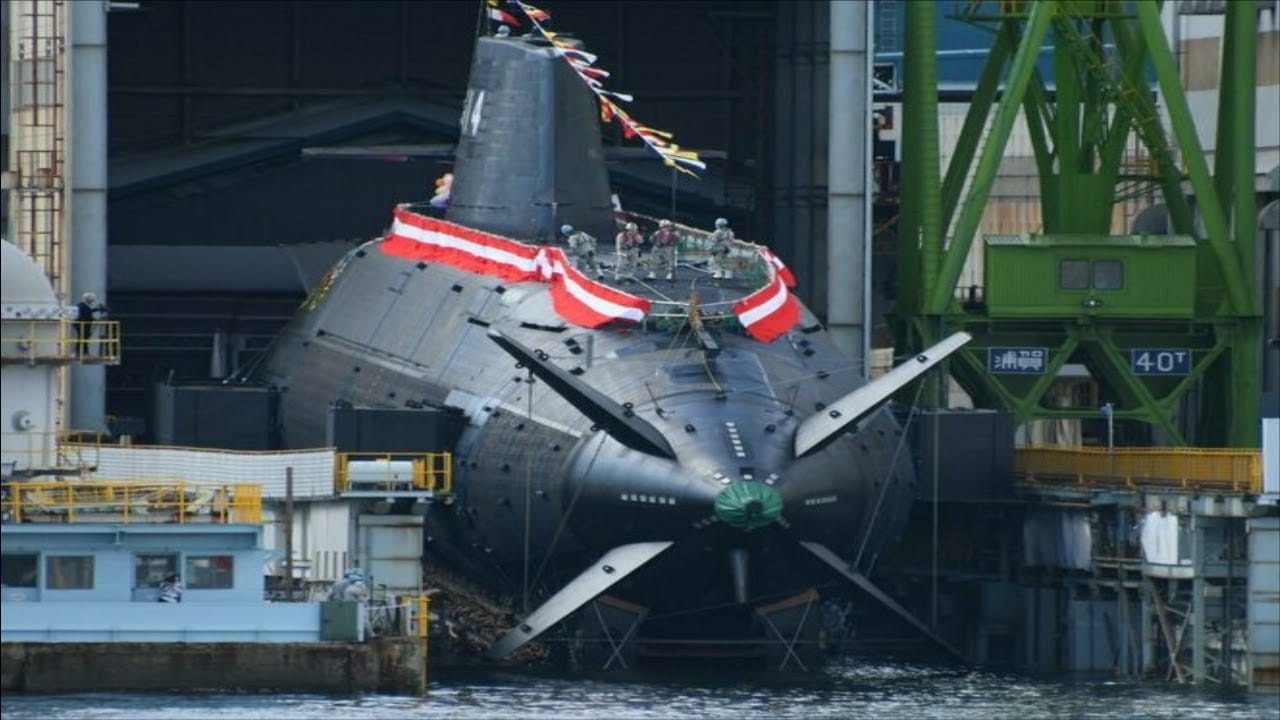
The Taigei-Class Is the World’s First Submarine Designed Entirely Around Lithium-Ion Batteries
The Taigei-class, or ‘big whale’, is Japan’s newest attack submarine. But the new boat isn’t just an upgrade; it’s the first submarine class designed entirely around lithium-ion batteries, representing a technological and doctrinal shift for Japan’s submarine force.
By abandoning traditional Air-Independent Propulsion (AIP), Japan has redefined diesel-electric submarine performance—prioritizing speed, stealth, and flexibility over endurance.
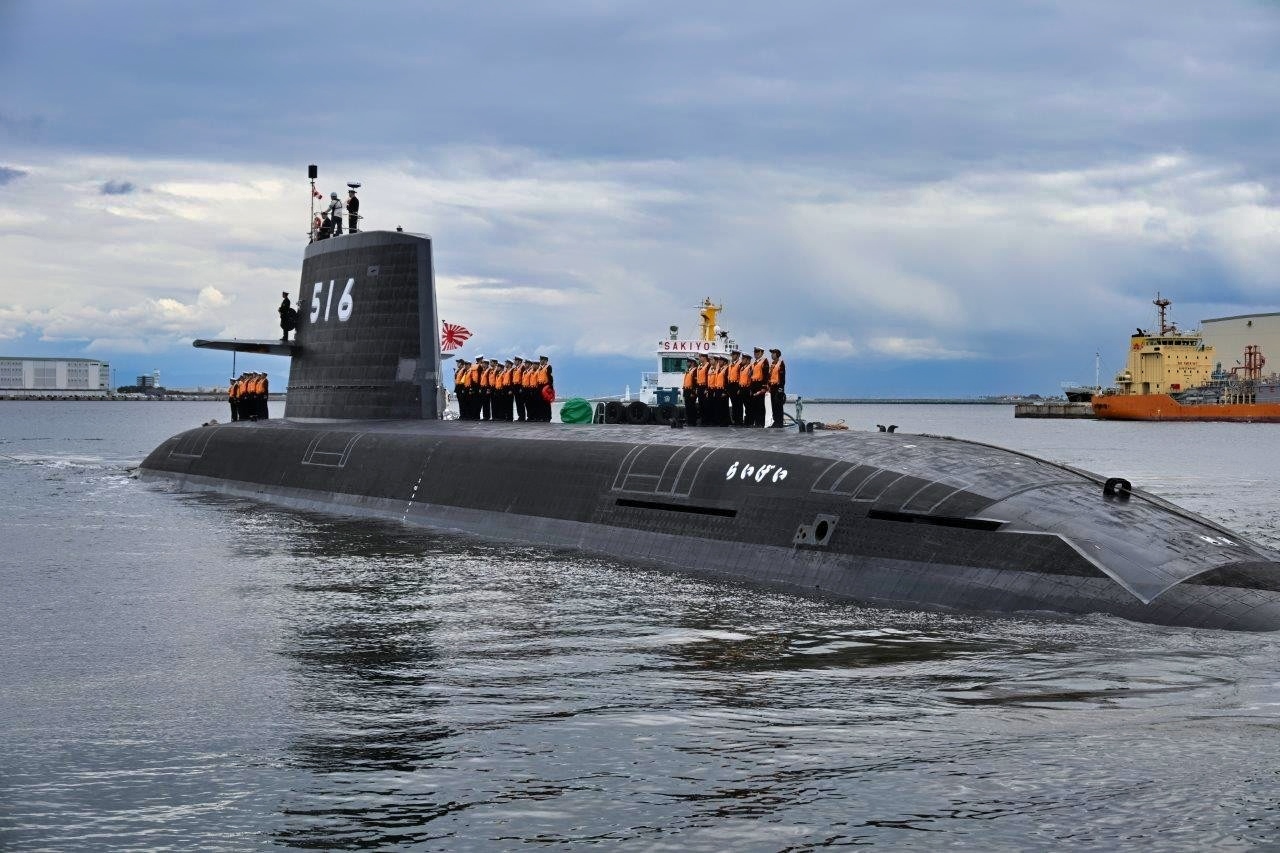
Taigei-Class Submarine. Image Credit: Creative Commons/JSDF.
The Big Shift: No AIP
Whereas the previous generation of Japanese submarines, like the Soryu-class, used Stirling AIP engines, the Taigei is entirely without AIP, opting instead for high-capacity lithium-ion batteries.
AIP is renowned for its quiet operation, but AIP subs were slow.
Japan’s new philosophy prioritizes high-speed underwater endurance and rapid recharge. So in effect, Japan is trading in low-speed persistence for high-performance stealth mobility.
Propulsion and Power
Lithium-ion batteries offer higher energy density and faster recharge cycles.
They can also sustain high speeds (20 knots submerged) and remain submerged longer. The advantage here is that the Taigei can reduce its exposure time, thereby reducing detectability.
The Tagei also pairs a Kawasaki 12V 25/31 diesel engine with an enhanced snorkel, optimizing for fast recharges.

Taigei-Class. Image Credit – Creative Commons.
Stealth and Acoustics
The Taigei is built with a “floating floor,” in which the machinery is isolated from the hull to reduce the vibration signature. The hull has been coated with acoustic-absorbent materials to reduce sonar return.
And without the AIP, the Taigei has removed a mechanical noise source. The net result here is an extremely quiet submarine—and a submarine that stays quiet while moving, not just loitering.
Maneuverability and Design
The Taigei features an X-shaped rudder with four control surfaces. This is better for precision maneuvering.
Designed for shallow, congested waters, the Taigei is mindful of its operating environment, having been optimized for the East China Sea and the First Island Chain.
Basically, the Taigei is built for tight, contested littoral environments, not the open ocean.
Sensors and Combat Systems
The Taigei is equipped with the ZQQ-8 sonar with fiber-optic arrays, which includes bow, flank, and towed array. This improves detection capability, with extended range and heightened sensitivity. A non-penetrating optronic mast enhances hull integrity and optimizes the internal layout.
The combination of features emphasizes situational awareness and survivability.
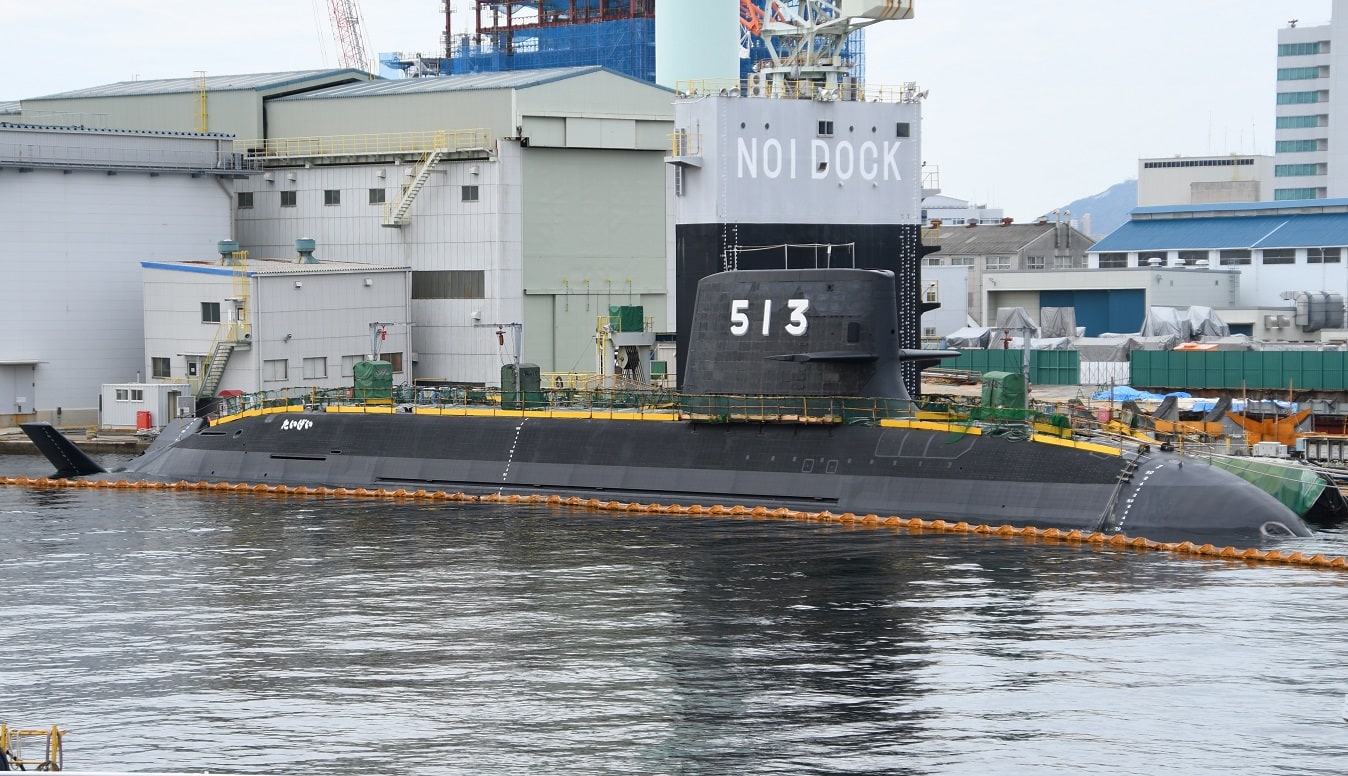
Taigei-class. Image Credit: Creative Commons.

Image: Creative Commons.
Notably, the Taigei was built with humans in mind. With expanded accommodations, including dedicated facilities for female submarines, the Taigei reflects Japan’s effort to broaden its recruiting base and sustain long-duration operations.
Improved automation reduces crew workload, allowing operators to focus more on sensor management and tactical decision-making rather than mechanical oversight. Over time, these quality-of-life and efficiency gains are expected to translate into higher readiness rates, better force retention, and improved operational performance across the fleet.
Weapons and Strike Capability
The Taigei carries Type 18 torpedoes with advanced guidance and resistance to countermeasures. For missiles, the Taigei is equipped with Harpoon Block II missiles, offering a 240 km range.
The role this weaponry enables is anti-ship and sea denial—not strategic land attack.
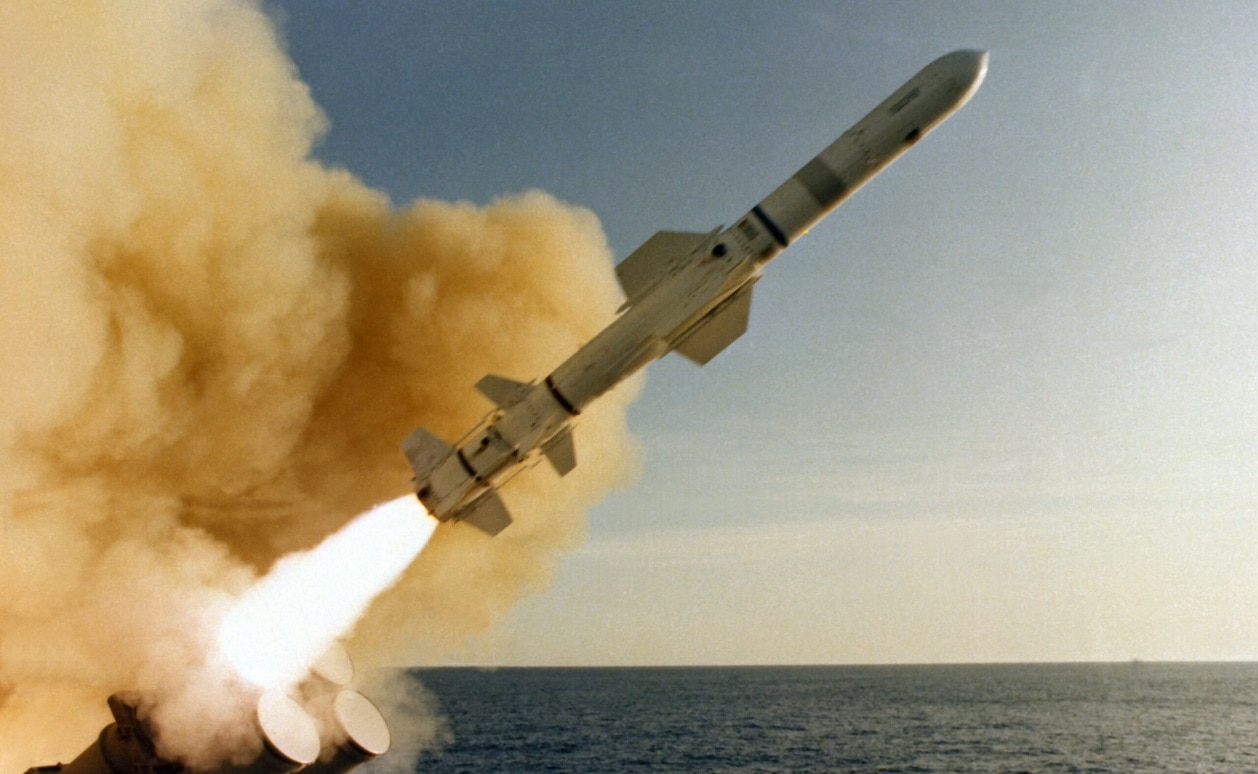
A view of an RGM-84 surface-to-surface Harpoon missile, immediately after leaving a canister launcher aboard the cruiser USS LEAHY (CG-16), near the Pacific Missile Test Center, Calif.
Tactics and Strategy
Expect the Taigei’s primary mission to include ambushing ships in chokepoints and shadowing enemy fleets. The key design advantage is high-speed stealth, meaning the Taigei should be effective at tracking carrier groups.
And with less snorkeling required, the Taigei’s detection risk will remain low, despite operating in proximity to enemy vessels.
Strategically, the Taigei will be used to guard the Miyako Strait and the Bashi Channel, to enhance control within the First Island Chain. As China’s PLAN expands, the Taigei will be used to guard bottlenecks in an effort to contain China.
Through integration with the US, the Japanese will be able to defend the chokepoints with the Taigei, while US vessels project power outward, in effect creating a more comprehensive defensive system. And at just $700 million per boat (versus $3-4 billion per SSN), the Taigei is a cost-effective asymmetric counter to China’s navy.
Japan’s investment in diesel-electric technology underscores the enduring relevance of non-nuclear submarines, which are especially useful in regional conflicts.
Indeed, the future of submarine warfare may not be nuclear-only; non-nuclear subs have repeatedly infiltrated carrier strike group defenses in joint exercises, showing that conventional platforms have stealth capabilities that scale to the real world.
The Taigei-class is not an evolutionary concept, but it marks a significant upgrade for Japanese regional denial capabilities.
About the Author: Harrison Kass
Harrison Kass is a writer and attorney focused on national security, technology, and political culture. His work has appeared in City Journal, The Hill, Quillette, The Spectator, and The Cipher Brief. He holds a JD from the University of Oregon and a master’s in Global & Joint Program Studies from NYU. More at harrisonkass.com.