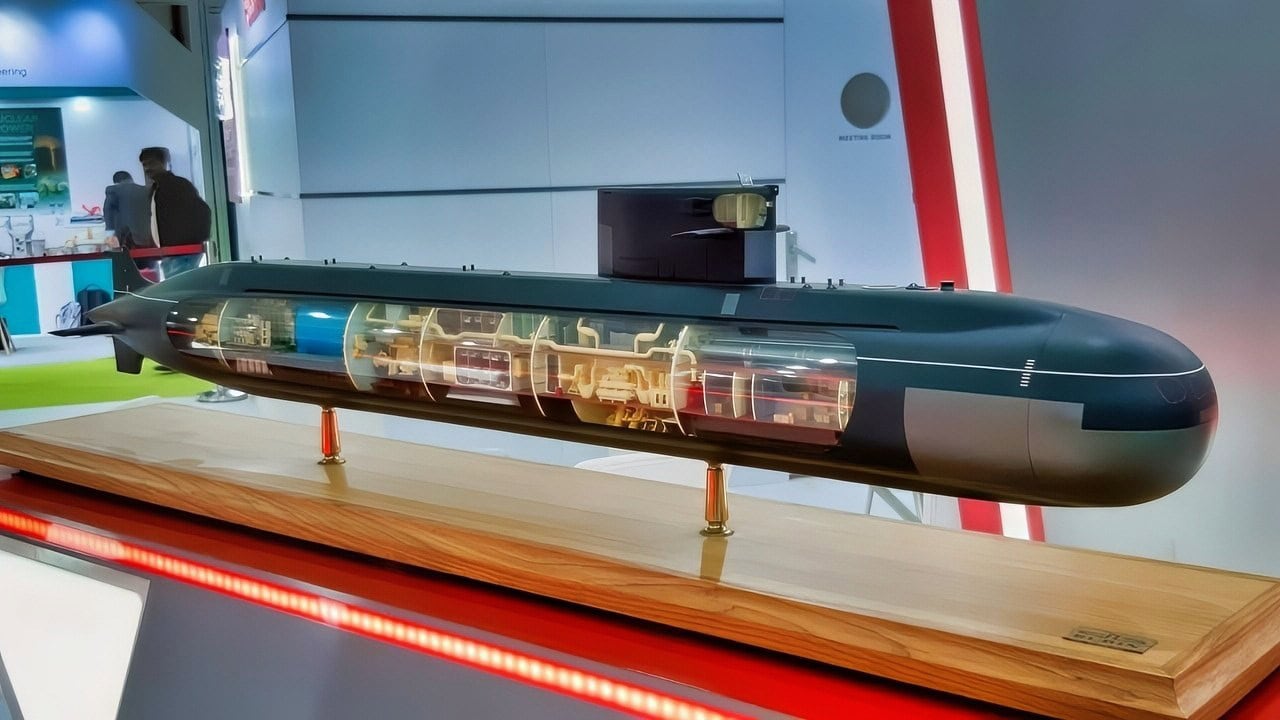
Summary and Key Points: Defense analyst Kris Osborn evaluates the Amur-class diesel-electric submarines, the advanced successors to the Project 877 Kilo-class.
-As of March 13, 2026, these vessels represent the peak of Russian non-nuclear stealth, utilizing Air-Independent Propulsion (AIP) and anechoic tiles to achieve “black hole” acoustic signatures.
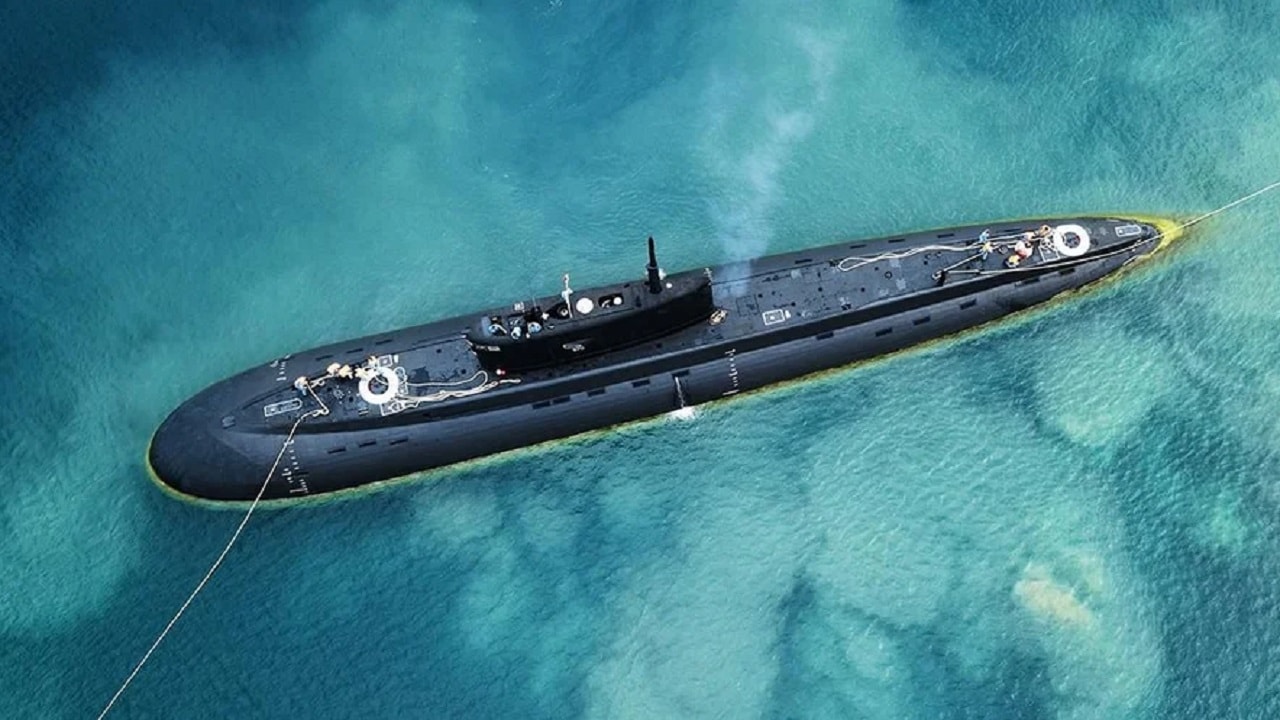
Kilo-Class Submarine. Image Credit: Creative Commons.
-This report analyzes the Amur-1650 and the missile-centric Amur-950, noting their capacity for 3M-54 Kalibr cruise missiles and 533mm heavyweight torpedoes.
-Osborn explores their role in anti-submarine warfare (ASW) and ISR, concluding that the Amur-class remains a formidable littoral deterrent for export partners worldwide.
The “Black Hole” Evolution: Why Russia’s Amur-Class Could Be a Threat to the U.S. Navy
Russia’s Amur-class submarines are modern diesel-electric attack submarines designed primarily for export and coastal defense missions.
Developed by the Russian design bureau Rubin, the Amur-class represents an evolution of the well-known Kilo-class submarines, incorporating improved stealth, advanced sensors, and modern weapon systems.
These submarines are intended to operate effectively in both shallow coastal waters and deeper ocean environments.
Their combination of quiet propulsion, sophisticated electronics, and flexible weapon systems allows them to perform a variety of naval missions, including anti-ship warfare, anti-submarine warfare, reconnaissance, and sea denial.
Diesel Electric Amur-Class Submarine
The Amur class originates from the Russian Project 877 Kilo-class submarine, one of the most widely exported diesel-electric submarines in the world. It was often referred to as the ‘black hole’ for its stealth capabilities, a claim many U.S. Navy experts dispute.
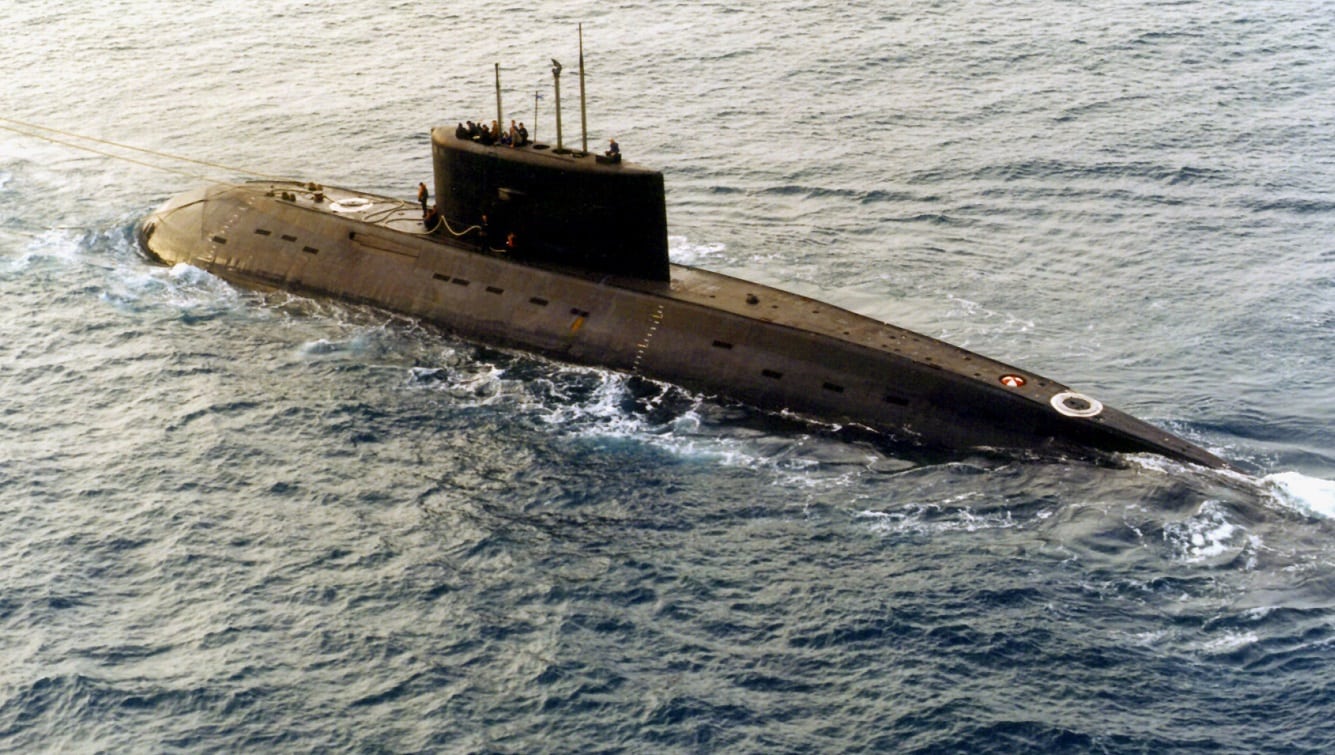
A Russian-built, Kilo-class diesel submarine purchased by Iran, is towed by a support vessel in this photograph taken in the central Mediterranean Sea during the week of December 23. The submarine and the support ship arrived at Port Said, Egypt, on Tuesday and were expected to begin transiting the Suez Canal today, Jan. 2, 1996. Ships and aircraft from the U.S. NavyÕs Sixth Fleet are tracking the submarine, which has been making the transit on the surface. This is the third Kilo-class submarine the Iranians have purchased from Moscow. DoD photo
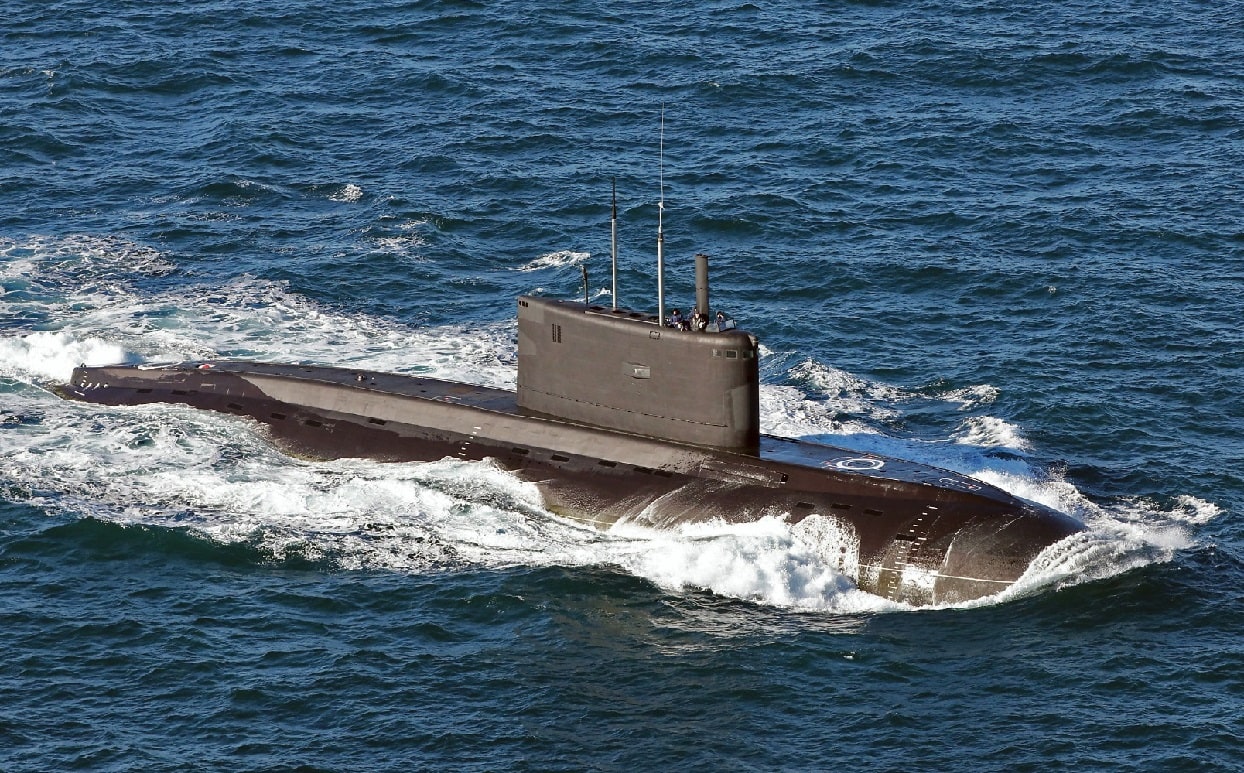
Kilo-class Submarine. Image Credit: Creative Commons.
While the Kilo class was known for its quietness and reliability, the Amur design introduces several technological improvements that enhance survivability and combat effectiveness, according to an essay in TurfDef. The export variants of the Amur family include the Amur-1650 and Amur-950 submarines, both developed by the Rubin Design Bureau in Russia.
One of the most significant technological features of the Amur class is its diesel-electric propulsion system.
Like many modern non-nuclear submarines, the Amur uses diesel generators to charge large battery banks when near the surface.
When submerged, the submarine runs on electric power alone, greatly reducing noise and making it more difficult for enemy sonar to detect. Quiet operation is critical for submarines because stealth allows them to approach targets undetected and avoid hostile anti-submarine forces.
The Amur design also includes advanced vibration isolation for machinery and an improved propeller design to reduce acoustic signatures further.
Air Independent Propulsion & Stealth
Another important propulsion technology associated with the Amur class is the possibility of air-independent propulsion (AIP). AIP systems enable diesel-electric submarines to remain underwater for longer periods without surfacing or using a snorkel to recharge batteries.
This capability significantly increases a submarine’s stealth and endurance.

Kilo-Class Submarine Fleet. Image Credit: Creative Commons.
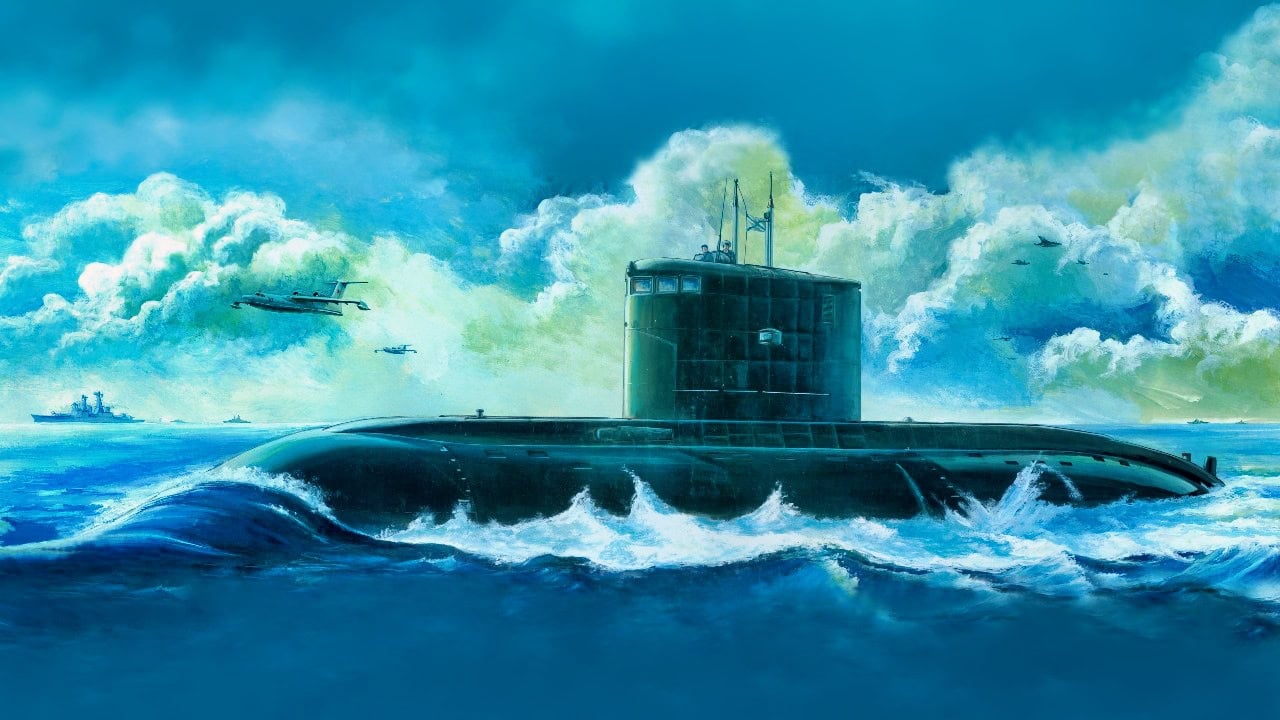
Kilo-Class Submarine
Stealth is further enhanced through the submarine’s hydrodynamic hull design and specialized materials.
The Amur class features a streamlined hull optimized for quiet underwater movement and reduced drag.
The outer hull is coated with anechoic tiles—rubber-like materials designed to absorb sonar waves and reduce the submarine’s acoustic signature.
These coatings also help prevent enemy sonar from receiving strong reflected signals, making the submarine harder to detect.
Such stealth technologies are essential for modern submarine warfare, where detection often determines the outcome of engagements.
Amur Passive Sonar
The Amur class also incorporates advanced sensor and sonar systems. These systems enable the submarine to detect enemy ships and submarines while remaining hidden.
The sonar suite typically includes a bow-mounted sonar array for forward detection, flank arrays along the sides of the hull for wider coverage, and towed sonar arrays that can be deployed behind the submarine to detect distant targets.
Passive sonar enables a submarine to listen for the sounds of ships and submarines without emitting signals that could reveal its position.
In addition to sonar, the submarine may carry electronic support measures that detect radar emissions from surface ships and aircraft, providing early warning of nearby threats.
Amur Weapons
The Amur-class submarines are equipped with a powerful range of weapons systems.
The larger Amur-1650 variant typically carries six 533-millimeter torpedo tubes capable of launching heavyweight torpedoes against enemy ships and submarines.
Onboard sonar systems can guide these torpedoes and may operate in active or passive modes to track targets. In addition to torpedoes, submarines can fire anti-ship cruise missiles, such as the 3M-54 Kalibr.
In terms of missions, the Amur class is primarily designed for sea denial operations, meaning it’s intended to “deny” an adversary safe access to a particular maritime region.
Submarines are highly effective in this role because their stealth forces enemy ships to operate cautiously and allocate significant resources to anti-submarine warfare.
The Amur class is also designed for anti-submarine warfare. Using advanced sonar systems, the submarine can locate and track hostile submarines before engaging them with torpedoes.
There is also an ISR function with these submarines, as they can covertly monitor shipping lanes, naval bases, and military exercises without revealing their presence.
Finally, Amur-class submarines can conduct mine-laying operations, placing naval mines in strategic waterways to block shipping routes or defend coastal areas.
About the Author: Kris Obsorn, Warrior Maven
Kris Osborn is the President of Warrior Maven – Center for Military Modernization. Osborn previously served at the Pentagon as a highly qualified expert in the Office of the Assistant Secretary of the Army—Acquisition, Logistics & Technology. Osborn has also worked as an anchor and on-air military specialist at national TV networks. He has appeared as a guest military expert on Fox News, MSNBC, The Military Channel, and The History Channel. He also has a Masters Degree in Comparative Literature from Columbia University.