
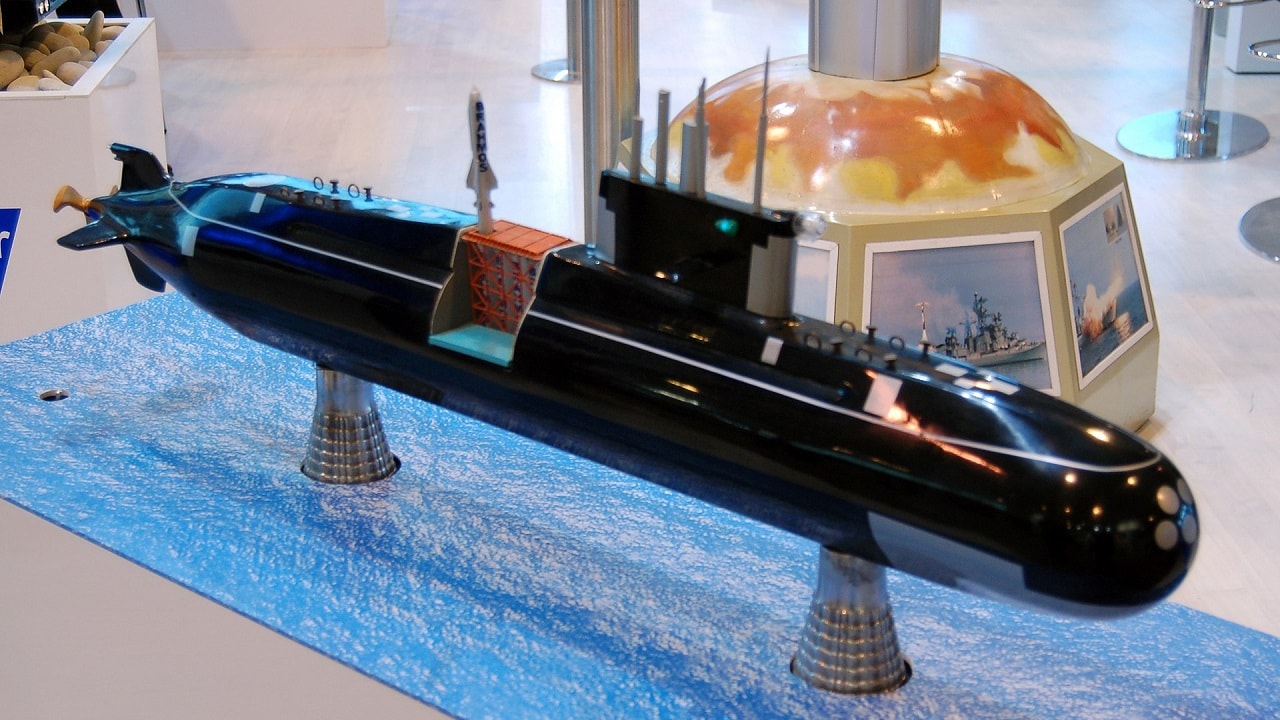
Synopsis: Reports in early 2025 suggested Morocco could be evaluating Russia’s Amur-1650 diesel-electric submarines as it explores acquiring its first undersea force.
-Moscow is pitching the Amur as a modern export-oriented design derived from the Lada program, promising improved stealth, automation, and optional air-independent propulsion for longer submerged endurance.
-On paper, the Amur family offers flexible missions—from sea denial to reconnaissance and, in some variants, cruise-missile launch capability.
-The problem is credibility: the underlying Lada effort has faced delays and performance issues, and Russia has yet to deliver a single Amur boat. Meanwhile, European rivals offer proven platforms, industrial partnerships, and dependable timelines.
In One Word: Failure?
Reports from early 2025 indicated that Morocco could be a potential customer for Russia’s long-touted Amur-1650 diesel-electric submarines, with some outlets indicating that Rabat was evaluating offers alongside bids from European shipbuilders as it seeks to acquire its first submarines.
Russia’s state-linked defense exporters have pitched two Amur-1650 boats as part of the deal, which has become a clear indicator that the Russian program has global interest despite years of delays and zero actual deliveries.
Morocco’s interest in the submarines is the result of budgetary considerations, geopolitics, and the advertised capabilities of the Amur-class – a submarine conceived as a modern, export-oriented successor to earlier diesel submarines.
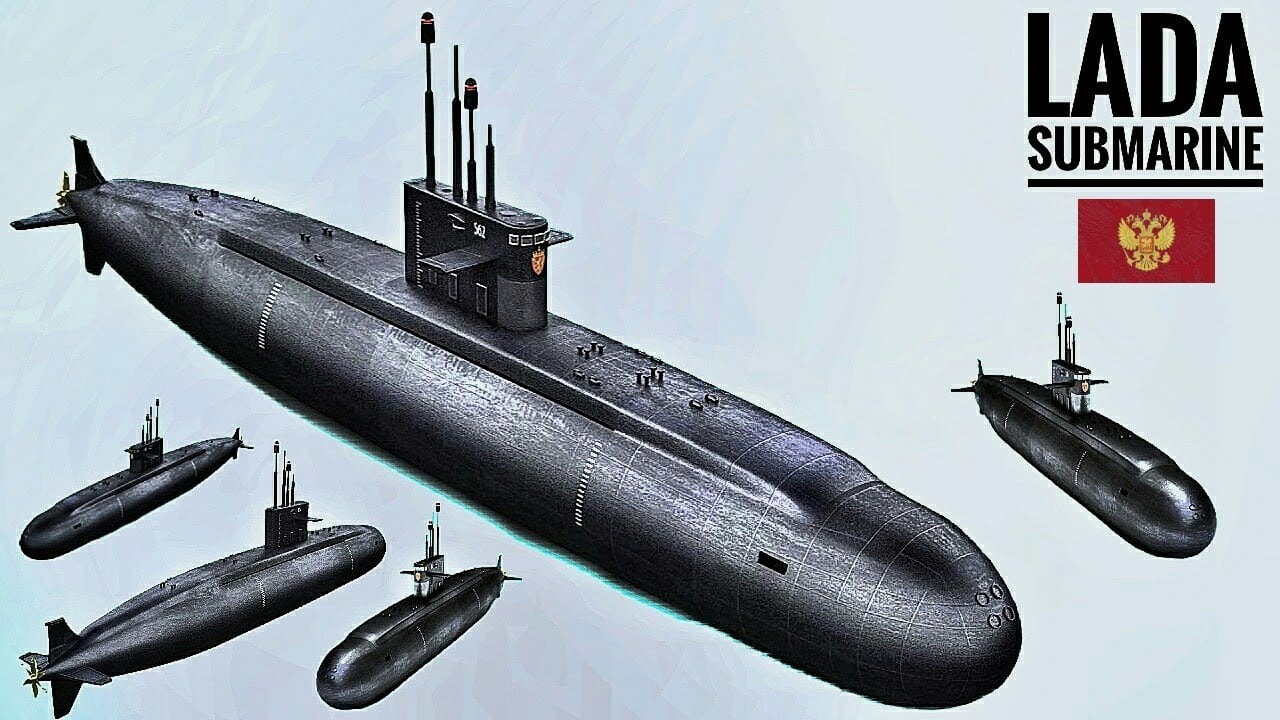
Lada-class Submarine. Image Credit: Creative Commons.
The AMUR-class offers a useful case study in how Russia is attempting to modernize and market its conventional submarine force – and where those ambitions are rubbing up against industrial, operational, and geopolitical constraints.
A Modern Diesel-Electric Concept
The Amur-class designation refers to a family of proposed Russian export submarines derived from the domestic Project 677 Lada design, intended as fourth-generation conventional diesel-electric attack submarines enhanced with stealth, automation, and combat systems.
There are two principal versions being marketed: the Amur-950 and Amur-1650. The numerals indicate the relative displacement of each submarine, with the smaller Amur-950 being designed for littoral and self-defense missions with a surface displacement in the 950–1,065-ton class.
The 950 also features advanced stealth abilities and up to 10 vertical launch system (VLS) cells for cruise missiles – an unusual feature for submarines of this size class.
The larger Amur-1650, meanwhile, is planned to have a surface displacement of around 1,765 tons and a length of around 66.8 meters. The submarine is intended for extended patrols and greater payloads, with six 533 mm torpedo tubes capable of firing torpedoes, mines, or potentially cruise missiles.
Both variants, however, are designed to minimize the noise signatures from machinery operating inside the hull. The reduced noise signatures are achieved through a single-hull design and the use of upgraded, modern machinery that operate more quietly, aimed at lowering detectability relative to older Kilo-class designs.
Optional air-independent propulsion (AIP) systems, likely based on fuel-cell technology, are also offered as an add-on to extend submerged endurance beyond what traditional diesel batteries permit, thereby narrowing the performance gap with nuclear submarines for specific missions.
In concept, the Amur-class offers a versatile conventional submarine option for anti-surface warfare, anti-submarine roles, reconnaissance, and where VLS is present, precision strike missions.
Export Dreams and Harsh Submarine Realities for Russia
Despite its technical promise, the new class of submarines has been plagued by delays, with no deliveries made, and competition is growing globally.
Although Russia and its state arms-export monopoly Rosoboronexport have displayed the design at defense exhibitions, no Amur-class submarine has been completed or commissioned for any navy as of late 2025.
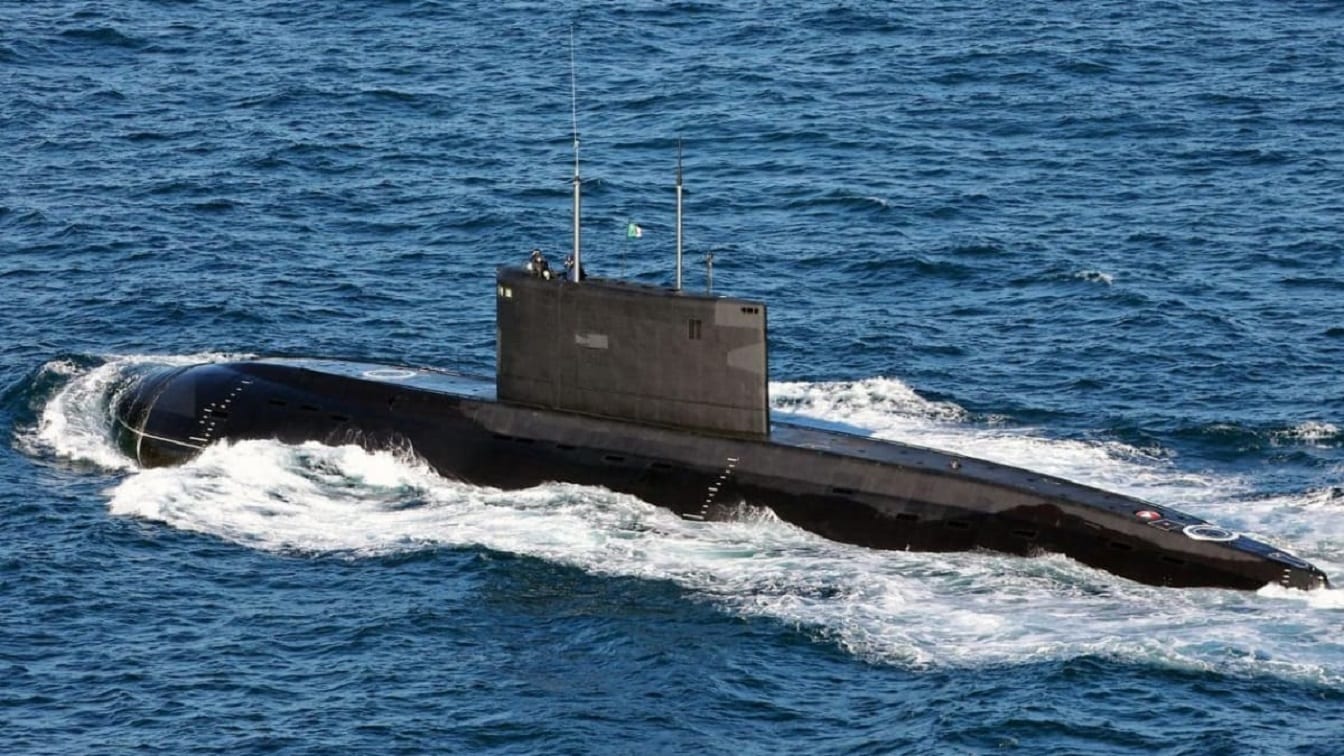
Iran’s Navy Has Kilo-Class Submarines. Image Credit: Creative Commons.
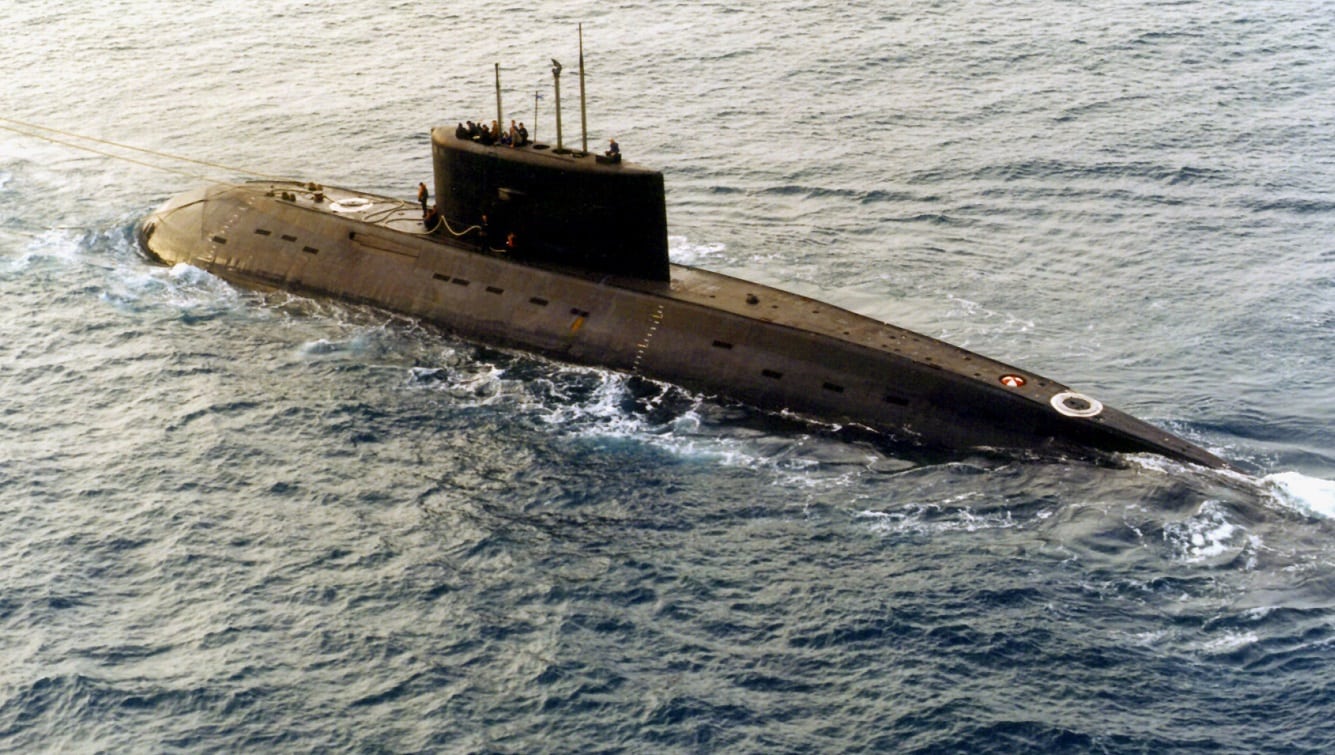
A Russian-built, Kilo-class diesel submarine purchased by Iran, is towed by a support vessel in this photograph taken in the central Mediterranean Sea during the week of December 23. The submarine and the support ship arrived at Port Said, Egypt, on Tuesday and were expected to begin transiting the Suez Canal today, Jan. 2, 1996. Ships and aircraft from the U.S. NavyÕs Sixth Fleet are tracking the submarine, which has been making the transit on the surface. This is the third Kilo-class submarine the Iranians have purchased from Moscow. DoD photo
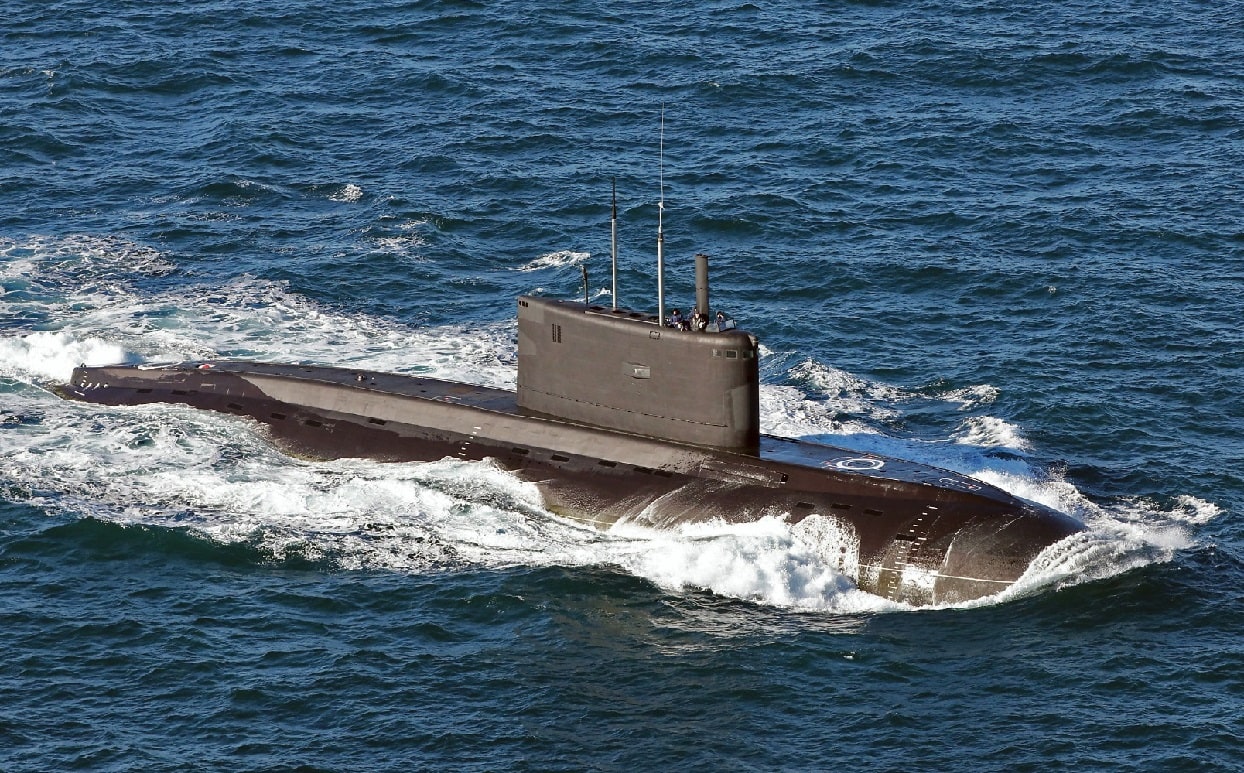
Kilo-class Submarine. Image Credit: Creative Commons.
A key factor in the stalled progress has been the parallel problems with the development of the Lada-class (Project 677), on which the Amur design is based.
The Lada program has experienced repeated delays and performance problems with its own submarines, leaving the export variant without a robust foundation from which to build, and therefore, no clear proof of concept. It’s a markedly different story from that of the Kilo-class submarines, which are widely considered to be among the quietest diesel boats ever built and which are currently being fielded by multiple navies.
The export market for conventional submarines is also quite competitive. European designs like France’s Scorpene class and Germany’s Type 214/A-series have secured contracts in Asia, Africa, and South America – and typically offer stronger industrial partnerships, technology transfers, and reliable delivery schedules than what Russia can offer.
And then there’s the geopolitical issue for Russia. Western sanctions tied to the Ukraine conflict have already constrained access to financing and specific technologies, impacting Russia’s broader defense industrial base and, by extension, its ability to deliver complex submarines on export timelines.
For now, the Amur-class is a design still seeking a customer willing to accept a significant developmental risk.
While reported interest from Morocco suggests Russia can still attract attention in the conventional submarine market, no contracts have been signed and no hulls have been laid down. By contrast, rival European platforms are already in service with multiple navies.
Until Russia can demonstrate serial production, resolve Lada-class technical issues, deliver a completed Amur-class submarine, and perhaps even bring an end to sanctions that are causing significant problems for its industrial base, the platform is likely to remain more of a symbol of Moscow’s export ambitions make it a credible competitor in the global submarine market.
About the Author:
Jack Buckby is a British author, counter-extremism researcher, and journalist based in New York who writes frequently for National Security Journal and 19FortyFive. Reporting on the U.K., Europe, and the U.S., he analyzes and understands left-wing and right-wing radicalization and reports on Western governments’ approaches to the pressing issues of today. His books and research papers explore these themes and propose pragmatic solutions to our increasingly polarized society. His latest book is The Truth Teller: RFK Jr. and the Case for a Post-Partisan Presidency.