
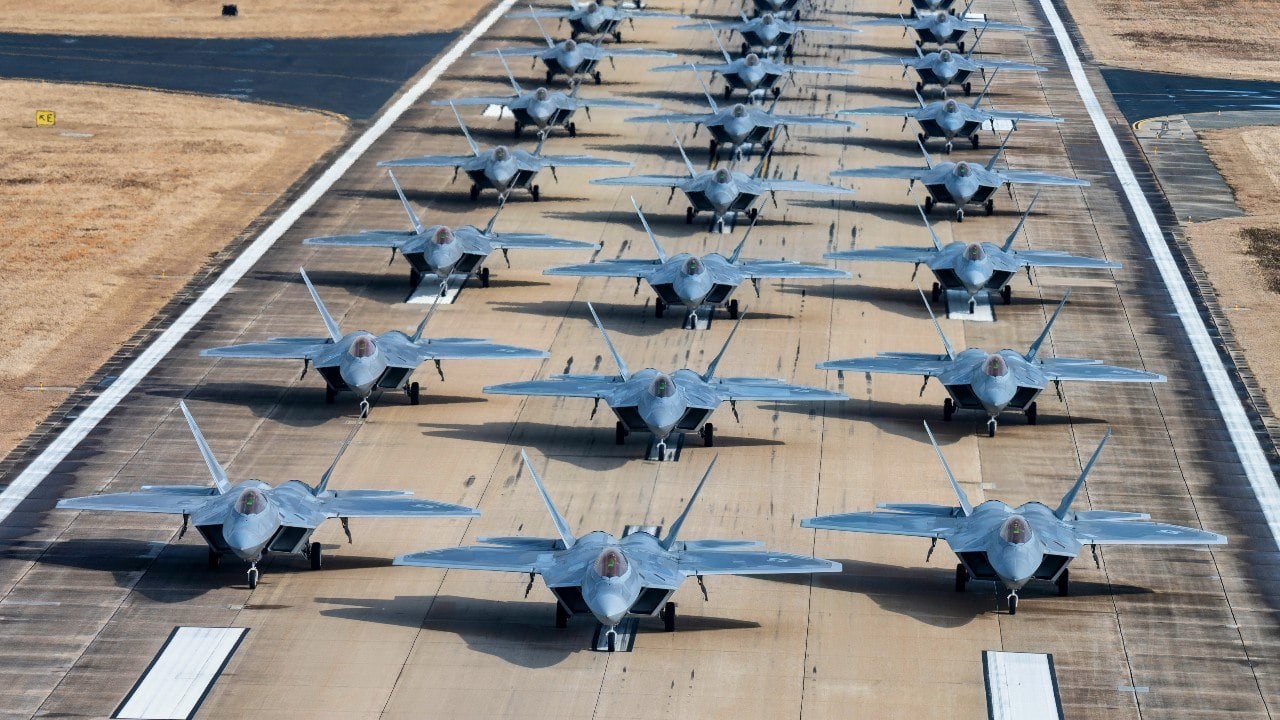
A $201 million F-22 Raptor was destroyed because of a mistake someone made while washing it. The Air Force sealed the investigation and refused to tell the public what went wrong.
The Mighty F-22 Raptor Goes Down for the Strangest of Reasons
If Operation Epic Fury has concluded, the F-22 Raptor’s performance should be considered a success.
Flying strike missions around the clock, it proved fully survivable.
For many years, it was viewed only as an air superiority dogfighter, limiting its combat use during the Global War on Terror. Now it can deliver air-to-surface bombs and missiles to eliminate enemy targets on the ground.
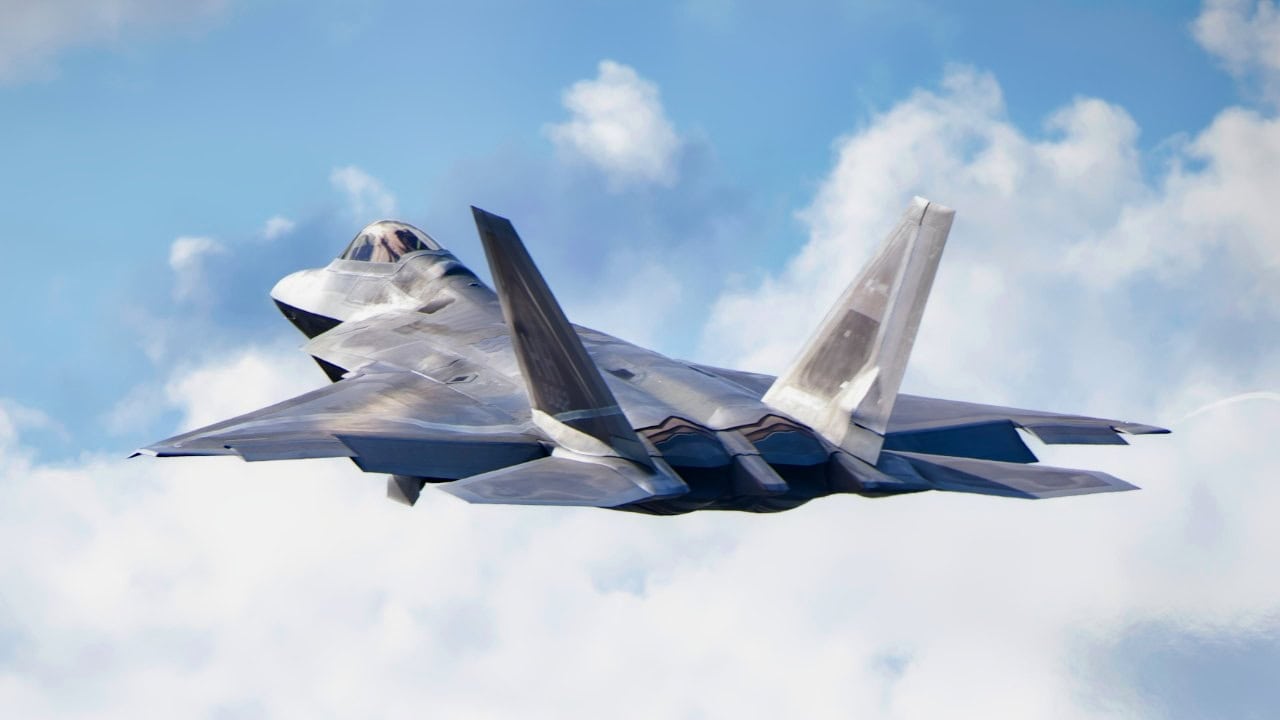
An F-22 Raptor aircraft takes off from Joint Base Pearl Harbor-Hickam, Hawaii, Aug. 8, 2024. The F-22 Raptor is a fifth-generation stealth fighter designed for air dominance, with capabilities in precision attack, advanced avionics, and unparalleled maneuverability. (U.S. Air National Guard photo by Tech. Sgt. Joseph Pagan)
May 2020 F-22 Crash Had Some Concerned
However, like many fighter jets with high operational tempo and sortie rates, the F-22 has not been immune to accidents. One crash has largely been forgotten, but it was a shock when it happened.
An F-22 went down in May 2020 near Eglin Air Force Base in Florida. The pilot ejected safely but sustained only minor wounds and recovered.
Maintenance Error Began a Cascade of Problems
An investigation revealed that a “maintenance error [was] made after the aircraft was washed,” according to a U.S. Navy spokesperson, as noted by the Air Force Times. Reports at the time note that the wash made the flight control system fail, preventing the pilot from controlling the aircraft.
The F-22 from the 43rd Fighter Squadron of the 325th Fighter Wing was conducting a routine patrol mission.
The aircraft was flying about 12 miles from the base when the accident occurred.
The Raptor Was Hard to Control Safely
The mechanical problem “impacted control inputs transmitted to the aircraft.” The issue began during takeoff, and the pilot had his hands full from the start.
“Upon takeoff, the pilot noticed a flight control system advisory and elected to continue the takeoff,” the spokesperson said. “Shortly after the aircraft became airborne, the pilot began having trouble controlling it and declared an emergency. While a recovery plan was being coordinated, the pilot continued to have issues with the aircraft and ejected.”
Expensive Wreck In a Dangerous Year for Stealth Flight
No civilian property damage occurred, and no citizens were killed or injured. The loss of the F-22 cost the U.S. Air Force $201 million. This was not a good look for the 325th Fighter Wing, which experienced eight other problems with its F-22s in 2020.
What Did the Investigation Reveal?
The Air Force wondered whether this was a fleet-wide problem requiring a complete grounding of F-22s. “A commander-directed investigation and a safety investigation board took place,” according to the Air Force Times. However, the Air Force refused to make the full report public after the inquiry.
Not the Best Way to Handle Crash Information
This is where the story gets complicated: the investigation’s details became convoluted as the Air Force tried to spin its reporting of the event. The Air Force Judge Advocate waived the Accident Investigation Board (AIB) report. These documents often provide more detail about incidents such as the F-22 crash in Florida. The Air Combat Command was reticent about sharing additional information.
This could have been because there were so many F-22 accidents that year involving the 325th Fighter Wing. This should not have been seen as a cover-up, but the lack of complete information was concerning to the media covering the incident.
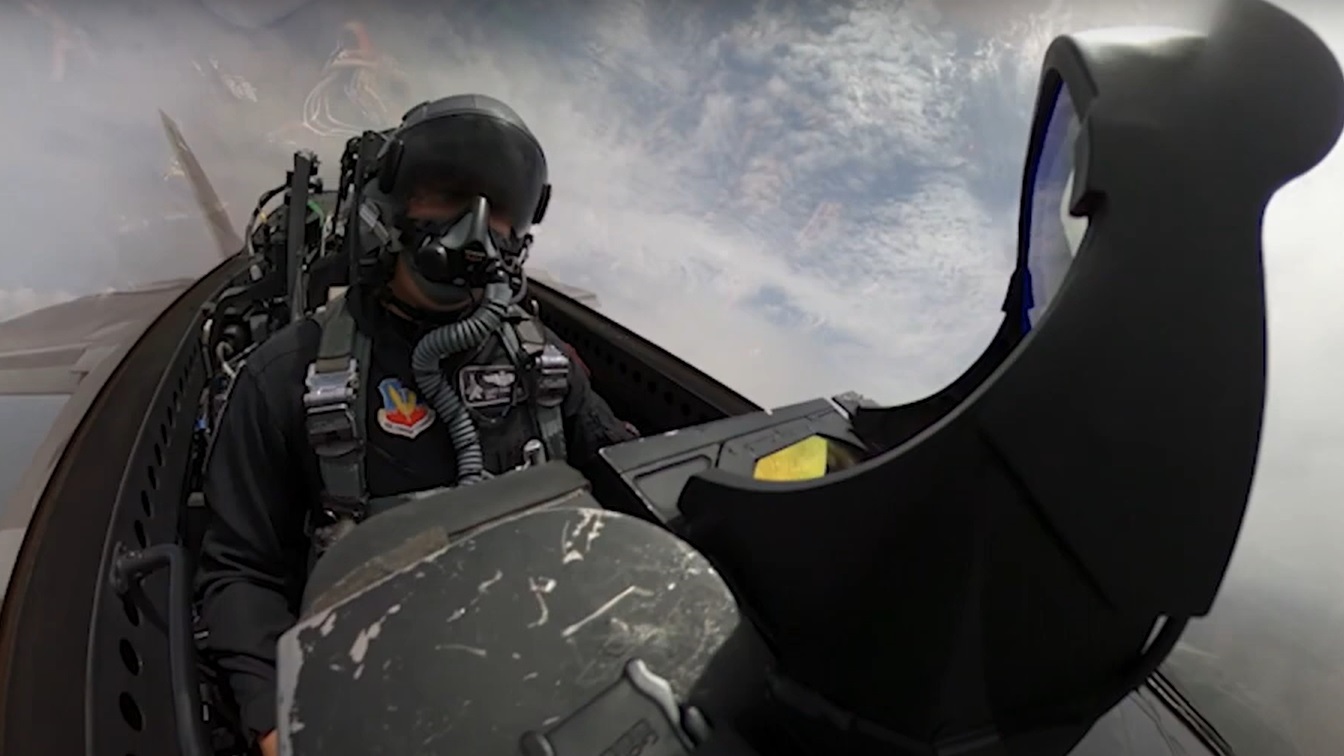
Maj. Joshua “Cabo” Gunderson, F-22 Demo Team pilot and commander, preforms a F-22 Raptor demonstration at the Space Coast Int. Air Show, May 22, 2022, with this video taken from inside the cockpit of an F-22.
F-35 Went Down Shortly After
It wasn’t just the F-22 that had been having problems. An F-35 also crashed at Eglin in May 2020, a week later.
The Air Force said the crash was caused by “excessive landing speed, exacerbated by issues with the pilot’s helmet-mounted display.”
“Even though Air Education and Training Command conducted an Accident Investigation Board [AIB] to investigate the second incident, the F-35 Joint Program Office said any corrective measures from the crash would remain secret,” according to Air and Space Forces magazine.
Air and Space Forces also revealed, “While most Class A mishaps result in publicly released reports, it is unclear how often commanders waive the requirement to provide the public with the investigation. In fiscal 2020, the Air Force reported 29 total Class A mishaps, including 14 destroyed aircraft. The public repository for AIBs lists nine reports for the destroyed aircraft. Air Education and Training Command did not conduct an AIB for an Afghan Air Force A-29 Super Tucano that crashed in Afghanistan because the USAF did not own the aircraft. It is unclear what the remaining aircraft are.”
It is clear that 2020 was not a good year for Air Force aircraft safety. Because stealth jets are considered top secret and carry sensitive systems, the service branch rarely releases all the details of investigations to the public.
Keeping the Public Better Informed
The Air Force has to balance the public’s right to know with the need for operational security, but it must recognize that, given the many accidents that year, more information should have been released.
This should not undermine the Air Force’s success during Operation Epic Fury.
The F-22 and F-35 have performed exceptionally well. Both aircraft have experienced their share of accidents and mishaps, and valuable lessons have been learned.
However, the Air Force must understand that more information should be released during adverse incidents.
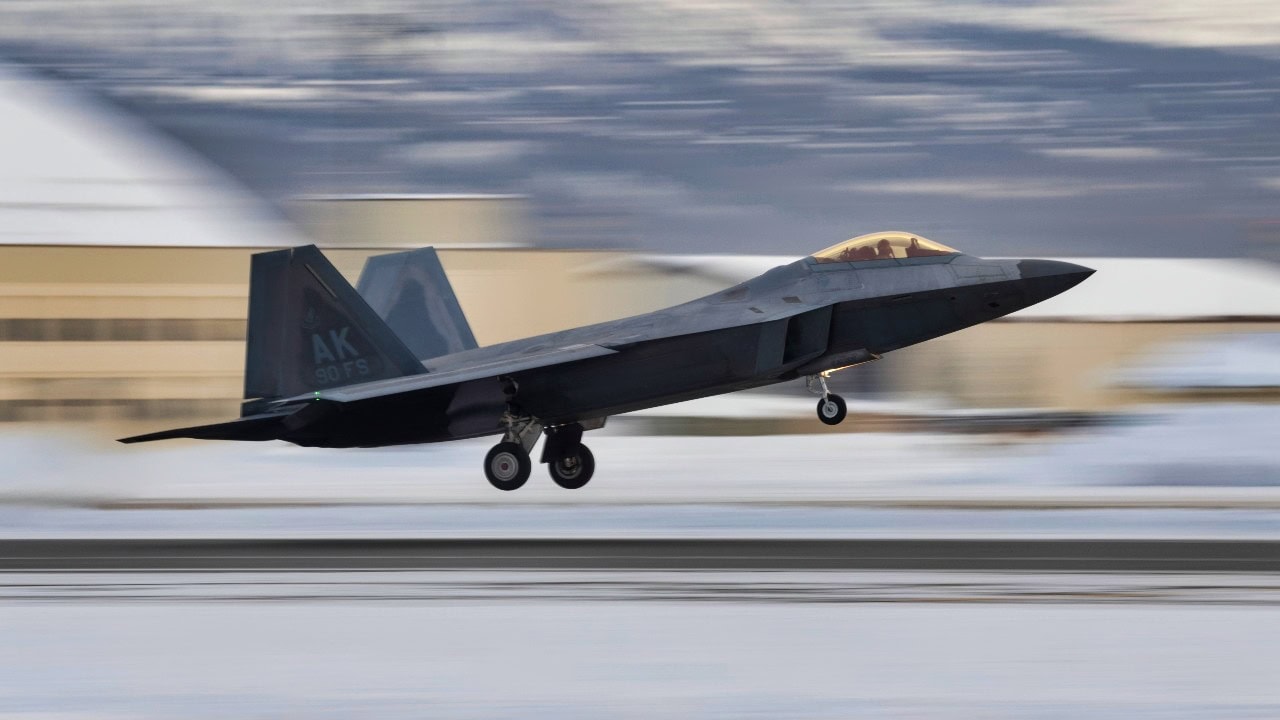
A U.S. Air Force F-22 Raptor assigned to the 3rd Wing takes off from Joint Base Elmendorf-Richardson, Alaska, Nov 21., 2023. The F-22 Raptor is a critical component of the Global Strike Task Force, and is designed to project dominance rapidly and at a great distance to defeat threats. (U.S. Air Force photo by Alejandro Peña)
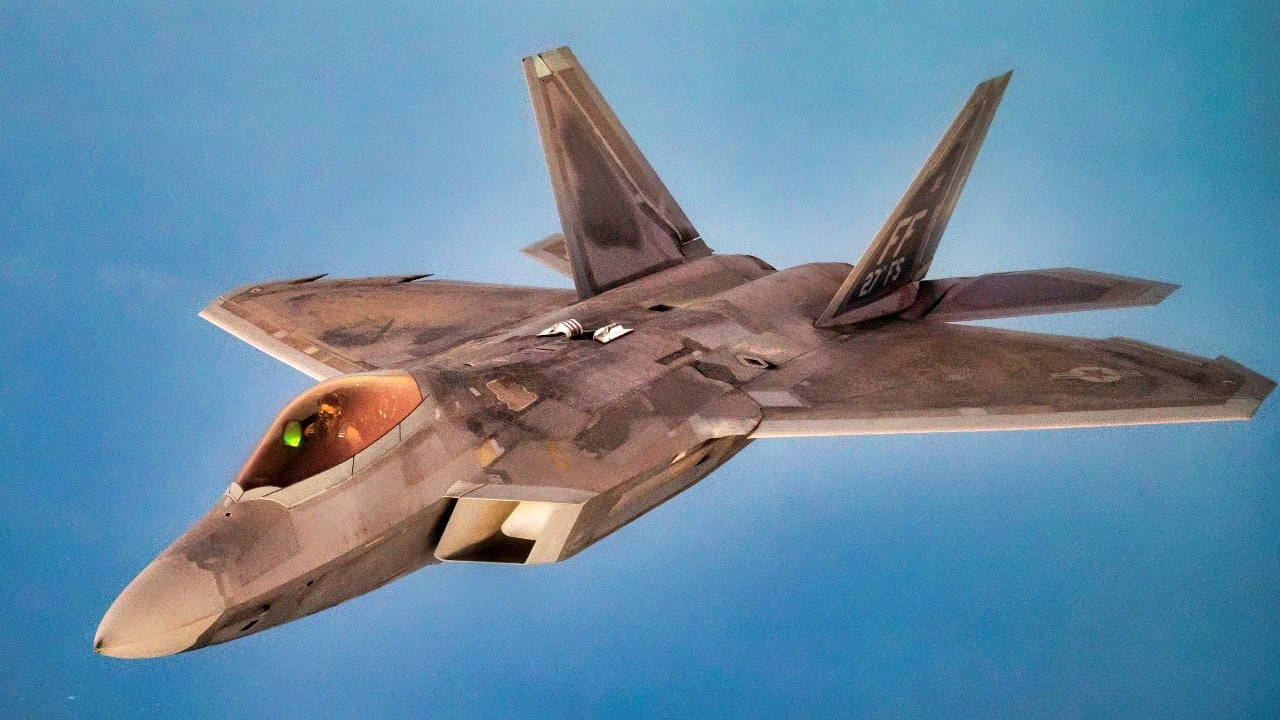
A U.S. Air Force F-22 Raptor soars above the United Arab Emirates March 16, 2022. The F-22 Raptors were rapidly deployed on order from the U.S. Secretary of Defense in coordination with the Abu Dhabi Crown Prince and have joined a range of joint, coalition, and allied and partner combat airpower capabilities already based across the region. (U.S. Air Force photo by Tech. Sgt. Christopher Ruano)
The good thing is that the Air Force learns from these types of problems and can fix mechanical and maintenance issues so they do not happen again.
Operation Epic Fury has shown that F-22s and F-35s have performed well so far, and no stealth airplanes have been downed as of April 10.
About the Author: Dr. Brent M. Eastwood
Author of now over 3,500 articles on defense issues, Brent M. Eastwood, PhD, is the author of Don’t Turn Your Back On the World: A Conservative Foreign Policy and Humans, Machines, and Data: Future Trends in Warfare, plus two other books. Brent was the founder and CEO of a tech firm that used artificial intelligence to predict world events. He served as a legislative fellow for US Senator Tim Scott and advised the senator on defense and foreign policy issues. He has taught at American University, George Washington University, and George Mason University. Brent is a former US Army Infantry officer. He can be followed on X @BMEastwood.