The U.S. Navy has sealed every Iranian port — no ship of any nation gets in or out. If Iran fires a single missile at the blockade force or a passing commercial vessel, the ceasefire is over, and the war restarts immediately.
The Blockade of Iran Is About to Begin
U.S. Navy warships are taking control of the Strait of Hormuz, using radar, sheer firepower, and maritime “force” to blockade all Iranian ports and “clear” the area of mines.
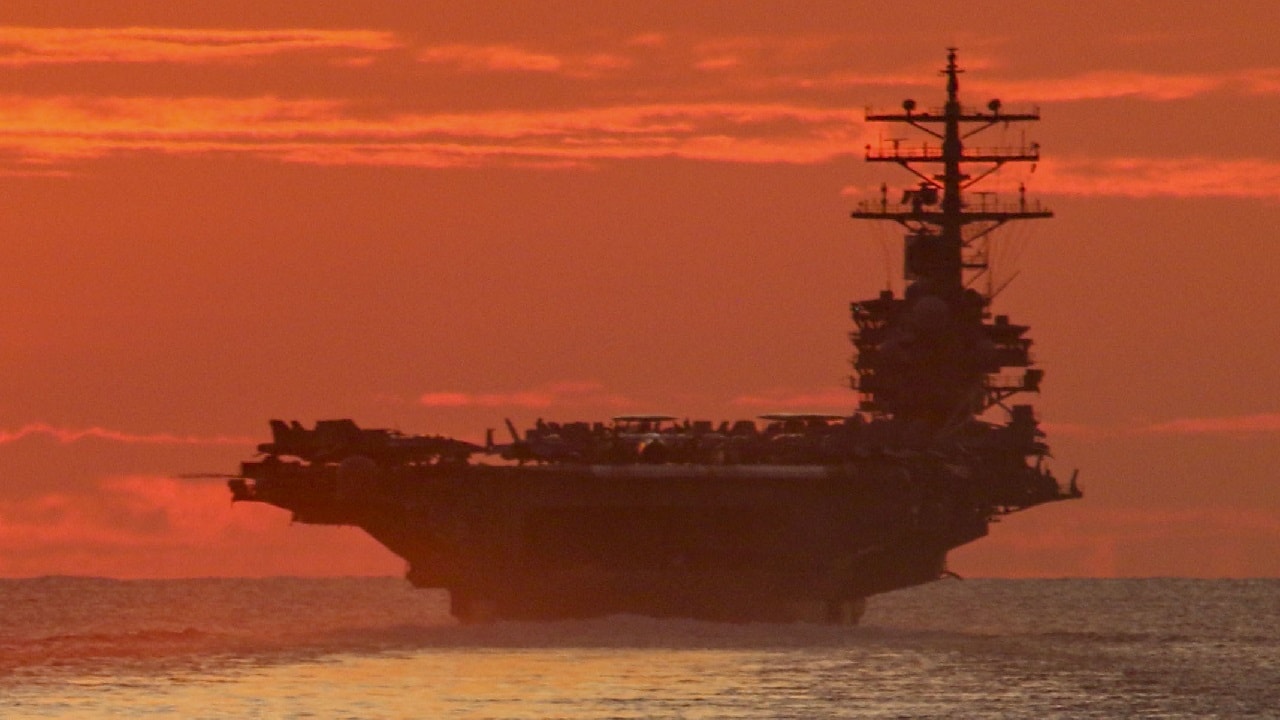
STRAIT OF MALACCA (June 18, 2021) The Navy’s only forward-deployed aircraft carrier USS Ronald Reagan (CVN 76) transits the South China Sea with the Arleigh Burke-class guided missile destroyer USS Halsey (DDG 97) and the Ticonderoga-class guided-missile cruiser USS Shiloh (CG 67). Reagan is part of Task Force 70/Carrier Strike Group 5, conducting underway operations in support of a free and open Indo-Pacific. (U.S. Navy Photo by Mass Communication Specialist 1st Class Rawad Madanat)
President Trump announced the blockade after peace talks in Islamabad failed to generate a breakthrough, given Iran’s continued insistence on pursuing its nuclear capability and unwillingness to give up control of the Strait of Hormuz.
Iran Port Shut Down
Therefore, U.S. naval firepower will now ensure that no maritime traffic enters or leaves Iranian ports on the Arabian Gulf or the Gulf of Oman.
Following the President’s announcement of the blockade, U.S. Central Command issued a statement explaining that “all vessels of all nations” will be blocked from entering Iranian ports, but that there will be “freedom of Navigation for vessels transiting the Strait of Hormuz to and from non-Iranian ports.”
The question this raises is clear: the Iranian reaction will drive the U.S. Navy’s next steps.
Should Iran fire ballistic missiles at U.S. or commercial ships allowed to pass through the blockade, serious military conflict could resume quickly.
The blockade will likely involve a well-armed U.S. Navy Carrier Strike Group, including destroyers, cruisers, and a carrier capable of quickly launching carrier-based attack jets.
Given that the U.S. operates largely with air superiority, the area will likely be blanketed with surveillance from drones, satellites, and fixed-wing reconnaissance aircraft.
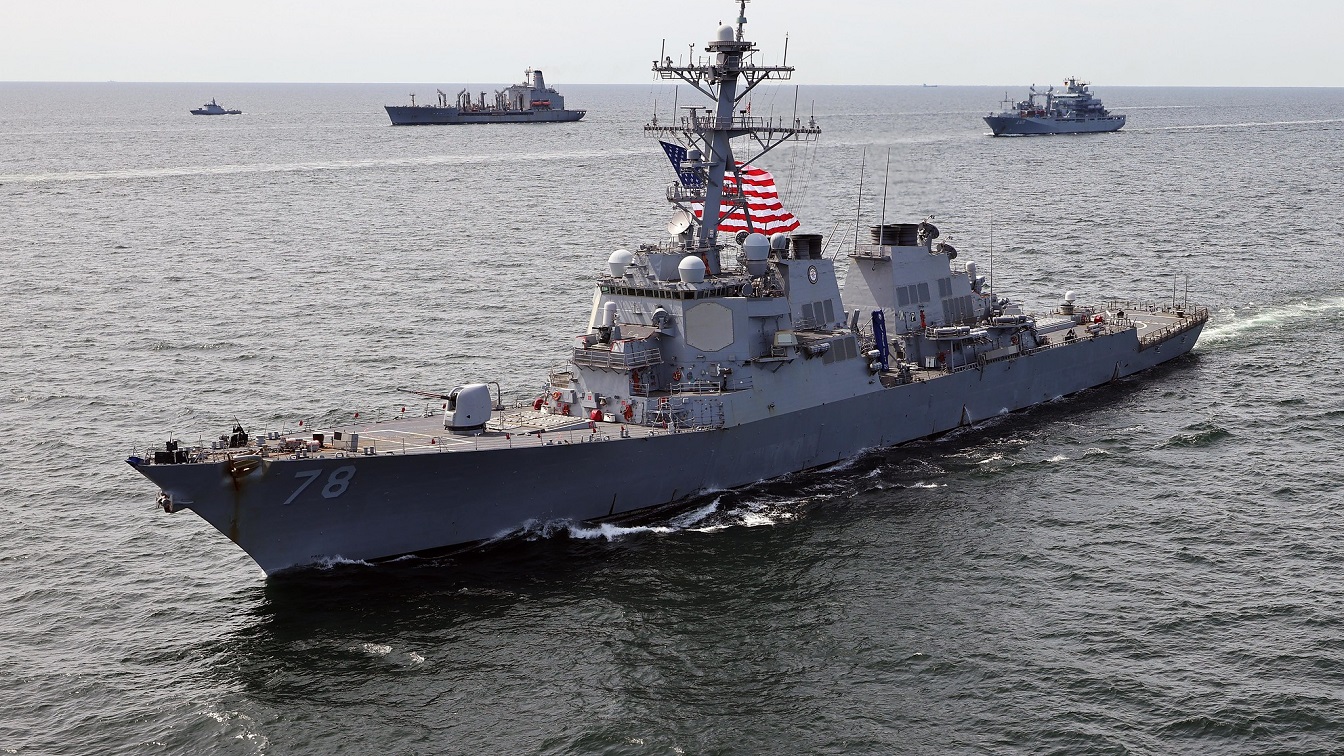
BALTIC SEA (June 6, 2022) The Arleigh Burke-class guided-missile destroyer USS Porter (DDG 78) sails in formation in the Baltic Sea, June 6, 2022, during exercise BALTOPS22. BALTOPS 22 is the premier maritime-focused exercise in the Baltic Region. The exercise, led by U.S. Naval Forces Europe-Africa, and executed by Naval Striking and Support Forces NATO, provides a unique training opportunity to strengthen combined response capabilities critical to preserving freedom of navigation and security in the Baltic Sea. (U.S. Navy photo) 220606-N-NO901-3008
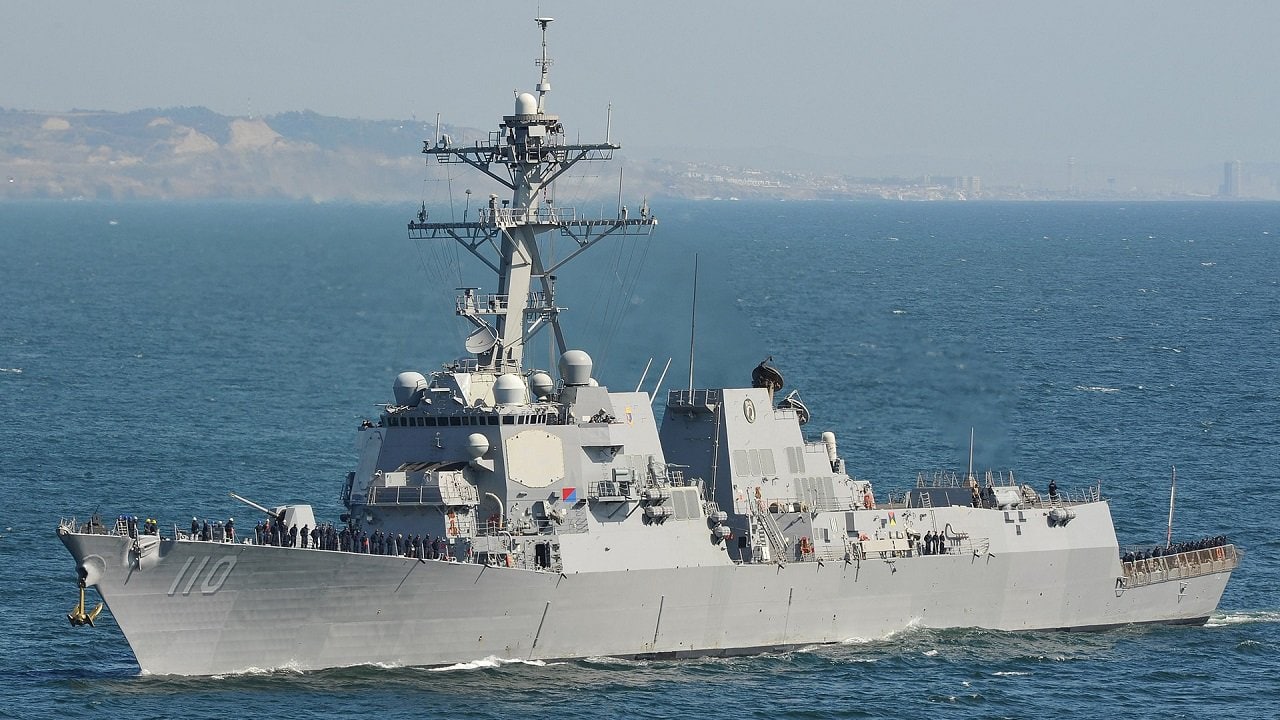
PACIFIC OCEAN (May 4, 2015) – The guided-missile destroyer USS William P. Lawrence (DDG 110) steams toward San Diego Harbor. (U.S. Navy photo by Mass Communication Specialist 3rd Class Nathan Burke/Released)
Red Sea Experience
While the Iranian threat in the Strait of Hormuz is certain to be more serious than that posed by the Houthis in the Red Sea in recent years, the Navy has specific countermeasure protocols, doctrinal practices, weapons systems, layered defenses, and coordinated command and control to “see” the area and “defend” as necessary.
A Carrier Strike Group is equipped with numerous responsive options, including specific weapons and tactics designed to counter drone and small-boat swarms. Surveillance aircraft, drones, and satellites will be in position to quickly “detect” Iranian small boats, and the Navy has the sensors and weapons to destroy them at stand-off ranges before they can get close enough to attack.
This can be coordinated through aerial surveillance, fighter jets positioned to fire precision air-to-surface weapons at moving boats, and closer-in ship defenses such as Close-in-Weapons-System (CWIS). The CWIS weapon is a deck-mounted Phalanx gun that fires 4,500 rounds per minute at incoming projectiles, using small tungsten-steel interceptors to “blanket” threats with suppressive fire.
Closer-in layered defenses also include missiles such as SeaRAM and Rolling Airframe Missile, as well as precision-guided interceptors capable of targeting and destroying maneuvering small boats at stand-off ranges.
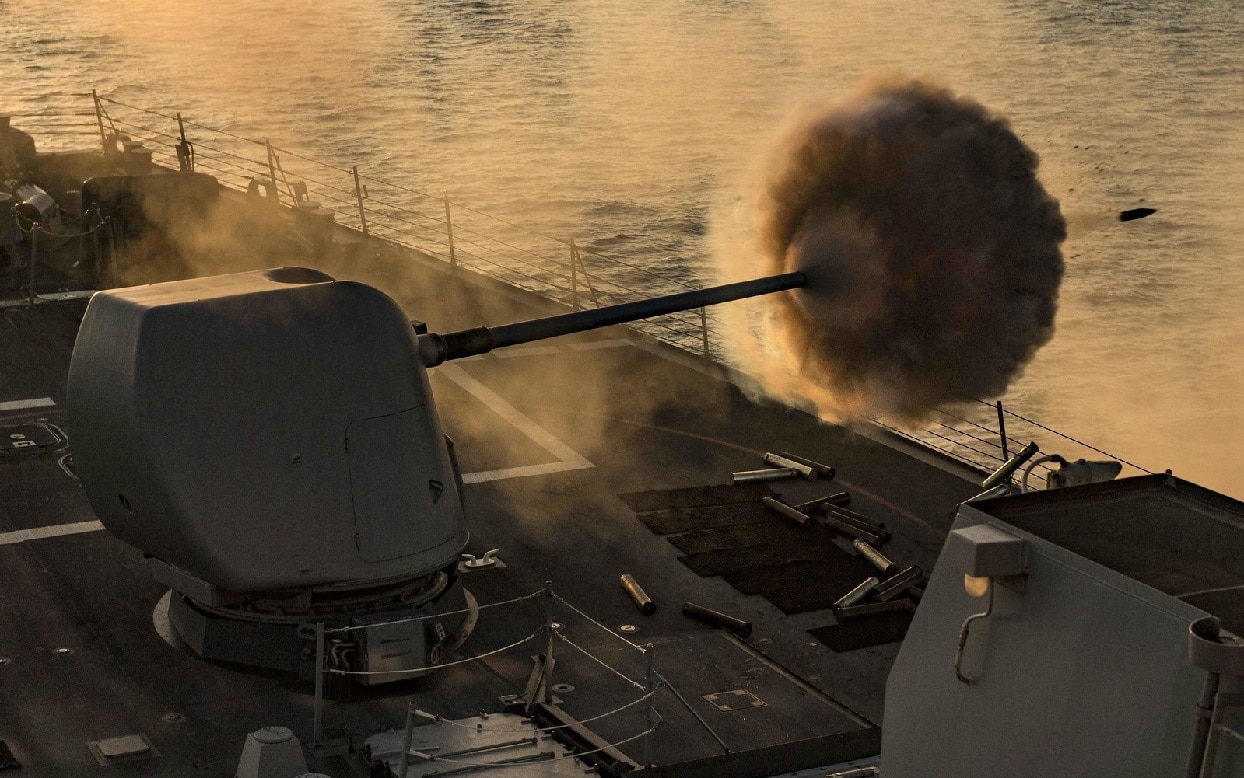
MEDITERRANEAN SEA (Sept. 24, 2018) The Arleigh Burke-class guided-missile destroyer USS Carney (DDG 64) fires its 5-inch gun during a live-fire exercise, Sept. 24, 2018. Carney, forward-deployed to Rota, Spain, is on its fifth patrol in the U.S. 6th Fleet area of operations in support of regional allies and partners as well as U.S. national security interests in Europe and Africa.
Warships such as Arleigh-Burke-class destroyers are also armed with 5-in deck-mounted guns, able to target small boats approaching from different angles simultaneously.
Drone vs Drone
Most recently, U.S. Navy warships have been armed with deck-launched counter-drone “drones” armed with proximity fuzes. These are extremely significant, as they can be fired to a specific target “area” in close “proximity” to a drone swarm and explode or detonate across an “area” to disable, degrade, or stop attacking drone swarms.
One such example is the Coyote drone, which has already been integrated into armored vehicles to counter drone swarms; the Navy has now configured the weapon for ship-launched counter-drone operations.
A few key lessons learned from the Red Sea include the use of carrier-launched fighter jets for targeting missions, aerial surveillance to see drones and cruise missiles from beyond the horizon, or weapons platforms able to “shoot” and destroy threats from the air.
Yet another key lesson from the Red Sea, according to Navy commanders, is that a “deep magazine” is needed to counter drones. Naval commanders from the Red Sea also say they learned new lessons about multi-domain command and control, meaning the value of connecting space assets with air surveillance and ground-based nodes to ensure an integrated threat picture.
Marine Air Defense Integrated System
Another critical tactic is now in place on U.S. Navy aircraft carriers and amphibious assault ships, involving U.S. Marines using tactical combat vehicles on the decks of warships to conduct counter-drone operations.
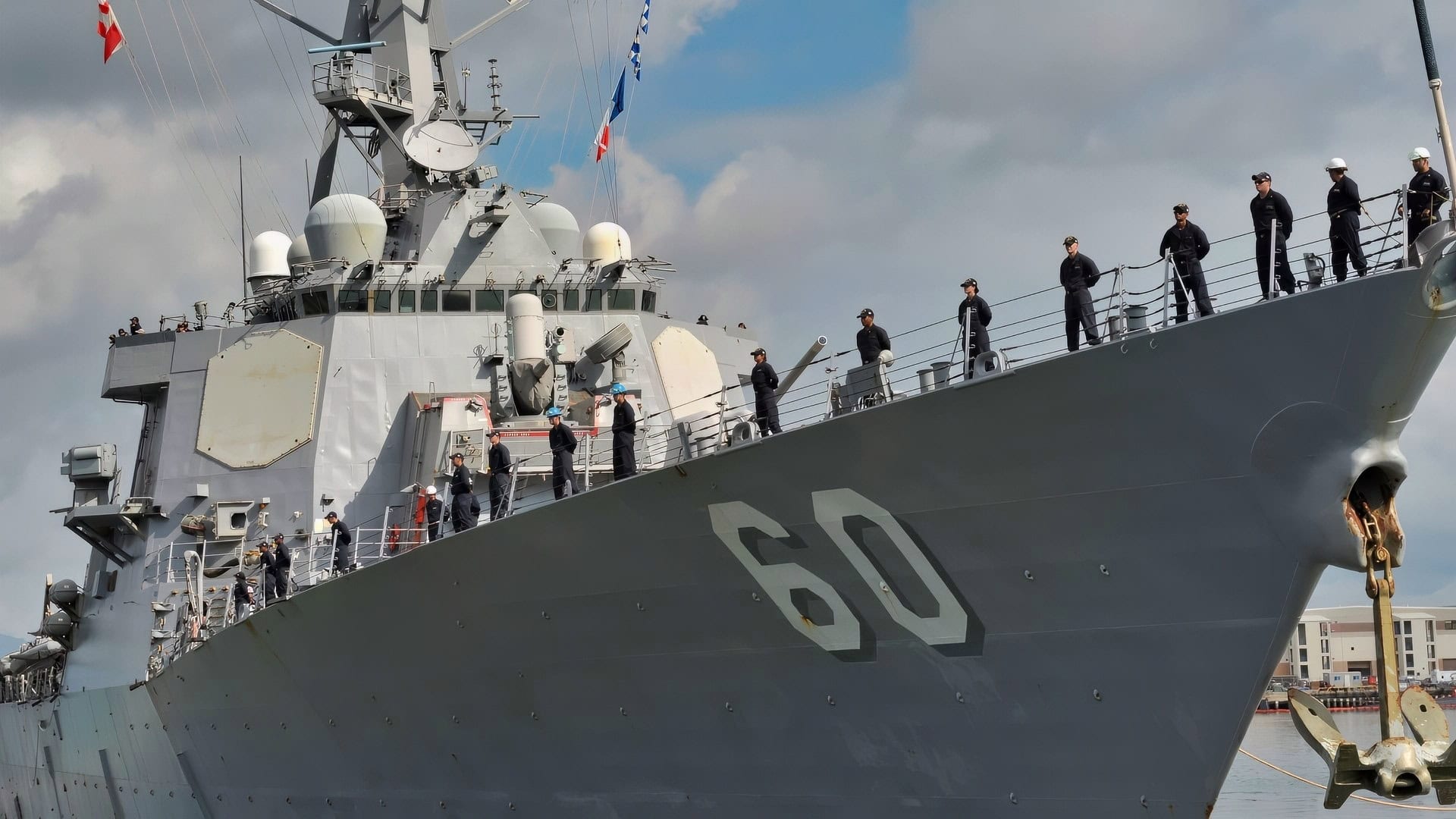
U.S. Navy Destroyer in Port. Image Credit: Creative Commons.
Small tactical vehicles are now integrated with a system called Marine Air Defense Integrated System (MADIS), a suite of counter-drone technologies positioned around the perimeter of the ship deck to track incoming drones and drone swarms; MADIS uses electronic warfare, advanced sensors, and heat-seeking, shoulder-launched Stinger missiles to counter enemy drones, helicopters, and low-flying fixed-wing aircraft.
These Marine units add an additional layer of drone swarm protection to surface ships, increasing both surveillance and countermeasures from the deck.
Island Hopping?
An unknown “x” factor in all of this is the prospect of some kind of amphibious operation; the USS Tripoli is also in the Gulf with 2,000 Marines, Osprey tiltrotors, and F-35Bs all in position to support some kind of sea-air-land incursion in case they were ordered to seize and hold some island territory.
With undersea unmanned systems, surface drones, a protective envelope provided by Aegis radar on destroyers, air support, and suppressive fire from large warships, it seems conceivable that an amphibious force could perform some kind of limited “island hopping” or amphibious operation.
MORE: The Iran Blockade Has a China Problem
About the Author: Kris Osborn
Kris Osborn is the President of Warrior Maven – Center for Military Modernization. Osborn previously served at the Pentagon as a highly qualified expert in the Office of the Assistant Secretary of the Army—Acquisition, Logistics & Technology. Osborn has also worked as an anchor and on-air military specialist at national TV networks. He has appeared as a guest military expert on Fox News, MSNBC, The Military Channel, and The History Channel. He also has a Masters Degree in Comparative Literature from Columbia University