
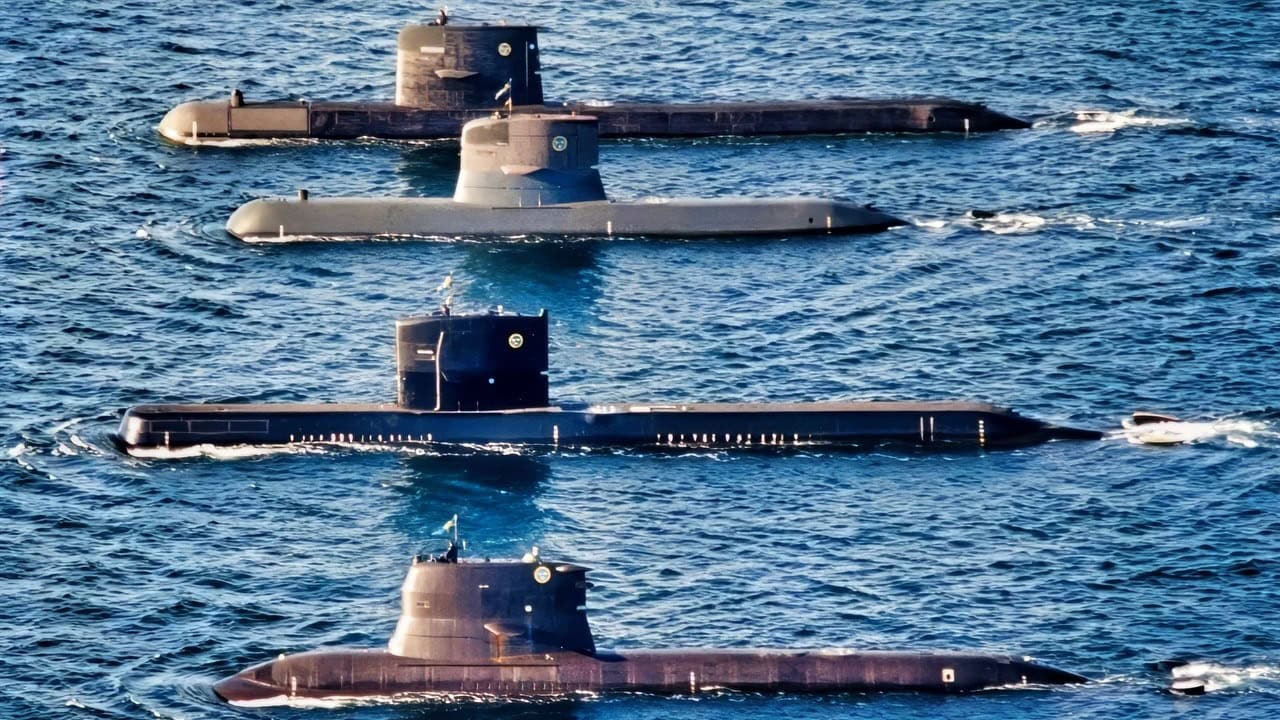
Do you ever wonder why the U.S. Navy wants only nuclear-powered and not diesel-electric submarines? Diesel-electrics are much less expensive and easier to build. They can be extremely stealthy and even have snuck up and “sank” American warships during training exercises. The diesel-electric submarines with Air-Independent Propulsion (AIP) are as quiet as a baby dolphin. They can be quick and agile – able to sneak around carrier strike groups with ease.
The U.S. Navy prefers its nuclear-powered subs for their global reach and range. The subs can stay out to sea for months when replenished regularly. They have high speed and outstanding maneuverability, too.
Nuclear-Powered Subs Enable a Global Strike Blue-Water Navy
Nuclear-powered boats give the United States a true blue-water navy that can strike the enemy with conventional cruise missiles or nuclear missiles anywhere and anytime. Plus, an all-nuclear-powered fleet offers economies of scale and efficiency in the building and maintenance procedures needed to keep them in the water for extended periods.
AIP Diesel-Electrics Are Better for Smaller Navies
AIP diesel-electric subs are well-suited to nations with smaller navies and limited defense budgets. They can protect littoral waters, conduct policing patrols for better homeland security, and spoof and confuse enemy anti-submarine warfare efforts.
What Is the Difference Between Diesel-Electrics and Nuclear-powered Subs?
USNI wrote that “the big difference between a nuclear-powered submarine and a conventional diesel-electric boat is underwater range and performance. Size, noise, layout, weapons, sensors, and so forth are simply the consequences of the type of propulsion adopted.”
Also, diesel-electric boats must “snorkel” close to the surface when the engines are running and the batteries are charging. AIP subs can remain submerged for weeks. They may be non-nuclear, but they have exceptional endurance in the absence of atmospheric oxygen. This is like having an extra power plant. AIPs are also very quiet and able to sneak through the gauntlet of a carrier strike group.
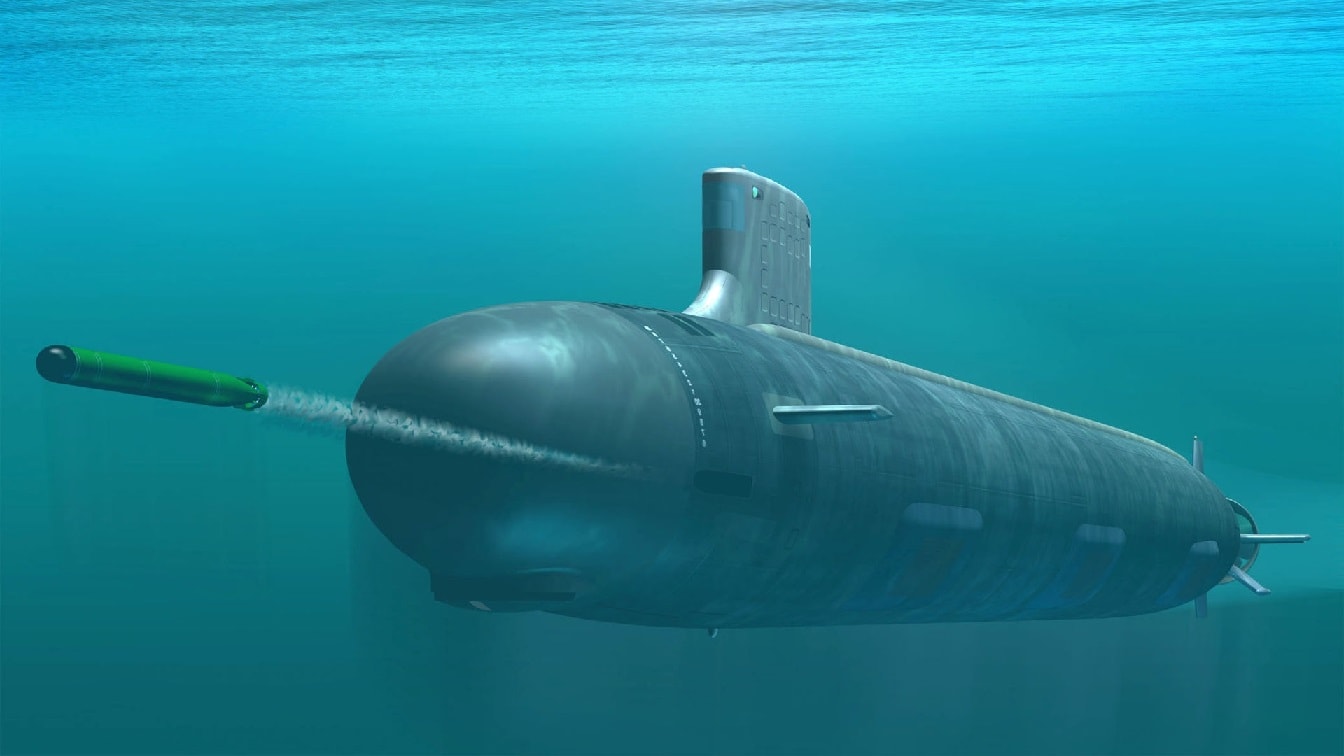
Image of Virginia-Class Submarine. Image Credit: Creative Commons.
AIPs Have Their Advantages
AIPs are not maintenance-heavy and can remain at sea for less money. These are perfect for countries seeking the best undersea warfare assets at a lower cost than nuclear-powered boats.
Sometimes, AIP subs can be as quiet as nuclear-powered models because the pumps in nuclear power plants can be detected by enemy sonar. Meanwhile, fuel cells on AIPs make less noise.
Swedish Gotland-class AIP Subs Are Outstanding
Sweden is known for its expertise in AIP. The Gotland-class boats are excellent, and countries such as China have also added AIP power plants to their diesel-electric subs. The U.S. Navy has not built a diesel-electric sub since the 1950s
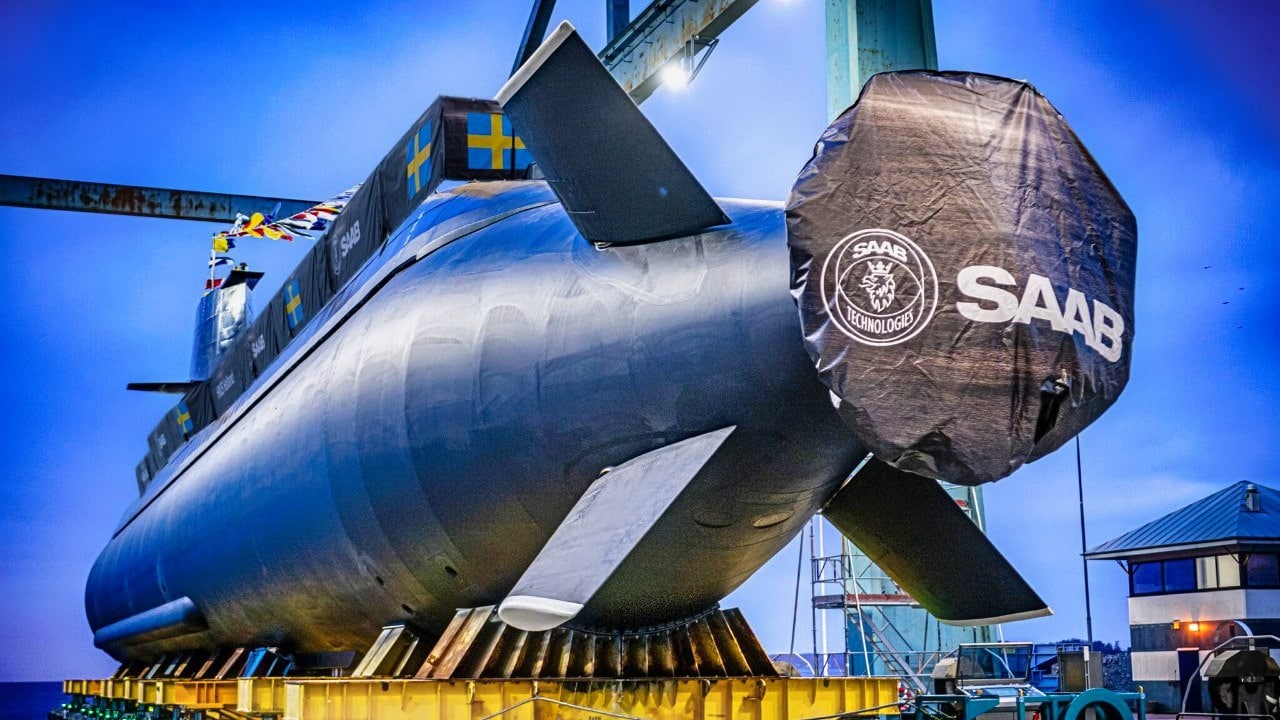
Gotland-Class. Image Credit: Saab.
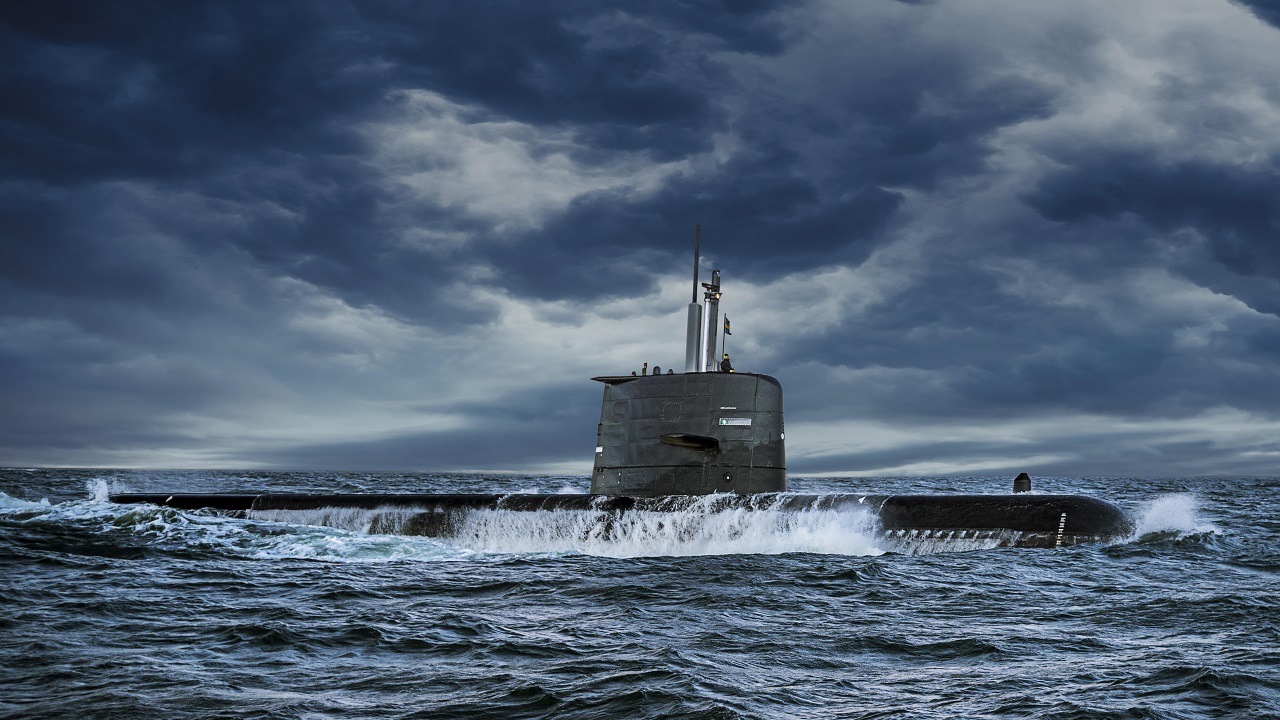
Gotland-Class. Image Credit: Saab.
Would the Americans Go With AIPs?
It is possible that the Navy could buy a small number of AIPs to patrol close to shore. These could be effective at homeland defense. They would not have the range of a nuclear sub, but that worldwide reach would not be necessary. The fleet could continue to work on new nuclear models, such as the Virginia-class, and also focus on AIPs.
This Comes With Many Problems
But this would be problematic. Construction would require new shipyards and specially-trained workers. The AIP systems would have to be designed, and nuclear engineering experts would have to be cross-trained to work on diesel-electric subs. Plus, crews have to be familiar with diesel-electric propulsion. This would require new instructional schools and an updated undersea doctrine with unique tactics, techniques, and procedures. These requirements would increase the cost and the time needed to add AIP subs to the fleet.
Naval Undersea Doctrine Is About Dominating the World
Instead, the Americans can focus on global dominance with their nuclear-powered subs. The U.S. Coast Guard is there to protect areas close to shore and littoral zones. The Navy is for projecting power in seas far away from U.S. shores.
Nuclear-powered Subs Are Also Faster
Speed is also better on an American nuclear boat. Some fast attacks subs can reach 25 to 30 knots. AIP subs can only make around 20 knots, and they slow to 11 knots while charging batteries.
AIPs Cost Less
But AIPs have significant cost advantages. The diesel-electrics can cost $200 million to $600 million, while American nuclear subs set the Navy back around $2.8 billion. Mid-life nuclear refueling can cost nearly $200 million and take at least two years. One mid-life maintenance period for a nuclear submarine is almost enough to buy a new diesel-electric.
The U.S. Navy Would So No to AIPs
Despite the cost advantages, do not expect the U.S. Navy to buy new diesel-electric subs with AIP. U.S. shipyards are not equipped to handle building a different type of boat.
The workers, designers, and engineers would need new training and long-term study at professional development schools to build an AIP model. The Navy’s defense concept is global reach and domination.
Existing nuclear-powered subs can sail around the globe for missions during a potential nuclear strike. They are expensive for sure, but building a new diesel-electric is not practical.
The best thing the U.S. Navy could do is counteract AIP subs. The Chinese operate these effectively, and the Americans must safeguard against the stealthy boats and work on sonar and defenses to the utmost. This means the Navy should study AIPs and determine how to defend against them, rather than developing its own diesel-electric submarines.
About the Author: Brent M. Eastwood, PhD
Author of now over 3,500 articles on defense issues, Brent M. Eastwood, PhD, is the author of Don’t Turn Your Back On the World: A Conservative Foreign Policy and Humans, Machines, and Data: Future Trends in Warfare, plus two other books. Brent was the founder and CEO of a tech firm that predicted world events using artificial intelligence. He served as a legislative fellow for US Senator Tim Scott and advised the senator on defense and foreign policy issues. He has taught at American University, George Washington University, and George Mason University. Brent is a former US Army Infantry officer. He can be followed on X @BMEastwood.