
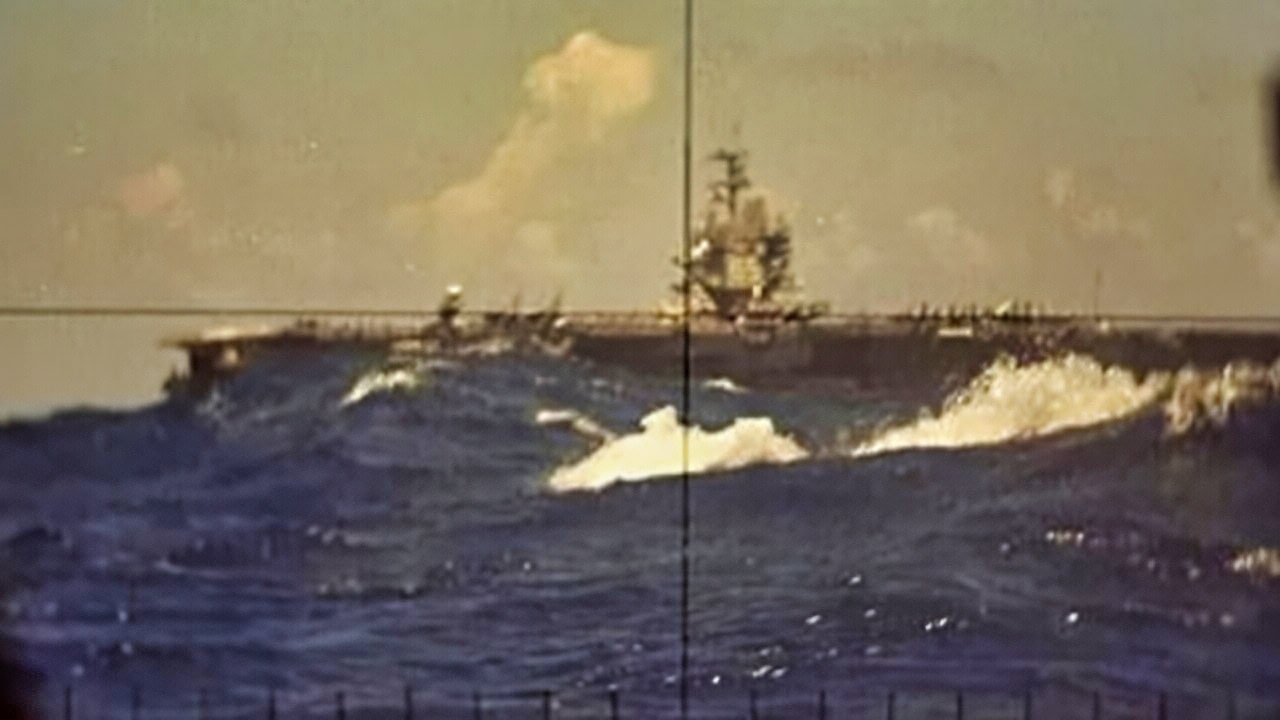
A Swedish diesel submarine costing a fraction of an American supercarrier repeatedly penetrated a carrier strike group’s defenses and ‘sank’ the carrier during exercises — and a German sub did the same thing to the USS Enterprise four years earlier. The Navy still deploys carriers at the center of every major operation, and the Iran war is proving why.
U.S. Navy Aircraft Carriers Keep Going Below the Waves in Combat Drills
American aircraft carriers are once again at the center of a major war. In recent operations against Iran, the USS Abraham Lincoln (CVN-72) has conducted sustained strike operations, while the USS Gerald R. Ford (CVN-78) has been pushed into a record deployment – now beyond 295 days – spanning multiple theaters.
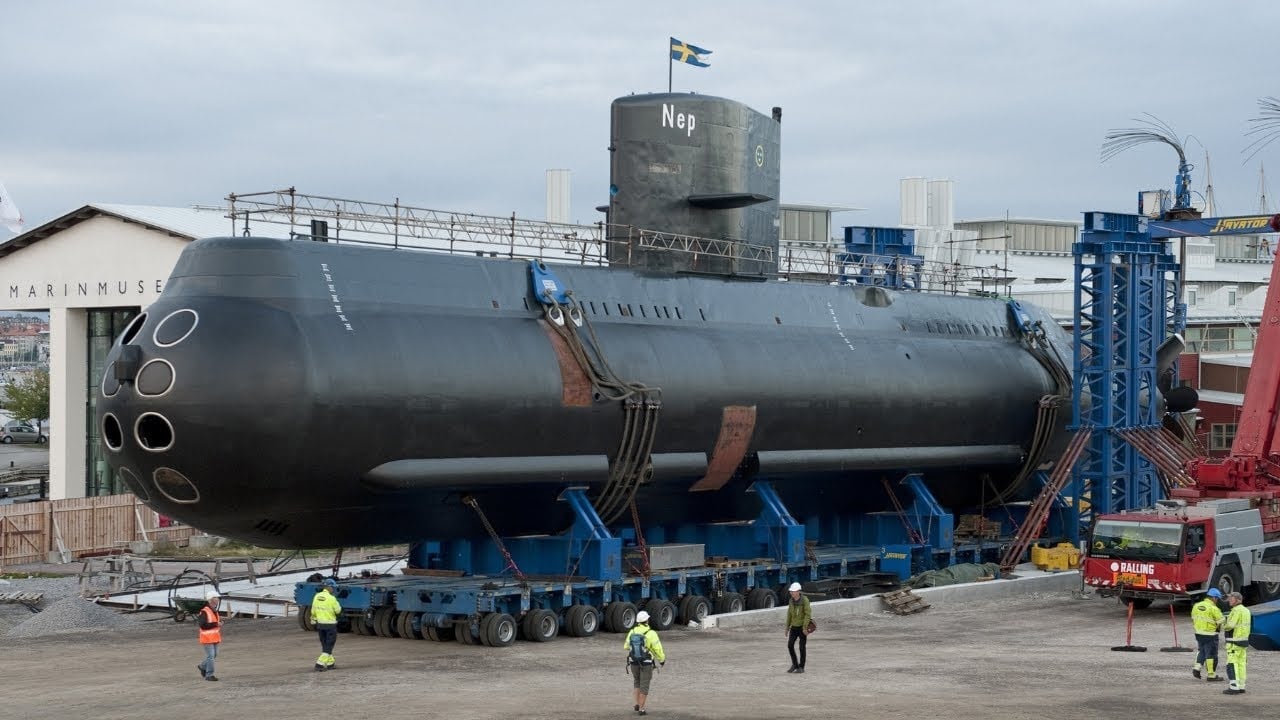
Gotland-class submarine. Image Credit: Creative Commons.
A third carrier, USS George H.W. Bush (CVN-77), has been moving toward the region as maritime operations expand. The deployments come amid ongoing debate about the growing vulnerability of surface fleets, with the U.S. Navy still treating the carrier as an indispensable asset for power projection and sustained combat operations.
But at the same time, the U.S. Navy has spent decades grappling with other lessons.
Again and again, in controlled exercises, relatively small and inexpensive diesel-electric submarines have penetrated carrier defenses and achieved simulated kills.
Among the most famous examples is a 2005 encounter between a Swedish submarine and a U.S. supercarrier.
The Gotland Incident and What It Proved
In 2004, the U.S. Navy made the unusual decision to lease a foreign submarine to support its training exercises. Then-Chief of Naval Operations Adm. Vern Clark directed the creation of a dedicated anti-submarine warfare command and authorized the leasing of the Swedish submarine HSwMS Gotland specifically to improve U.S. anti-submarine capabilities.
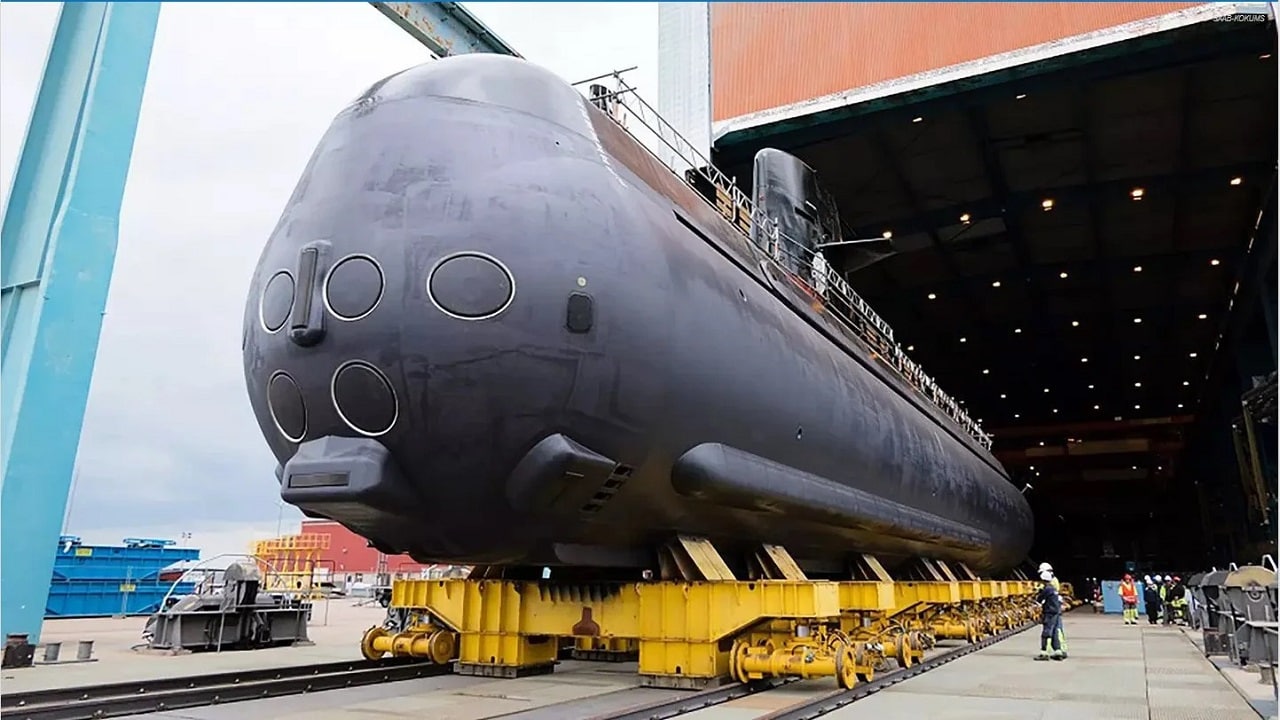
Gotland-Class. Image Credit: Creative Commons.
It was a result of the Navy recognizing that its anti-submarine warfare (ASW) focus had been shaped by the demands of the Cold War – a time when the primary threat came from Soviet nuclear submarines operating in open ocean environments. Modern diesel-electric submarines, especially those equipped with air-independent propulsion (AIP), posed an entirely different problem.
The Gotland-class was designed for stealth in coastal waters. Its Stirling engine AIP system allowed it to remain submerged for extended periods without running noisy diesel engines, dramatically reducing its acoustic signature. When the submarine arrived in San Diego in 2005, it was assigned an opposing-force role against U.S. naval units, including carrier strike groups. The results were not encouraging. U.S. forces, according to Gotland’s commanding officer, “have had a very difficult time finding us.”
During pre-deployment exercises, the submarine was able to penetrate the defensive screen of a carrier strike group, position itself for attack, and effectively “sink” the carrier in a simulated engagement.
This was not a one-off surprise, either. The submarine repeated similar successes during its lease period. The exercise was explicitly designed to test U.S. defenses against modern diesel-electric submarines – defenses that many analysts and observers had already noted were lacking.
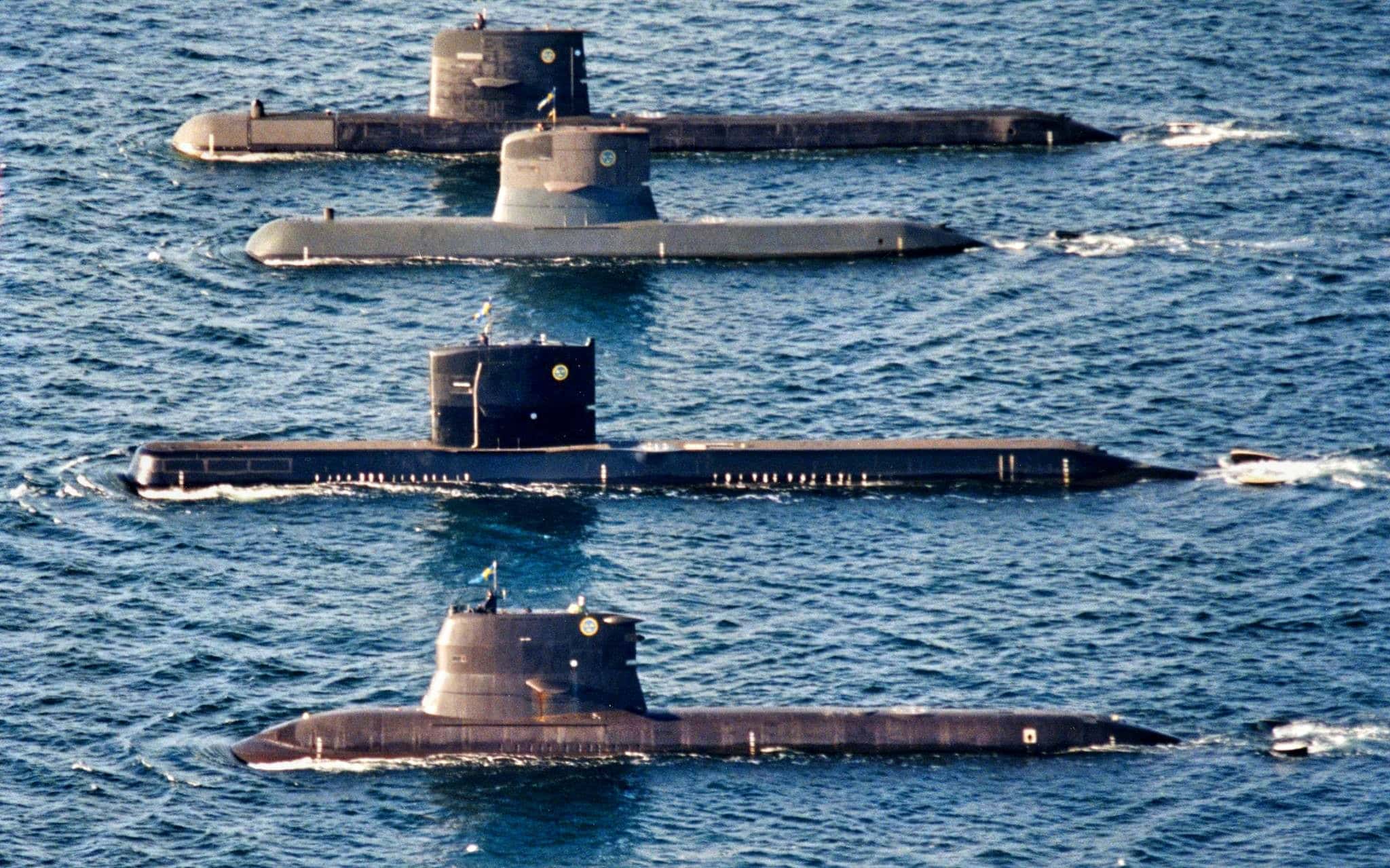
Gotland-Class Submarines and more from Sweden. Image Credit: Swedish Navy.
And the tests were proven necessary. At the end of the process, the U.S. Navy took action, with the Gotland deployment serving as an acknowledgment that the threat was real and that existing ASW practices needed improvement.
This Wasn’t the Only Time
The Gotland incident is a story frequently told within naval circles, but it is not the only time something like this has happened.
In fact, it is part of a larger pattern that predates and extends well beyond that single exercise.
In 2001, during a Caribbean exercise, a German diesel-electric submarine U24 managed to evade detection, surface within firing range of the carrier USS Enterprise (CVN-65), and take periscope photographs. Those photographs were considered a simulated kill.
Diesel-electric submarines have repeatedly demonstrated advantages in specific operational environments, particularly in shallow or congested waters. Unlike nuclear submarines, which rely on continuous reactor cooling systems that produce detectable noise, conventional submarines can operate on battery power with extremely low acoustic signatures.
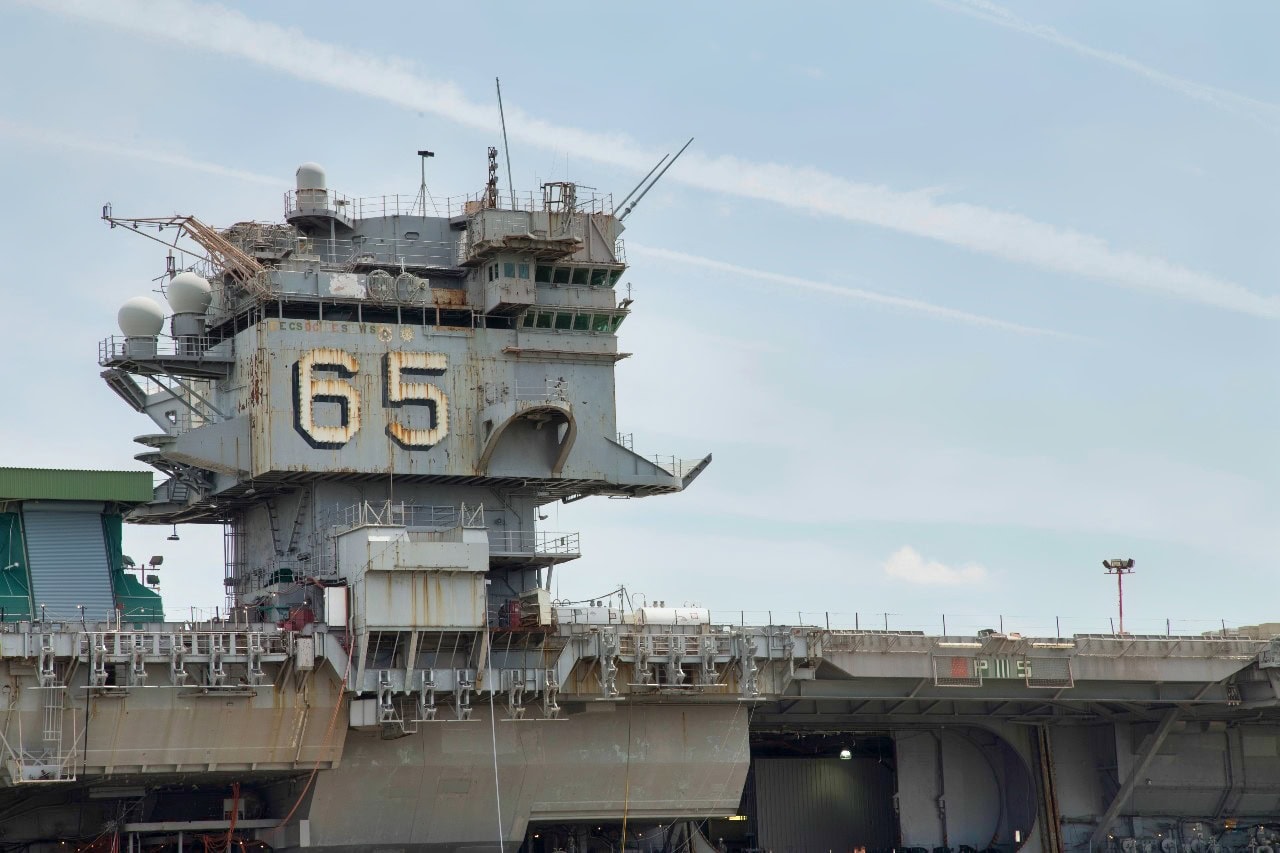
NEWPORT NEWS, Va. (July 15, 2018) — USS Enterprise (CVN 65) sits pierside at Newport News Shipbuilding following its decommissioning in February 2017. (U.S. Navy photo by Mass Communication Specialist 2nd Class Cat Campbell/RELEASED)
That challenge is also compounded in littoral environments, where background noise and thermal layers within the water limit sonar performance. Anti-submarine warfare against non-nuclear submarines is widely understood to be extremely difficult as a result, particularly in coastal waters where the submarines are optimized to operate.
The Navy responded in the mid-2000s by incorporating foreign submarines into training as part of an effort to rebuild a skill set that had slowly atrophied following the end of the Cold War. What the exercises demonstrate, though, is not that diesel submarines are superior in all respects, but that, under the right conditions, they can pose a threat to high-value surface assets.
Why Carriers Still Dominate Real Combat Operations
The lesson of the Gotland incident and other exercises was not that “carriers are obsolete” – and if it was, the U.S. Navy would not still be deploying them at scale. The current conflict in Iran proves that carriers remain relevant and that carrier strike groups are capable of defending them against threats.
Carriers remain uniquely capable platforms for sustained air operations without dependence on host-nation bases.
In Iran, U.S. aircraft carrier strike groups have provided continuous strike capability that allowed the U.S. military to degrade Iranian missile capabilities and air defenses. They have supported intelligence gathering and provided air defense coverage over an enormous operational area.
The continued reliance on carriers reflects their flexibility as assets. A carrier strike group is far more than a single ship; it is a mobile, layered combat system that includes destroyers, helicopters, submarines, and airborne early warning aircraft. Working together, they provide air defense and strike capabilities – and, importantly, anti-submarine warfare capability.
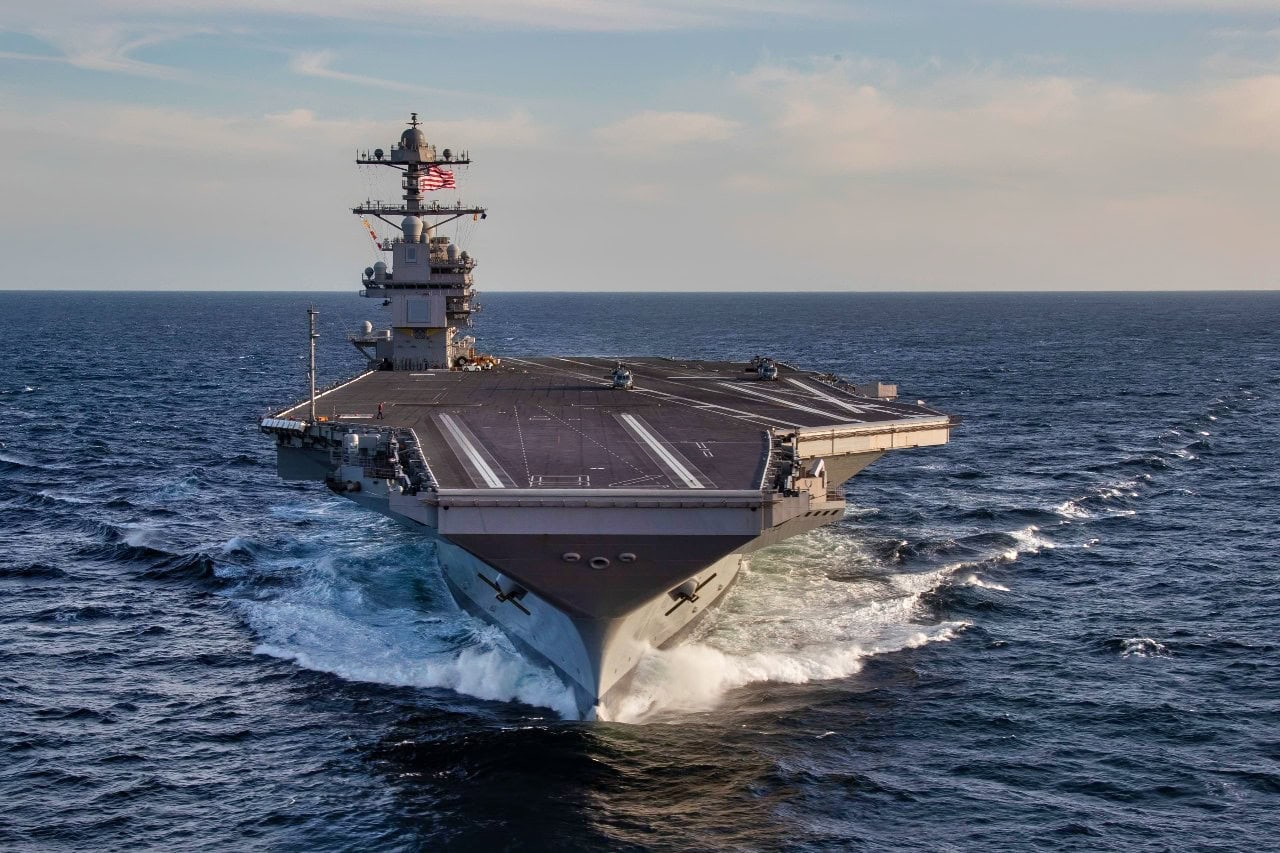
The Ford-class aircraft carrier USS Gerald R. Ford (CVN 78) and the Italian aircraft carrier ITS Cavour (CVH 550) transit the Atlantic Ocean March 20, 2021, marking the first time a Ford-class and Italian carrier have operated together underway. As part of the Italian Navy’s Ready for Operations (RFO) campaign for its flagship, Cavour is conducting sea trials in coordination with the F-35 Lightning II Joint Program Office’s Patuxent River Integrated Test Force to obtain official certification to safely operate the F-35B. Gerald R. Ford is conducting integrated carrier strike group operations during independent steaming event 17 as part of her post-delivery test and trials phase of operations.
Even in a contested environment, carriers offer something no platform can replicate at scale – a sustained airpower that can be moved wherever it is needed.
The Threat Exists, But Aircraft Carriers Are Evolving
While carriers remain central to U.S. operations all over the globe, the threats they face are becoming more complex – and more numerous. Iran, even with its limited resources, demonstrated the ability to launch large-scale missile and drone attacks across the region.
In early March 2026, Iranian state-linked outlets claimed that the USS Abraham Lincoln (CVN-72) had been struck during a large-scale missile and drone barrage launched across the Gulf. U.S. Central Command rejected the claim outright, stating that no U.S. carrier had been hit and that the only confirmed vessel struck in those opening exchanges was the Iranian drone carrier Shahid Bagheri, which was destroyed in port during U.S. strikes.
The attempted attack, however, was real. Iran launched a coordinated salvo of ballistic missiles and long-range drones targeting U.S. naval forces and regional infrastructure. U.S. Navy destroyers operating alongside the carrier – equipped with the Aegis Combat System and SM-2 and SM-6 interceptors – engaged the inbound projectiles while carrier-based aircraft and airborne early warning platforms extended the carrier’s defensive perimeter.
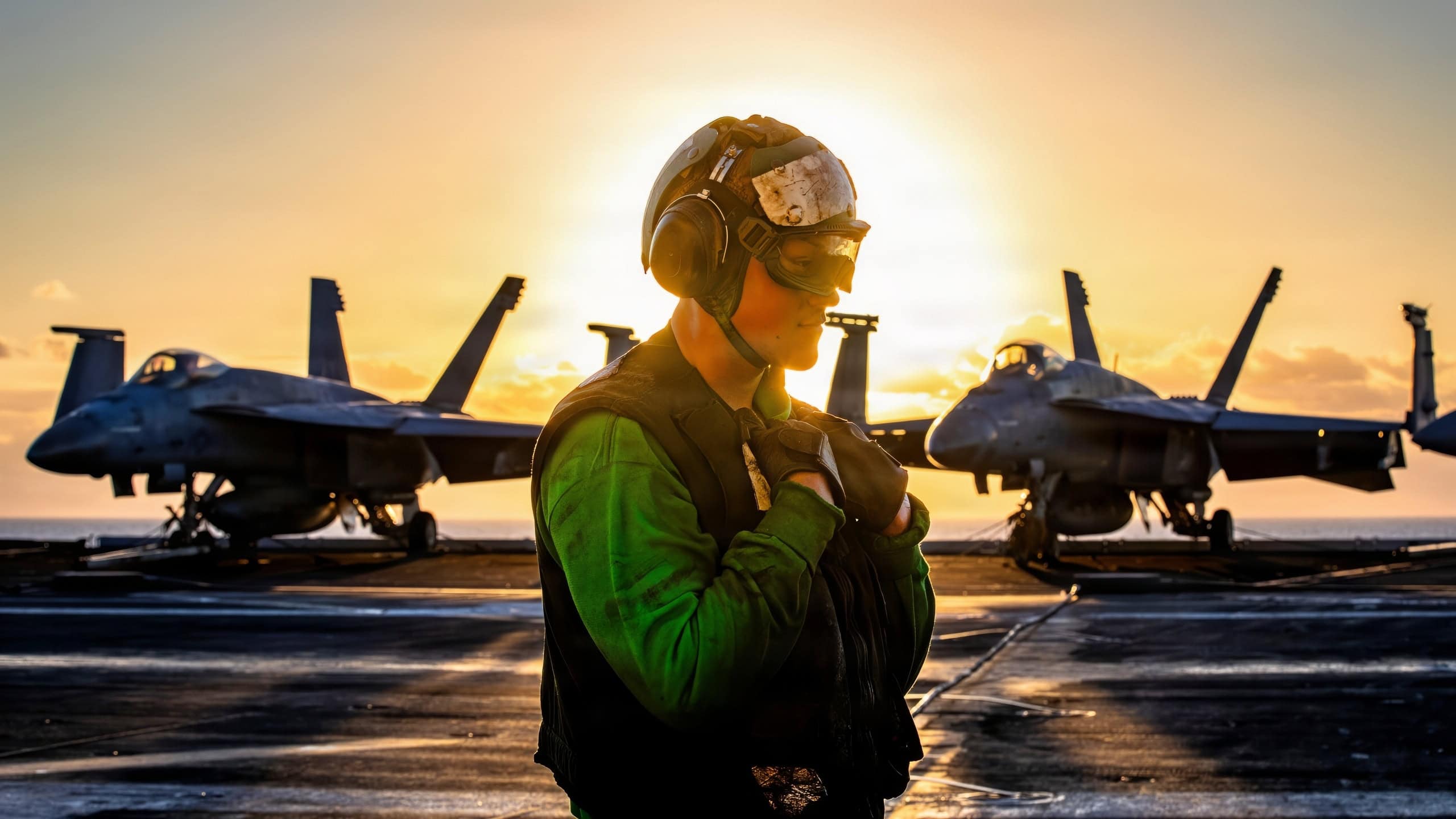
A U.S. Sailor observes flight deck operations on the flight deck of the world’s largest aircraft carrier, USS Gerald R. Ford (CVN 78), during Operation Epic Fury, Feb. 28, 2026. (U.S. Navy photo)
The majority of the Iranian projectiles were intercepted before they could reach their targets.
At the same time, U.S. operations prioritized the destruction of Iranian naval assets early in the campaign, effectively neutralizing the kind of threat seen in exercises over the last two or more decades.
Strikes targeted its fast attack craft and Iran’s small submarine fleet, reflecting the fact that the undersea threat – particularly in the confined waters of the Persian Gulf – remains one of the most dangerous challenges to any carrier strike group.
The Gotland incident is just one of many examples of supercarriers being threatened by smaller, less expensive assets – but carriers are going nowhere. China continues to advance its own fleet of supercarriers, starting with the Type 003 Fujian currently undergoing trials, with Type 004 and 005 also on the way. China is betting big that supercarriers will remain relevant for decades to come, and so is the United States.
About the Author: Jack Buckby
Jack Buckby is a British researcher and analyst specializing in defense and national security, based in New York. His work focuses on military capability, procurement, and strategic competition, producing and editing analysis for policy and defense audiences. He brings extensive editorial experience, with a career output spanning over 1,000 articles at 19FortyFive and National Security Journal, and has previously authored books and papers on extremism and deradicalization.