
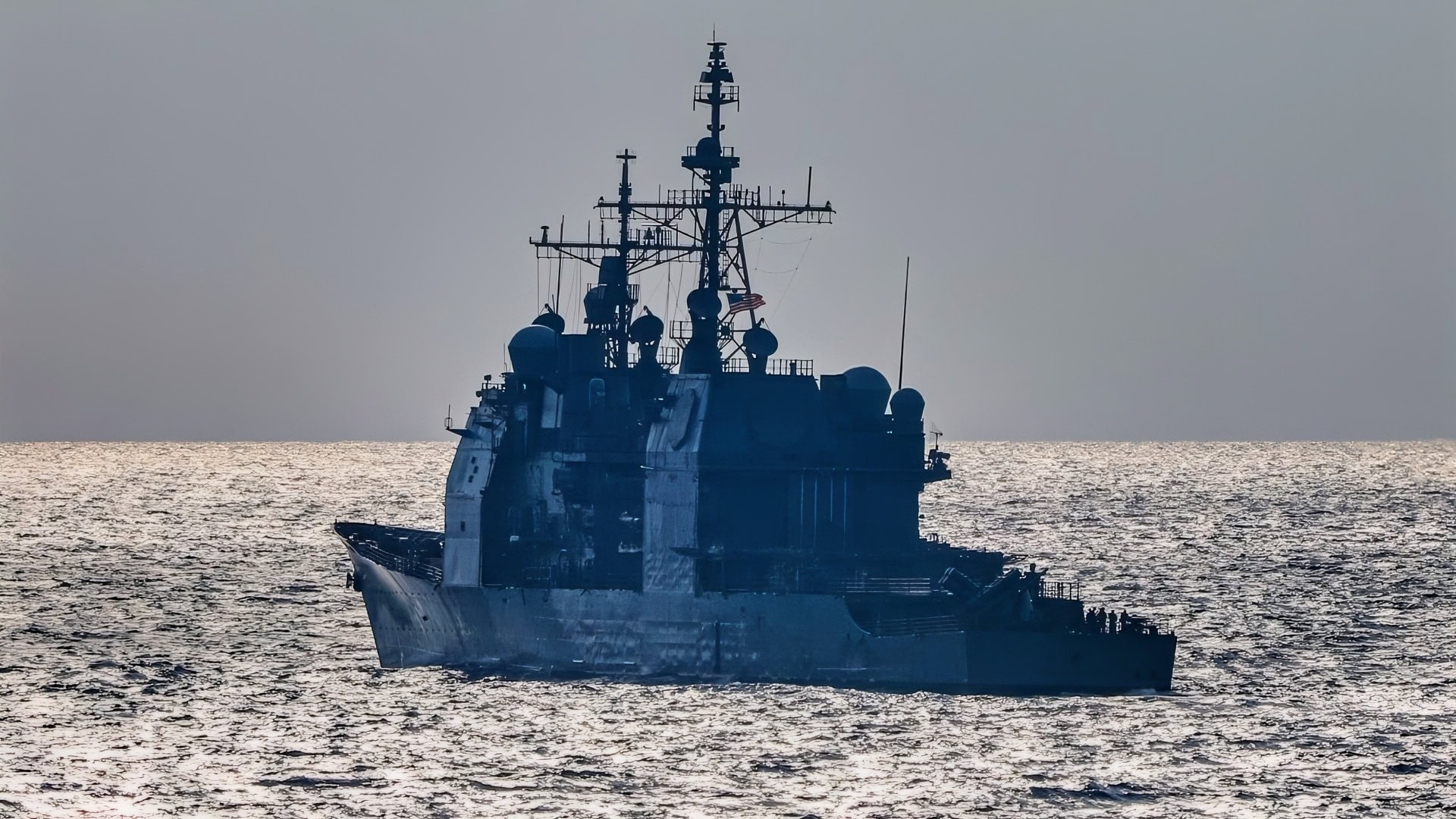
On paper, Taiwan is harder to invade today than at any point in its modern history — and that’s precisely the problem.
Over the past two years, it has procured 57 HIMARS rocket systems, fielded its fourth Patriot air defense battalion, ordered Army Tactical Missile Systems with a 300-kilometer reach, and committed to spending 3.5 percent of GDP on “hard” defense — the NATO standard that most NATO members still can’t hit. By any conventional measure, Taiwan is turning itself into something China would genuinely bleed to take by force. The porcupine strategy is working.
The problem: the more unassailable Taiwan becomes on the beach, the more attractive the option that doesn’t require touching the beach at all.
Taiwan is winning the war China won’t fight. It may be losing the one China will.
How to Secure Taiwan: The Case for the Porcupine
The logic behind the porcupine approach is sound, and it deserves credit before it gets complicated. Mobile, survivable, distributed weapons — anti-ship missiles, rocket artillery, coastal defense systems — don’t need to defeat the PLA outright. They need to make an amphibious crossing so costly that Beijing’s generals price themselves out of the option.
Washington deliberately pushed this approach, steering Taipei away from prestige platforms toward systems that are hard to kill on the ground and lethal at sea.
Every serious wargame modeling a contested amphibious assault on a hardened Taiwan arrives at roughly the same place: China could do it, but the butcher’s bill would be severe.
That’s a real strategic achievement. The trouble is the assumption buried beneath it — that Beijing’s primary path to taking Taiwan runs through an amphibious assault. China has been examining that assumption too, and drawing different conclusions.
China Finds Another Door
A competent adversary doesn’t keep throwing forces at a fortified position. It finds another door.
Sailor Repairs Mast Lights on USS Nimitz. Image Credit: Creative Commons. A U.S. Navy Sailor repairs lights on the flight deck of the aircraft carrier USS Nimitz (CVN 68) while in port at Naval Base Kitsap-Bremerton, Washington, Nov. 3, 2023. Nimitz is in port conducting routine operations. (U.S. Navy photo by Mass Communication Specialist Seaman Apprentice Joseph M. Paolucci)
In late December 2025, the PLA ran its second major blockade exercise of the year around Taiwan — Justice Mission 2025 — deploying naval and coast guard assets to rehearse isolating the island, cutting its sea lanes, and practicing counter-intervention operations.
No aircraft carriers participated. This was not a dress rehearsal for an invasion. It was something more deliberate: a methodical practice run for strangling Taiwan without triggering the kind of unambiguous military assault that gives Washington a clean reason to respond.
This fits a years-long pattern. China has normalized large-scale joint operations in the strait, repeatedly crossed the centerline, run air and naval patrols inside Taiwan’s claimed airspace and territorial waters.
It has folded commercial vessels into military formations, deliberately softening the legal boundary between civilian shipping and military action. Beijing isn’t just developing the ability to blockade Taiwan.
It’s building the legal and operational scaffolding to execute one in a way that, from a distance, resembles something short of war.
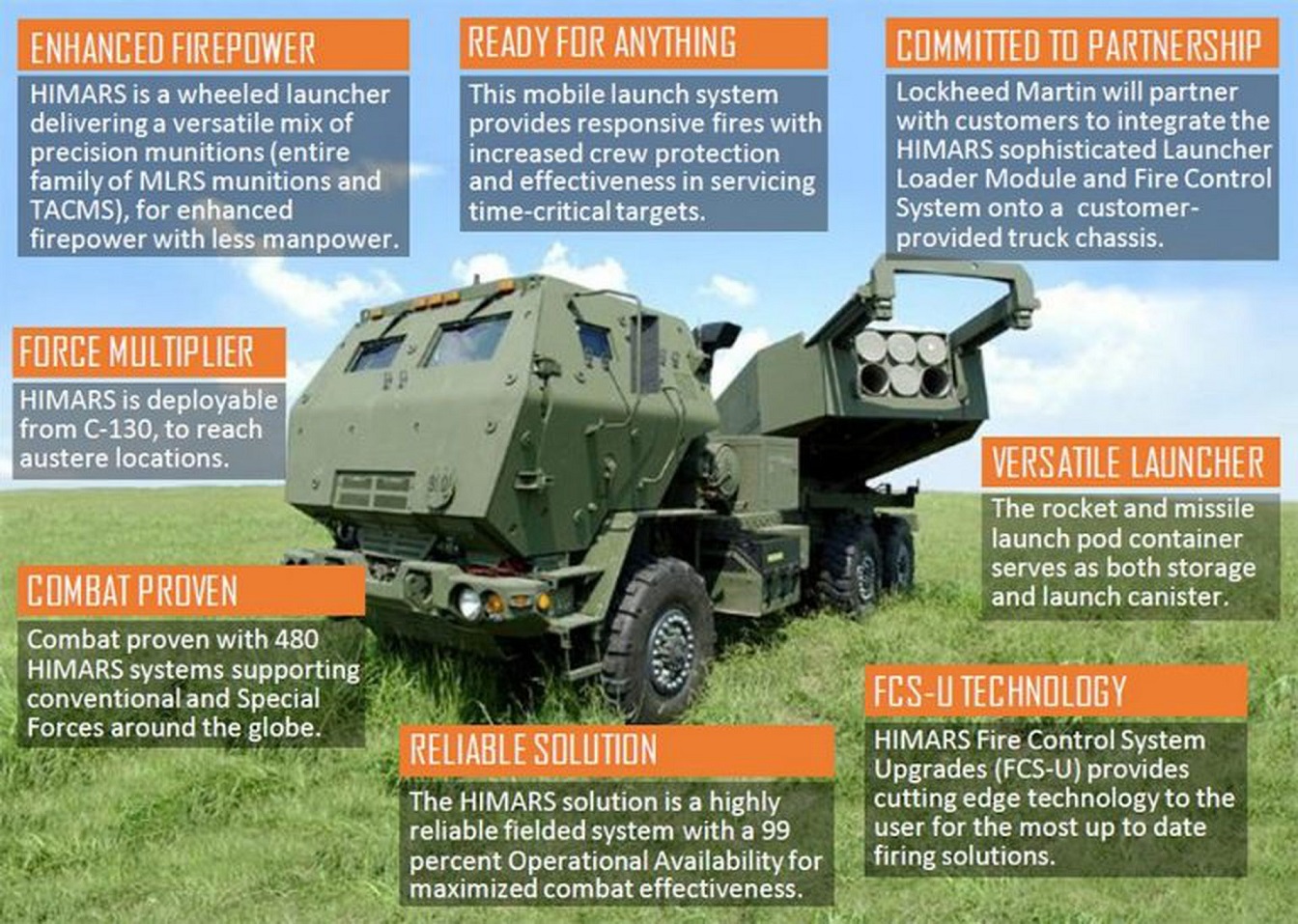
HIMARS graphic from Lockheed Martin.
The math isn’t subtle. Why absorb catastrophic losses storming a fortified island when you can cut off its fuel and let the calendar do the work?
HiMARS cannot shoot down a blockade.
What a Blockade Actually Targets
Consider what a blockade actually targets. Taiwan imports roughly 97 percent of its energy. Its strategic LNG reserves last somewhere between 11 and 14 days at normal consumption levels. Two weeks. Taiwan’s current energy policy has it decommissioning nuclear reactors while deepening LNG dependence — moving in precisely the wrong direction on the variable that matters most when the tankers stop arriving.
And then there are the semiconductor fabrication facilities or fabs. Taiwan produces around 90 percent of the world’s most advanced semiconductors. Those facilities run on massive, uninterrupted power. Disruptions measured in days — not months — begin cascading into global economic consequences severe enough to generate their own pressure on Washington and every allied government running a technology-dependent economy. The coercion doesn’t require a single missile fired at American forces. It requires patience and a credible naval presence in the strait.
The porcupine holds the beach. It cannot manufacture its own fuel. On day 12, when the grid starts flickering, the anti-ship missiles matter less than they did on day one.
Where Washington’s Exposure Lives
This is where Taiwan’s military success and Washington’s political exposure meet. Strategic ambiguity was built around a legible trigger: unambiguous aggression, troops on sand, missiles in cities, a moment that gives an American president both the political cover and the legal standing to respond with force.
That architecture makes sense for an invasion scenario.
A blockade offers no such moment. China has spent years constructing a legal gray zone between “blockade,” “quarantine,” and “maritime law enforcement” — studying how the United States has framed its own naval enforcement operations elsewhere and banking the precedents.
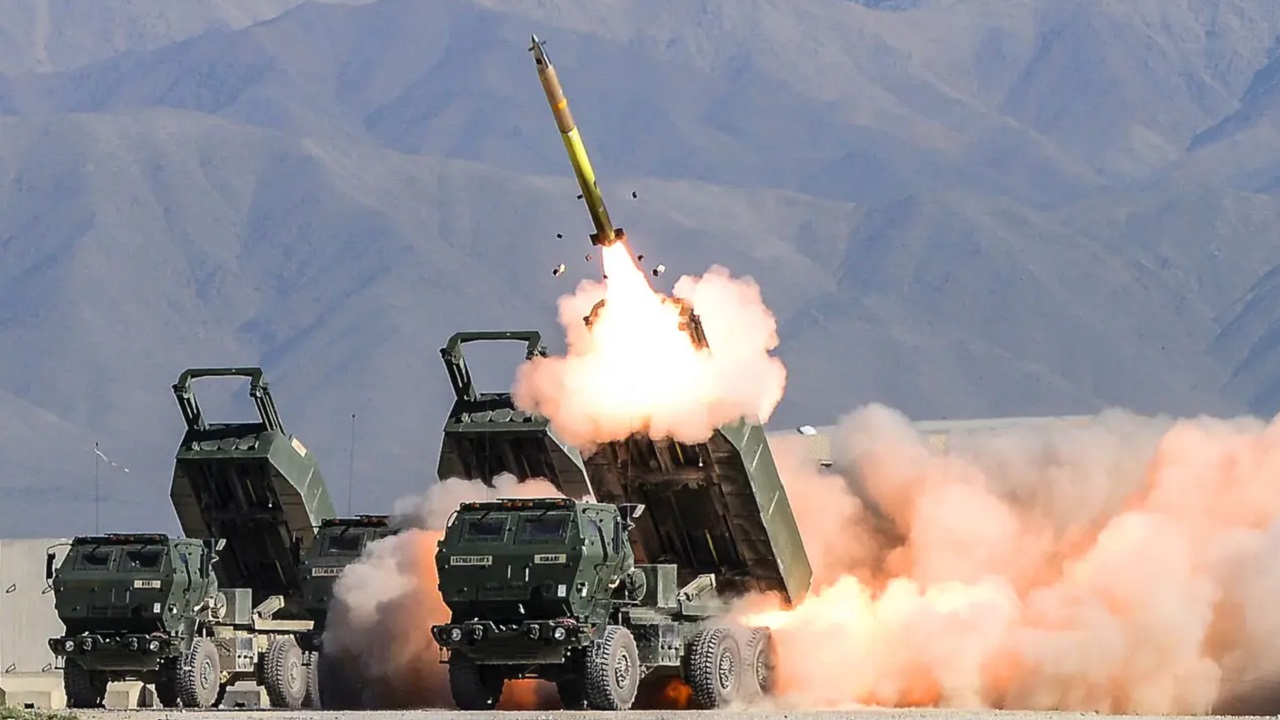
HIMARS test. Image Credit: Wisconsin National Guard.
The question a blockade puts to Washington is not whether America will defend Taiwan. The question is whether America will fire the first recognizable shot at a nuclear-armed state over something Beijing’s diplomats are calling a domestic maritime security operation.
That is a fundamentally harder call than responding to an invasion, and it is exactly the situation strategic ambiguity handles worst — legally muddy, escalation-sensitive, and structured to force Washington into choosing between making the first overt move or watching Taiwan run out of runway by degrees.
Taiwan’s military buildup, in this light, may be narrowing China’s options toward a scenario that Washington is least prepared to address. That dynamic is worth sitting with.
A Porcupine Cannot Outlast a Siege
Taiwan’s armed forces are more capable today than at any time in the past. The procurement decisions of the last several years were the right ones. But a porcupine survives by being painful to swallow. It does not outlast a siege.
The question that actually matters in the Taiwan Strait is not whether the United States can defeat a Chinese amphibious invasion. It’s what anyone plans to do on day 15 of a blockade — when the LNG is gone, the fabs are dark, and Beijing hasn’t put a single bullet through an American hull.
We built Taiwan a fortress. We forgot to stock it.
About the Author: Dr. Andrew Latham
Andrew Latham is a professor of international relations and political theory at Macalester College in Saint Paul, MN. You can follow him on X: @aakatham. He writes a daily column for 19FortyFive.com.