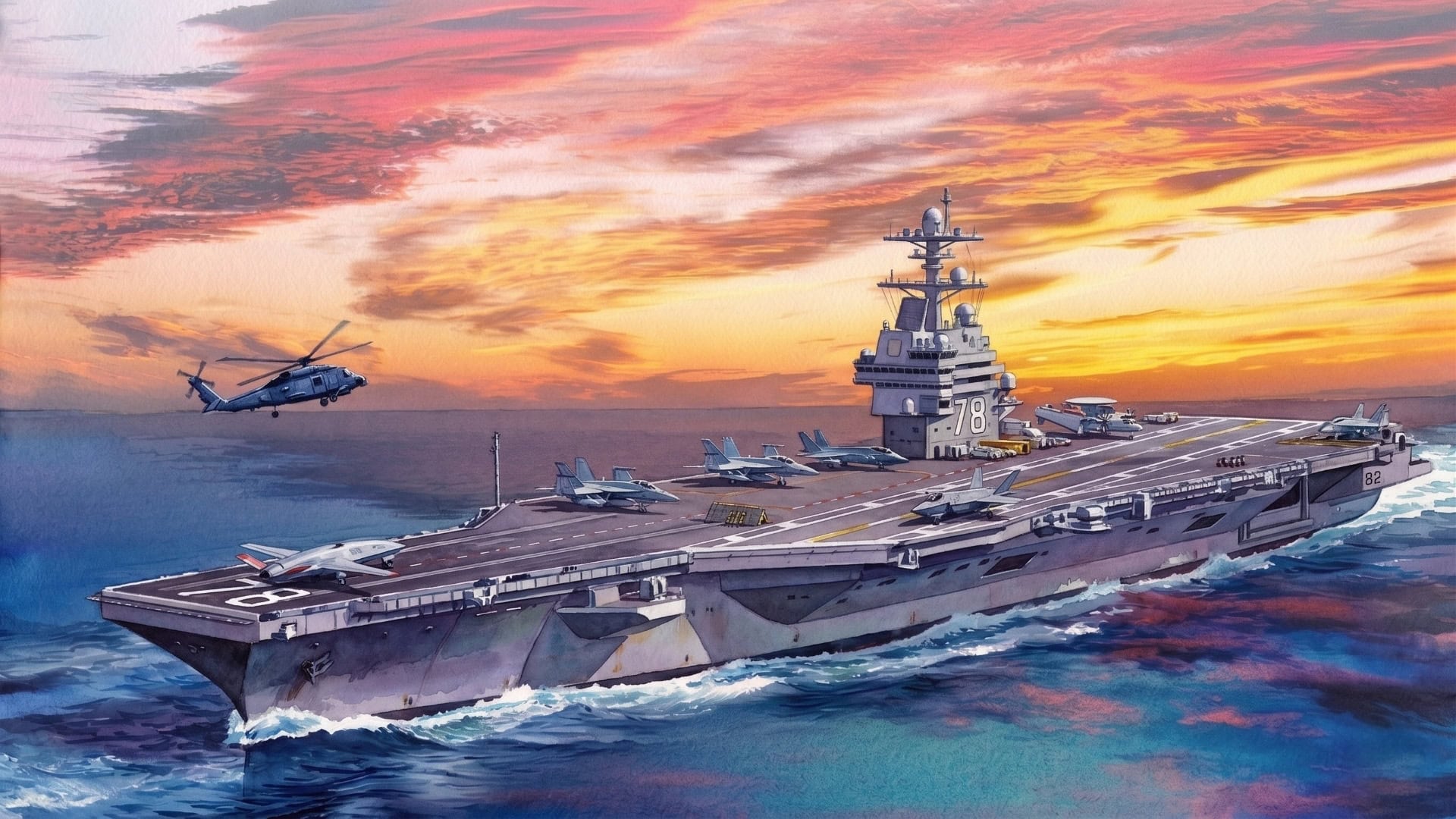
The U.S. Navy is currently undertaking a significant review of its future aircraft carrier force, with particular focus on the next-generation Ford-class carriers. This review has sparked widespread debate over whether the Navy will continue building these ships as planned, modify their design, or shift to a different type of carrier altogether. While no final decision has been made, the review reflects broader concerns about cost, technology, and the future of naval warfare.
At the center of the discussion is the Gerald R. Ford–class aircraft carrier, the Navy’s most advanced and expensive warship program.
Designed to replace the older Nimitz-class carriers on a one-for-one basis, the Ford class incorporates numerous innovations, including electromagnetic aircraft launch systems (EMALS), advanced arresting gear, improved nuclear reactors, and automation that reduces crew size.
These features are intended to increase sortie generation rates, reduce long-term operating costs, and enhance combat capability.
Is Ford-Class Aircraft Carrier “Worth It”?
However, these technological advancements have come with challenges.
The Ford-class program has faced years of cost overruns, delays, and technical issues—particularly with its new catapult and weapons elevator systems.
These problems have raised questions within both political and military circles about whether the benefits justify the costs. As a result, the Navy has initiated a comprehensive review of the design and procurement strategy for future carriers.
The Navy’s review is examining not only the cost of Ford-class carriers but also their operational effectiveness compared to the older Nimitz class.
Officials are asking a fundamental question: Are the new carriers delivering enough additional capability to justify their significantly higher price? Each Ford-class ship costs well over $13 billion, making them among the most expensive military platforms ever built.
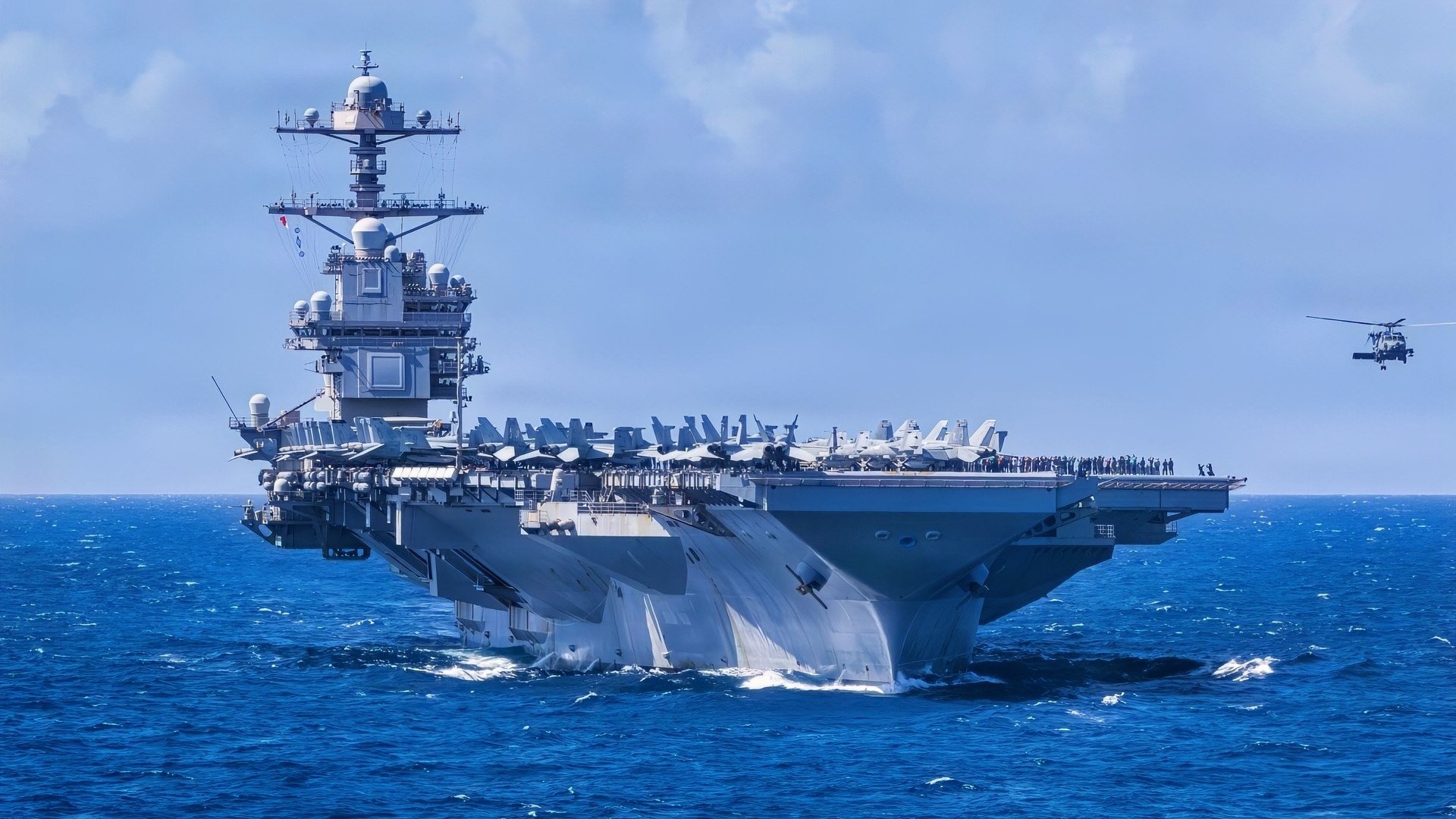
U.S. Navy Carrier Air Wing 8 aircraft fly in formation over the world’s largest aircraft carrier, Ford-class aircraft carrier USS Gerald R. Ford (CVN 78), during Carrier Air Wing 8’s aerial change of command ceremony while underway in the Caribbean Sea, Jan. 19, 2026. U.S. military forces are deployed to the Caribbean in support of the U.S. Southern Command mission, Department of War-directed operations, and the president’s priorities to disrupt illicit drug trafficking and protect the homeland. (U.S. Navy photo)
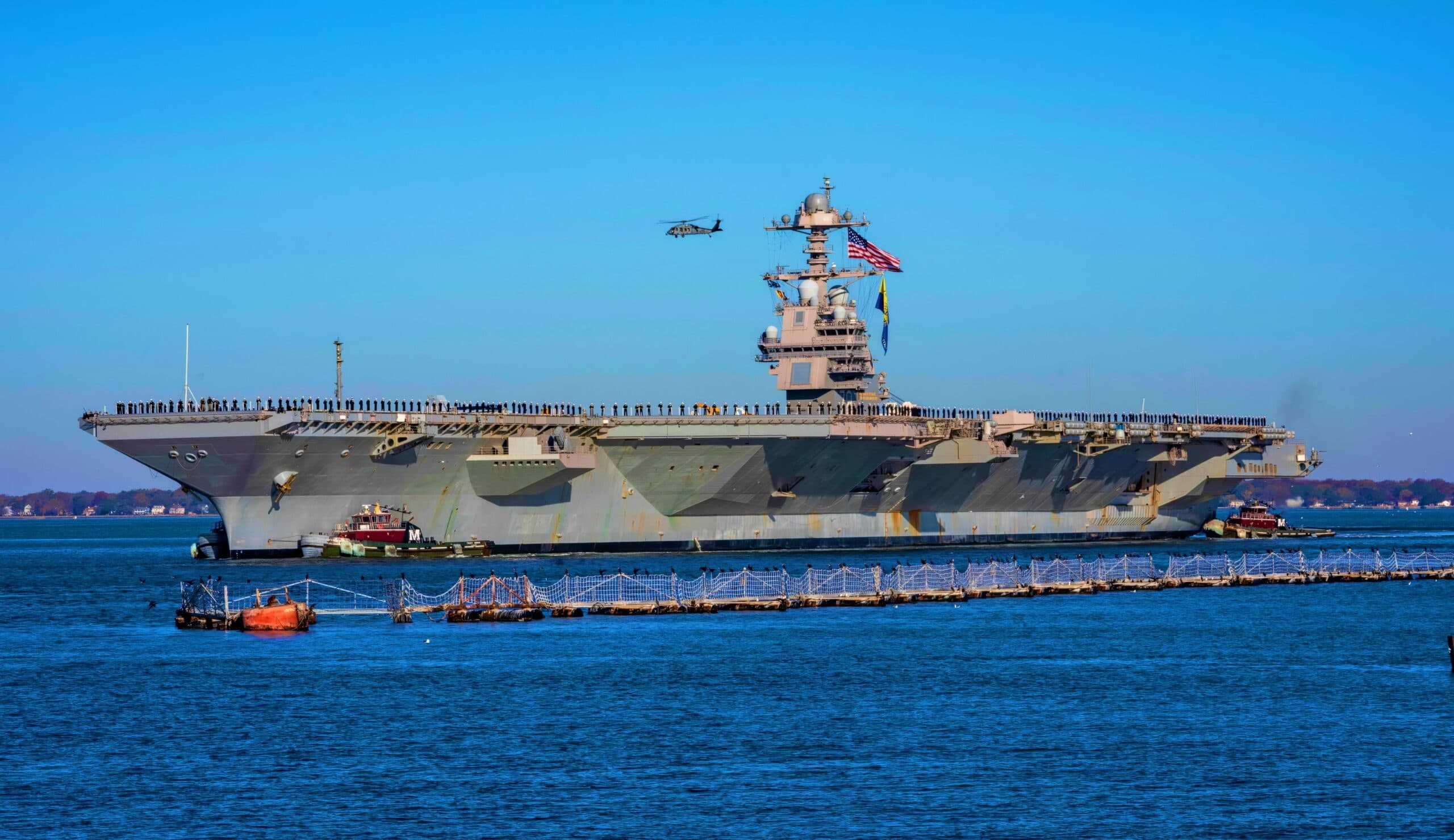
NORFOLK (Nov. 26, 2022) The USS Gerald R. Ford (CVN 78) returns to Naval Station Norfolk after completing their inaugural deployment to the Atlantic Ocean with the Gerald R. Ford Carrier Strike Group (GRFCSG), Nov. 26. The GRFCSG, returned to Naval Station Norfolk following a scheduled deployment with Allies and partners in an effort to build strategic relationships and contribute to a stable and conflict-free Atlantic region, while also showcasing the U.S. Navy’s most advanced class of aircraft carrier. (U.S. Navy Photo/Video by Mass Communication Specialist First Class Nathan T. Beard)
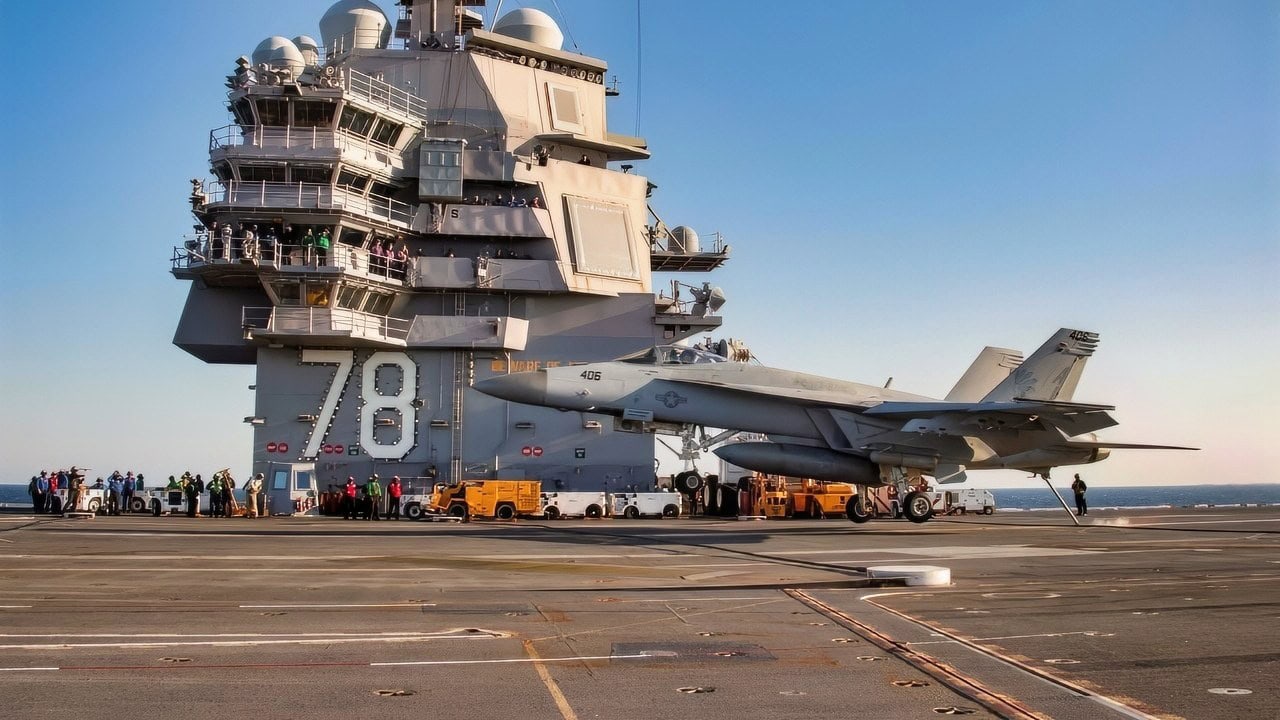
USS Gerald R. Ford Supercarrier Flight Deck. Image Credit: Creative Commons.
The review is also tied to broader budgetary pressures.
The Navy is under increasing scrutiny to ensure that its shipbuilding programs are efficient and aligned with evolving strategic needs. In this context, the carrier review is part of a larger effort to evaluate all major acquisition programs.
With competing priorities such as submarines, destroyers, and unmanned systems, the Navy must balance its investments carefully.
Cancel Future Ford-class?
One notable aspect of the review is that it could influence the procurement of future Ford-class carriers—specifically the fifth and sixth ships in the class, which have not yet been fully contracted.
The Navy has indicated that the review results will help determine whether and how these ships are built.
This has led to speculation that the service might slow down production, modify the design, or potentially cancel some planned vessels.
Despite these uncertainties, it is important to note that the Navy is not planning to abandon aircraft carriers altogether.
Senior officials have emphasized that carriers remain central to U.S. military strategy, providing unmatched power projection, deterrence, and flexibility.
Even critics of the Ford class generally agree that some form of large-deck carrier will continue to play a key role in the fleet.

USS Gerald R. Ford Aircraft Carrier or Supercarrier

Oct. 9, 2022 – The first-in-class aircraft carrier USS Gerald R. Ford (CVN 78) steams the Atlantic Ocean during a simulated straits transit with the Gerald R. Ford Carrier Strike Group (GRFCSG) in the Atlantic Ocean, Oct. 9, 2022. The Gerald R. Ford Carrier Strike Group is deployed in the Atlantic Ocean, conducting training and operations alongside NATO Allies and partners to enhance integration for future operations and demonstrate the U.S. Navy’s commitment to a peaceful, stable and conflict-free Atlantic region. (U.S. Navy photo by Mass Communication Specialist 2nd Class Jackson Adkins)
What remains unclear is whether future carriers will look like the current Ford class or evolve into something different.
One possibility is that the Navy could pursue an updated or modified version of the Ford design, incorporating lessons learned from early ships while addressing cost and reliability issues.
This would allow the Navy to retain the advantages of the new technology while improving affordability and performance.
New Design for Aircraft Carriers
Another possibility is a more significant shift in carrier design.
The Navy has periodically studied alternatives, including smaller carriers or “light carriers” that could operate fewer aircraft but be built in greater numbers.
Such ships might be less expensive and more survivable in an era of advanced anti-ship missiles. However, they would also lack the capacity and capabilities of traditional supercarriers, raising questions about their effectiveness in high-end conflicts.
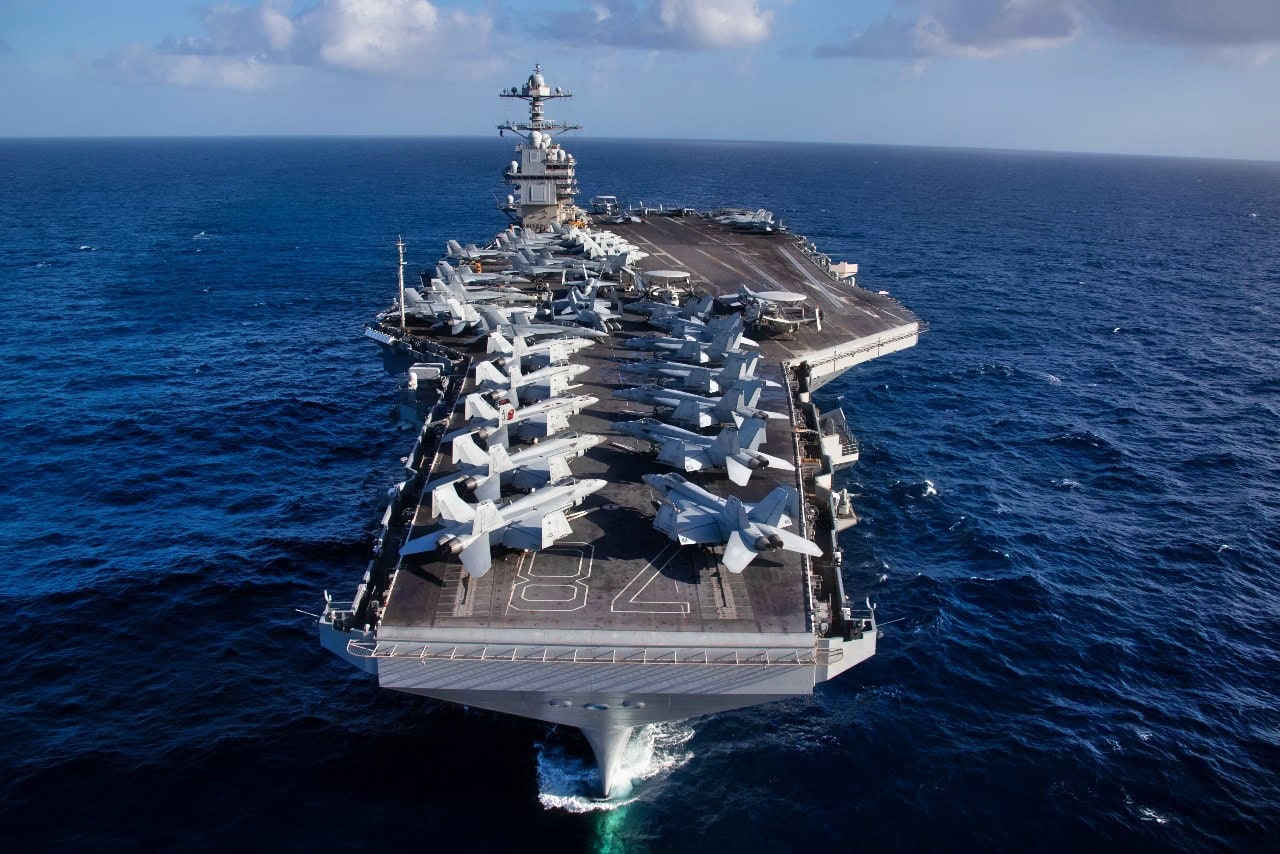
The world’s largest aircraft carrier USS Gerald R. Ford (CVN 78), steams in the Mediterranean Sea, Dec. 24, 2023. The Gerald R. Ford Carrier Strike Group is currently operating in the Mediterranean Sea. The U.S. maintains forward-deployed, ready, and postured forces to deter aggression and support security and stability around the world. (U.S. Navy photo by Mass Communication Specialist 2nd Class Jacob Mattingly)
USS Ford Combat Tested
Operational experience with the first ship in the class, USS Gerald R. Ford, is another important factor.
The carrier has demonstrated strong performance in terms of sortie generation and combat operations, suggesting that the new technologies can deliver real benefits.
However, technical issues and maintenance challenges associated with the USS Ford have also underscored the risks of introducing so many innovations at once.
Ultimately, the Navy’s review is expected to conclude in 2026 and will likely shape carrier policy for decades to come.
The outcome could range from reaffirming the current Ford-class program to making incremental changes or even initiating a new carrier design.
What is clear is that the Navy is taking a cautious and analytical approach, recognizing both the importance of carriers and the need to adapt to changing technological and strategic realities.
About the Author: Kris Osborn, Warrior Maven President
Kris Osborn is the Military Technology Editor of 19FortyFive. Osborn is also President of Warrior Maven – Center for Military Modernization. Osborn previously served at the Pentagon as a highly qualified expert in the Office of the Assistant Secretary of the Army—Acquisition, Logistics & Technology. Osborn has also worked as an anchor and on-air military specialist at national TV networks. He has appeared as a guest military expert on Fox News, MSNBC, The Military Channel, and The History Channel. He also has a Master’s Degree in Comparative Literature from Columbia University.