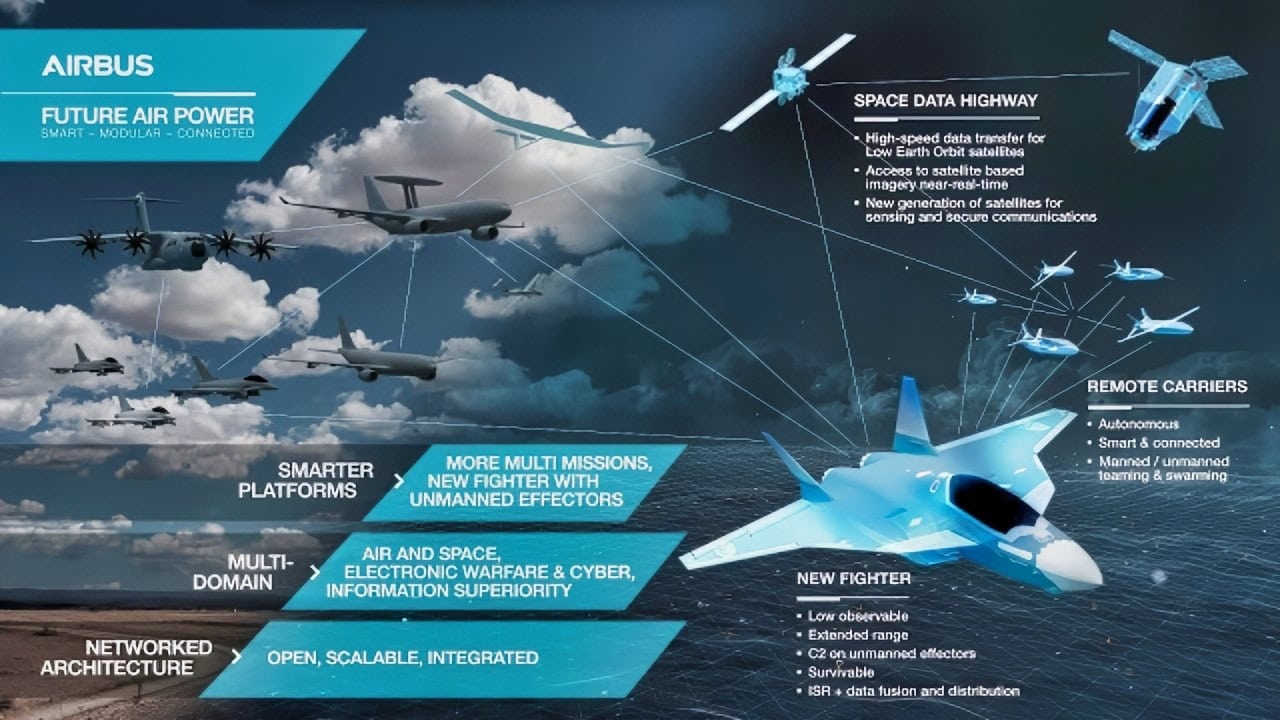
The latest chapter of the Franco-German Future Combat Air System (FCAS) fighter jet saga is now being written by both countries’ defense ministers as they look for a solution that is workable and acceptable to both. “We are continuing to move forward,” French President Emmanuel Macron told reporters late last week. “We have instructed our defence ministries to work on several fronts.”
FCAS: Divergent Priorities
Though both the French and the Germans have pointed fingers at each other, one fundamental issue appears to be divergent operational requirements for a European-designed and built sixth-generation fighter.
While France maintains its own stockpile of air-delivered nuclear weapons as well as carrier-capable fighter aircraft, Germany has neither an aircraft carrier nor its own nuclear weapons (though Berlin does participate in NATO’s nuclear weapon sharing agreement).
Germany has accused the French contingent on the FCAS program of hoarding key parts of the program and reserving design work for Dassault Aviation.
Though the future of the FCAS project appears to be up in the air, the €100 billion project was slated to replace France’s Dassault Rafale jets, as well as the Eurofighter Typhoons flown by both the German and Spanish air forces.
Paris and Berlin have been at loggerheads over the project, also known by its acronym, FCAS, for more than a year. FCAS is a tripartite project that includes Madrid. One leading German think tank wrote that the project was “too big to fail,” words that perhaps today seem less astute than when they were written.
But in addition to Berlin’s fighter jet woes, Germany is also in the midst of a defense reshuffle of immense proportions.
Strongest Army in Europe?
In parallel to harnessing and redirecting German industrial might toward weapons production, Berlin is also set on building out its own military.
In a series of documents released last week, as well as in Germany’s first post-war overarching military strategy, the overhaul of the German Bundeswehr has been set in motion.
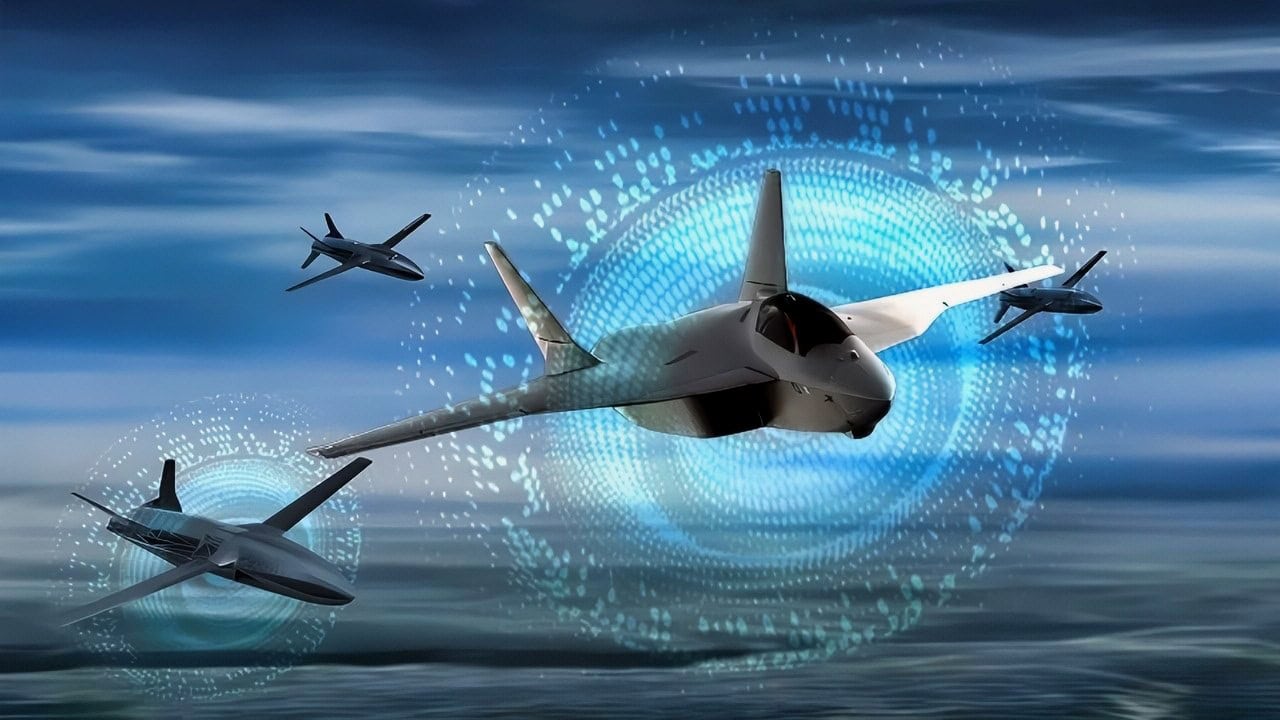
FCAS. Image Credit: Industry Handout.
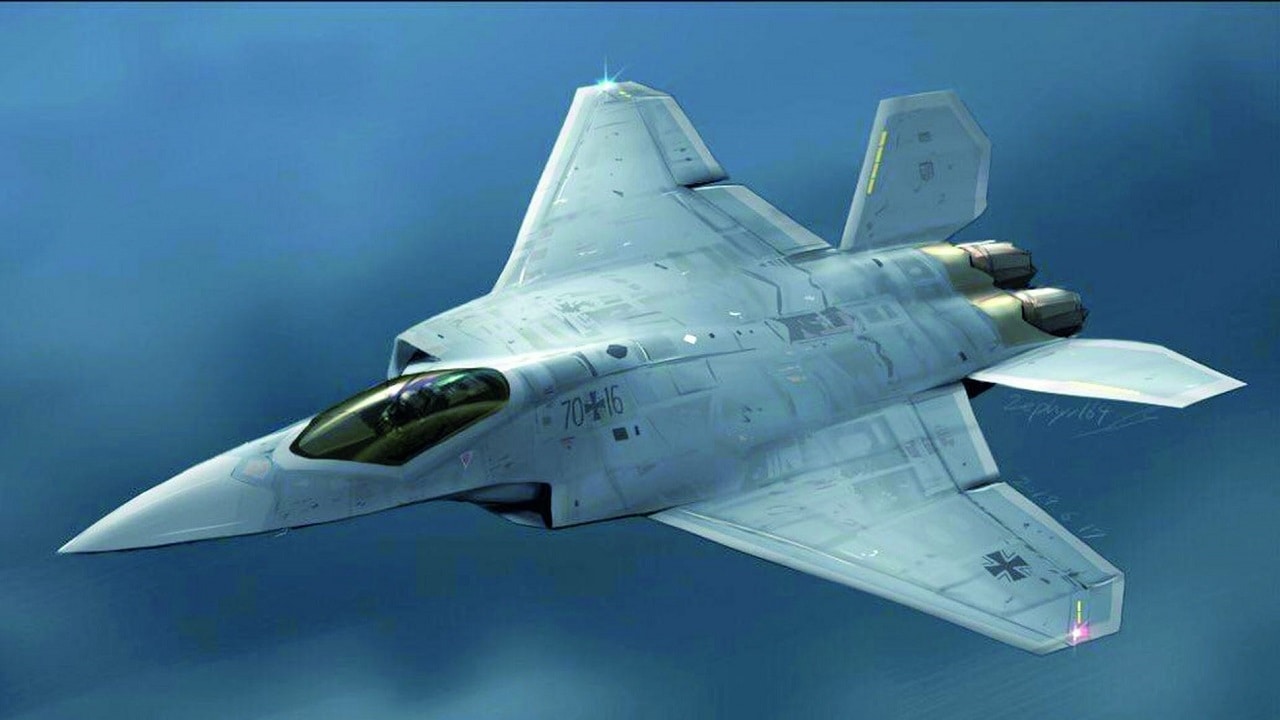
FCAS. Image Credit: Creative Commons.
Though in previous years many made light of the Bundeswehr’s lack of basic military equipment (in one infamous incident, German soldiers were issued broomsticks to simulate machine guns), the country now hopes to build the strongest army in Europe by 2039 — in a great twist of irony, exactly a century after the German invasion of Poland.
German Defense Minister Boris Pistorius first announced the shift late last year, though the roadmap outlining the revamp was only given to Germany’s lawmakers in April. The guide will be the Bundeswehr’s strategic map for the next two decades.
Called Verantwortung für Europa, German for Responsibility for Europe, Russia is clearly identified as the pacing threat facing not just Germany, but all of Europe covered by the NATO alliance.
But rather than subdividing the world into disparate, unrelated centers, the strategy instead views the territory of NATO, the Indo-Pacific, and the Middle East as interrelated spheres. Germany also seeks to grow the number of active-duty soldiers to about 260,000 by the middle of the next decade, while increasing the number of soldiers in reserve, for a combined total of 460,000.
But the road ahead will not be easy. Germany has long measured its own military prowess, as well as its military aid to Ukraine, by counting the number of units purchased or donated, or by the vague metric of the combined weight of systems, rather than those systems’ battlefield effects. This changes with Germany’s course-correction.
Into the Future
Whether French-German differences can be ironed out remains to be seen.
Though both countries certainly appear willing and able to finance a project as complex as FCAS will almost certainly prove to be, neither country has experience designing a fifth-generation stealth fighter, let alone the kind of sixth-generation aircraft FCAS aims to be.
With its own nuclear weapons and civilian nuclear industry, Paris may find it easier to meet their needs by going it alone — even if that means ditching German and Spanish Euros and design assistance.
This raises an important question: what will Berlin and Madrid do if their French partner leaves?
One option could be to join another parallel fighter initiative, the Global Combat Air Programme.
That project counts Italy, the United Kingdom, and Japan as program partners.
But adding two new parties to GCAP could risk the kind of disagreements over requirements that, in the end, could torpedo FCAS.
About the Author: Caleb Larson
Caleb Larson is an American multiformat journalist based in Berlin, Germany. His work covers the intersection of conflict and society, focusing on American foreign policy and European security. He has reported from Germany, Russia, and the United States. Most recently, he covered the war in Ukraine, reporting extensively on the war’s shifting battle lines from Donbas and writing on the war’s civilian and humanitarian toll. Previously, he worked as a Defense Reporter for POLITICO Europe. You can follow his latest work on X.