
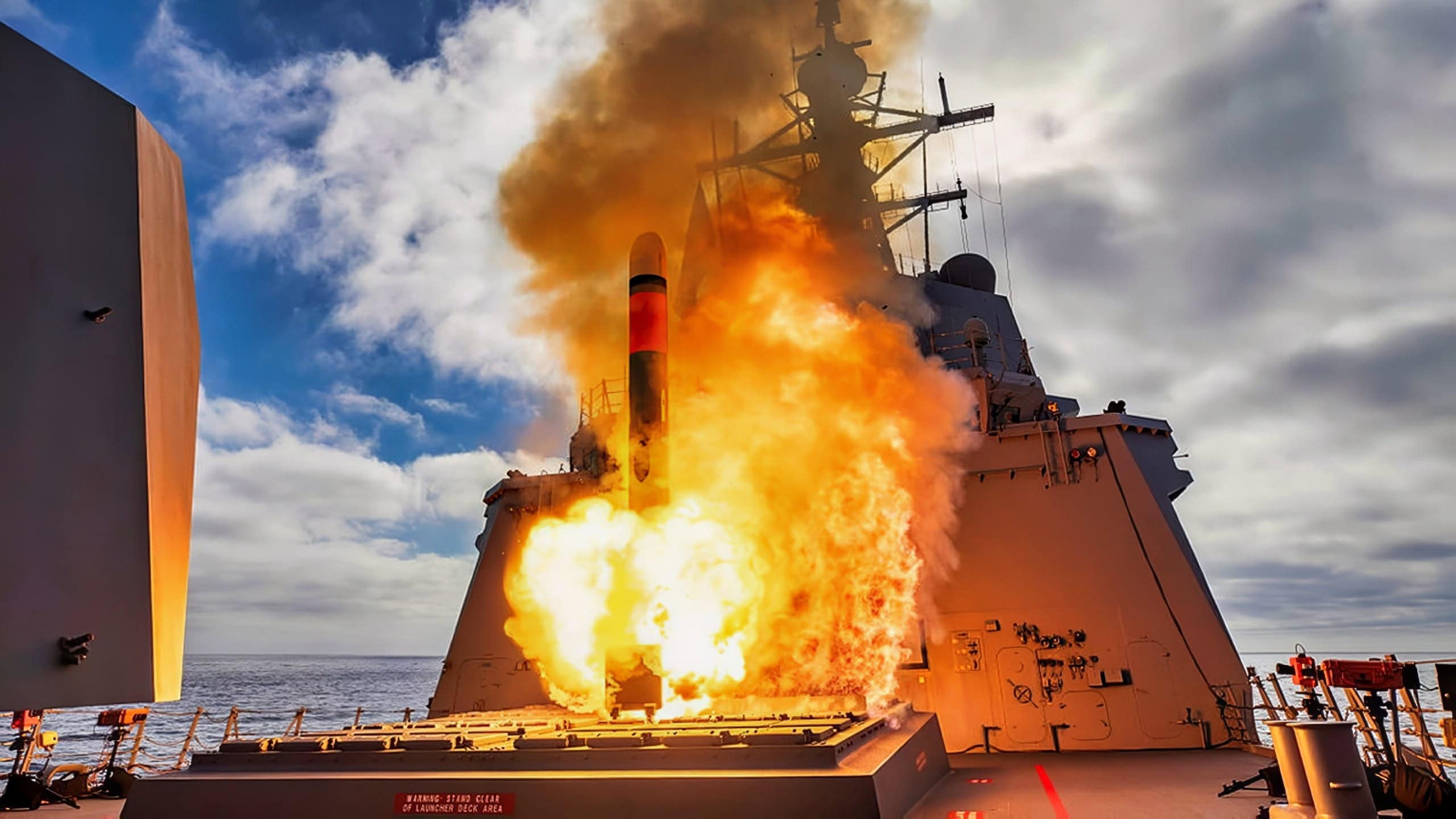
One of the defining features of Operation Epic Fury, a high-intensity air and sea campaign against Iran, was an unprecedented level of missile expenditure. The operation exposed the current US magazine depth, demonstrating how precious the US’s current missile stockpile actually is. During the conflict, vast amounts of Tomahawk, Patriot, and THAAD missiles were fired; the stockpile will take years to replenish, exposing a dangerous reality about how quickly the US can burn through years of missile production, and raising questions about readiness for a larger war with an adversary like China.
Scale of the Expenditure
US forces fired over 850 Tomahawks, including 400 spent in just the first 71 hours of the conflict.
The purpose of the expenditure was to destroy Iran’s air defenses and command nodes. Other munitions were used, too, including 50 percent of the Patriot interceptor stockpile and 50 percent of the THAAD stockpile.
Additionally, 1,000 JASSM-ER missiles were fired, depleting 80 percent of the existing inventory and 45 percent of the PrSM inventory.
The point being, Operation Fury did not selectively consume the US missile stockpile but rather consumed, at an industrial scale, America’s existing precision weapons. Replacing what was spent, in days and weeks, will take years.
Tech of the Tomahawk
Arguably, the most important missile in the US inventory is the Tomahawk, a subsonic cruise missile with a 1,000-plus mile range.
Using GPS and inertial navigation and terrain contour matching (TERCOM), the Tomahawk flies a low altitude, terrain-following profile to deliver a 1,000-pound class warhead. The Tomahawk is widely used because it is precise and survivable, giving the US standoff capability.
Essentially, the Tomahawk is the backbone of US strike warfare. But the Tomahawk is slow to produce and expensive, making large-scale use costly and difficult to replace.
Tech of the JASSM-ER
The JASSM-ER is a stealthy cruise missile launched from the air with a 500-600-mile range. Crafted with low observable shaping and autonomous targeting, the JASSM-ER is used to penetrate defended airspace.
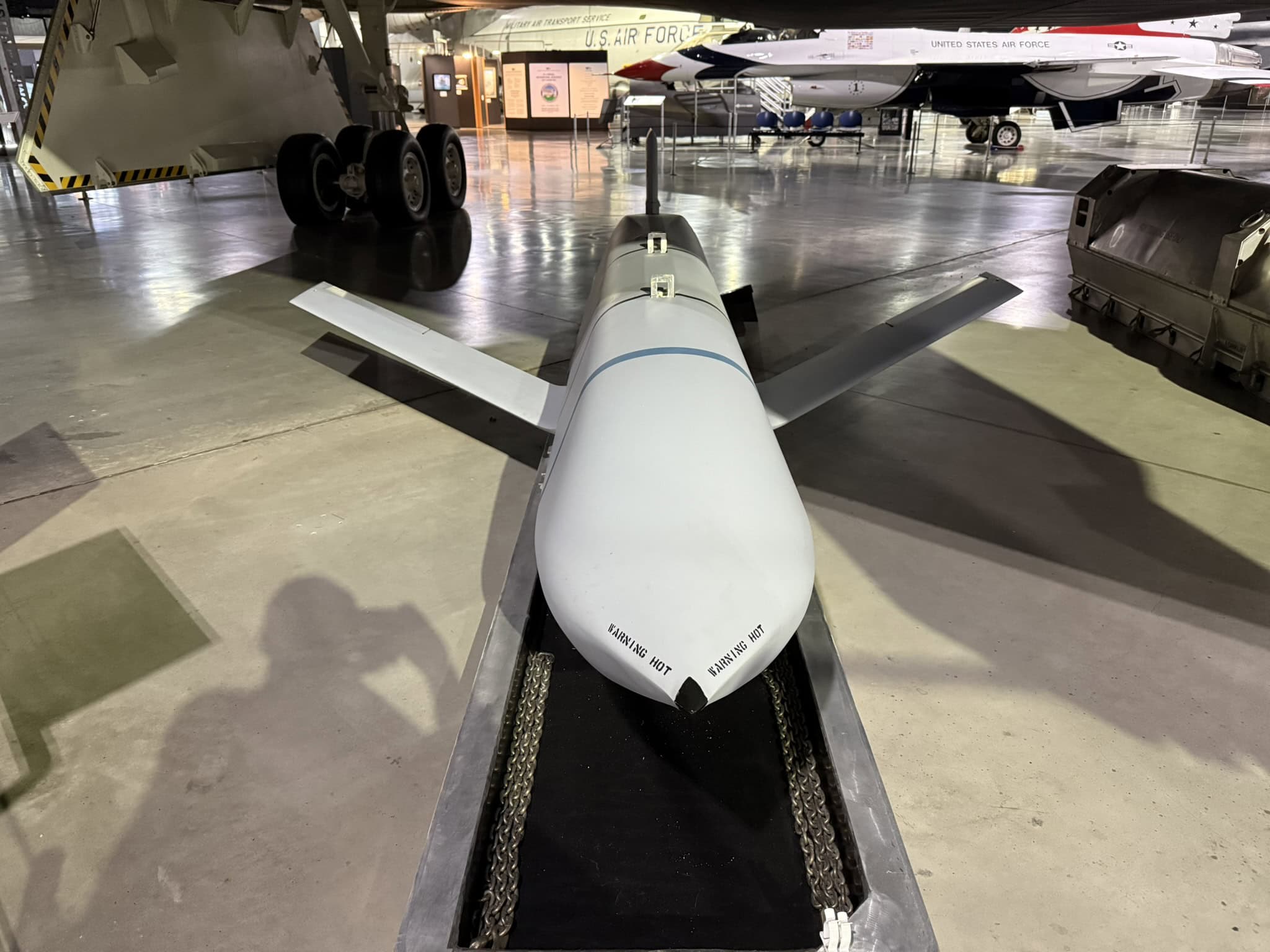
JASSM. Image Credit 19FortyFive.com
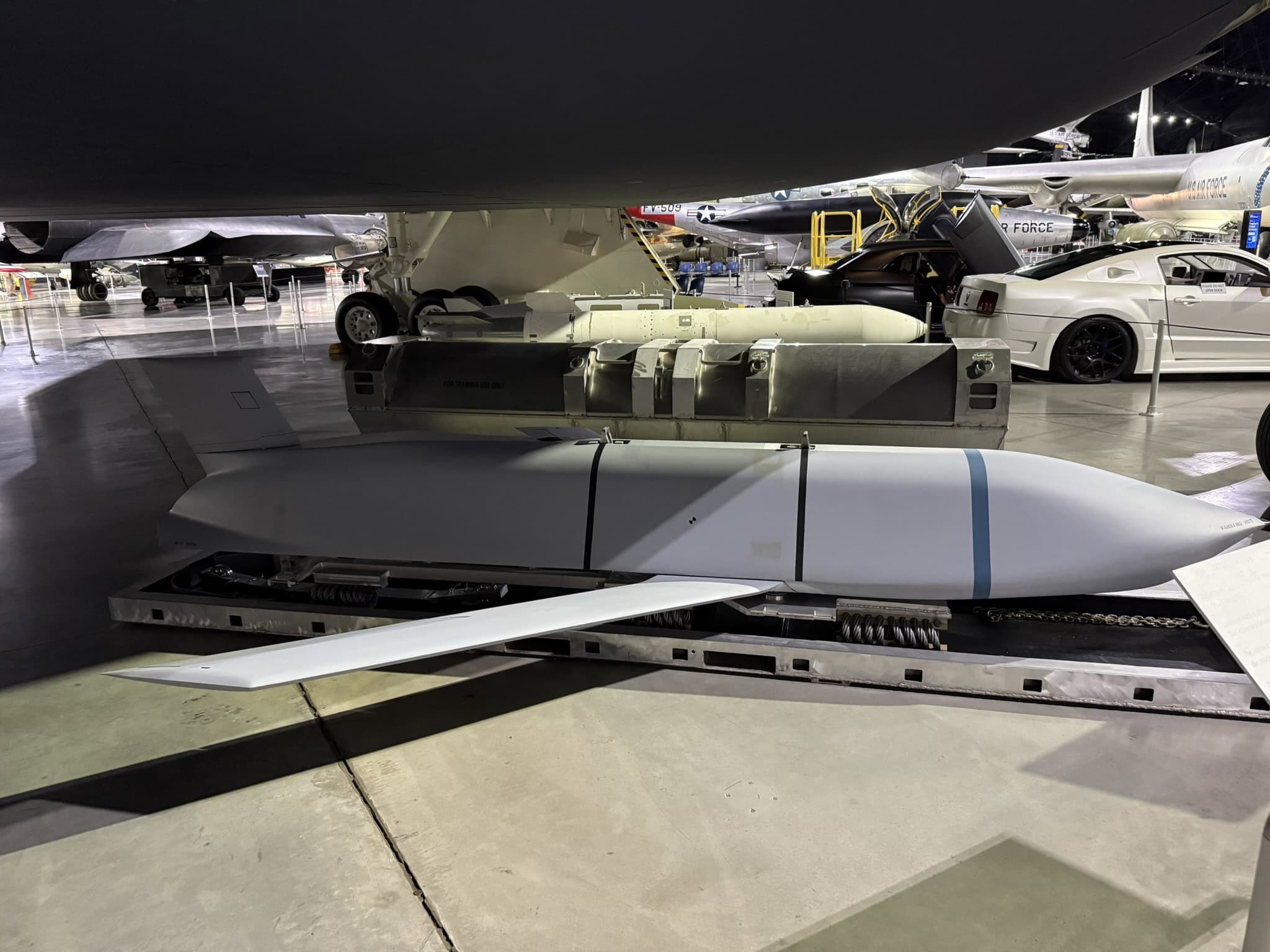
JASSM Cruise Missile. 19FortyFive.com Image.
Unfortunately, the missile is expensive to build, and the US has only a limited stockpile. The JASSM-ER is a high-end, sophisticated weapon that Epic Fury consumed at scale.
Tech of the Interceptors
The US also mass-consumed Patriot and THAAD interceptors.
The Patriot is a point defense system that intercepts aircraft and missiles. The THAAD is an exo-atmospheric interceptor that destroys ballistic missiles in their terminal phase.
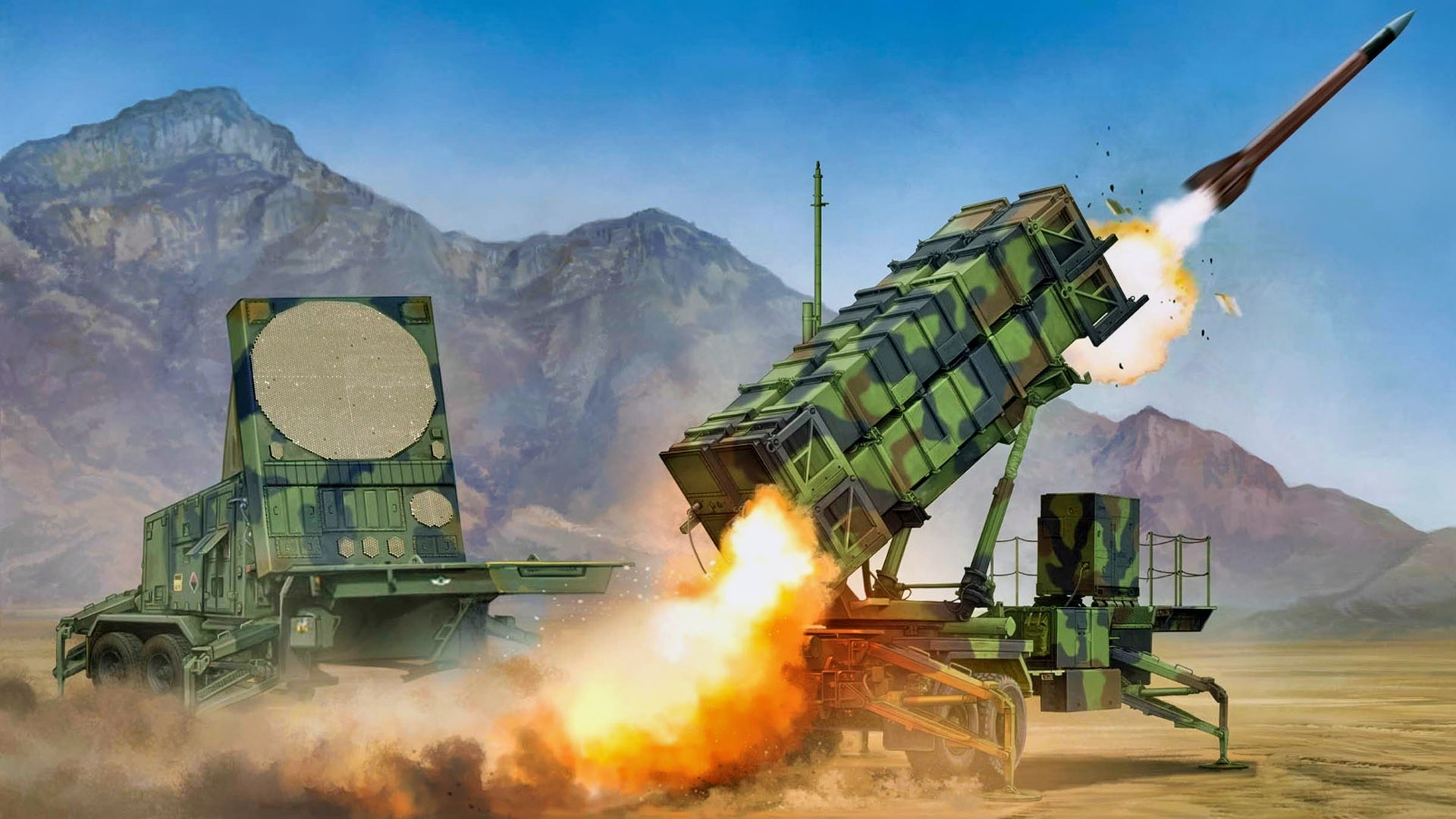
Patriot Missile. Image Credit: Creative Commons.
The key trait of these platforms is that they “hit-to-kill” with a kinetic intercept. These are effective defensive systems—but they cost millions per shot while the incoming threats are often vastly cheaper, creating a significant cost asymmetry. Epic Fury highlighted how glaring the cost asymmetry can be with respect to defensive missile systems.
The Production Problem
The problem with expending so many sophisticated missiles, is that replenishment will take years. Rebuilding the Tomahawk stores, for example, will take two to four years; the advanced interceptors will take 3-5 years.
Why? Because the weapons rely on complex supply chains and specialized components, like rocket motors and guidance electronics, the production cycles are remarkably long at two years for a single missile. Multiple bottlenecks exist, including the acquisition of rare materials, general industrial capacity, and workforce limits. So while the US can spend missiles quickly, rebuilding them takes years.
Attempting to Surge
The US would like to increase Tomahawk production to up to 1,000 units per year using multi-year contracts and industrial investment. But the reality is that you cannot scale sophisticated missile production instantly; production lag will persist despite the desire for an uptick.
The production capacity on paper relative to the actual delivery rates is another factor, too; reality typically lags behind.
So the most realistic expectation is that production capacity will remain slow, even as the US pushes to replenish the inventories consumed through Epic Fury.
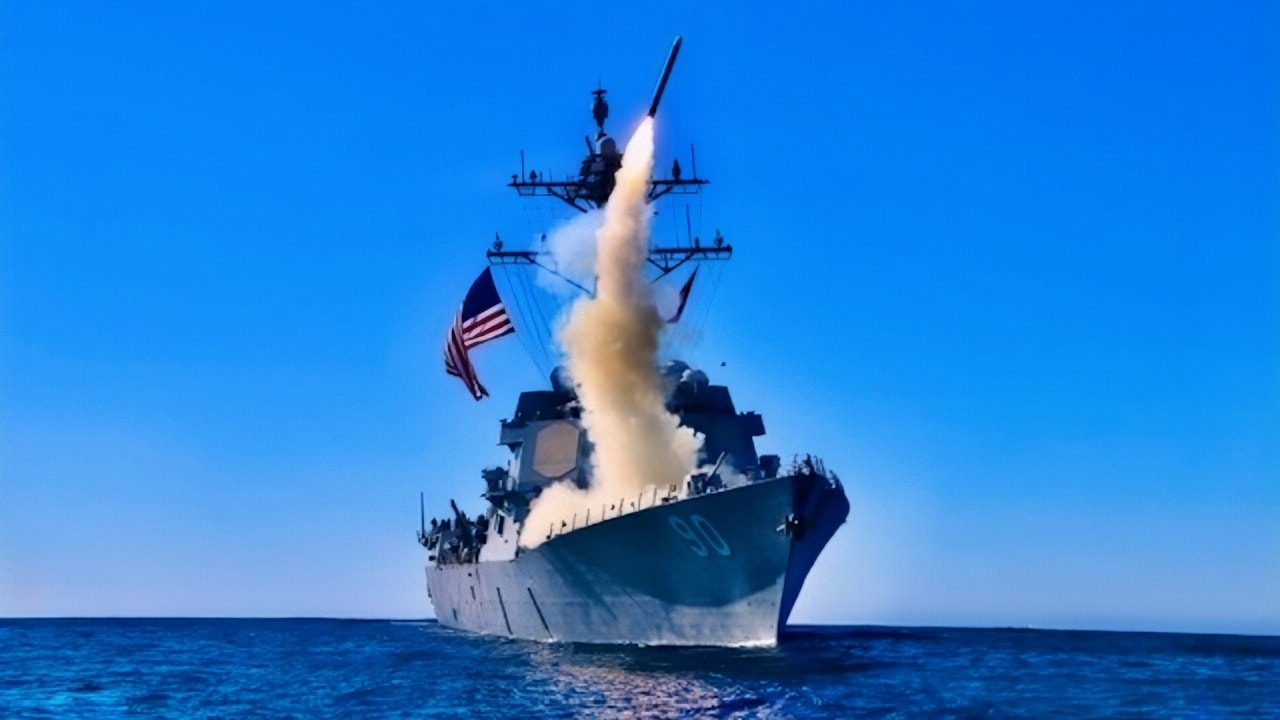
(Dec. 01, 2020) – The guided-missile destroyer USS Chafee (DDG 90) launches a Block V Tomahawk, the weapon’s newest variant, during a missile exercise. This event marked the first time a Block V Tomahawk missile was operationally tested, marking the Navy’s transition to a more advanced capability for the fleet. Block V includes an upgrade that will enhance navigation performance and provide robust and reliable communications. Chafee is currently assigned to Carrier Strike Group ONE and is homeported in Pearl Harbor. (U.S. Navy photo by Ens. Sean Ianno/Released)
The China Problem
Before Operation Epic Fury, the US missile stockpiles were designed for a peer conflict. But Epic Fury has depleted inventories, resulting in reduced readiness and a risk window. The risk window, during which the US has weakened deterrence, is now through the next five years.
China is undoubtedly paying attention; a Pacific conflict would require a massive missile usage. The PLA is studying US targeting and strike patterns, recognizing US industrial weaknesses and timelines. So Epic Fury may have solved a regional problem—in a region of decreasing importance—while creating a larger strategic vulnerability against a peer in the most vital region on Earth.
Was it Worth it?
Proponents of Epic Fury and the corresponding missile expenditure will argue that the operation degraded Iran generally, destroyed their infrastructure, and delayed their nuclear program. But critics of Epic Fury will argue that the US consumed critical munitions in a non-essential operation, diverting focus from the Indo-Pacific, and strengthening China’s relative position. So was Iran worth burning through the US’s high-end arsenal?
Probably not. Epic Fury appears to have been a tactical success, but the strategic wisdom of the operation and how that outcome relates to future operations remain dubious.
Industrial Takeaways
Modern warfare is not just about deploying platforms but about producing them. The lesson was obvious after World War II, when US industrial capacity dwarfed that of Imperial Japan and Nazi Germany, proving more important than the often sophisticated capabilities those Axis powers could field.
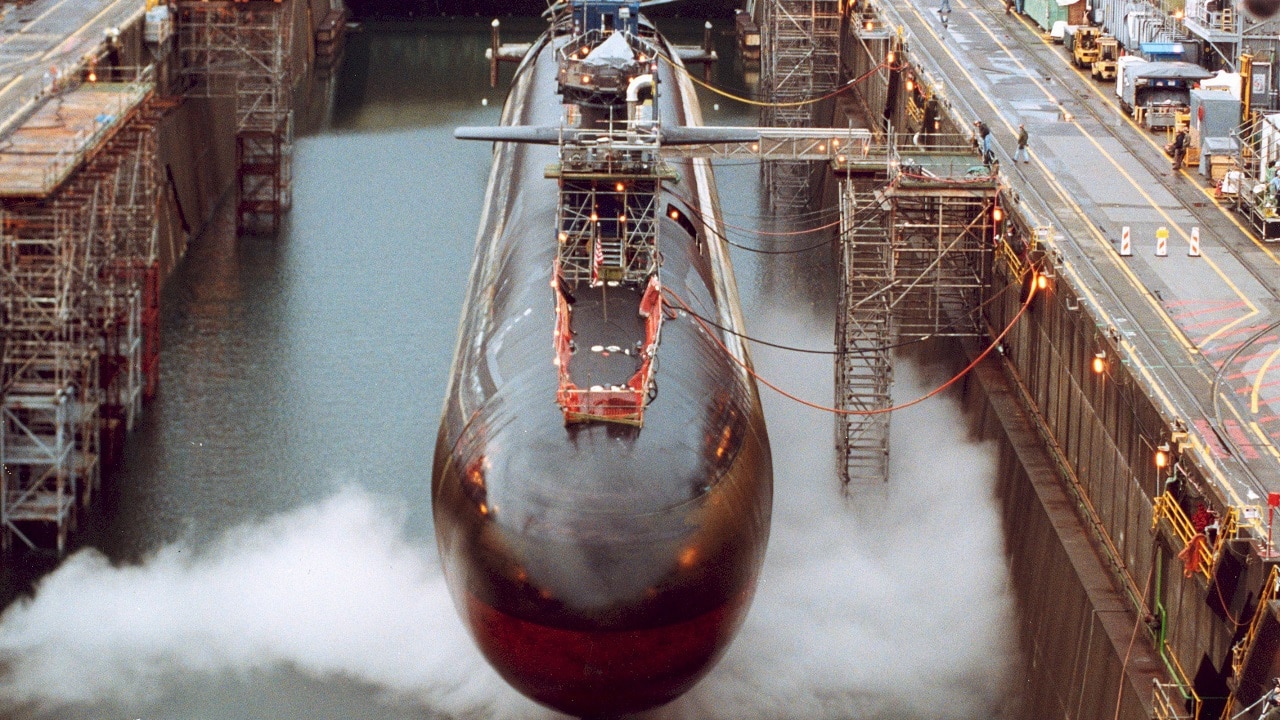
Puget Sound Naval Shipyard, Wash. (Aug. 14, 2003) — USS Ohio (SSGN 726) is in dry dock undergoing a conversion from a Ballistic Missile Submarine (SSBN) to a Guided Missile Submarine (SSGN) designation. Ohio has been out of service since Oct. 29, 2002 for conversion to SSGN at Puget Sound Naval Shipyard. Four Ohio-class strategic missile submarines, USS Ohio (SSBN 726), USS Michigan (SSBN 727) USS Florida (SSBN 728), and USS Georgia (SSBN 729) have been selected for transformation into a new platform, designated SSGN. The SSGNs will have the capability to support and launch up to 154 Tomahawk missiles, a significant increase in capacity compared to other platforms. The 22 missile tubes also will provide the capability to carry other payloads, such as unmanned underwater vehicles (UUVs), unmanned aerial vehicles (UAVs) and Special Forces equipment. This new platform will also have the capability to carry and support more than 66 Navy SEALs (Sea, Air and Land) and insert them clandestinely into potential conflict areas. U.S. Navy file photo. (RELEASED)
The lesson is still relevant today; Epic Fury exposed that the US is optimized for short wars but not necessarily for sustained, high-intensity conflict. The mismatch between consumption rate (weeks) and production rate (years) is a limiting factor on US capacity, suggesting that future wars may not be decided by technological superiority but by industrial superiority.
Final Takeaways
Epic Fury proved that the US has a potent strike capability. But the conflict also exposed fragility in US industrial sustainment. The depletion of missile stores is not just a logistical issue but a strategic vulnerability that could embolden China and will surely take years to address.
The US missile inventory isn’t just about war-fighting but also about shaping adversary decision-making. The real consequences of Epic Fury may not reveal themselves until years down the line.
In future conflicts, the US will likely still rely heavily on missiles during the initial phases.
The reduced stockpile compresses US options, leaving the US with less ability to absorb early losses. Adversaries will lean into American fragility, too, shifting to cheaper, high-volume systems while the US remains reliant on expensive, hard-to-produce munitions like the Tomahawk.
About the Author: Harrison Kass
Harrison Kass is a writer and attorney focused on national security, technology, and political culture. His work has appeared in City Journal, The Hill, Quillette, The Spectator, and The Cipher Brief. He holds a JD from the University of Oregon and a master’s in Global & Joint Program Studies from NYU. More at harrisonkass.com.