
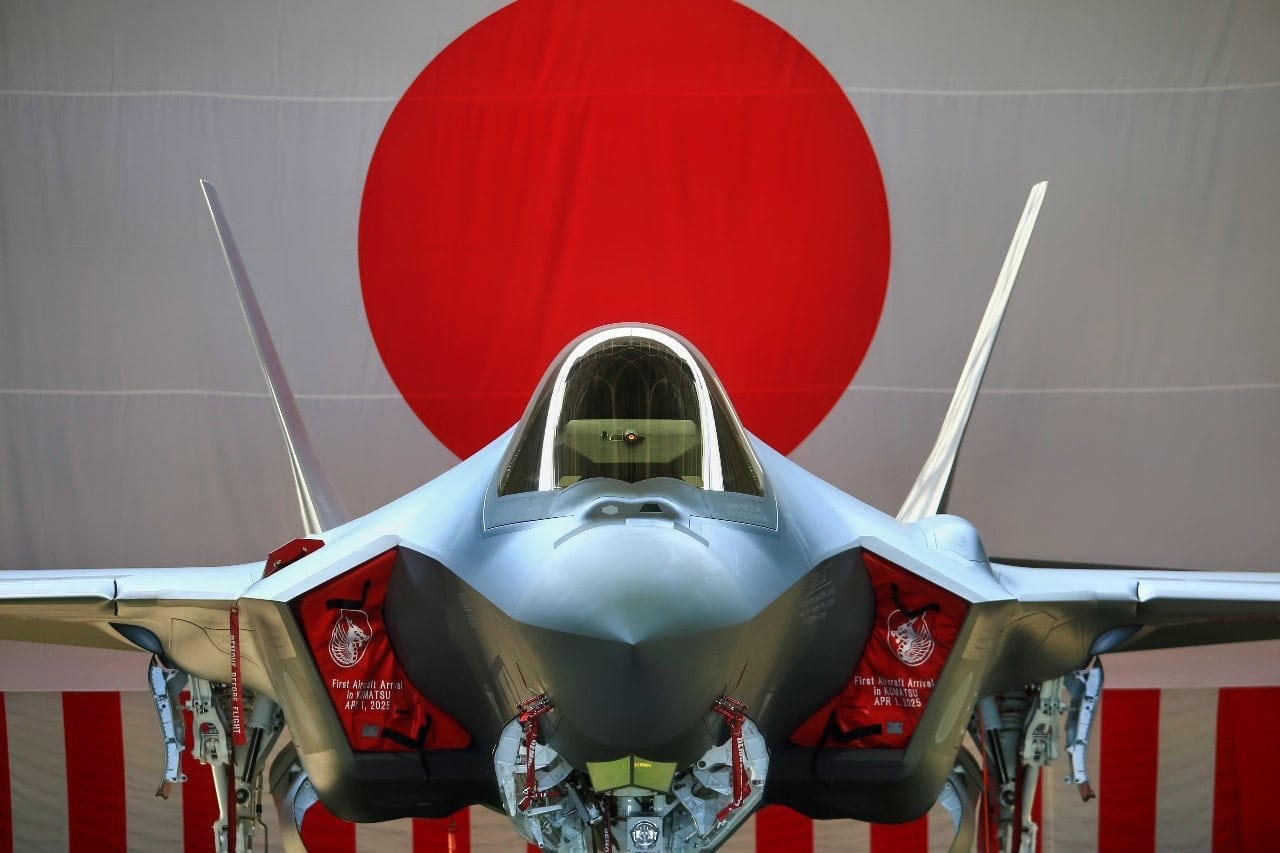
Japan’s Light Aircraft Carriers Carrying F-35s Are Gamechangers In the Pacific: The Japanese Maritime Self-Defense Forces (JSDF) have evolved into a high-speed, mobile, 5th-generation warfare capability through the rapid development of new “mini-aircraft carriers” that carry American-built F-35Bs.
The new light mini-carriers of the JMSDF were deployed to the US last year, where they trained with the US Navy off the coast of San Diego. The redesigned destroyers of the Izumo class have been converted into carriers that will expand the reach of Japan’s forces.
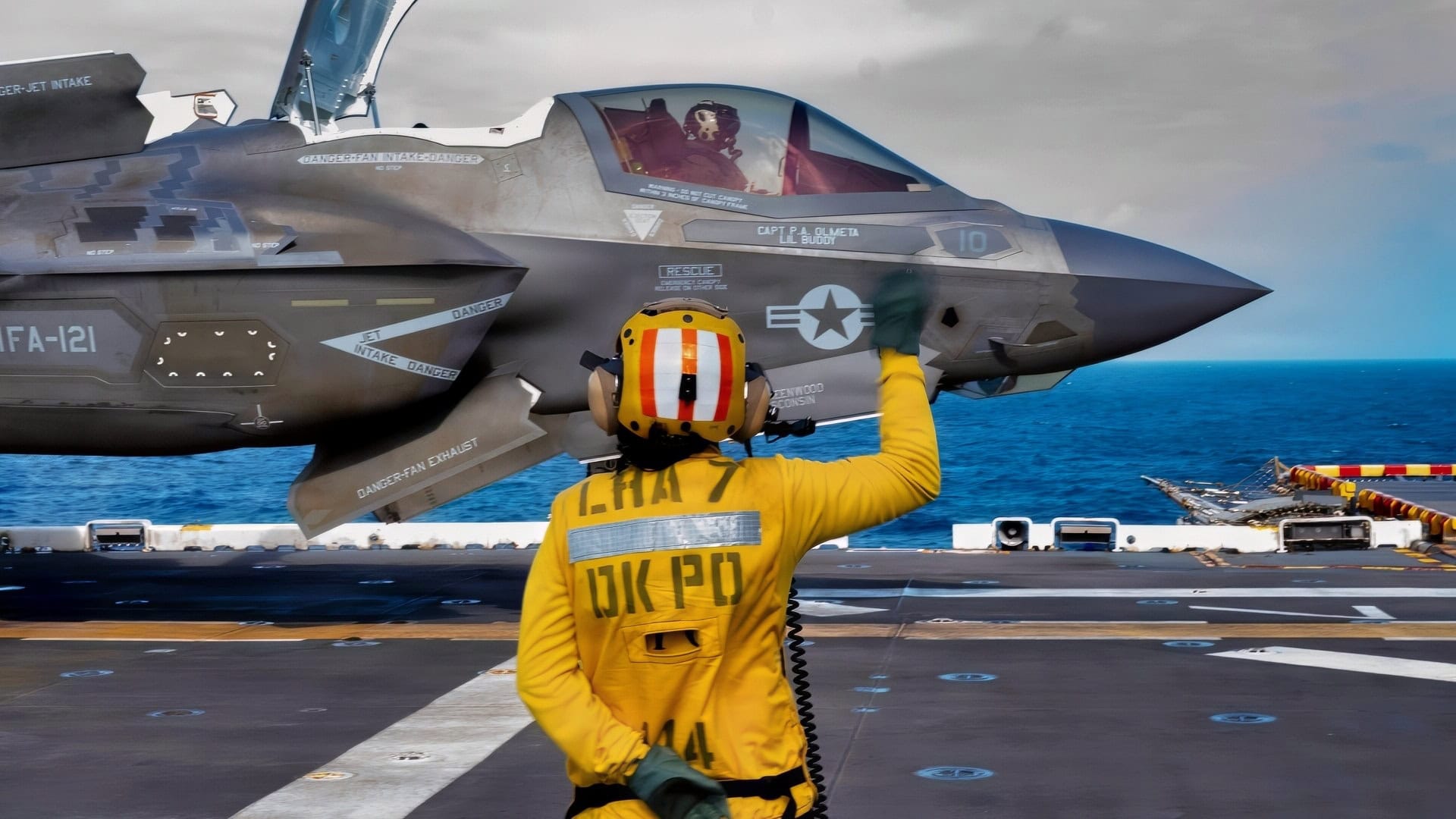
Aviation Boatswain’s Mate (Aircraft Handling) 3rd Class Anika Ramos directs the launch of an F-35B Lighting II, attached to Marine Fighter Attack Squadron 242 during flight operations on the flight deck of the America-class amphibious assault ship USS Tripoli (LHA 7) in the South China Sea, Dec. 11, 2025.
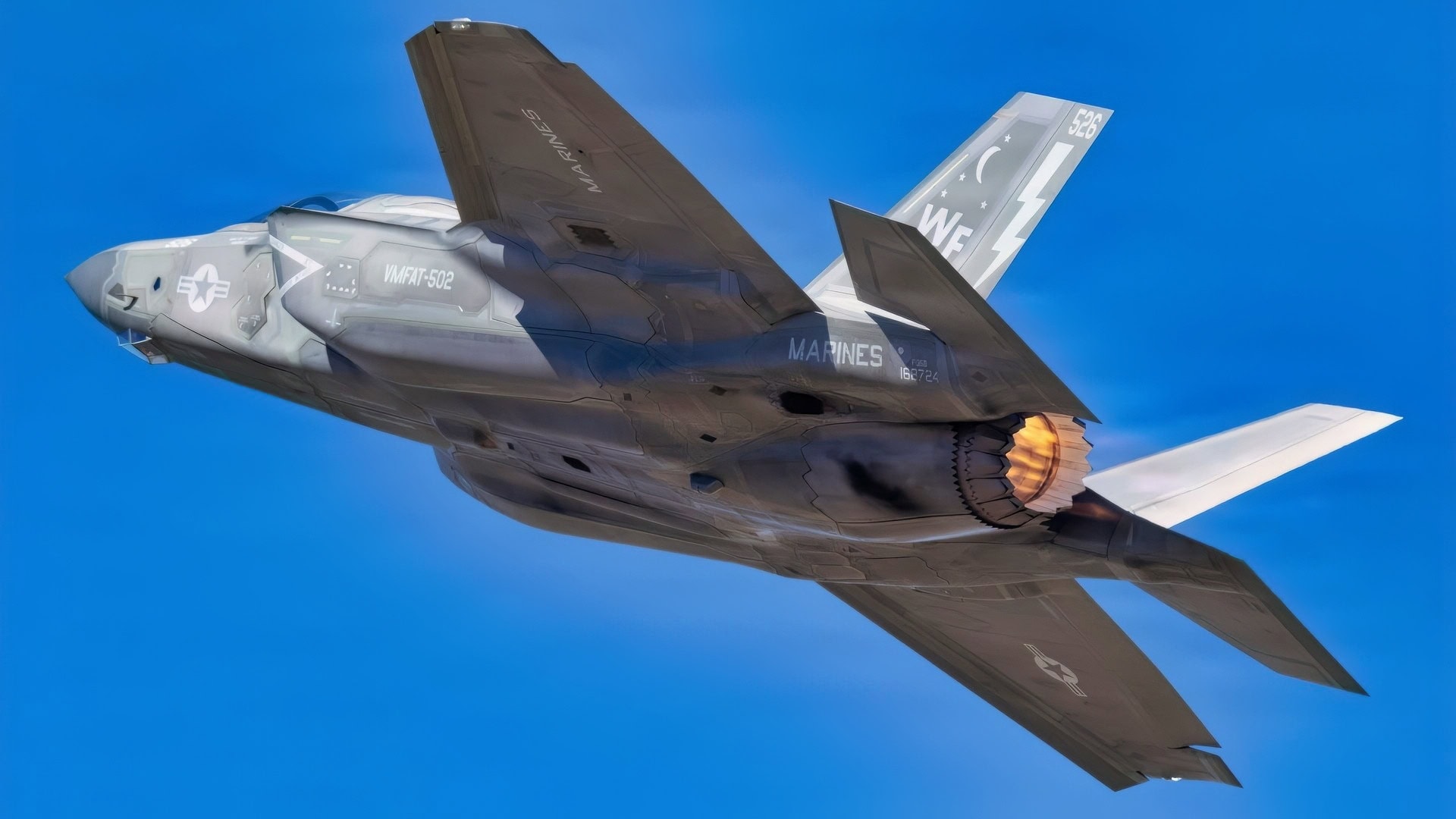
A U.S. Marine Corps F-35B Lightning II lights its afterburner and climbs during the Luke Days 2026 airshow, Saturday, March 21, 2026, at Luke Air Force Base, Arizona. The Marine Corps F-35B Lightning II demonstration showcases the maneuverability and advanced technology of a fifth-generation fighter. Demonstrations like this reflect the cutting-edge capabilities that allow the joint force to maintain air superiority in modern combat operations. (U.S. Air National Guard Photo by Tech. Sgt. Hampton Stramler)
Japan Has Power Projection And Expanded Defenses
Called the “JS Kaga,” the newly configured amphibious carrier is designed to transport F-35s, troops, helicopters, and other power-projecting and attack-enabling assets.
These new assets are game-changers for Japan in the Pacific, enabling it to project power and expand its defenses in the Indo-Pacific.
The Kaga has a maximum displacement of 27,000 tons at full load and an 814-ft flight deck; it is a ship vastly smaller than US Navy carriers, which displace more than 100,000 tons.
However, the Kaga is currently perfect for the JSDF, given China’s belligerent actions in the region.
First Japanese Aircraft Carriers Constructed Since World War II
The Kaga is named after the Japanese prefecture, which also bore the name of a World War II carrier. The JS Kaga is actually longer than its predecessor but carries fewer aircraft.
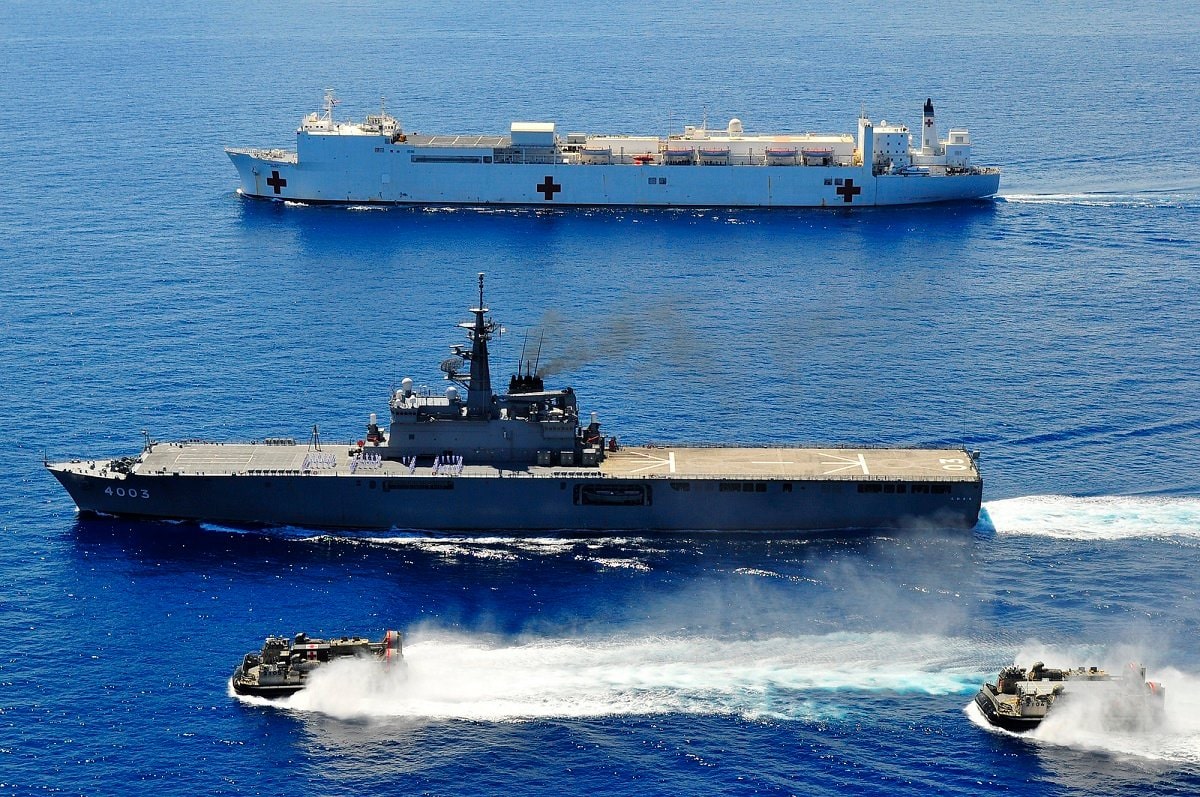
The Military Sealift Command hospital ship USNS Mercy (T-AH 19), rear, the Japanese Maritime Self-Defense Force Osumi-Class amphibious assault ship JDS Kunisaki (LST 4003), center, and two Japanese landing craft, air cushion hovercraft steam through the South China Sea during a photo exercise June 14, 2010. Mercy is deployed as part of Pacific Partnership 2010, the fifth in a series of annual U.S. Pacific Fleet humanitarian and civic assistance endeavors to strengthen regional partnerships. (DoD photo by Mass Communication Specialist 2nd Class Jon Husman, U.S. Navy/Released).
During World War II, the first ship, named Kaga, was sunk during the Battle of Midway in June 1942.
At least four bombs hit the Kaga during an attack by US divebombers led by Commander Wade McClusky during the battle: a 1000-pound bomb and at least three 500-pounders.
The Japanese had been caught trying to switch their aircraft from bombs to torpedoes, and the American dive bombers caught them off guard. The explosions ignited 80,000 pounds of bombs and torpedoes along with aviation fuel, immediately turning her into a flaming wreck. She was one of four carriers that Japan lost that day, and it turned the tide of the Pacific War.
Meet The JS Kaga
The Kaga and the Izumo have been modified to operate F-35B fighter jets, which have short takeoff and vertical landing capabilities.
These vessels are now capable of deploying and supporting F-35Bs, bolstering Japan’s defense capabilities, particularly amid rising regional tensions with China.
They operate more like US amphibious assault ships than traditional fleet carriers. It is also a milestone for Japan, as it establishes smaller aircraft carriers equipped with the F-35B Lightning II, or “Lightning carriers,” as the new capital ships of Asia.
These smaller light carriers can hit speeds over 35 knots and are very maneuverable, making them much harder to hit.
Conversion and Upgrades Of The Ships
The first ship of the class, JS Izumo, entered service in March 2015, followed by her sister ship JS Kaga in March 2017. Initially designed to be strictly helicopter carriers, the Japanese Cabinet in 2018 approved plans to convert both ships to operate the short-takeoff and vertical-landing F-35B as part of the National Defense Program Guidelines and Mid-Term Defense Plan.
In October 2021, U.S. Marine Corps F-35Bs conducted the first-ever landing and takeoff from a Japanese vessel since the end of World War II.
The Izumo-class destroyers have undergone modifications, including a reinforced flight deck and improved hangar space, to accommodate the F-35B.
This conversion involves modifying the flight deck, including strengthening it and adding heat-resistant coatings, as well as altering the bow shape to a rectangular design.
The bow of the Izumo-class ships has been modified to a rectangular shape, similar to that of US amphibious assault ships. This increases the usable deck area and improves aircraft launch and recovery.
Recent photos from last week in the Aviationist show the bow modifications made for the F-35s.
The Kaga’s flight deck also received heat-resistant material on its flight deck to tolerate the heat of the F-35B’s vectored thrust engine; new lights for nighttime operations; and centerline marking (tramline) along the flight deck, the article added.
F-35B Integration Gives JSDF More Power Projection
The F-35B is designed for short takeoff and vertical landing (STOVL), making it well-suited for operation from these lighter, smaller carriers.
The second stage of conversion involves modifications to the interior compartments to accommodate the F-35B, including the installation of munition magazines.
The JSDF Fleet issued a statement on the work completed. “The escort vessel ‘Izumo’ has reached a milestone in the modification work to alter the bow shape related to its special refit, and took a commemorative photo with those involved. Preparations are steadily progressing toward completion.”
Strategic Weapons For Japan’s Defense
These upgraded vessels provide Japan with a more mobile and flexible strike capability, potentially enhancing its ability to project power in the region.
Trials have been conducted with US F-35Bs, demonstrating the vessels’ capacity to support the aircraft.
The ability to deploy F-35Bs from these “Lightning Carriers” contributes to Japan’s overall defense strategy, particularly amid continued Chinese aggression. It allows Japan to project and protect its shores.
US Cooperation With The Project
The US has been actively involved in the process, with joint exercises and training, further highlighting the close defense relationship between the two countries.
Japan’s MOD has also engaged in collaborative weapons development with the US on systems such as the Aegis radar, the SM-3 Block IIA, and the Evolved Sea Sparrow Missile Block 2.
Japan is also exploring the use of drones alongside the F-35B, which could further expand the capabilities of its carrier air wings. The US has been developing the “loyal wingman” or the “Collaborative Combat Aircraft” (CCA) program.
Japan’s concern about China has led to significant increases in its defense spending. The Kaga can carry 12 F-35Bs and possibly more.
While the F-35B is the only variant designed to operate from amphibious assault ships and light aircraft carriers, it shares the same stealth technology and advanced avionics as the F-35A and F-35C.
And while the actual number of F-35 fighters per ship is low compared to traditional aircraft carriers, the F-35B’s stealth and advanced sensor capabilities provide a substantial boost to Japan’s regional defense capabilities.
The carriers are labeled “defensive” to align with Japan’s pacifist constitution; however, they allow Japan to project airpower far from its land bases, serving as an asymmetric response to China’s regional security threats.
About the Author: Steve Balestrieri
Steve Balestrieri is a National Security Columnist. He served as a US Army Special Forces NCO and Warrant Officer. In addition to writing on defense, he covers the NFL for PatsFans.com and is a member of the Pro Football Writers of America (PFWA). His work was regularly featured in many military publications.