
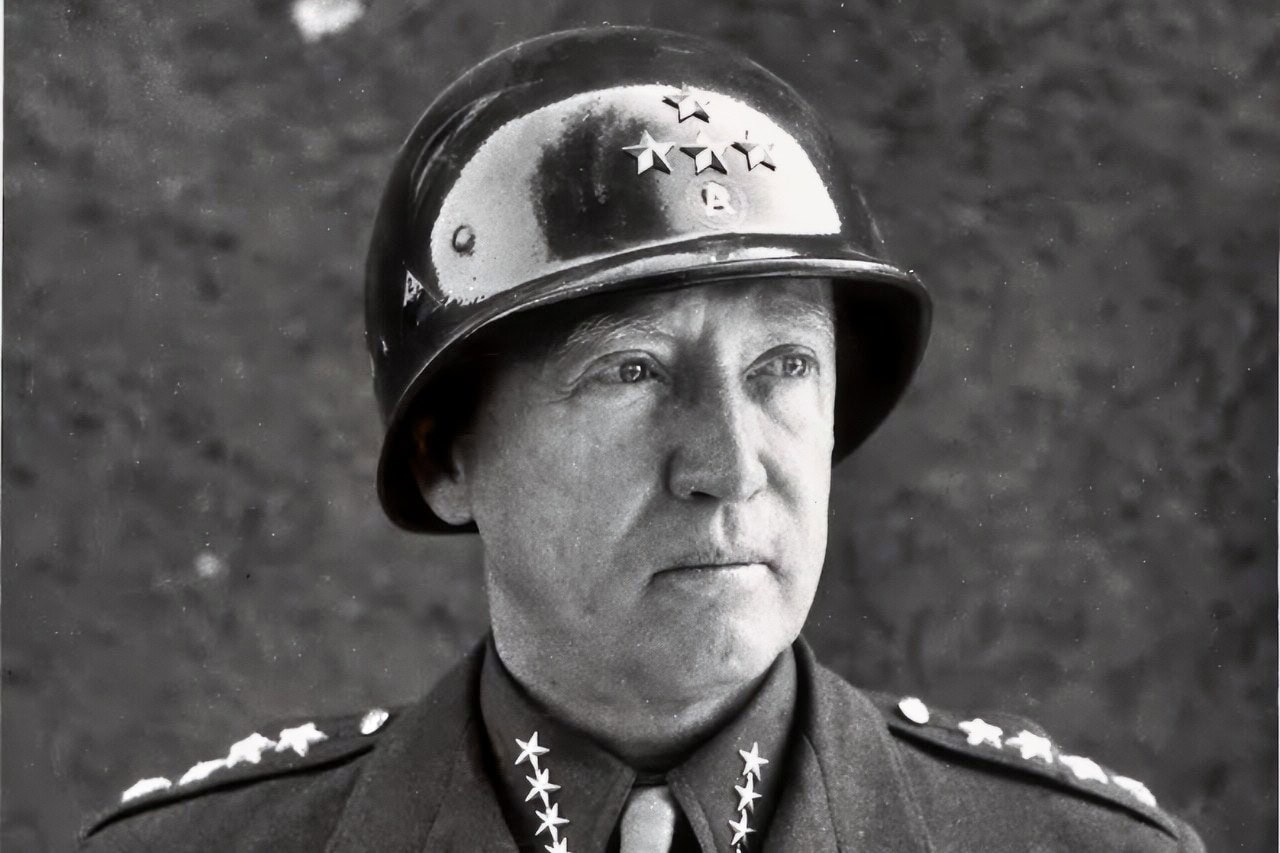
General George S. Patton once said it best: “How can a man fail if he replaces everything subordinate to success?” The legendary “Old Blood and Guts” was more than just a hard-charging warrior—he was a master military planner whose preparation skills saved the day at the Battle of the Bulge and conquered Sicily before Field Marshal Montgomery could get there.
Sunday Quote of the Day by General George S. Patton
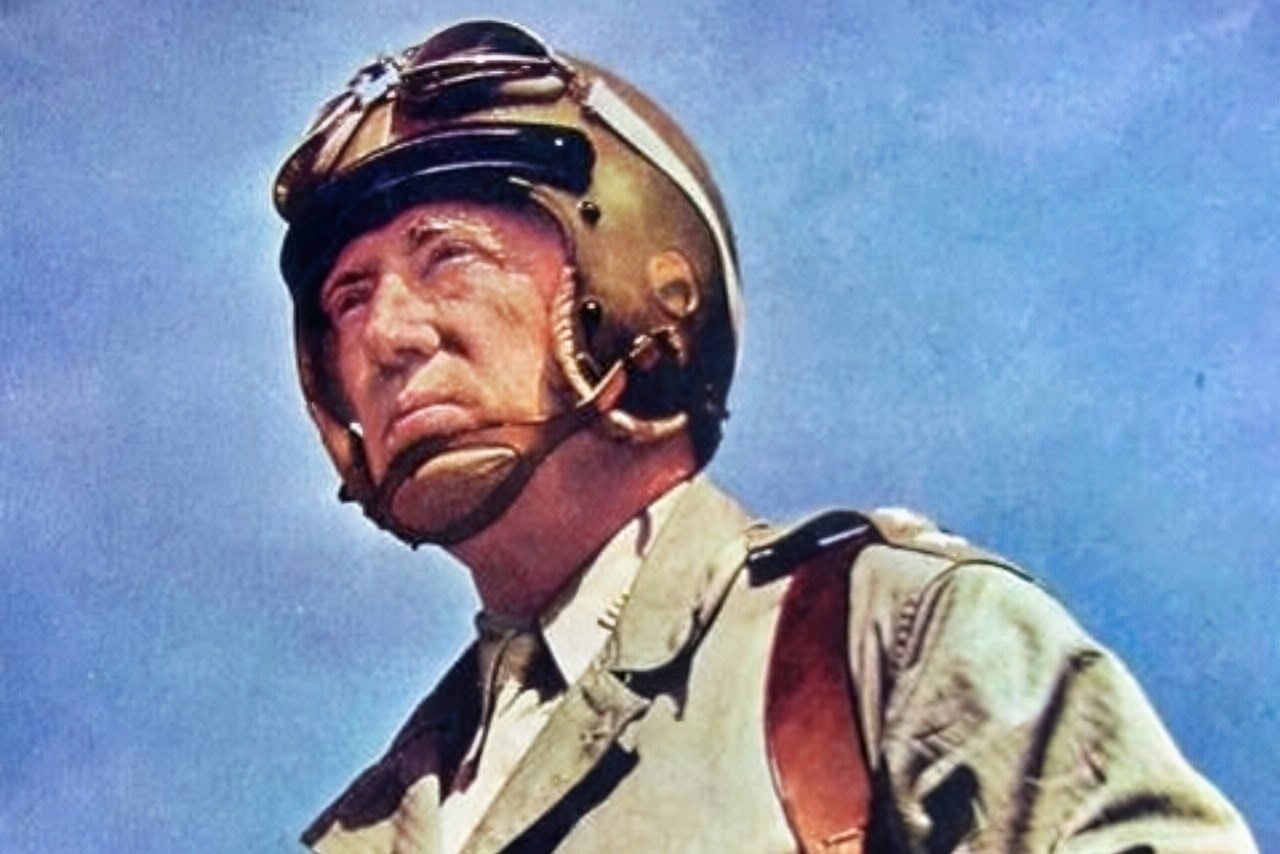
General George Patton of the U.S. Army. Image Credit: Creative Commons.
“How can a man fail if he replaces everything subordinate to success?”- U.S. Army General George S. Patton
That quote, belongs to General George Smith Patton Jr. (11 November 1885 – 21 December 1945), one of the U.S. Army’s all-time most beloved yet also most controversial generals.
This particular nugget, taken from a transcript of a 1971 lecture delivered by historian Martin Blumenson at the United States Air Force Academy (USAFA), titled “The Many Faces of George S. Patton, Jr.,” was uttered to his then-fiancée and beloved eventual wife, Beatrice Ayer Patton (January 12, 1886 – September 30, 1953; born Beatrice Banning Ayer).
Though George Patton was certainly a hard-charging warrior who earned the sobriquet “Old Blood and Guts,” he was no mindless knuckle-dragger.
A major factor in his success was the brain that accompanied his brawn, particularly his keen planning skills.
Patton the Proper Planner Part I: The Battle of the Bulge AKA The Ardennes Offensive (December 16, 1944 – January 28, 1945)
Thanks to a major intelligence failure—and the complacent dithering of Generals Dwight David “Ike” Eisenhower and Omar Nelson Bradley—the Battle of the Bulge ) started off as a huge disaster for the Allies.
Much like the Tet Offensive during the Vietnam War in 1968, the Americans were caught completely off-guard.
However, there was no way in Hades that George Patton was simply going to roll over and accept defeat.
Indeed, acclaimed historian Alex Kershaw puts it in a January 19, 2023, article for Friends of the National WWII Memorial, “I knew that his finest hours came during the Battle of the Bulge…he was also the only senior Allied general to emerge from the Battle of the Bulge with his reputation enhanced.”

General Patton Portrait. Image Credit: Creative Commons.
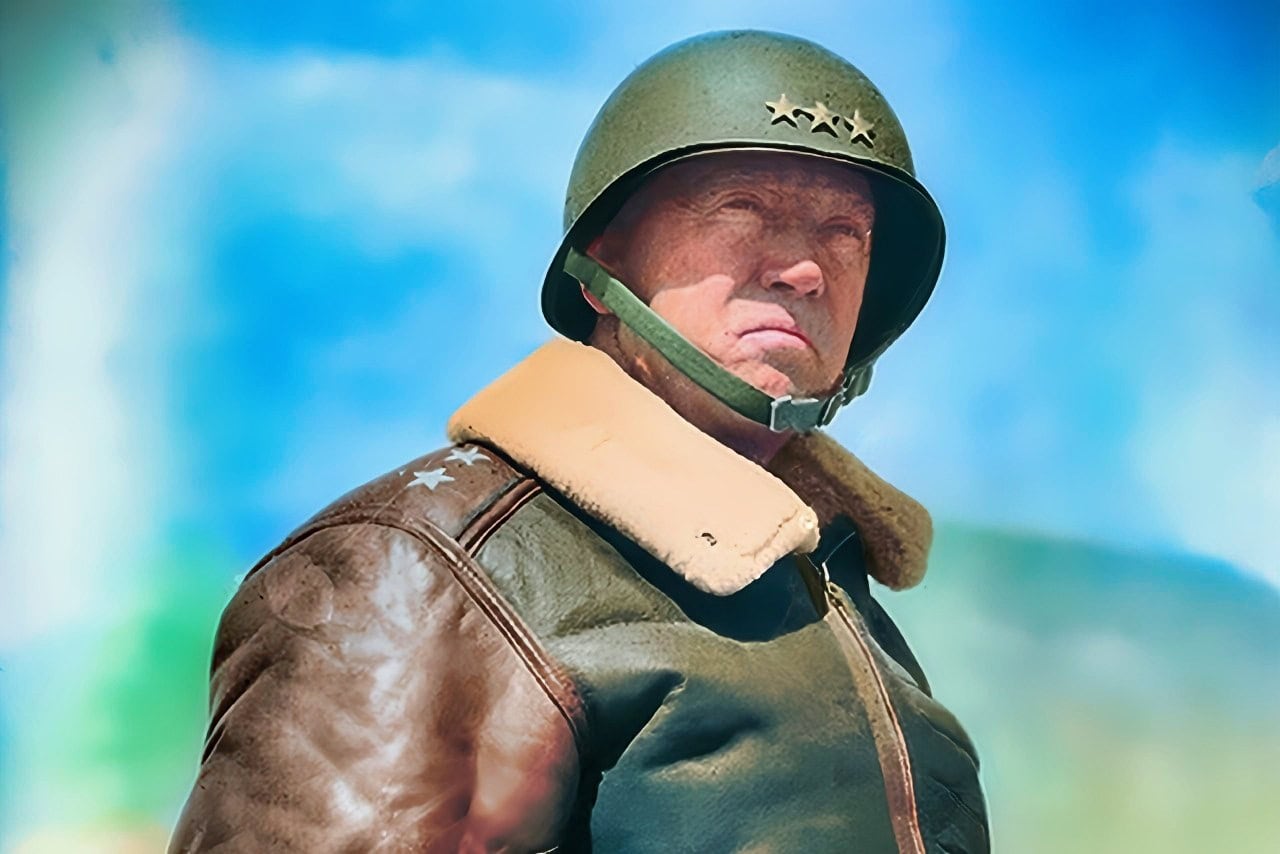
George Patton U.S. Army Photo
Martin Blumenson would have wholeheartedly concurred, noting that “Probably the best example of his sure hold on planning occurred in December 1944, when the German Ardennes counteroffensive drove a bulge into the First Army line. In 48 hours, Patton turned his Third Army 90 degrees to the left and started a drive that linked up with the embattled defenders of Bastogne and threatened the flank of the German bulge. The German attack was as good as contained.”
A classic example of victory being snatched from the jaws of defeat, thanks not only to Patton’s sheer willpower and force of personality, but also his brainpower and force of planning prowess.
Both U.S. Navy Commander (Ret.) Richard “Demo Dick” Marcinko—founding C.O. of SEAL Team 6—and U.S. Army Colonel (Ret.) David Hackworth was fond of the 7P’s Principle: Proper Prior Planning Prevents Piss-Poor Performance.
Well, in the case of Patton in the Ardennes, the 7P’s weren’t enough to prevent piss-poor performance, but they certainly made up for it in the end.
Patton the Proper Planner Part Deux: The Sicily Campaign AKA Operation Husky (July 9, 1943 – August 17, 1943)
Though Patton was rightfully known first & foremost as a mastermind of tank warfare, his skill in planning amphibious warfare tends to be comparatively overlooked and underrated.
To cite Mr. Blumenson again, “[T]here is no question of his proficiency as a planner and leader of amphibious assaults. As a matter of fact, it was his willingness, his insistence, to conduct amphibious end runs in Sicily that enabled him to beat General Montgomery into Messina.”
“General Montgomery” as in Bernard Law Montgomery, 1st Viscount Montgomery of Alamein (17 November 1887 – 24 March 1976), affectionately nicknamed “Monty.” “Monty” and “Old Blood and Guts” had a well-known mutual personal animus, so when the latter’s 7th Army arrived in Messina several hours before the former’s 8th Army, it certainly didn’t do anything to promote the prospect for personal peacemaking between the two Allied officers! Personal pettiness aside, Patton’s accomplishment *did* complete the Allied conquest of Sicily, a key island region of Italy.
Patton the Proper Planner Part III: the Pre-WWII Years
Indeed, one can go back further than the WWII years to see examples of George Patton’s planning genius.
In the 23 years between the end of WWI and America’s entry into WWII, military budgets were low and military forces small, and many regular officers grew discontent and discouraged. Not Patton. He took his peacetime soldiering career very seriously, as demonstrated by the following:
– Drawing a plan to restructure the infantry division into triangular form in order to get more maneuver and firepower out of fewer men, thereby anticipating the World War II type formed by Gen. Lesley McNair
– Earning his pilot’s license in order to better understand the developing maturity of airpower, and working on the idea of employing the light plane for communication and liaison
-Working closely with J. Walter Christie to improve the silhouette, suspension, power, and guns of tanks
-Inventing a machine gun sled to give riflemen in the assault more direct fire support
To quote Martin Blumenson one last time, “All this he did before Pearl Harbor.”
About the Author: Christian D. Orr
Christian D. Orr is a Senior Defense Editor. He is a former Air Force Security Forces officer, Federal law enforcement officer, and private military contractor (with assignments worked in Iraq, the United Arab Emirates, Kosovo, Japan, Germany, and the Pentagon). Chris holds a B.A. in International Relations from the University of Southern California (USC) and an M.A. in Intelligence Studies (with a concentration in Terrorism Studies) from American Military University (AMU). He is also the author of the book “Five Decades of a Fabulous Firearm: Celebrating the 50th Anniversary of the Beretta 92 Pistol Series,” the second edition of which was recently published.