
Grant the optimistic scenario: The Iran ceasefire holds. Diplomats produce something they can call a framework. The immediate military pressure eases, and Washington declares a measure of success.
What comes next?
The honest answer is a countdown clock — set to expire under considerably worse conditions than the last one.
The mow-the-lawn debate is already underway in national security circles. Strike, degrade, wait for Iran to reconstitute, strike again. It worked tolerably well when Iran was building its capabilities largely in isolation, financing them through sanctions-squeezed revenue, and absorbing setbacks without meaningful external resupply. That version of the problem may already be obsolete.
The Iran Resupply Problem Is Structural, Not Contingent
Iran doesn’t rebuild in a vacuum anymore. That is the single most important fact about any future confrontation that the current debate is systematically underweighting.
Russia has spent three years transferring drone technology to Iran — and getting it back, improved. The Shahed-136 started as an Iranian concept and returned from Ukraine as a combat-tested platform with documented performance data. Moscow gets cheap attrition munitions. Tehran gets engineering feedback from the most intensive drone warfare environment in history. The transaction runs in both directions, and both parties have every incentive to deepen it.
North Korea’s contribution is less sophisticated but strategically significant. Ballistic missiles. Artillery shells. The institutional knowledge of a state that has spent decades producing weapons under sanctions and learned to do it well. Pyongyang has demonstrated repeatedly that it can supply materiel to partners without meaningful international consequences. There is no reason to assume that changes.
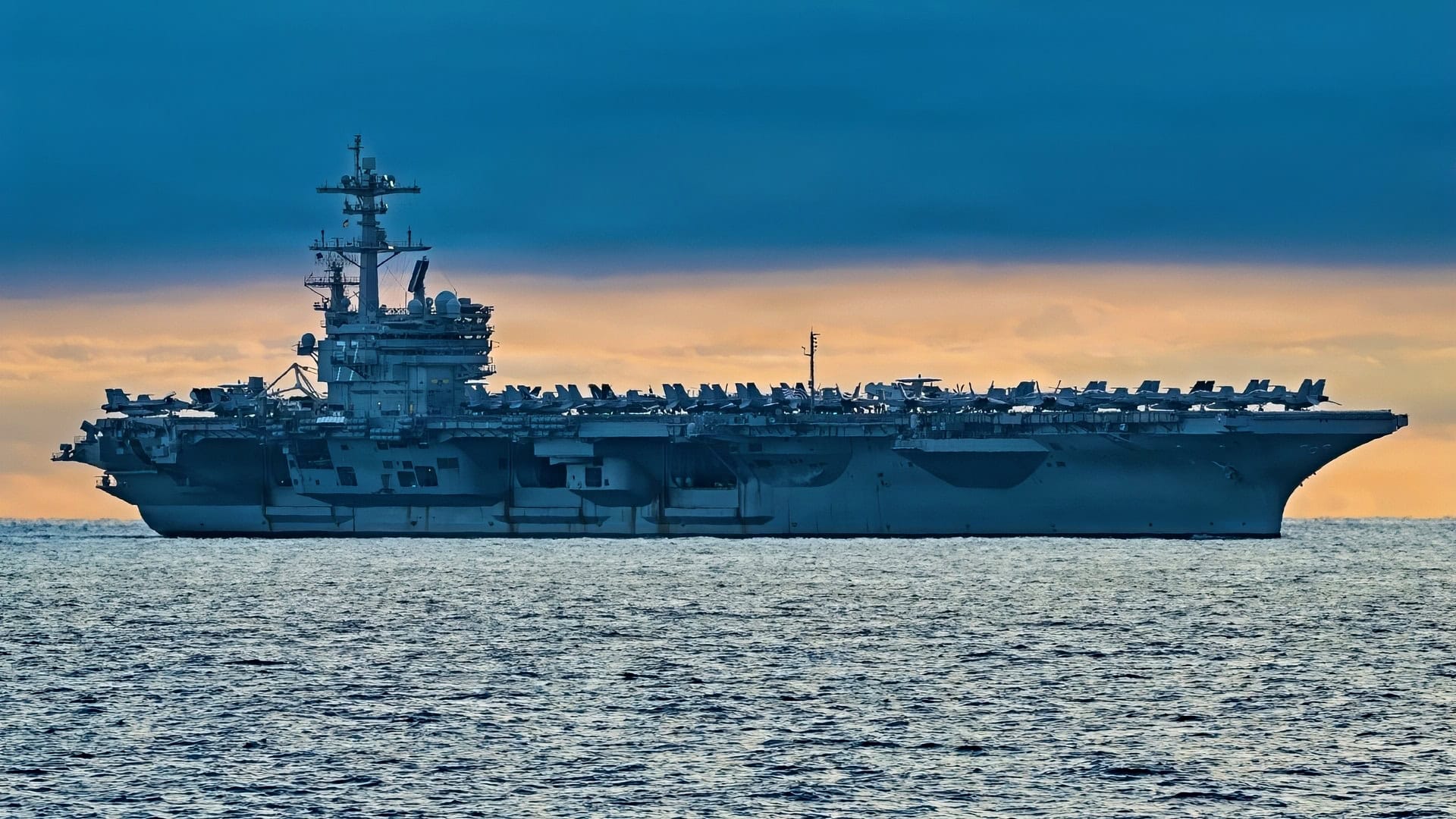
The Nimitz-class aircraft carrier USS George H.W. Bush (CVN 77) sails in formation while underway in the Atlantic Ocean, Dec. 10, 2025. The George H. W. Bush Carrier Strike Group is underway for Group Sail, its first integrated at-sea training phase. This event is designed to increase the Strike Group’s tactical proficiency and lethality across all domains, meeting Navy and Joint warfighting requirements. (U.S. Navy photo by Mass Communication Specialist Seaman Mark Peña)
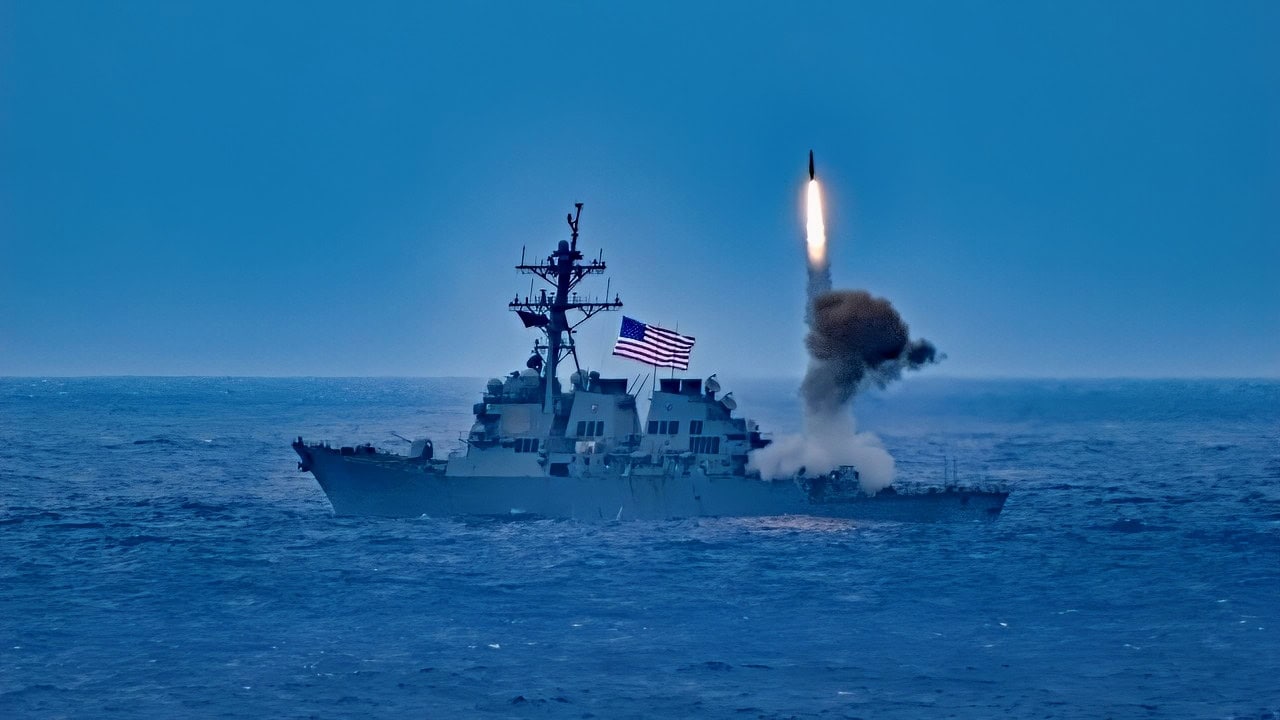
(March 24, 2022) – The Arleigh Burke-class guided-missile destroyer USS Milius (DDG 69) launches a Standard Missile (SM) 2 during Surface Warfare Advanced Tactical Training while operating in the Philippine Sea, March 24, 2022. Milius is assigned to Commander, Task Force 71/Destroyer Squadron (DESRON) 15, the Navy’s largest forward-deployed DESRON and the U.S. 7th Fleet’s principal surface force. (Courtesy photo)
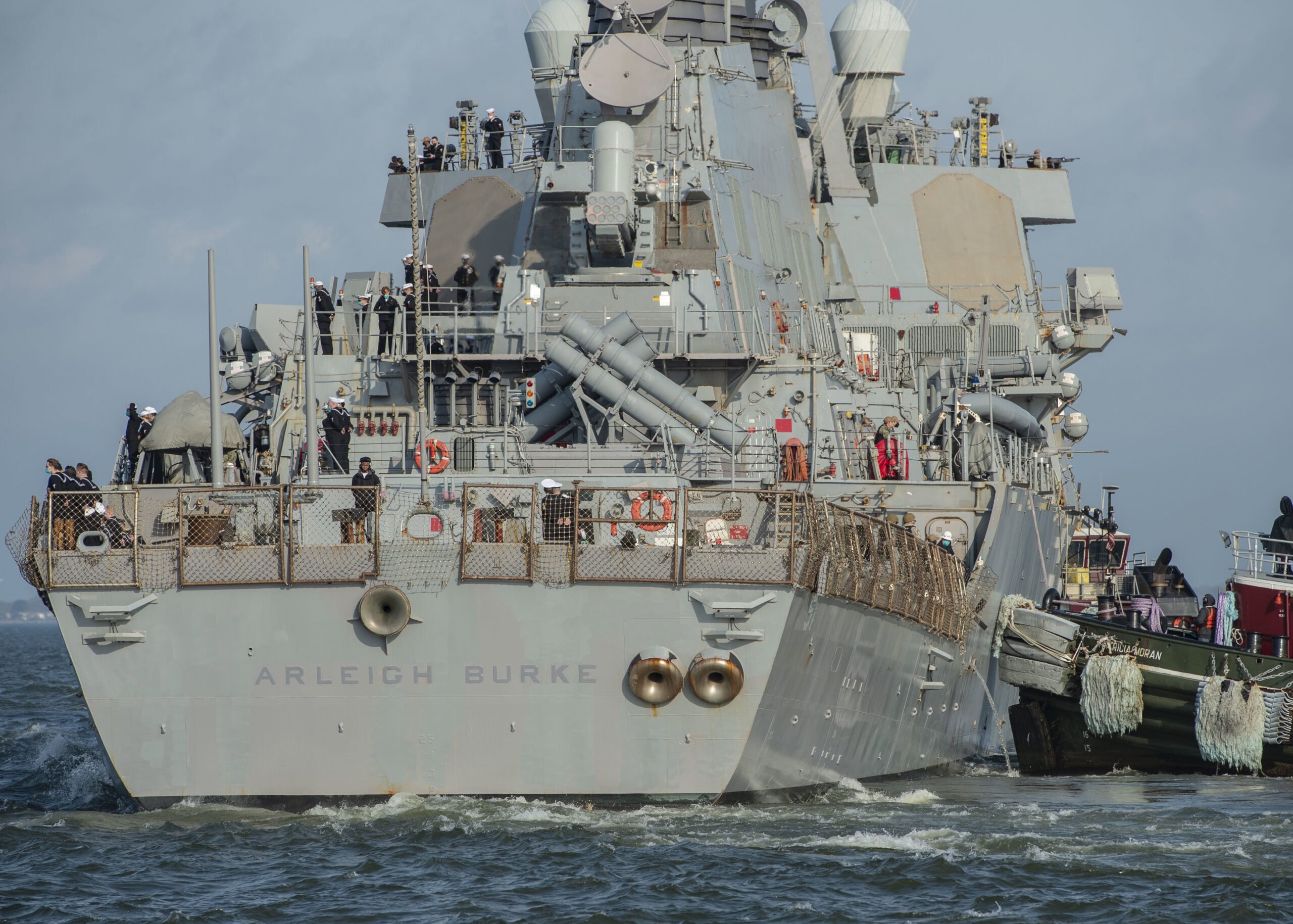
NORFOLK (Mar. 26, 2021) – A tugboat assists the guided-missile destroyer USS Arleigh Burke (DDG 51) in getting underway Mar. 26. Arleigh Burke will replace USS Donald Cook (DDG 75) as one of four forward deployed naval forces (FDNF) located in Spain. Arleigh Burke will join USS Ross (DDG 71), USS Roosevelt (DDG 80), and USS Porter (DDG 78) as the newest member of FDNF Rota. (U.S. Navy photo by Mass Communication Specialist 2nd Class Kris R. Lindstrom)
China’s role is the one Washington least wants to name. Beijing hasn’t armed Tehran the way Moscow has. It doesn’t need to. China buys roughly 90% of Iran’s crude exports. That revenue pays engineers, funds procurement, and keeps production lines running that sanctions were built to starve. The 2021 Comprehensive Strategic Partnership locked in that arrangement for 25 years across energy, infrastructure, and security. Iran’s defense budget has not cratered under sanctions pressure. It was supposed to. The reason it hasn’t isn’t complicated.
The architecture of external support is not fragile, and it is not reversible on any near-term timeline. If anything, the current conflict has deepened each of those relationships. Shared adversaries clarify priorities. Every member of that network has now observed, at scale, what Iran’s drone and missile capabilities look like under real combat conditions — and where their limits are. The next version won’t have the same limits.
The Baseline Problem
Here is what the mow-the-lawn approach assumes: that you’re mowing the same lawn each time.
The Iran that reconstitutes after this conflict will not look like the Iran that entered it. Iranian engineers now possess something they lacked before — operational data from a genuine high-intensity exchange against sophisticated air defense systems. They know which missiles got through, at what altitudes, under what conditions. They know which drones were intercepted and roughly how. That is not information they can read in a public report. It is institutional knowledge acquired under fire, and it compounds.
Precision-guided munitions capable of threatening hardened facilities have gotten cheaper and more accessible since Washington last ran this calculation seriously. Iranian ballistic missile accuracy has improved steadily for a decade. The range has extended. Warhead variety has grown. Strike Iran in five years and the degradation calculus — sorties required, penetrating weapons needed, days to achieve meaningful damage — comes out differently than it did this time. Mow the lawn on that terrain, and you are running a harder operation against a reconstituted force supported by three external powers that now hold combat-validated data on your methods and your limits.
The Doctrine Problem
The more uncomfortable question is what Washington is actually trying to accomplish—and whether episodic strikes can achieve it.
Strikes set programs back. They cannot permanently eliminate the knowledge base, the industrial capacity, or the political will that drives them. North Korea is the relevant precedent. Decades of maximum pressure, periodic military threats, zero strikes — and North Korea is now a nuclear-armed state with a ballistic missile program capable of reaching the continental United States. The pressure held the problem in place without resolving it. That is not a strategy. It is an expensive delay.
Iran’s trajectory, left on its current vector, ends in the same place. A resolution that doesn’t address that vector doesn’t resolve anything — it defers the problem, at compounding cost, into a strategic environment where the United States will have fewer good options than it does today.
The mow-the-lawn metaphor is more revealing than its proponents intend. It describes a maintenance problem, not a solution. Lawns that get mowed keep growing. The gardener keeps returning. The lawn never ends.
Any resolution that doesn’t answer what comes next — structurally, diplomatically, doctrinally — is not a resolution at all. It’s an intermission.
About the Author: Dr. Andrew Latham
Andrew Latham is a professor of international relations and political theory at Macalester College in Saint Paul, MN. You can follow him on X: @aakatham. He writes a daily column for 19FortyFive.com.