
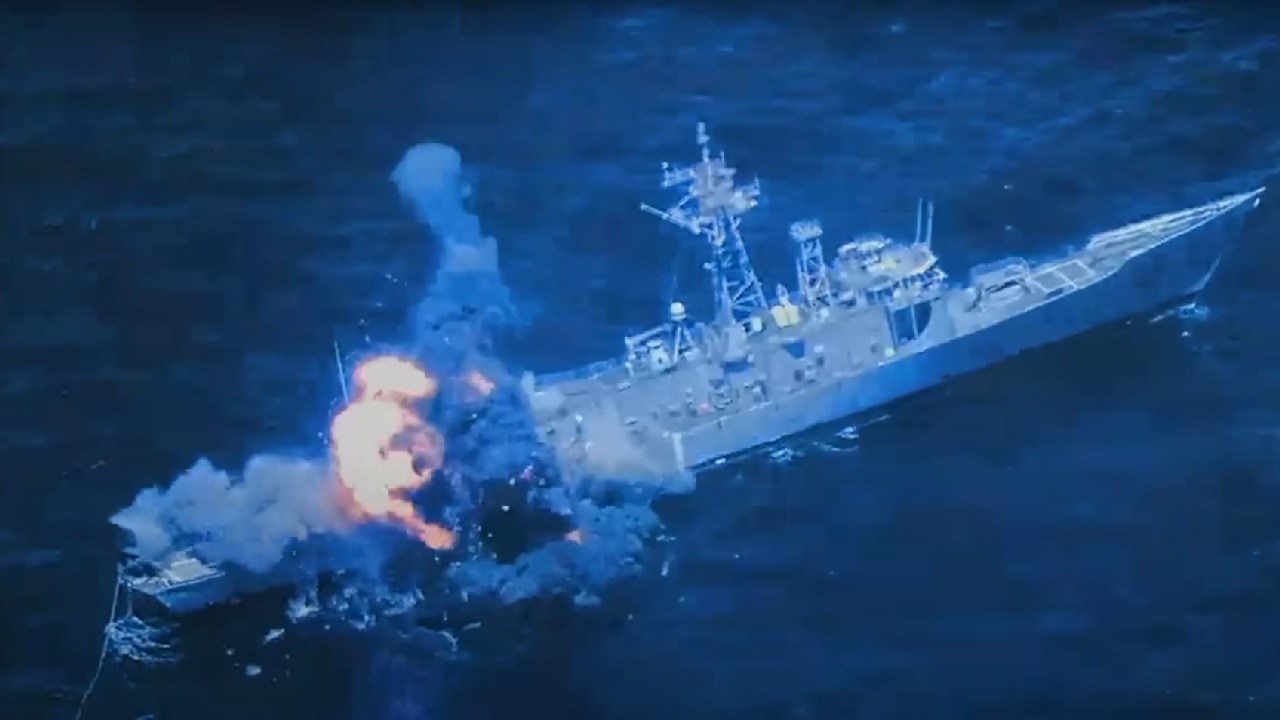
Japan just fired anti-ship missiles outside its own territory for the first time since World War II—a stunning moment that has sent shockwaves through Beijing and signals how dramatically Tokyo’s military posture is shifting. On May 6, 2026, Japanese Ground Self-Defense Force troops launched two Type-88 surface-to-ship missiles from Culili Point in Paoay, Ilocos Norte, hitting and sinking the former U.S. Navy minesweeper BRP Quezon roughly 75 kilometers offshore within just six minutes.
Japan Makes History Firing Type 88 Anti-Ship Missile
Japan fired anti-ship missiles outside its own territory for the first time on May 6 during the annual Balikatan military exercises in the Philippines. The development represents a significant expansion of Tokyo’s military role in the Indo-Pacific amid rising tensions with China.
Japanese Ground Self-Defense Force troops launched two Type-88 surface-to-ship missiles from northern Luzon that struck and sank the BRP Quezon, a former U.S. Navy minesweeper that fought during World War II before later serving in the Philippine Navy. The exercise involved Japanese, American, Philippine, and Canadian forces and formed part of the largest and most technologically advanced Balikatan drills ever conducted.
The missiles were launched from Culili Point in Paoay, Ilocos Norte, on the northwestern coast of Luzon facing the South China Sea and near the strategically critical Luzon Strait between the Philippines and Taiwan. Philippine military officials said the missiles struck the target vessel roughly 75 kilometers offshore within six minutes of launch.
The Type-88 missile system, developed by Mitsubishi Heavy Industries, is a truck-mounted coastal anti-ship weapon with a range of roughly 100 miles. Until now, the missile had only been fired inside Japanese territory. The news appears to be a sign that Japan is steadily moving away from the highly restrictive postwar defense posture it maintained for decades.
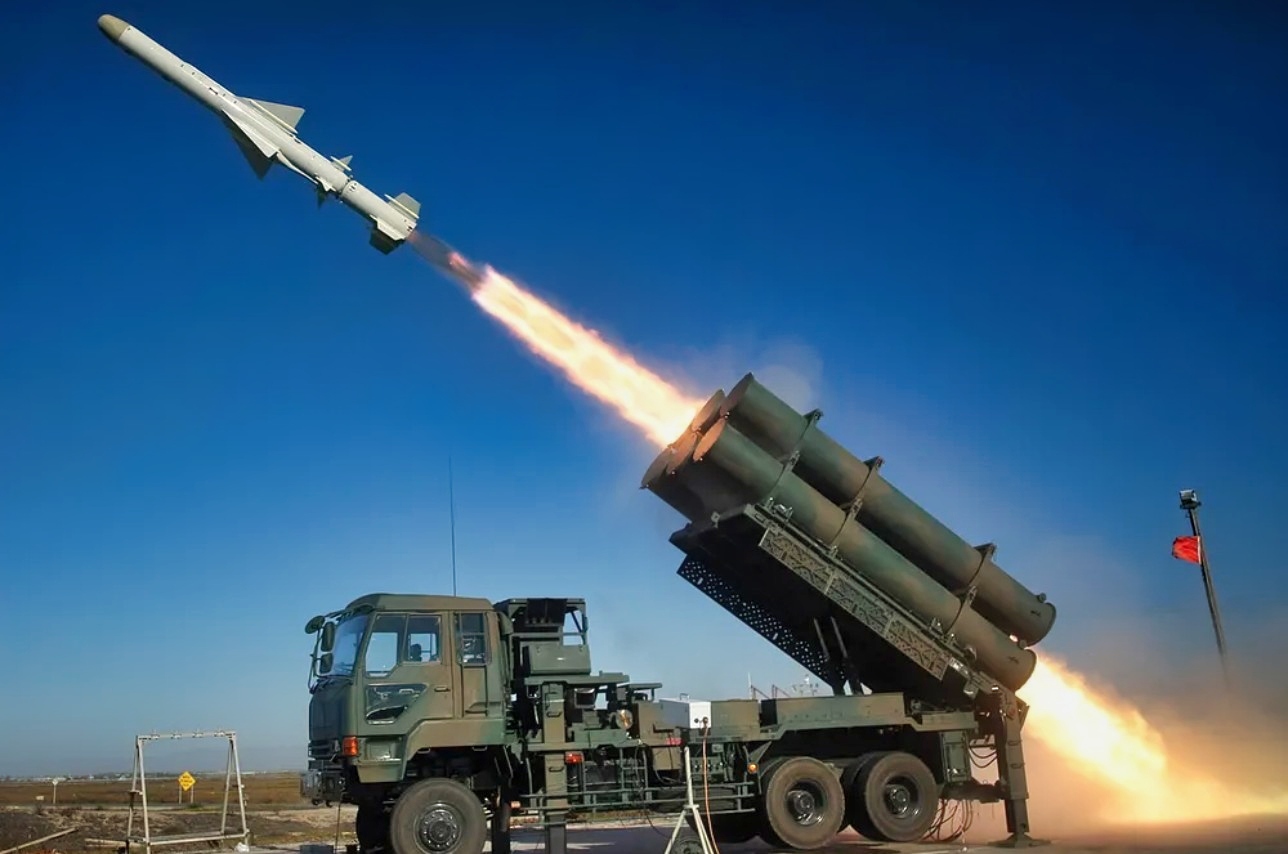
Type 88 Anti-Ship Missile from Japan
The target vessel itself also carried substantial historical symbolism. The BRP Quezon originally entered U.S. Navy service in 1944 as USS Vigilance during World War II and saw combat operations against Japan before being transferred to the Philippine Navy in 1967.
The ship remained in Philippine service for decades and was one of the oldest operational warships in Southeast Asia before its retirement in 2021.
The recent strike exercise also involved a wide range of allied aircraft and warships beyond the Japanese missile launch itself. Philippine Navy frigates BRP Miguel Malvar and BRP Antonio Luna participated alongside the Canadian frigate HMCS Charlottetown.
Philippine Air Force FA-50 light fighters and A-29 Super Tucano attack aircraft also joined the operation alongside a U.S. Navy P-8 Poseidon maritime patrol aircraft and MQ-9 surveillance drone.
Meanwhile, nearby, U.S. Marine Corps forces from the Hawaii-based 3rd Marine Littoral Regiment deployed additional anti-ship and air-defense systems, including NMESIS and MADIS launchers, although the American missile systems did not fire during the event.
NMESIS, short for Navy-Marine Expeditionary Ship Interdiction System, is designed to destroy hostile warships from dispersed island positions and has become a central part of the Marine Corps’ new Pacific-focused operational doctrine.
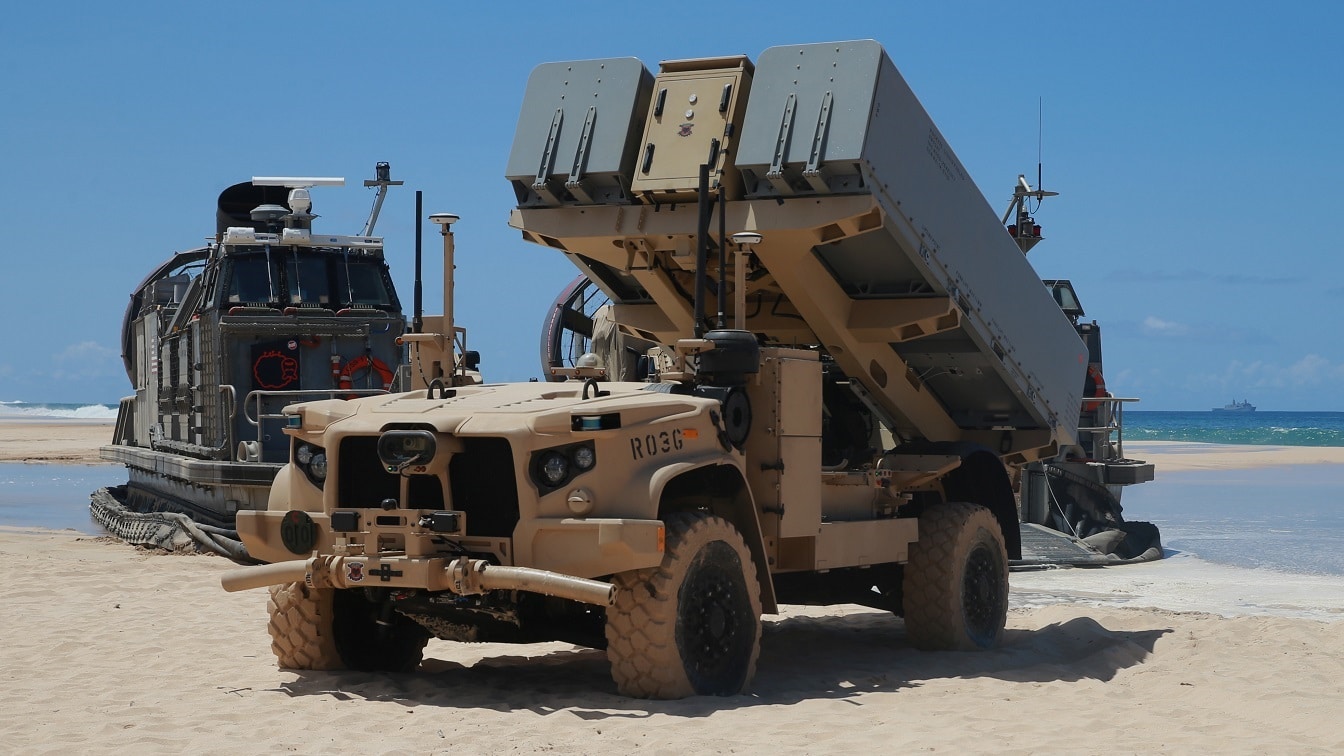
A Navy Marine Expeditionary Ship Interdiction System launcher deploys into position aboard Pacific Missile Range Facility Barking Sands, Hawaii, Aug. 16, 2021. The NMESIS and its Naval Strike Missiles participated in a live-fire exercise, here, part of Large Scale Exercise 2021. During the training, a Marine Corps fires expeditionary advanced base sensed, located, identified and struck a target ship at sea, which required more than 100 nautical miles of missile flight. The fires EAB Marines developed a targeting solution for a joint force of seapower and airpower which struck the ship as the Marines displaced to a new firing position. The Marine Corps EABO concept is a core component of the Force Design 2030 modernization effort. (U.S. Marine Corps photo by Maj. Nick Mannweiler, released)
2026’s Balikatan Exercise
2026’s Balikatan exercise is the largest yet and marks a shift toward missile-centric maritime warfare across the Indo-Pacific.
More than 17,000 troops are participating in the drills, including approximately 10,000 U.S. personnel and roughly 1,400 Japanese troops. Japan and Canada joined as full participants for the first time this year, while Australia, France, and New Zealand also contributed forces.
The exercise now focuses largely on maritime denial operations and distributed missile deployments, as well as island defense and interoperability between allied forces amid concerns over China’s rapid military expansion and the possibility of a future conflict involving Taiwan or the South China Sea.
Earlier during Balikatan 2026, U.S. forces also fired a Tomahawk cruise missile from the Army’s Typhon launcher system in the Philippines for the first time.
The Luzon Strait and northern Philippines have become especially important in American and allied military planning because the area forms one of the key maritime choke points between the South China Sea and the wider Pacific Ocean. In any potential Taiwan conflict, the waters around northern Luzon would likely become critical transit routes for both Chinese and allied naval forces.
Philippine Defense Secretary Gilberto Teodoro, who observed the missile launch alongside Japanese Defense Minister Shinjiro Koizumi, described the exercise as part of a broader effort to strengthen regional deterrence and allied cooperation.
Teodoro said future drills would likely expand further and involve additional partner nations.
“I am very, very proud and happy that we were able to pull this off,” he said, adding, “We are building deterrence for shared threats.” Teodoro also told reporters that “these things should have been done a long time ago.”
China Expresses Frustration
China has strongly criticized the missile exercise, with reports revealing that the Chinese Foreign Ministry accused Japan of using security cooperation as a justification for deploying offensive missile systems overseas. Beijing has repeatedly condemned Balikatan and other expanding regional military exercises involving the United States and its allies.
The exercise also demonstrated how rapidly defense ties between Japan and the Philippines have expanded over the last several years. Tokyo and Manila are reportedly negotiating potential transfers of Japanese military equipment to the Philippines, including Abukuma-class destroyers and TC-90 surveillance aircraft, as Japan gradually loosens its long-standing restrictions on military exports.
About the Author: Jack Buckby
Jack Buckby is a British researcher and analyst specializing in defense and national security, based in New York. His work focuses on military capability, procurement, and strategic competition, producing and editing analysis for policy and defense audiences. He brings extensive editorial experience, with a career output spanning over 1,000 articles at 19FortyFive and National Security Journal, and has previously authored books and papers on extremism and deradicalization.