
Two classified Russian military satellites maintained a 10-foot gap in low Earth orbit on April 28, while traveling at 17,000 miles per hour. The COSMOS 2581 and COSMOS 2583 spacecraft held formation using precise propulsion and orbital control while a third satellite and a smaller subsatellite operated nearby. U.S. officials now fear the maneuver was a test of Russian anti-satellite weapon capability.
Russia’s Satellites Just Did Something Rather Strange
Two Russian military satellites maneuvered to within roughly 10 feet of one another in low Earth orbit late last month during what analysts say was a highly sophisticated and deliberate orbital operation involving multiple spacecraft.
The event, detected on April 28 and later analyzed by the space situational awareness company COMSPOC using radar tracking data from LeoLabs, involved the classified Russian satellites COSMOS 2581 and COSMOS 2583 maintaining an extremely close formation while a third satellite and a previously released subsatellite operated nearby.
In an X post, COMSPOC said that it was not a “coincidental pass,” adding that “COSMOS 2583 performed several fine maneuvers to maintain this tight configuration.”
The satellites are part of a trio of Russian military spacecraft – COSMOS 2581, 2582, and 2583 – launched aboard a Soyuz-2.1V rocket from Plesetsk Cosmodrome in February 2025. The operation demonstrated advanced rendezvous and proximity operations (RPO) capabilities, a class of orbital maneuvering technology increasingly associated with both satellite servicing and potential anti-satellite warfare missions.
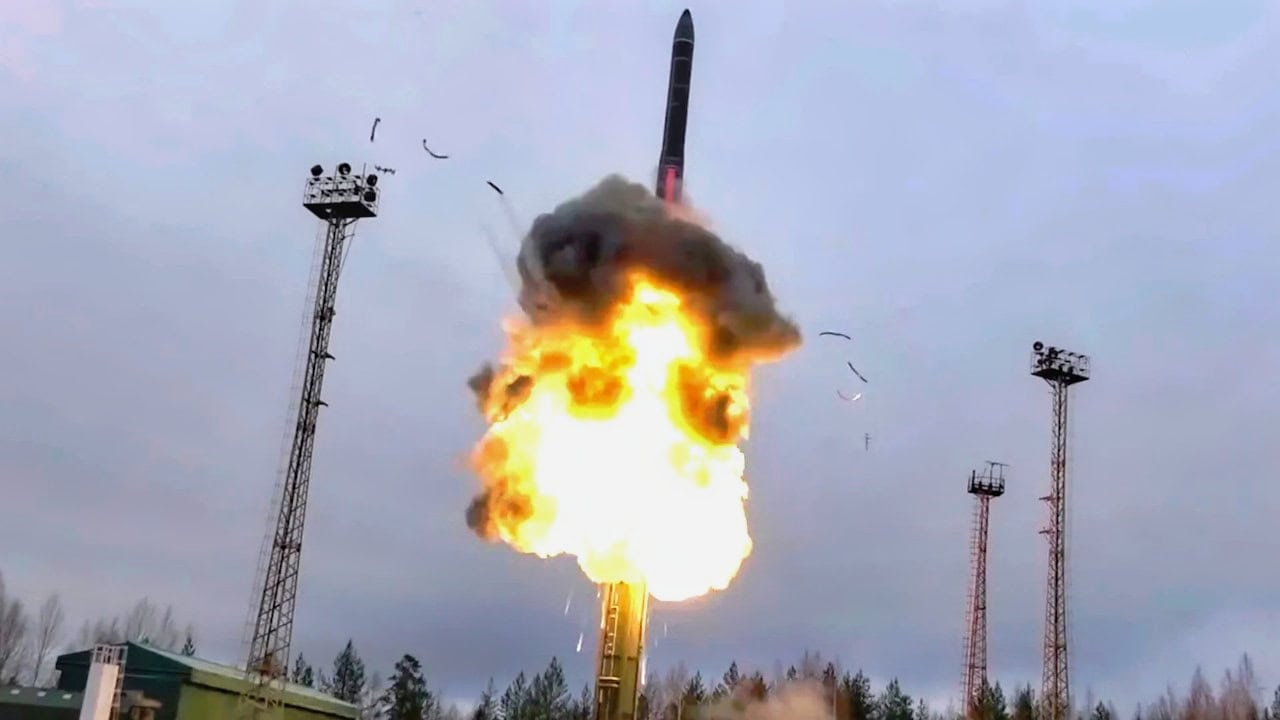
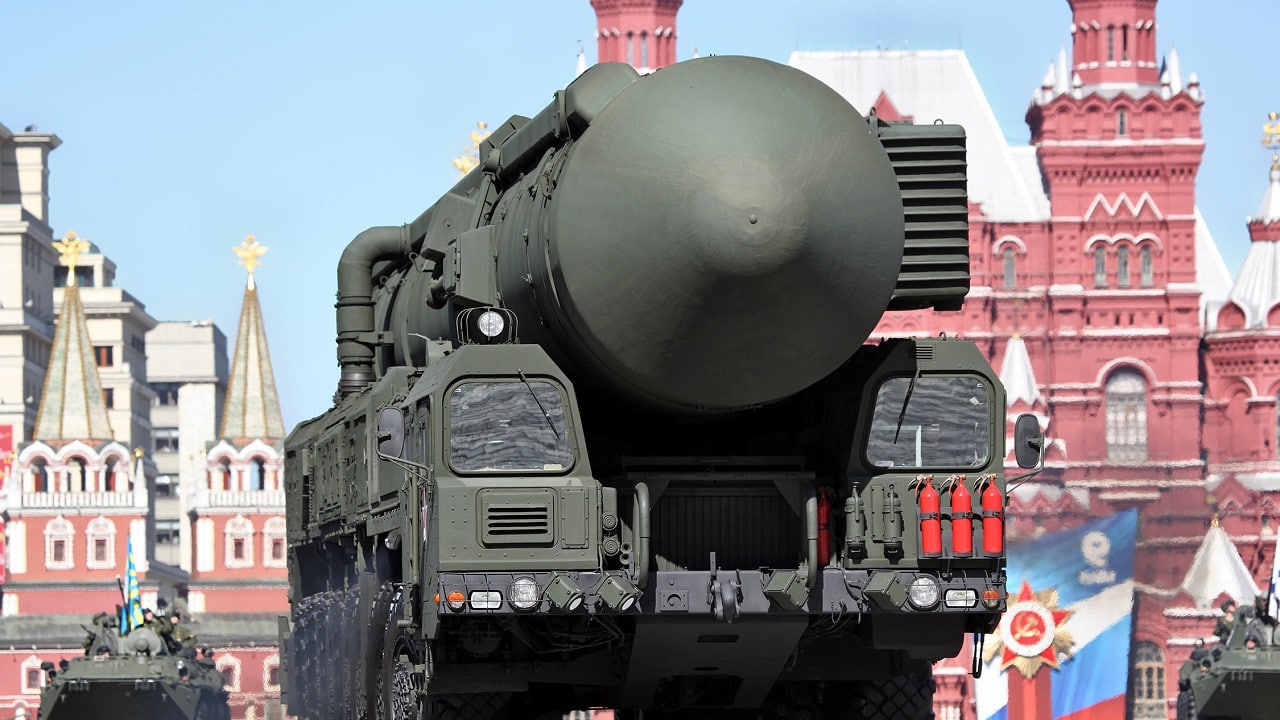
Oreshnik ICBM from Russia. Image Credit: Creative Commons.
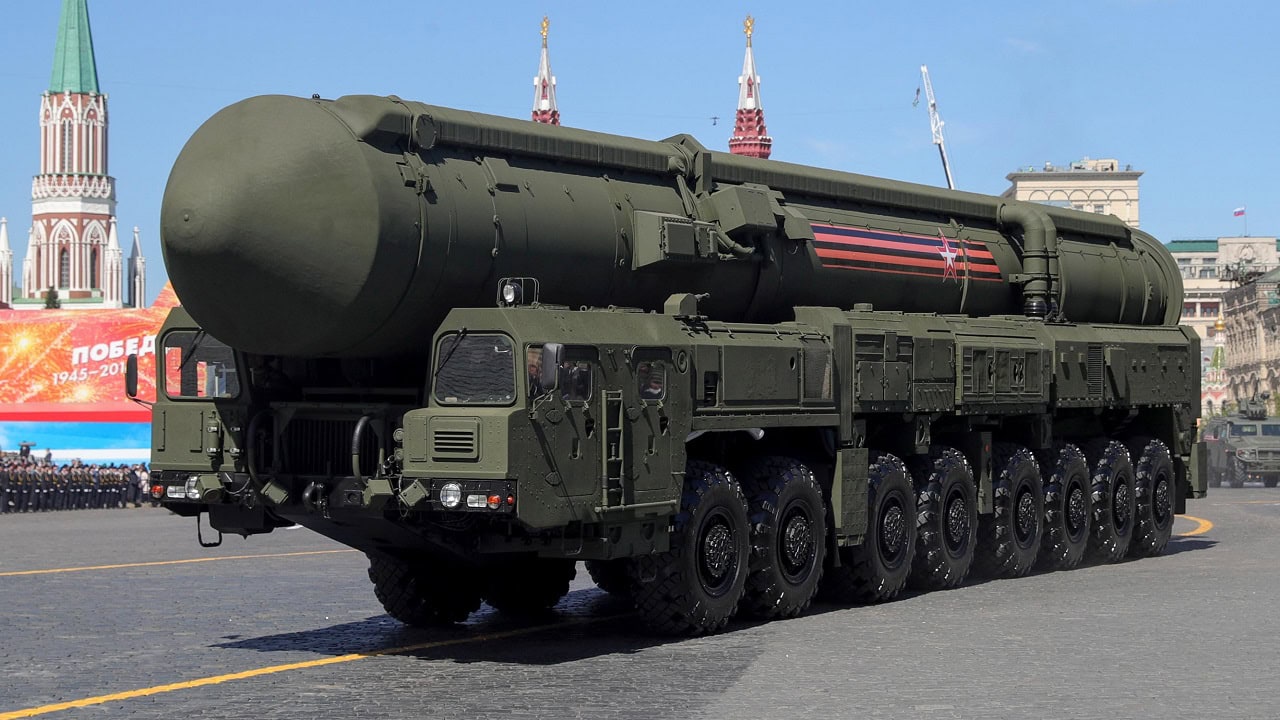
MAY 9, 2018: An RS-24 Yars mobile intercontinental ballistic missile system rolls down Moscow’s Red Square during a Victory Day military parade marking the 73rd anniversary of the victory over Nazi Germany in the 1941-1945 Great Patriotic War, the Eastern Front of World War II. Sergei Bobylev/TASS.
Specifically, RPO refers to maneuvers in which one spacecraft deliberately approaches, follows, or operates very close to another spacecraft in orbit, using highly precise navigation and propulsion systems.
The news comes amid growing concern among Western defense officials about the militarization of space and the increasing ability of major powers to maneuver spacecraft precisely around one another in orbit.
What Happened in Orbit
According to COMSPOC, the closest approach occurred on April 28 when COSMOS 2581 and COSMOS 2583 closed to within approximately three meters while maintaining what analysts described as near-zero relative velocity.
That is a technically demanding maneuver given that objects in low Earth orbit typically travel at speeds exceeding 17,000 miles per hour. Maintaining a stable relative position at such close distances requires highly precise propulsion, navigation, and orbital control systems.
COMSPOC stated that COSMOS 2583 actively maneuvered during the event to preserve the formation rather than simply passing by naturally due to orbital mechanics. The company also said COSMOS 2582 remained nearby at a distance of less than 100 kilometers while “Object F,” a smaller subsatellite previously released by COSMOS 2583, passed within 15 kilometers of COSMOS 2582 and within 10 kilometers of COSMOS 2581. Neither of those spacecraft maneuvered during the pass.
The company also noted that the satellites have been conducting multi-object rendezvous and proximity operations since late 2025, suggesting the April event was part of a continuing series of coordinated orbital tests rather than a one-off demonstration.
Rendezvous and proximity operations refer to controlled maneuvers in which spacecraft approach or maintain formation with other objects in orbit. The technology has legitimate civilian uses, including docking missions, refueling, debris removal, and satellite servicing.
However, the same capabilities can also be applied to military inspection or anti-satellite missions.
Russia’s Secretive COSMOS Satellite Program
The satellites involved in the operation are part of Russia’s long-running COSMOS program, a designation historically used for both civilian and classified military spacecraft. COSMOS 2581, 2582, and 2583 were launched on February 5, 2025, aboard a Soyuz-2.1V rocket from the Plesetsk Cosmodrome in northern Russia. However, Moscow has never publicly disclosed the mission’s exact purpose.
Shortly after launch, analysts observed unusual orbital activity associated with the spacecraft. For example, in March 2025, one of the satellites released a smaller object later cataloged by the U.S. Space Force as “Object F.” Similar deployments in other Russian missions have attracted scrutiny from Western analysts because of their potential military applications.
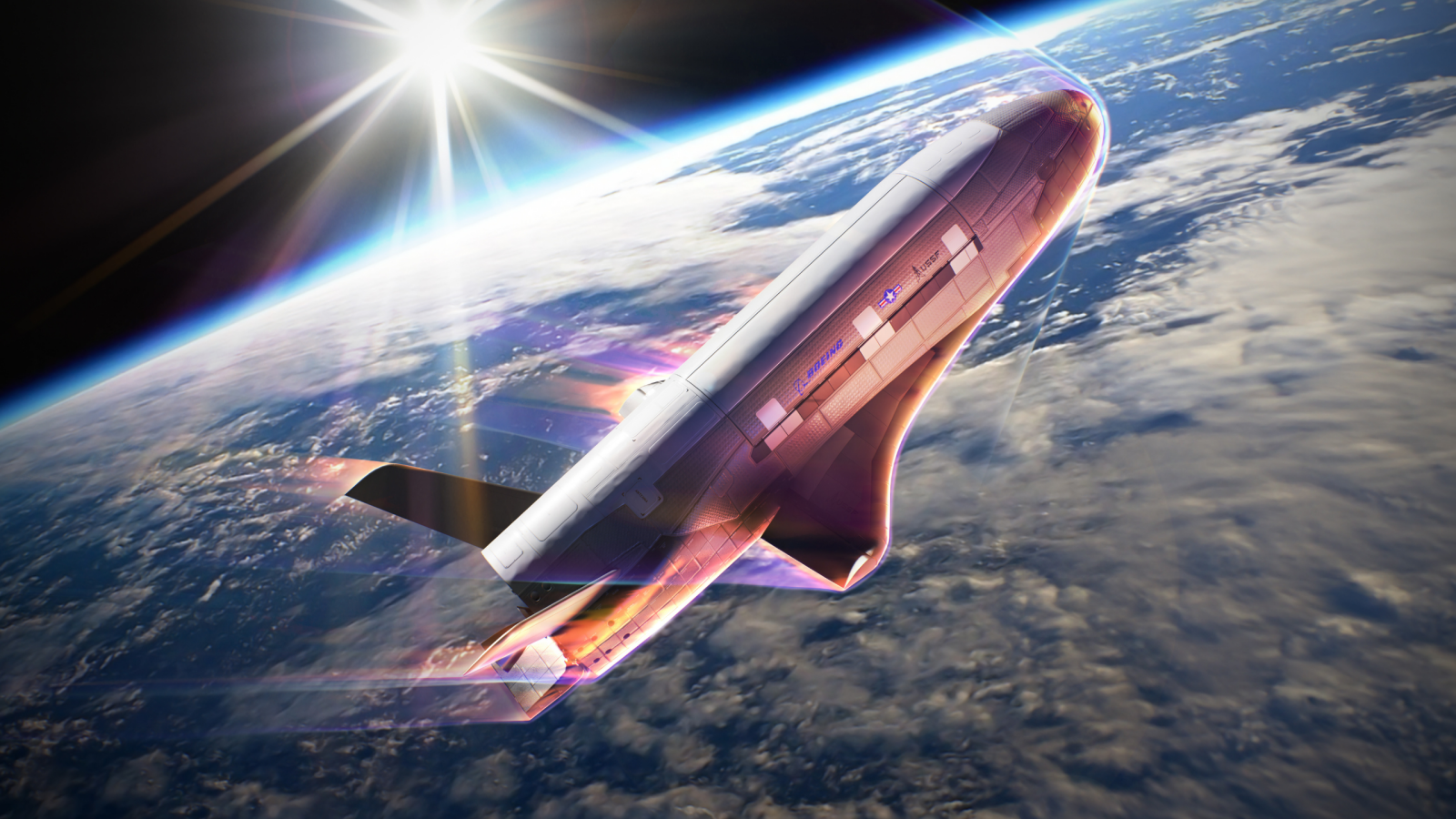
X-37B. Image Credit: Creative Commons.
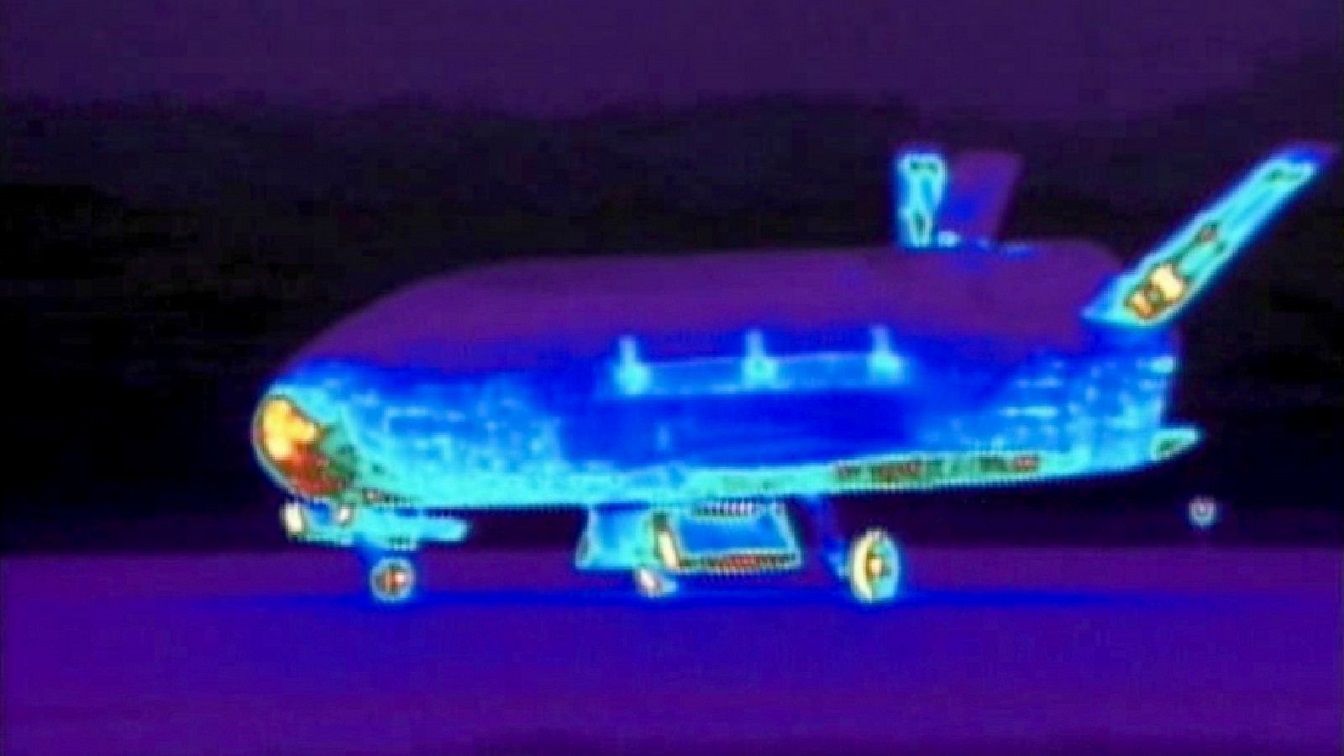
X-37B. Image Credit: NASA YouTube/Screenshot.
The latest maneuver is not the first time Russia has tested close-proximity orbital operations. In 2020, Russian satellites COSMOS 2542 and COSMOS 2543 closely approached a U.S. reconnaissance satellite, prompting U.S. officials to accuse Moscow of testing space weapon capabilities.
American officials later accused one of the satellites of firing a high-speed projectile in orbit during another test associated with Russia’s suspected “Nivelir” counterspace program.
Russia also conducted a direct-ascent anti-satellite missile test in November 2021 that destroyed the Soviet-era satellite COSMOS 1408 and created more than 1,500 trackable pieces of orbital debris, drawing international condemnation.
Why It Matters Militarily
Military interest in rendezvous and proximity operations has grown rapidly because satellites now underpin nearly every major aspect of modern warfare. GPS navigation, secure communications, missile warning systems, reconnaissance, targeting data, and precision-guided weapons all rely heavily on spacecraft operating in orbit.
That means a satellite capable of maneuvering close to another spacecraft could potentially inspect it, interfere with it electronically, damage it physically, or even disable it entirely. One of the major concerns surrounding the systems is that many peaceful satellite servicing technologies are fundamentally indistinguishable from offensive counterspace capabilities.
The United States, China, and Russia have all developed increasingly advanced maneuverable satellites over the last decade. China has demonstrated similar proximity operations during multiple classified orbital missions, while the United States operates its own inspection and servicing spacecraft alongside the X-37B orbital spaceplane program.
It is still unclear what Russia was testing during the latest COSMOS maneuvers.
About the Author: Jack Buckby
Jack Buckby is a British researcher and analyst specializing in defense and national security, based in New York. His work focuses on military capability, procurement, and strategic competition, producing and editing analysis for policy and defense audiences. He brings extensive editorial experience, with a career output spanning over 1,000 articles at 19FortyFive and National Security Journal, and has previously authored books and papers on extremism and deradicalization.