
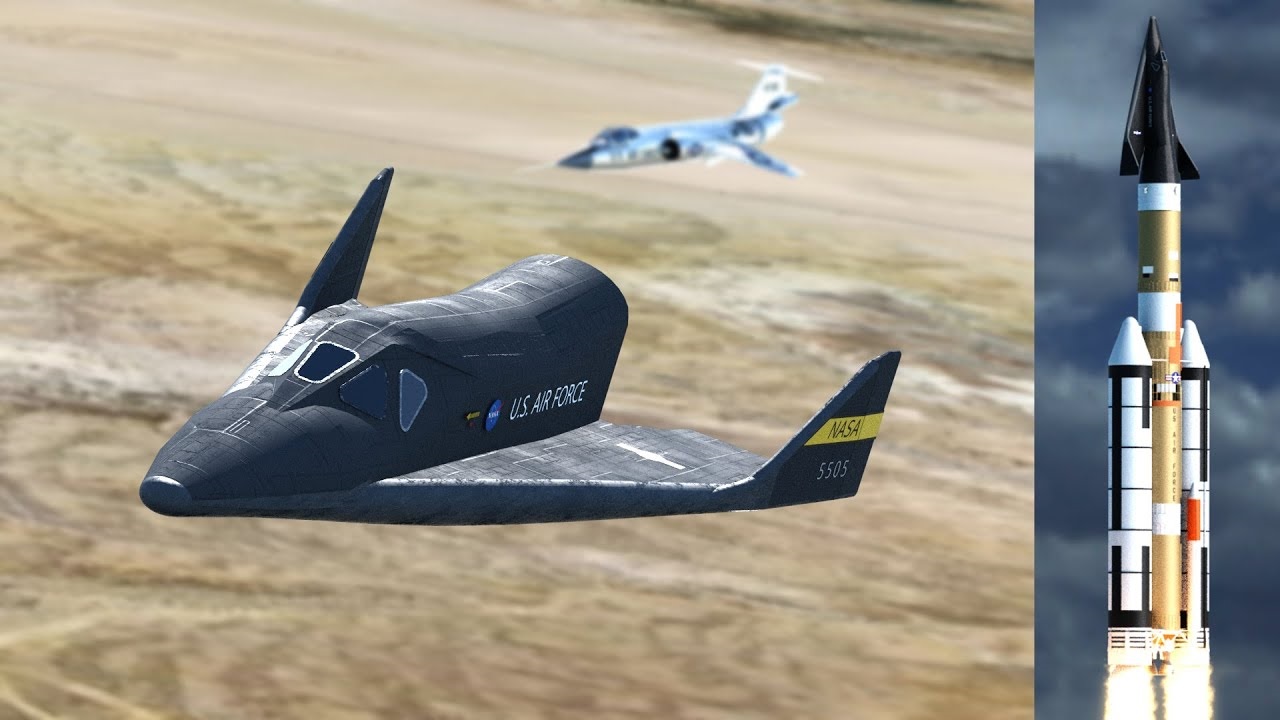
Summary and Key Points on the X-20: Years before the Space Shuttle, the US Air Force had designed a reusable, piloted spaceplane that launched on a rocket and glided back to a runway — selected its pilots, including a young Neil Armstrong, and brought the first vehicle within a month of assembly.
Then, in December 1963, it was cancelled for want of a clear mission. America rebuilt the same idea as the Shuttle two decades later — and the orbital role the Dyna-Soar was designed for is being flown today by the secretive X-37B and China’s own spaceplane.
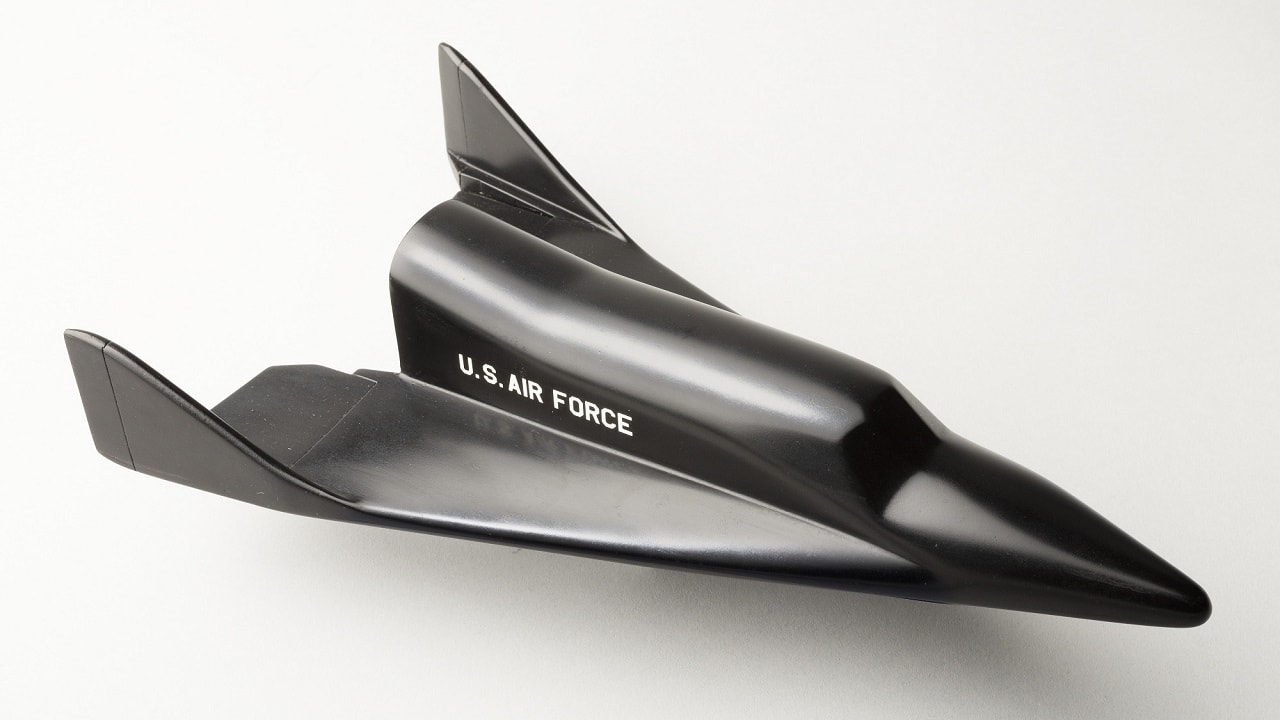
Model, Dyna-soar X-20.

NASA X-20 Dyna-Soar space vehicle on reentry. (Artist rendering).
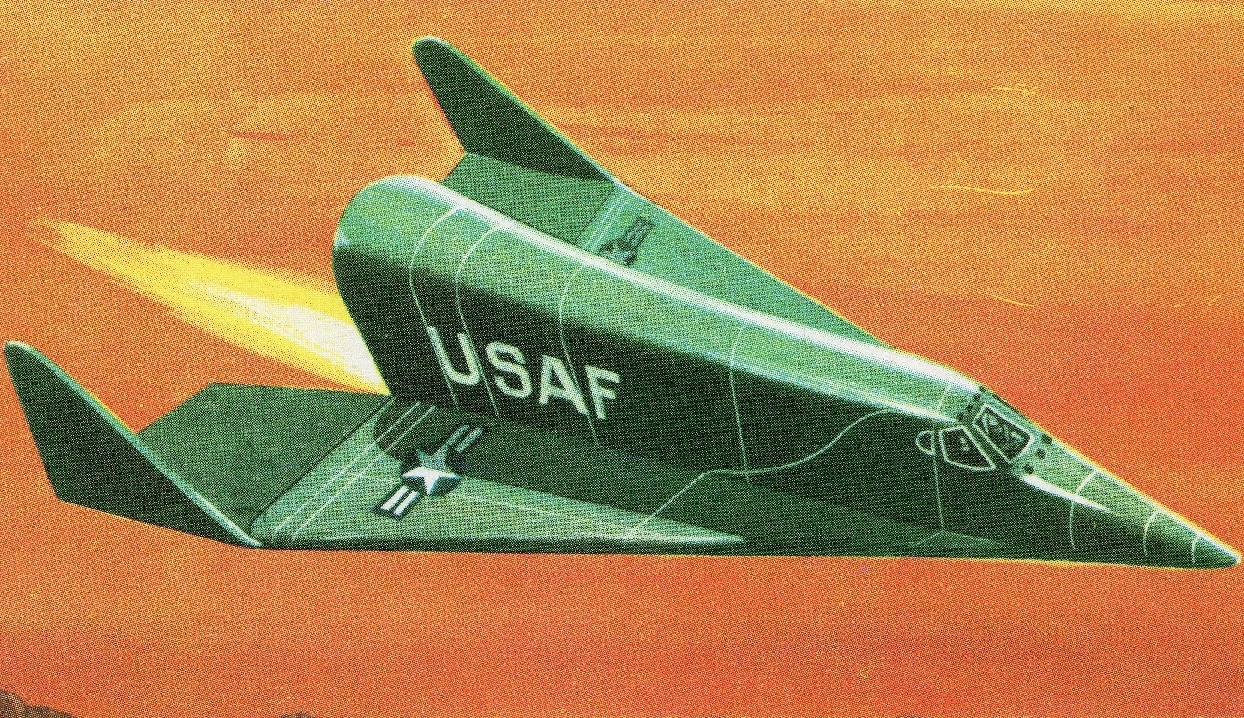
Image: Creative Commons.
The Space Shuttle Two Decades Early: How The X-20 Dyna-Soar Was Canceled Before It Ever Flew
Long before the Space Shuttle rolled out to a launch pad, the United States Air Force was building a reusable, piloted spaceplane that would launch on a rocket, fly in orbit, and glide back to land on a runway like an airplane.
It was called the X-20 Dyna-Soar, a compression of “Dynamic Soarer,” and it was the earliest American manned space project to reach the stage of actual development contracts. The program ran from October 1957, the same month the Soviet Union launched Sputnik, until its cancellation in December 1963, and at the moment it was killed, it was tantalizingly close to flying.
The concept was radical for its era. While every other spacecraft under development on either side of the Cold War, the American Mercury capsule and the Soviet Vostok among them, was designed to return to Earth on a ballistic trajectory and descend under a parachute, the Dyna-Soar was conceived to do something fundamentally different. It was a single-pilot, delta-winged glider that would be boosted to orbital or near-orbital speed by a rocket and then fly back down through the atmosphere under the control of its pilot, landing at an airfield rather than splashing into the ocean.
The intellectual lineage stretched back to the German Sänger-Bredt “Silbervogel” skip-glide rocket bomber concept of the Second World War, an idea for a winged vehicle that would skip across the upper atmosphere like a stone across water. The Air Force was now trying to turn that idea into operational hardware.
A Machine Designed To Do Almost Everything
The Dyna-Soar was meant to be a military vehicle, and the breadth of missions the Air Force imagined for it was staggering. The program was structured to develop a craft capable of reconnaissance, bombing, space rescue, satellite maintenance, and the inspection or sabotage of enemy satellites. It was conceived in three evolutionary stages: a research vehicle to prove the concept, a reconnaissance variant, and, finally, a strategic-bombing version that the Air Force hoped would be fully operational in the mid-1970s.
The vehicle itself looked like nothing else in the sky. It was a low-wing, tailless delta design roughly thirty-five feet long, with a single pilot seated front and center and an equipment bay behind him sized to carry weapons or reconnaissance gear. Because engineers feared that the extreme heat of atmospheric reentry would destroy conventional rubber tires, the Dyna-Soar was designed to land not on wheels but on retractable skids, sliding onto a runway like a sled.
The airframe had to withstand reentry temperatures that pushed the limits of 1960s materials science, and the glider underwent what was then described as one of the most exhaustive wind tunnel test programs in the history of flight. To validate the heat shield concepts, the Air Force launched a series of ASSET test vehicles beginning in September 1963 to study the punishing thermal environment of high-lift reentry.
The Pilots, Including A Future First Man On The Moon
The Dyna-Soar was a piloted vehicle, and the men chosen to fly it were among the most accomplished test pilots in the country. In April 1960, the Air Force secretly selected a group of seven pilots to train for the spaceplane. Among them was a civilian NASA test pilot named Neil Armstrong, who was working on the X-15 rocket plane program at the time, along with fellow pilots who would go on to their own significant careers in aviation and spaceflight.
Armstrong’s involvement was real but brief. He and fellow pilot Bill Dana, both civilian test pilots on loan from NASA’s X-15 effort, left the Dyna-Soar program in the summer of 1962. Armstrong was selected as part of NASA’s second astronaut group in September 1962 and, of course, went on to command Apollo 11 and become the first human to set foot on the Moon.
When the names of the remaining Dyna-Soar pilots were announced publicly later in 1962, Armstrong was no longer among them. The program continued developing a custom spacesuit for its pilots, with the Air Force announcing in September 1963 that a new suit developed at Wright-Patterson Air Force Base would give the X-20 pilots greater mobility and comfort for missions lasting up to thirty-six hours.
The Booster Problem And The Mission Problem
For all its ambition, the Dyna-Soar was dogged from the beginning by two problems it never fully solved. The first was a basic question of how to get it into space. The program churned through a remarkable sequence of proposed launch vehicles, reflecting genuine indecision about how to lift the roughly five-ton glider to orbital velocity. Planners considered the Titan I, then the Titan II, then the Saturn C-1, before finally settling on the powerful Titan III in late 1961. Each change cost time, and the repeated delays meant that the Mercury program was putting Americans into space while the Dyna-Soar was still arguing over its rocket.
The second problem proved fatal. Nobody could ever settle the question of what, exactly, the Dyna-Soar was for. The vehicle had been designed to do aeronautical research and to develop military weapons capabilities at the same time, and as the program matured, that dual purpose increasingly looked like no clear purpose at all. The Air Force gave the craft the experimental “X-20” designation in June 1962, a label that implied a peaceful research mission, but the change did nothing to resolve the underlying ambiguity.
In January 1963, Secretary of Defense Robert McNamara commissioned a study to determine whether the X-20 actually had a viable military weapons role, comparing it directly against NASA’s two-man Gemini capsule then under development. The study’s conclusions doomed the program. McNamara came to believe the Air Force had placed too much emphasis on controlled reentry while having no real objectives for what the vehicle would actually do once it reached orbit.
The Cancellation That Came Too Soon
On December 10, 1963, McNamara formally announced the end of the X-20 program. The timing was brutal because the Dyna-Soar was not a paper study or a stalled concept. It was a machine on the verge of becoming real. According to the program’s own records, the cancellation came with engineering drawings nearly complete and the first spacecraft only about a month from final assembly, with captive-carry drop tests from a B-52 mothership scheduled to begin only about eight months later and the first piloted flight planned for 1966.
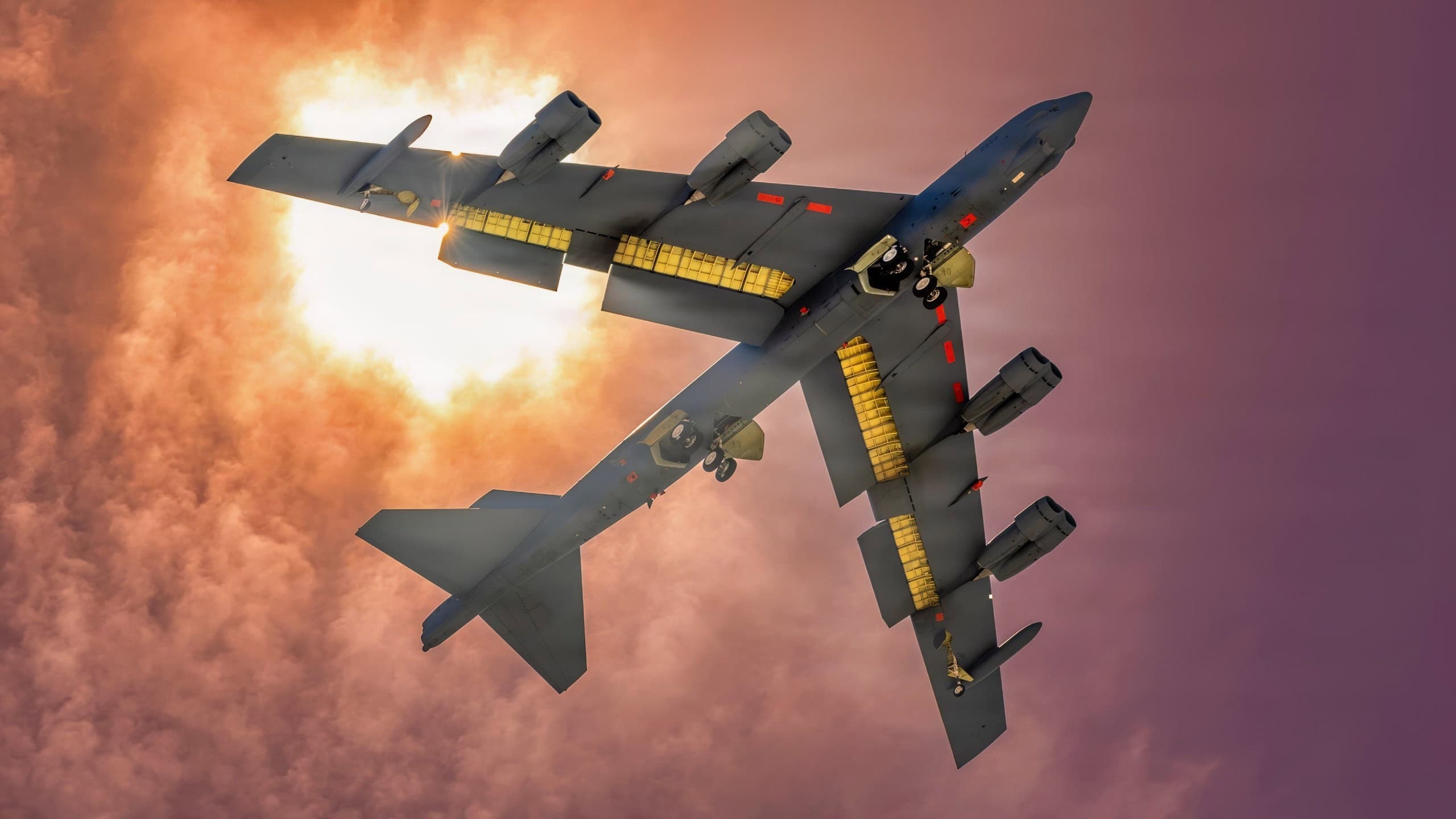
A B-52H Stratofortress assigned to the 419th Flight Test Squadron at Edwards Air Force Base, California, departs for an evening test mission over the Mojave Desert. The B-52H test fleet is in high demand, testing a variety of advanced capabilities for the joint-force. The 412th Test Wing will soon begin developmental test work on new avionics, radar, and engines as part of the B-52J effort, allowing the Stratofortress to serve the warfighter into the 2050’s. (Air Force photo by Todd Schannuth)
The money already spent reflected how far the program had come. By the time of cancellation, the Dyna-Soar had consumed roughly $400 million in then-year dollars, with various accountings of the total program reaching as high as $660 million when all associated costs are counted. McNamara’s stated rationale, when he announced the decision, came down to a poor return on investment for a vehicle that, after years of development and hundreds of millions of dollars, still lacked a firm mission or a clear reason for being. On the very same day he killed the Dyna-Soar, McNamara announced its replacement, the Manned Orbiting Laboratory, a program built around a Gemini capsule and also launched by a Titan rocket. That successor program would itself be canceled in 1969, after years of work and well over a billion dollars, having never flown a crew either.
The Shuttle’s Unbuilt Ancestor
The cruelest part of the Dyna-Soar’s story is what came afterward. The United States killed its reusable winged spaceplane in 1963, and then spent the 1970s designing and building one from scratch.
The Space Shuttle, which first flew in 1981, embodied the same fundamental concept the Dyna-Soar had pioneered nearly two decades earlier: a piloted, reusable, winged vehicle that launched on a rocket and glided back to land on a runway. The idea that the Air Force had nearly turned into flying hardware in the early 1960s was reinvented, at enormous cost, a generation later.
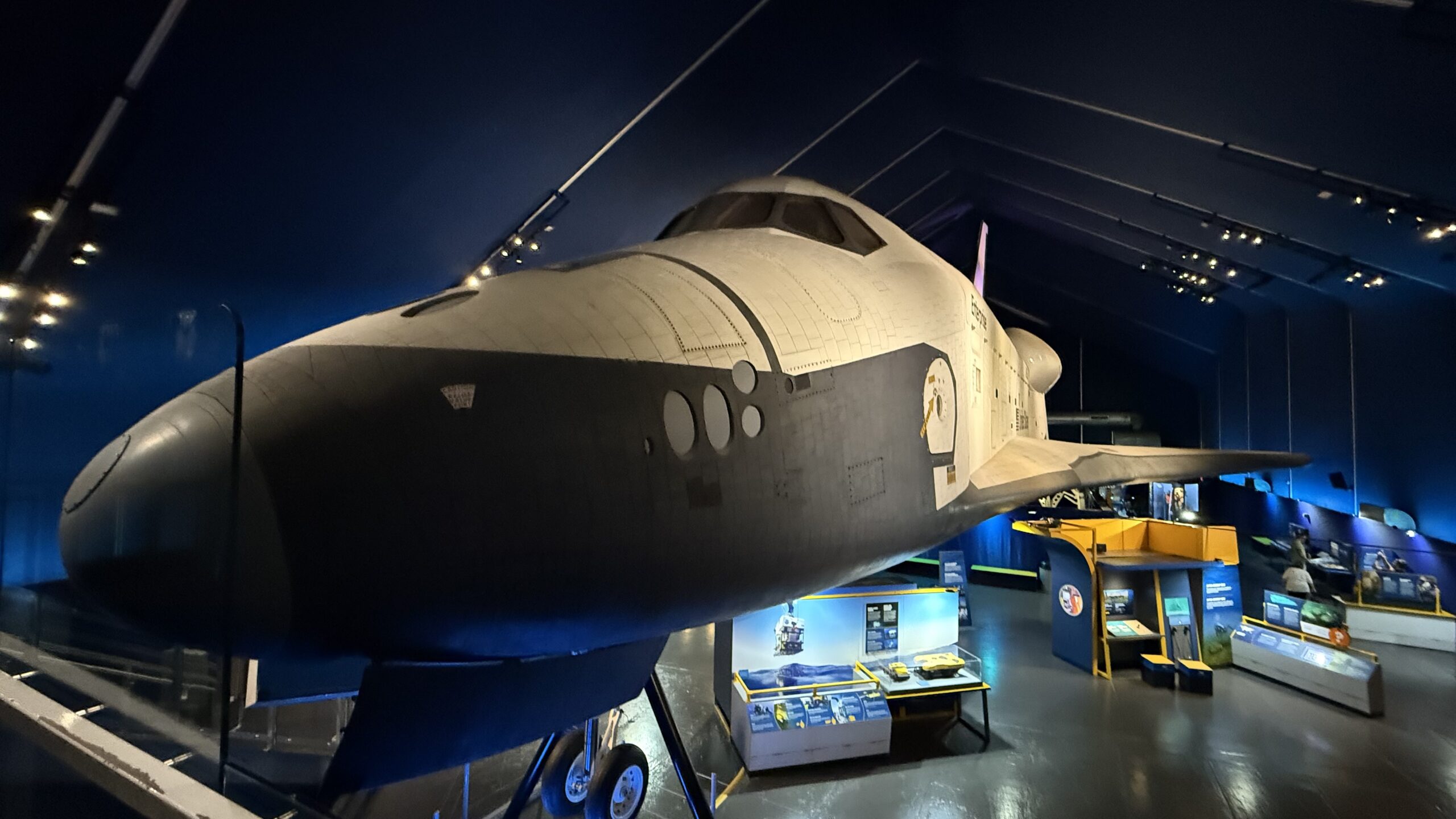
NASA Space Shuttle Onboard USS Intrepid. 19FortyFive.com Image.

Shuttle Discovery at National Air and Space Museum on October 1, 2022. Image Credit: 19FortyFive.com

NASA’s Space Shuttle Discovery. Image Taken by 19FortyFive.com on October 1, 2022.
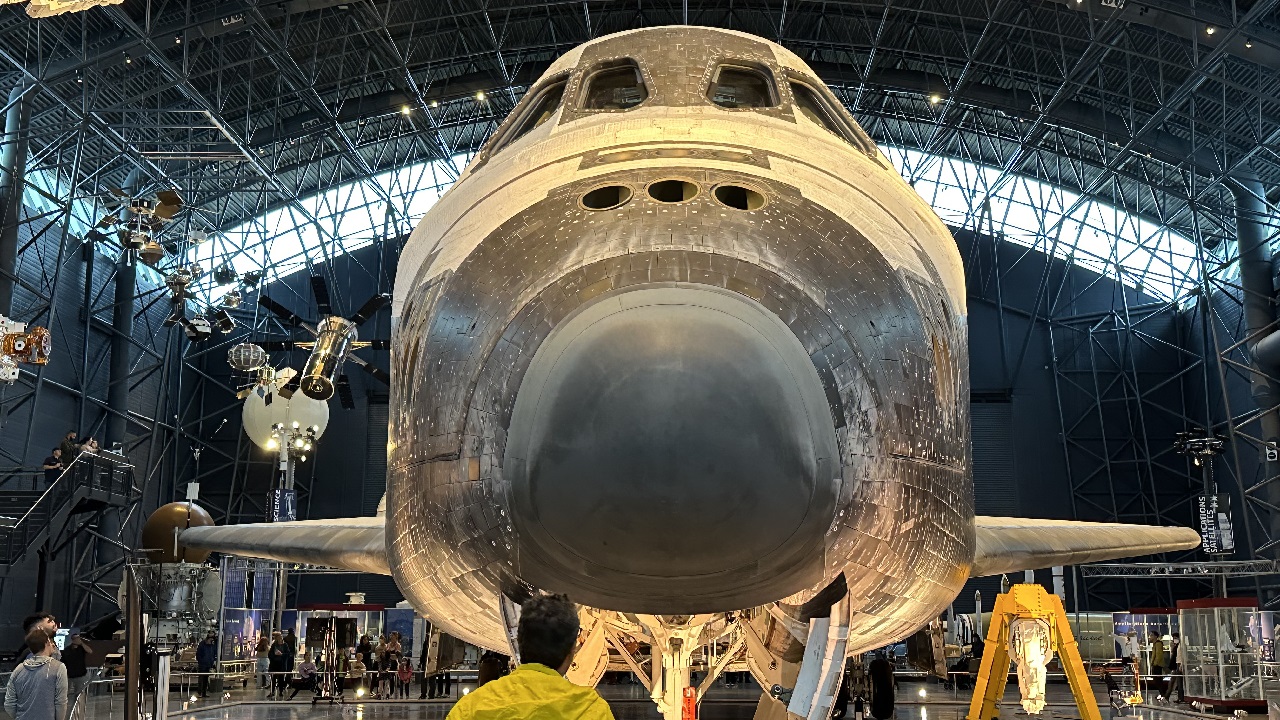
NASA Space Shuttle Discovery. Image Credit: 19FortyFive.com taken on October 1, 2022.
The Dyna-Soar’s influence did not entirely vanish with its cancellation. The research it generated, particularly the work on high-lift reentry, thermal protection, and hypersonic aerodynamics, fed into later programs, and the ASSET reentry test vehicles continued flying after the parent program was gone. The lifting-body and winged-reentry research of the 1960s that informed the Shuttle’s design drew on the same body of knowledge the Dyna-Soar effort had built. In that sense, the program was never entirely wasted, even though its central artifact never left the ground.
The Mission That Came Back
The Dyna-Soar’s deeper vindication came decades after the Shuttle. The Air Force’s vision of a small, reusable, winged spaceplane that could maneuver in orbit, linger for long-duration missions, and glide home to a runway is no longer a canceled concept — it is flying right now.
The uncrewed X-37B, operated under the Space Force and shrouded in secrecy about what it actually does in orbit, performs almost exactly the role the Dyna-Soar’s planners imagined: an on-orbit utility vehicle for reconnaissance, inspection, and missions the military prefers not to discuss.
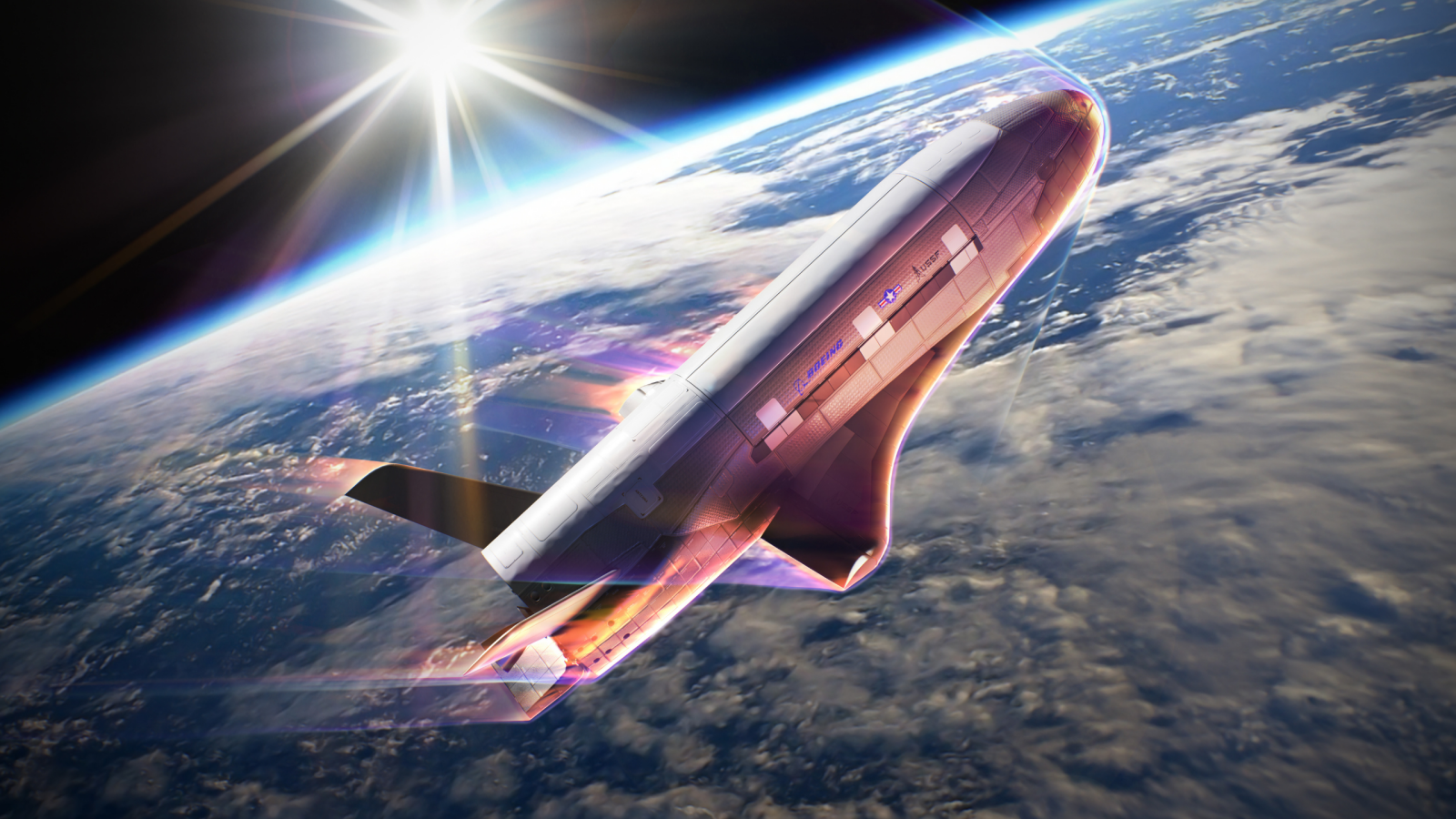
X-37B. Image Credit: Creative Commons.
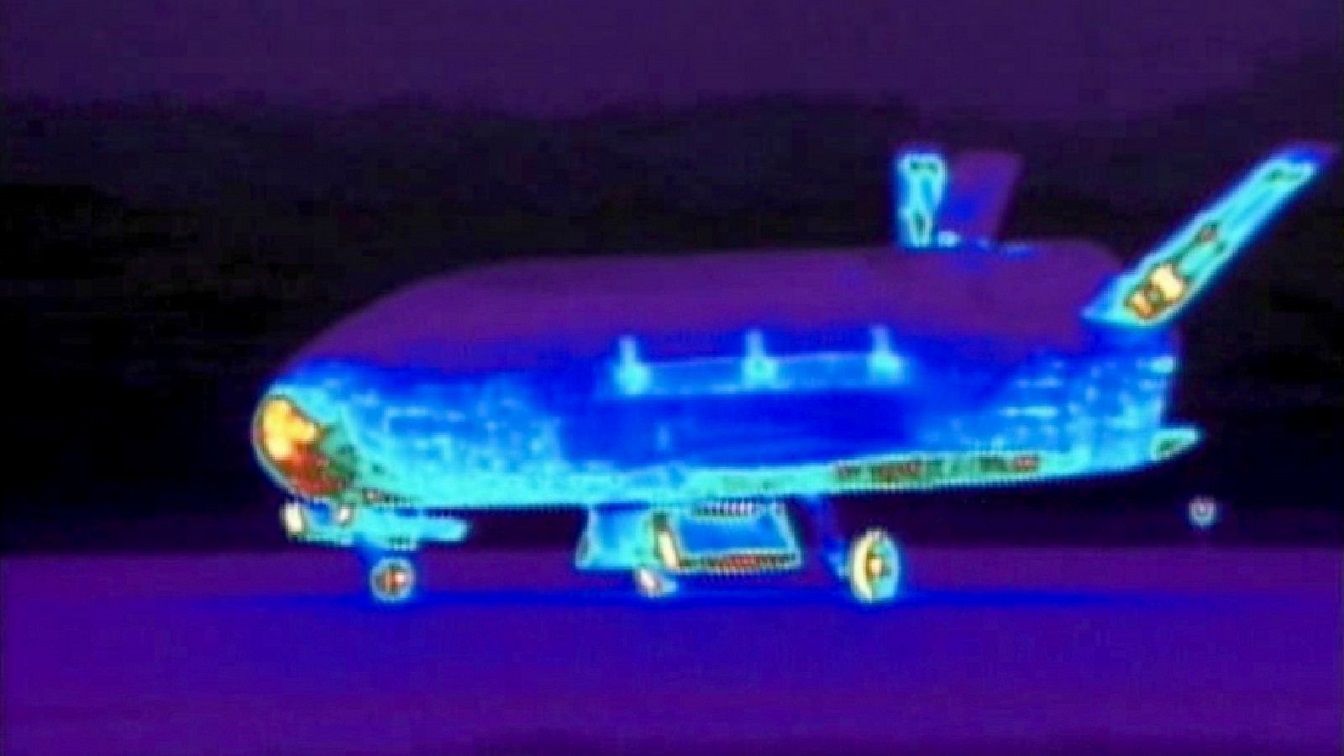
X-37B. Image Credit: NASA YouTube/Screenshot.
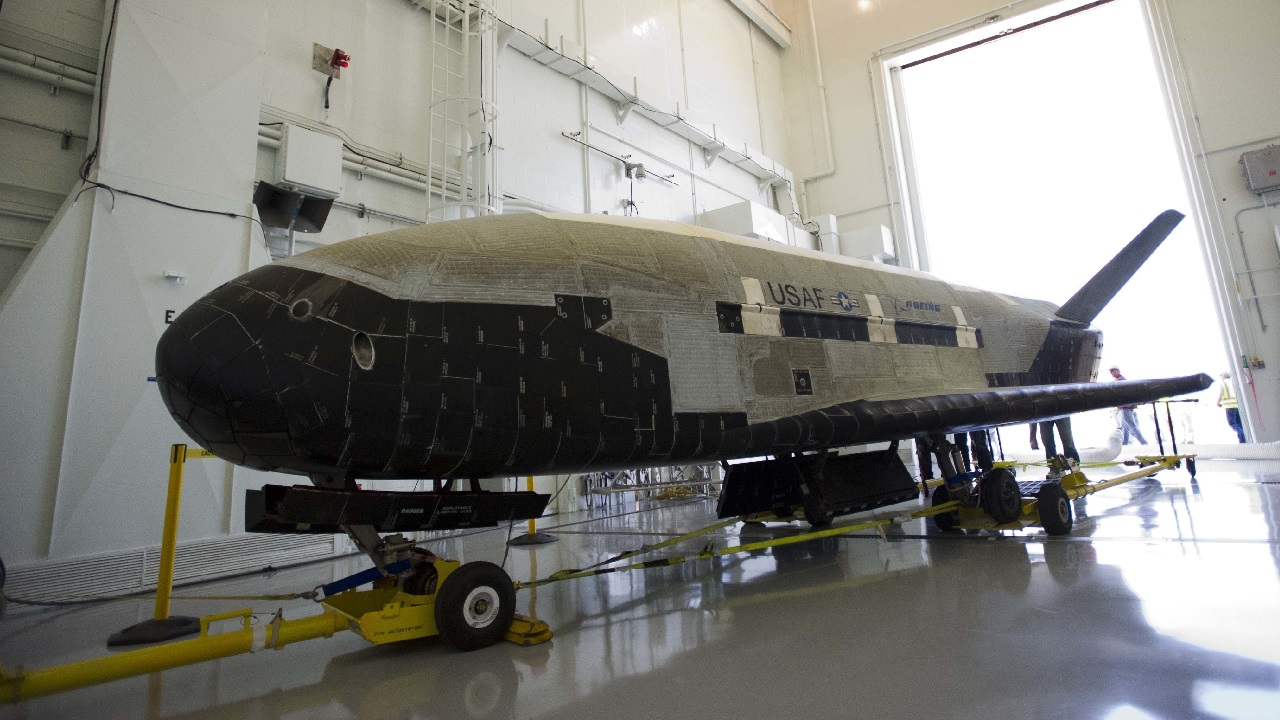
The X-37B Orbital Test Vehicle (OTV), the Air Force’s unmanned, reusable space plane, landed at Vandenberg Air Force Base at 5:48 a.m. (PDT) June 16. OTV-2, which launched from Cape Canaveral Air Force Station, Fla., March 5, 2011, conducted on-orbit experiments for 469 days during its mission. The X-37B is the newest and most advanced re-entry spacecraft. Managed by the Air Force Rapid Capabilities Office, the X-37B program performs risk reduction, experimentation and concept of operations development for reusable space vehicle technologies. (photo credit: Boeing)
China has followed suit with its own reusable spaceplane, sometimes referred to as Shenlong, which has conducted multiple classified orbital flights. The strategic competition the Dyna-Soar was conceived to address never went away; the United States and China are simply running it now with vehicles that finally work.
What the Dyna-Soar represents, in the end, is the road American spaceflight did not take. The Air Force had designed a reusable spaceplane, selected and trained its pilots, run the most exhaustive wind tunnel program of its era, built test hardware, and brought the first vehicle to within a month of assembly, all before the end of 1963. Had it been allowed to fly, the United States might have had an operational winged spaceplane two decades before Columbia ever reached orbit.
Instead, the program was canceled for want of a clear mission, its hardware was never completed, and the concept was left to be rediscovered by a later generation that would relearn, the hard and expensive way, what Dyna-Soar’s engineers had already worked out. The machine that was two decades ahead of its time became a monument to how thoroughly a good idea can be lost when no one can agree on what it is for.
About the Author: Harry J. Kazianis
Harry J. Kazianis (@Grecianformula) was the former Senior Director of National Security Affairs at the Center for the National Interest (CFTNI), a foreign policy think tank founded by Richard Nixon based in Washington, DC. Harry has over a decade of experience in think tanks and national security publishing. His ideas have been published in the NY Times, The Washington Post, The Wall Street Journal, CNN, and many other outlets worldwide. He has held positions at CSIS, the Heritage Foundation, the University of Nottingham, and several other institutions related to national security research and studies. He is the former Executive Editor of the National Interest and the Diplomat. He holds a Master’s degree focusing on international affairs from Harvard University. Kazianis is Editor-In-Chief of 19FortyFive.