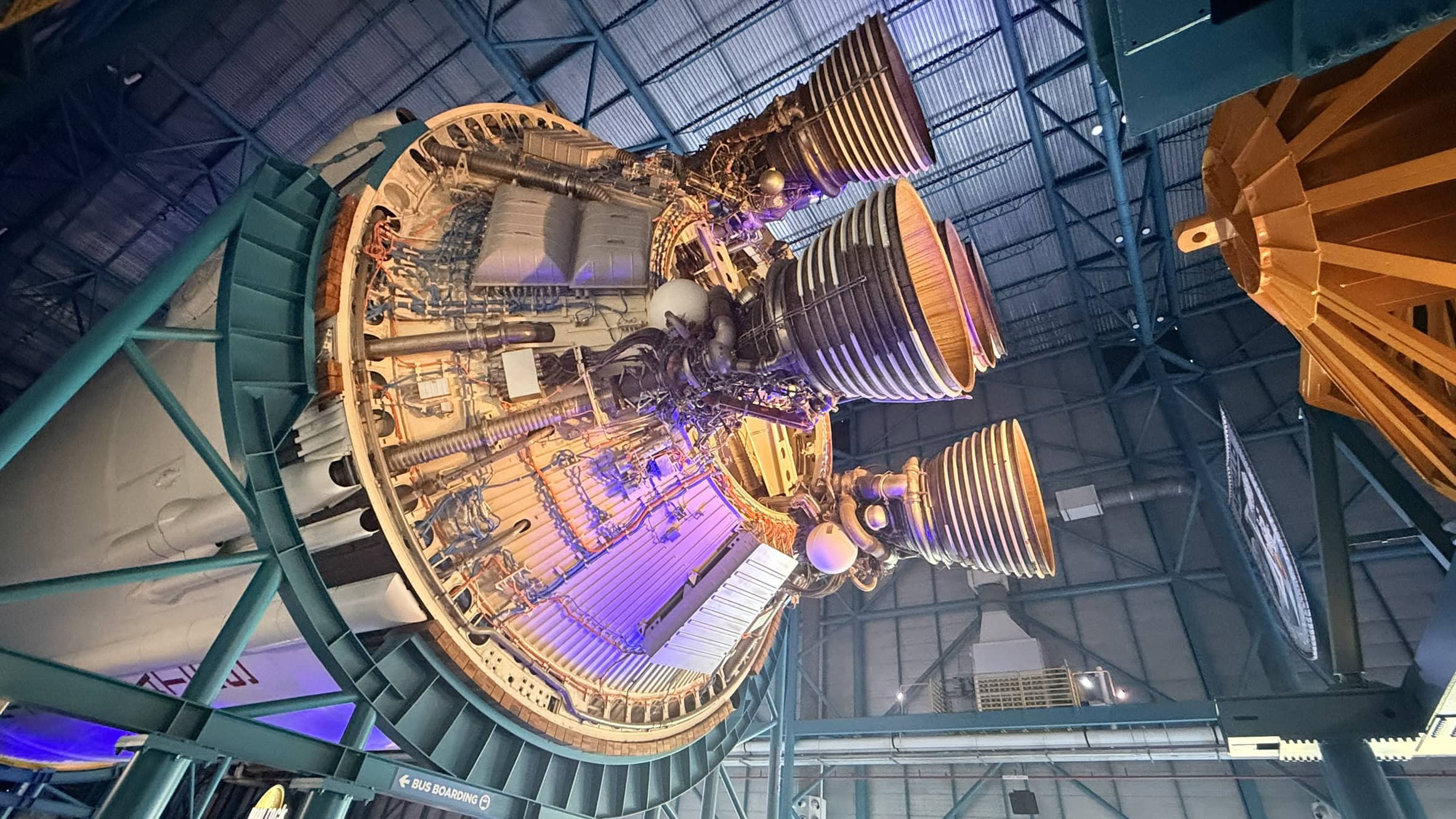
Exclusive Photos – We Got Right Up Close to the Saturn V Rocket at Kennedy Space Center: When the United States entered the Space Race, they were coming from behind. The Soviet Union had bested them in the first and second rounds. Soviet science and engineering propelled the world’s first artificial satellite, Sputnik, into orbit.
As if that wasn’t painful enough for the Americans, the Soviets got the first human into Earth orbit, Yuri Gagarin. But the Americans were not entirely out of the race.
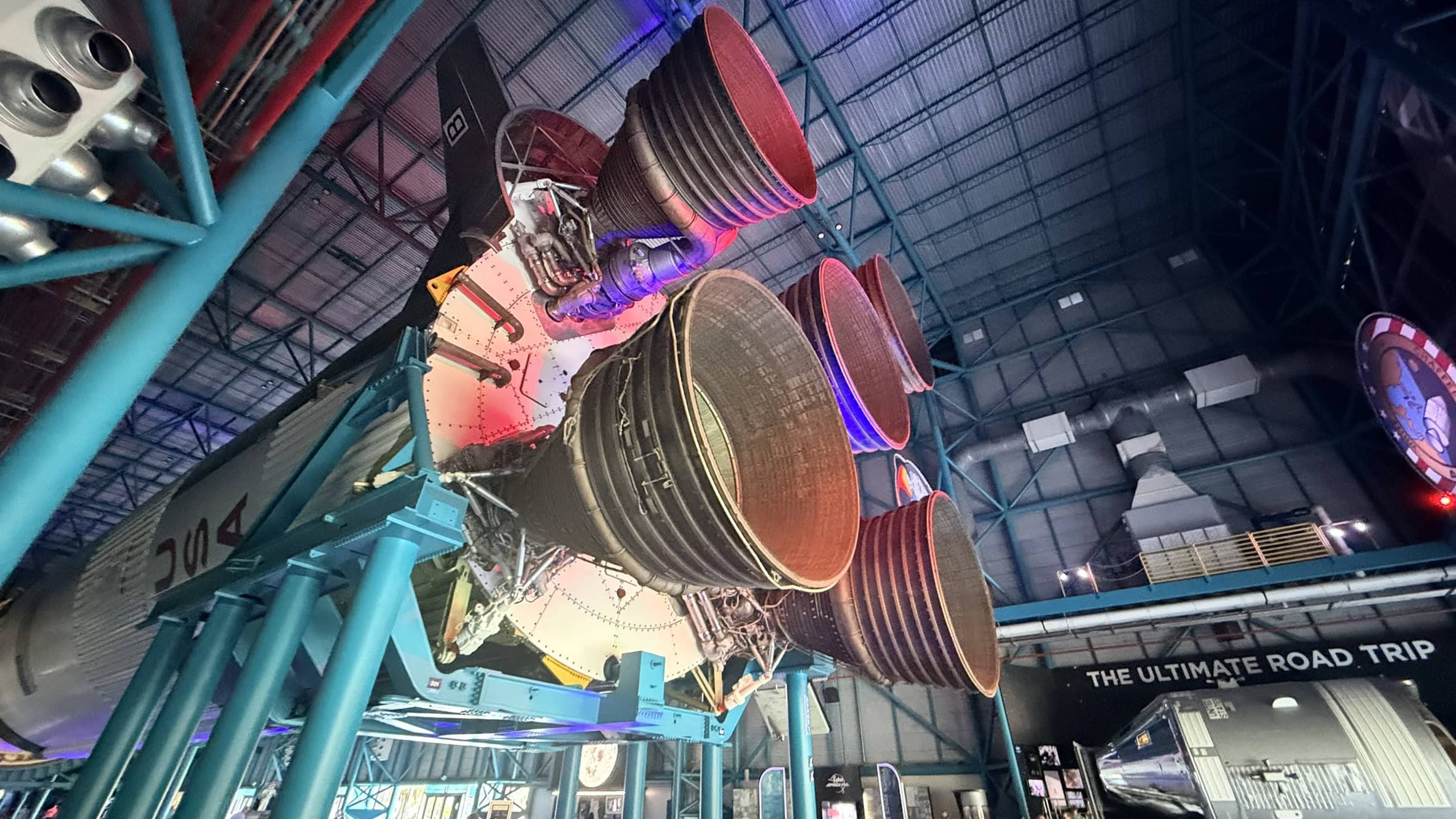
Saturn V rocket at the Kennedy Space Center. Taken on 6/28/2026 by Harry J. Kazianis for 19FortyFive.
There was still one last major frontier to capture, possibly the most important—the moon.
And the Americans had just the system to ensure they would get there first.
The Saturn V
Saturn V. America’s premier heavy-lift rocket. The likes of which have yet to be matched even today. 19FortyFive went to see the legendary Saturn V at the Apollo/Saturn V Center inside the Kennedy Space Center in Cape Canaveral, Fla., recently to get a firsthand look at how incredible this rocket system was.
Indeed, Saturn V remains the largest, heaviest, and most powerful rocket ever successfully flown into space. At liftoff, the rocket blasted three astronauts on their journey to the moon–repeatedly.
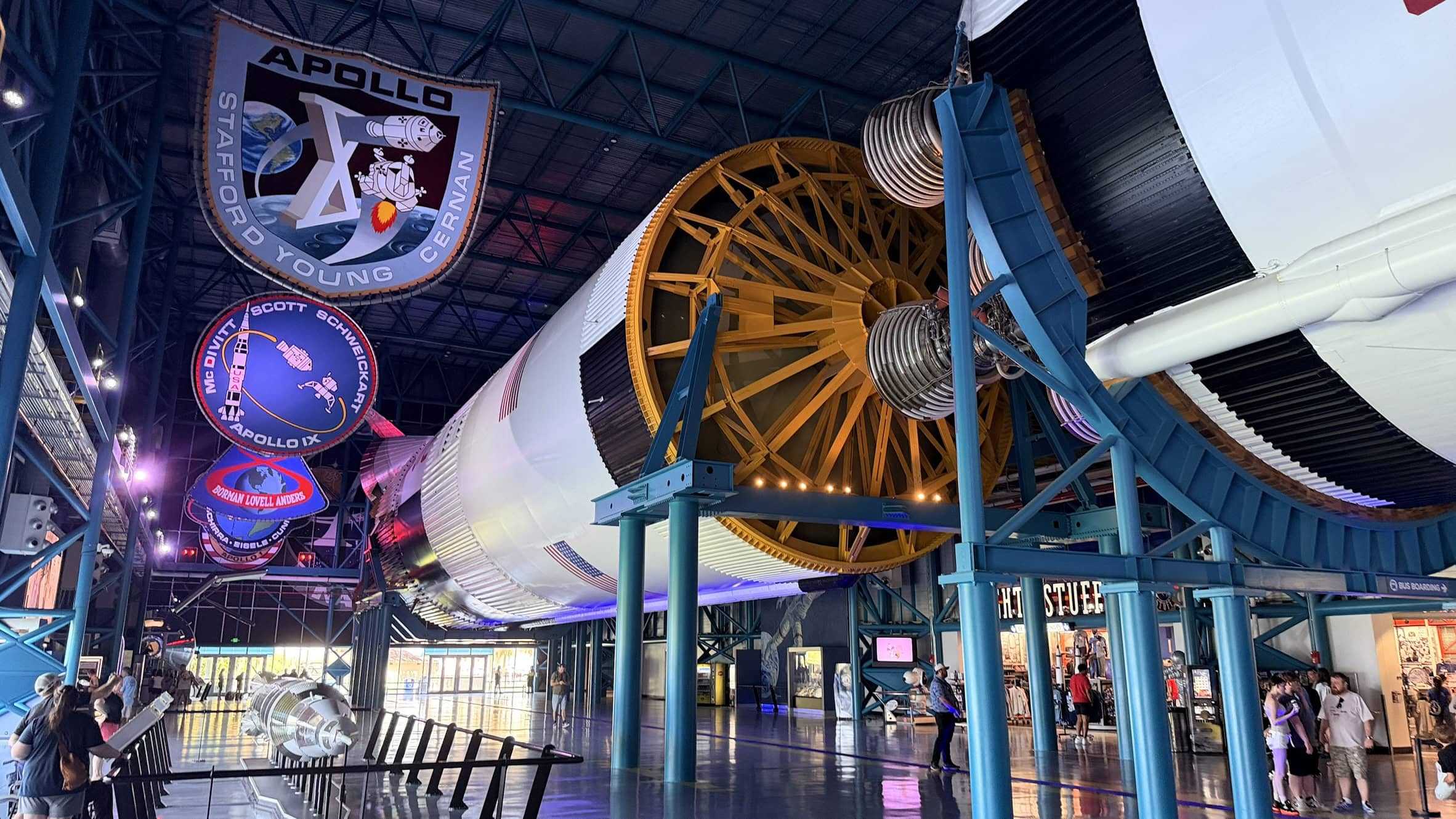
Saturn V rocket at the Kennedy Space Center. Taken on 6/28/2026 by Harry J. Kazianis for 19FortyFive.
This rocket was so powerful that, during its first test flight on the Apollo 4 mission, it broke tiles all the way in a control center three miles away from where it was launched.
Indeed, the fiery launch sequence had to be observed from miles away for safety and to protect spectators from destructive shockwaves.
The scale of the rocket was impressive, too, making it 363 feet–60 feet taller than the Statue of Liberty.
From 1967-73, the Saturn V flew more than a dozen times to the moon and back.
In fact, Saturn V not only lifted Americans to the moon (before the Soviets could get their cosmonauts there) but also placed Skylab into orbit as its last act before retirement.
Washington decided to mothball the entire system due to its high cost and the belief that the Americans had won the Space Race after Neil Armstrong set foot on the lunar surface.
NASA’s Real Role in the Cold War
So much of the US space program was militaristic.
Of course, NASA was created for scientific purposes.
The US government deliberately separated the National Aeronautics and Space Administration (NASA) from the United States Air Force at the outset of the Cold War, in part to demonstrate that the United States had benign intentions in space.
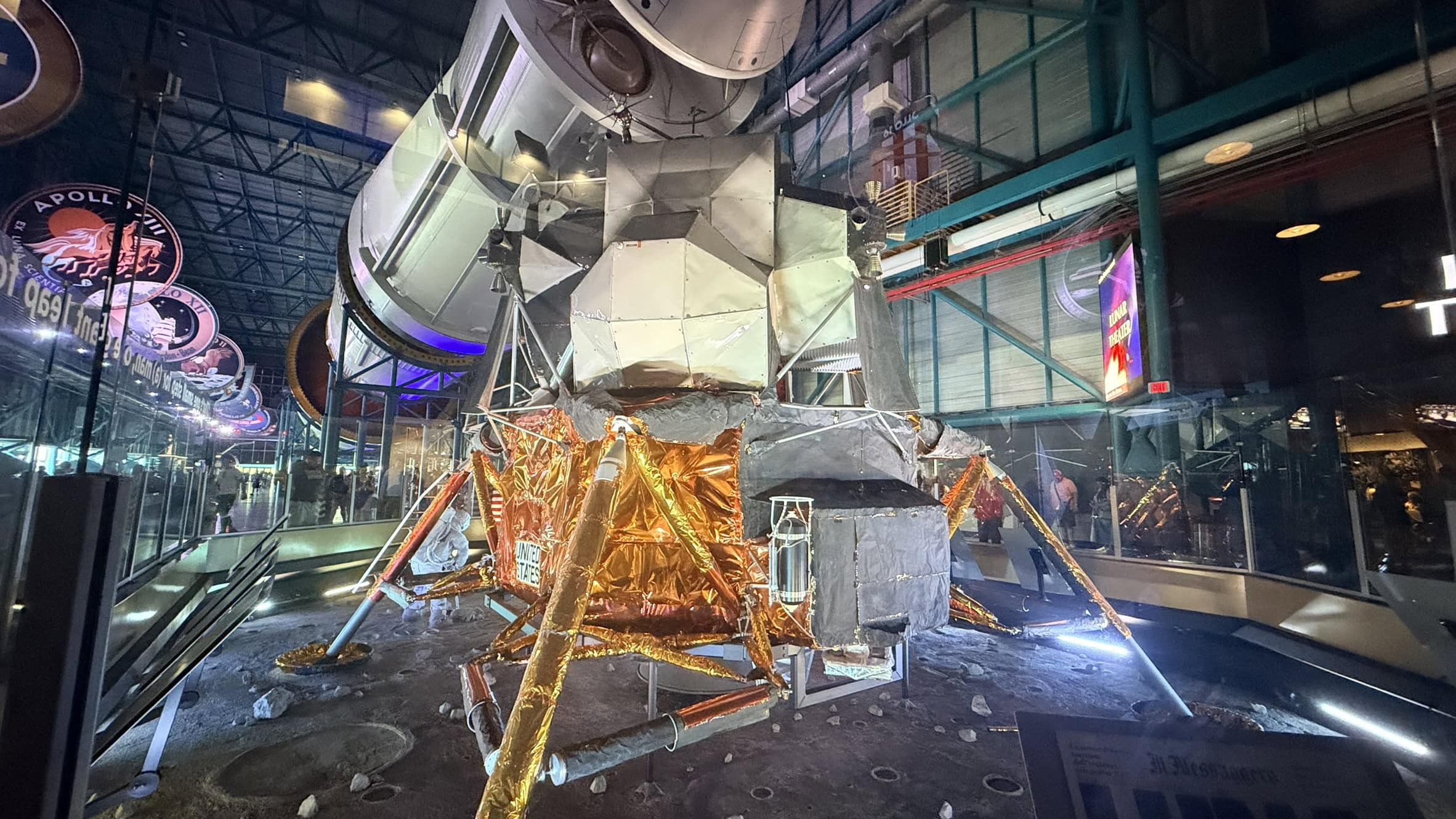
Saturn V rocket at the Kennedy Space Center. Taken on 6/28/2026 by Harry J. Kazianis for 19FortyFive.
Yet, the entire reason the Americans were even interested in space was to fight–and win–the Cold War in another domain.
What’s more, NASA relied heavily on infrastructure and other support from the United States military. Its separation from the military as a civilian agency was real. But NASA was predominantly a Cold War-fighting institution by another name (like the CIA was).
Troubling: How Nazi Science Helped Put Americans On the Moon
The chief architect was a man known for his controversial nature. Former Nazi (some would say war criminal) scientist, Dr. Wernher von Braun.
He and his team were exfiltrated from postwar Germany by US intelligence as part of Operation Paperclip, which was the American initiative to coopt as much advanced Nazi science and scientists as possible to better compete against the Soviet Union in what was at the time the coming Cold War.
Von Braun’s real contributions to the United States were in the domain of rocketry. It had always been his dream to land humans on the moon.
Indeed, the father of the V1 and V2 rockets had supposedly once remarked, upon seeing his rockets launched by Hitler make their way toward London during the war, that “the rockets work brilliantly. But they’re landing on the wrong planet.”
And with his inclusion in the postwar American military development programs, von Braun acted as the chief architect of America’s rocket program for the moon.
Because of this, von Braun is remembered as the “Father of American Rocketry.” Without his contributions, regardless of his controversial wartime record, Americans likely would not have landed on the moon when and how they did.
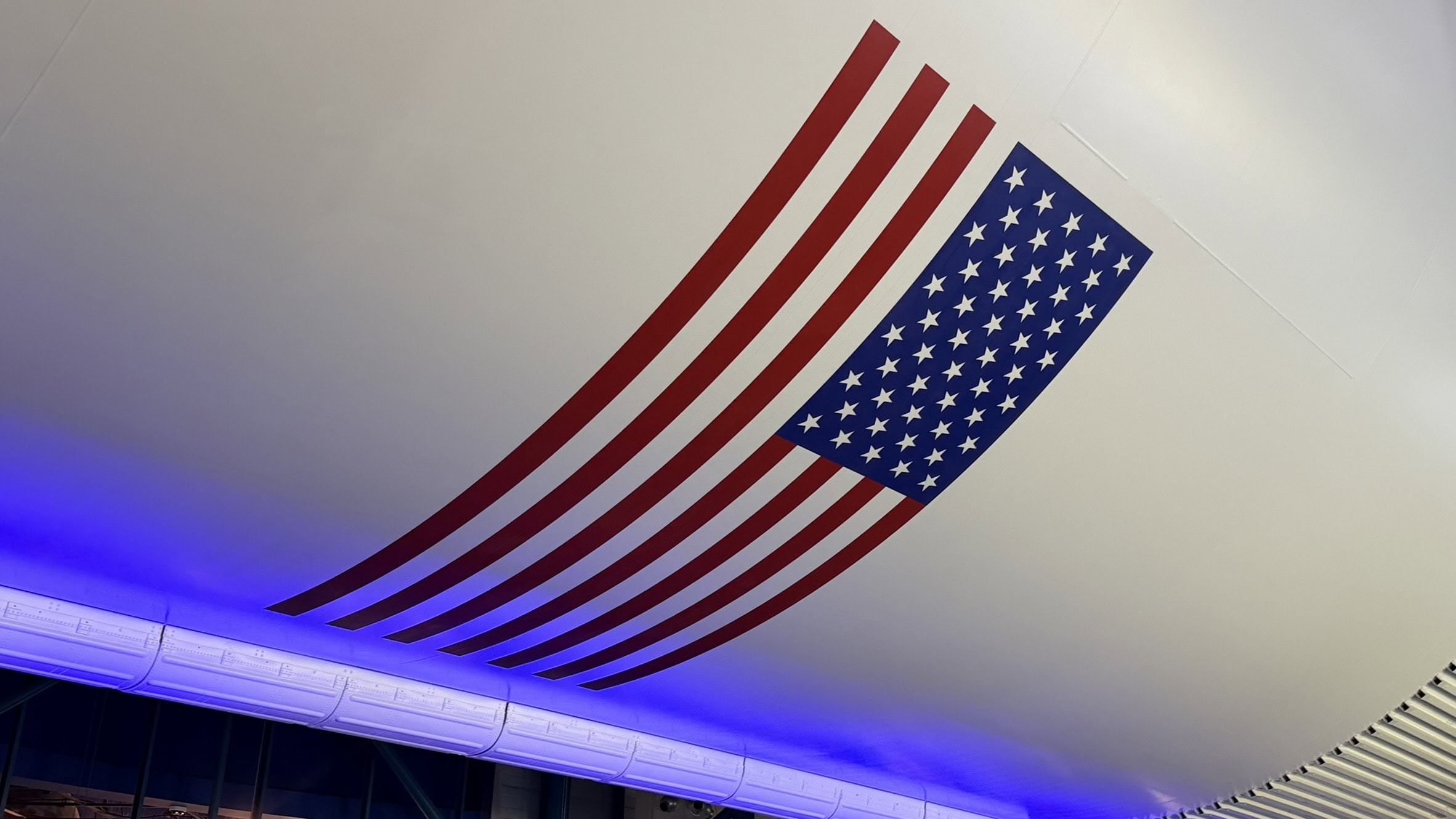
Saturn V rocket at the Kennedy Space Center. Taken on 6/28/2026 by Harry J. Kazianis for 19FortyFive.
The Most Important Invention of the Last Century
Anyway, no American rocket–indeed, no rocket anywhere in the world–has enjoyed the same level of success that the Saturn V rocket has enjoyed. That’s an incredible testament to the program itself.
But it is a reminder that since the 1960s, grand American engineering projects, such as the Saturn V, have stagnated.
Yes, we have SpaceX and its quest for a new heavy-lift rocket to reach Mars (and now the moon). It’s been years, though, since anyone really put that kind of effort into creating a system similar to the Saturn V.
Because of that, Americans stopped caring much about space. We told ourselves that we had conquered that frontier simply because we put some American flags on the moon.
That is not how other countries view things, though.
NASA logo. 19FortyFive image.
For countries like China, nothing is final in space–and nothing is settled until they get their say. Right now, the Chinese are working feverishly to develop their own system to send their taikonauts to the moon.
Had the Americans simply continued funding their Saturn V rocket and maintained that system, we likely would have sent astronauts beyond the moon by now.
Saturn V was likely the most important piece of engineering of the last half of the twentieth century. It remains unmatched in the second decade of the twenty-first century, too.
About the Author: Brandon J. Weichert
Brandon J. Weichert is the Senior National Security Editor at 19FortyFive.com. He also manages The Weichert Brief on Substack. Weichert also hosts “National Security Talk” on Rumble. He is the author of four bestselling national security books, the most recent of which is A Disaster of Our Own Making: How the West Lost Ukraine (Encounter Books). Follow him via Twitter/X @WeTheBrandon.