
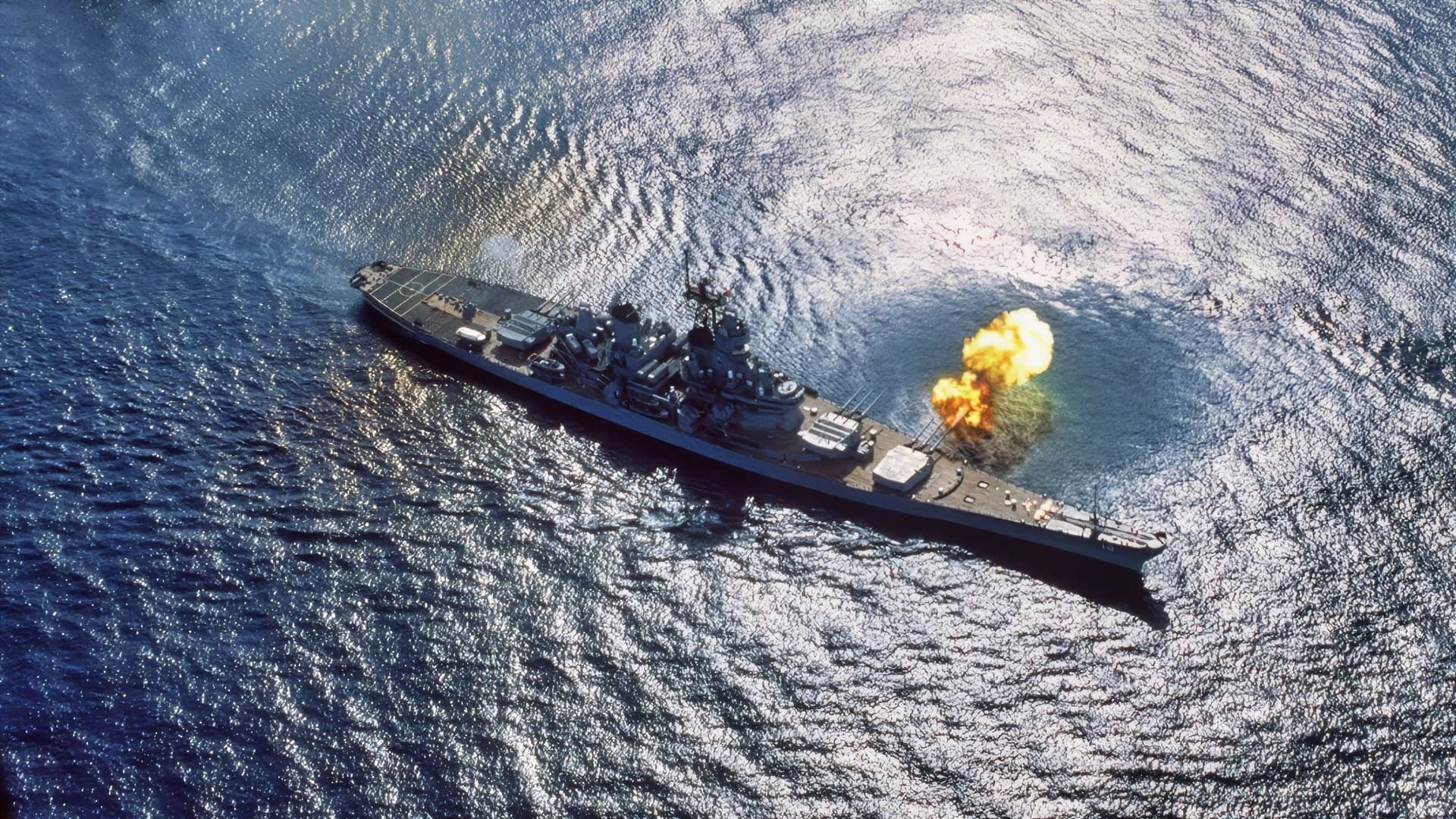
The Trump-class battleship is unlikely to die in combat. It is more likely to die in committee or in a shipyard schedule that never catches up to its own technology wish list.
The Navy has put a political name and a budget line behind a real problem. America’s surface fleet needs more missile volume. It needs ships with sufficient electrical power to support larger sensors and future weapons. It needs something beyond another stretched destroyer doing cruiser work.
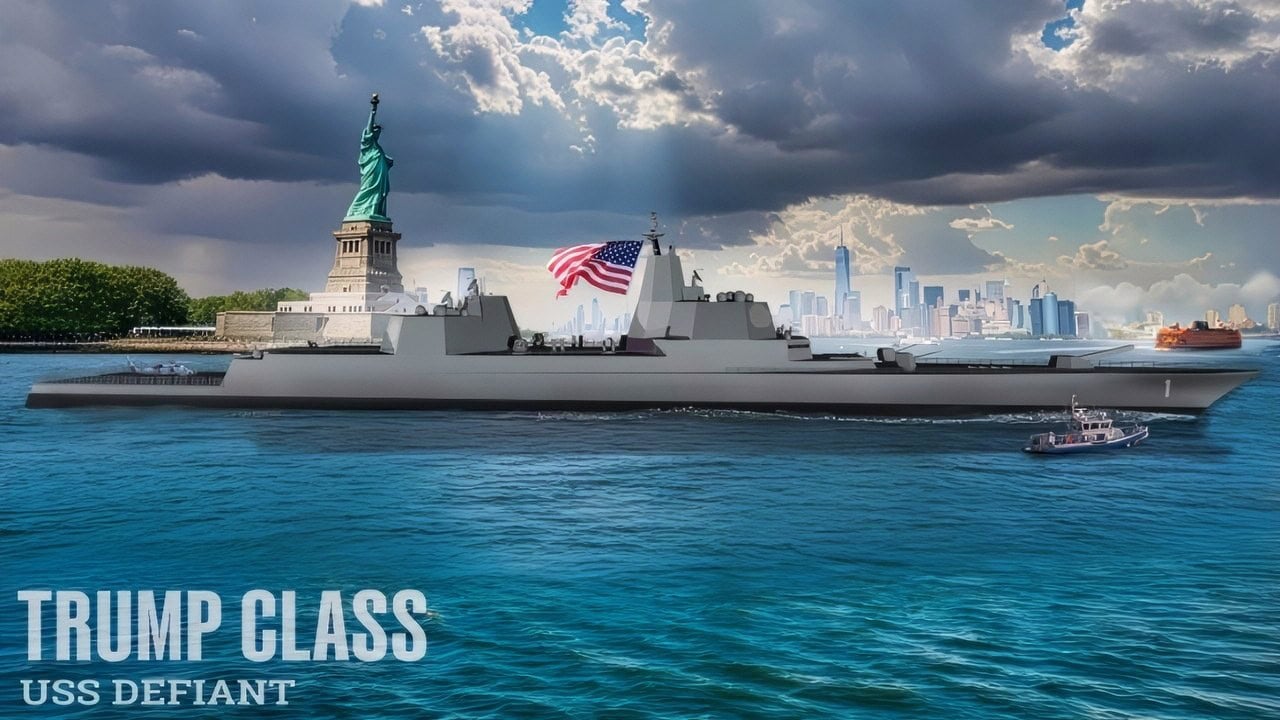
Trump-Class Battleship. Image Credit: Creative Commons/White House.
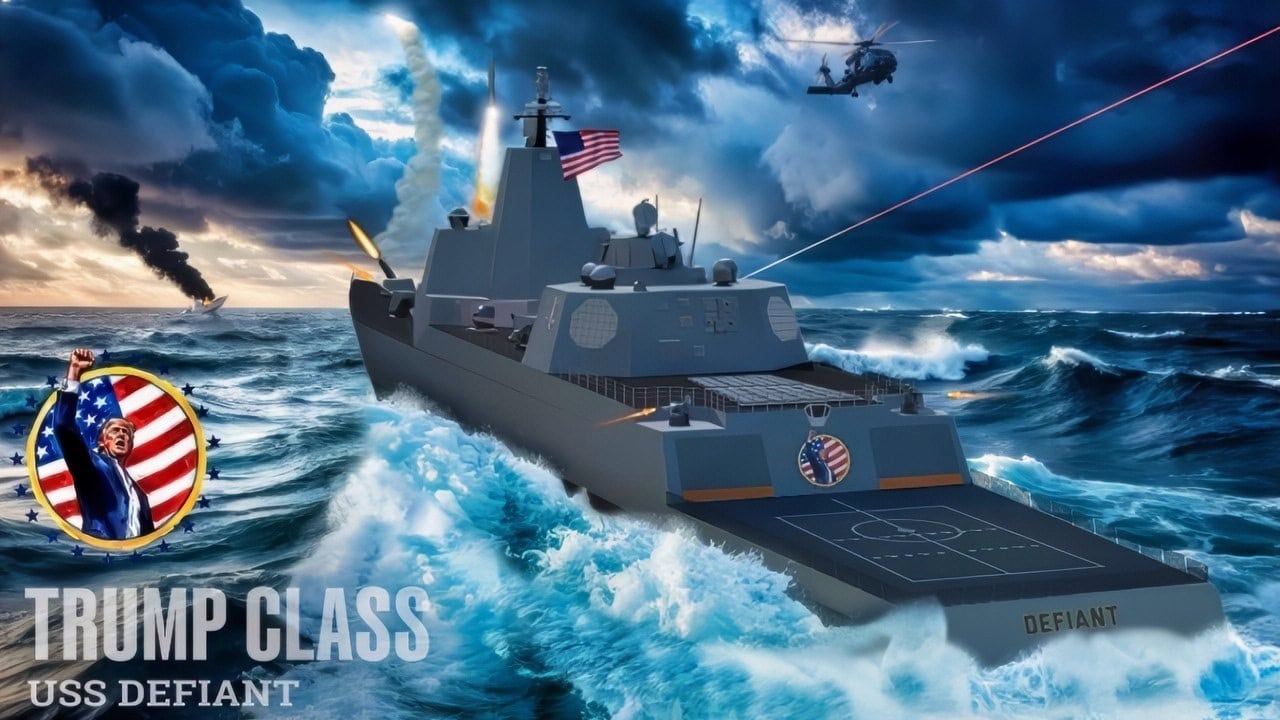
Trump-Class Battleship. Image Credit: Creative Commons/White House Photo.
Then the Navy did what the Navy too often does. It turned a real requirement into a vessel so ambitious—and, as of this spring, so heavy with nuclear propulsion—that Congress is now asking whether the ship can be built at all without cannibalizing the carriers and submarines the fleet already depends on.
The Trump-Class Battleship Is Already in Trouble
The first Trump-class ship, the future USS Defiant (BBG 1), is supposed to anchor the new BBG(X) program. Navy budget documents put the lead ship above $17 billion, with delivery projected for 2036. The Congressional Budget Office has put the possible lead-ship cost in a range that could run well above $20 billion.
The ship itself is not a small upgrade. The Navy describes a battleship of more than 35,000 tons, with long-range strike weapons, larger vertical launch systems for hypersonics, directed-energy weapons, railguns, advanced command spaces, and enough power generation to make all of this sound less like a surface combatant and more like a floating argument about the future of naval war.
And in May, the Navy resolved the question that had hung over the design since December: the ship will be nuclear-powered and built around the same reactor that powers the Ford-class carriers. That single decision changed the program’s center of gravity. It is why final assembly is now headed to Newport News, one of only two American yards that can build a nuclear surface ship, and it is why the congressional fight this summer was not really about railguns.
A larger surface combatant is not a crazy idea. Destroyers are crowded. The cruiser force is aging out. The Pacific is a big theater. If the United States is serious about deterring China at sea, it needs ships that can carry more weapons and stay in the fight.
That is the serious case for the Trump-class. The trouble is that the same logic, pushed one step further, is what gets the program into difficulty.
The Ghost Is Zumwalt
Congress has seen this before. The name changes, the renderings get better, and the language around “transformational” capabilities becomes a little more careful. The pattern remains familiar.
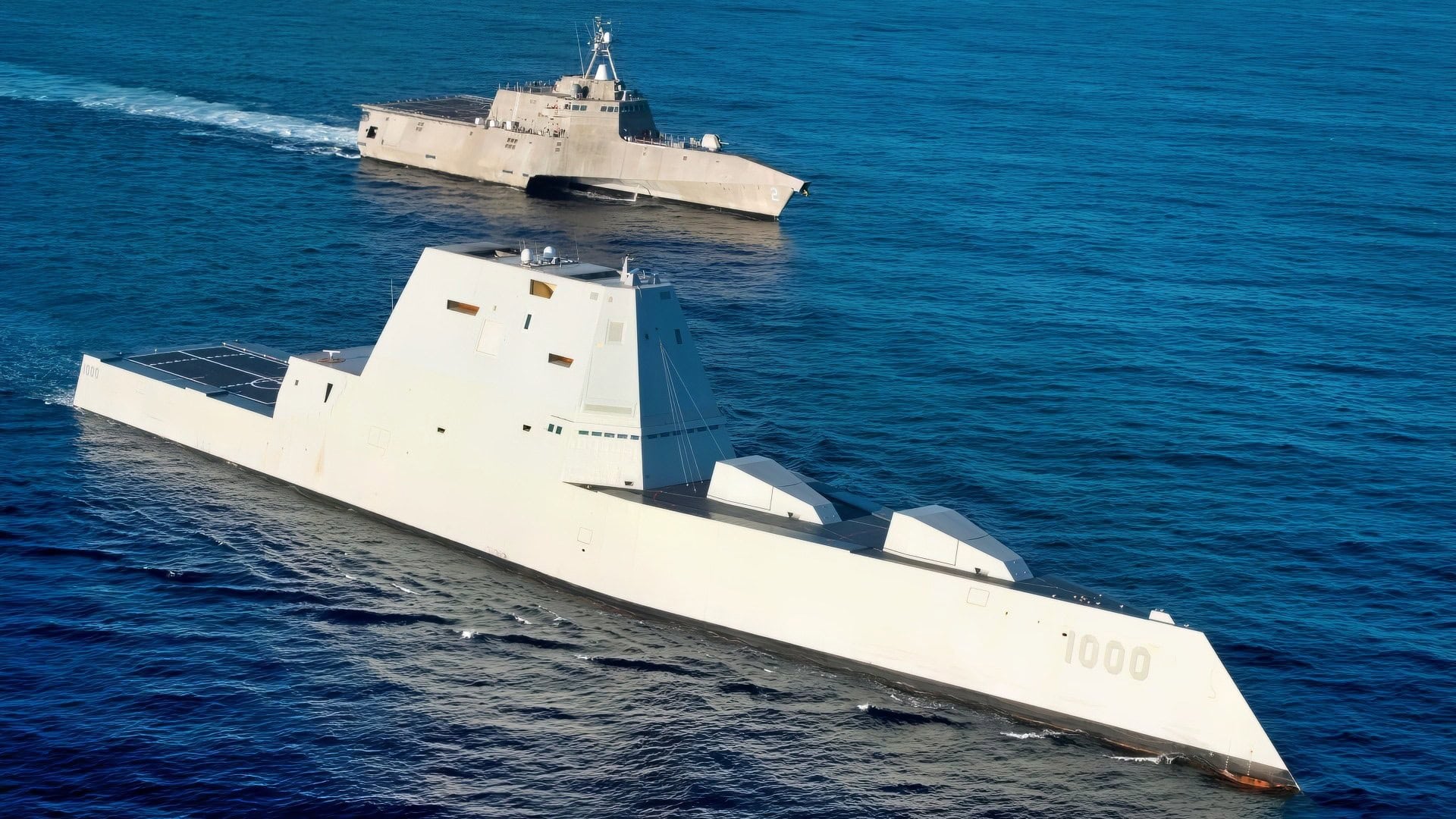
Dec. 8, 2016) The guided-missile destroyer USS Zumwalt (DDG 1000), left, the Navy’s most technologically advanced surface ship, is underway in formation with the littoral combat ship USS Independence (LCS 2) on the final leg of its three-month journey to its new homeport in San Diego. Upon arrival, Zumwalt will begin installation of its combat systems, testing and evaluation, and operation integration with the fleet. (U.S. Navy photo by Petty Officer 1st Class Ace Rheaume/Released)
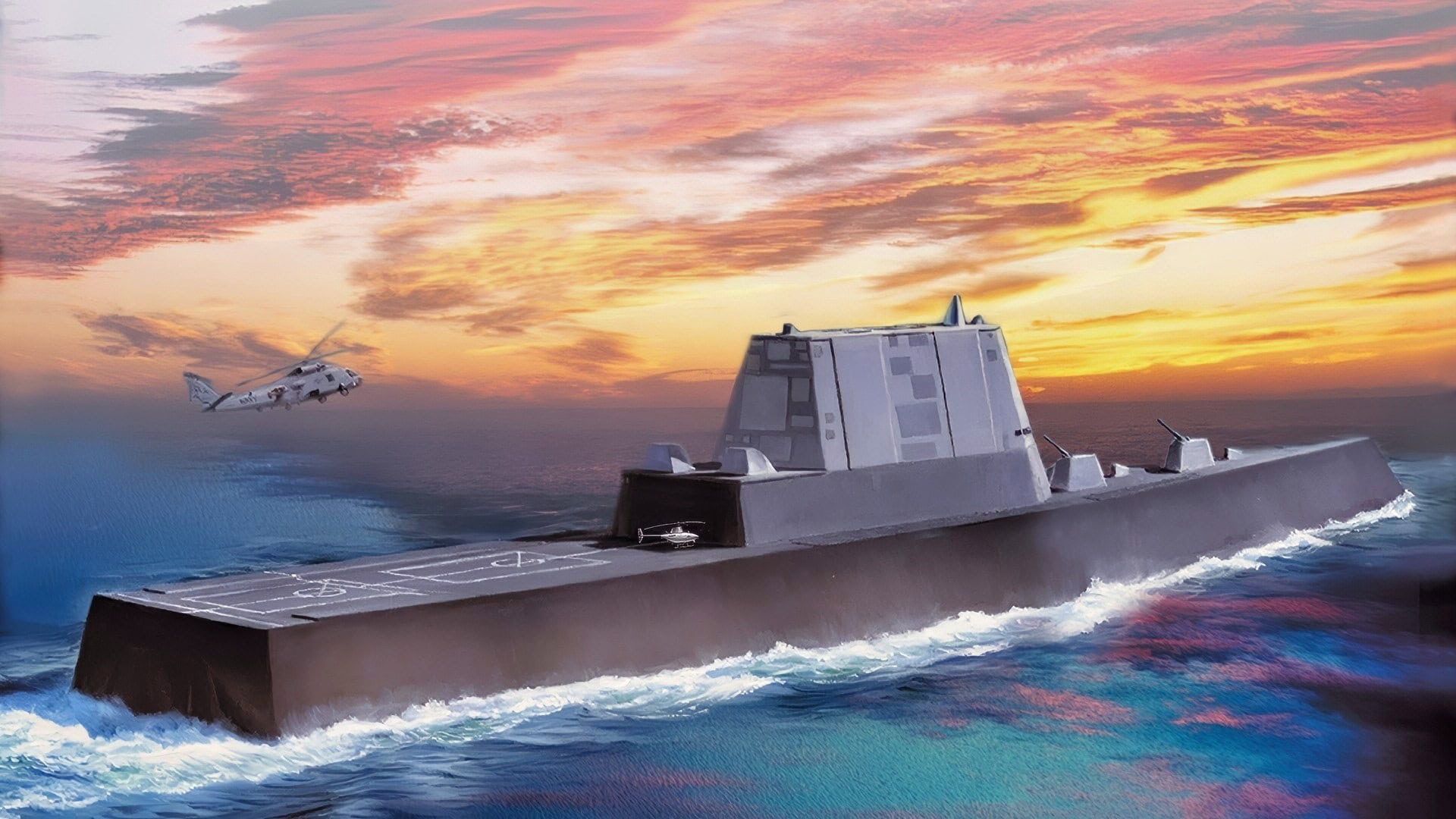
Zumwalt-Class Artist Rendering. Image Credit: Creative Commons.
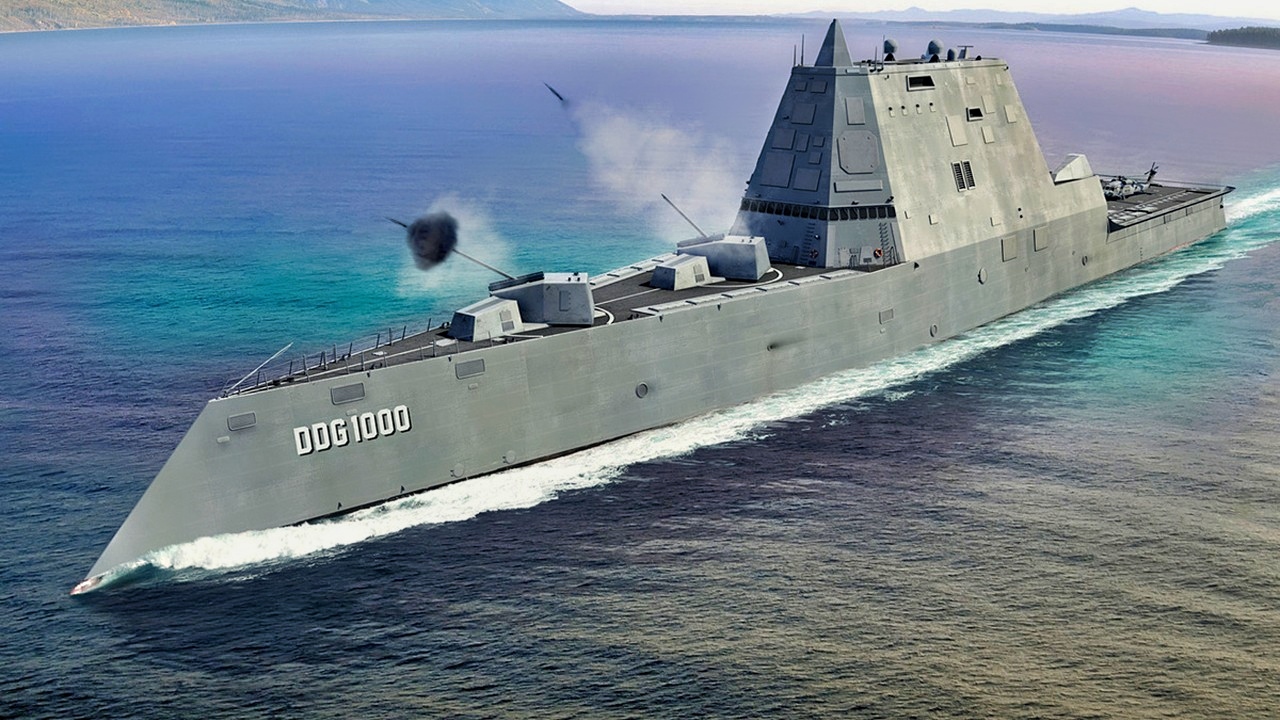
Zumwalt-Class U.S. Navy Destroyer. Image Credit: Creative Commons.
Zumwalt was supposed to change naval warfare. It became a three-ship class whose original gun system lost its rationale after the ammunition became absurdly expensive. LCS arrived with more concept than combat power. The Constellation frigate was meant to be safer, but then ran into the old American problem of modifying a design until the schedule starts to sag.
None of these cases is identical to BBG(X). Still, the family resemblance is difficult to ignore—and members of Congress have said so out loud, invoking Zumwalt, LCS, and the canceled CG(X) cruiser in the same breath as the battleship. A real operational problem appears. The Navy answers it with a design that depends on technology and stable requirements, arriving at the same time. Then Washington discovers that ships are less forgiving than slide decks.
The Trump-class takes that pattern and scales it up. It has to answer China and prove the Golden Fleet is more than branding. It has to absorb technologies that are still not where the Navy wants them to be and do all of it on nuclear power, drawing on an industrial base already stretched thin.
Congress Is Right to Be Suspicious
The House Armed Services Committee did not quite kill the program. On June 4, an amendment from ranking member Adam Smith to strip the $1 billion in advance procurement failed 26-30. House appropriators later kept the $1 billion level after rejecting a Betty McCollum amendment to zero it out, and then added restrictions and reporting requirements.
The suspicion is not partisan noise, and it is worth being precise about what Congress is actually worried about. The committee’s adopted amendment, from Representative Joe Courtney, does not lead with lasers. It leads with reactors. It notes that only two American yards can build nuclear-powered ships, that one of them—Newport News—is already behind on every Ford-class carrier, and that a single supplier builds the reactors for the entire submarine and carrier fleet. Layering a nuclear battleship on top of that, the committee warns, could jeopardize carrier delivery and strain the reactor base for years. That is the real charge: not that the weapons are immature, but that the Navy is proposing to fund a nuclear ship it cannot yet build without robbing the rest of the fleet.
The weapons question is Congress’s second line, not its first. House legislation also bars a construction contract for the lead ship until the Navy secretary certifies that the planned weapon systems have reached a sufficiently mature technology readiness level. That is a polite congressional way of saying: prove this is not another science project with a hull wrapped around it.
And the doubt is earned. Railguns have been pursued, shelved, revived in pieces, and discussed for years as if a breakthrough were always just over the horizon. Shipboard lasers are real enough to matter, yet the leap from today’s systems to the kind of high-power weapons imagined for BBG(X) is not trivial.
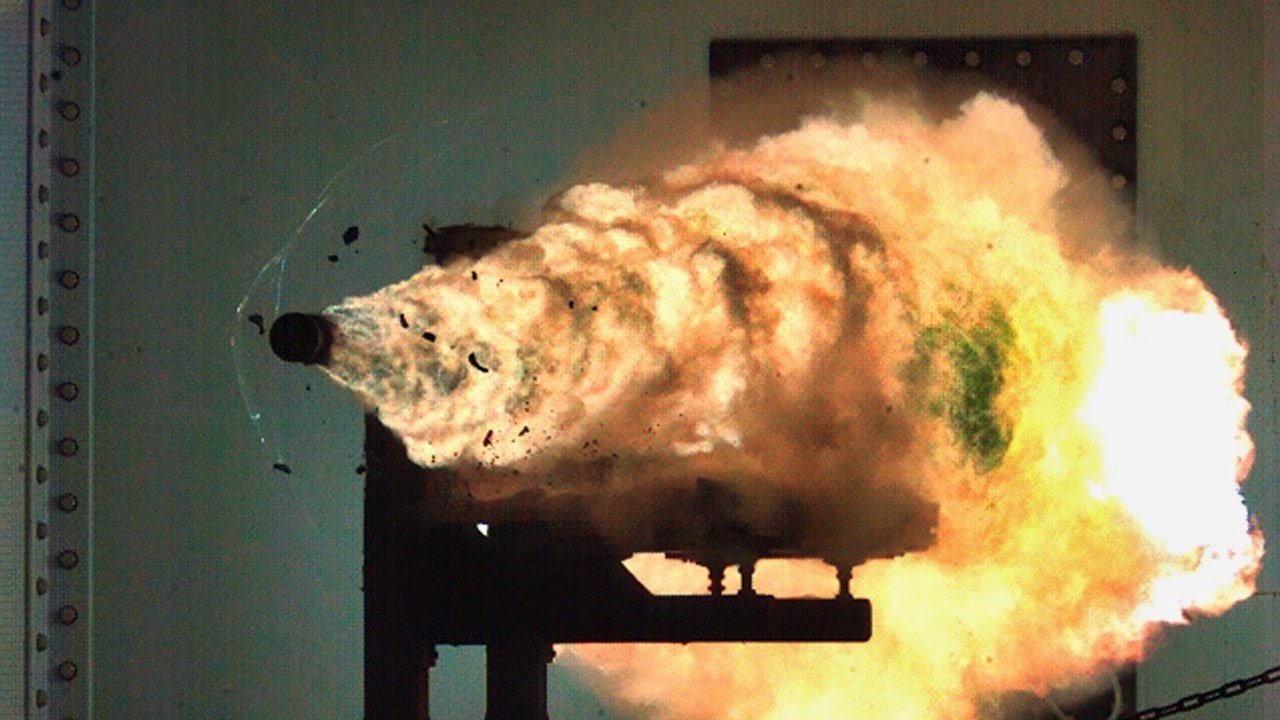
(Jan. 31, 2008) Photograph taken from a high-speed video camera during a record-setting firing of an electromagnetic railgun (EMRG) at Naval Surface Warfare Center, Dahlgren, Va., on January 31, 2008, firing at 10.64MJ (megajoules) with a muzzle velocity of 2520 meters per second. The Office of Naval Research’s EMRG program is part of the Department of the Navy’s Science and Technology investments, focused on developing new technologies to support Navy and Marine Corps war fighting needs. This photograph is a frame taken from a high-speed video camera. U.S. Navy Photograph (Released)
This is where the naming controversy becomes a distraction. Washington can argue about whether the class should carry Trump’s name. Naval history can sort out the protocol. The harder question is whether the United States can afford to spend a decade building a nuclear ship whose reactors compete with those of its carriers and whose most important features are still maturing.
Deterrence Needs Ships That Exist
The strategic case for BBG(X) rests on firepower. A large ship with deep magazines, long-range missiles, and command capacity would give combatant commanders something they currently lack. It should not be waved away by people who think every large ship is automatically obsolete.
A realist should take the requirement seriously. China is building naval power at scale. The United States cannot deter a maritime great power with communiqués, slogans, and exquisite platforms that arrive too late to affect the balance.
That is precisely why the Trump-class is vulnerable. A ship that costs more than $17 billion before construction begins becomes a political hostage. Build only a few, and each one carries too much symbolic weight. The weapons could lag, leaving the hull an expensive placeholder. And every schedule slip buys the Navy another year of explaining why the future fleet is still waiting on the pier.
The nuclear decision sharpens every one of these problems. It is exactly what concentrates the cost, ties up the two yards that can do the work, and forces the battleship to compete with carriers and submarines for the same scarce reactors and the same single supplier. The choice that was supposed to give the ship endurance is the choice that puts it in direct rivalry with the rest of the fleet.
The deeper problem is mass. The Pacific does not reward monuments. It rewards forces that can be distributed, repaired, supplied, risked, and replaced. A battleship may add firepower to a fleet. It may also absorb money, manpower, shipyard capacity, reactor production, and congressional patience that could have put more usable combat power into the water.
The Trump-class may still become a ship. But the odds are already narrowing. The Navy has to freeze the design, mature the weapons, defend the cost, secure the reactors, and protect the rest of the shipbuilding plan from the gravitational pull of one enormous hull.
Great powers do not lose naval races only because they build too little. They can also lose by chasing the future in a form they cannot build fast enough or afford in numbers, and then hesitate to risk once the shooting starts. The Trump-class is being sold as proof that American sea power is coming back. For now, it looks more like a warning about how hard that return is going to be.
About the Author: Dr. Andrew Latham
Andrew Latham is a professor of international relations and political theory at Macalester College in Saint Paul, MN. You can follow him on X: @aakatham.