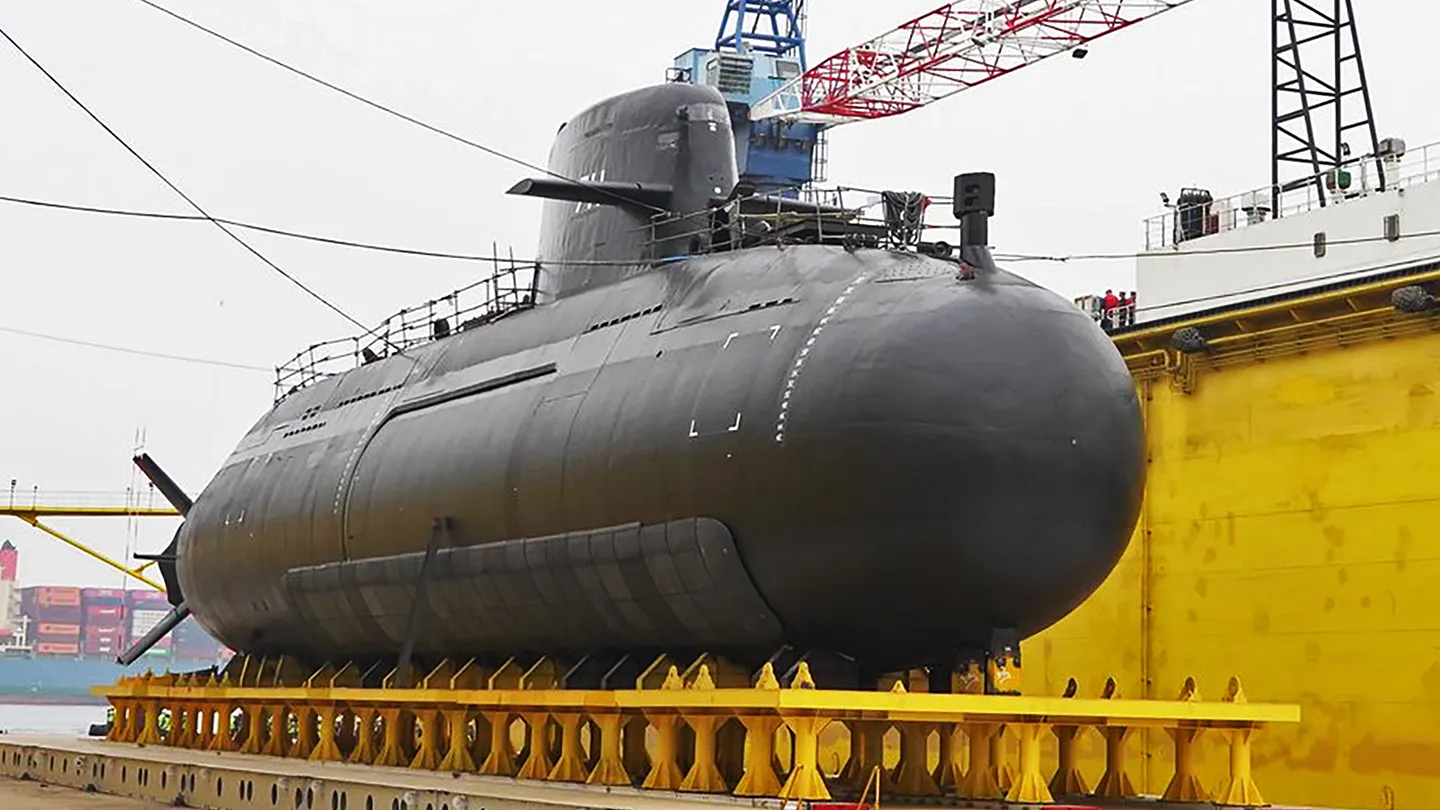
Under the second Trump Administration, US support for Taiwan shows signs of weakening. This could be a temporary departure from longstanding US policy, since America will have a new president in two and a half years. It is also possible, however, that this is the beginning of a permanent shift.
America is still persisting with some longstanding efforts to help friends and allies in the Asia-Pacific region defend themselves. Simultaneously, however, there are multiple indications that the current US government wants to distance itself from a scrap with China over Taiwan.
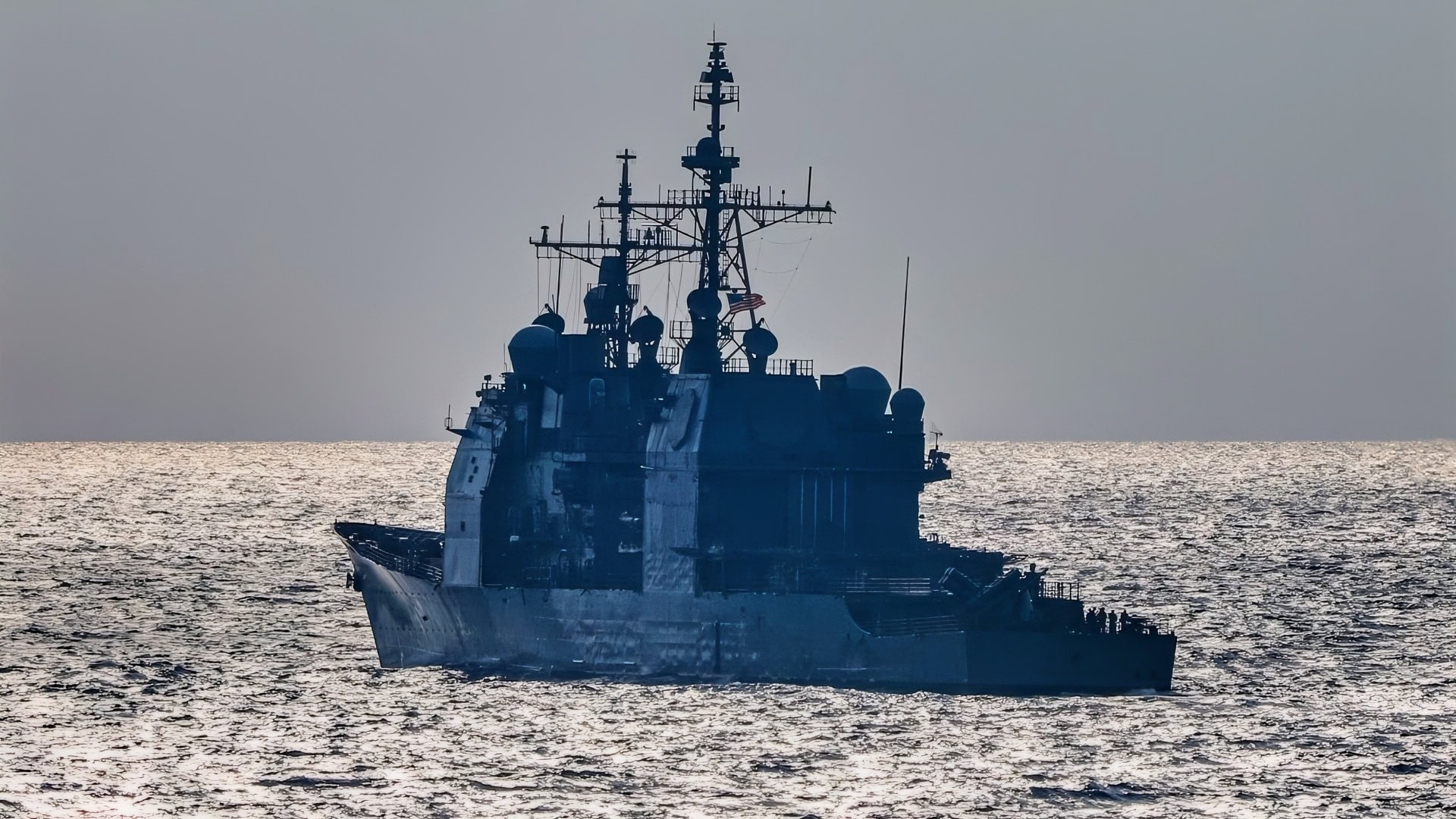
TAIWAN STRAIT (Aug. 28, 2022) Ticonderoga-class guided-missile cruiser USS Antietam (CG 54) transits the East China Sea during routine underway operations. Chancellorsville is forward-deployed to the U.S. 7th Fleet area of operations in support of a free and open Indo-Pacific. (U.S. Navy photo by Mass Communication Specialist 2nd Class Justin Stack)
On one occasion, before beginning his second term, Donald Trump said he would respond to a Chinese invasion attempt with sanctions. At least three times, he has said publicly that Taiwan is indefensible. In May, Trump said he would use a proposed $14 billion US arms sale to Taiwan, already approved by Congress and awaiting his signature, as a “bargaining chip.” Consulting with the Chinese government about an arms sale to Taiwan violates the Six Assurances, part of US policy toward Taiwan since the Reagan Administration.
Asked about this, Trump said he would not be bound by the Six Assurances because it was “a long way away”—i.e., too old. Also in May, Pete Hegseth became the first US Secretary of Defense in at least a decade to avoid mentioning Taiwan in his speech to the Shangri-La Dialogue on defense issues.
Taiwan’s role as a key supplier of semiconductors has not prompted the US to commit more strongly to protecting Taiwan; rather, it has led Washington to pressure Taiwan to move some of its production to the US for safekeeping in the event of a cross-Strait war.
If the White House’s willingness to fight over Taiwan is at a low point, the current situation seems to provide Xi with a window of opportunity to move militarily against Taiwan. He is unlikely, however, to attempt to exploit this window, for several reasons.
A successful PLA invasion and capture of Taiwan’s main cities would still be immensely difficult despite China’s newly improved military capabilities. A blockade is more feasible, but would not ensure Taiwan’s surrender and would give Taiwan’s friends plenty of time to respond with counter-measures. The PLA is somewhat off balance because of a purge of many high-level commanders, ostensibly for corruption.
The 21st National Congress of the Chinese Communist Party will take place next year, likely in October. Xi will be seeking a fourth term as General Secretary and will not want to take risky actions beforehand that could embolden domestic opponents. Despite his past statements about Taiwan, the Chinese think Trump is unpredictable, which gives them pause. Finally, Beijing has the opportunity to make gains on the Taiwan issue without fighting because of the Trump Administration’s interest in reaching a bilateral economic deal.
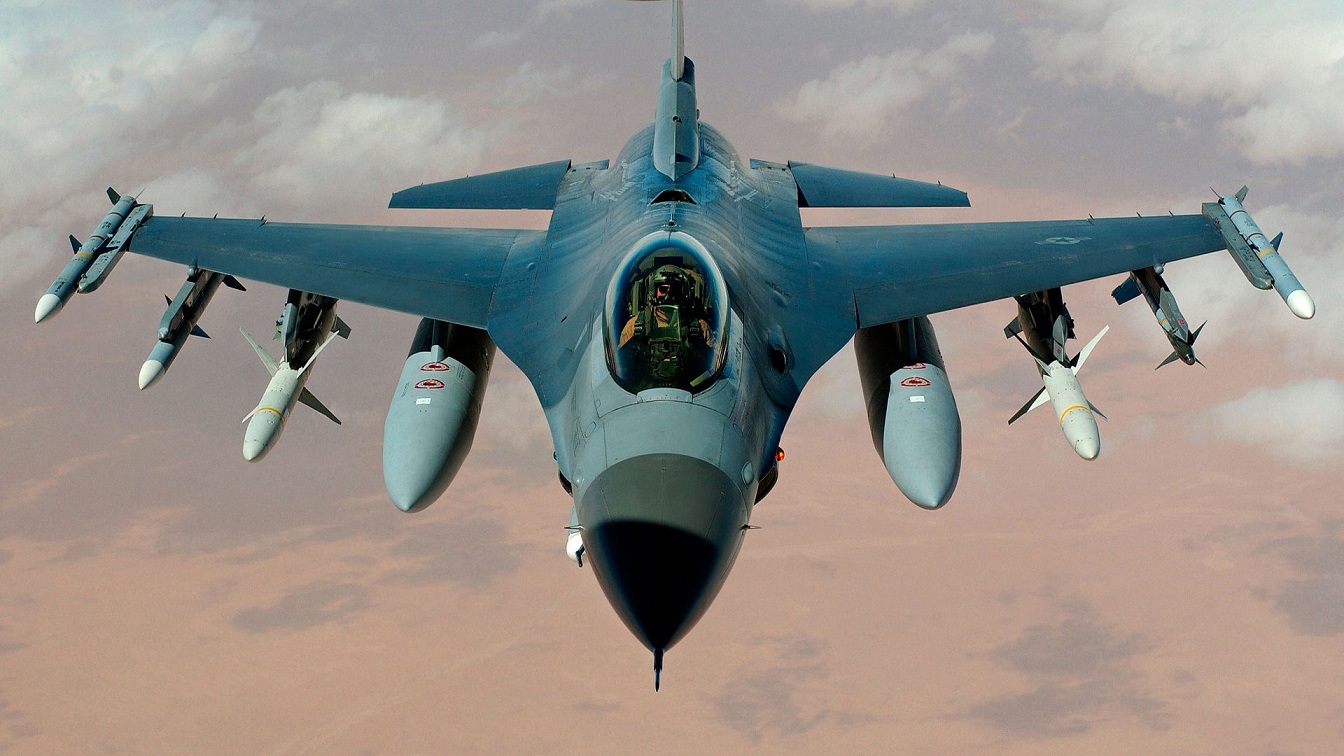
A U.S. Air Force F-16 Fighting Falcon flies a mission in the skies near Iraq on March 22, 2003 during Operation Iraqi freedom. The plane is armed with HARM missiles.
The current weakening of US support for Taiwan might be a temporary feature unique to the Trump Administration. The next US president, even a Republican, might reverse it. Before joining the Trump II cabinet, Secretary of State Marco Rubio, a likely contender for the Republican presidential nomination, advocated for more international space for Taiwan, a less ambiguous US commitment to defend Taiwan in the event of a cross-Strait war, and a streamlined process for the US to sell arms to Taiwan. Another possible Republican presidential candidate, Ron DeSantis, has said he is committed to deterring China from attacking Taiwan.
There are, however, three longer-term developments that could continue to push US policy toward softer support for Taipei.
China’s defense modernization and buildup are steadily raising the costs and risks of a hypothetical US war against China. Three decades ago, America would have easily won a cross-Strait war with minimal losses. Now, war games indicate that even a defeat of an attempted Chinese invasion of Taiwan would entail grievously heavy losses among US as well as Taiwan forces, plus damage to the US homeland from Chinese cyberattacks. The Chinese have greatly narrowed the previous technological gap with America and field larger numbers of key weapons systems than does the US, while showing no intention to slow down in the near future.
The US government has seemingly given up on complying with the legal requirement in the 1979 Taiwan Relations Act that America provide Taiwan with armaments “necessary to enable Taiwan to maintain a sufficient self-defense capability.” By no reasonable interpretation is Taiwan anywhere close to that capability, and the arms America provides do little to close the huge imbalance in forces that China enjoys over Taiwan.
Doubts about the likelihood of victory and reservations about the prospect of massive US casualties will inevitably affect Washington’s willingness to intervene in Taiwan’s defense.
Another consideration for US planners is the relative decline of the US defense industrial base. The US government’s willingness to throw in additional funding does not by itself solve this problem. Deeper obstacles include a lack of qualified and experienced American engineers, insufficient shipyard and factory capacity, supply chains that rely on very limited availability of key components, and reliance on China for core materials such as rare earth elements. Meanwhile, some of the US precision munitions expended during the Iran war won’t be fully replenished until 2030.
Given the strength and depth on both sides, a US-China war would likely be protracted rather than quick. During the opening weeks, both the US and China would expend huge numbers of precision munitions and lose ships and aircraft vital to maintaining the campaign. With its industrial might, China could replace its losses more quickly than the US could. In this respect, a long war would be to China’s advantage. In a case where the US side prevailed but exhausted its military power in the process, China might be able to quickly rebuild its forces and launch a second round of war against a gravely weakened US.
The third long-term development that may help permanently distance the US from intervening to defend Taiwan is the movement of America’s Overton Window. The Trump presidency has shown that Americans can tolerate a policy of reduced US backing for Taiwan. This may have been true for a long time, but it was never tested until now. Previous US presidents went along with the foreign policy elites who accepted the arguments for why a de facto independent Republic of China is in America’s interest.
For decades, strategists have offered persuasive arguments for why it would be bad for America if China forcibly annexes Taiwan. A major global economy would be dragged into the China-Russia Bloc. Global political liberalization would suffer a serious defeat as an authoritarian empire absorbed a hard-won democracy. The PRC’s strategic position would be greatly improved, to the detriment of US friends and allies. In particular, Japan’s trade routes and island territories would be under increased threat.
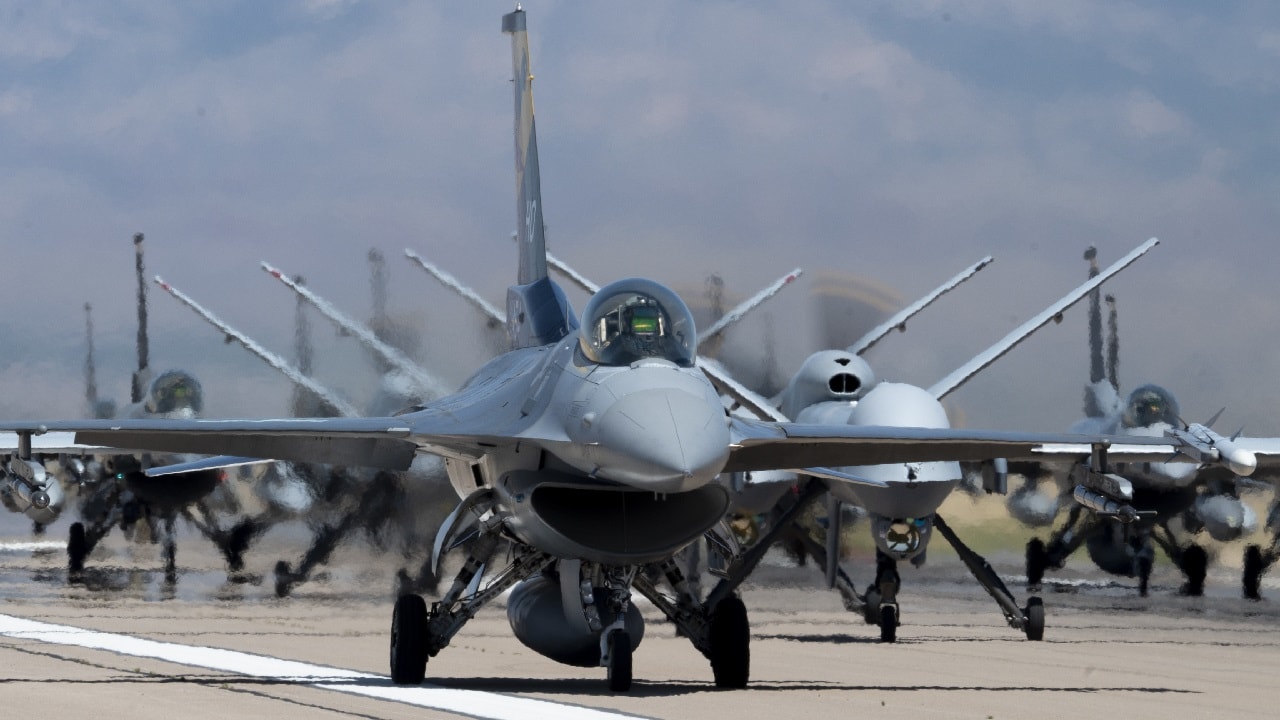
Forty-nine F-16 Vipers and MQ-9 Reapers assigned to the 49th Wing line up on the runway during an elephant walk at Holloman Air Force Base, New Mexico, April 21, 2023. The 49th Wing is the Air Force’s largest F-16 and MQ-9 formal training unit, building combat aircrew pilots and sensor operators ready for any future conflicts. (U.S. Air Force photo by Tech. Sgt. Victor J. Caputo)
An involuntary unification of Taiwan with China would severely undermine America’s leadership in the region.
Trump has broken from the tradition of accepting these arguments, seemingly prioritizing an economic agreement with China over Taiwan’s strategic importance. He has demonstrated that it is politically possible for a US commander-in-chief to at least talk about downgrading support for Taiwan.
Some members of Congress have expressed unhappiness. For example, in May, a bipartisan group of senators sent Trump a letter urging him to greenlight the arms sale. In June, Rep. Lloyd Doggett said “Taiwan is not a bargaining chip. . . . [W]e need to make available every weapon that Taiwan needs in its defense as quickly as it becomes possible.” Nevertheless, pro-Taiwan members of Congress have been unwilling or unable to hold the Trump Administration to account for its agenda.
The views of the US public on this issue might be decisive, but there is little outcry from American society over reduced support for Taiwan. In opinion polls such as those conducted by the Chicago Council on Global Affairs, the percentage of Americans who say they would support sending US forces into a war against China to protect Taiwan has almost always remained below 50 percent. That number would likely be lower if respondents were told American involvement would result in the destruction of several major US warships, hundreds of US aircraft, and the accompanying large numbers of human casualties. The percentage supporting Taiwan tends to be higher or lower depending on how publicly critical the US government is of China, suggesting that, in this case, public opinion follows rather than constrains government policy.
A broad sense of war-weariness among Americans can only drag down US enthusiasm for a war against China to defend Taiwan. After seeing hugely wasteful and mostly unsuccessful military operations in Afghanistan and Iraq and now an unpopular campaign against Iran, Americans will have little appetite for discretionary wars for years to come.
As American dominance fades, reconsideration of enduring foreign policies is inevitable. Before the end of his presidency, it is possible Trump could sour on China and pivot to strengthening defense cooperation with Taiwan. But the era of consistently strong US support for Taipei appears to be ending.
About the Author: Denny Roy
Denny Roy is a Senior Fellow at the East-West Center in Honolulu. He specializes in Asia-Pacific security and strategic issues.