

Summary and Key Points: Saab, Lockheed Martin, and Bombardier are now competing for the largest defense-industrial decision Canada has made in a generation — not just which fighter the Royal Canadian Air Force flies, but whether the country builds its next air force at home or buys it abroad. Ottawa began with a review of its F-35 order and has ended up weighing a C$500 billion industrial strategy, a 140-aircraft fleet, and a Swedish offer to assemble Gripen fighters on Canadian soil with full technology transfer. The aircraft matters. The jobs, the supply chains, and the question of sovereignty matter more.
Introduction: Canada’s Aerospace Choice Coming Soon
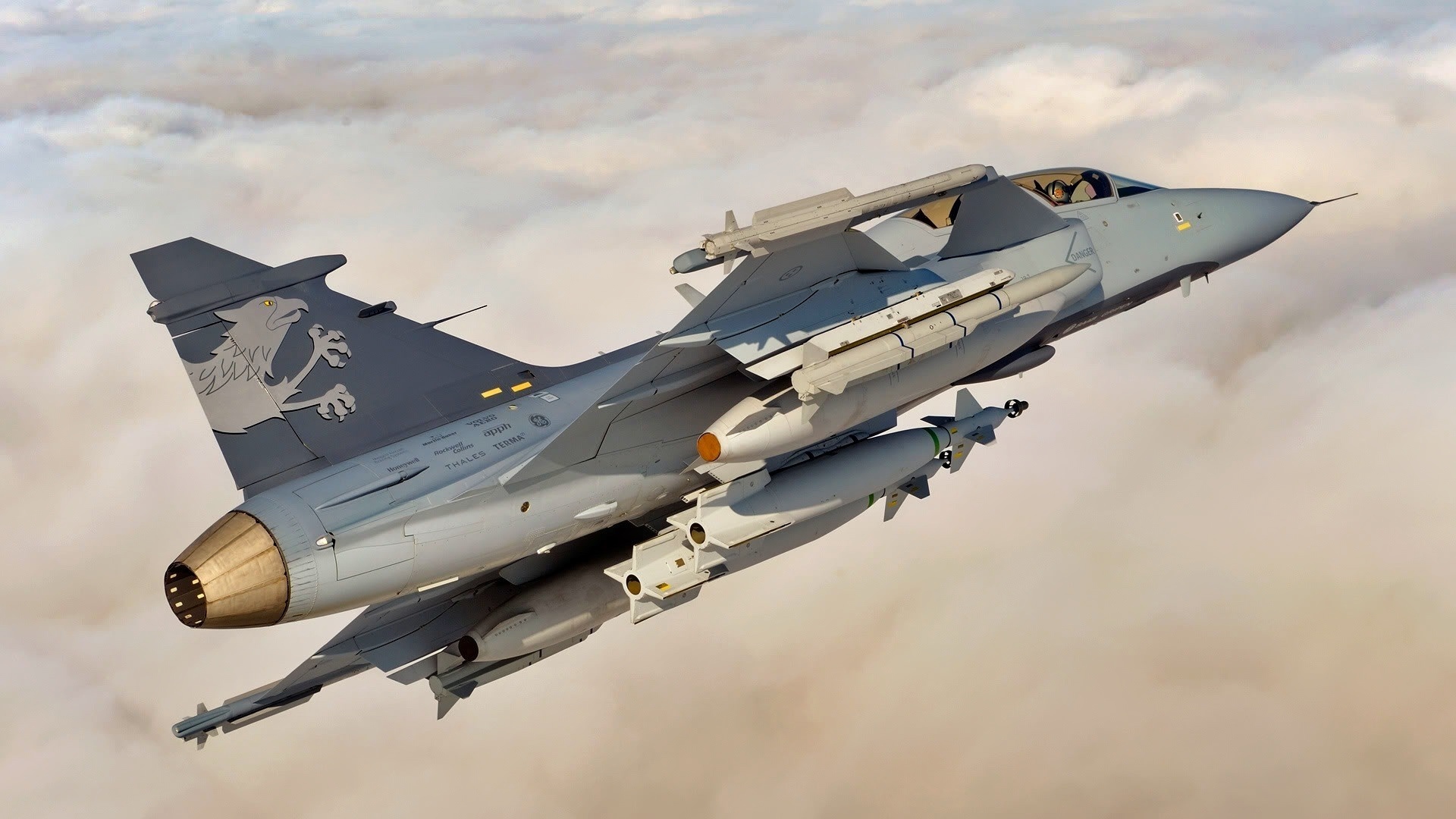
JAS 39. Image Credit: Creative Commons.
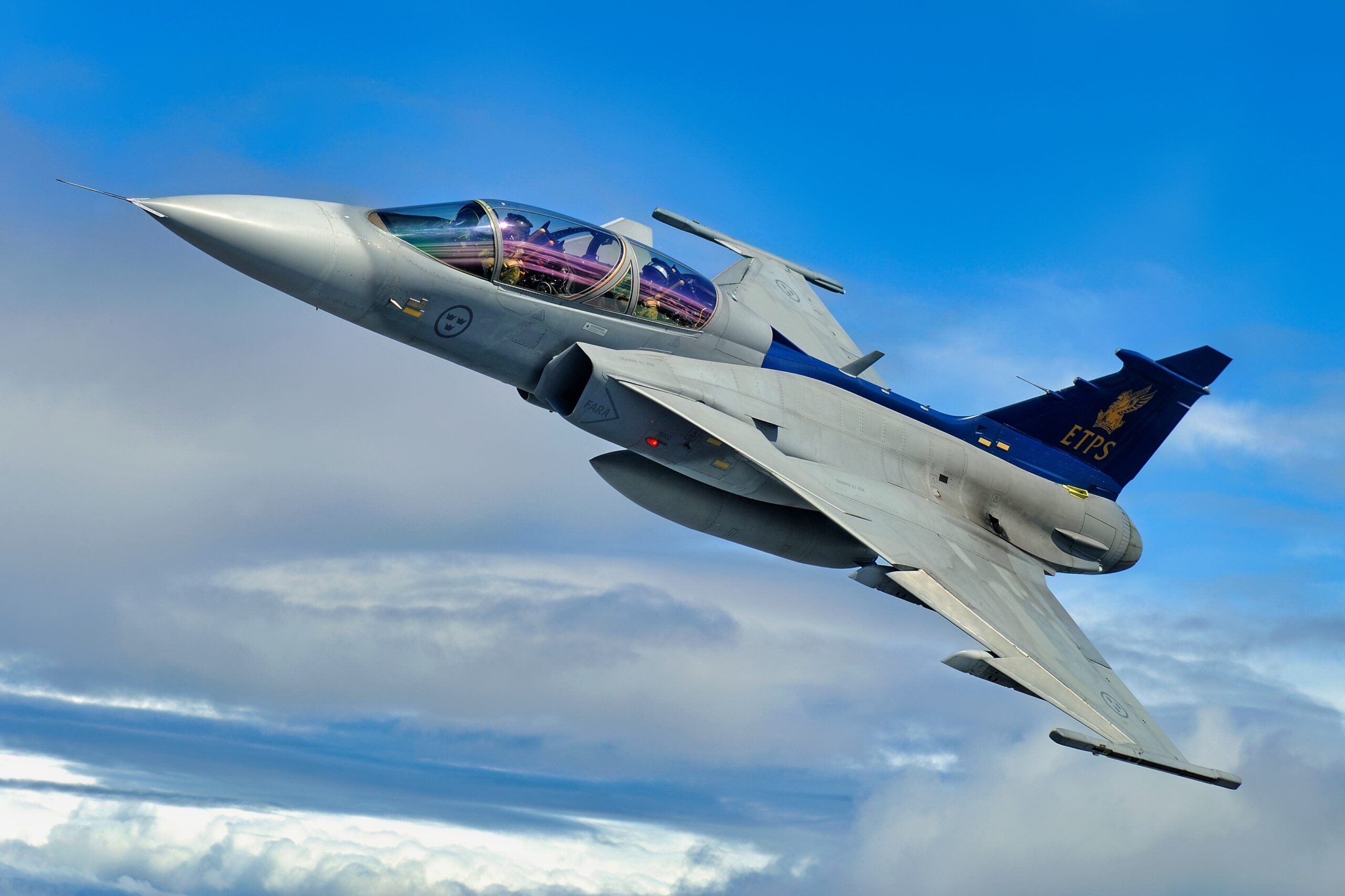
JAS 39 Gripen Fighter from Sweden. Image Credit: Creative Commons.
Canada’s review of its F-35 purchase was supposed to be a question of whether to switch fighters.
It has turned into something larger: a plan to expand the Royal Canadian Air Force to roughly 140 aircraft and split the work between two manufacturers on two continents. Lockheed Martin assembles Canada’s F-35s in Fort Worth and channels billions in supply-chain work north.
Saab is offering to build Gripen fighters on Canadian soil outright. Ottawa is now weighing whether to fund both tracks at once, and the industrial case on each side is the one that matters most.
F-35 Debate
Saab, Lockheed Martin, and Bombardier are the three companies whose industrial offers now sit at the center of Canada’s fighter decision, and the government of Prime Minister Mark Carney is evaluating a procurement far bigger than the one it started with.
What began in March 2025 as a review of a C$27.7 billion order for 88 F-35As has grown into negotiations over a mixed fleet that industry and government sources told CBC News could reach 140 aircraft, a three-tier force of F-35s for stealth missions, Saab Gripen Es for everyday air defense, and Saab GlobalEye aircraft for airborne surveillance. Carney’s Defense Industrial Strategy, unveiled in February 2026, calls for close to C$500 billion in defense investment over the coming decade and a rise to the equivalent of 5 percent of GDP by 2035, with the goal of doing as much work as possible inside Canada.
The fighter file has become the largest early test of whether Ottawa can convert defense spending into a domestic industrial base, and the two bidders are competing on exactly that ground.
Saab’s GlobalEye Win Was the First Step Toward a Gripen Line in Canada
The clearest signal that a split buy is coming arrived on May 27, 2026, when Carney confirmed that Canada would enter negotiations with Saab for a fleet of GlobalEye airborne early warning aircraft, a program of six aircraft valued at more than C$5 billion.
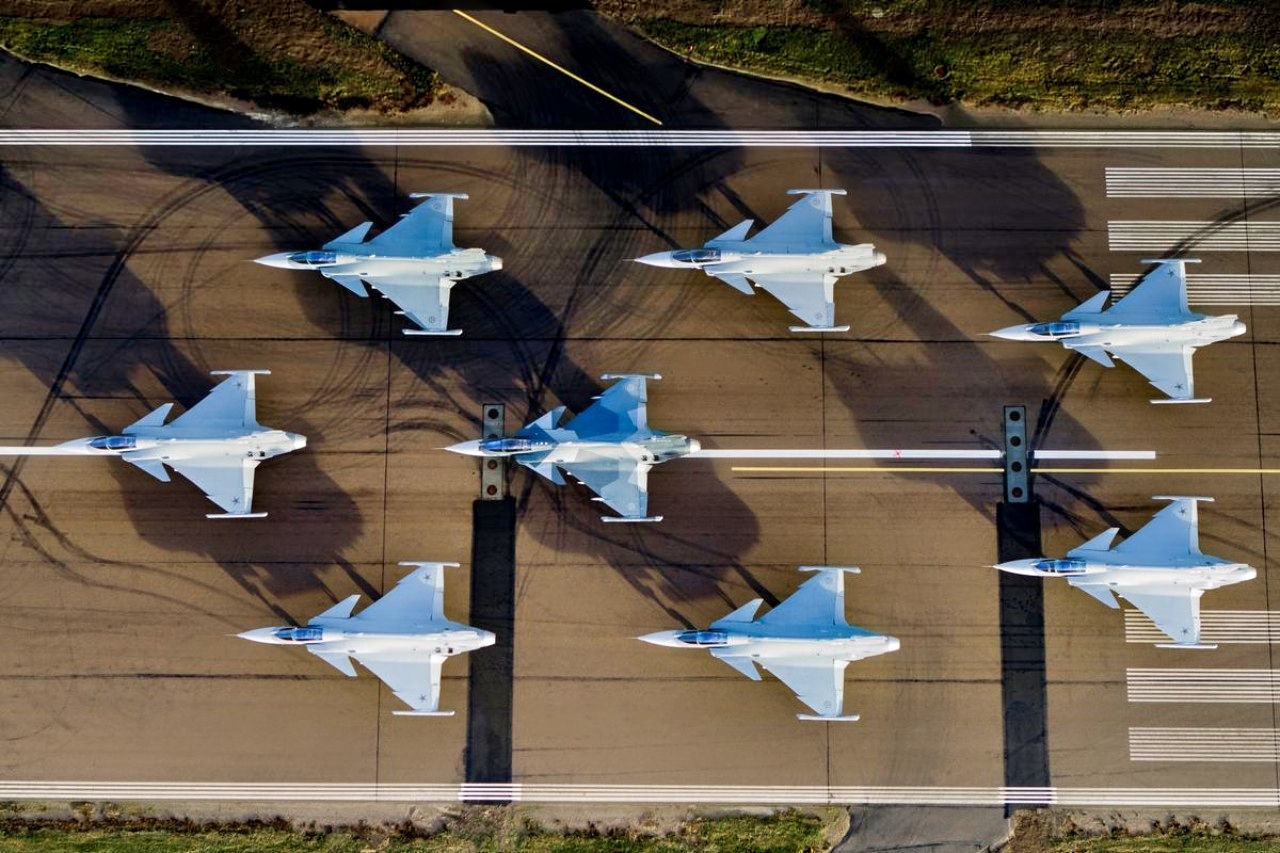
JAS 39 Gripen E. Image Credit: Creative Commons.
The decision passed over Boeing’s E-7 Wedgetail and the U.S.-Israeli L3Harris Aeris proposal in favor of the Swedish system, and CBC News reported that Saab and Ottawa view the surveillance contract as the first step in a broader partnership to build Gripen fighters in Canada using the same supply chain.
Al Jazeera reported that analysts read the GlobalEye choice as a test case for the Carney government’s stated policy of pivoting away from American military dependence, and the practical logic is straightforward: the GlobalEye is built on Bombardier’s Global 6500 business jet, already manufactured in Ontario, which lets Ottawa present the aircraft as substantially Canadian-made and stand up an industrial base that a follow-on Gripen order could then use.
What Saab’s Gripen Offer Would Actually Build on Canadian Soil
The industrial heart of Saab’s pitch is a promise the F-35 program structurally cannot match: assembling the aircraft in Canada rather than importing it. Saab has told Ottawa that a combined purchase of 72 Gripen fighters and six GlobalEye aircraft could support up to 12,600 jobs in Canada, a figure Saab Canada president Simon Carroll confirmed is tied to buying both fleets.
Reporting by Radio-Canada and Defense Industry Europe put the internal split at roughly 9,000 jobs linked to Gripen assembly and sustainment and about 3,600 to GlobalEye production. Saab plans production centers in Ontario and Quebec anchored by a pan-Canadian supplier network that includes IMP Aerospace, GE Aviation, CAE, and Arcfield Canada, and the company’s Canadian materials describe a Gripen program creating direct jobs maintained across a 40-year sustainment horizon, backed by a commitment to 100 percent industrial offsets, meaning every dollar Canada spends would be matched by work placed in the country.
The offer’s most consequential feature is what Saab calls sovereignty of capability. The company has proposed full technology transfer, source code access to the Gripen’s mission systems, sovereign data control, and independent upgrade and maintenance rights, which would allow Canada to modify and sustain its own fighters without returning to the manufacturer for permission.
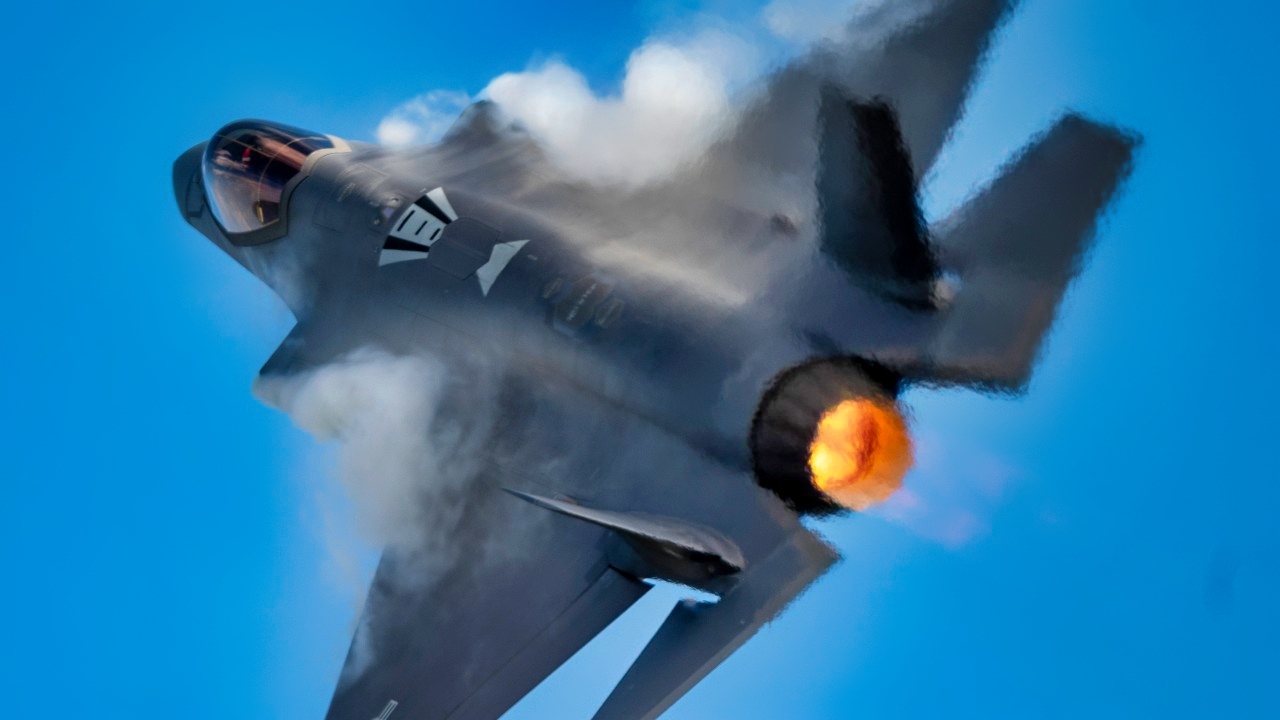
U.S. Air Force Maj. Melanie “Mach” Kluesner, the pilot for the F-35A Demonstration Team, performs aerial maneuvers in a USAF F-35A Lightning II during the practice day before the airshow at Jacksonville Naval Air Station, Florida, on 18 October, 2024. The practice day ensures that the team is able to safely and properly display the power, agility, and lethality of America’s 5th generation fighter jet. (U.S. Air Force photo by Senior Airman Nicholas Rupiper)
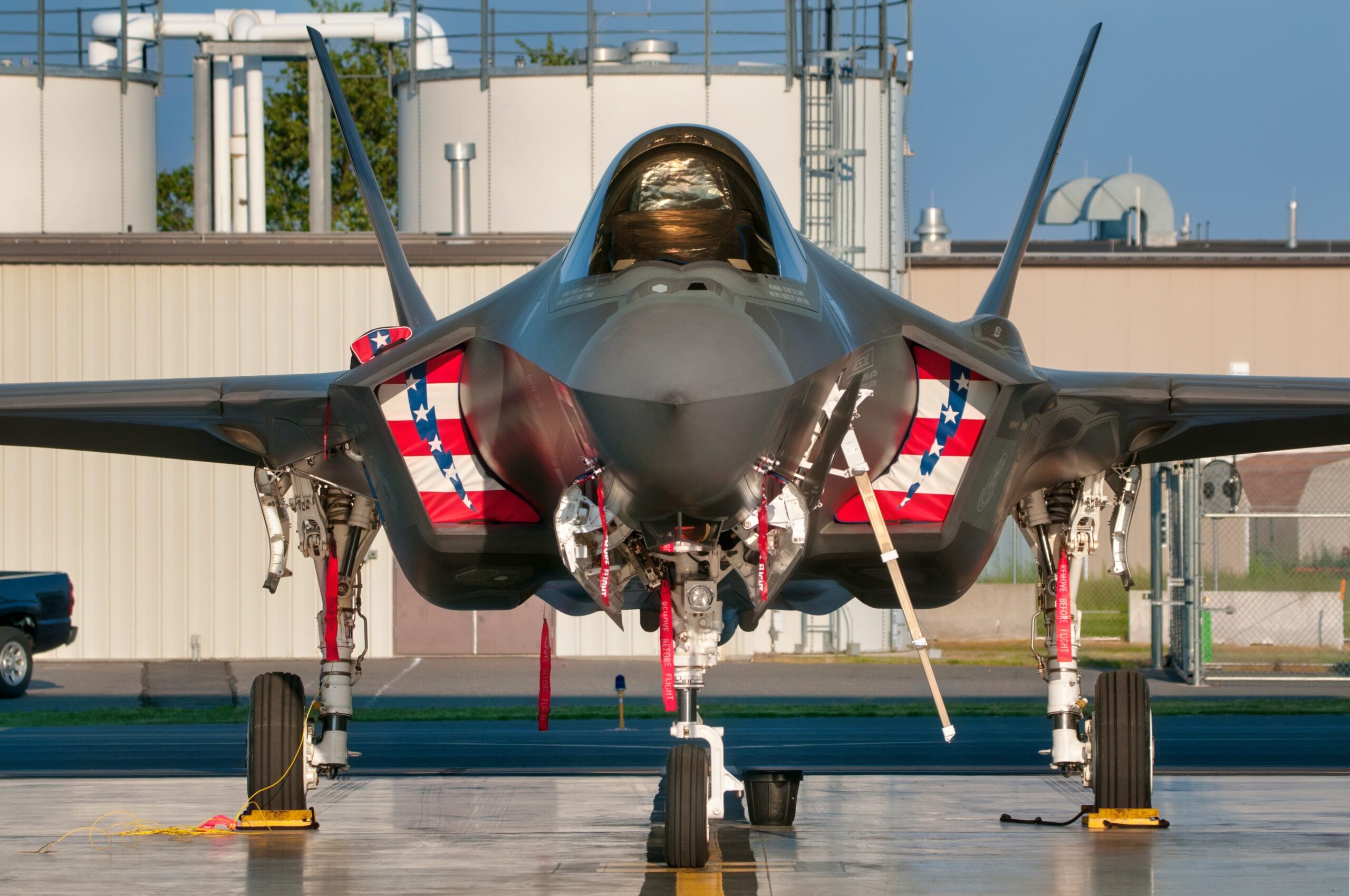
A U.S. Air Force F-35 Lightning II fighter jet from the 56th Fighter Wing, Luke Air Force Base, Arizona, displays it’s crew-designed red, white and blue inlet covers while parked in a military aircraft shelter at the Atlantic City International Airport in Egg Harbor Township, N.J. on May 26, 2016. Pilots and crew from the USAF F-35 Heritage Flight Team made a stop at the 177th Fighter Wing of the New Jersey Air National Guard on the way to their performance at the Jones Beach Airshow in Wantagh, New York on May 28 and 29. (U.S. Air National Guard photo by Master Sgt. Andrew J. Moseley/Released)
Saab CEO Micael Johansson framed the distinction bluntly, saying the company is prepared to transfer technology so that Canada can create sovereign capabilities rather than simply buy aircraft. A domestic Gripen line would also be built for export.
Ukraine has expressed interest in more than 100 Gripens, and Saab lacks the manufacturing capacity in Sweden to meet the demand it is seeing, which is part of why a Canadian assembly hub is attractive to the company as well as to Ottawa. Saab has already proven the model works by standing up a Gripen line in Brazil with Embraer, which rolled out its first Brazilian-built aircraft in March 2026.
What Lockheed Martin’s F-35 Program Already Delivers to Canada
The case for staying with the F-35 is not that it lacks industrial benefit, because it carries a great deal of it, built up over nearly three decades. Lockheed Martin states that Canada’s participation in the global F-35 program is projected to generate more than C$15.5 billion in industrial value through 2058, spanning both production and sustainment.
More than 110 Canadian companies have contributed to the F-35 supply chain over the life of the program, each aircraft in the global fleet contains roughly C$3.2 million in Canadian-made components, and Lockheed says about 30 Canadian firms are active suppliers today, employing around 2,000 workers, with contributions ranging from major structures built in Winnipeg to engine sensors made in Ottawa and composite panels produced in Lunenburg, Nova Scotia.
The distinction from Saab’s model is that this work is supply-chain participation in a global program rather than domestic final assembly.
Lockheed builds Canada’s F-35s in Fort Worth, Texas, and Canadian firms win packages within the worldwide production and sustainment system.
Faced with Saab’s competition, Lockheed and Washington have pushed back on both the industrial and the operational fronts. Lockheed has told Ottawa it can provide roughly C$15 billion in Canadian work if the country maintains its full 88-aircraft order, and Industry Minister Mélanie Joly has publicly said she will press the company to expand its Canadian workforce as a condition of any continued commitment.
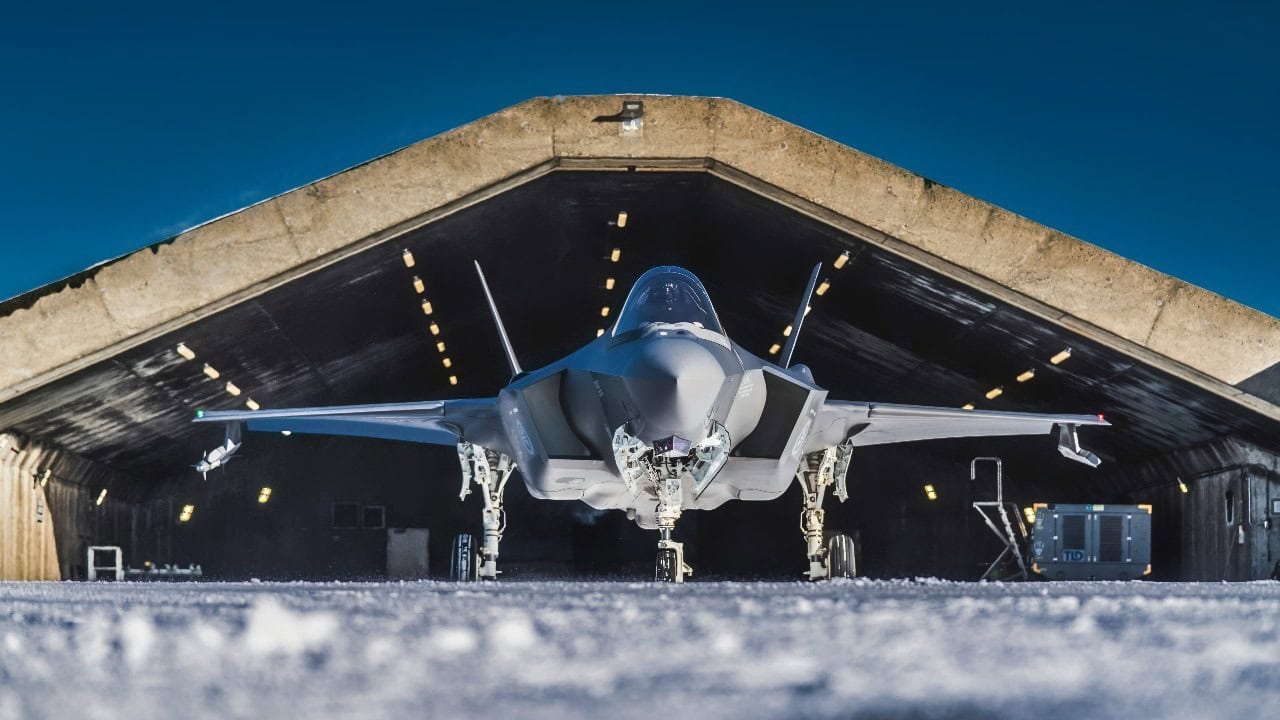
A Royal Norwegian Air Force F-35 Lighting II fighter leaves its shelter at Keflavík Air Base in Iceland. Norway sent the fighters to Iceland, which doesn’t have its own air force, in February 2020.
The F-35’s core industrial argument is that its value compounds with the size of the global fleet, roughly 1,270 aircraft as of early 2026, heading toward a planned 3,600 across 20 countries, giving Canadian suppliers access to a production run no single national program could rival.
The 140-Aircraft Expansion and the Defense Industrial Strategy Behind It
The reason both offers can be entertained at once is that Canada is no longer debating a fixed-size fleet. Ottawa is legally committed only to the first 16 F-35As, which are already in production and effectively locked into the force, and it has quietly paid for long-lead components on 14 more to preserve its place in the production queue while it decides.
The remaining 72 aircraft of the original 88-jet plan are uncontracted and therefore available for reduction or substitution.
That flexibility, combined with a defense budget projected to rise by roughly C$82 billion over five years, is what makes a 140-aircraft force conceivable. Canada operated 138 CF-18s in the 1980s and today flies fewer than 88, so a fleet of that size would represent a return to Cold War-scale airpower rather than a novel expansion, driven by NORAD modernization, Arctic surveillance, and NATO commitments that all landed on the same procurement at once.
Under the framework being discussed, Canada would keep a core of F-35As, with reports converging on figures between 30 and 72, to preserve fifth-generation stealth for the highest-threat NORAD and coalition missions, while acquiring around 60 to 72 Gripen Es to provide fighter mass, replace the CF-18s, and anchor the domestic production line.
The Gripen brings lower operating costs and the ability to fly from short or austere northern runways, and pairing it with the Canadian-built GlobalEye creates a Saab-centered industrial cluster that could become one of the largest defense manufacturing projects in the country. For the Carney government, the appeal is that a dual-track buy diversifies suppliers, hedges against U.S. political leverage over the F-35 supply chain, and converts a larger share of a growing defense budget into Canadian jobs than an all-American fleet would.
The Data-Link Problem That Limits the Sovereignty Case
The industrial case for buying both aircraft runs into one hard technical constraint that Ottawa cannot resolve on its own. The F-35 communicates through the Multifunction Advanced Data Link, a low-observable system that lets stealth aircraft share sensor and targeting data without giving away their position, and the United States has never shared MADL technology with non-American manufacturers.
Neither the Gripen nor the GlobalEye comes with it. Reporting by CBC News found that experts doubt Washington will permit MADL to be installed on the Swedish aircraft, which means a mixed fleet may not fully network inside NORAD without a workaround that the Trump administration would have to approve.
Retired Canadian air force colonel and former F-35 test pilot Billie Flynn said a NORAD commander would have to reduce the fidelity of information before passing it to a GlobalEye or Gripen, and a Saab adviser acknowledged the integration gap while arguing it matters less for surveillance aircraft operating well behind the fighters they direct. The practical effect is that the sovereignty Saab offers on the Gripen line comes with a networking limit set in Washington, and the industrial upside of a domestic fleet is bounded by how much interoperability Canada is willing to trade for it.
Whether Two Fleets Is the Smart Industrial Bet Remains Contested
Not every analyst accepts that splitting the buy is the wisest use of the money, and the strongest objection comes from inside the defense-policy community.
David Perry, president of the Canadian Global Affairs Institute, told CTV that if Ottawa’s real goal is a larger fighter force, the most efficient path would be to simply order more F-35s, the aircraft that won the original competition on capability and the one already integrated into Canada’s supply chain and training pipeline.
Perry questioned how the two fighters would operate together and noted that a pilot could not move between the Gripen and F-35 cockpits, adding complexity the government has not fully explained. The Canadian Global Affairs Institute lists Lockheed Martin as a strategic sponsor and Saab as an event supporter in its most recent annual report, a relationship worth noting on both sides of the argument.
A leaked Future Fighter Capability Project evaluation reported by Radio-Canada showed the F-35 scoring far higher than the Gripen-and-GlobalEye combination on capability, which supporters of the American jet cite as evidence that industrial benefit is being weighed against a real performance gap.
Carney has said Canada will decide on the fighter fleet in due course, and reporting indicates that an announcement is likely to be delayed until after the U.S. midterm elections in November 2026, to avoid further straining relations with Washington while the decision is made.
Whichever way Ottawa moves, the choice has already become a referendum on whether Canada builds its next air force at home or buys it abroad, and the industrial terms of that question now weigh as heavily as the aircraft themselves.
About the Author: Harry J. Kazianis
Harry J. Kazianis (@Grecianformula) was the former Senior Director of National Security Affairs at the Center for the National Interest (CFTNI), a foreign policy think tank founded by Richard Nixon based in Washington, DC. Harry has over a decade of experience in think tanks and national security publishing. His ideas have been published in the NY Times, The Washington Post, The Wall Street Journal, CNN, and many other outlets worldwide. He has held positions at CSIS, the Heritage Foundation, the University of Nottingham, and several other institutions related to national security research and studies. He is the former Executive Editor of the National Interest and the Diplomat. He holds a Master’s degree focusing on international affairs from Harvard University.

