
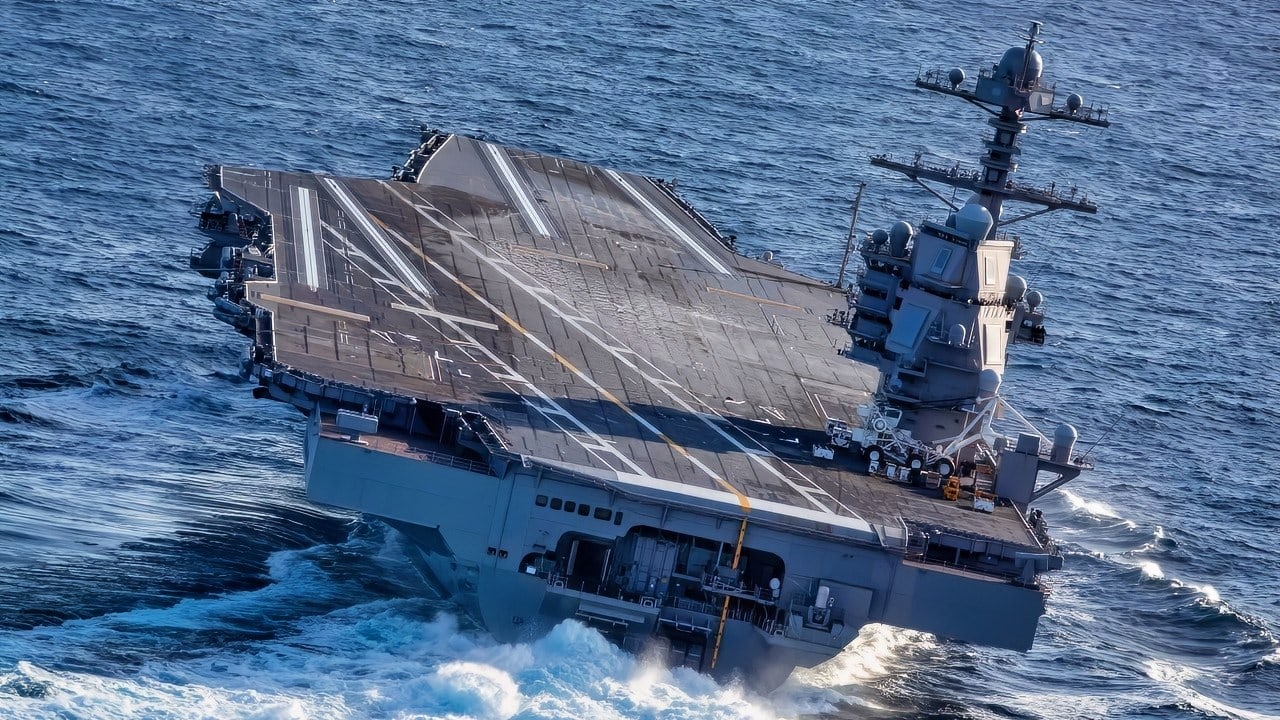
The US Navy is evaluating a potentially major change to future Ford-class aircraft carriers: moving the ship’s island—the multi-story command-and-control superstructure—farther forward toward the middle of the flight deck.
According to the Washington Post, the review comes in response to President Donald Trump’s preference that modern carriers more closely resemble their World War II predecessors.
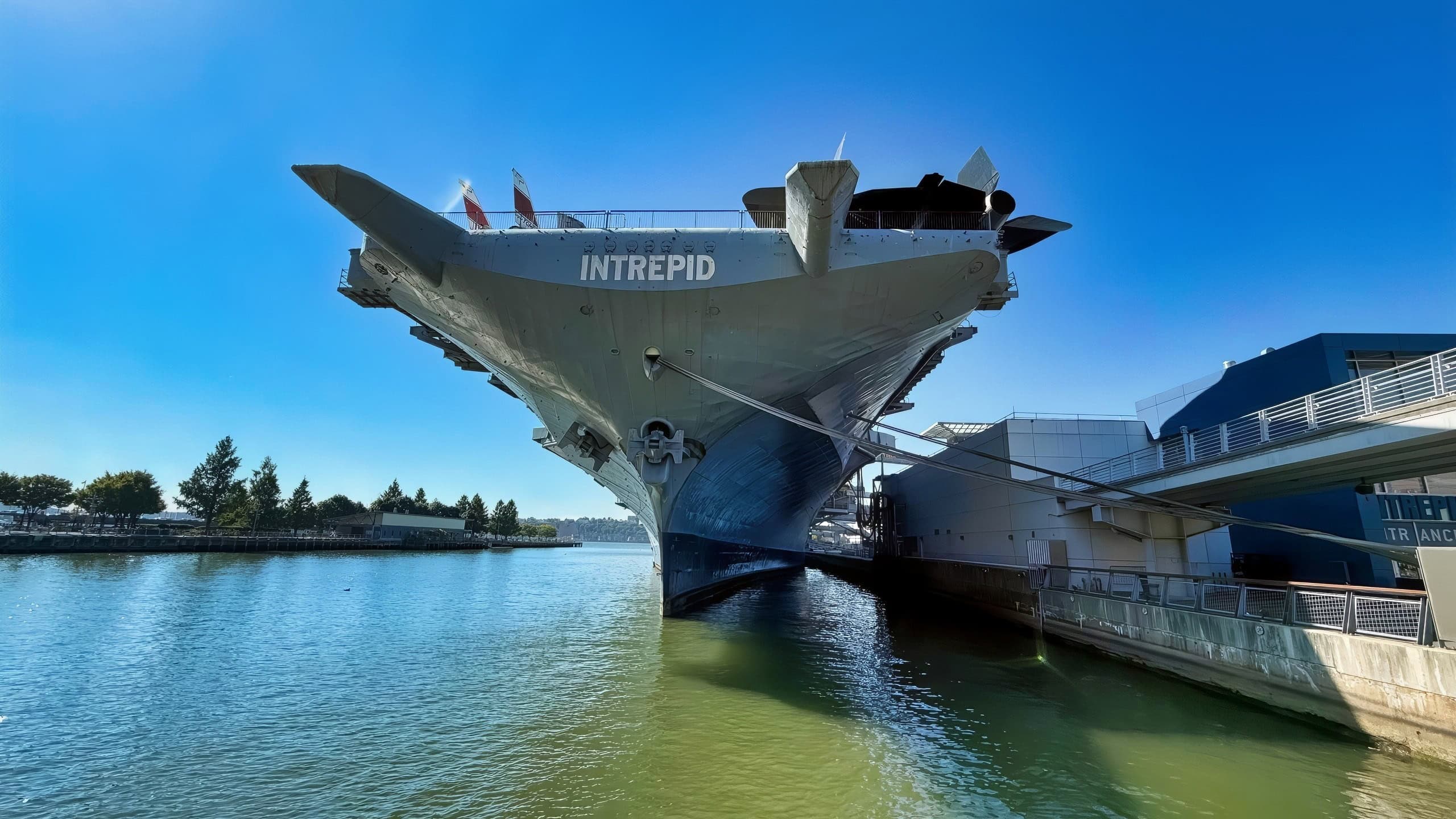
USS Intrepid Essex-Class Aircraft Carrier 19FortyFive.com Photo.
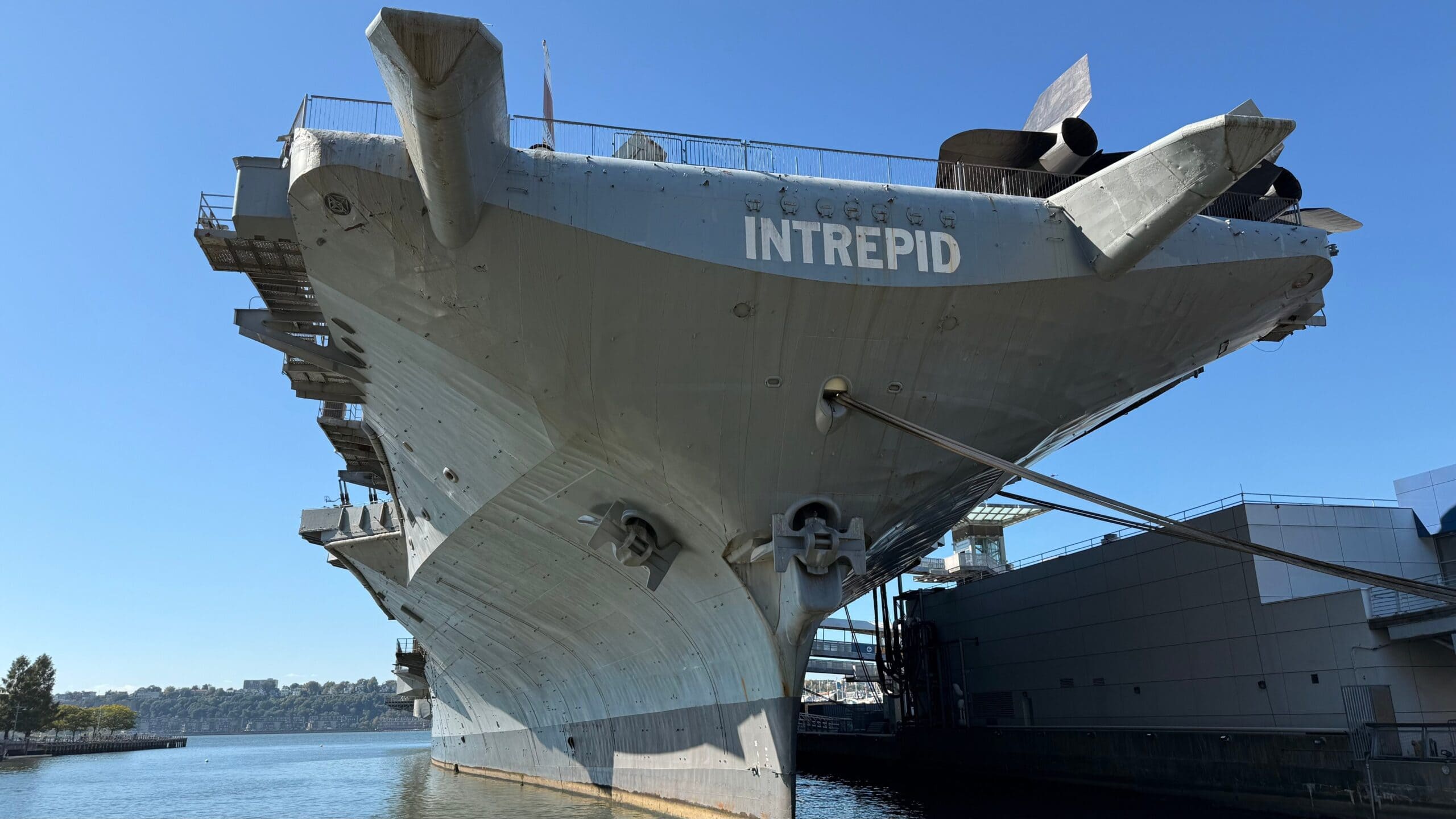
Exterior of Essex-Class USS Intrepid. Image Credit: 19FortyFive.com
This isn’t the only Trump administration directive targeting the Ford-class carriers; in August 2026, a national security memo ordered the Navy to develop a plan to replace the Ford-class’s electromagnetic aircraft launch system (EMALS) with the traditional steam catapult found on the Nimitz-class carriers.
If the Navy followed either directive, it would cost billions of dollars and undo billions of dollars in research, development, and production that went into the systems currently in place.
Moving the island alone would likely create extraordinary cost and scheduling consequences, and the plan is accordingly receiving intense pushback from the Navy.
The Old Island
President Trump is chasing an aesthetic that worked during World War II aircraft carriers such as the Essex-class. But World War II carriers were developed around an entirely different aviation ecosystem 80 years ago.
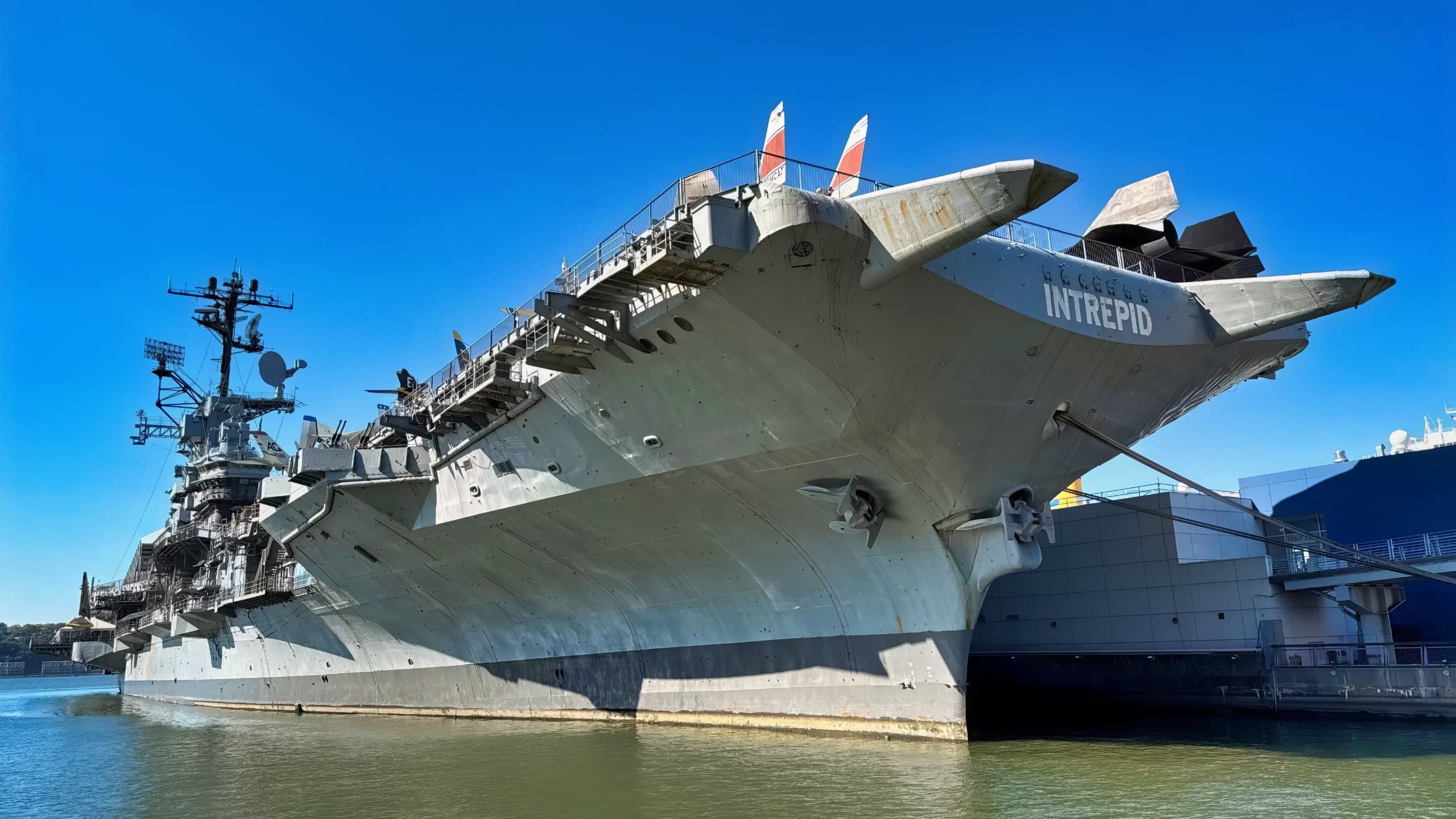
Essex-Class USS Intrepid 19FortyFive.com Photo
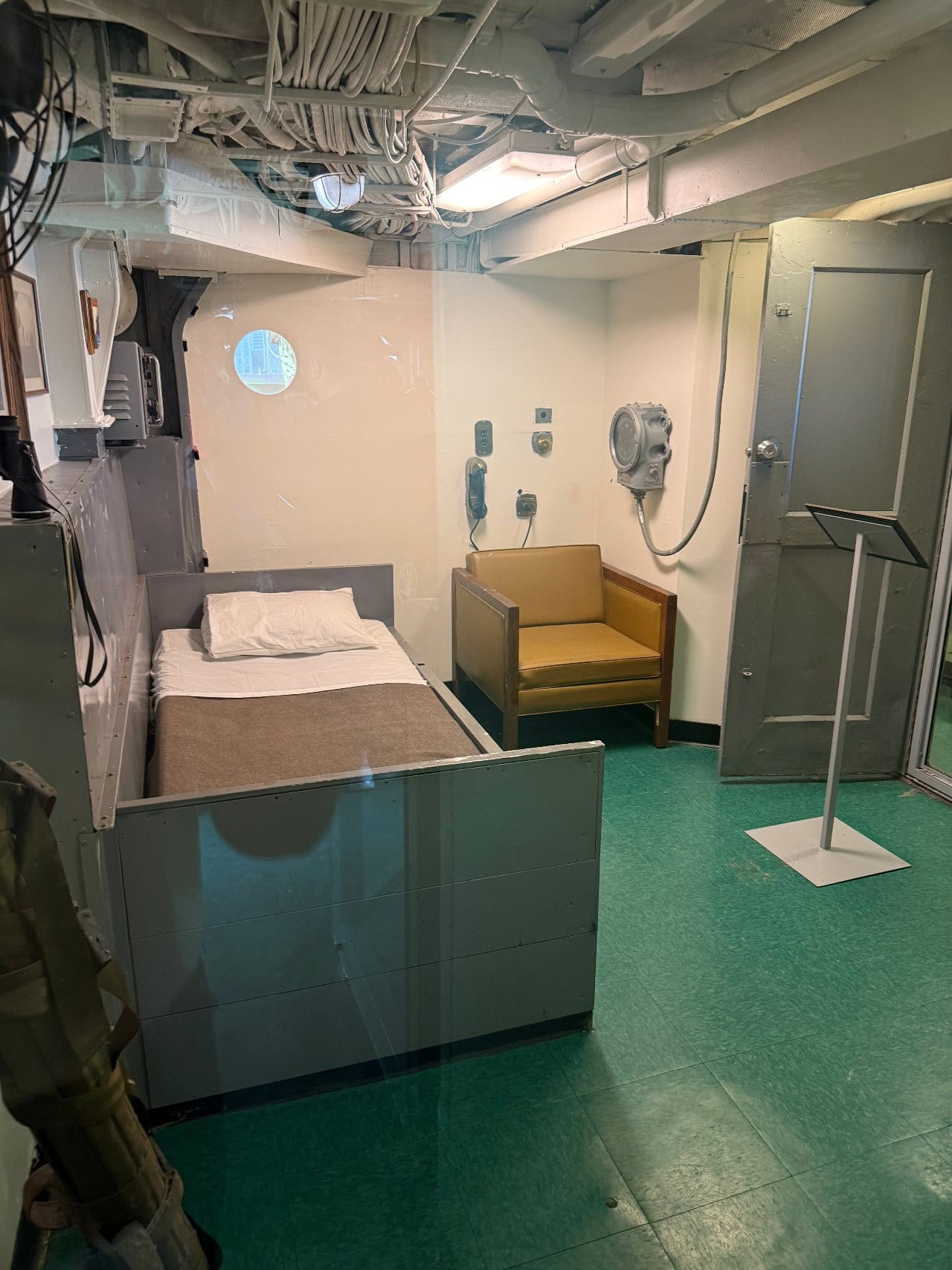
Inside USS Intrepid Essex-class. Image Credit: 19FortyFive.com
The aircraft were relatively light and small; they were slow, piston-engine machines. Flight decks were built to handle aircraft weighing a couple of tons.
By comparison, modern fighters have maximum takeoff weights approaching 30 tons or more.
Modern carriers are designed to simultaneously accommodate catapult launches and arrested landings, inflight refueling, jet blast, and helicopters.
Fighter aircraft today include the F/A-18 and the F-35C, as well as aircraft like the E-2D and, increasingly, unmanned aircraft.
The Ford class was designed to accommodate all of this variety, and part of that accommodation is the placement of the current superstructure.
Moving the Island Aft
The Ford did not end up with its island near the stern by accident, according to reporting by The Washington Post. The island was deliberately moved aft for efficiency and safety.
Moving it rearward creates additional aircraft parking and handling space near the catapults.
It helps aircraft move through the sequence of fueling, taking on weapons, staging, and moving to the catapult for launch with fewer conflicting movements and less friction overall.
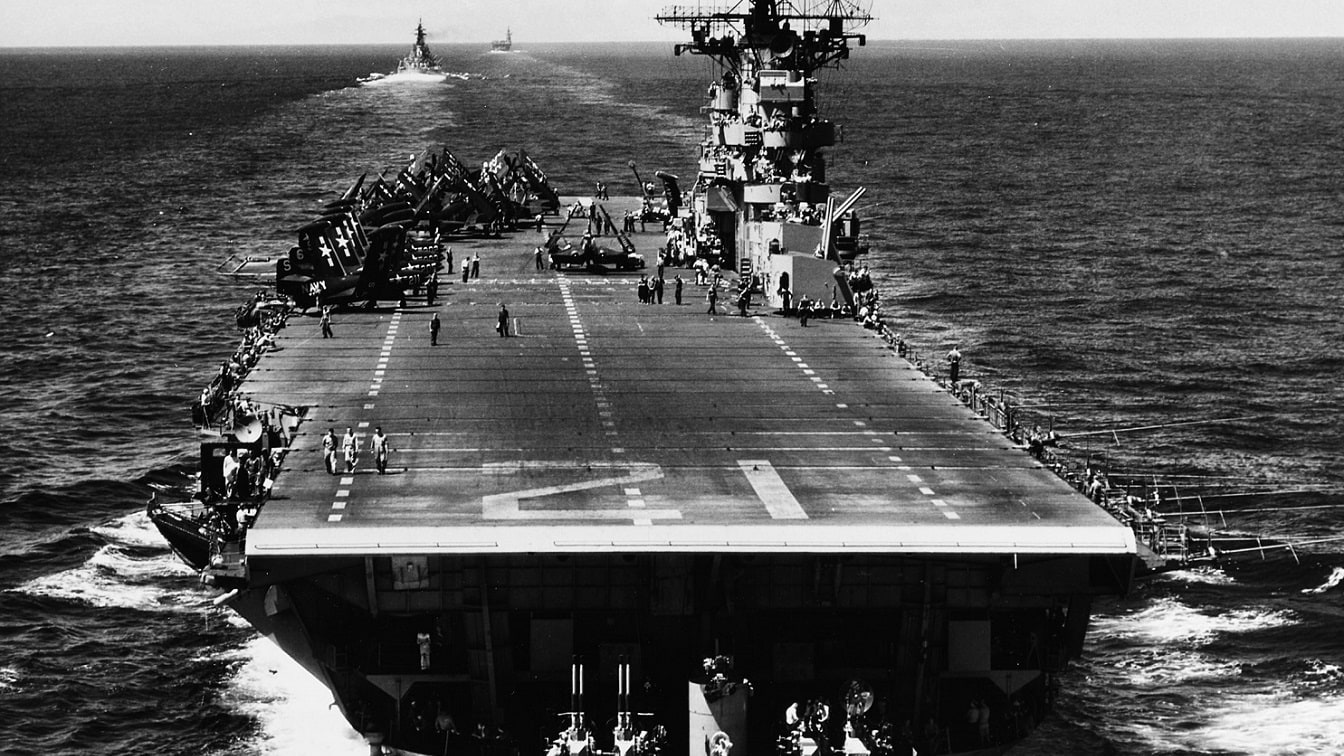
Essex-class. Image Credit: US Navy Archives.
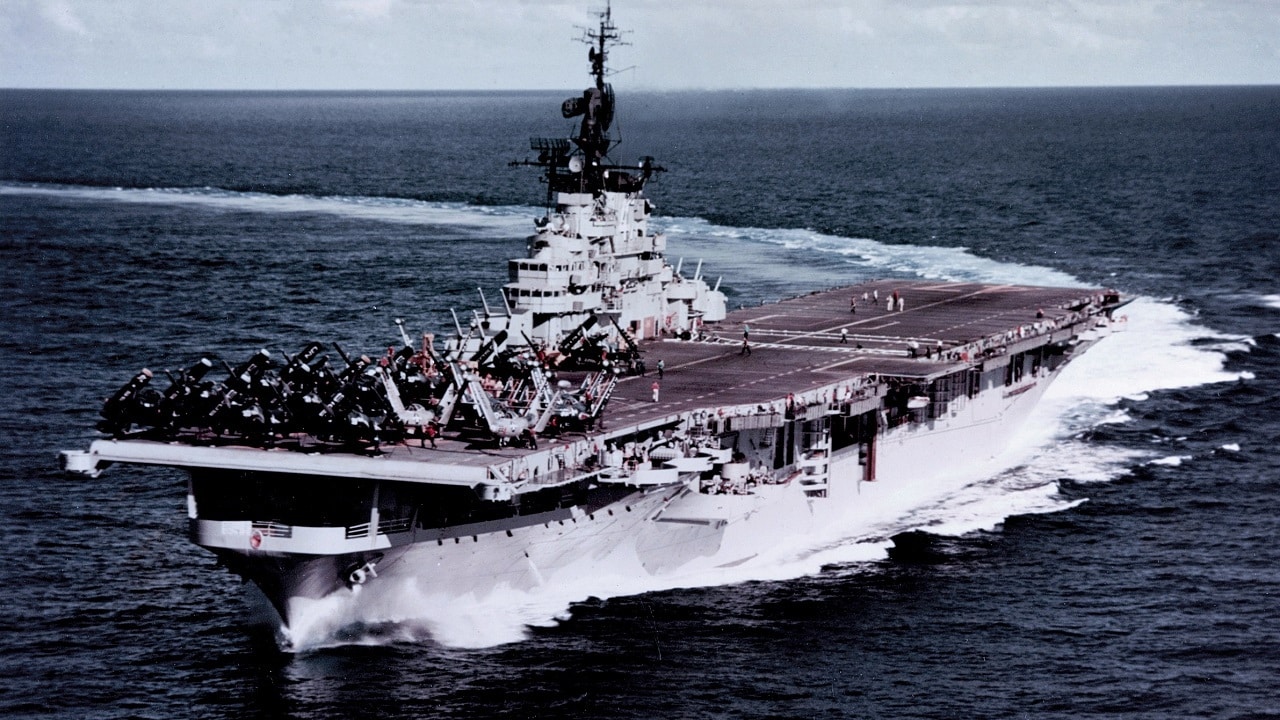
The U.S. Navy aircraft carrier USS Philippine Sea (CVA-47) makes a sharp turn to starboard, while steaming in the Western Pacific with the U.S. Seventh Fleet, 9 July 1955. Philippine Sea, with assigned Air Task Group 2 (ATG-2), was deployed to the Western Pacific from 1 April to 23 November 1955.
The Post also reports that the application improves recovery safety of reducing turbulence encountered when approaching the deck, consistent with the Ford’s broader design philosophy, in which the entire flight deck was built around generating sorties as quickly and as frequently as possible.
The point is, moving the island forward isn’t a cosmetic or superficial change; it’s a reconfiguration of one component interconnected with others in the world’s most sophisticated and dangerous aviation ecosystem.
Back to Steam
Trump’s critique of the EMALS system is more substantial. The Ford’s electromagnetic catapult has long suffered developmental problems and operational problems.
It’s a big part of why the carrier took so long to get to sea; indeed, the lead ship required about 17 years to construct.
Steam catapults, by contrast, have decades of proven operational history aboard American carriers. But the Navy now credits EMALS as being highly effective despite early problems.
Have the kinks been worked out? Either way, the Navy has long since committed to EMALS. Reverting now would be costly and would represent abandoning technology that has been obsessively refined.
Reverting now would force the Navy to redesign an existing class to reinstall an older system that is not compatible with the Ford.
World War II is Over
World War II aircraft carriers were extremely effective, helping the United States to win the war in the Pacific.
But World War II aircraft carriers were designed for strategic realities that existed eighty years ago, such as short-range aircraft, visual combat, unguided bombs and torpedoes, limited airborne radar, and large numbers of relatively inexpensive aircraft.
Today’s carriers, hypothetically operating in the Pacific against China, would need to be capable of confronting long-range anti-ship ballistic and cruise missiles, satellites, precision submarines, long-range bombers carrying standoff weapons, electronic warfare, networked targeting systems, and so on.
The strategic environment has changed substantially, and the Ford was built specifically for it, with its aft-ward island and EMALS.
About the Author: Harrison Kass
Harrison Kass is a writer and attorney focused on national security, technology, and political culture. His work has appeared in Tablet, City Journal, The Hill, The Spectator, and The Cipher Brief. He holds a JD from the University of Oregon and a master’s in Global & Joint Program Studies from NYU. More at harrisonkass.com.