
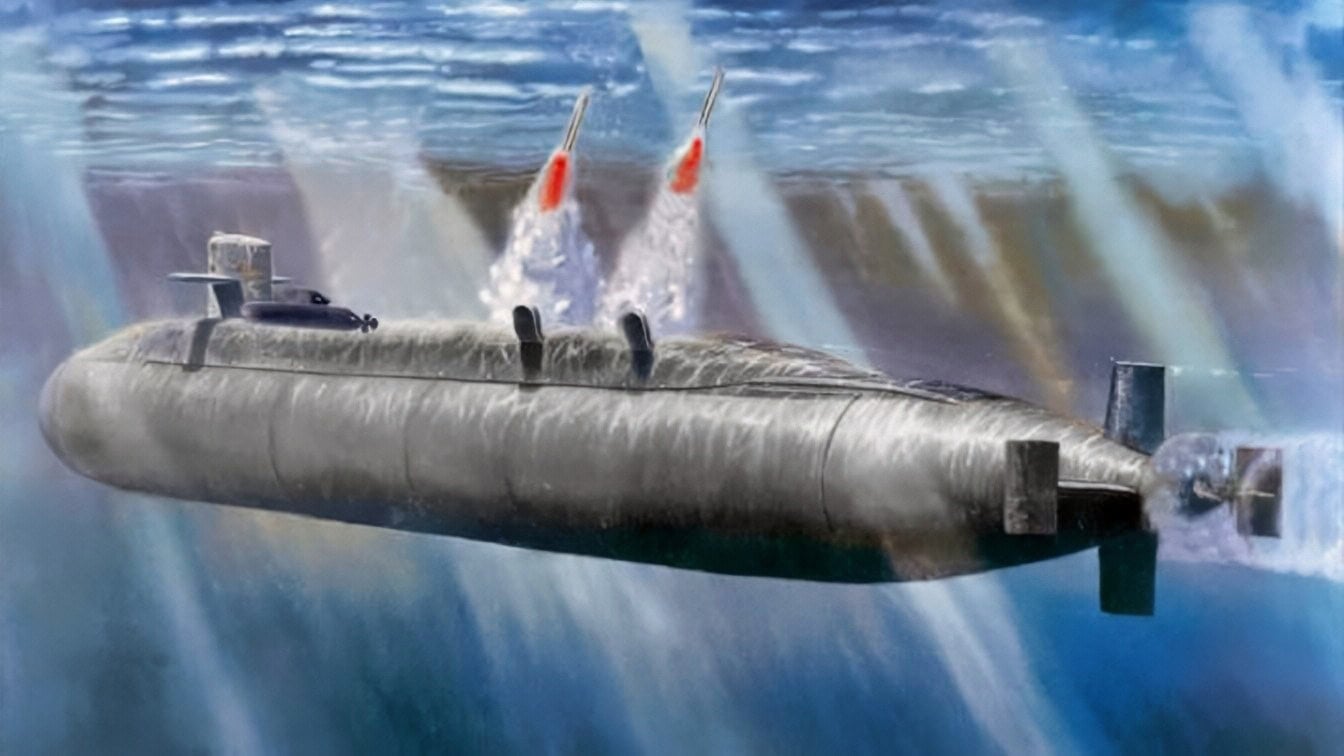
Summary and Key Points: The United States Navy has expended close to a decade’s worth of Tomahawk cruise missiles in roughly a year, and the American defense industrial base cannot replace them quickly at any price. Pentagon budget documents show the Navy bought 68 of the weapons in 2023 and just 34 in 2024, while Raytheon’s production line has recently delivered roughly 100 per year. Congress has appropriated billions, and Raytheon has agreed to scale output toward 1,000 missiles annually, but a supply chain ten tiers deep, a two-company rocket motor sector, and a shrunken skilled workforce mean the first replacement missiles will not reach the fleet’s launch cells in real numbers until 2030.
The Missile Challenges the U.S. Navy Faces
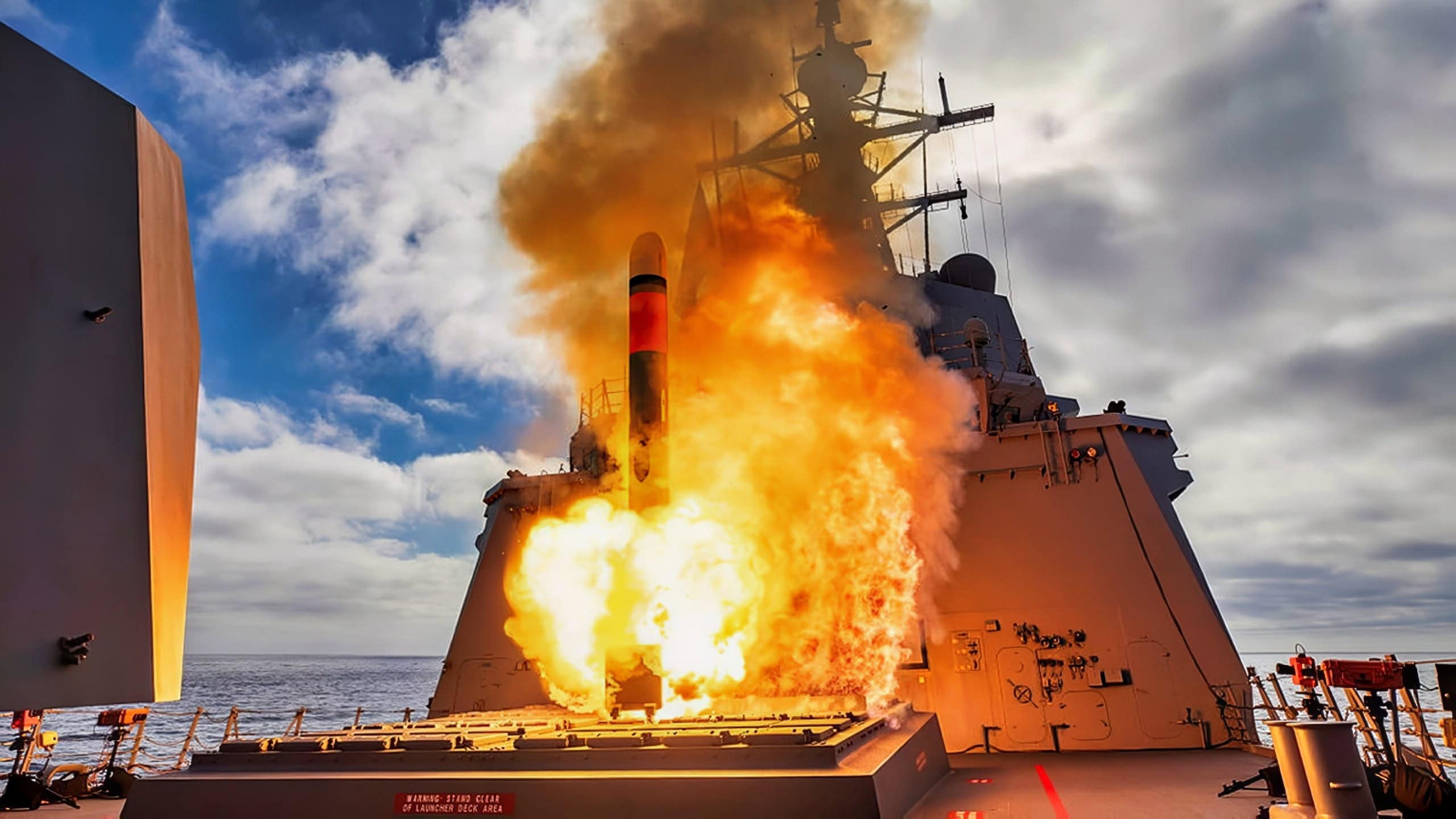
Tomahawk Missile Firing. Image Credit: Government of Australia.
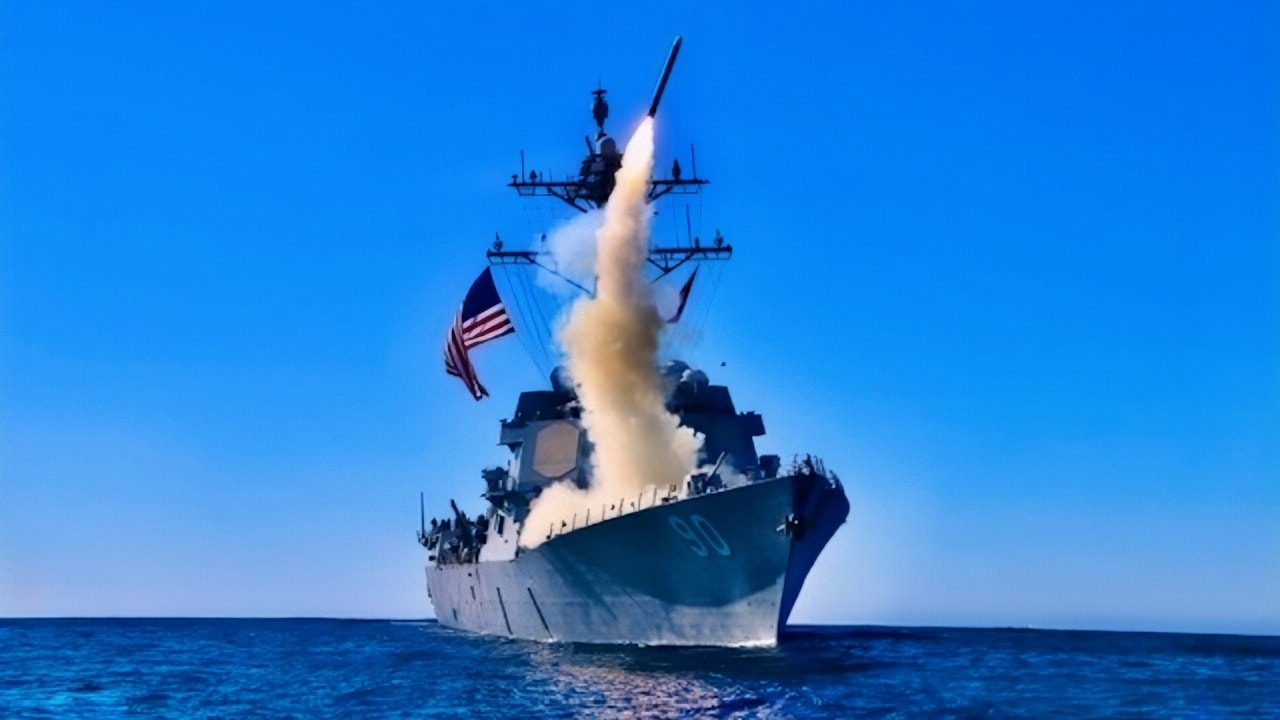
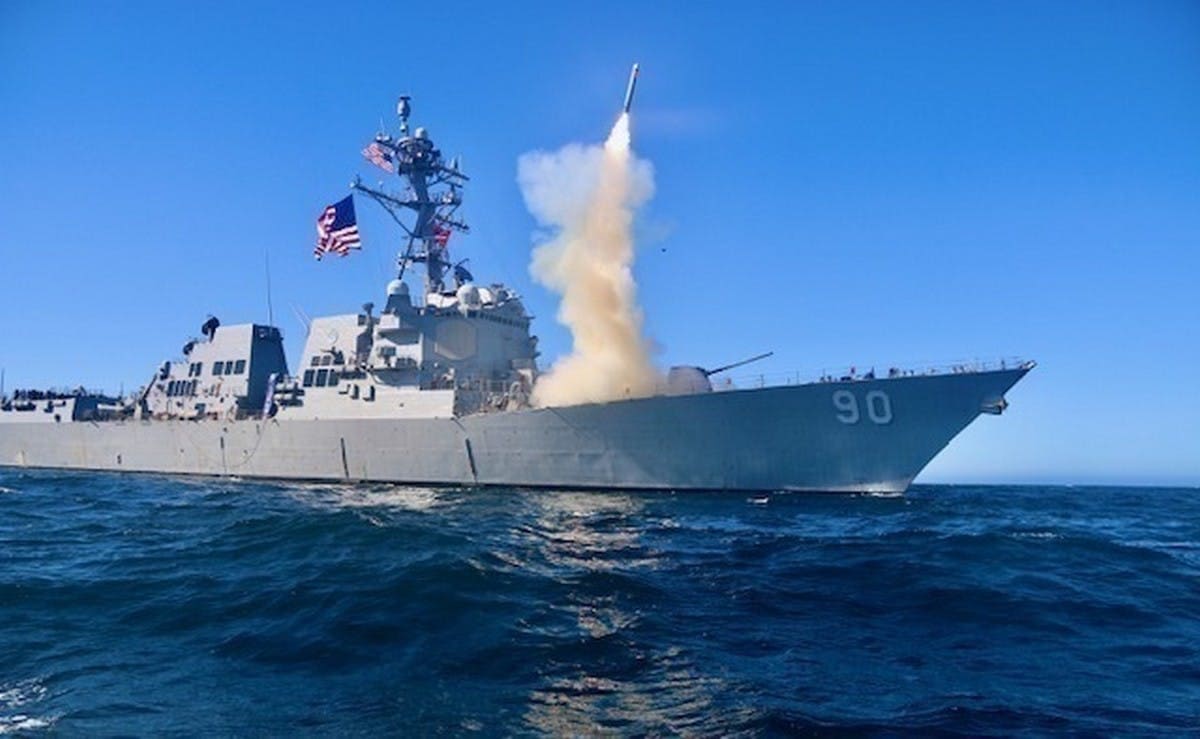
(Dec. 01, 2020) – The guided-missile destroyer USS Chafee (DDG 90) launches a Block V Tomahawk, the weapon’s newest variant, during a missile exercise. This event marked the first time a Block V Tomahawk missile was operationally tested, marking the Navy’s transition to a more advanced capability for the fleet. Block V includes an upgrade that will enhance navigation performance and provide robust and reliable communications. Chafee is currently assigned to Carrier Strike Group ONE and is homeported in Pearl Harbor. (U.S. Navy photo by Ens. Sean Ianno/Released)
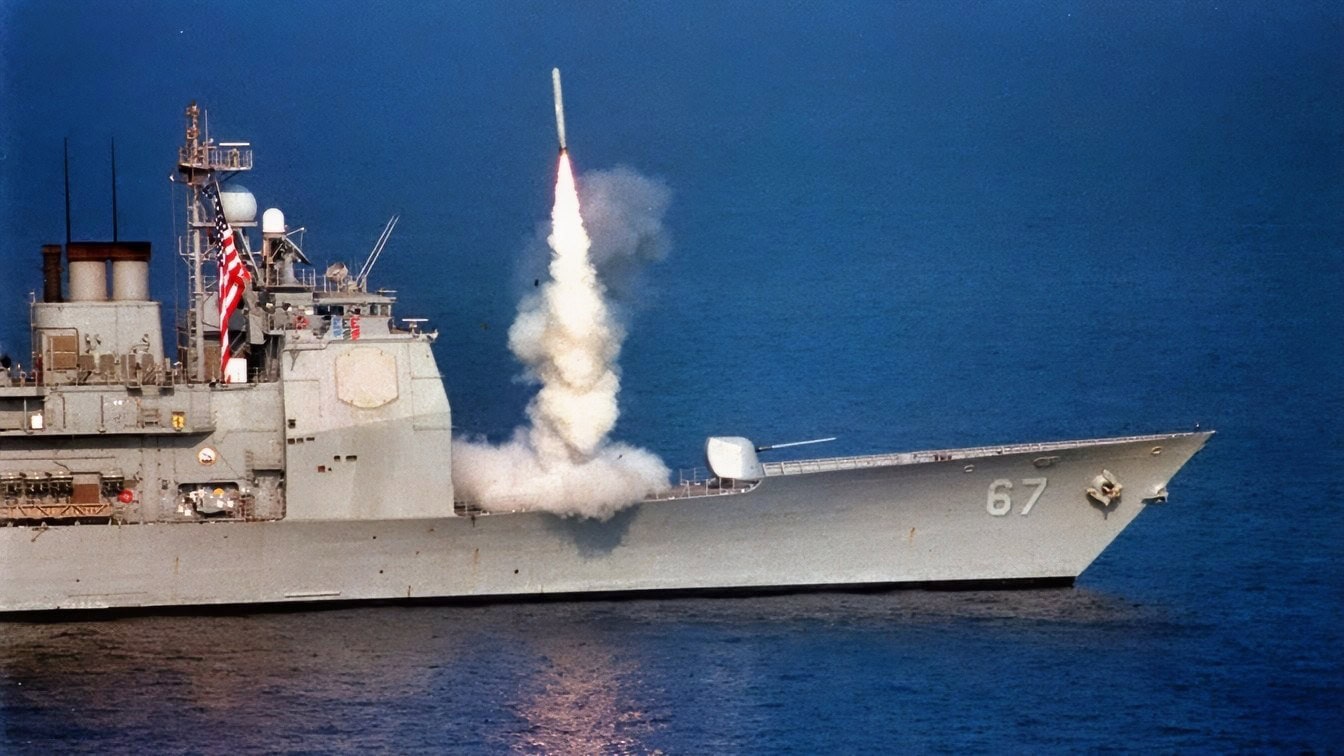
A Tomahawk cruise missile launches from the forward vertical launch system of the USS Shiloh (CG 67) to attack selected air defense targets south of the 33rd parallel in Iraq on Sept. 3, 1996, as part of Operation Desert Strike. The attacks are designed to reduce risks to the pilots who will enforce the expanded no-fly zone. President Clinton announced an expanded no-fly zone in response to an Iraqi attack against a Kurdish faction. The larger no-fly zone in Southern Iraq will make it easier for U.S. and coalition partners to contain Saddam Hussein’s aggression. The U.S. Navy Ticonderoga Class cruiser launched the missiles as it operated in the Persian Gulf.
Since June 2025, across the strikes on Iran and a running campaign against the Houthis in Yemen, the United States has fired close to 1,000 Tomahawk cruise missiles, and possibly more. To grasp what that means, look at the other side of the ledger. In a typical recent year, the country builds only a few dozen new ones: Pentagon documents show the Navy bought 68 in 2023 and 34 in 2024, and requested just 57 for 2026. American forces have expended, in roughly a year of fighting, close to a decade’s worth of production.
This is the part of the story that gets attention: the alarming pace at which a prized weapon is being drained from the shelves. The harder and more important question is what happens next, because the intuitive answer, simply build more, runs headlong into an industrial base that cannot do that quickly, no matter how much money it is handed. The Pentagon is well aware of all this and is throwing real resources at it. Awareness, however, does not compress timelines, and even a serious, well-funded crash effort will not put a meaningful number of new Tomahawks in the fleet’s launch cells until the end of the decade.
The Arithmetic of the Shortfall
Start with how long it takes to build a single Tomahawk. Each missile requires roughly two years to assemble from order to delivery because of its specialized components and the limited pool of suppliers for critical parts. That is the lead time on one missile with everything already in place. Scaling the whole line up is far slower. When the Navy placed a large replacement order in its 2027 budget request, defense analyst Mark Cancian of the Center for Strategic and International Studies calculated that, given a 34-month production lead time, the first of those missiles would not begin arriving until March 2030, with inventories not restored until late that year.
Tomahawk Missile. Image: Creative Commons.
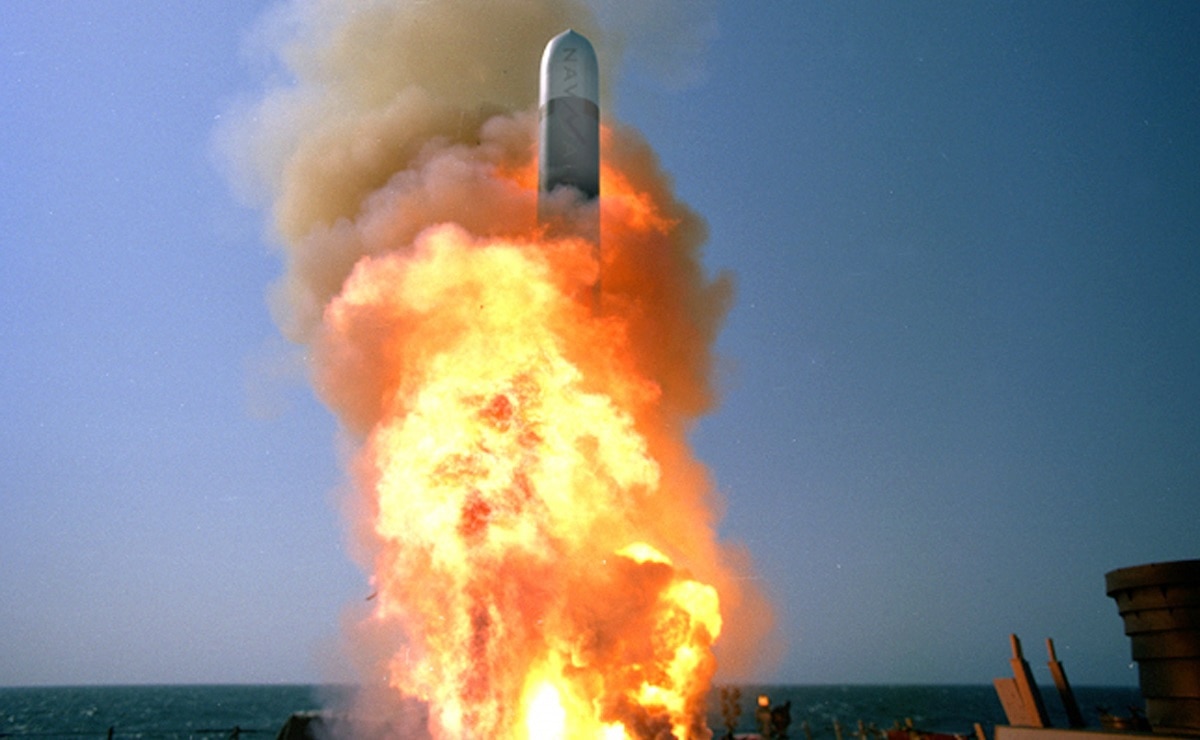
At sea aboard USS Stethem (DDG 63) Ð A Tactical Tomahawk Cruise Missile launches from the guided missile destroyer USS Stethem (DDG 63) during a live-warhead test. The missile traveled 760 nautical miles to successfully impact itÕs intended target on San Clemente Island, part of the Naval Air Systems Command (NAVAIR) test range in Southern California. The Tactical Tomahawk is the next generation of Tomahawk cruise missile, adds the capability to reprogram the missile while in-flight to strike any of 15 preprogrammed alternate targets, or redirect the missile to any Global Positioning System (GPS) target coordinates. It also will be able to loiter over a target area for some hours, and with its on-board TV camera, will allow the war fighting commanders to assess battle damage of the target, and, if necessary redirect the missile to any other target. Launched from the Navy’s forward-deployed ships and submarines, Tactical Tomahawk will provide a greater flexibility to the on-scene commander. Tactical Tomahawk is scheduled to join the fleet in 2004. U.S. Navy photo. (RELEASED)
The gap between consumption and production is not a rounding error; it is an order of magnitude. Raytheon, the maker, has recently been turning out on the order of 100 Tomahawks a year, and in leaner years, far fewer. A single month of intense operations against Iran burned through the equivalent of a full year of that output. The Navy possesses roughly ten thousand vertical launch cells across its fleet, and no longer has enough missiles of all types in inventory to fill them even once. The Navy Secretary told senators the stockpile situation was “dangerously low.” The problem is not that the Pentagon failed to see this coming. Seeing it does not make the factories move any faster.
Why You Can’t Buy Your Way Out Quickly
The instinct in Washington, when a shortage appears, is to appropriate money against it. That instinct is running into a wall that analysts have begun to call the iron triangle of the defense industrial base, in which time, capacity, and cost are in permanent tension. As the Foreign Policy Research Institute has put it, constraints deep in the supply chain mean industry simply cannot “make it now” just because policymakers want more missiles, so that even a large, urgent emergency contract moves at a pace that is strategically irrelevant in the near term. Money is necessary, but it is nowhere near sufficient, and it acts slowly.
The reason dates back thirty years. After the Cold War, the United States deliberately optimized its defense industry for efficiency rather than surge capacity: high-margin, low-volume production, just-in-time inventory with minimal buffers, and sole-source contracts to hold down costs. That model works beautifully in peacetime and fails when demand spikes tenfold overnight. Factories closed, supply chains for explosives and propellants atrophied, and the skilled workforce that knew how to manufacture munitions at scale aged out of the system. Rebuilding that capacity, as one analysis put it, is not a problem that can be solved by throwing money at it; it requires time, expertise, and sustained commitment across electoral cycles. That is the core of why the Tomahawk shortage will take years rather than months to fix, and the specifics only sharpen the point.
The Supply Chain Is the Real Bottleneck
A Tomahawk is not something a single factory stamps out. It is an assembly of more than a thousand precision components drawn from a supply chain that can run ten tiers deep, and the prime contractor at the top is rarely the binding constraint. The problem sits below it, among the small sub-tier suppliers who make the specialized parts, many of them the only firm in the country producing their particular piece.
Decades of consolidation and lumpy, unpredictable ordering hollowed out that layer. When the Navy buys 34 missiles one year and hopes for hundreds the next, suppliers cannot justify investing in capacity that may sit idle, so many either raise prices, move to commercial work, or close. And when one of those firms goes under, the damage is not easily reversed: as one industry analysis describes it, the tooling is lost, the skilled labor disperses, and the qualification data disappears. Standing up a replacement supplier and formally qualifying it to build a part for a weapon that has to work the first time is a multi-year process on its own. This is why simply “expanding the factory” is misleading. The prime can add a shift in Tucson far faster than the fragile web of suppliers beneath it can grow.
The Solid Rocket Motor Chokepoint
The single hardest bottleneck is the one that launches the missile. Every Tomahawk fires from its launch cell on a solid-rocket motor booster, and the American solid-rocket motor industry is dangerously thin. Two decades of mergers reduced the number of domestic suppliers from six to two, meaning the nation’s entire missile output depends on a couple of legacy producers, where a single fire, strike, or supply snag becomes a national problem overnight.
The chemistry itself resists being rushed. The propellant relies on ammonium perchlorate bound with powdered aluminum, and each motor must be cast and cured over multiple days under tightly controlled conditions to avoid cracks and voids that would cause it to explode in the tube rather than fly. Only a handful of facilities are authorized to do that casting. The Pentagon has poured roughly a billion dollars into expanding one producer’s capacity, and a cohort of newer companies is trying to break into the field, but they have not yet proven they can scale from prototypes to the large, reliable production lots the military actually needs. Motors take time to make, and making more of them takes years.
The Workforce That Aged Out
Behind every one of these constraints is a shortage of people who can do the work. The munitions surge is competing for a thin pool of skilled labor, machinists, welders, propellant technicians, and quality inspectors that shrank badly during the long post-Cold War drawdown and is now being asked to staff a dozen missile programs at once. These are not jobs that can be filled with a week of onboarding.
They require specialized training, hands-on experience, and, for classified work, security clearances that themselves take many months to process.
The result is that even where money and facilities exist, the workforce becomes the limiting reagent.
New hires must be trained by experienced workers who are already stretched, and every program that pulls from the same labor pool at the same time slows them all down. Rebuilding a manufacturing workforce, like rebuilding a supplier base, takes years.
What’s Being Done, and Why It Still Runs to 2030
None of this is a counsel of despair, and it would be wrong to suggest nothing is happening.
The response has been substantial. Raytheon has signed a framework agreement with the Pentagon to scale Tomahawk production toward 1,000 missiles a year over the next several years, a more than tenfold increase, and a separate contract is funding a capacity expansion that is due to be completed in 2028.
Congress has appropriated billions for the broader munitions industrial base, including dedicated funding for solid-rocket motor infrastructure, and the Navy’s 2027 budget requests a historic surge in long-range strike procurement.
The catch is baked into the timelines above.
The framework agreements and factory expansions are real, but their missiles land in 2028, 2029, and 2030, not this year or next. Allied demand competes for the same lines, with orders bound for Japan, Australia, and European partners now potentially delayed as the US refills its own shelves first. And the strategic problem is that the Tomahawk is not a Middle East weapon; it is a central piece of American planning for a potential war in the Pacific, where wargames routinely see US forces exhaust their long-range munitions in the opening days.
China, watching the United States drain its magazines against Iran and the Houthis, is investing in a defense industrial base that some analysts describe as effectively mobilized for war.
The weight of the Tomahawk shortage is not that America cannot build the missiles, or that no one is trying.
It is that a decade of optimizing the defense base for peacetime efficiency built a system that cannot surge, and unwinding that, rebuilding suppliers, rocket-motor plants, and a skilled workforce, is the work of years, which the country may not have to spare. Congress has found the money.
What cannot be appropriated is time, and on current schedules, the missiles will not return to the fleet’s launch cells in real numbers until the end of the decade.
About the Author: Harry J. Kazianis
Harry J. Kazianis (@Grecianformula) was Senior Director of National Security Affairs at the Center for the National Interest (CFTNI), a foreign policy think tank founded by Richard Nixon based in Washington, DC. Harry has over a decade of experience in think tanks and national security publishing. His ideas have been published in the NY Times, The Washington Post, The Wall Street Journal, CNN, and many other outlets worldwide. He has held positions at CSIS, the Heritage Foundation, the University of Nottingham, and several other institutions related to national security research and studies. He is the former Executive Editor of the National Interest and the Diplomat. He holds a Master’s degree focusing on international affairs from Harvard University.

