
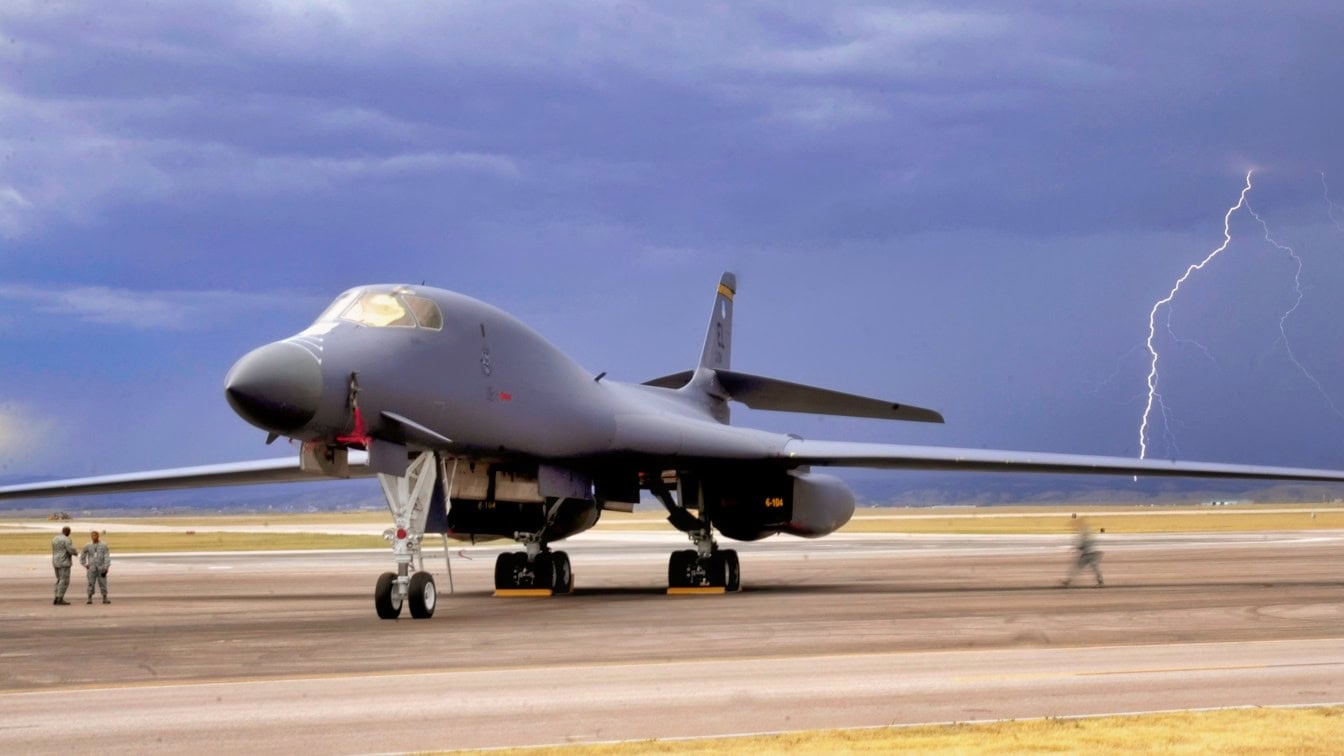
The U.S. Air Force is finding new ways to enable older legacy aircraft to participate more effectively in modern warfare.
The B-1B Lancer bomber now has a maritime combat capability that could be decisive in future battles. The Lancers have successfully been integrated in an early test with the AGM-15AC Long-Range Anti-Ship Missile (LRASM). This projectile could make adversaries such as China wonder whether a Day One strike against its navy by B-1B bombers is in the cards someday.
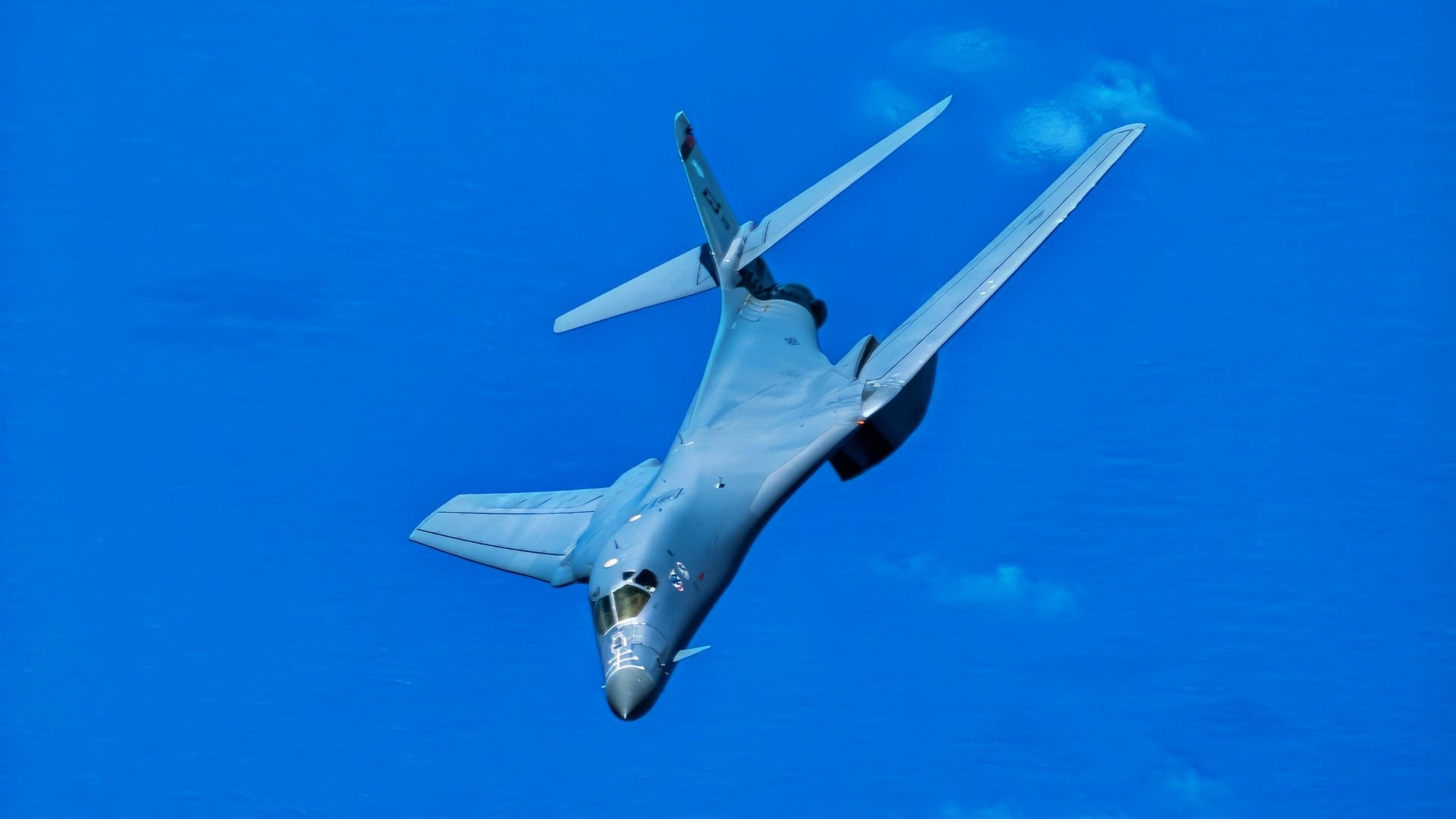
A U.S. Air Force B-1B Lancer attached to the 34th Bomb Squadron, Ellsworth Air Force Base, South Dakota, banks right with the wings in the swept position over the Pacific Ocean after taking off from Anderson Air Force Base, Guam, June 12, 2022. Bomber missions contribute to joint force lethality and deter aggression in the Indo-Pacific by demonstrating United States Air Force ability to operate anywhere in the world at any time in support of the National Defense Strategy. (U.S. Air Force Photo by Technical Sgt. Chris Hibben)
Can an LRASM Be Launched from B-1Bs on a Regular Basis?
The U.S. military conducted a validation test for the LRASM with the B-1B at Dyess Air Force Base in Texas on June 2.
The technicians were trying to determine whether the Lancer could be a successful platform for the LRASM given the bomber’s massive payload and ability to effectively punish ground targets.
New Options in Sea Warfare
The integration of the LRASM could grant the Air Force another option to destroy ships, and the missile fight that will be conducted in future scenarios has U.S. battle planners enthusiastic, as the military now has additional options.
“This event was a critical step forward in validating our procedures and proving our capability on the ground,” said the 7th BW weapons officer in an Air Force news release.
“By utilizing a live AGM-158C connected via an extended cable—which was fabricated and tested entirely by our own weapons back-shop Airmen—we successfully verified rapid process integration of both new aircraft and missile software, as well as gathered invaluable data to sharpen current procedures, all while supporting future combat readiness.”
Step-by-Step Testing Process
While the evaluators used a cable to connect the missile to the B-1B rather than loading the projectile into the airplane, this was a significant test to determine the future deployment of the LRASM with the heavy-duty bomber.
B-2s Can Also Launch the LRASM
The B-2 Spirit bomber is also getting in on the fun. A B-2 fired an LRASM at a practice target during exercise Valiant Shield 26 near the Marianas Islands earlier this summer.
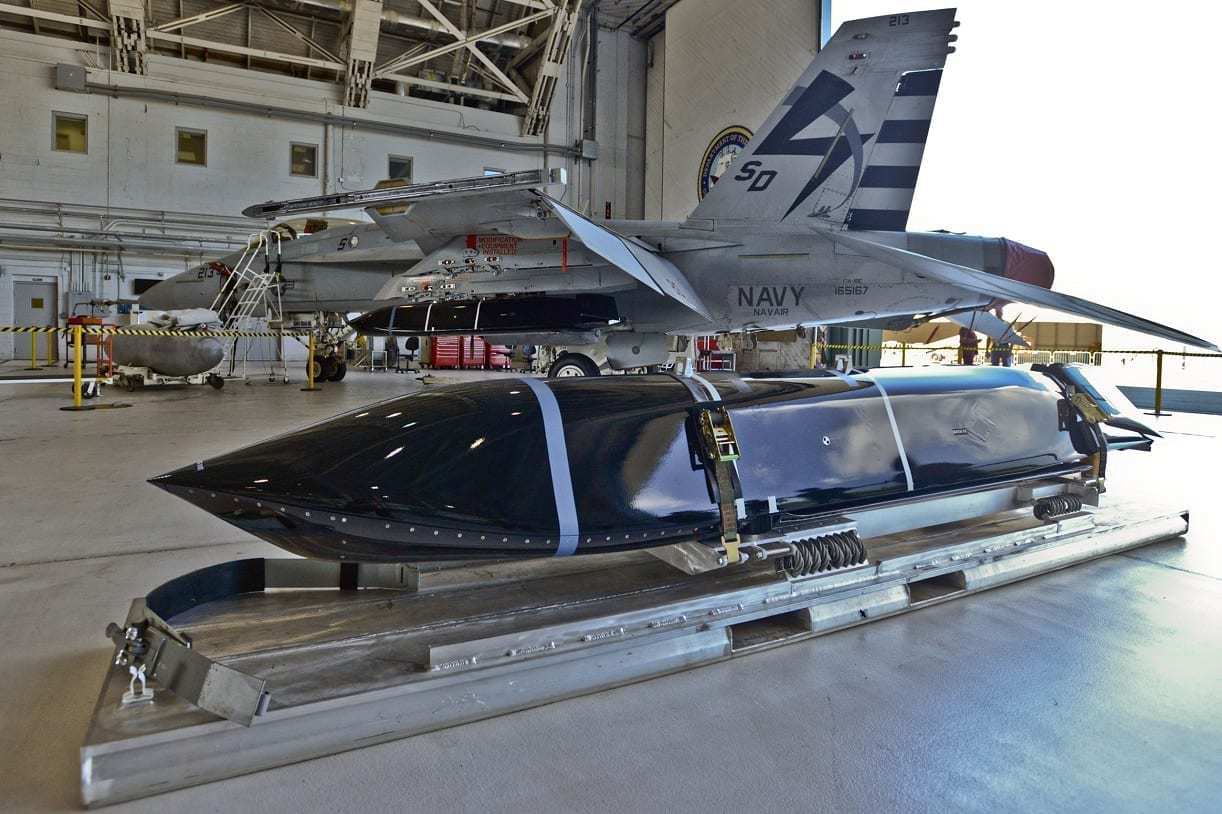
A Long Range Anti-Ship Missile (LRASM) integrated on F/A-18E/F Super Hornet 12 August 2005 at NAS Patuxent River, Md.
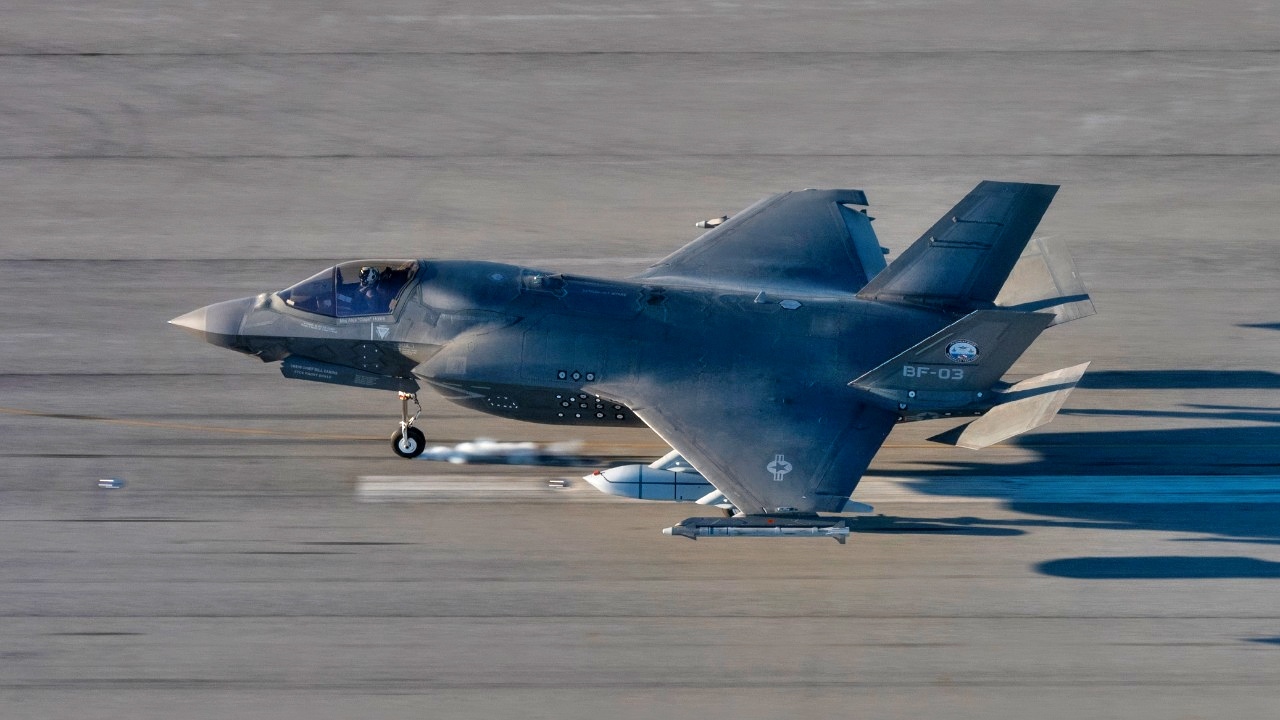
NAS PATUXENT RIVER, Md. — An F-35 Lightning II test pilot conducts the first flight test to certify the F-35B short takeoff and vertical landing variant of the fighter aircraft for carrying the AGM-158C Long-Range Anti-Ship Missile (LRASM). As part of ongoing weapon integration efforts, the Pax River F-35 Integrated Test Force (Pax ITF) team for the first time flew test flights Jan. 14 with two AGM-158 loaded on external stations. LRASM is a defined near-term solution for the Offensive Anti-Surface Warfare (OASuW) air-launch capability gap that will provide flexible, long-range, advanced, anti-surface capability against high-threat maritime targets. The Pax River ITF’s mission is to effectively plan, coordinate, and conduct safe, secure, and efficient flight test for F-35B and C variants, and provide necessary and timely data to support program verification / certification and fleet operational requirements.
The Air Force will buy 114 LRASMs for the service, funded by a $738 million budget set-aside in FY2027.
The LRASM has a very long range of more than 200 nautical miles, enabling it to take out enemy shipping with an “intelligent” guidance system and targeting network.
More Specs About the LRASM
The missile has a 1,000-pound penetrating fragmentation blast warhead and a multimode sensor that makes it extremely accurate against moving ships.
This will allow the Air Force and Navy to make up an integrated force called “distributed lethality.” The idea behind this concept is to penetrate China’s anti-access/area-denial strategy during what I call the Kinetic Missile Fight.
‘Hunter-Killer Formations’ to Dominate the Fight
While the Air Force delivers the badly needed LRASM, the Navy uses a number of destroyers, cruisers, and amphibious vessels in hunter-killer formations to maximize the destruction of enemy ships.
“Our true asymmetric advantage isn’t found in the B-1’s steel and software; it is rooted in our skilled, innovative, and highly motivated Airmen,” said U.S. Air Force Col. Robert Sturgill, 7th BW and installation commander.
“On the flightline and in our weapons shops, these professionals look past legacy blueprints to design and implement ideas that push weapon system capacity and capabilities far beyond original limits.
By stepping boldly into the space of what is possible, our force ensures our Wing and Global Strike remain lethal, adaptable, and unmatched.”
Making a Dent in Chinese Warship Building
The Air Force and Navy working as a team is a notable development for future battle concepts in the Indo-Pacific. China has a huge navy, and more U.S. assets are needed to counter its shipbuilding prowess.
The Need for Amphibious Warfare Support
The LRASM could also be used against Chinese aircraft carrier strike groups that the country has been rapidly deploying.
The LRASM deployment will clear the way for Naval and Marine Corps amphibious operations. The Marines are trying to return to their roots as a landing force to take territory in East Asia.
The Future of Indo-Pacific Operations
The LRASM has many use cases that could make the weapon decisive in the Indo-Pacific.
This shows that the U.S. military is looking for ways for the Navy, Air Force, and Marines to forge into a single integrated joint force that would be particularly lethal.
It seems the Americans continue to find new ways to get more munitions that were not used before. The B-1B has more testing and evaluation methods in store for the LRASM.
The Air Force knows that this missile could make a difference in the region, and the Chinese should take note that their warships could succumb to a missile attack that could send them to the bottom of the sea.
About the Author: Brent M. Eastwood, PhD
Brent M. Eastwood, PhD, author of now over 3,500 articles on defense issues, Brent M. Eastwood, PhD, is the author of Don’t Turn Your Back On the World: A Conservative Foreign Policy and Humans, Machines, and Data: Future Trends in Warfare, plus two other books. Brent was the founder and CEO of a tech firm that predicted world events using artificial intelligence. He served as a legislative fellow for US Senator Tim Scott and advised the senator on defense and foreign policy issues. He has taught at American University, George Washington University, and George Mason University. Brent is a former US Army Infantry officer. He can be followed on X @BMEastwood.