
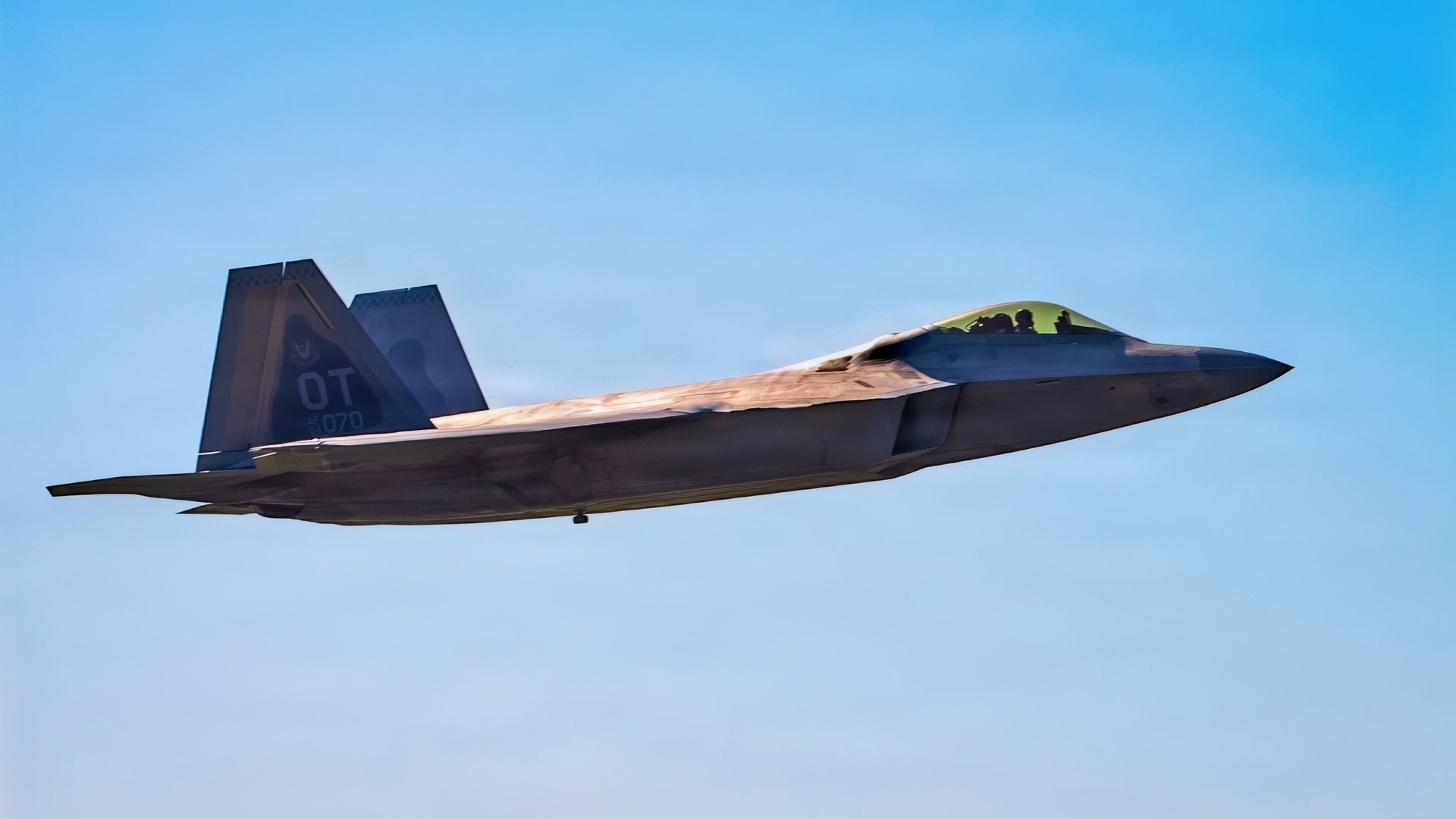
Summary and Key Points: The United States Air Force is spending to keep the F-22 Raptor lethal well into the era of its planned replacement, the F-47, and in the process turning the older fighter into a testbed for its successor’s technology. A March photograph over the Mojave captured a Raptor flying with stealth-shaped external fuel tanks and infrared search-and-track pods, part of a FY2026 “Viability” package that adds new sensors, an Infrared Defensive System facing a production decision by September 30, open mission systems, and a long-delayed helmet-mounted display. Lockheed says new capabilities now prove themselves on the Raptor before reaching the F-47, and in a reversal the 32 training-only Block 20 jets once bound for retirement may be upgraded to combat status, potentially growing the fleet for the first time since the production line closed.
The F-22 Raptor Won’t Retire Anytime Soon: An Aerospace Wonder

The F-22 Raptor Demonstration Team uniform is worn during a practice demonstration at Langley Air Force Base, Virginia, Nov. 13, 2025. The all-black flight suit is a signature look for Air Combat Command demonstration teams. (U.S. Air Force photo by Staff Sgt. Lauren Cobin)
The Raptors’ second act is no longer a rumor. The sensor pods just finished their qualification window; a production decision on its new defensive system is due by September 30; stealthy fuel tanks built to stay on in combat are flying at Edwards; and the missile it will first carry is being accelerated with classified quantities.
Underneath the hardware sits a quieter truth: the Air Force and Lockheed now say out loud that the F-22 has become the pathfinder for the F-47, the test article de-risking its own replacement.
And in the strangest turn of all, the 32 training-only Raptors once headed for the boneyard may be upgraded to fight — the first growth in the combat fleet since the production line closed.
The clearest picture of the F-22’s future was taken over the Mojave in March: a Raptor flying with faceted stealth fuel tanks and sensor pods under its wings, a configuration that had existed publicly only as renderings and a trade-show model until aviation photographer Jarod Hamilton caught it in the air near Edwards Air Force Base. What the image actually documents is bigger than new stores on old wings. The jet that was supposed to fade politely into the F-47’s shadow is being rebuilt in flight — and the rebuild is doing double duty, because nearly every system going onto the Raptor is bound, eventually, for the fighter that retires it.
Aerospace Ledger: What “Raptor Viability” Actually Buys
The paper trail runs through the budget. The Air Force’s FY2026 request opened a new-start program it calls the F-22 “Viability” package, seeded with $90.34 million, and the budget documents enumerate what viability means: low-observable signature management, a modernized pilot-vehicle interface, countermeasures, a new helmet, cryptographic updates, dynamic synthetic-aperture radar mapping, cybersecurity hardening, electronic-warfare enhancements against evolving threats, and the Infrared Defensive System.
That last item is the package’s centerpiece: the program of record that replaces the Raptor’s legacy missile-launch detectors with new infrared sensors tuned to spot very-long-range air-to-air and surface-to-air shots.
It also carries the first of this story’s two live clocks: the go/no-go for low-rate initial production falls in the fourth quarter of FY2026, which ends September 30. The helmet line closes a twenty-year-old wound: F-22 pilots, whose helmet-mounted display was axed during the jet’s development, are finally getting Thales Scorpion HMDs.
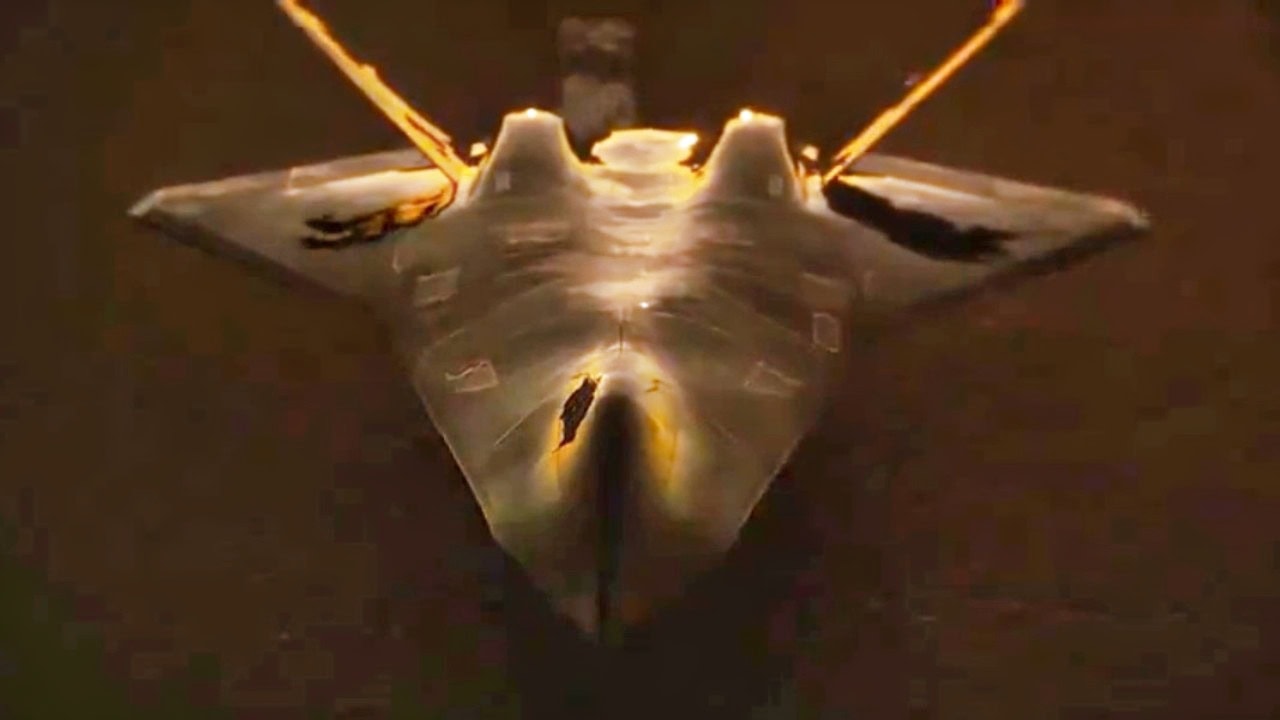
F-47 Fighter from Boeing. Image Credit: U.S. Air Force Screenshot.
The driver behind it all is the missile environment. The Chinese PL-15’s combat debut last year is already credited with accelerating America’s AIM-260 response, and the Air Force has warned that adversary missiles could reach 1,000 miles by mid-century. Of the 185 Raptors in inventory, 143 are combat-coded; the viability package exists to keep the number lethal through the F-47 transition rather than aging out within it.
Range Reality: The Tanks That Stay On and the Pods That Just Finished School
The hardware everyone can see addresses the Raptor’s oldest embarrassment: legs. The F-22’s short combat radius has always been mitigated by 600-gallon external tanks that compromise its stealth, fine for Alaska intercept alerts but useless against modern air defenses.
The Low Drag Tank and Pylon program replaces them with stealth-shaped tanks that, per Lockheed’s F-22 program vice president, are designed to stay on the jet even in combat rather than being punched off at the first sign of a threat. The timeline is a study in honest friction: ground and wind-tunnel testing finished by the end of 2023, flight tests began in early 2024, squadron deliveries were due by this past March, and the latest budget documents concede the program is first “closing out technical discrepancies,” without elaborating. The underwing infrared search-and-track pods operate on a parallel track, promising passive detection of stealthy targets without radiating and betraying the Raptor’s position, and their qualification testing was scheduled through the third quarter of FY2026 — a window that closed on June 30. Both systems were flying together in the March imagery. What neither the Air Force nor Lockheed has disclosed is the actual range extension the tanks buy; figures circulate, but no official number exists, and none is invented here.
The Incubator: Proving the F-47’s Technology on a Twenty-Year-Old Airframe
The deeper story is the one Lockheed’s Skunk Works vice president, OJ Sanchez, has put on the record. The Block 30/35 fleet, he says, is in a hefty modernization built around software-defined open mission systems, architecture that lets the jet take new capability quickly so it can “see, and shoot, and go farther”, with the F-22 at the forefront of the Air Force’s crewed-uncrewed teaming work — and with the explicit philosophy that new technologies prove themselves on the Raptor before they reach the F-47. That is not an analyst’s inference; it is the program’s stated design.
Gen. Kenneth Wilsbach acknowledged as far back as 2024 that there was no longer a definitive F-22 replacement plan and that modernization work was already flowing both directions between the Raptor and the NGAD effort.
Read the upgrade list again through that lens, and it becomes a sixth-generation risk-reduction catalog. The mirror-like coatings periodically photographed on test Raptors belong to a technology family widely expected on the F-47.
The IRDS sensors, the open mission systems, the drone-control work: each matures on an existing airframe rather than on one being built. And the weapon completes the pattern. The AIM-260 JATM, developed for the F-22 and F-35 first, now sits inside the Pentagon’s new Munitions Acceleration Council, with $66 million in FY2026 acceleration funding and FY2027 quantities classified in the procurement justification. The missile the Raptor fields is the missile the F-47 will carry on day one, already wrung out by the jet it replaces. The F-22 is not merely holding the line until the F-47 arrives; it is quietly lowering the price of the F-47’s arrival.
Block 20 Twist: The Bridge Might Get Wider
Then there is the turn nobody predicted five years ago. The fleet’s 32 oldest Raptors, the Block 20s, are training-only jets: no AIM-120D integration, no Link 16 transmit, no ability to carry JATM. They fly more than 90 percent of initial F-22 pilot training, which is why Congress has legally barred their retirement until FY2028, even as the Air Force spent years trying to send them to the boneyard, armed with an estimate that upgrading them would cost $3.3 billion over 15 years, a figure the GAO’s 2024 review criticized as insufficiently documented.
The reversal came last fall: in the same discussions where Sanchez described the modernization push, Lockheed confirmed it is now exploring upgrades for the Block 20 fleet with the Air Force. President Trump has publicly floated an “F-22 Super” in the same breath as new fighter variants. However those threads resolve, the direction of travel has inverted — from shrinking the Raptor force to potentially enlarging it for the first time since the production line closed more than a decade ago. The Air Force’s own fleet graphic plans for “185+” F-47s, a one-for-one replacement of the Raptors; the Raptors, meanwhile, are arranging to be worth replacing for years longer than scheduled.
The Counterpoints: The Critics’ Ledger
The case against all this spending is real and worth stating plainly. The F-22 carries what critics note are the highest maintenance costs and lowest availability rates in the American fighter force; even upgraded, its combat radius remains short for the Pacific, roughly half the J-20’s by some assessments; it still cannot employ standoff air-to-surface weapons, making it the least versatile expensive aircraft in the inventory; and every viability dollar is a dollar not accelerating the F-47 itself, or buying F-35s and F-15EXs that arrive with modern architectures built in. The timing risk cuts both ways, too: if the F-47 holds its schedule, with first flight targeted for 2028, the window in which these upgrades matter narrows, and the Air Force will have partially rebuilt a fighter on the eve of its replacement.
All fair, and the calendar answers most of it. Air superiority does not take gap years; the F-22 is the only pure air-dominance machine America possesses until F-47s exist in squadron numbers, and no program schedule in living memory has moved left.
If the F-47 is early, the Raptor money bought insurance that wasn’t needed, the cheapest kind of waste. If the F-47 is late, the upgrades are the whole hedge. And either way, the technologies flow forward: the sensors, the coatings, the open architecture, the missile, and the drone-teaming doctrine all arrive on the F-47 already proven, because a twenty-year-old fighter spent its final decade as the proving ground. The viability package is not competing with the F-47. It is subsidizing it.
Which returns to that photograph over the Mojave: an F-22 flying with its successor’s technology hung under its wings, tanks that stay on, sensors that hunt without speaking, more than a decade after the last Raptor was delivered and a decade before America can field enough of what comes next.
The jet was supposed to spend these years waiting for retirement. It is spending them teaching its replacement to fly — and it may yet finish with more fighters in the fleet than it had when the lesson began.
F-22 Raptor: A Story in Photos
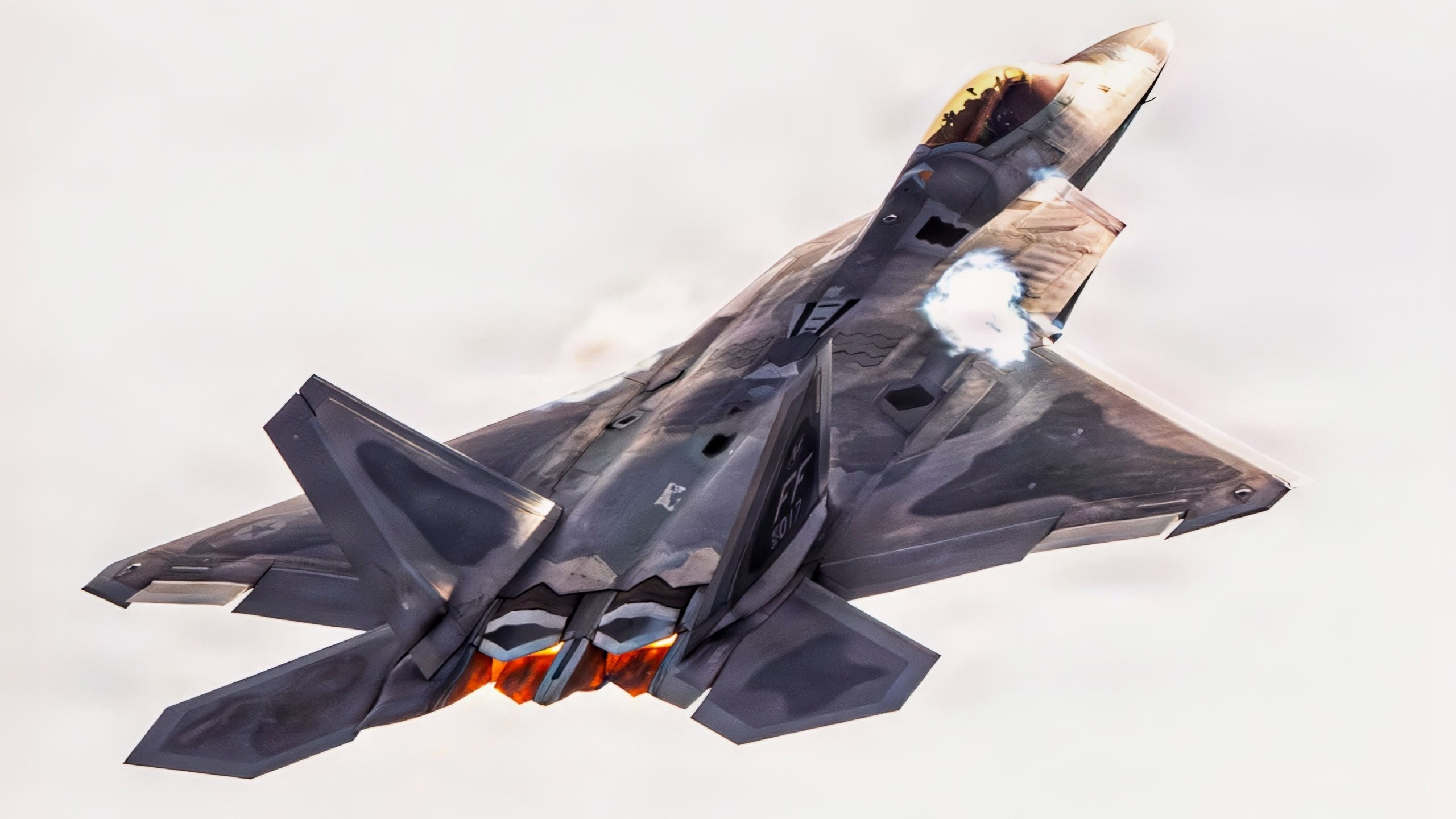
U.S. Air Force Capt. Nick “Laz” Le Tourneau, pilot and commander of the F-22 Raptor Aerial Demonstration Team, performs a practice demonstration for the 2026 Heritage Flight Training and Certification Course at Davis-Mothan Air Force Base, Arizona, March 1, 2026. The Heritage Flight Training and Certification Course is an annual event where military and civilian pilots train together to fly in formations, showcasing both modern and vintage military aircraft. These flights are performed at airshows across the country to honor the service and contributions of every U.S. Airmen, past and present, while educating the general public on the importance of the U.S. Air Force and its mission. (U.S. Air Force photo by Staff Sgt Mary Bowers)
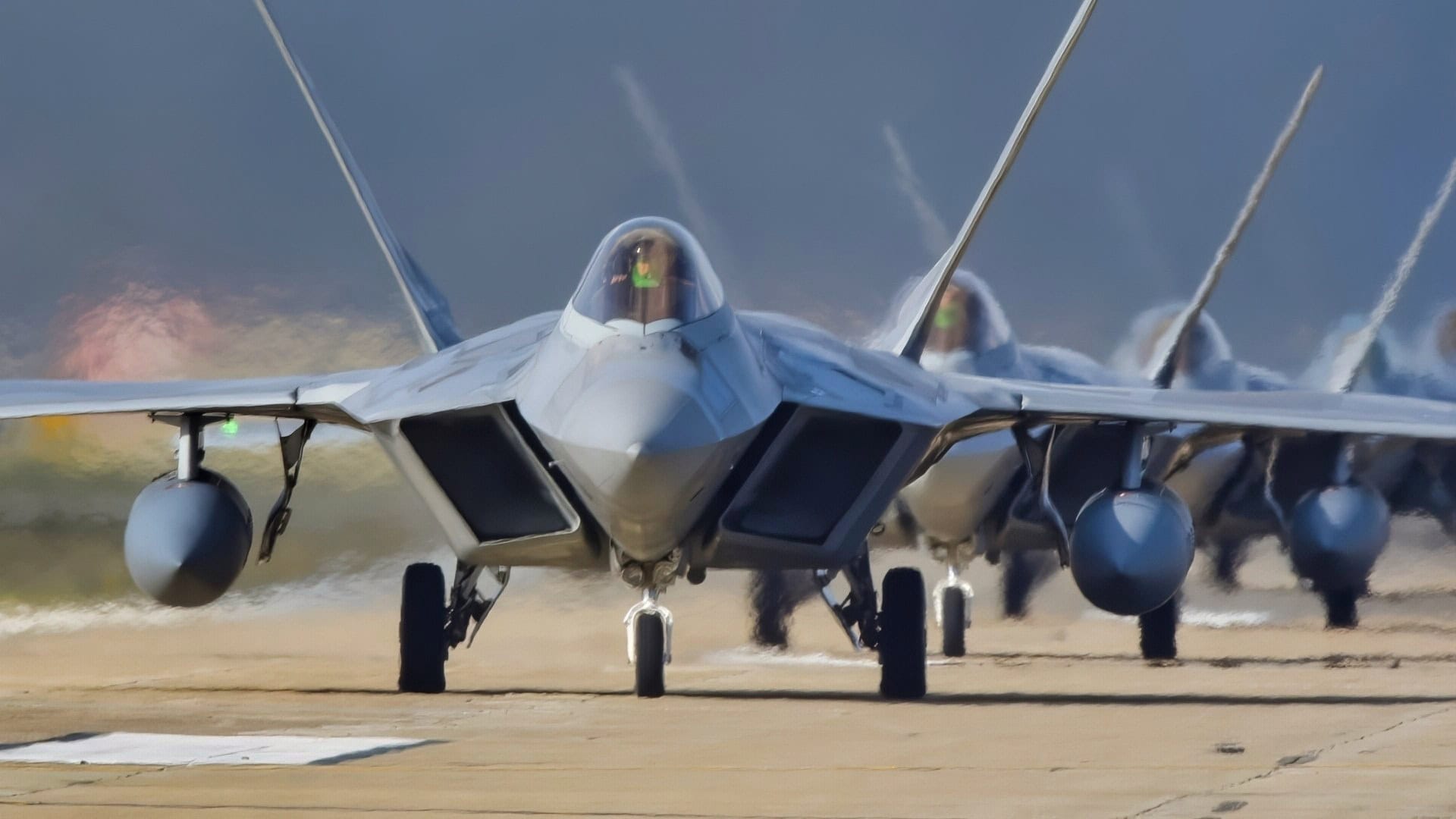
F-22 Raptors from the 1st Fighter Wing and 192nd Fighter Wing, participate in a total force exercise at Joint Base Langley-Eustis, Virginia, Feb. 28, 2019. Both wings partnered with the 633rd Air Base Wing during the Phase I exercise to showcase their readiness and deployability of the F-22s. (U.S. Air Force Photo by Tech Sgt. Carlin Leslie)
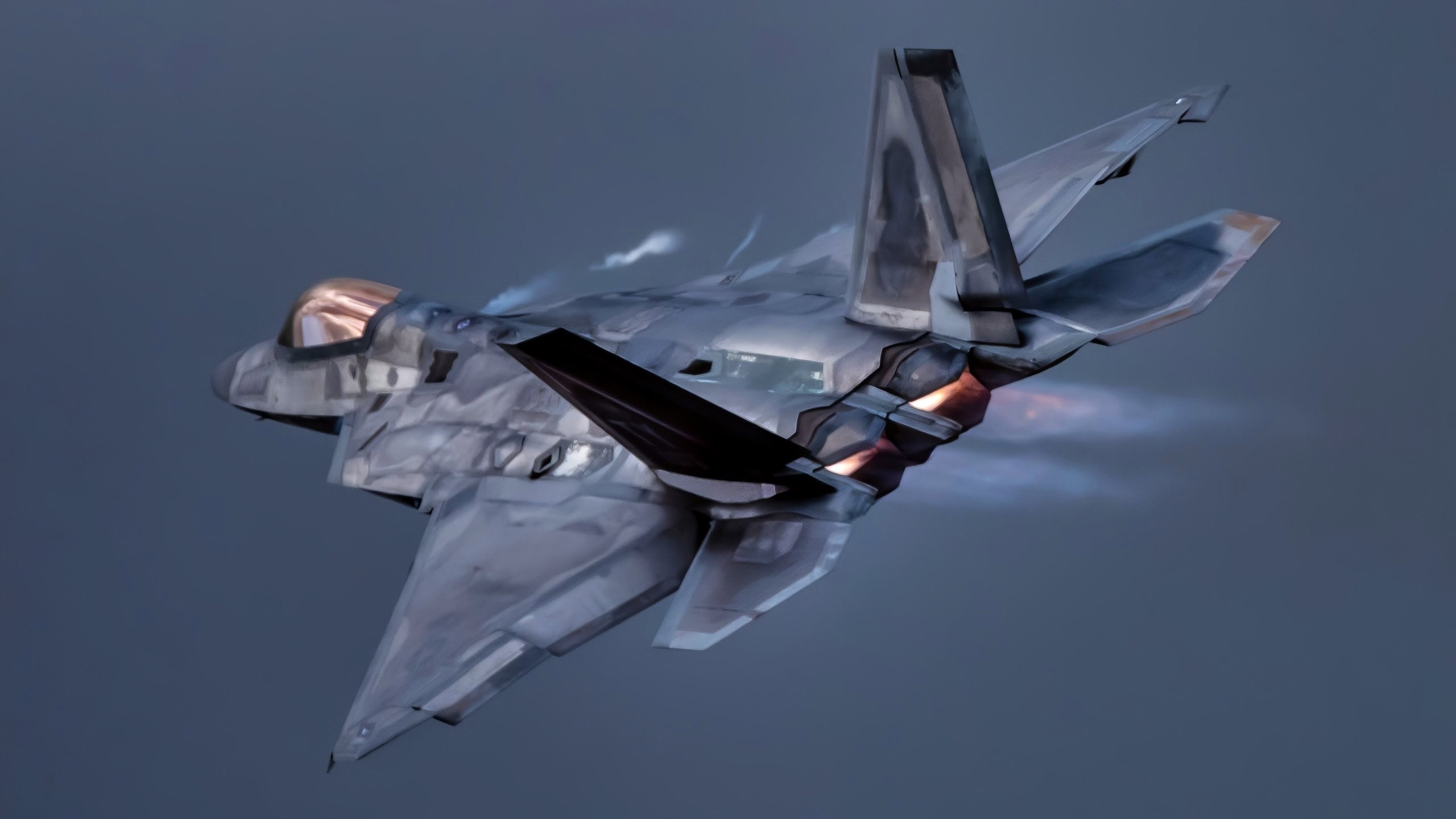
U.S. Air Force Maj. Josh Gunderson, F-22 Raptor Demonstration Team commander and pilot, flies a practice demo at Joint Base Langley-Eustis, Va., Dec. 6, 2019. Representing Air Combat Command, the F-22 Demo Team travels to air shows all across the world showcase the performance and capabilities of the world’s premier 5th-generation fighter. (U.S. Air Force photo by 2nd Lt. Sam Eckholm)
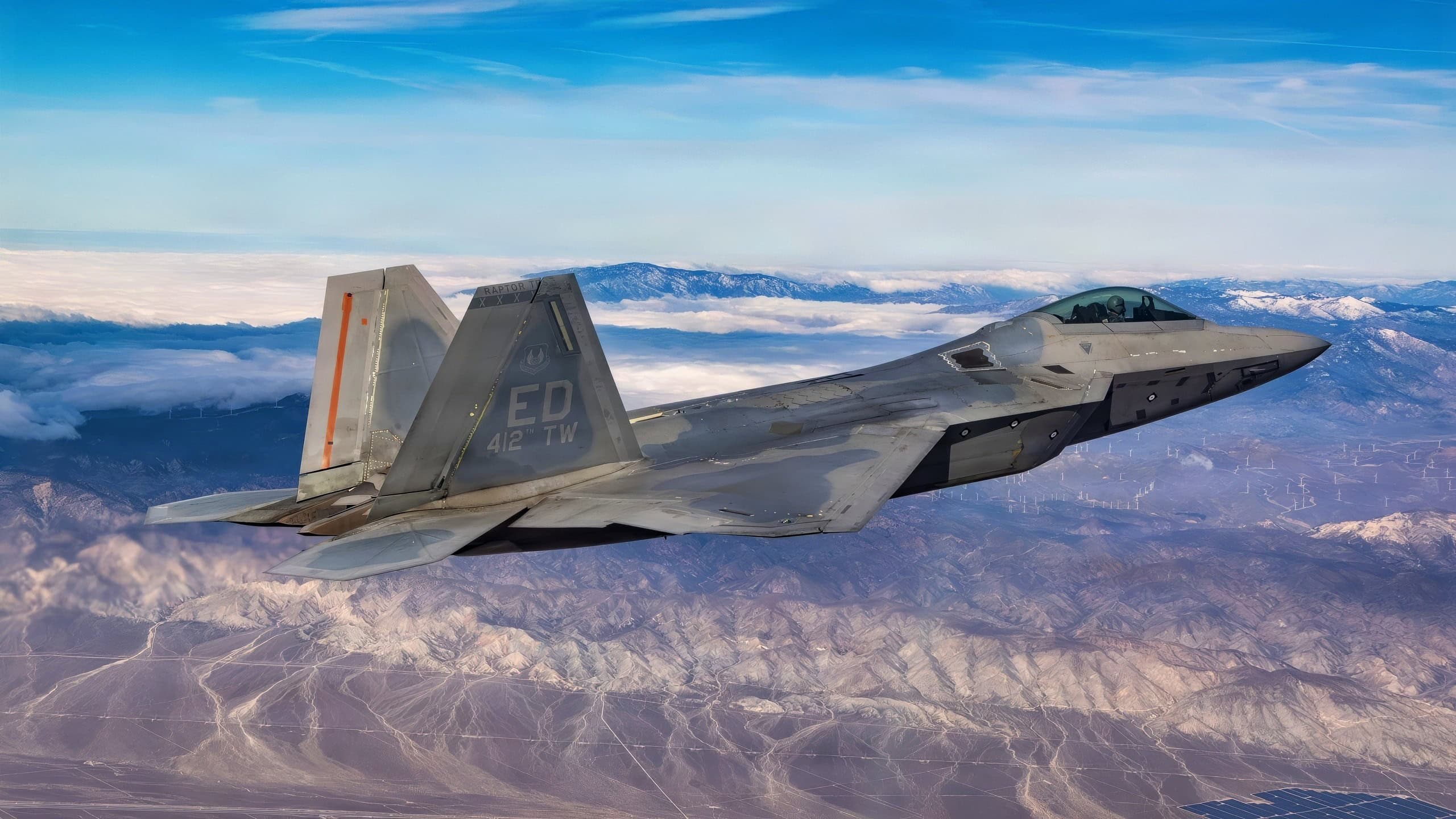
An F-22 Raptor assigned to the 411th Flight Test Squadron, Air Dominance Combined Test Force, soars over the Mojave Desert ahead of conducting high angle-of-attack maneuvers on Feb. 26, 2026. High AoA is a highly specialized set of combat aircraft maneuvers that are performed by experienced pilots and test pilots. Edwards AFB is one of the few places in North America where aviators can learn and become certified in this unique state of flying. (Courtesy photo)
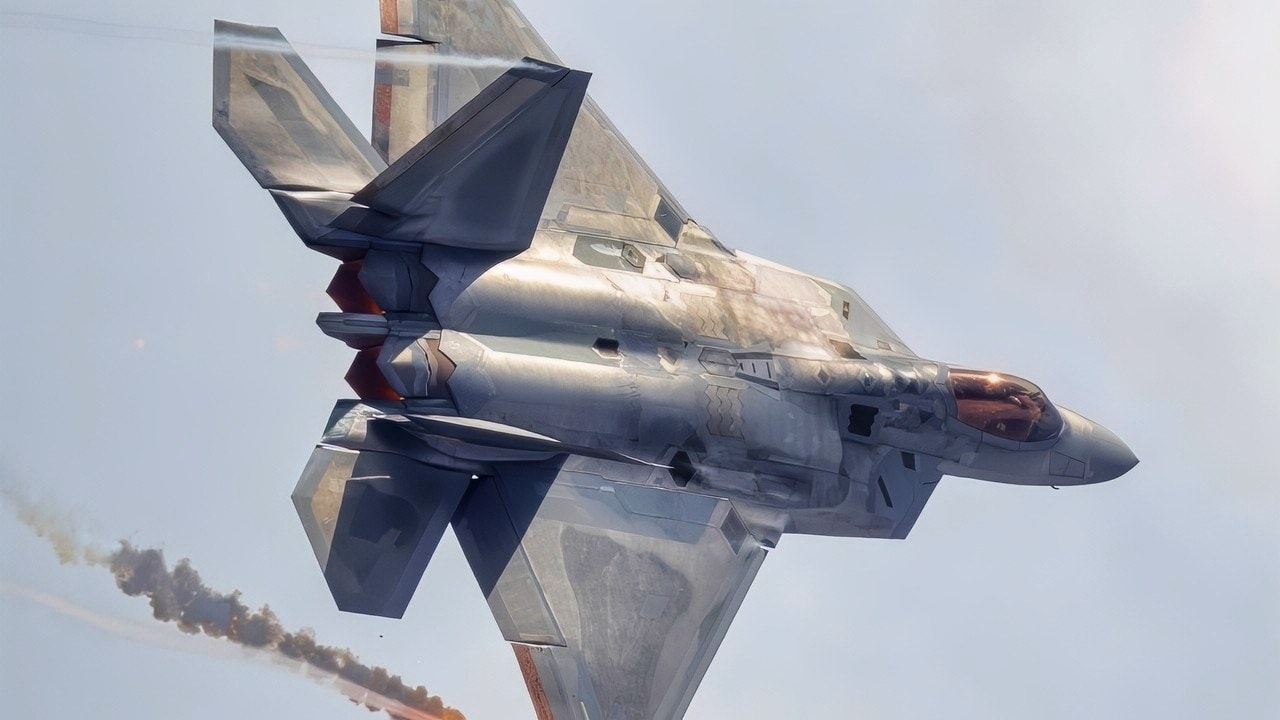
An F-22 Raptor releases flares during an aerial demonstration at Naval Air Station Oceana, Virginia, Sept. 21, 2025. The display highlights the aircraft’s defensive systems and advanced capabilities, demonstrating both its agility and readiness in complex flight operations. (U.S. Air Force photo by Staff Sgt. Lauren Cobin)
About the Author: Harry J. Kazianis
Harry J. Kazianis (@Grecianformula), Editor-In-Chief of 19FortyFive, is the former Senior Director of National Security Affairs at the Center for the National Interest (CFTNI), a foreign policy think tank founded by Richard Nixon based in Washington, DC. Harry has over a decade of experience in think tanks and national security publishing. His ideas have been published in the NY Times, The Washington Post, The Wall Street Journal, CNN, and many other outlets worldwide. He has held positions at CSIS, the Heritage Foundation, the University of Nottingham, and several other institutions related to national security research and studies. He is the former Executive Editor of the National Interest and the Diplomat. He holds a Master’s degree focusing on international affairs from Harvard University.

