
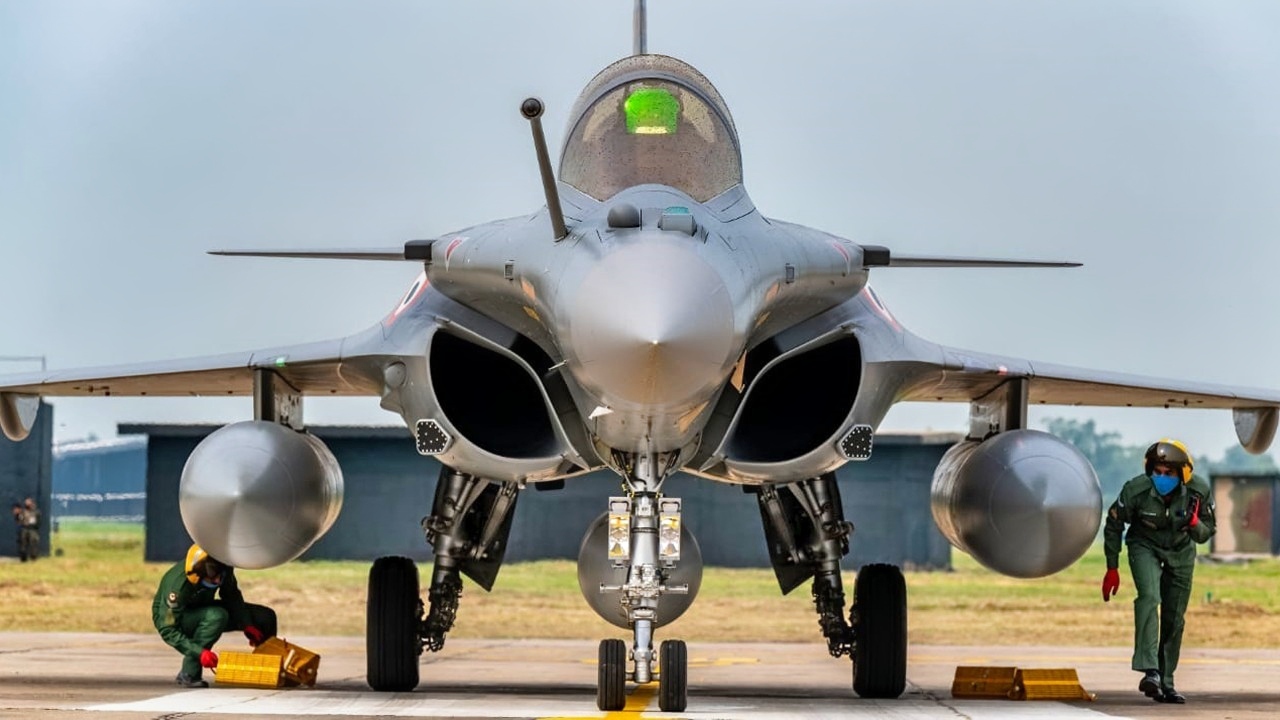
For its first two decades in service, the Dassault Rafale could not win a single export order, losing competition after competition to American and Russian jets. Since 2015, it has become one of the most sought-after fighters on the planet, with eight foreign air forces signed up and a backlog so deep that Dassault cannot build the jets fast enough.
The reasons that turned a commercial failure into an export champion say as much about global politics as they do about the airplane.
No Stealth, No Problem: The Dassault Rafale Is Selling Strong in the F-35 Era
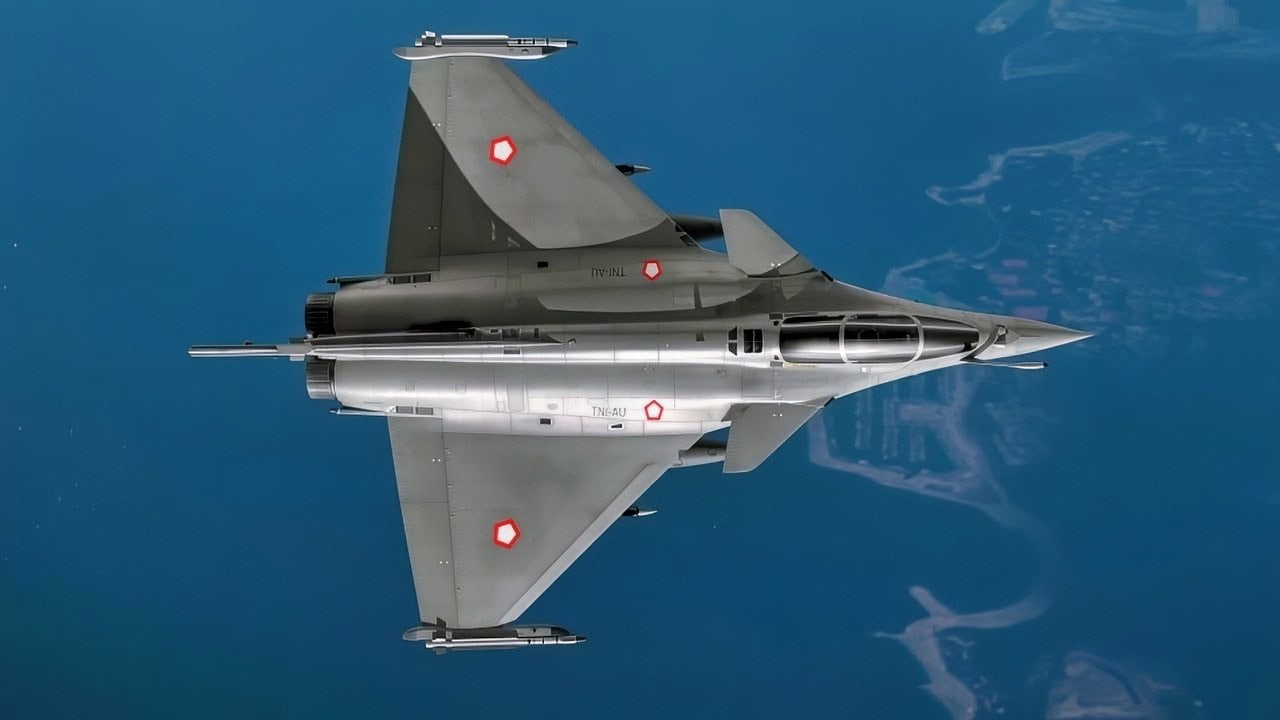
Dassault Rafale Overhead. Image Credit: Industry Handout.

Dassault Rafale Fighter from France. Image Credit: Creative Commons.
For the first twenty years of its career, the Rafale was a hard sell. France’s twin-engine, delta-canard fighter lost competitions across the Middle East and Asia while the F-16, F-15, and later the F-35 cleaned up.
Then, in February 2015, Egypt broke the drought with a 24-aircraft order, and the jet has scarcely stopped selling since. Total Rafale orders have passed 500 by the end of 2024 and now exceed 640, split between France and eight export customers: Egypt, Qatar, India, Greece, Croatia, the United Arab Emirates, Indonesia, and Serbia. The UAE’s 80-jet contract is the largest export deal in Dassault’s history.
Behind the firm orders sits a pipeline that includes late-stage talks with Iraq, a possible Indian follow-on for up to 114 more, and a November 2025 letter of intent from Ukraine covering as many as 100. Dassault’s problem now is not demand but capacity: at roughly 26 jets a year, its current backlog represents close to a decade of production.
So why are so many air forces choosing a non-stealth French fighter over the American alternative?
Three reasons recur, and the most important one has almost nothing to do with the aircraft itself.
No American Veto
The Rafale’s biggest selling point is what it does not come with: strings running back to Washington.
An F-35 buyer accepts a jet whose software, spare parts, and mission-data files depend on American-controlled supply chains, and whose upgrades and weapons integration are subject to US law and congressional sign-off.
For a growing number of governments, that dependency has become the deciding factor — the worry that in a diplomatic rupture, Washington could slow spare deliveries, withhold a software update, or block a weapon, effectively grounding an air force it no longer wishes to support.
Whether the United States would ever actually do so is genuinely debated, but the perception alone carries real weight in the market.
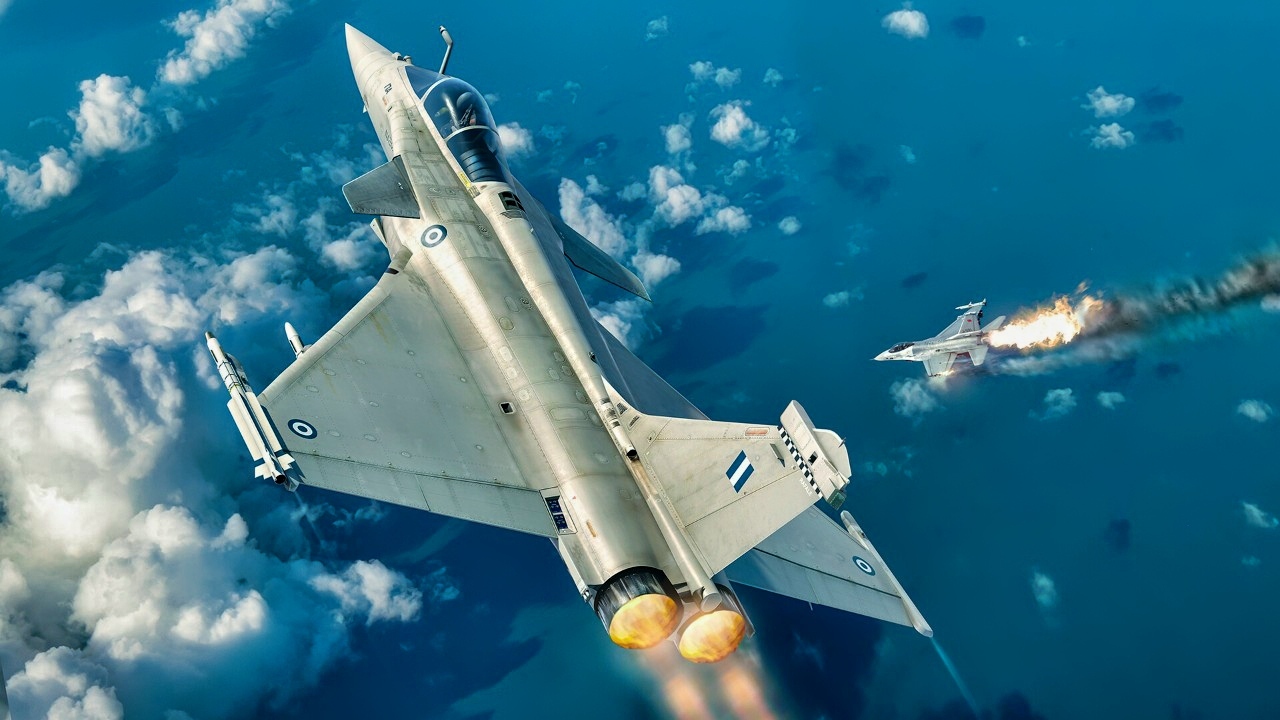
Dassault Rafale Fighter. Artist Created Image/Creative Commons.
France sells the Rafale as a sovereign purchase and means it. Buyers get far more freedom to integrate their own or third-party weapons, fewer end-use restrictions, and no American seat in the chain of approvals — its independence from US export-control law is repeatedly cited as its edge with nations seeking operational sovereignty. Dassault made that exact pitch to Indonesia, describing the jet as a tool for sovereignty and operational independence.
The clearest illustration is Serbia, a traditional Moscow partner that in 2024 became the eighth Rafale customer — a purchase that would have been unthinkable with an American aircraft.
For countries that want front-line capability without tying their defense posture to US politics, the Rafale is frequently the only credible option on the table.
A Fighter That Keeps Growing
Buyers are also not purchasing a finished product; they are buying into a roadmap.
Dassault upgrades the Rafale in successive “standards,” and the jet coming off the line today is markedly more capable than the one Egypt bought in 2015. The current F4 standard adds networked combat, the new RBE2-XG radar, the Scorpion helmet-mounted display, and expanded connectivity.
The F5 standard, now entering development for service around 2030, is the ambitious leap: it will pair the Rafale with a stealthy “loyal wingman” drone derived from Dassault’s nEUROn demonstrator, introduce gallium-nitride radar meant to help detect stealth aircraft, and carry France’s next-generation hypersonic nuclear missile. The French air force expects the type to serve into the 2050s.
That continuity protects the investment. A Rafale bought in 2026 rides the same upgrade path as France’s own front-line fleet, staying relevant against evolving threats without a wholesale replacement.
And because France depends on the Rafale for both its airborne nuclear deterrent and its carrier aviation, export customers can be confident that the development money will keep flowing regardless of the order book.
The Cost Question, Honestly for Dassault Rafale
The Rafale is often billed as the cheaper alternative to the F-35, and that deserves a caveat.
On sticker price, it usually is not: the F-35A’s flyaway cost has fallen to somewhere around $80–85 million, while a Dassault Rafale tends to run higher per airframe depending on configuration and weapons fit. Where the Rafale’s economics turn competitive is the total package.
Export deals bundle training, long-term fixed-price support, weapons, and industrial offsets — local assembly, technology transfer, and jobs that make the purchase easier to justify at home. Operators also point to lower operating and sustainment costs for a conventional twin-engine fighter than for a stealth jet that demands specialized maintenance and low-observable coatings. In short, the Rafale competes less on the price of the plane than on the cost and the control of owning it across thirty years, and for many buyers, sovereign control is worth paying for rather than saving on.
Why the F-35 Still Wins the Numbers Game
None of this makes the Rafale the market leader. The F-35 remains far and away the best-selling Western fighter, with well over a thousand built and orders from some twenty nations.
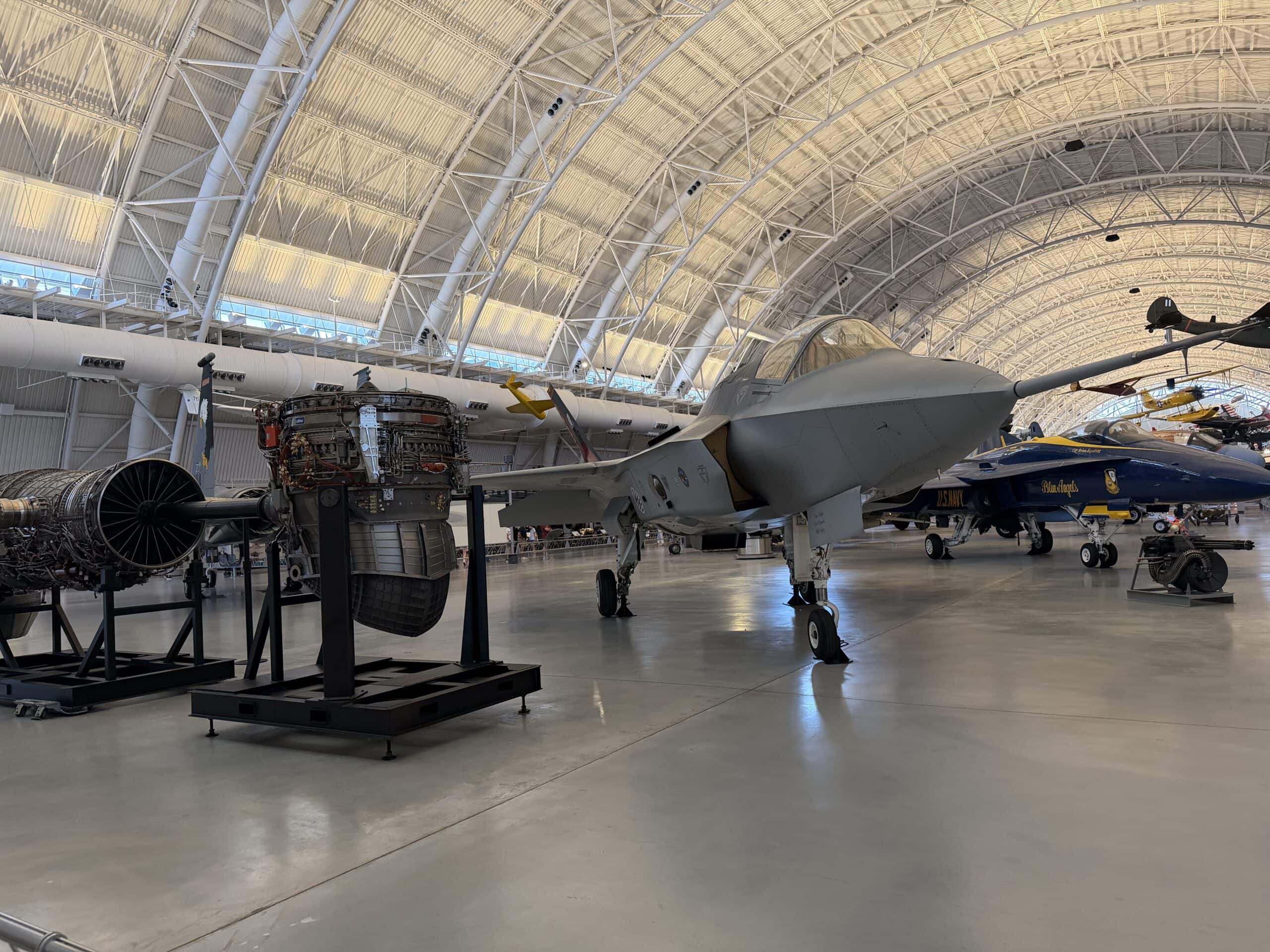
F-35 at the Smithsonian 19FortyFive Photo
It offers genuine stealth the Rafale cannot match, and the tight American integration that unsettles some buyers is a feature for others — allies who want to fight alongside US forces, plug into the same data networks, and lock in the security relationship the jet carries. The Rafale’s sovereignty pitch has limits of its own: France attaches its own political conditions to sales, and its production line is backed up enough that new customers can face multi-year waits.
But that is exactly why the Rafale has carved out such a durable niche. In a world where more governments are hedging against dependence on any single superpower, France is offering precisely what those buyers want: a proven, combat-tested, continuously improving fighter that answers to no one but its owner.
The order book and the decade-long queue to fill it suggest that the argument is only becoming more persuasive.
MORE – Why So Many Stealth Fighters Sit in U.S. Museums
About the Author: Harry J. Kazianis
Harry J. Kazianis (@Grecianformula) was the former Senior Director of National Security Affairs at the Center for the National Interest (CFTNI), a foreign policy think tank founded by Richard Nixon based in Washington, DC. Harry has over a decade of experience in think tanks and national security publishing. His ideas have been published in the NY Times, The Washington Post, The Wall Street Journal, CNN, and many other outlets worldwide. He has held positions at CSIS, the Heritage Foundation, the University of Nottingham, and several other institutions related to national security research and studies. He is the former Executive Editor of the National Interest and the Diplomat. He holds a Master’s degree focusing on international affairs from Harvard University.