
For most of a century, the United States and Canada have shared the longest undefended border on Earth. For part of that century, both capitals kept invasion plans for each other in locked drawers. War Plan Red, approved at the cabinet level in 1930 and classified until 1974, mapped an American conquest of Canada that opened with a gas attack on Halifax and ended with no return of captured territory. Canada’s Defence Scheme No. 1, drafted nine years earlier by an officer who scouted Vermont in civilian clothes, sent flying columns south toward Seattle and Minneapolis. Neither plan ever came close to execution. Both are entirely real. And Ottawa planned first.
Invade Canada: An Introduction
Every few decades, the file resurfaces, and lately it has been resurfacing again, as talk of Canada as a “51st state” sends readers hunting for the strangest chapter in the world’s friendliest defense relationship. The chapter holds up. In the U.S. National Archives at College Park, Maryland, sits a declassified Joint Army and Navy Board file, drawn up between the world wars, that describes in professional staff-officer prose how the United States would conquer its northern neighbor. It is not a hoax, not a satire, and not the work of a lone crank. It was approved by the Secretary of War and the Secretary of the Navy, refined over years, and kept secret for four decades. The story of how it came to exist and of the Canadian mirror image that preceded it says less about any real appetite for war than about how military staffs think, but the details remain among the most arresting in North American history.
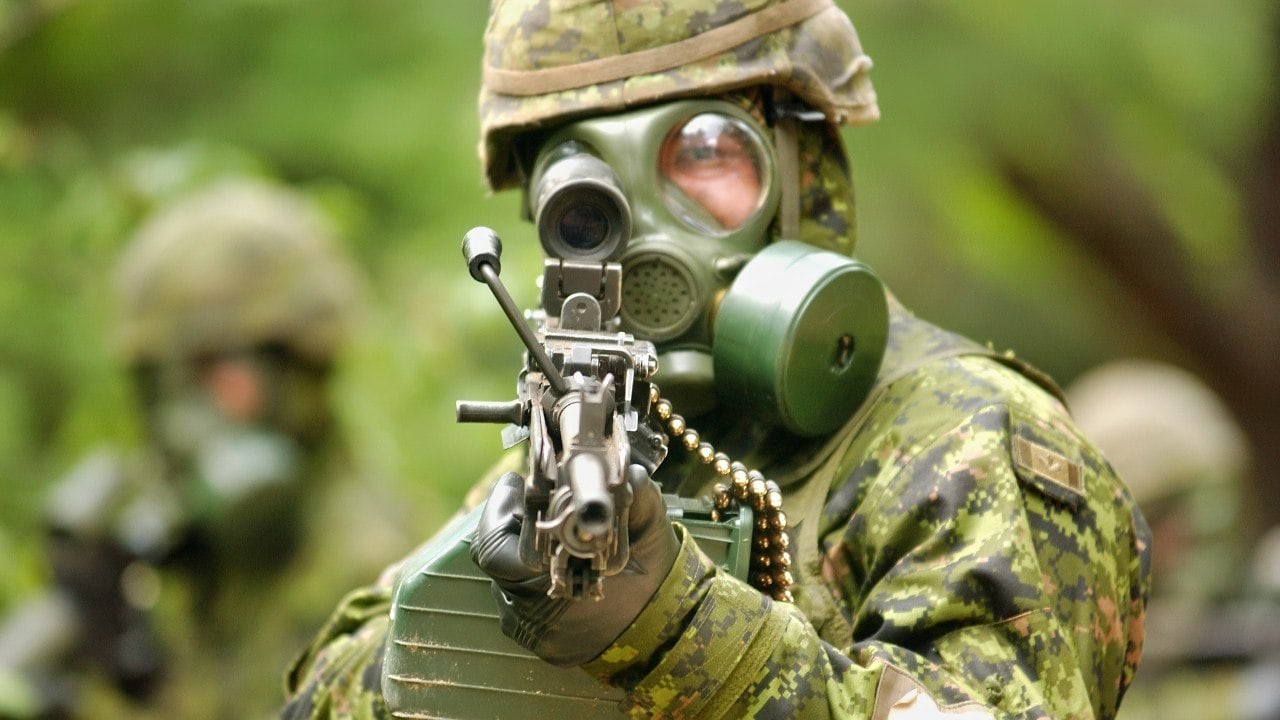
Pte Allen Jewell 1 RCR providing forward cover with his C9 weapon and wearing a new NBCD suit after coming under a simulation chemical agent attack at CFB Petawawa training area.
Defense History: When Britain Was “Red,” and Canada Was “Crimson”
In the years after World War I, American military planners produced a rainbow of contingency plans, each color-coded to a potential adversary. Japan was Orange, Germany was Black, Mexico was Green, and the British Empire, then still the world’s dominant naval power, was Red, with Canada assigned its own shade, Crimson. Most of these were training exercises in logistics and mobilization math, drafted by mid-level officers, and some addressed scenarios nobody considered likely. But the British file was taken seriously, because Anglo-American friction in the 1920s was real: the two navies were rivals, war debts poisoned the relationship, and the collapse of the 1927 Geneva Naval Conference sharpened planners’ attention. Out of that atmosphere, the War Department produced the 94-page Joint Army and Navy Basic War Plan Red, approved in 1930 by Secretary of War Patrick J. Hurley and Secretary of the Navy Charles Francis Adams III, formally issued the following year, and updated into the mid-1930s. As a routine hypothetical exercise, it required no signature from the president and no vote in Congress.
The plan’s logic ran in a straight line. If war came with Britain, the Royal Navy would hold the early advantage at sea, and Canada would serve as Britain’s base and springboard on the continent. The fastest way to hurt London, the planners concluded, was therefore to take Canada away from it, denying Britain its North American foothold and forcing a negotiated peace.
The Plan: Halifax First, Keep Everything
The opening move was aimed at a single city. Halifax, Nova Scotia, was the port through which British reinforcement of Canada would flow, and War Plan Red called for a joint Army-Navy assault to seize it at the outset, severing Canada from Britain in the first days of the war. The most notorious detail sits right there in the file: the first strike on Halifax was to be delivered with poison gas, and the undersea cable running through the city was to be cut, breaking the communications link between Britain and Canada. The planners weighed several approaches by land and sea, and their preferred option was to come ashore at St. Margarets Bay, a quiet inlet near the city, instead of fighting straight in; if Halifax could not be taken at all, American forces would occupy New Brunswick and the rail junction at Moncton to cut Nova Scotia off from the rest of the country.
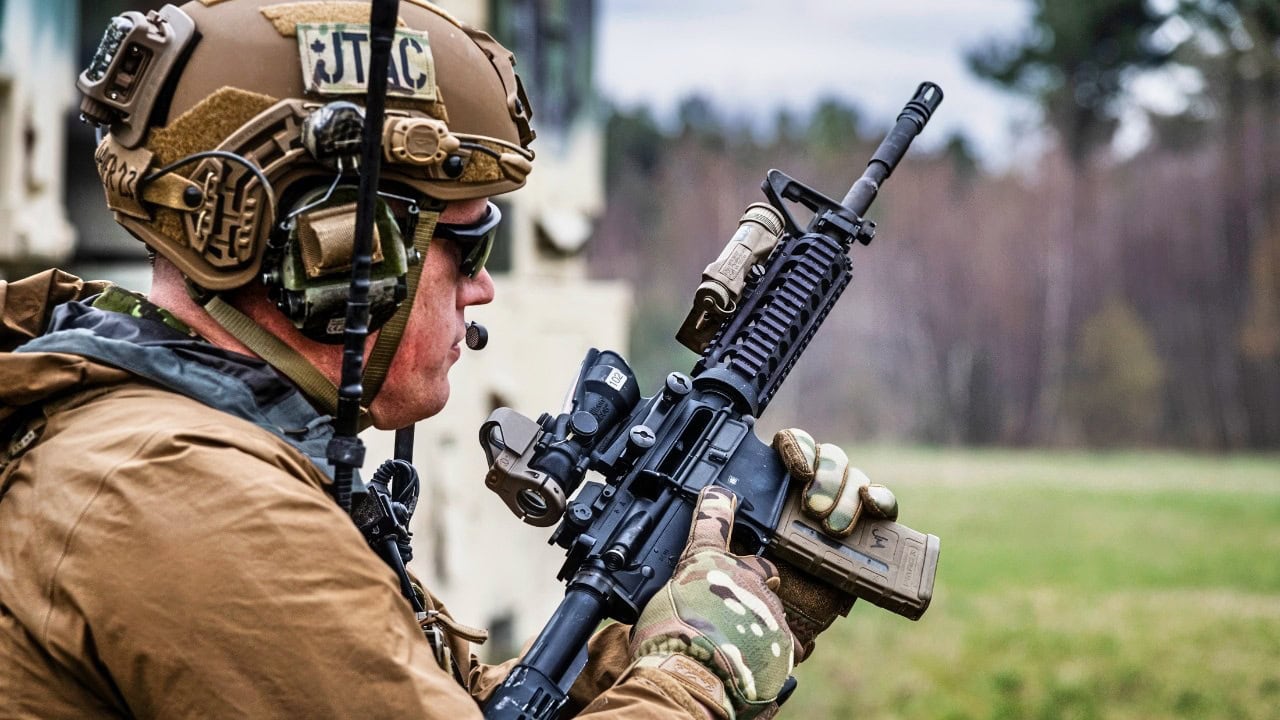
Sgt Mark Button, a Joint Terminal Attack Controller (JTAC) from the 1st Regiment, Royal Canadian Horse Artillery fires an American M4 assault rifle on a range while he participates in Exercise Hungry Horse in Fort Drum, New York State from April 29th to May 3rd 2024.
Photo Credit Petty Officer Second Class Dan Bard, Directorate Army Public Affairs.
Behind the opening blow came a continental campaign on three fronts. From Vermont and northern New York, American forces would drive on Montreal and Quebec City, severing eastern Canada from the Atlantic seaboard. From Grand Forks, North Dakota, they would push to Winnipeg, the junction that stitched the entire Canadian rail system together, and the planners saw no serious obstacle on that axis. Along the Great Lakes, simultaneous offensives would cross the Niagara River from Buffalo, the Detroit River into Windsor, and the St. Mary’s River at Sault Ste. Marie toward the nickel mines of Sudbury, while the seizure of Ontario would deliver Toronto, most of Canadian industry, and the hydroelectric plants near Niagara Falls. A 1930 planning estimate reasoned that taking the Niagara power supply and western coal would produce “an immediate strangulation of its manufacturing and munitioning capacity,” with Maine serving as a base for operations toward the Maritimes. The Navy, meanwhile, would take control of the Great Lakes and clamp a blockade on both of Canada’s ocean coasts. On the Pacific, Vancouver would be attacked overland from Bellingham, Washington, Vancouver Island by sea from Port Angeles, and the port of Prince Rupert bottled up by blockade. And the plan’s end state was the bluntest detail of all: the United States intended to keep what it took, with no provision for returning captured territory.
The 1935 Escalation: Disguised Airfields and 36,500 Troops
For its first years, Red was paper. In February 1935, it briefly grew hardware. The government put roughly $57 million into updating the plan, and the update reached beyond the filing cabinet: three military airfields were built near the Canadian border disguised as civilian airports, and the Army massed some 36,500 troops for what was then the largest war game in American history. The planning even descended to road maps, with the file advising that “The best practicable route to Vancouver is via Route 99.” None of this meant an invasion was coming; war games need scenarios, and Canada was the scenario conveniently next door. But it is the moment the story stops being purely archival, and it is the reason the plan still startles readers who assume such documents never left the drawer.
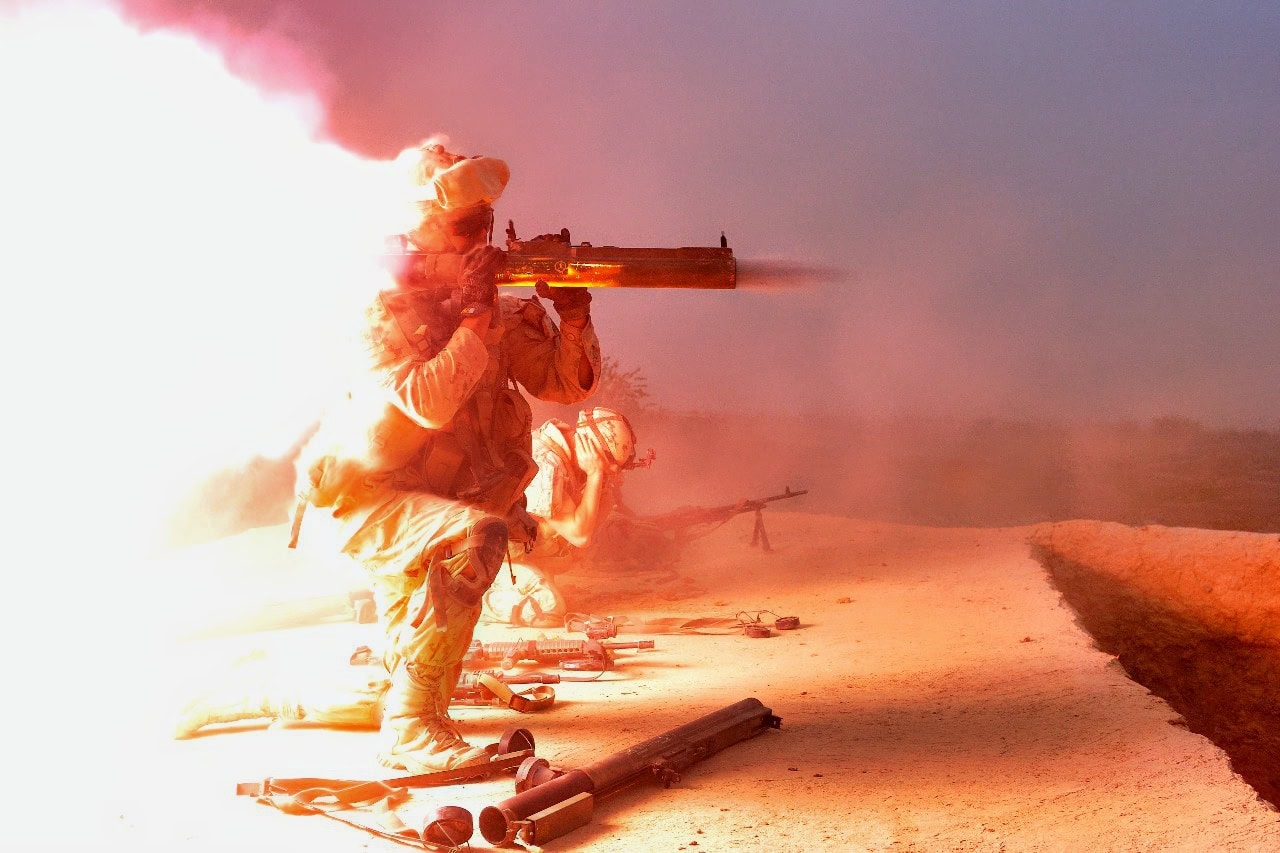
Corporal Brandon Bourdon, 1RCR B COY 4 Platoon, fires an M72 rocket launcher at insurgents that set up an offensive in a grape hut.
The Mirror: Canada’s Plan Came First
The twist that redeems the whole story is that Canada got there first. In the spring of 1921, the Canadian Army’s director of military operations and intelligence, Lieutenant Colonel James “Buster” Sutherland Brown, a decorated veteran of the Western Front, crossed into New York and Vermont in civilian clothes with a few fellow officers on what amounted to a reconnaissance holiday. He took notes on roads, bridges, and the local temperament, observing among other things that Prohibition-era Americans drank less than Canadians, with one Vermont man cheerfully telling him he would head north himself for a beer. That April, Brown produced Defence Scheme No. 1, a plan built on the conviction that the best defense of a small country beside a giant was a fast offense.
The scheme called for Canadian flying columns to surge across the border the moment a US-British war appeared imminent, seizing Seattle in the west, Great Falls in Montana, Minneapolis in the center, and Albany in the east. Brown had no illusions about holding any of it.
The purpose was disruption, throwing American mobilization off balance and pulling US forces toward the flanks, to buy time for Britain and the Commonwealth to send help across the Atlantic.
Historians have not been kind to the concept. Christopher M. Bell judged it close to “suicidal”: Brown had never checked his premise with London, and Britain, facing a neighbor ten times Canada’s size, had no intention of shipping a large army across the Atlantic to fight for the Dominion, which meant the scheme would have squandered Canada’s best troops while neglecting Halifax, the one place the country absolutely had to hold. Canada’s own military leadership agreed in the end. Chief of the General Staff Andrew McNaughton terminated Defence Scheme No. 1 in 1928, and in 1933 ordered most of the related documents burned, concluding that “Politically Canada’s position vis-à-vis the United States has been immensely stabilized.” Brown, for his part, went on to become a brigadier-general.
The Reality Check: Paper, Not Prologue
The honest frame for all of this is the one the planners themselves would have used. Contingency plans of this kind were the ordinary output of every serious general staff, and the American color series ran from the plausible to the almost decorative, including a White plan for domestic unrest.
War Plan Red never envisioned operations beyond the Western Hemisphere, never carried political intent, and never came within sight of execution.
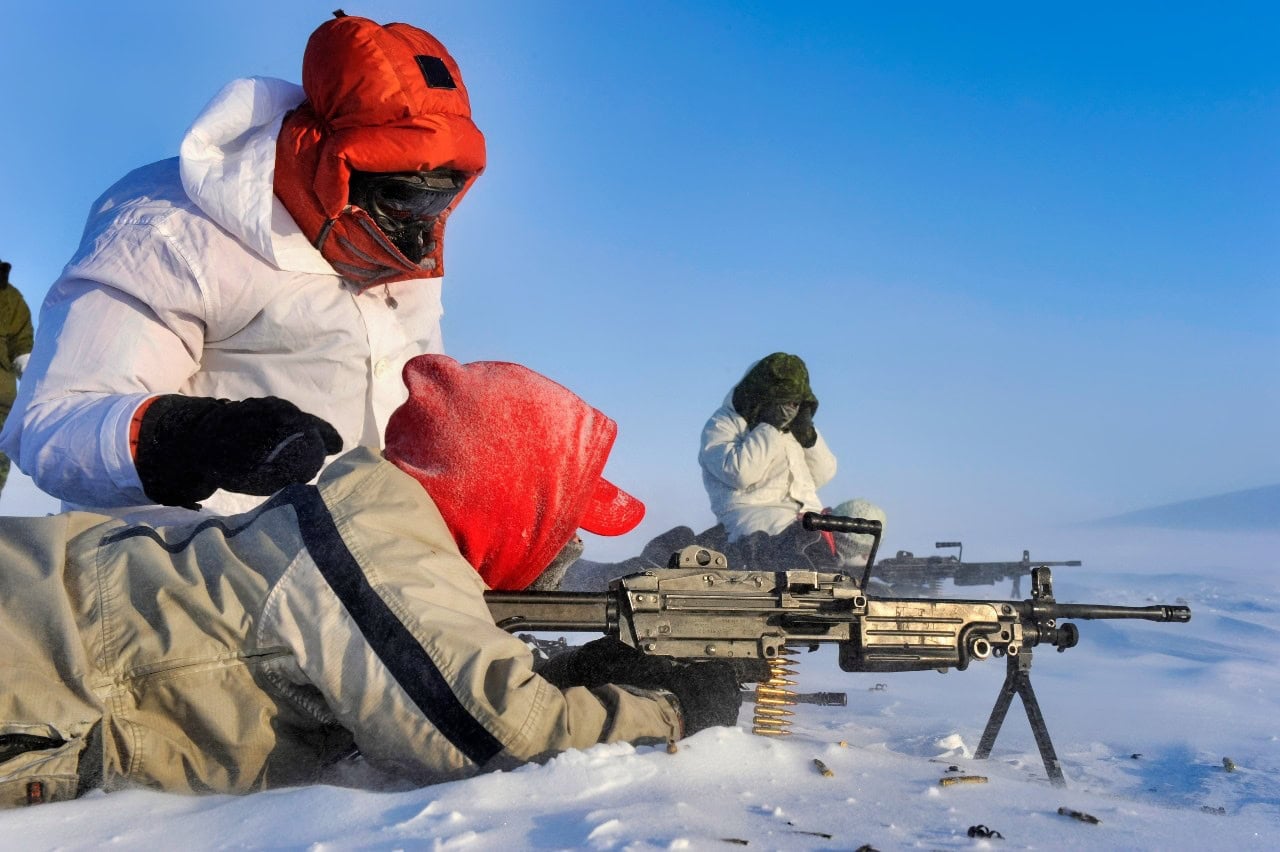
Canada Special Forces
The historian John Major has noted that by May 1936 the American leadership already treated Red as a low priority, as attention swung to Japan and War Plan Orange, and with the outbreak of World War II in 1939 the file was shelved for good, superseded by the Rainbow plans and finally declassified in 1974, when its release caused a brief diplomatic stir and gave a Washington Post retrospective its memorable nickname for the scheme, “Raiding the Icebox.” Kevin Lippert later assembled the two plans into a book-length account. Within a decade of the plan’s approval, the two countries it imagined at war were the closest of allies, and they went on to build NORAD, the only binational air-defense command on Earth.
There is one more irony, and it is a current one. The country whose conquest American staff officers once gamed now fields a military whose problems are entirely its own: readiness figures that recent audits put far below standard, equipment critics describe as rotting away, a recruiting shortfall years in the making, retention problems that have refused to fade, and a fighter purchase that has consumed its air force. The modern Canadian defense question is not whether America is coming, but whether Canada can field the forces its own alliance commitments demand.
Which leaves the two documents where they belong, as artifacts. One set of papers was burned in Ottawa in the 1930s; the other sat sealed in Washington until 1974 and now rests in a reading room in Maryland, available to anyone with a research card.
The two staffs that once mapped each other’s conquests spent the next ninety years building the most integrated defense partnership in the world, and the border their plans crossed on paper remains what it has been for generations, long, quiet, and undefended.
The invasion of Canada exists only as a file, which is exactly where both countries always intended to keep it.
More: Canada’s F-35 Debate Has a Hidden Back History Everyone Forgets About
About the Author: Harry J. Kazianis
Harry J. Kazianis (@Grecianformula) was the former Senior Director of National Security Affairs at the Center for the National Interest (CFTNI), a foreign policy think tank founded by Richard Nixon based in Washington, DC. Harry has over a decade of experience in think tanks and national security publishing. His ideas have been published in the NY Times, The Washington Post, The Wall Street Journal, CNN, and many other outlets worldwide. He has held positions at CSIS, the Heritage Foundation, the University of Nottingham, and several other institutions related to national security research and studies. He is the former Executive Editor of the National Interest and the Diplomat. He holds a Master’s degree focusing on international affairs from Harvard University.

