
Summary and Key Points: Nearly every “best tank” ranking crowns the American M1 Abrams, and with good reason, but that verdict buries a more interesting question: what is the rest of the world building, and where does it beat the Abrams at its own game? Strip out the American tank and rank the field on its merits, and five main battle tanks stand above the rest in 2026, each optimized for something the Abrams is not, from Germany’s export-dominant Leopard to South Korea’s rapidly built K2, Israel’s combat-hardened Merkava, Britain’s returning Challenger, and France’s fast-firing Leclerc. Here is the ranking, judged on firepower, protection, mobility, sensors, availability, and combat record.
RANKED: 5 Best Tanks Not Made in the USA
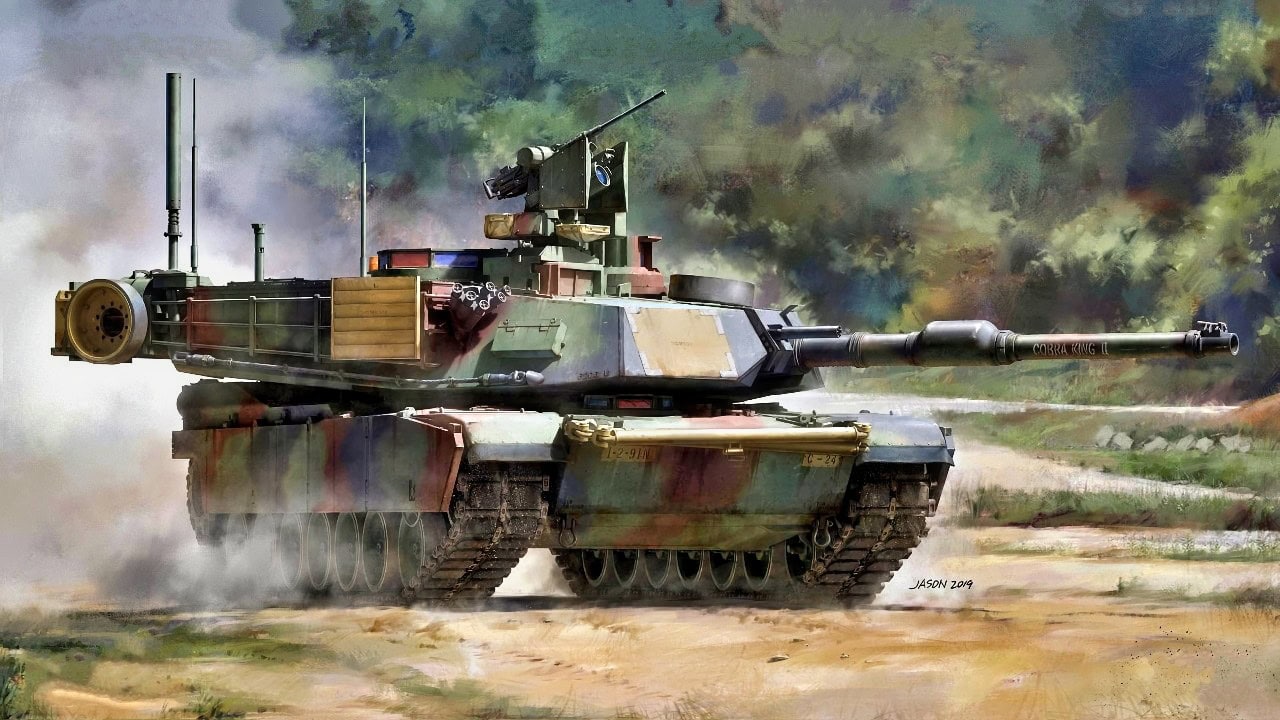
M1 Abrams Tank. Image Credit: Creative Commons.
The main battle tank was declared dead more than once in the drone age, and it keeps refusing to die. What has changed is that survivability and situational awareness now matter as much as gun caliber, and the world’s best non-American tanks have each answered that shift differently. None of them is simply a copy of the Abrams. Each makes a distinct bet about what a tank most needs to do, and comparing them against the American benchmark is the clearest way to see what makes each one special. The ordering below, especially among the middle entries, is close enough that reasonable analysts will disagree, but the five tanks themselves are the class of the non-US field.
5. Leclerc XLR (France): The Fastest Gun
France’s Leclerc has always been the sprinter among Western tanks, and its modernized XLR variant retains that edge. Where the Abrams and most Western tanks carry a human loader, the Leclerc uses a bustle autoloader that lets it sustain a rate of fire of roughly 12 rounds per minute, faster than a crew-loaded gun can manage, from a lighter 57-ton hull that prizes agility over bulk. The XLR upgrade integrates the tank into France’s SCORPION program, adding a networked command system that lets it share targeting data in real time with French Griffon, Jaguar, and Serval vehicles, plus new modular armor, a remote weapon station for urban fighting, and improved mine and drone protection.
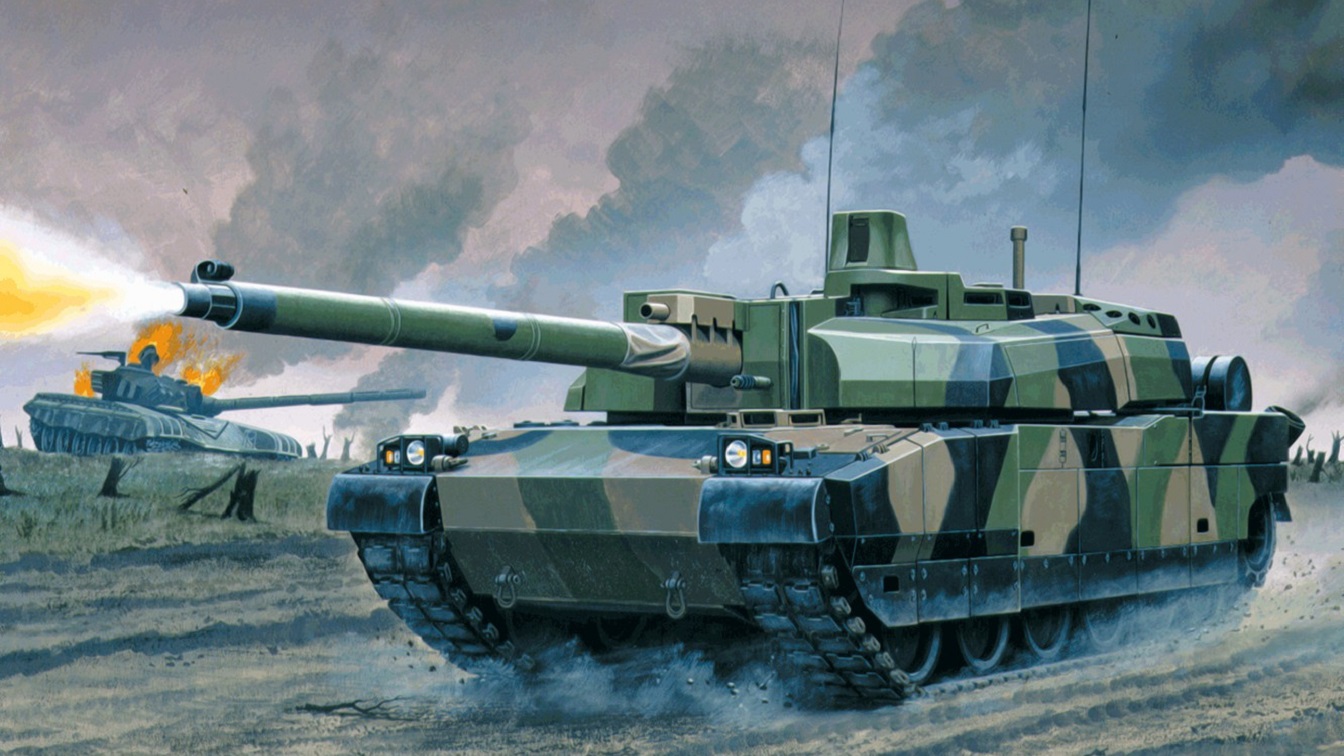
Leclerc Tank Artist Rendering.
What it beats the Abrams at is tempo and integration, putting more rounds downrange faster while plugging into a digital force network. The honest caveats are real, though: France built only around 200 Leclercs, the line is closed, and the tank has a reputation as maintenance-intensive, which limits its reach beyond the French Army.
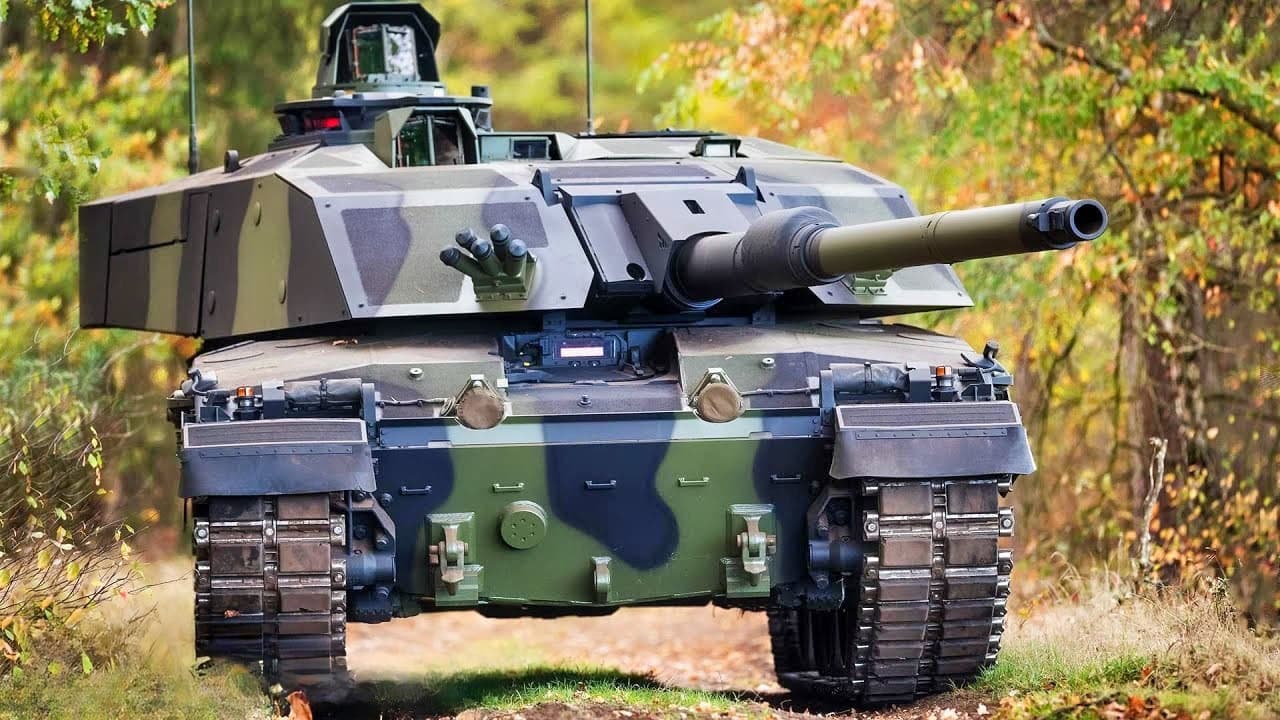
4. Challenger 3 (Britain): The New Gun and the Armor Legend
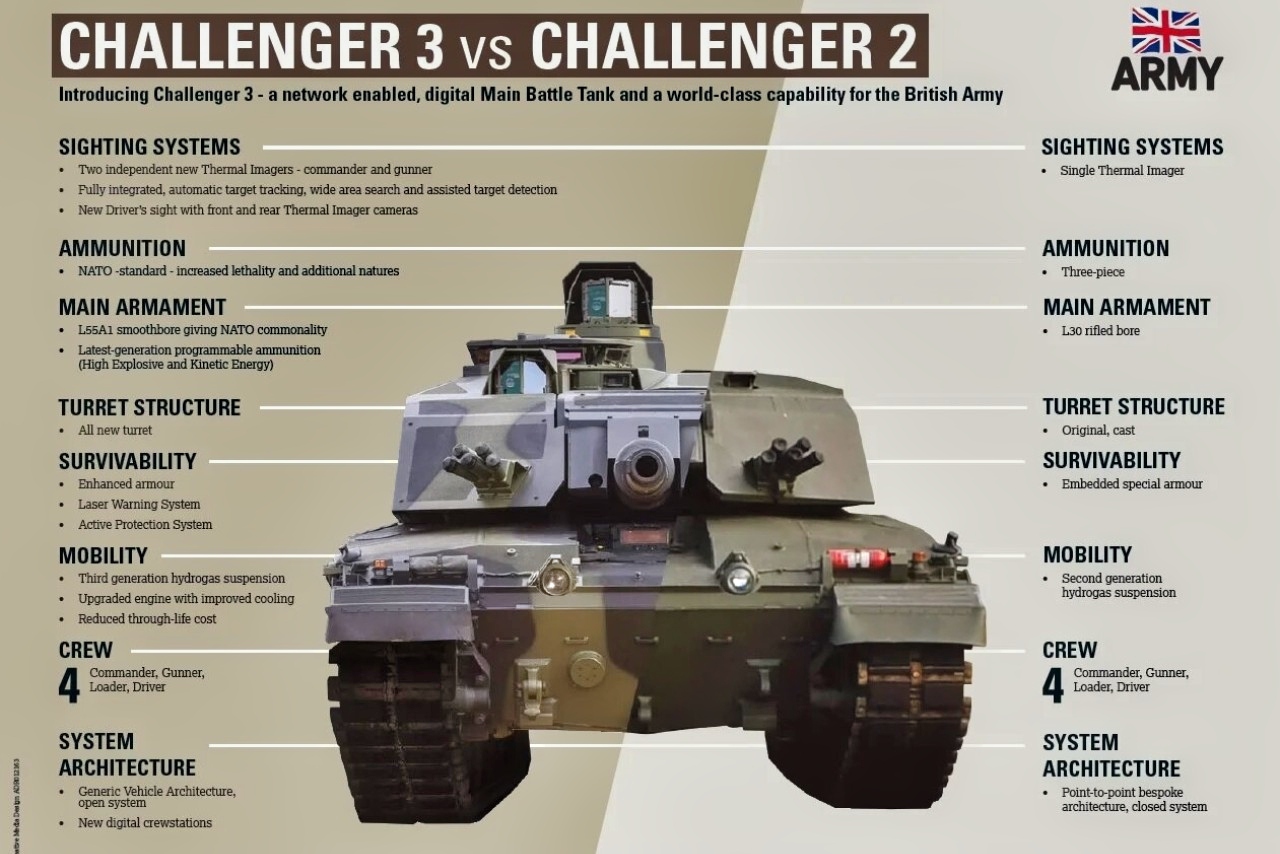
Britain’s entry is the newest and the most caveated. The Challenger 3 is a deep modernization of the Challenger 2 by Rheinmetall BAE Systems Land under an £800 million program to convert 148 tanks, fitting an entirely new turret around Rheinmetall’s L55A1 120mm smoothbore gun. That change matters because the Challenger 2 was the last major Western tank to use a rifled main gun, which locked it out of NATO’s standard smoothbore ammunition, and the Challenger 3 finally fixes that while adding the Trophy active protection system, new thermal optics, and a modern digital fire-control system. The tank completed its first crewed live firing in January 2026 and a round of battlefield mission trials through the spring.
Challenger 3 Tank. Image Credit: Creative Commons.
What it inherits from the Challenger 2 is a survivability reputation few tanks can claim: in the 2003 Iraq War, the Challenger 2 was the only tank in the conflict never to lose a crew member to enemy fire, and the Challenger 3 keeps that heavily protected lineage while adding a hard-kill defensive layer the older tank lacked. The blunt caveat is that it is not yet in service. Initial operating capability is targeted for 2027; British reporting in mid-2026 flagged delays tied to the turret and drivetrain, and it remains uncertain whether the full 148-tank fleet will be built. It ranks here on capability, not yet on fielded numbers.
3. Merkava Mk 4 Barak (Israel): The Survivor
No tank on this list has seen more recent combat than Israel’s Merkava, and the latest Merkava Mk 4 Barak, which entered service in 2023, is built around a philosophy the Abrams does not share: crew survival above all. Alone among top Western tanks, the Merkava mounts its engine in the front of the hull, using the powerpack itself as an additional layer of protection between incoming fire and the crew, with a rear door that allows the tank to resupply, evacuate the wounded, or extract its crew under cover. The Barak version adds an upgraded Trophy active protection system, 360-degree day-night camera coverage, a fighter-jet-style helmet-mounted display for the commander, and sensors that enable the tank to acquire and strike targets with high automation.
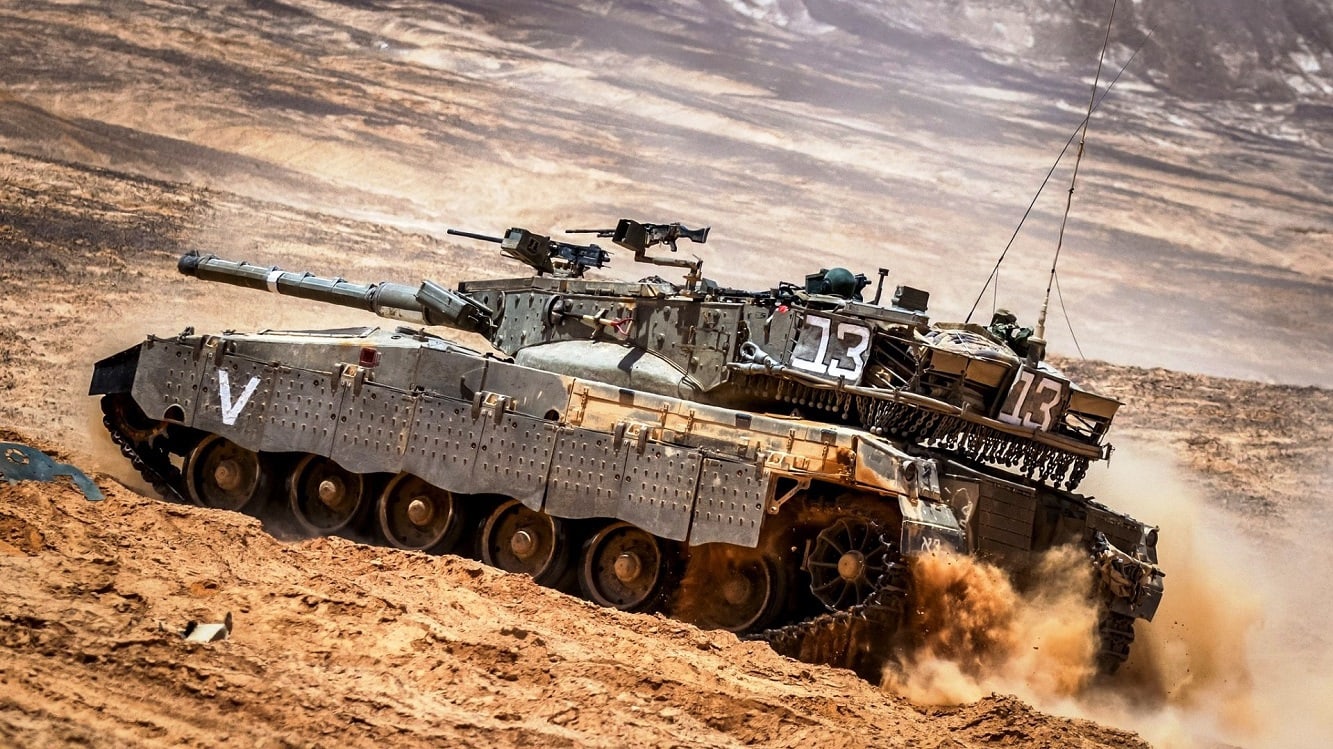
Merkava Tank. Image Credit: Creative Commons.
What it beats the Abrams at is proven active protection and survivability design. The Trophy system has intercepted anti-tank guided missiles and rockets in actual combat on Israeli tanks, real intercepts against real threats, which is why the Americans, British, and Germans have all adopted it. The caveat is sobering and current: Israel’s tanks have taken losses in Gaza and Lebanon, and Hezbollah has claimed to have destroyed Merkavas with both rockets and, in 2026, an FPV drone, a reminder that no tank, however well protected, is immune in the drone era.
2. K2 Black Panther (South Korea): The One You Can Actually Get
South Korea’s K2 Black Panther is the tank that proved availability is a capability. It is a genuinely advanced machine, with a 120mm L55-length smoothbore fed by an autoloader that cuts the crew to three, a hydropneumatic suspension that lets it kneel and lean, and an elaborate snorkel system that lets it ford rivers up to 4.1 meters deep, far beyond the roughly 2 meters the Abrams can manage. But its defining advantage is industrial. When Poland gave its old tanks to Ukraine and needed to rearm immediately, Hyundai Rotem could deliver K2s within months while Germany’s dormant Leopard line could not, winning a framework deal for up to 1,000 tanks.
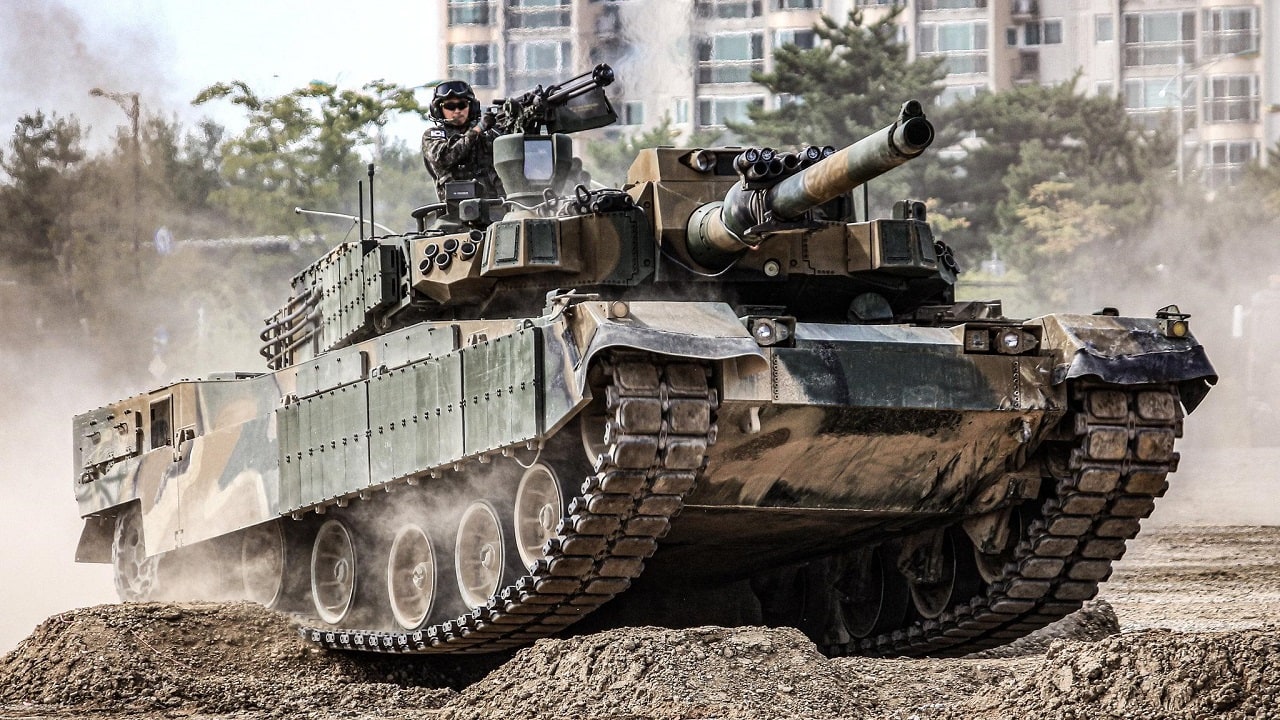
K2 Black Panther. Image Credit: Creative Commons.
What it beats the Abrams at is speed of production and delivery, plus deep-fording mobility and a modern autoloader. Poland has since deepened the deal, with 180 tanks delivered and hundreds of Polish-built K2PLs to follow, a locally produced variant gaining a hard-kill active protection system, anti-drone electronic warfare, and Trophy integration. With a next-generation K3 already in development, South Korea has built not just a great tank but a great tank you can buy at scale, which in a rearming world is its own kind of dominance.
1. Leopard 2A8 (Germany): The World’s Tank
The best tank not made in America is the newest version of the one the rest of the world already trusts. The Leopard 2A8 is the first main battle tank built from scratch for the German Army since 1992, and it carries the same L55A1 gun as the Challenger 3, firing advanced KE and programmable airburst rounds out to five kilometers, wrapped in new modular armor with dedicated protection against top-attack munitions and drones, and fitted with the Trophy active protection system. On raw capability, it is a match for anything on this list.
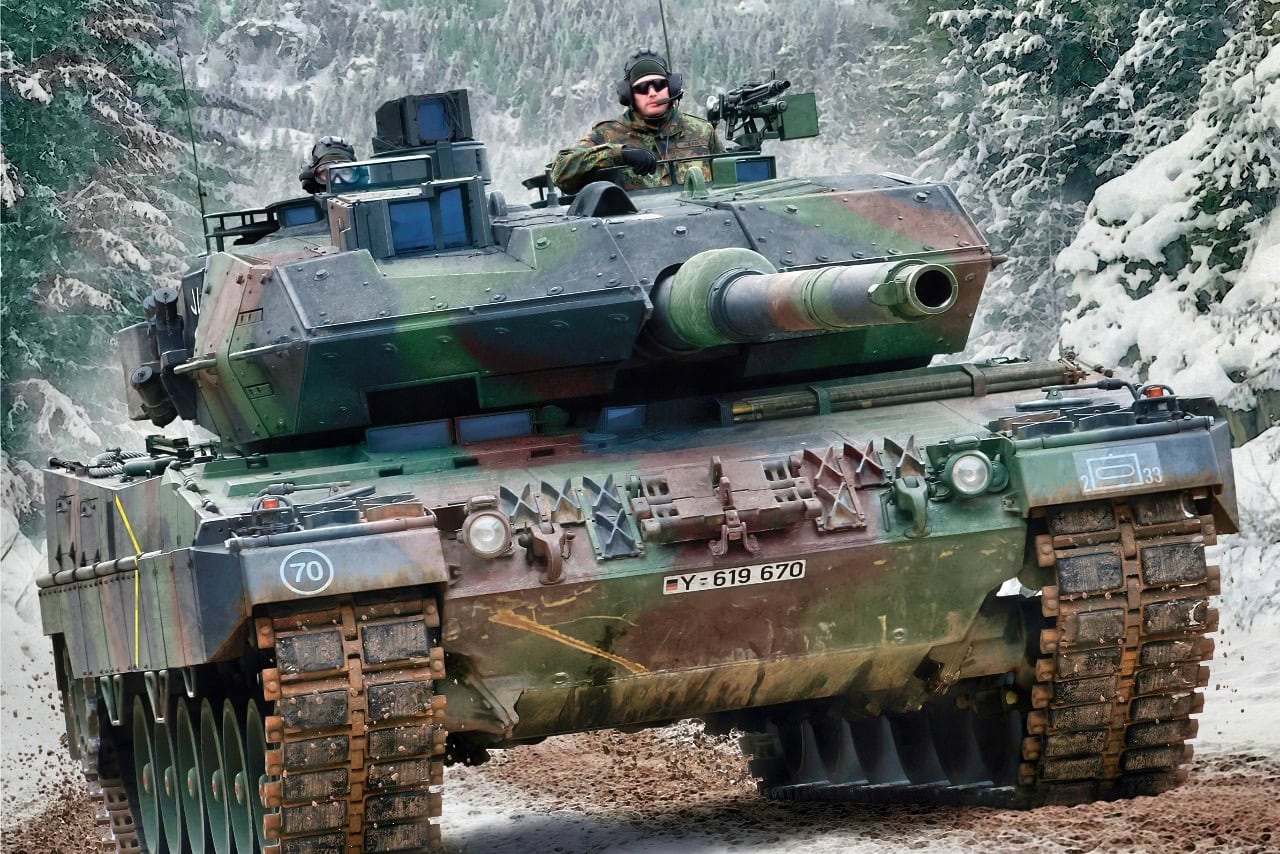
Leopard 2 Tank. Image Credit: Creative Commons.
Its true advantage, the one the Abrams cannot touch, is ubiquity. More than 20 nations operate the Leopard 2 family, and the 2A8 has already drawn roughly 350 orders across at least five NATO countries, including Germany, Norway, the Netherlands, Lithuania, Sweden, the Czech Republic, and Croatia. Norway became the first foreign operator when deliveries began in April 2026, and Germany’s first tanks will deploy to a permanent brigade in Lithuania. That footprint means shared logistics, shared training, shared spare parts, and shared ammunition across much of the alliance, a continent-wide standardization no other tank offers. In a coalition war, the tank that most of your allies already fly is worth more than a marginally better one that stands alone.
The Ones That Just Missed
The global field runs deeper than five. Turkey’s Altay is entering series production in 2026 as an indigenous design derived from K2 technology, and it may climb these rankings fast once fielded. Japan’s Type 10 is a lightweight, superbly networked tank held back only by its Japan-only service. China’s Type 99A is capable but operationally opaque, its true performance hard to judge. And Russia’s T-90M and much-hyped T-14 Armata are combat-experienced but have been repeatedly humbled in Ukraine, where drones and anti-tank missiles have exposed their vulnerabilities, a cautionary note about how any tank fares against modern threats.
That is the real lesson of ranking the non-American field. The rest of the world is not building an imitation, Abrams. Each of these tanks optimizes for something different: France for rate of fire, Israel for survivability, South Korea for availability, Germany for ubiquity, and Britain for protection. In an era when a cheap drone can kill an expensive tank, that diversity of design philosophy may matter more than which machine wins a spec-sheet duel.
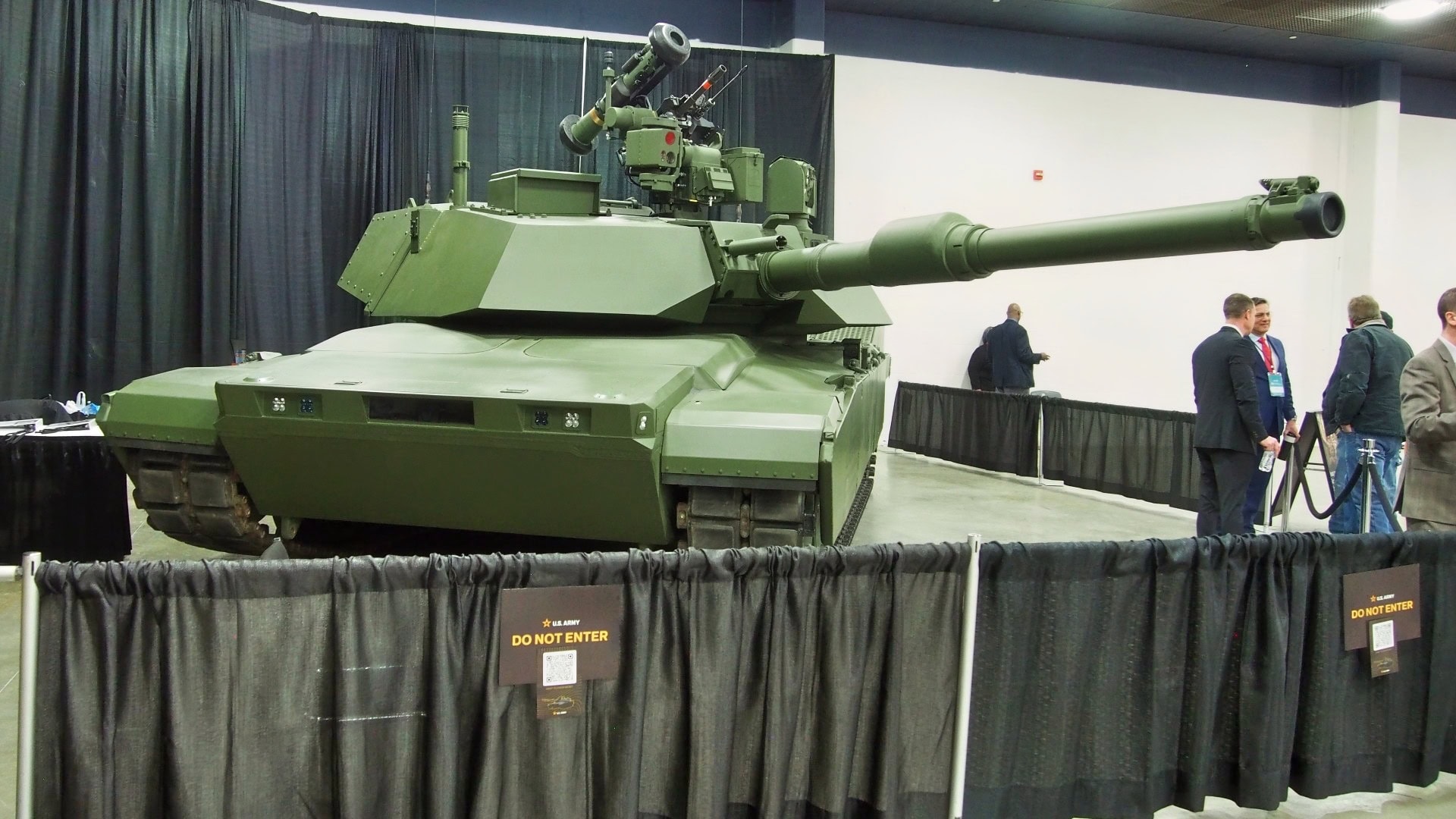
M1E3 Abrams Tank. Taken by 19FortyFive.com
The Abrams remains a superb tank, but it is far from the only great one, and the five above prove the rest of the world has plenty of answers of its own.
About the Author: Harry J. Kazianis
Harry J. Kazianis (@Grecianformula) was the former Senior Director of National Security Affairs at the Center for the National Interest (CFTNI), a foreign policy think tank founded by Richard Nixon based in Washington, DC. Harry has over a decade of experience in think tanks and national security publishing. His ideas have been published in the NY Times, The Washington Post, The Wall Street Journal, CNN, and many other outlets. He has held positions at CSIS, the Heritage Foundation, the University of Nottingham, and several other institutions related to national security research and studies. He is the former Executive Editor of the National Interest and the Diplomat. He holds a Master’s degree focusing on international affairs from Harvard University.