
Summary and Key Points: The tracking was a quiet triumph: Taiwan’s giant early-warning radar spotted a Chinese submarine-launched ballistic missile and handed the track to the United States. But the same episode exposes the vulnerability underneath. Taiwan has exactly one radar of this kind; it sits at coordinates everyone knows, and a nearly identical American radar was knocked out of action this year by an adversary far weaker than China. The eye that guards Taiwan is also a bullseye.
What We Know: The Tracking Success
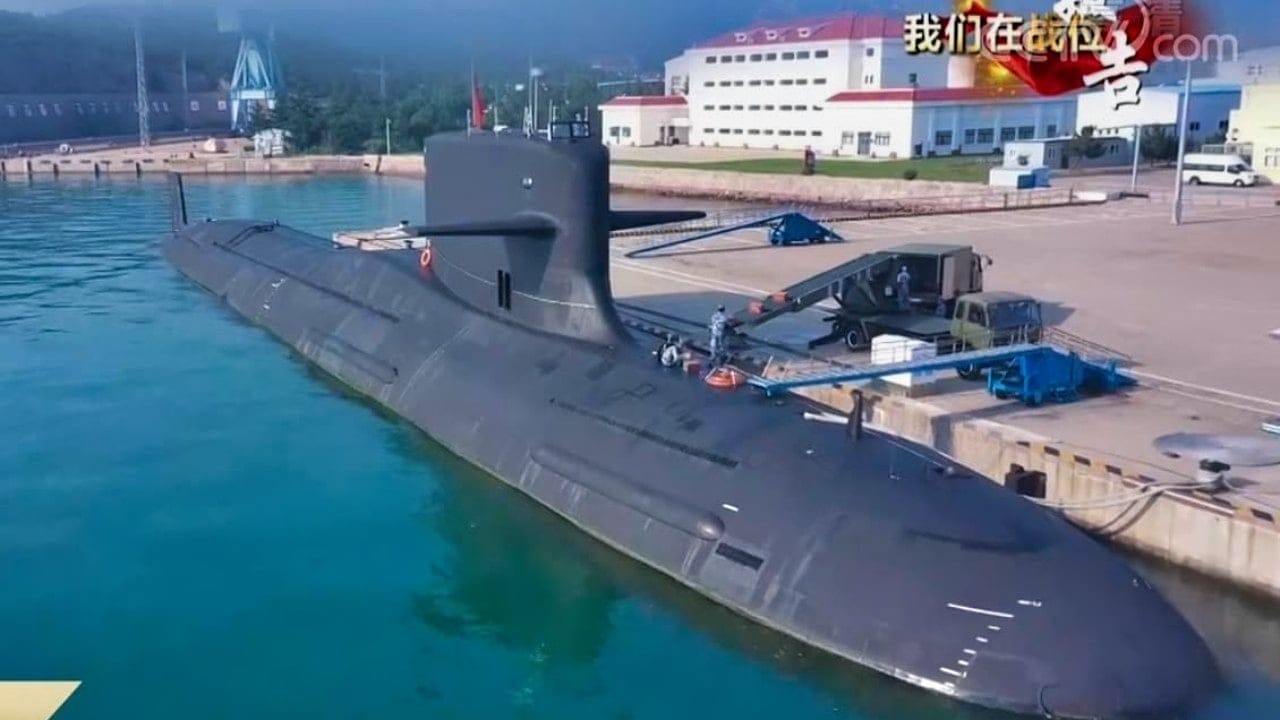
Type 093B Submarine from China. Image Credit: Screengrab.
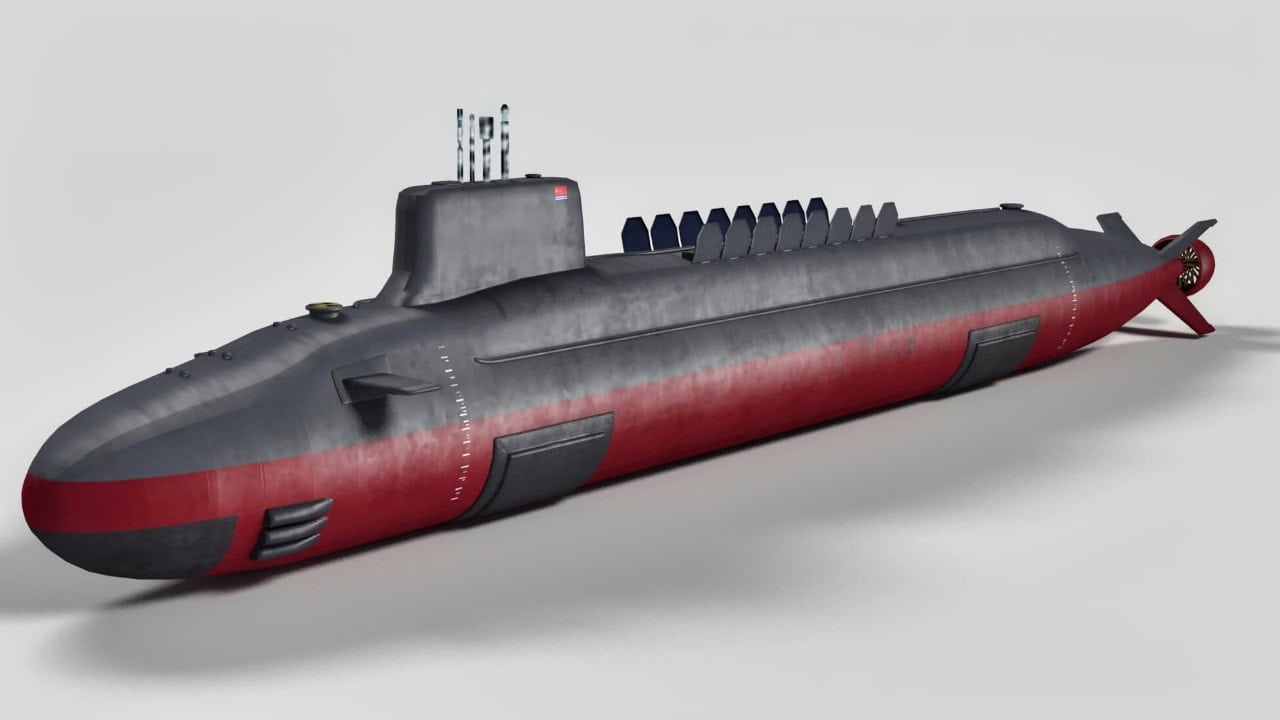
Earlier this month, Taiwan’s AN/FPS-115 Pave Paws radar at the Leshan station in the island’s north detected a Chinese ballistic missile shortly after it launched from a nuclear-powered submarine, tracking it through the opening phase of flight, according to a senior Taiwanese official cited by the South China Morning Post. Taipei then shared the data with the United States, which kept tracking the missile with satellites once it flew beyond Pave Paws’ reach. Analysts debated whether it was a JL-2 or the newer, longer-range JL-3; Taiwan’s national security chief posted a map tracing a flight over the northern Philippines to a splashdown in the South Pacific. Taiwan rarely reveals a detection like this at all, which made the disclosure itself a message to Beijing.
The Seeing is one of the most capable radars in Asia. Built by Raytheon and operational since 2013 at a cost of roughly $1.4 billion, the Pave Paws array sits at 2,600 meters and can spot a launch up to 3,100 miles away, a range that blankets all of mainland China and the South China Sea. It gives Taiwan something priceless in a missile-age war: roughly six minutes of warning of an incoming ballistic strike. It is the cornerstone of the island’s early-warning network.
It is also a single point of failure. Taiwan operates exactly one long-range radar of this class, having examined a second set and canceled the plan in 2012 after the first ran over budget and behind schedule. That leaves the island’s entire early-warning architecture resting on one enormous, fixed installation whose location is no secret, guarded only by point-defense guns at the site. In any Chinese assault, and the timing of one is fiercely debated, it would sit among the very first targets, alongside the airbases and fighters Taiwan needs to survive the opening hours. Taiwanese military experts have urged strengthening Leshan’s defenses, and the reason they said so this year is not hypothetical.
In late February, during Iran’s retaliatory strikes across the Gulf, an AN/FPS-132 early-warning radar in Qatar was hit, a member of the same Raytheon strategic-radar family as Taiwan’s and worth about $1.1 billion. Iran’s Revolutionary Guard claimed the radar was destroyed; commercial satellite imagery instead showed serious damage to a single array face, and Qatar confirmed only that the site had been targeted. The lesson landed regardless. The War Zone called the strikes on such radars “a wake-up call”: large fixed radars are fragile, nearly impossible to hide because their coordinates can be read off a map and their damage assessed from commercial satellites, and they cannot be relocated or quickly rebuilt. If Iran could damage one, China, which fields the largest missile force on earth and has thickened its air defenses across the Strait, could do far worse to Leshan on the opening morning of a war. The same warning has been sounded about American bases across the Pacific.
Which points to the episode’s real lesson, and it is not on the radar. It is the backstop. When the Chinese missile flew past Pave Paws’ horizon, the track did not go dark; U.S. satellites and long-range sensors picked it up and carried it onward. That layered, redundant architecture — space-based sensors above fixed ground radars, allied networks sharing a single picture — is what actually ensures Taiwan, far more than any one antenna on a mountain. The intelligence-sharing on display in this launch is both Taipei’s insurance and its dependency, and it is why wargames of a Taiwan fight keep concluding that survival comes from dispersal and resilience, not from prized single assets an enemy can map in advance.
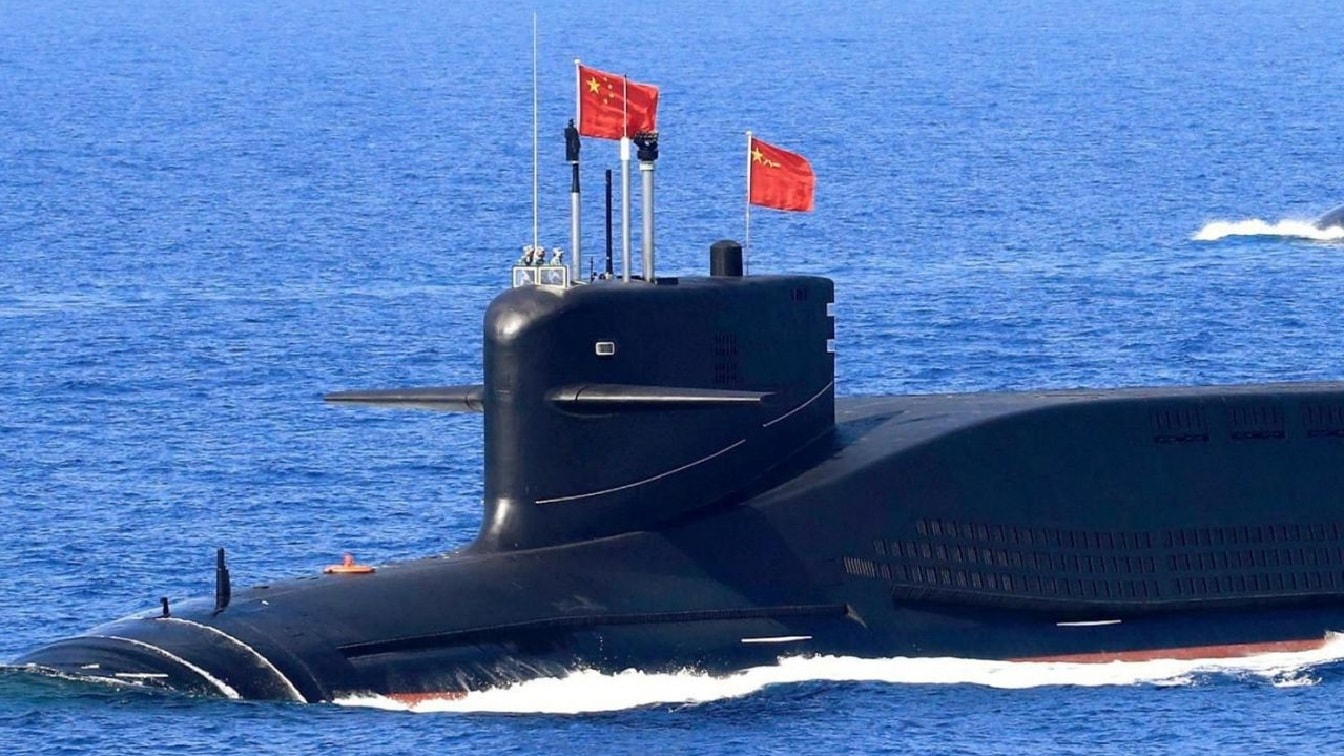
Chinese nuclear missile submarines. Image Credit: Creative Commons.
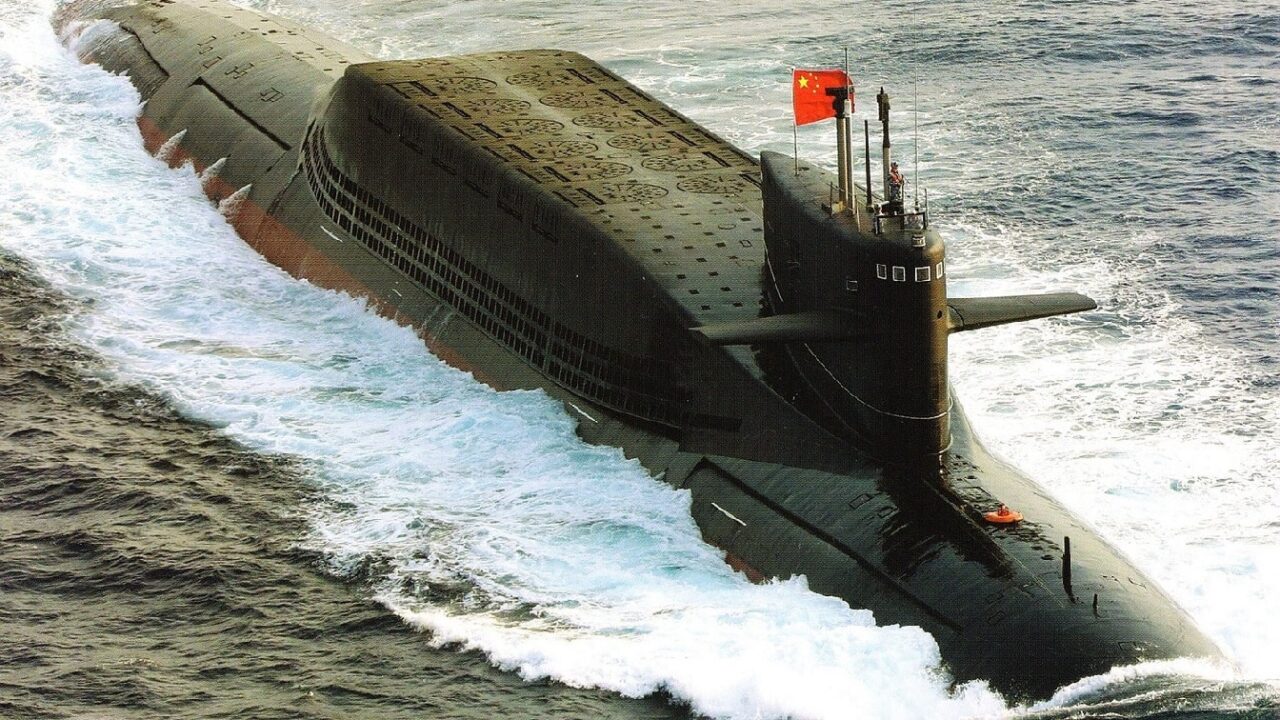
SSBN China Submarine. Image Credit: Creative Commons.
None of this means Leshan is doomed. The Qatar radar was damaged rather than disabled and kept partial function; redundancy and hardening genuinely raise the cost of blinding a defender; and one radar tracking one test launch in peacetime is a data point, not a wartime promise.
But the balance is plain enough. The Pave Paws did exactly what it was built to do this month, catching a missile the instant it broke the surface.
The trouble is that the war it exists to warn against would open by trying to destroy it, and this year, a weaker adversary than China proved that these radars can be hit.
MORE – The Navy Wants Nuclear Submarine Drone Motherships
About the Author: Harry J. Kazianis
Harry J. Kazianis (@Grecianformula) was the former Senior Director of National Security Affairs at the Center for the National Interest (CFTNI), a foreign policy think tank founded by Richard Nixon based in Washington, DC. Harry has over a decade of experience in think tanks and national security publishing. His ideas have been published in the NY Times, The Washington Post, The Wall Street Journal, CNN, and many other outlets worldwide. He has held positions at CSIS, the Heritage Foundation, the University of Nottingham, and several other institutions related to national security research and studies. He is the former Executive Editor of the National Interest and the Diplomat. He holds a Master’s degree focusing on international affairs from Harvard University.

