
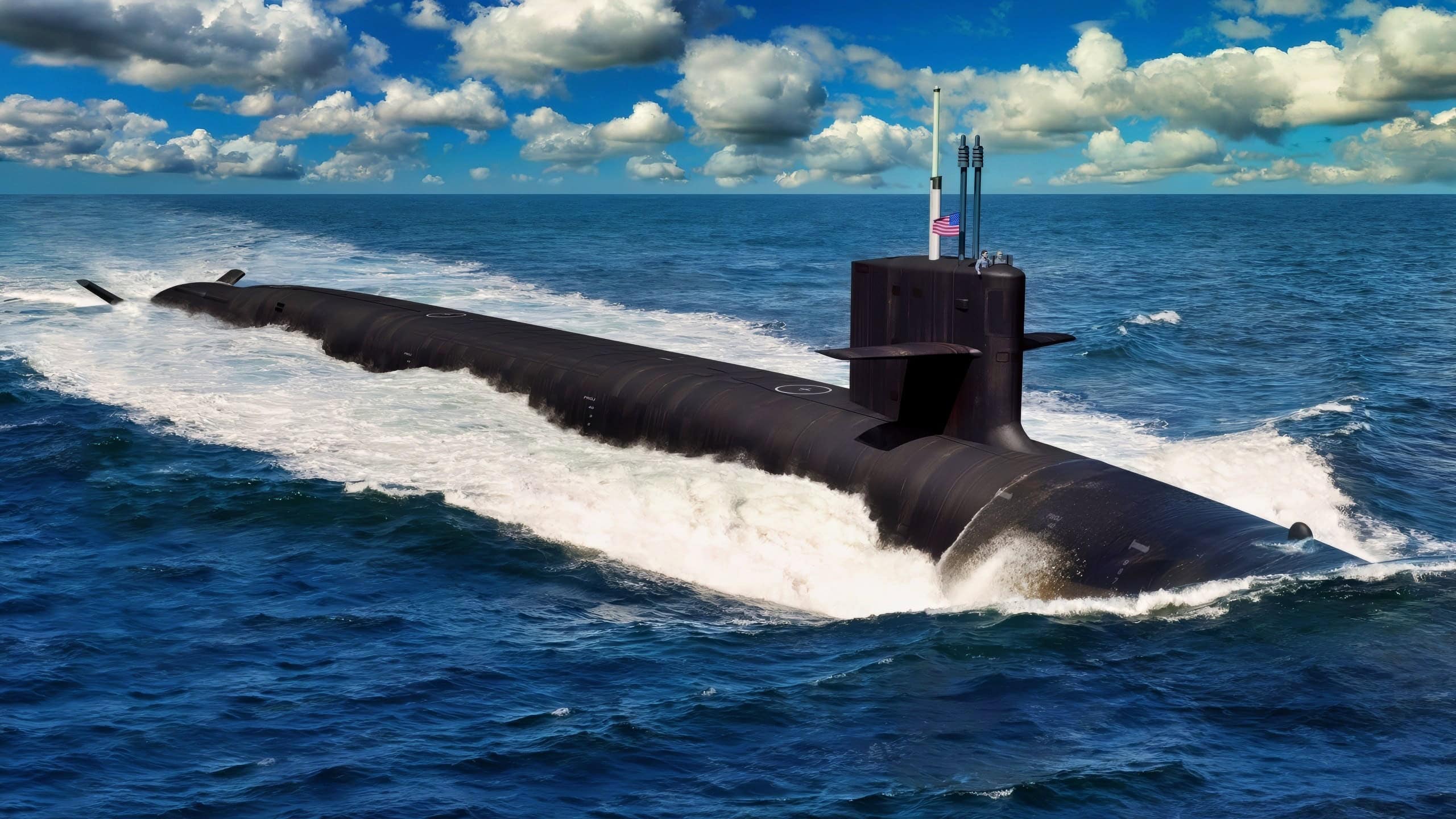
The Navy’s $130 Billion Columbia-Class Submarine Carries America’s Nuclear Deterrent. It’s Already Late, and There’s No Plan B: The Columbia-class ballistic missile submarine is the most expensive shipbuilding program in American history, and unlike the other costly programs that draw the same complaint, this one cannot be canceled, cut, or done on the cheap. It will carry roughly 70 percent of the nation’s deployed nuclear warheads, the most survivable leg of the triad. It is also running late, its lead boat delivering a year or more behind schedule into a window with almost no margin, because the aging submarines it replaces are running out of physical life on a clock no one can reset. The cost is staggering. The harder problem is that there is no alternative and no room for error.
The Columbia-Class Mistake?
Start with the money, and keep two very different numbers apart, because the difference is where most accounts of this program go wrong. To build the twelve boats, the Navy will spend close to $130 billion, a procurement figure that the Pentagon breaks down to about $126 billion for the submarines themselves and roughly $140 billion in total acquisition cost.
Over the full 42-year service life, once operations, maintenance, and sustainment are counted, the lifecycle bill approaches $350 billion. The lead boat alone, the future USS District of Columbia, is estimated at around $16 billion, and the Navy formally declared a schedule breach on the program in November 2024. No American shipbuilding effort has ever cost more.
What the Money Actually Buys
This is the crucial difference between Columbia and the other programs that draw fire for their price tags. A Ford-class carrier or a rebuilt Zumwalt destroyer invites a fair question about whether the capability justifies the cost. The Columbia does not, because it buys the entire sea-based nuclear deterrent. When deployed, ballistic missile submarines account for roughly 70 percent of America’s operationally deployed nuclear warheads, according to U.S. Strategic Command, and they are the one leg of the triad a rival cannot plausibly destroy in a first strike. Silos can be targeted.
Bombers can be caught on the ground. A boomer on patrol, hidden somewhere in the ocean, guarantees that the United States can always retaliate, which is the entire logic of deterrence. The twelve Columbias will replace fourteen Ohio-class boats, each carrying sixteen Trident II D5 missiles, displacing 21,000 tons submerged, and running on quiet electric-drive propulsion with a life-of-ship reactor that never needs mid-life refueling. That reactor is precisely why twelve new boats can do the work of fourteen older ones.
Late, and the Clock Is Not the Navy’s to Reset
The trouble is timing. The lead boat was supposed to be delivered in 2027, and it will not. The picture today is genuinely split, and the split is itself telling. General Dynamics, which assembles the boat at its Electric Boat yard, says it is “on a path to deliver that first boat by the end of 2028,” and the Navy’s program office has mounted an acceleration effort to hold that date. But the Navy’s own Fiscal Year 2027 budget submission still records a delivery of March 2029, with the second boat, the future USS Wisconsin, not arriving until April 2030. Government auditors land between the two and warn that the 2028 target holds only if planned construction improvements materialize, and slips toward March 2029 if they do not. The first deterrent patrol arrives around 2031 in every version.
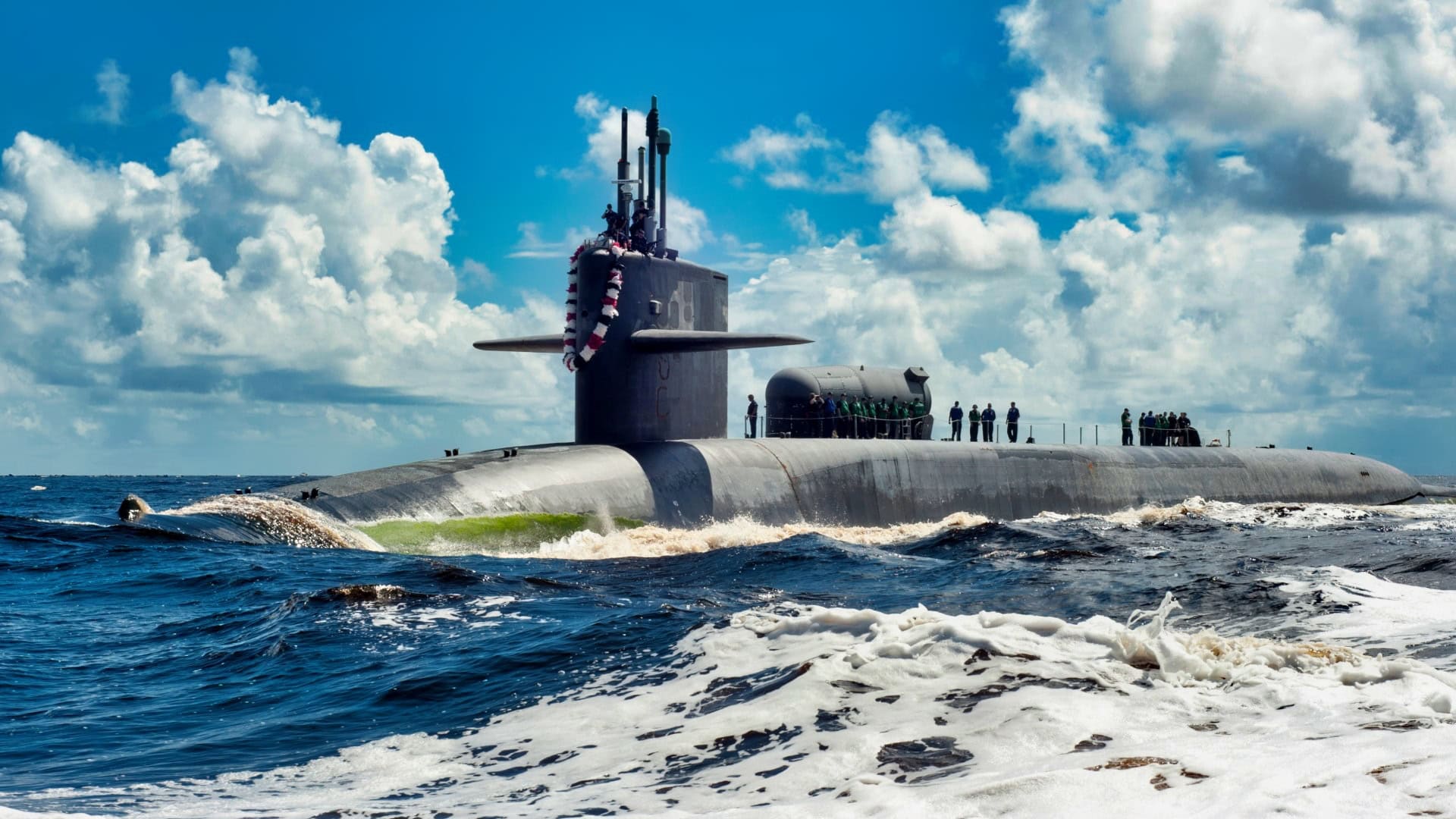
FERNANDINA BEACH, Fla. – The Ohio-class guided missile submarine USS Georgia (SSGN 729) transits the Saint Marys River July 15. Georgia returned to Kings Bay after spending more than a year forward deployed. (U.S. Navy photo by Mass Communication Specialist 1st Class(SW) James Kimber)
A year of slippage would be an ordinary story for most warships. It is not ordinary here, because the schedule is chained to something the Navy cannot control: the age of the Ohio-class boats. Those submarines, which entered service in the 1980s, were designed for a thirty-year life, and have already been stretched to forty-two years through mid-life refuelings and extensive overhaul work. They are now at the far end of that road, limited by hull fatigue, reactor core life, and obsolete systems, and further extension is impractical and risky. As the Government Accountability Office puts it, as the Ohio boats begin to retire in 2027, the lead Columbia must be ready for its first patrol in fiscal year 2031 “to avoid a gap in deterrence requirements.” That is the entire problem in one sentence. The replacement schedule and the retirement schedule were laid one on top of the other with almost no space between them, and every month the Columbia slips, that space shrinks.
Why There Is No Plan B
Ask what the Navy does if the Columbia slips further, and the answers run out quickly. It cannot simply keep the Ohio boats longer because they are aging out of nuclear and structural limits that no budget can erase. It cannot build the Columbia meaningfully faster, because the same shipyards are already failing to deliver Virginia-class attack submarines on time while building Ford-class carriers, besides, all drawing on an industrial base short an estimated 140,000 skilled workers, where the welders assembling the most important submarines in the fleet earn around $46,000 a year. The one genuine buffer is thin: USNI News has reported that the Navy is studying ways to extend the lives of five current Ohio-class boats to keep the force above its minimum, a stopgap that pushes already-exhausted hulls a little further. It is real, temporary, and not a plan so much as a way to buy months. There is no version in which a fresh option appears.
The program’s cost cannot be walled off from the rest of the fleet, either. Every dollar and every welder-hour spent recovering the Columbia’s schedule is one not spent on attack submarines, surface ships, or munitions, forcing admirals to choose between the nuclear deterrent and the conventional fleet needed to face China in the Pacific. A program built to guarantee national security is quietly straining the security around it, and the people closest to it know the stakes. The Navy stood up a dedicated submarine-production office in 2026 to stabilize the effort, and its leaders have described delivering the boat on time as a matter of urgent national necessity rather than ordinary program management.
A Watch Kept Unbroken Since 1960
The stakes are simple to state. Since the first Polaris patrol in 1960, the United States has kept at least one ballistic missile submarine on deterrent patrol at all times, an unbroken watch across sixty-five years and every crisis of the nuclear age. A gap in that posture, even a brief one, would be the first in its history, and it would arrive at the worst imaginable moment, with China sprinting toward nuclear parity, Russia keeping its modern Borei-class boomers on patrol, and North Korea fielding submarine-launched missiles that were unthinkable a decade ago. A visibly thinning American submarine deterrent would invite exactly the probing and miscalculation the force exists to prevent.
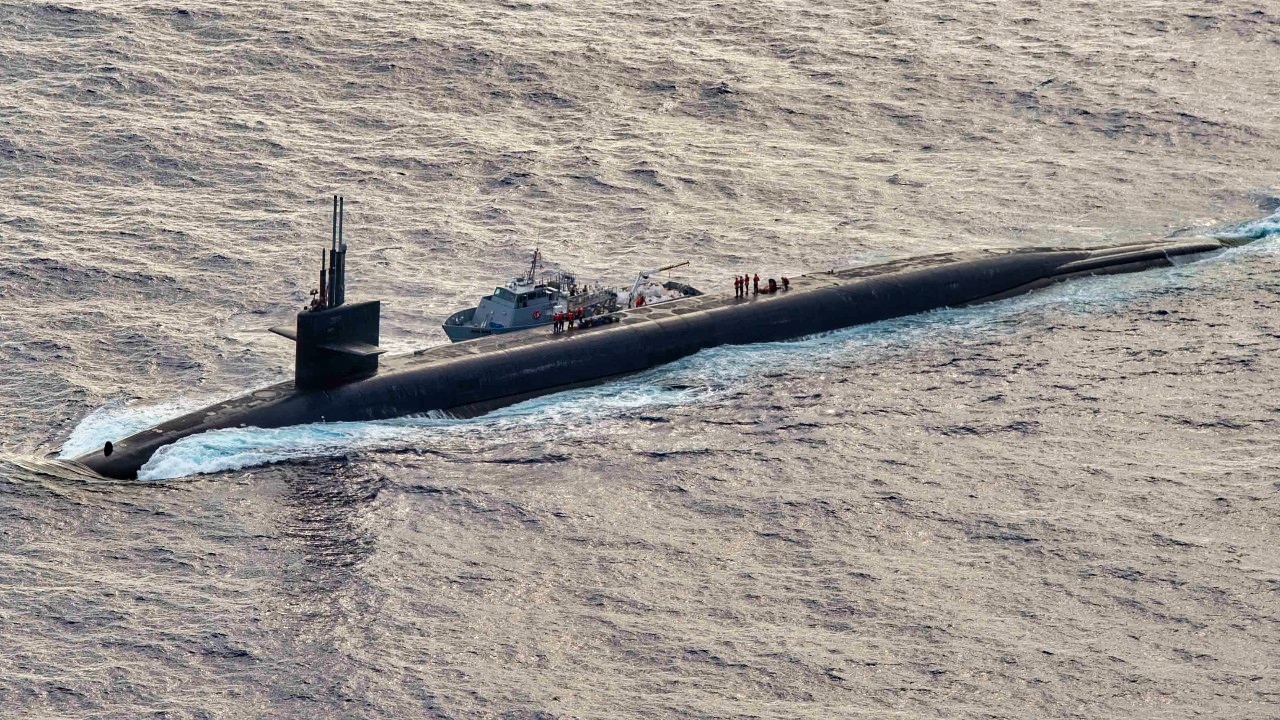
The Ohio-class ballistic missile submarine USS Kentucky (SSBN 737) sails alongside a submarine support vessel during a routine armed air escort (AAE) exercise, April 24, 2025. AAEs are designed to improve interoperability between our services, increasing lethalitythrough multi-domain integration.. Commander, Submarine Group (SUBGRU) 9, exercises administrative control authority for assigned submarine commands and units in the Pacific Northwest providing oversight for shipboard training, personnel, supply and material readiness of submarines and their crews. SUBGRU-9 is also responsible for nuclear submarines undergoing conversion or overhaul at Puget Sound Naval Shipyard in Bremerton, Washington. (U.S. Navy photo by Mass Communication Specialist 1st Class Ryan Riley)

The Ohio-class guided-missile submarine USS Florida (SSGN 728) departs Naval Submarine Base Kings Bay. Florida will perform routine operations while at sea. (U.S. Navy photo by Mass Communication Specialist 1st Class James Kimber/Released)
The Case for Calm
The honest counterweight matters because the picture is not all alarm. By the most recent accounts, the program is recovering. Under an acceleration plan, the shipbuilders delivered all 26 modules of the lead boat to the final assembly yard, and the boat is now roughly 65 percent complete, with the Navy driving toward the 2028 date. General Dynamics reports steadying supplier performance and real progress over the past year. Congress has continued to fund the program fully, and the Congressional Research Service judges that even the temporary dip to ten or eleven available boats through the early 2040s is acceptable, because all of those boats will be operational rather than tied up in overhaul. Unlike the Zumwalt or the troubled surface programs, no serious analyst argues that the Columbia is the wrong ship or wasted money. It is the right boat for the Navy’s most important job, and the comeback in its construction is real. The only question is whether it arrives in time.
That is the tension the enormous price tag obscures. The Columbia is not a scandal of firepower-per-dollar or a capability chasing a mission. It is the opposite: a program the country cannot do without, cannot cancel, cannot accelerate much, and cannot afford to see slip, being built by an industrial base that is slipping across nearly everything it touches. The recovery may well hold.
But a $130 billion bet on the survival of the nation’s deterrent has been scheduled with no margin left, against a clock the Navy does not control, with no fallback if the bet goes wrong. The most expensive warship program in American history has to be on time. It already is not.
About the Author: Harry J. Kazianis
Harry J. Kazianis (@Grecianformula) was the former Senior Director of National Security Affairs at the Center for the National Interest (CFTNI), a foreign policy think tank founded by Richard Nixon based in Washington, DC. Harry has over a decade of experience in think tanks and national security publishing. His ideas have been published in the NY Times, The Washington Post, The Wall Street Journal, CNN, and many other outlets. He has held positions at CSIS, the Heritage Foundation, the University of Nottingham, and several other institutions related to national security research and studies. He is the former Executive Editor of the National Interest and the Diplomat. He holds a Master’s degree focusing on international affairs from Harvard University.