
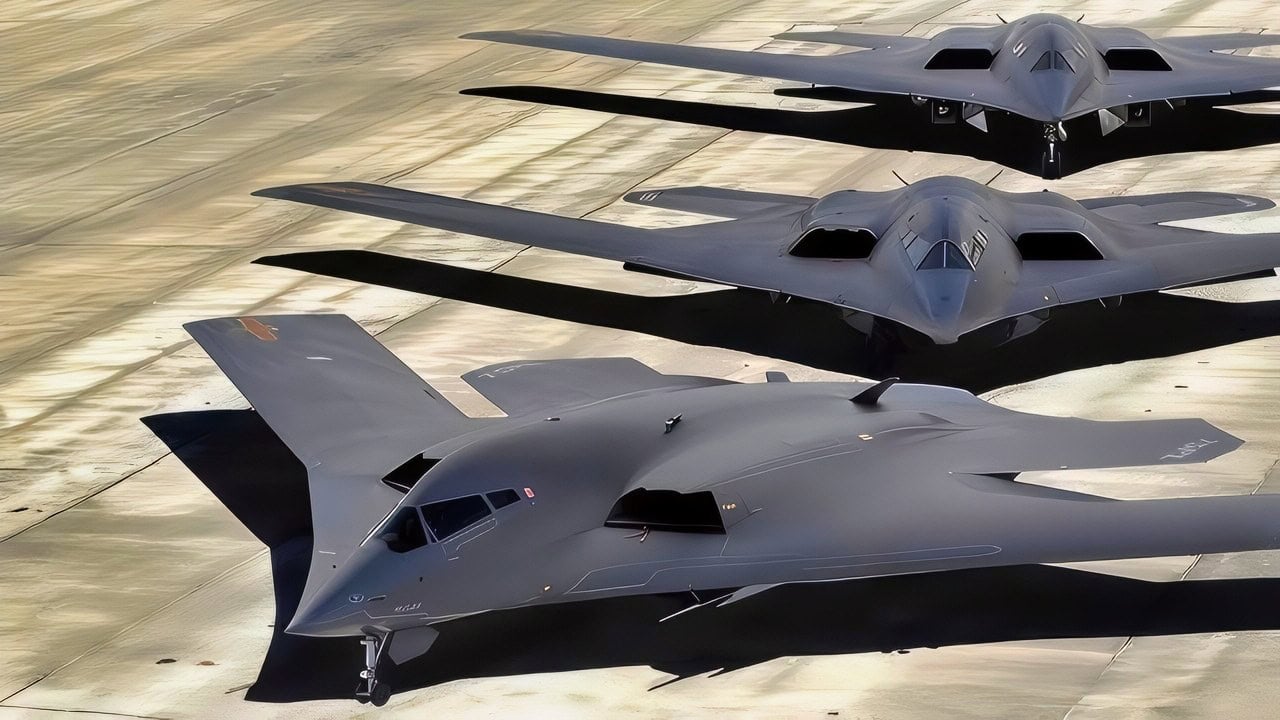
Every debate about China’s H-20 stealth bomber asks the same question: when will it fly, and can Xi’an build it? Those are the wrong questions, or at least the lesser ones. A penetrating strategic bomber is not an airplane so much as a system, and the least glamorous part of that system, the aerial tanker fleet that turns a regional aircraft into an intercontinental one, is where China’s numbers collapse. The United States is legally required to keep more than 500 tankers. China operates roughly 35, none of which carries the high-flow refueling boom that heavy bombers drink from. Until that changes, the H-20’s most impressive range figures remain on paper, and the map in the renderings is larger than the map of China it can actually reach.
The bomber itself has been dissected endlessly, including on this site, where the engineering case has been made in detail: the engines, stealth materials, and production tooling Xi’an has not yet mastered, a program that has missed one unveiling window after another, and a design philosophy that amounts to attempting forty years of American stealth-bomber evolution in a single leap. All of that concerns whether the airplane gets built. Assume for a moment that it does, that every engineering hurdle falls and a flying-wing bomber rolls out tomorrow. It would still be tethered to a refueling fleet that cannot support the missions for which the aircraft was designed.
The Fleet Behind the Fleet
Start with the raw numbers, because they are not close. Congress has written American tanker strength into law: the FY2026 defense authorization raised the mandatory minimum refueling fleet to 502 aircraft by 2028, on top of a force that today fields roughly 376 KC-135 Stratotankers plus a growing fleet of more than a hundred KC-46s. Lawmakers guard those numbers so jealously that recent legislation has barred KC-135 retirements and ordered mothballed KC-10s kept in flyable condition. Washington treats the tanker force as indispensable to global airpower, because it is.
China’s entire aerial refueling force, by comparison, numbers approximately 35 aircraft: three elderly Il-78 tankers bought secondhand from Ukraine, a modest fleet of H-6U and H-6DU bomber conversions, and the newer YY-20A tankers derived from the Y-20 transport. The quality gap inside that small number is severe. The H-6U conversions, built on the same 1950s Tu-16 airframe as China’s bombers, offload just 18.6 tons of fuel, while the YY-20A carries roughly 90 tons, more than four times as much. The YY-20A is a genuinely modern tanker, and it is genuinely scarce: Janes counted a single example in service in early 2022, four by late that year, and at least eight within another few months, with open-source estimates today ranging from a dozen to a few dozen airframes. Even the most generous reading leaves China’s tanker force at a fraction of America’s, supporting an air force of more than three thousand aircraft. The arithmetic is fourteen to one, and it favors the country that already has stealth bombers.
The Hose Problem
The mismatch runs deeper than counting, into the plumbing. Every aerial refueling aircraft China operates passes fuel the same way, through flexible hoses trailing basket-shaped drogues that a receiving aircraft plugs into with a probe. The YY-20A carries hose pods under each wing and a centerline drogue unit; the H-6U and the Il-78s are hose-and-drogue machines as well. What China has never publicly fielded is a flying-boom tanker, the rigid, operator-steered pipe that plugs into a receptacle and passes fuel several times faster than any hose can. That distinction is not trivia. It is the reason every large American aircraft, from the B-52 to the C-17 to the B-2 stealth bomber, refuels through a boom: filling a bomber’s tanks through a hose is so slow that the geometry of a combat mission stops working.
That leaves the H-20’s designers at a fork with no good exit. A fixed refueling probe on a flying wing would compromise the radar signature the entire airframe is designed to achieve. A retractable probe adds a door, a mechanism, and a maintenance burden to a stealth surface, and still condemns the bomber to sipping fuel at those rates. A boom receptacle, the American solution, requires a boom-equipped tanker that does not exist in Chinese service, and whichever path Beijing chooses then requires a flight-test and certification campaign to clear the bomber behind each tanker type it will use.
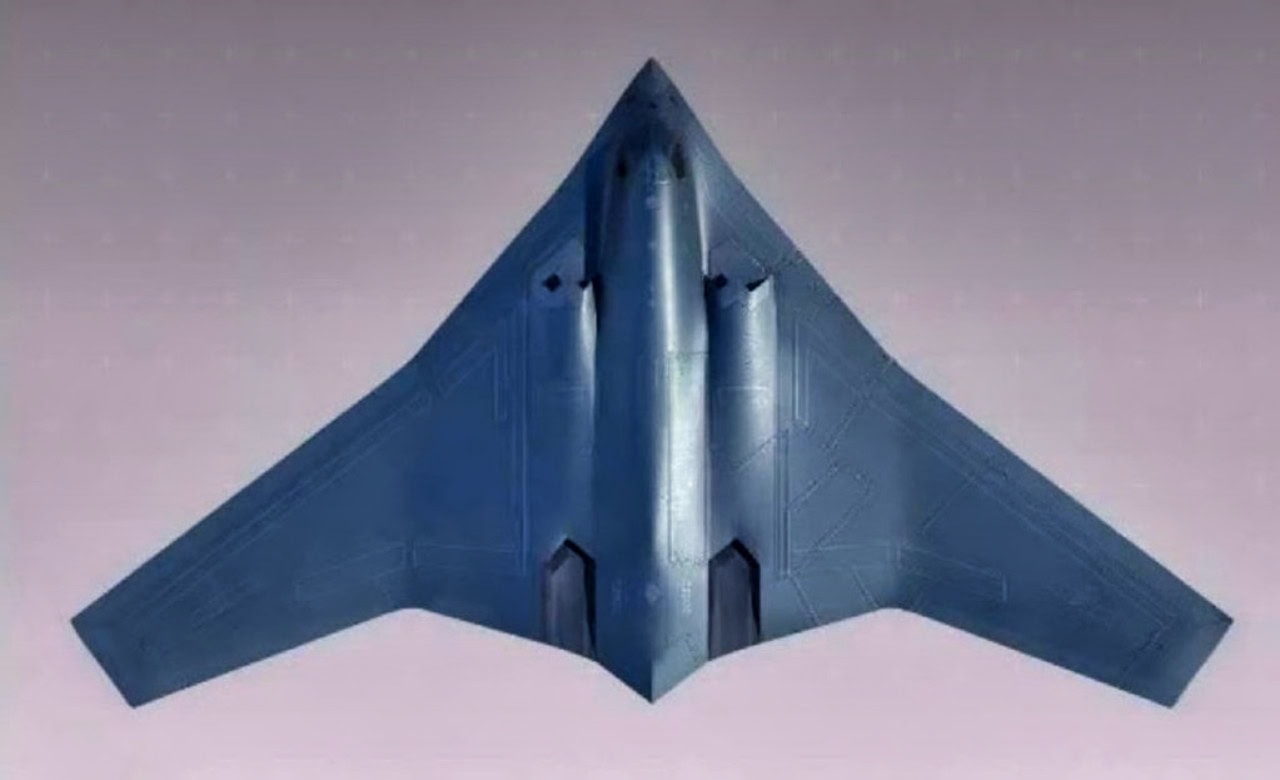
H-20 Bomber from China Artist Rendition.
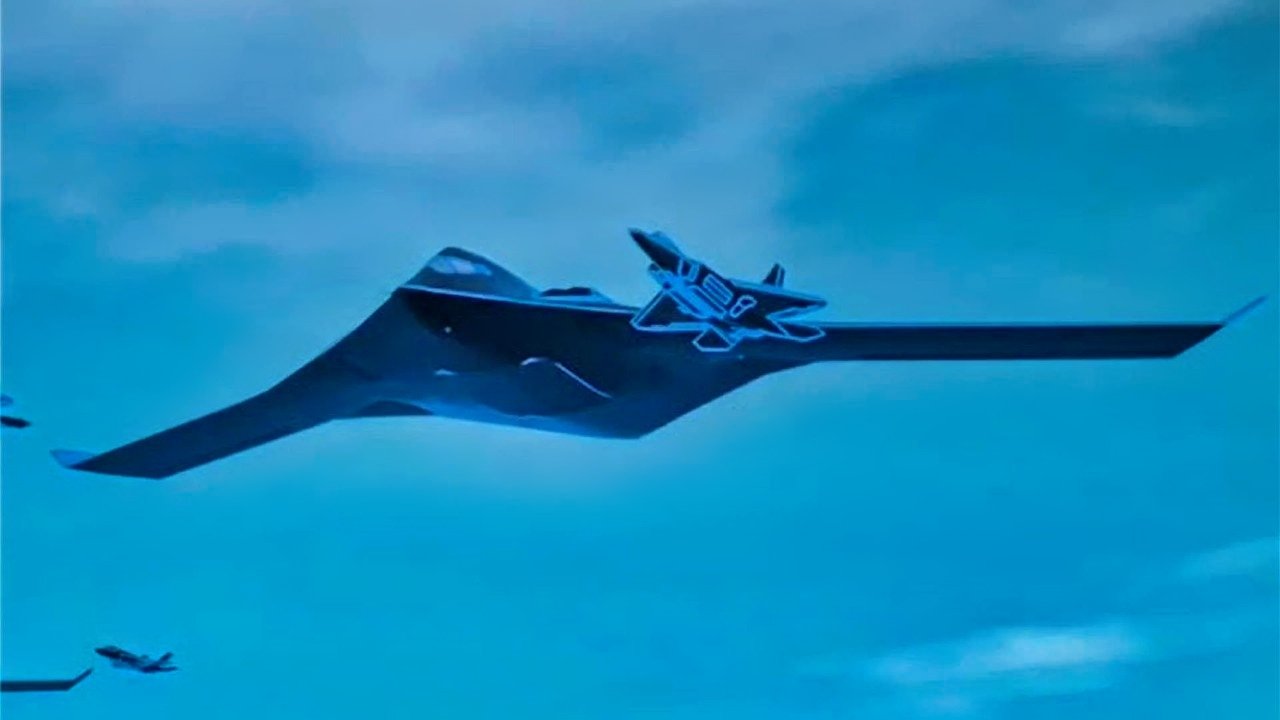
H-20 Bomber Image. Image Credit X Screeenshot.
The casual assumption that China can simply refuel its new bomber from the tankers it already owns skips past all of this. Having tankers and being able to tank a stealth flying wing are two different capabilities, and China has demonstrated only the first.
The Geometry of the Pacific
Here, honesty requires drawing the map carefully, because the tanker problem does not bite everywhere equally. The H-20’s unrefueled range is estimated at 8,500 kilometers in Pentagon assessments, with some expert projections running past 10,000, and even the conservative figure covers the missions that matter most to Beijing. Guam lies roughly 3,000 kilometers from the Chinese coast; the first island chain, Japan, the Philippines, and the reach that would reshape the Indo-Pacific balance all fall comfortably within an 8,500-kilometer range for an aircraft flying from deep inland bases, no tanker required. That is presumably why China chose a large flying wing in the first place, and any honest account makes that plain.
The tanker problem begins where the advertising does. Hawaii sits roughly 8,500 kilometers from mainland China, which, at the optimistic end of the range, makes it a one-way trip. The continental United States lies far beyond that. Sustained operations, the ability to hold targets at risk day after day rather than mounting a single dramatic sortie, multiply the fuel demand further.
Every mission profile that justifies the word “intercontinental,” the word that separates the H-20 from the missile force China already fields in the thousands, runs through a tanker bridge that is 35 aircraft thin. The Pentagon itself makes the connection explicit: its annual China report ties the Y-20U tanker directly to the PLAAF’s ability to “operate beyond the First Island Chain” and to support a more robust air leg of a Chinese nuclear triad that includes the H-20. Washington’s analysts already treat the tankers as part of the bomber’s equation. The commentary around the bomber rarely does.
Tankers Are Targets
There is a second layer, and the United States has been kind enough to demonstrate it. American war games of a Pacific conflict consistently point to the vulnerability of large tankers concentrated at a handful of airfields, where strikes on hubs like Andersen and Kadena would push refueling orbits hundreds or thousands of miles farther from the fight. The Air Force is worried enough to pursue a next-generation survivable tanker for the mid-2030s, described in congressional research as an aircraft with stealth and defensive capabilities capable of operating in contested airspace.
Read that carefully: the country with 500 tankers, hardened bases, and seventy years of refueling experience judges its non-stealthy tankers too vulnerable for a modern Pacific war.
Now apply the same logic in reverse. For the H-20 to reach beyond Guam, a Chinese tanker, a large, radar-bright, defenseless aircraft, has to fly east, past the first island chain, into airspace patrolled by American and allied fighters and swept by long-range missiles, and loiter there predictably while the bomber drinks. The stealth bomber may be hard to find.
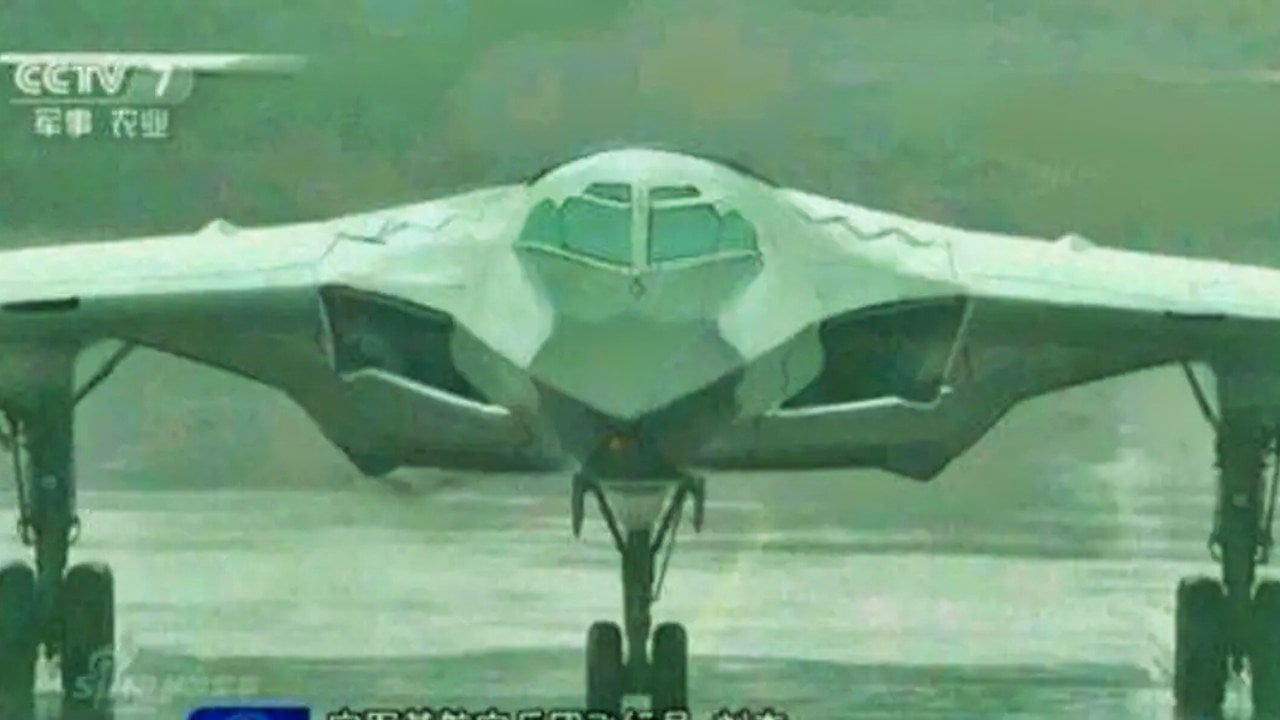
Image Credit of H-20 Bomber: Creative Commons.
The tanker that extends it is not, and killing the tanker converts the intercontinental bomber back into a regional one without ever detecting the bomber itself. Any American planner looking at a future H-20 raid will see the same soft spot American planners already see in their own force, except China’s version of that soft spot is thirty-five aircraft with no survivable replacement, even on paper.
Beijing Knows
None of this is lost on China, and the honest counterweight is that the gap is closing from the demand side.
The YY-20A fleet is growing off a hot Y-20 production line, and the newest variant, the Y-20B with domestic WS-20 engines, is assessed by analysts as a multi-role tanker-transport, suggesting Beijing intends to field refueling capacity in real numbers rather than as a boutique capability. Some projections have the PLAAF fielding scores of tankers by the early 2030s, conveniently aligned with the H-20’s perpetually receding service date. China is building the enabling fleet; it simply has not built it yet, and a boom-equipped variant, the piece that a receptacle-equipped stealth bomber would actually need, remains unseen.
Which returns the story to its proper size. The H-20, whenever it appears, will be a regional strike aircraft of genuine consequence from the day it enters service, and against Guam and the first island chain, it needs no tanker at all.
What it will not be, for years after its debut, is the intercontinental, Hawaii-threatening, America-reaching bomber of the promotional imagination, because that aircraft requires a refueling armada China has barely begun to assemble and a refueling method China has never demonstrated.
The question everyone asks about the H-20 is when it will fly. The question that decides what it can do is quieter: watch the tanker line at Xi’an, not the bomber unveiling, because reach is a system, and the system is still missing its middle.
About the Author: Harry J. Kazianis
Harry J. Kazianis (@Grecianformula) was the former Senior Director of National Security Affairs at the Center for the National Interest (CFTNI), a foreign policy think tank founded by Richard Nixon based in Washington, DC. Harry has over a decade of experience in think tanks and national security publishing. His ideas have been published in the NY Times, The Washington Post, The Wall Street Journal, CNN, and many other outlets. He has held positions at CSIS, the Heritage Foundation, the University of Nottingham, and several other institutions related to national security research and studies. He is the former Executive Editor of the National Interest and the Diplomat. He holds a Master’s degree focusing on international affairs from Harvard University.

