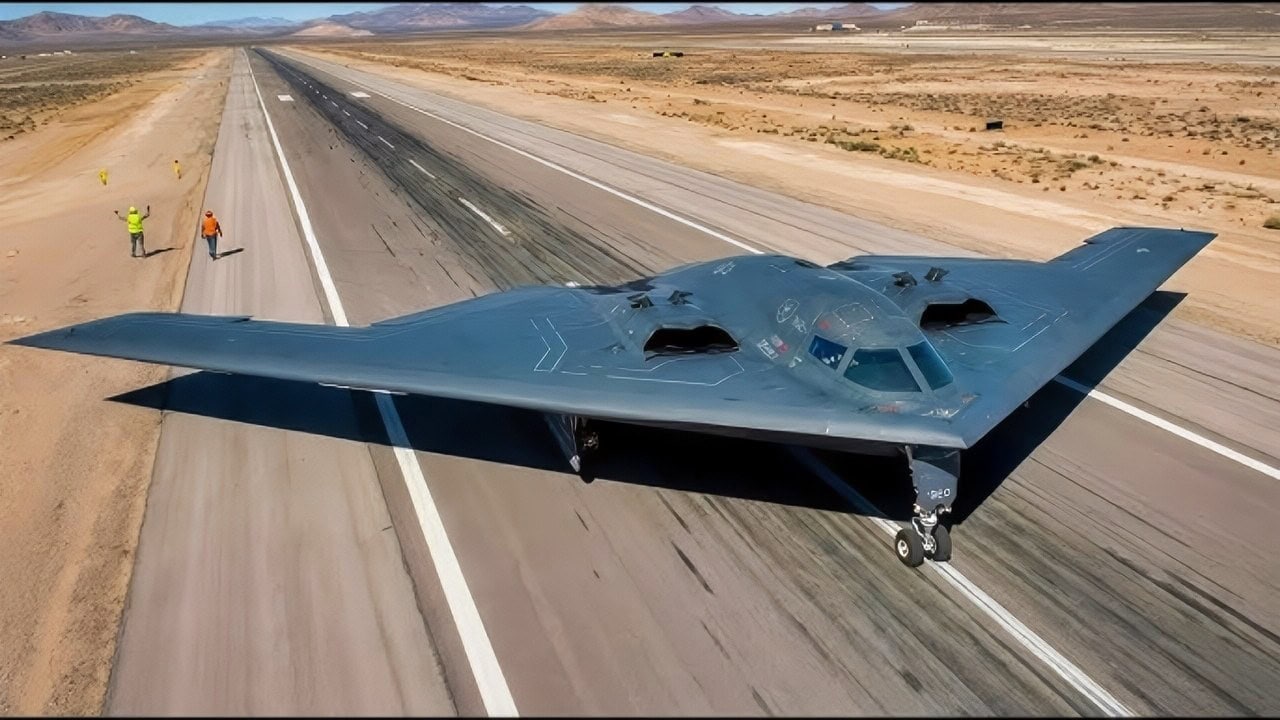
Summary and Key Points: While the Chengdu J-36 fighter program has successfully flown four prototypes in record time, the Xi’an H-20 stealth bomber remains trapped in a development “freeze.”
-Revealed in 2016, the project has missed multiple high-profile unveiling windows, with the official timeline now pushed to the 2030s.
-General Stephen Davis of Air Force Global Strike Command describes the PLAAF as a “regional bomber force at best,” noting the massive engineering gap between Chinese designs and U.S. low-observable (LO) platforms.
-Recent tech leaks are increasingly viewed as political theater to mask President Xi’s ongoing military purges.
Frozen in Time: Why the Xi’an H-20 Hasn’t Flown a Decade After First Mentions
If imitation is the most sincere form of flattery, then China’s defense-industrial enterprises succeed in flattering about half the world.
The tendency of Beijing’s advanced weapons platforms to appear to be partially or completely reverse-engineered analogues of designs from other countries is well known.
Many analysts are still waiting to see a genuine, indigenous Chinese invention rather than a copy of someone else’s kit.
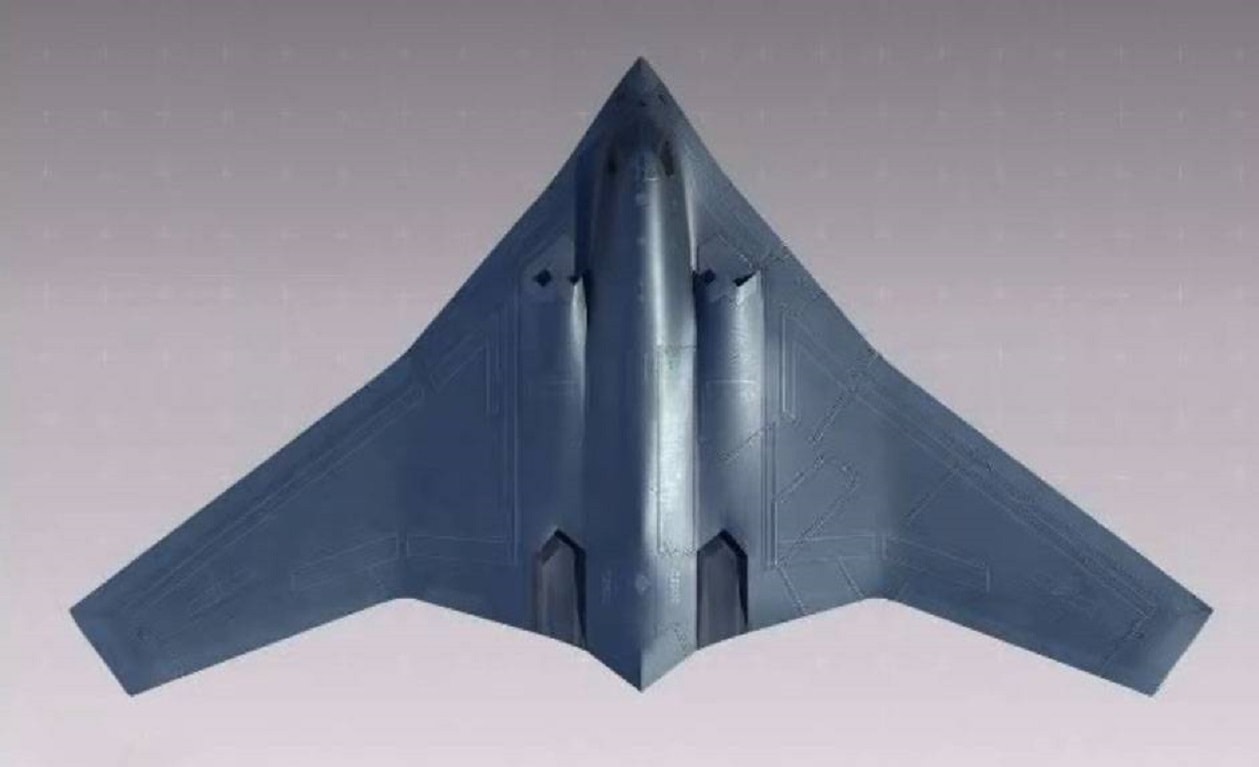
Computer-Generated Image of China’s Xian H-20 Stealth Bomber. Image Credit: Creative Commons.
One of those imitations is the Chinese effort to develop a “flying wing” configuration stealth bomber that would closely resemble the designs of the B-2 Spirit and B-21 Raider.
That Chinese aircraft under development has become known as the H-20 and is supposedly a product of the Xi’an Aerospace Corporation.
For decades, this enterprise has been producing the People’s Liberation Army Air Force’s (PLAAF) only long-range bomber, the H-6.
Not surprisingly, the H-6 itself is not a homegrown Chinese design. Instead, it is a license-built version of the old Tupolev Tu-16 from the Soviet era.
Stealth Bomber Dreams for China: Very Long in Coming
But the H-20 program seems to be making very little progress toward a flying prototype. By comparison, Chinese fighter aircraft programs are developing on timelines that generally put comparable U.S. efforts to shame.
The Chengdu J-36 sixth-generation fighter, which put four prototypes in the air within a span of slightly more than a year, is a perfect example. As a report from December 2025 observes, this program shows Beijing’s “leapfrogging approach may be [due to] China’s belief that disruptive technology can offset conventional disadvantages, akin to ‘overtaking on a curve’– investment in radical innovation and bypassing legacy systems can pioneer new operational concepts, reshape the nature of conflict to its advantage and ultimately bring strategic superiority.”
But the H-20 is not making major leaps in technological development—it seems to be frozen in time. The existence of the aircraft was revealed a decade ago in 2016. Two years later, in 2018, Chinese military spokesmen stated the program was making “great progress,” but without releasing any specific details.
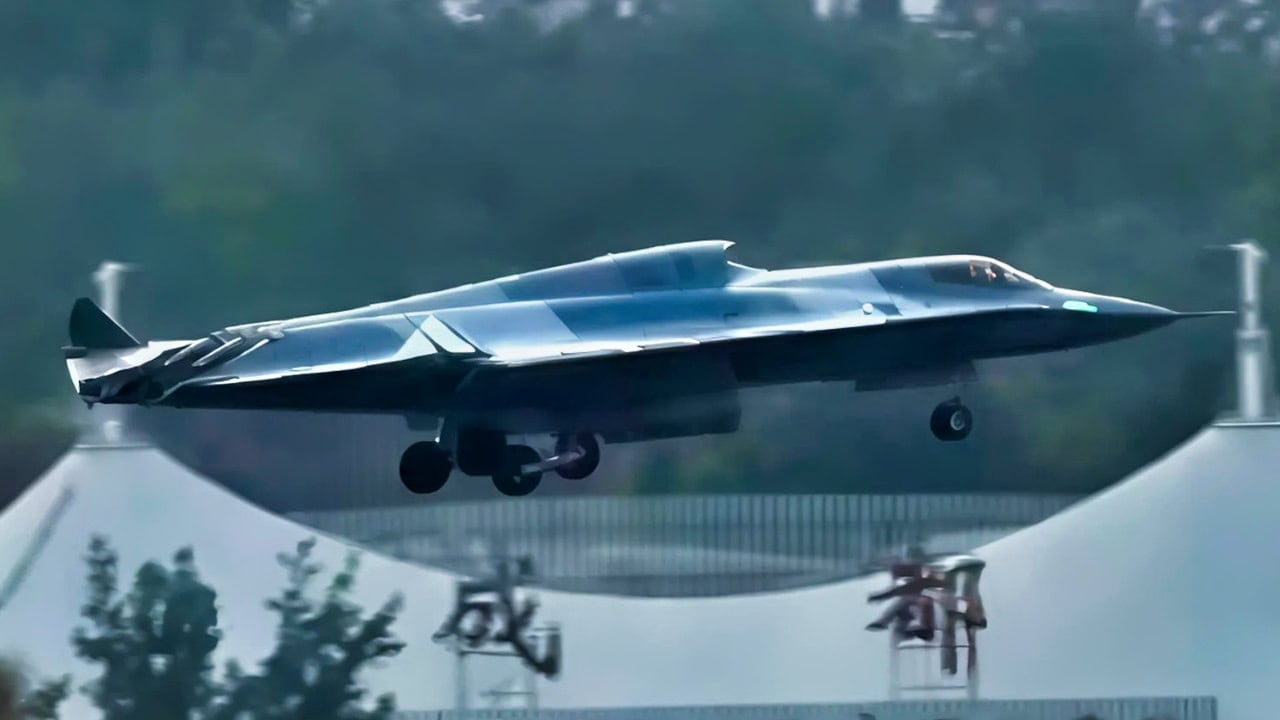
J-36 Fighter from X/Screenshot.
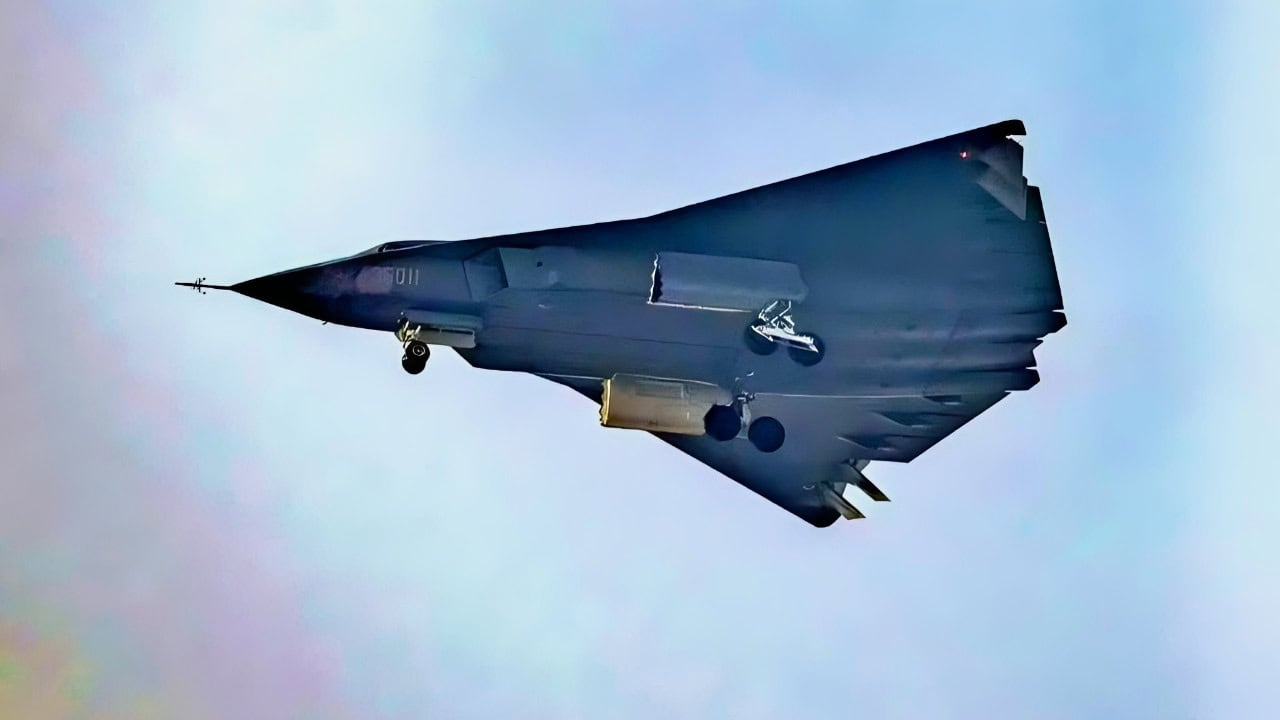
J-36 Fighter from China. Image Credit: X Screenshot.
There supposedly was also a plan in the works for the H-20 to be unveiled in 2019, on the occasion of the 70th anniversary celebrations of the 1949 founding of the People’s Republic of China. But this also never happened. One of the only moments in which there was any official recognition of the H-20 program was a PLAAF recruitment video in 2021 that showed just a short mention of the aircraft at the tail end of the footage.
Then, in 2022, there were reports in Chinese state-controlled media that the H-20 was close to making its maiden flight—but again, no follow-on confirmation. In 2024, there was another prediction of the program being revealed “very soon,” this time from the Vice Commander of the PLAAF, Wang Wei.
That prediction quietly faded. Finally, in 2025, the official line became that the aircraft would not be operational until sometime in the 2030s.
Only a Regional Strike Capability
The head of U.S. Air Force Global Strike Command, General Stephen Davis, commented this week that Xian’s difficulties show that producing a flying aircraft with the strategic reach of U.S. programs may be a bridge too far for Chinese design teams.
Speaking to U.S. defense media outlets, Davis stated, “There’s no other country in the world that can take and deliver a long-range strike platform pretty much on any day, in any time and place that they’re choosing, right?
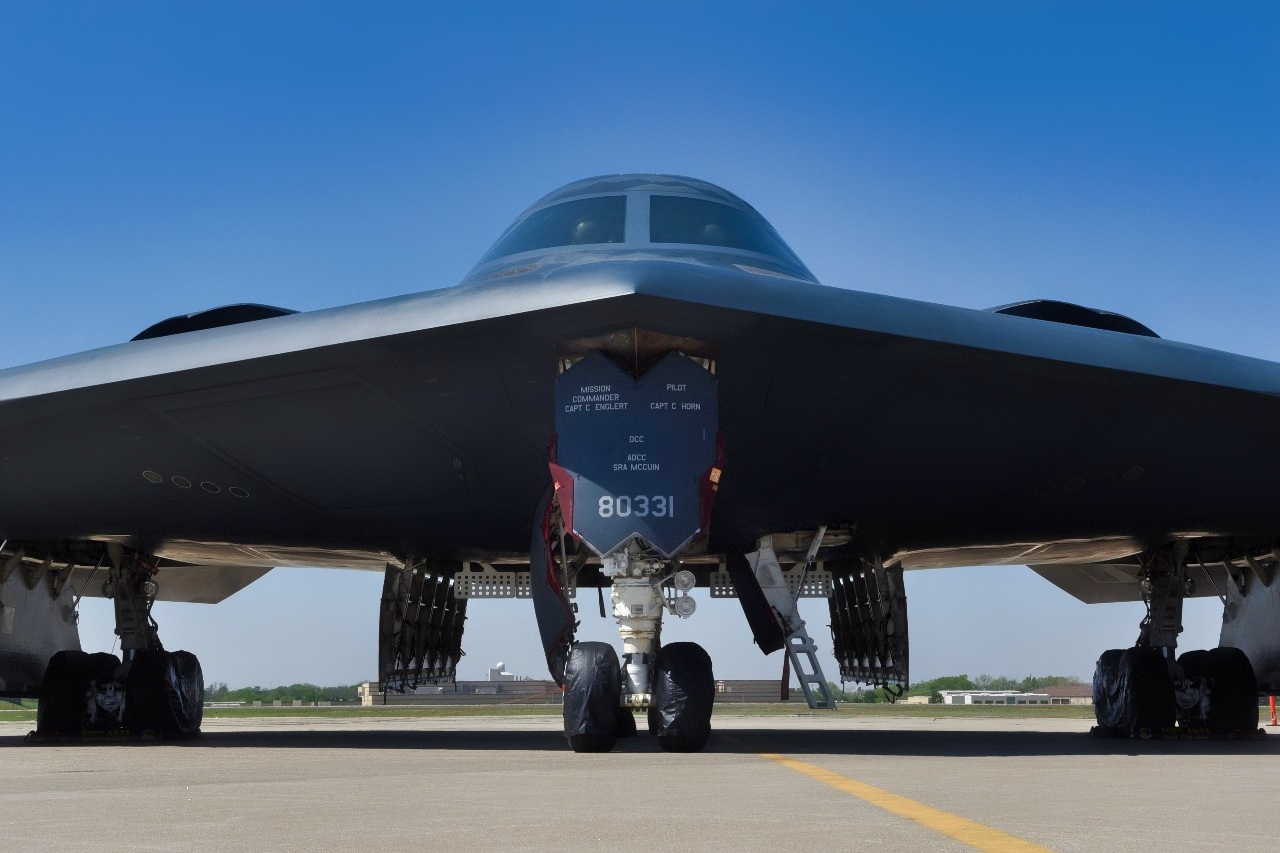
B-2A, serial #88-0331, ‘Spirit of South Carolina’ of the 509th Bomb Wing, Air Force Global Strike Command, on the parking ramp at Tinker Air Force Base, Oklahoma, during a visit April 11, 2017. The B-2A ‘stealth bomber’ visited the base to allow hundreds of personnel who work in direct support of the aircraft program through continuous software upgrades to see it in person and better understand the aircrafts’ role in the nation’s defense. (U.S. Air Force photo/Greg L. Davis)
“Really, China is a regional bomber force at best. I think they’re trying to continue to develop that.”
H-20: Not Really a Concern for the U.S. Military?
In 2024, a U.S. intelligence source said the H-20 stealth bomber was “not really” a concern for the United States at the time. That official was also quoted as explaining, “the thing with the H-20 is when you actually look at the system design, it’s probably nowhere near as good as US LO [low-observable] platforms, particularly more advanced ones that we have coming down. They’ve run into a lot of engineering design challenges, in terms of how do you actually make that system capability function in a similar way to, like, a B-2 or a B-21.”
Former intelligence officials who spoke to 19FortyFive on the H-20 said that there is a concrete reason for recent leaks about advanced Chinese military programs.
Chinese President Xi Jinping has been disparaged in world media outlets over his recent purging of his most-senior generals, removing what was left of the leadership of the Central Military Commission in the process.
“If you are going to entirely gut the senior leadership of your military,” said one former official we spoke to, “then you need to do something to prove that despite the internal chaos it might create, that is a temporary inconvenience and your armed forces have not become incapable of functioning or producing meaningful accomplishments.”
“What you would then do is start talking about all of the aspects of your military that are going well,” he said. “You would keep showing examples of how your military is the most modern and sophisticated in the world – making the subtle suggestion that your brand-new high-tech bombers, fighters, etc. are so modern that they need young and innovative commanders to make maximum use of them. It is a clever and understated way of explaining away why you have rid yourself of old blood – so you can bring in the new.”
About the Author: Reuben F. Johnson
Reuben F. Johnson has thirty-six years of experience analyzing and reporting on foreign weapons systems, defense technologies, and international arms export policy. Johnson is the Director of Research at the Casimir Pulaski Foundation. He is also a survivor of the Russian invasion of Ukraine in February 2022. He worked for years in the American defense industry as a foreign technology analyst and later as a consultant for the U.S. Department of Defense, the Departments of the Navy and Air Force, and the governments of the United Kingdom and Australia. In 2022-2023, he won two awards in a row for his defense reporting. He holds a bachelor’s degree from DePauw University and a master’s degree from Miami University in Ohio, specializing in Soviet and Russian studies. He lives in Warsaw.