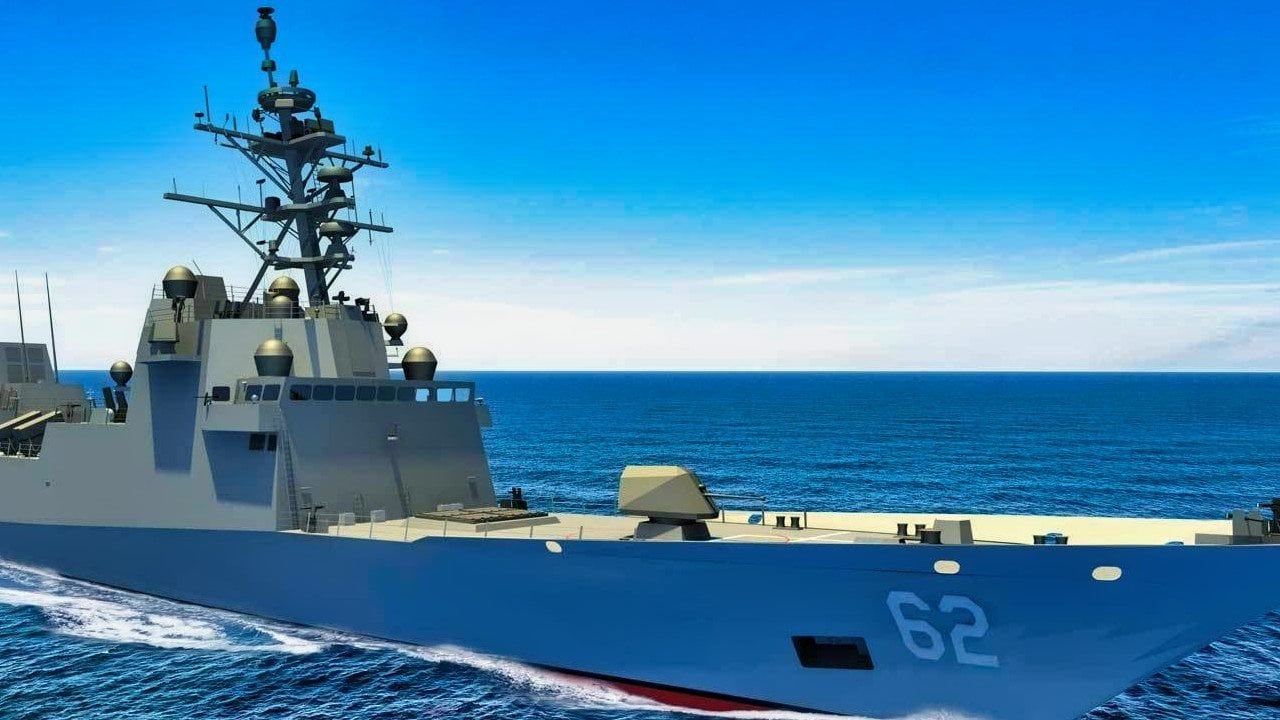
When the United States Navy went looking for a new frigate to replace the iconic–but aging–Oliver Hazard Perry-class frigate (they were retired in 2015), it had a handful of requirements.
One of the Navy’s major requirements for what was then called the FFG(X) project was that it could not replicate the abject failures of the Littoral Combat Ship (LCS) program.
A Proven Design That Was Supposed to Avoid Another LCS Disaster
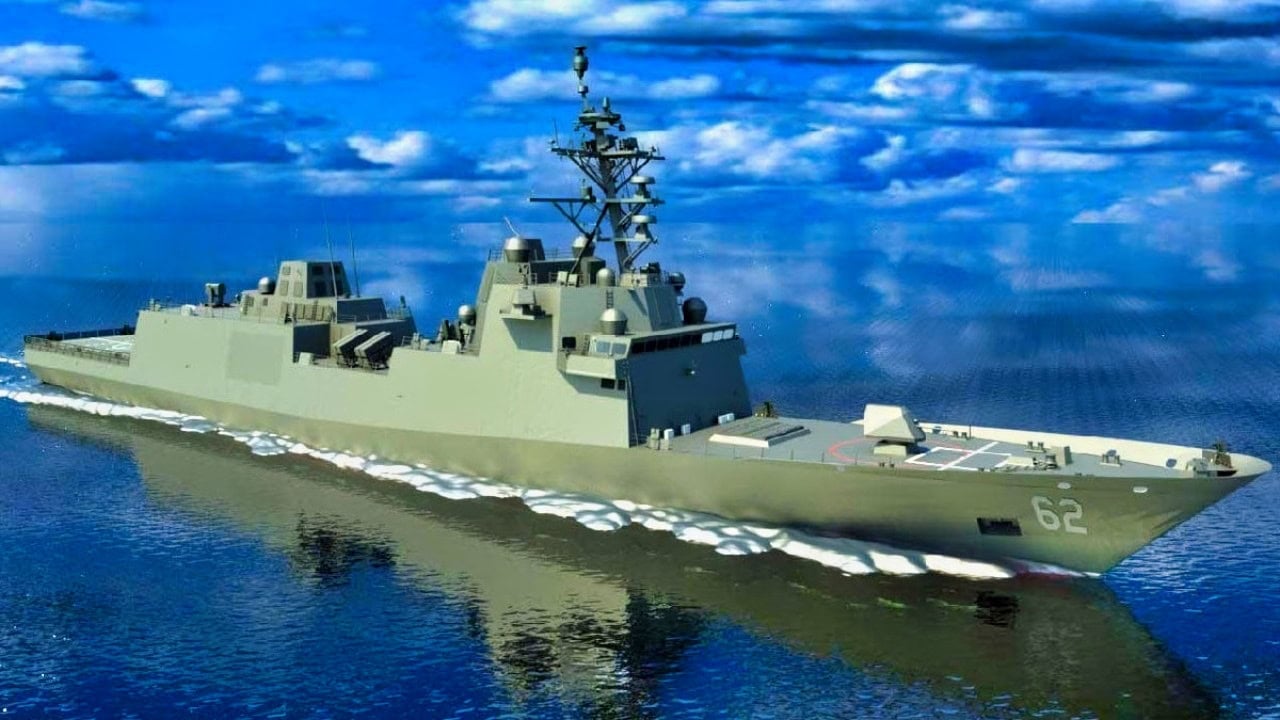
Constellation-Class Frigate. Image Credit: Creative Commons.
So, rather than inventing an entirely new frigate, the Navy’s FFG(X) prioritized preexisting designs and vendors who were more interoperable.
They chose the Italian and French FREMM frigate design built by Fincantieri. Because it was a proven, mature design already in production and proven at sea, the Navy reasoned that it’d have better luck procuring this warship than it would with other unique designs.
In fact, the Navy had told Congress, when it sought to purchase the frigate, that it was a lower engineering risk than the Zumwalt-class destroyer and the LCS.
Officials stressed that roughly 85 percent of the design would remain unchanged, with minor modifications to US components and subsystems (as opposed to the European ones the FREMM originally used).
All this ensured that the ship was cheaper, easier to build, and could be delivered faster.
Plus, the fact that the ship was a proven European design by a European shipbuilder–Fincantieri–that already enjoyed contracts with the Pentagon meant that America would have reliable warships that were interoperable with its NATO partners.
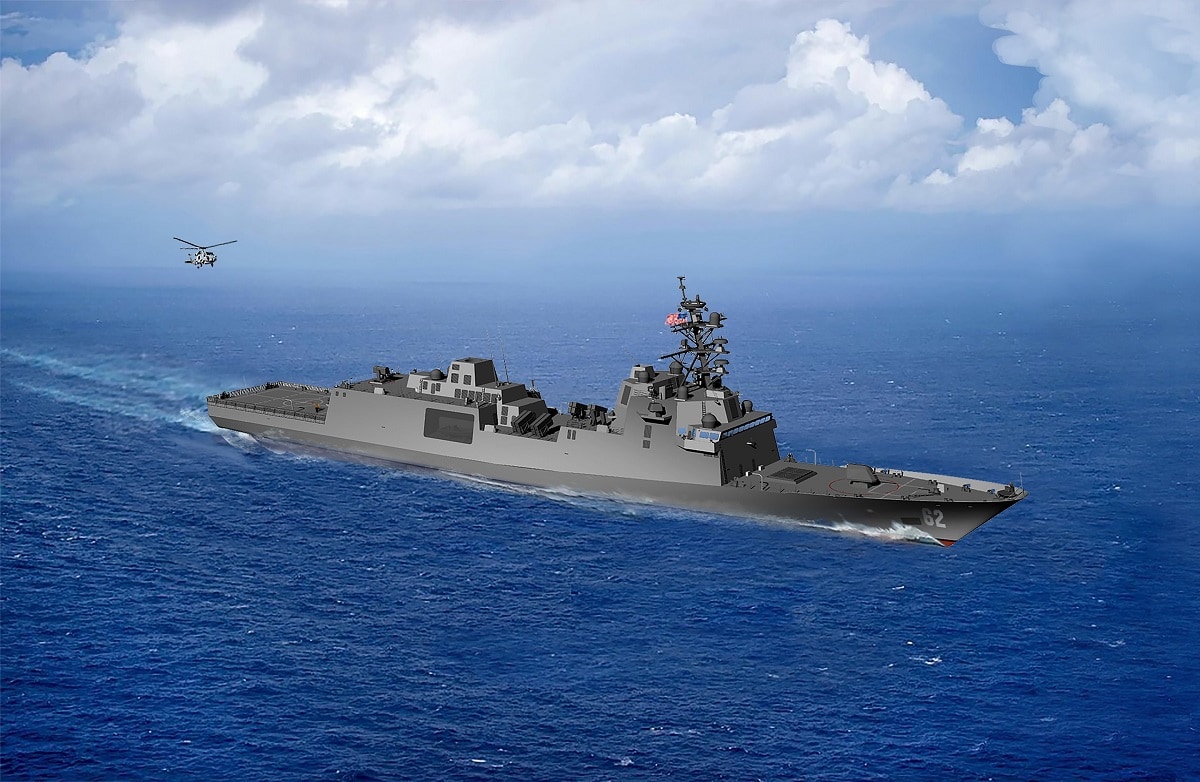
An artist rendering of the U.S. Navy guided-missile frigate FFG(X). The new small surface combatant will have multi-mission capability to conduct air warfare, anti-submarine warfare, surface warfare, electronic warfare, and information operations. The design is based on the FREMM multipurpose frigate. A contract for ten ships was awarded to Marinette Marine Corporation, Wisconsin (USA), on 30 April 2020.
In fact, the Constellation had the promise of being the most successful modern US Navy warship program of the post-Cold War years.
That was all true until the Pentagon bureaucracy got involved. As you’ll see, no American enemy could have been as damaging to the Constellation-class frigate’s acquisition as was the Pentagon’s acquisition bureaucracy.
And that failure by the Pentagon bureaucracy is something that American taxpayers will be paying down for decades–and that the US Navy will be left having to contend with, as critical strategic gaps form in its surface warfare capabilities.
When Tweaking Became Total Redesign
One recurring theme in modern Pentagon procurement is the ceaseless, incremental bureaucratic iterations throughout the process.
What seems like a reasonable or modest tweak to a design becomes one of many such changes that, when taken together, fundamentally transform the project from what it was originally designed to do into something else entirely.
And its value as a combat system is irretrievably lost–all while copious amounts of tax dollars continue being poured into the declining project.
The Pentagon fretted over the differences between inherent European and American ship designs. Of course, the original FREMMs were already NATO-friendly.
So, the notion that there was a ton of difference between the two powers was likely overstated by the Pentagon’s risk-averse bureaucrats.
Nevertheless, the acquisition experts started by upgrading the ship’s design to better conform to what they saw as American survivability standards.
One aspect of the FREMM that was of concern was the need for a different electrical architecture. The Pentagon insisted on a complete change. Of course, American combat management systems were distinct.
Thus, those systems–including the AEGIS and SPY-6(V) radar–had to be accounted for.
Then there were differences in the propulsion systems of European navies and the US Navy.
The Pentagon demanded changes to the propulsion system to comply with US Navy standards. Because of the kinds of missions the Navy undertakes globally, there was a need to adjust to support expanded power generation.
European and American warships apparently have very different shock standards, too.
What’s more, the Navy wanted enhanced cyber defense requirements for the ship that went beyond the defenses Fincantieri usually included in FREMMs destined for France and Italy.
Since the end of the Cold War, the US military has generally desired larger margins for future upgrades. There were necessary changes to compartment layouts and, naturally, there were different standards–and sizes–between the European FREMMs and the proposed Constellation-class.
Over time, the Navy forced Fincantieri to embrace all these requirements. Fincantieri begrudgingly did as they were told.
Predictably, the program failed because the Navy’s goals and the requirements to achieve them were fundamentally mismatched.
Because of repeated new ship design failures since the 1990s, the Navy needed a quick fix, and they needed to get that fix from traditional sources.
The Constellation was an excellent solution. The Pentagon couldn’t help itself. The Navy needed an evergreen ship design, but it wanted an entirely new platform that it attempted to procure midway through the acquisition process.
The Weight Explosion
Originally, Navy leaders expected a small percentage of the parent design from Europe to change. By the time the Constellation was mid-development, though, the percentage of change was overwhelming. Rather than getting a proven ship, engineers were designing a new American frigate from scratch while telling Congress they weren’t.
To build this new ship, which they were calling a spinoff of the FREMM, there were new modeling, testing, certification, software integration, and manufacturing drawings.
All these changes, therefore, added engineering hours. And all the new engineering hours exploded construction costs.
But the biggest change–the change that just sank any semblance of cost savings with the project–was the weight that the Constellation accumulated. It rose by about 13 percent from earlier estimates made before Fincantieri was awarded the contract. And weight growth was basically the silver bullet that killed this program.
That’s because added weight affects the ship’s speed and, of course, its fuel consumption. Increases in weight change the stability.
These changes also negatively impact reserve buoyancy. Because the ship has become heavier, there’s greater demand on the electrical systems.
The added weight basically negated the future modification plans the Navy intended for the Constellation.
The whole thing became a vicious cycle–and that vicious cycle meant that US taxpayers were going to be paying a lot more for a ship that would be much less useful.
Construction Began Before the Navy Stopped Designing It
Here’s the most unbelievable aspect of this story. The Pentagon was still designing the Constellation-class when Fincantieri implemented construction.
Perhaps the assumption was that, since this was a proven design and only a small percentage of the ship was expected to change, Fincantieri could proceed with the design.
But the fact that the Pentagon had not finalized the design before Fincantieri cut the steel for the Constellation-class frigate’s hull proved to be the costliest mistake.
Normally, when the Navy builds a ship, they complete the design, finalize all drawings, and then begin construction.
In this case, however, they began construction–while continuing the design phase–which forced massive alterations to the construction process.
So, shipbuilders were forced to remove completed work whenever a new redesign came through.
They had to redesign spaces, too. Piping had to be rerouted, as did electrical systems, to accommodate the expansions Navy designers called for.
In so doing, though, the Navy both inflated the ship’s cost and ensured it would no longer be of tactical use.
The Cost Explosion
The Navy envisioned a relatively affordable frigate that enjoyed a quick turnaround from conception to construction.
In fact, that was the entire point of the Constellation-class. The lead ship was projected to cost around $1.3 billion, with an overall fleet of 20 ships to be constructed over time, costing taxpayers around $22 billion.
Later estimates, however, changed. The initial cost rose to hundreds of millions of dollars above the $1.3 billion projection for the first ship.
Then, all the delays caused by the tandem design-and-construction process guaranteed additional inflationary cost increases.
And through it all, people apparently forgot that schedule delays themselves drive costs to stratospheric levels.
Think about it. If a ship takes nine or ten years rather than four to build, then labor costs will rise, material prices will increase, subcontractor and workforce costs will increase, and your overhead costs will explode. That’s precisely what happened.
Cancellation and Cost
Ultimately, the Navy abandoned the Constellation-class frigate. But not after blowing through billions of dollars on a failed system.
The Navy elected to complete only the first two of 20 ships, terminating the remaining planned warships and shifting resources again toward a new frigate design focused entirely on affordability and faster production.
The cost was not merely a symptom of the Constellation-class frigate’s collapse–it was the product of constant redesign. It was a failure of the Pentagon’s acquisitions bureaucracy.
Every change in requirements triggered new engineering work, delayed construction, increased labor hours, and compounded inflation.
The Navy did something insane, too. They converted a program, like the Constellation-class frigate, that was designed to save money, but it actually spent more money and blew through the very cost savings that were supposed to make the program succeed.
With the combined failures of the Zumwalt-class destroyer and the LCS, the Navy just showed that the Constellation-class was more than just a one-off failure. It is another data point demonstrating that the American military can no longer build effective platforms.
About the Author: Brandon J. Weichert
Brandon J. Weichert is the Senior National Security Editor at 19FortyFive.com. He also manages The Weichert Brief on Substack. Weichert also hosts “National Security Talk” on Rumble. He is the author of four bestselling national security books, the most recent of which is A Disaster of Our Own Making: How the West Lost Ukraine (Encounter Books). Follow him via Twitter/X @WeTheBrandon.