
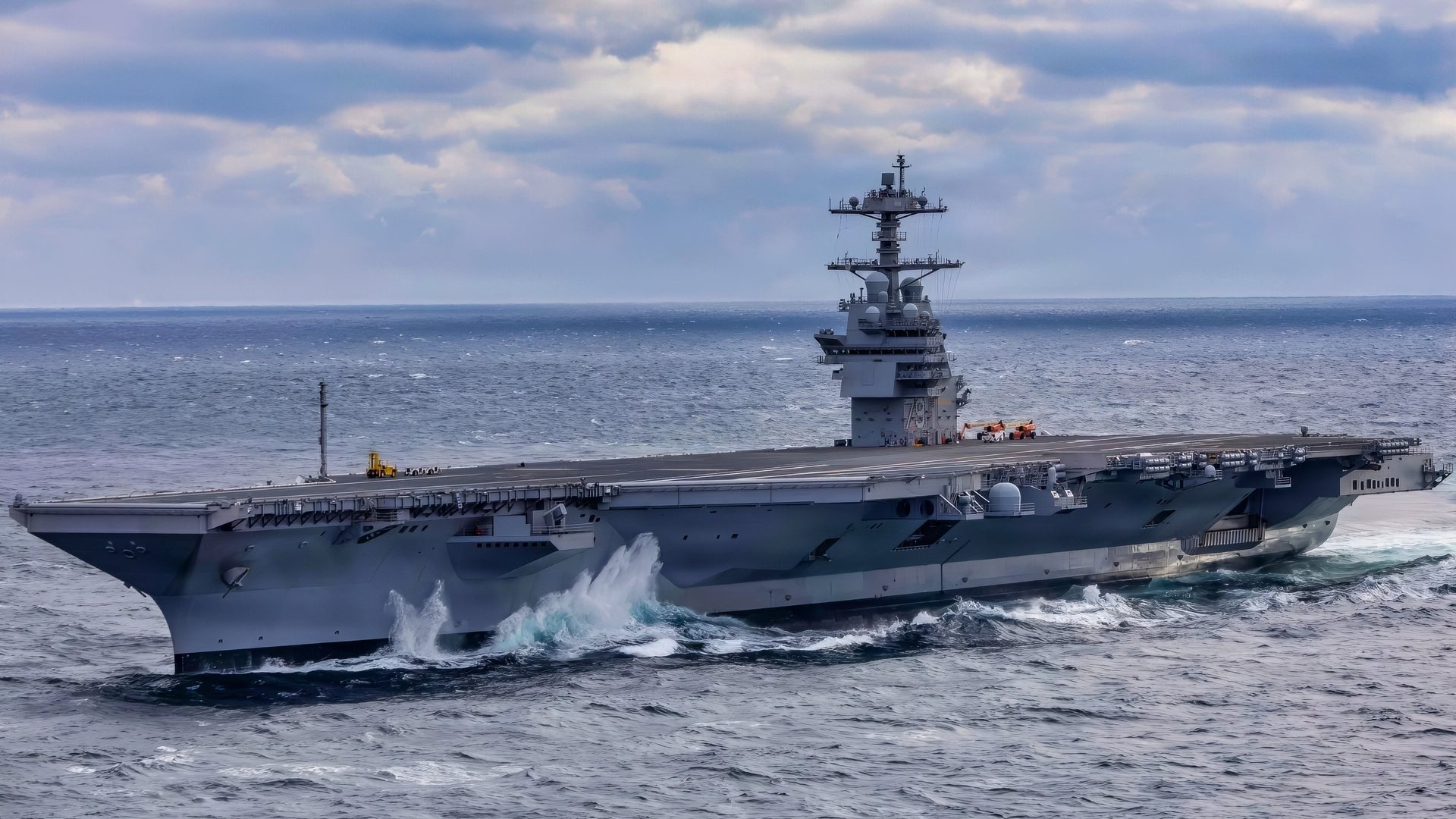
The future USS John F. Kennedy is a warship with a strange birth certificate. Her first steel was cut during Barack Obama’s first term. She will be delivered to the Navy in March 2027 and will, in all likelihood, deploy under the next president. Sixteen years from first cut to the fleet, for a ship America once built in two. This is where the time goes and why the clock keeps getting slower.
The Stopwatch
Follow one ship through the yard. The Kennedy’s first steel was cut in February 2011; her keel was laid in July 2015; she was christened in December 2019; she finished builder’s sea trials this February; and she is scheduled for delivery in March 2027, with fitting-out running to that July, commissioning after that, and a maiden deployment likely a few more years beyond. That is sixteen years from first cut to the fleet, and the delay has a fleet-level bill attached: because the 50-year-old USS Nimitz retired in May before her replacement arrived, the Navy operates just ten carriers until the Kennedy shows up, against a legal requirement of eleven.
Nor does delivery end the story. Her older sister is the proof: the Gerald R. Ford’s first steel was cut in 2005, she commissioned in 2017 after arriving more than two and a half years late, did not make her first full deployment until 2023, and, nine years after commissioning, is still receiving modifications to fully operate the F-35C. The stopwatch doesn’t stop when the ship joins the fleet.
Where the Time Goes
Three things eat the years. The first is that America has exactly one shipyard, Newport News in Virginia, capable of building a nuclear-powered carrier, and it is a single point of failure running at capacity. Its dry docks impose a rigid sequence: a new hull cannot be laid down until the ship ahead of it launches, and the yard has now formally cited its own “construction footprint,” meaning it physically cannot stage all the prefabricated modules at once, so one ship’s delay cascades into every ship behind it.
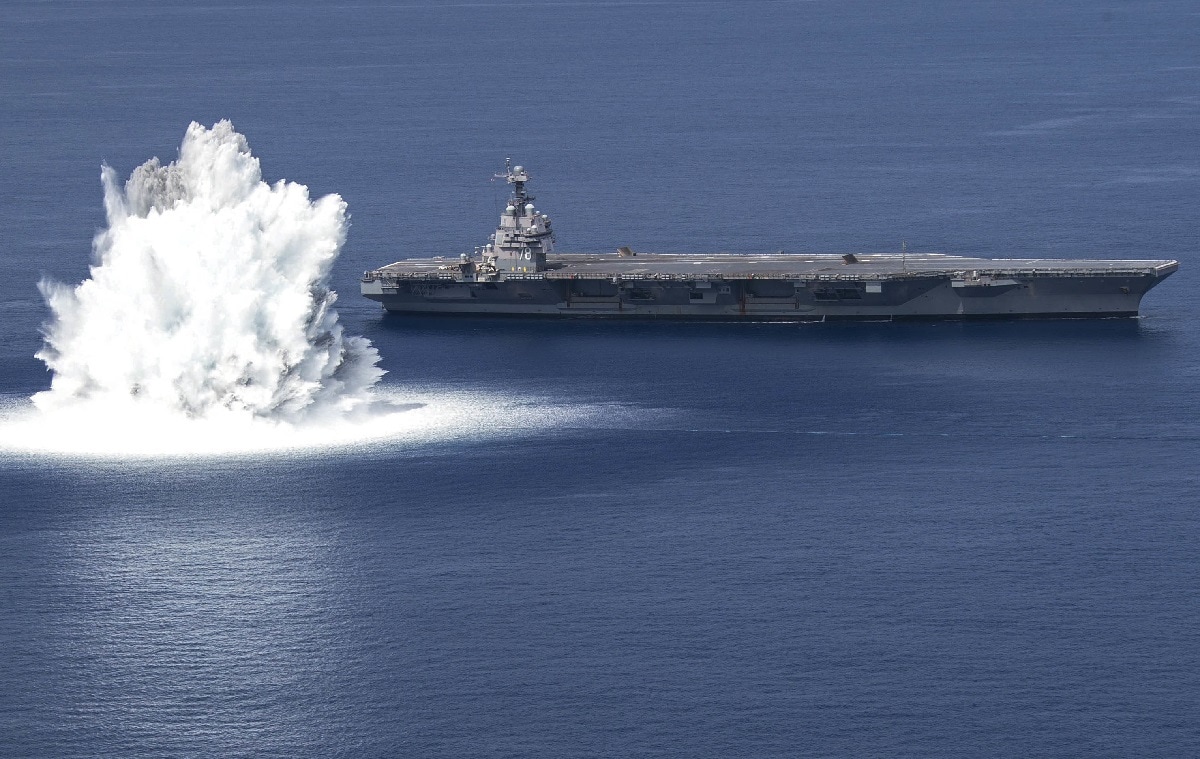
The aircraft carrier USS Gerald R. Ford (CVN 78) completes the first scheduled explosive event of Full Ship Shock Trials while underway in the Atlantic Ocean, June 18, 2021. The U.S. Navy conducts shock trials of new ship designs using live explosives to confirm that our warships can continue to meet demanding mission requirements under harsh conditions they might encounter in battle.
The second is people and parts. Carriers demand nuclear-certified welders, machinists, and electricians in chronically short supply; the Aircraft Carrier Industrial Base Coalition has warned for years about a graying workforce and a strained network of thousands of suppliers, many the last company standing that makes their part, and the Navy’s own budget books blame the Enterprise’s slips on late delivery of “sequence critical” material. It is the same bottleneck that runs through every nuclear hull America builds, which is why money alone has not fixed it: a master shipfitter cannot be trained in a budget cycle.
The third is the technology bet. The Ford class packed some two dozen unproven systems into a first-of-class hull, and the bill is still being paid: per the Navy’s latest budget justification, what is holding the Kennedy to 2027 is finishing certification of the advanced arresting gear and completing work on the new weapons elevators, the same two systems that bedeviled the Ford for years after commissioning.
The Clock Is Running Backward
The most damning fact is the direction of travel. The Congressional Budget Office told Congress in April that Nimitz-class carriers take seven to eight years to build, while the Fords are taking ten to eleven years on current schedules, with destroyers and submarines nearly doubling from five to six years to nine to ten, and the delays growing over the past year rather than shrinking.
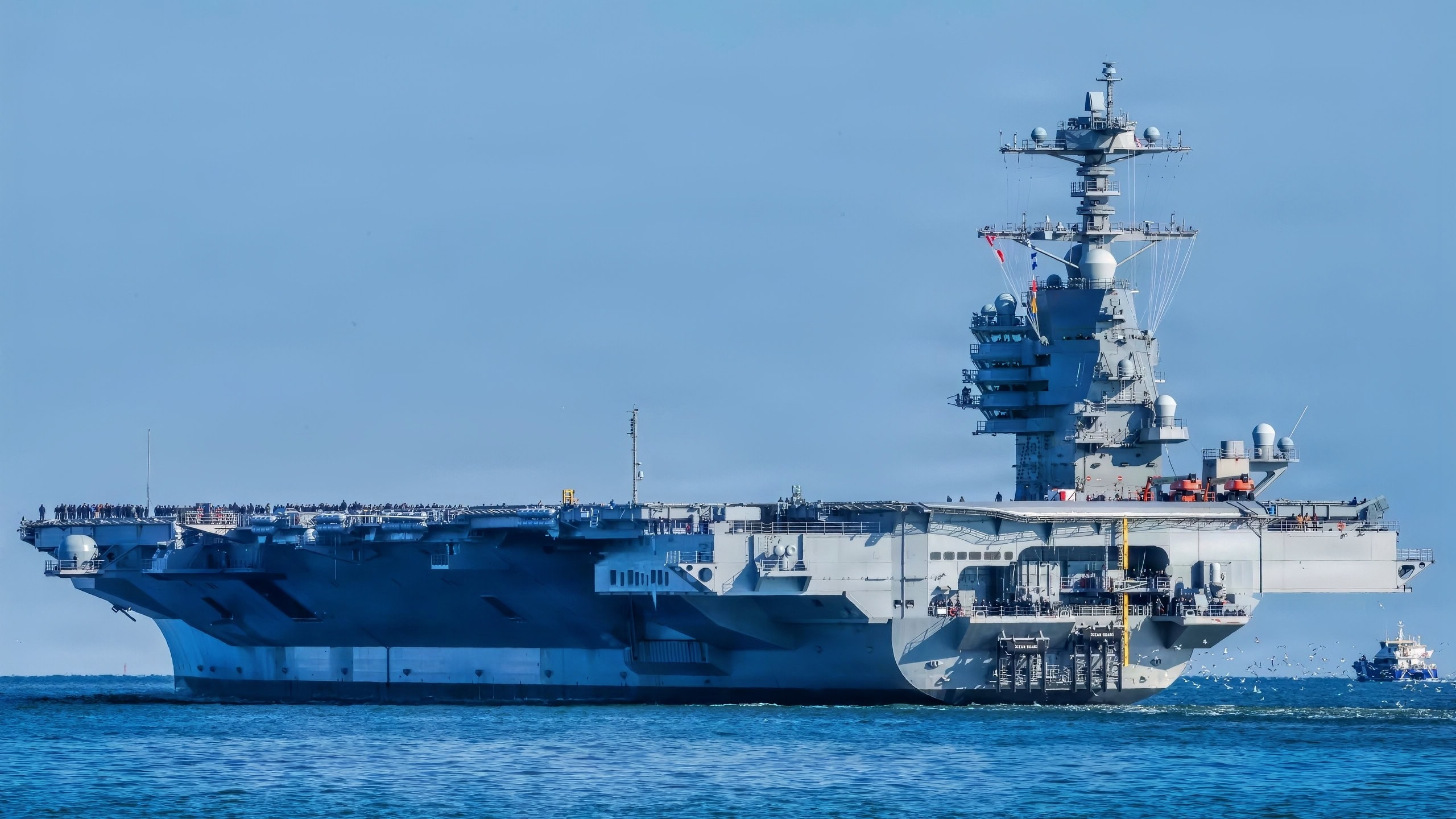
Pre-Commissioning Unit John F. Kennedy (CVN 79) transits the James River as the ship departs for Builder’s Trials, Jan. 28, 2026. Builder’s Trials provide an opportunity to test ship systems and components at sea for the first time, and make required adjustments prior to additional underway testing. (U.S. Navy photo by Mass Communication Specialist Seaman Jayden Howard)
The class behind the Kennedy proves it: the Enterprise, first steel in 2017, has slipped from 2028 to 2029 to 2030 and now toward 2031, while the Doris Miller just slipped two more years to 2034, a roughly fifteen-year build.
The two carriers after her are projected for 2040 and 2043.
For perspective, in the Second World War, an Essex-class fleet carrier went from keel to commissioning in about 20 months, and a single yard once launched fifty escort carriers in under two years. The nation that did that now needs a decade and a half, per hull, and is slowing.
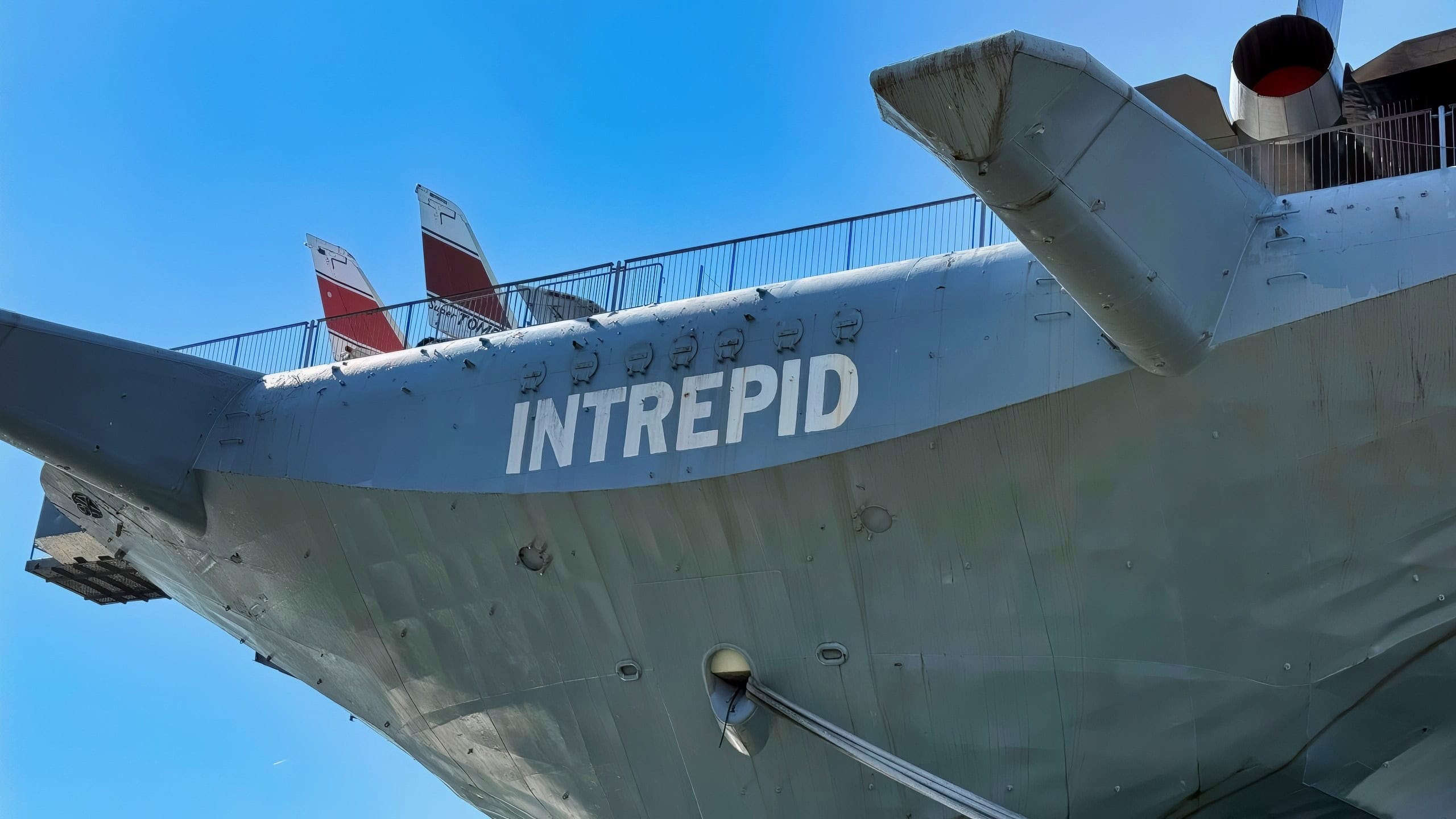
USS Intrepid of the Essex-Class Aircraft Carriers. Image Credit: 19FortyFive.com Original Photo.
Why It Matters
None of this is trivia. Every year added to a carrier’s build is a year the fleet shrinks, a year the remaining ships deploy harder and wear faster, and a year the comparison with China’s shipbuilding cadence grows uglier.
The Kennedy will be a magnificent warship when she arrives.
But the sixteen years it took to get her there is less a construction schedule than a strategic warning, printed one slipped delivery date at a time, that the arsenal of democracy currently builds its most important weapon at the pace of a cathedral.
About the Author: Harry J. Kazianis
Harry J. Kazianis (@Grecianformula) was the former Senior Director of National Security Affairs at the Center for the National Interest (CFTNI), a foreign policy think tank founded by Richard Nixon based in Washington, DC. Harry has over a decade of experience in think tanks and national security publishing. His ideas have been published in the NY Times, The Washington Post, The Wall Street Journal, CNN, and many other outlets worldwide. He has held positions at CSIS, the Heritage Foundation, the University of Nottingham, and several other institutions related to national security research and studies. He is the former Executive Editor of the National Interest and the Diplomat. He holds a Master’s degree focusing on international affairs from Harvard University.