
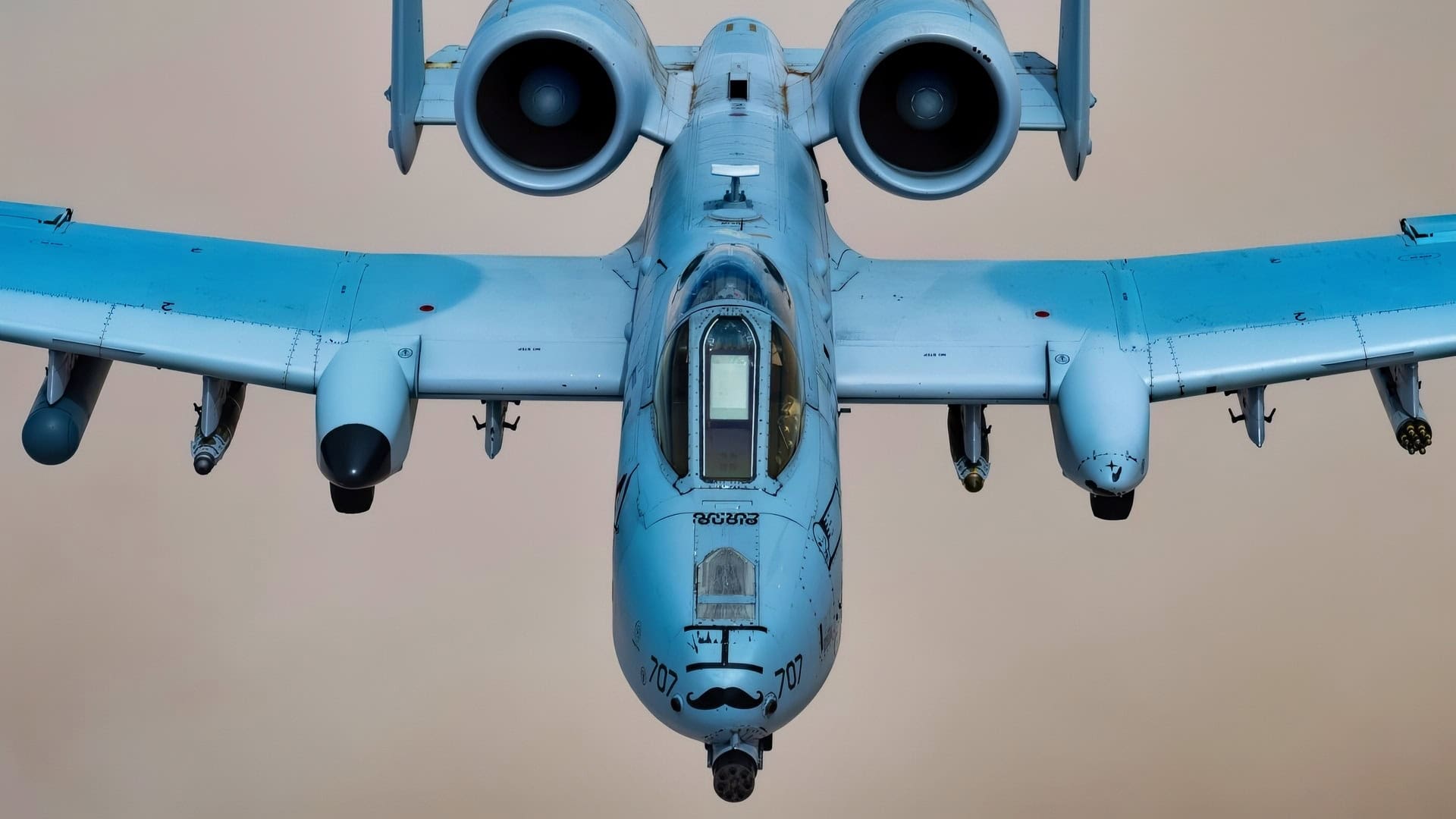
In 2017, during a routine training mission over Michigan’s Grayling Air Gunnery Range, US Air Force Captain Brett DeVries entered a strafing pass in his A-10 Thunderbolt II.
As DeVries depressed the trigger, the GAU-8/A Avenger cannon malfunctioned; a cloud of gas engulfed the cockpit, and the rear portion of the canopy broke away.
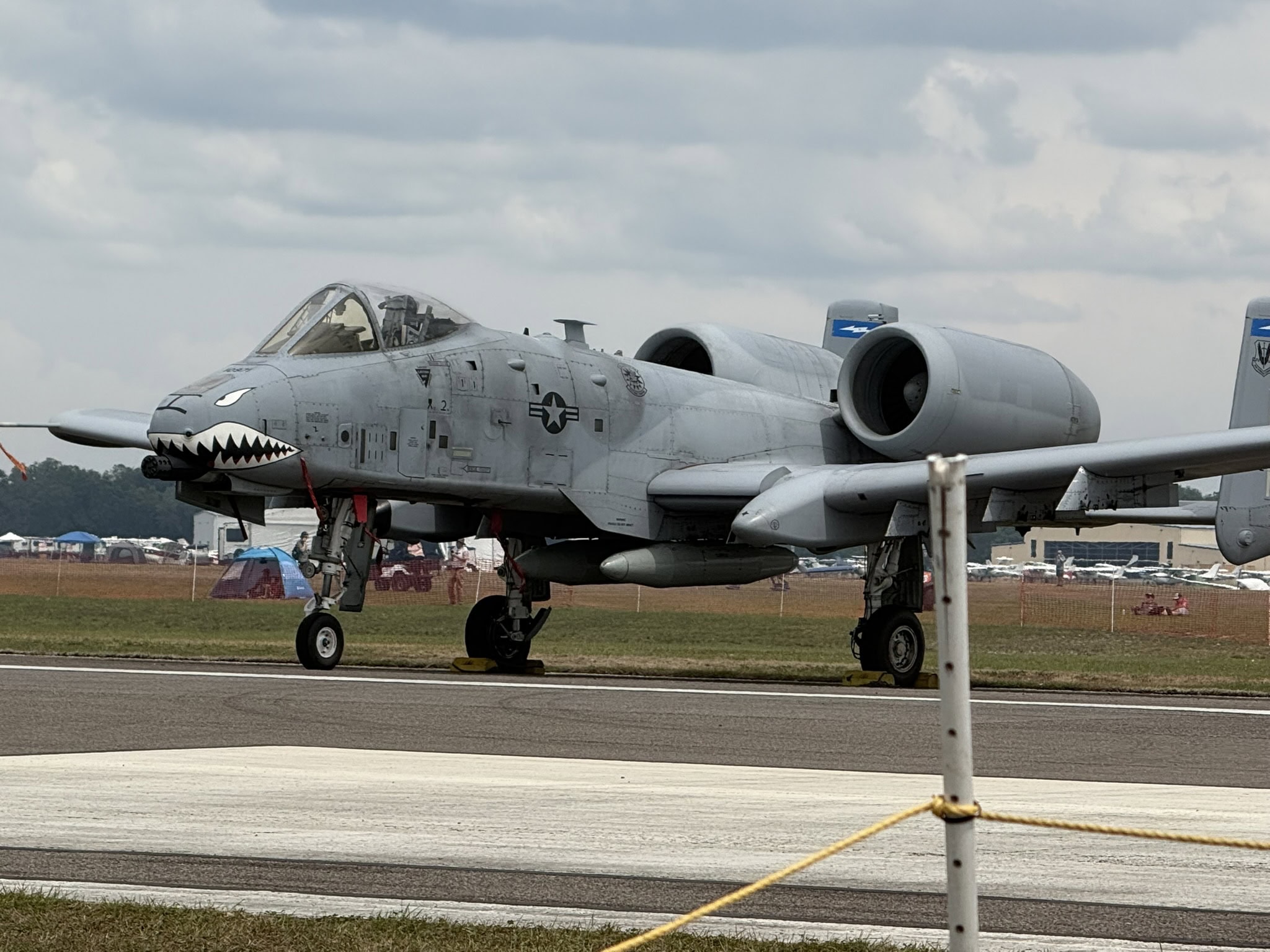
A-10 Warthog. 19FortyFive.com image taken in Lakeland, Florida on 4/19/2026.
The aircraft was moving at 375 miles per hour.
But that was only part of the problem.
The gun damage also compromised the aircraft’s landing gear, preventing the nose landing gear from locking—putting DeVries in a highly dangerous situation.
During the Strafing Run
When DeVries fired his cannon, wingman Major Shannon Vickers described a “donut of gas” surrounding DeVries’ cockpit. DeVries himself experienced a violent jolt, like being sucker punched.
And then the canopy failed—exposing DeVries directly to high-speed airflow. Loose paper and cockpit material began flying around, naturally raising concerns that debris could enter either of the two rear-mounted turbofan engines.
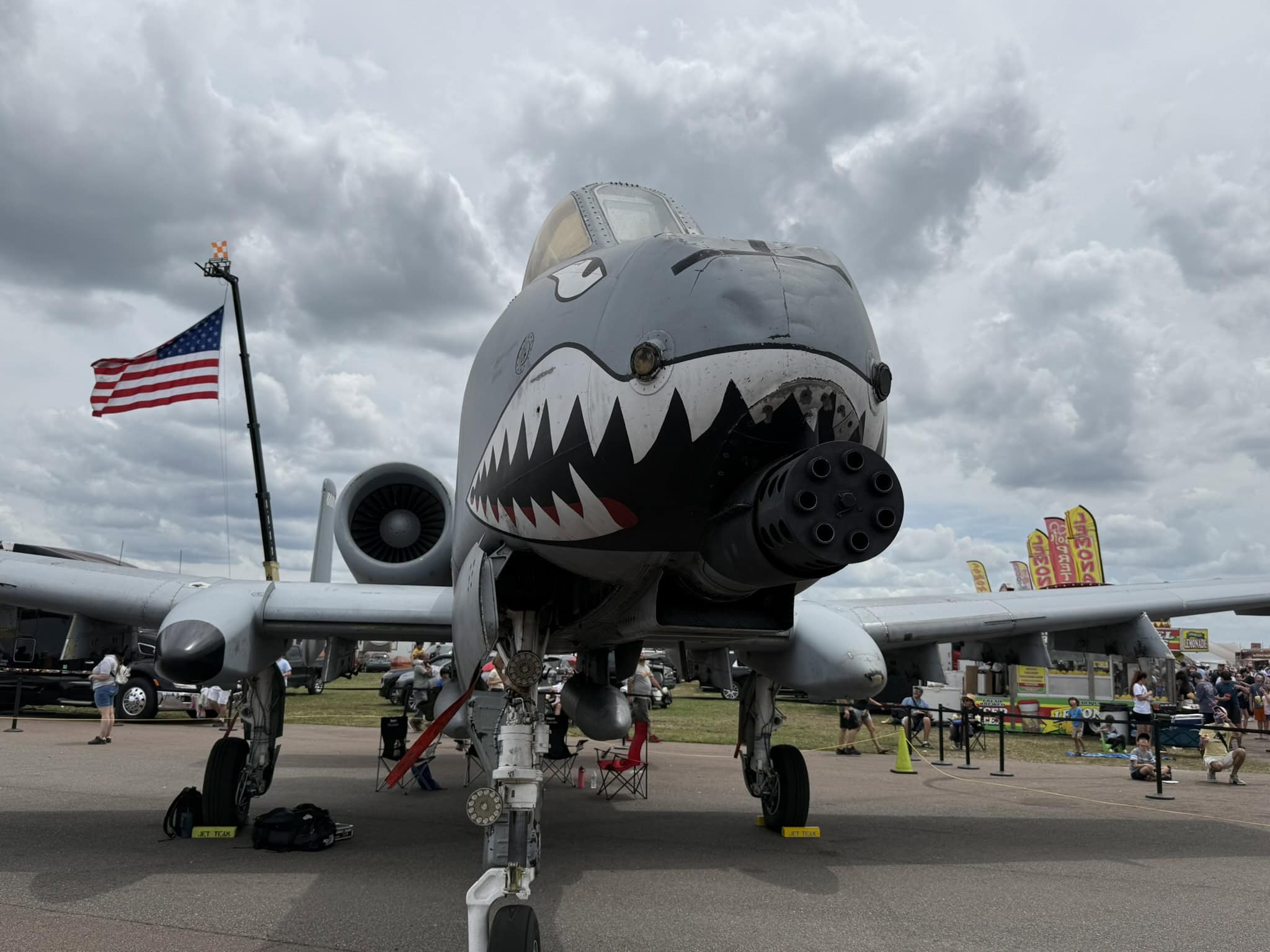
A-10 Warthog at Lakeland Air Show in Lakeland, Florida. Image by Harry J. Kazianis.
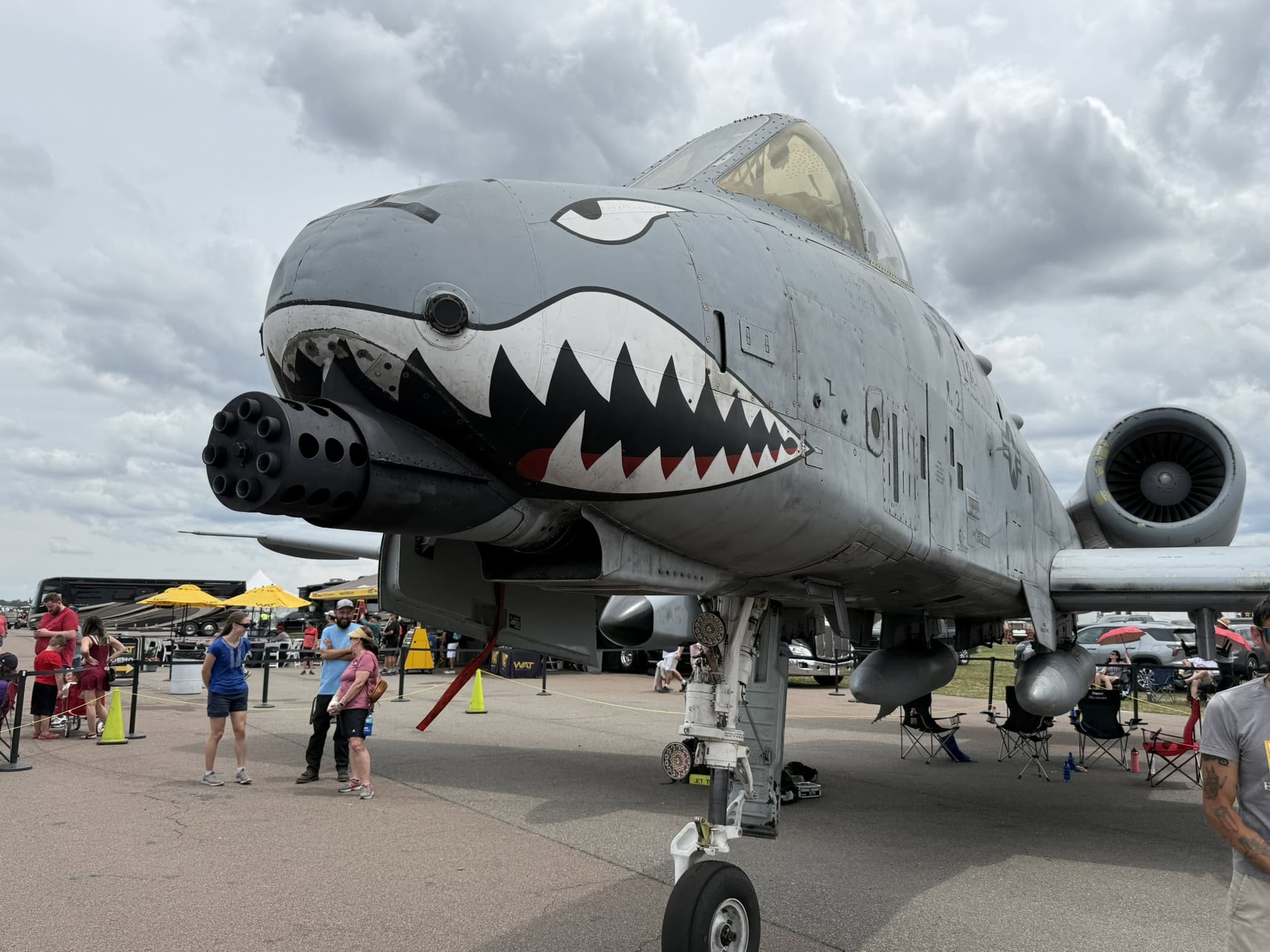
A-10 Warthog at Lakeland Air Show in Lakeland, Florida. Image by Harry J. Kazianis.
Thinking quickly, DeVries climbed to roughly 2,000 feet to stabilize the aircraft and assess the damage. He also moved his seat lower to situate himself behind the remaining windscreen protection.
Handling the GAU-8
The GAU-8 is not a normal aircraft cannon—it is a seven-barrel, hydraulically driven rotary cannon that fires 30×173 mm ammunition.
Designed to attack armored vehicles and fortified targets, the GAU-8 itself weighs about 700 pounds. When the gun is combined with the ammunition and feed systems, the total weight is several thousand pounds.
The thing is massive—and capable of firing thousands of rounds per minute (though pilots rely only on short controlled bursts). The recoil force is absolutely immense, roughly comparable to the thrust of one of the A-10’s engines.
This causes the entire airframe to shake and decelerate during firing. Indeed, the entire A-10 was effectively designed around the cannon, with the gun mounted near the aircraft centerline and the nose landing gear offset to make room, while the rest of the airframe was shaped around the ammunition drum and feed system.
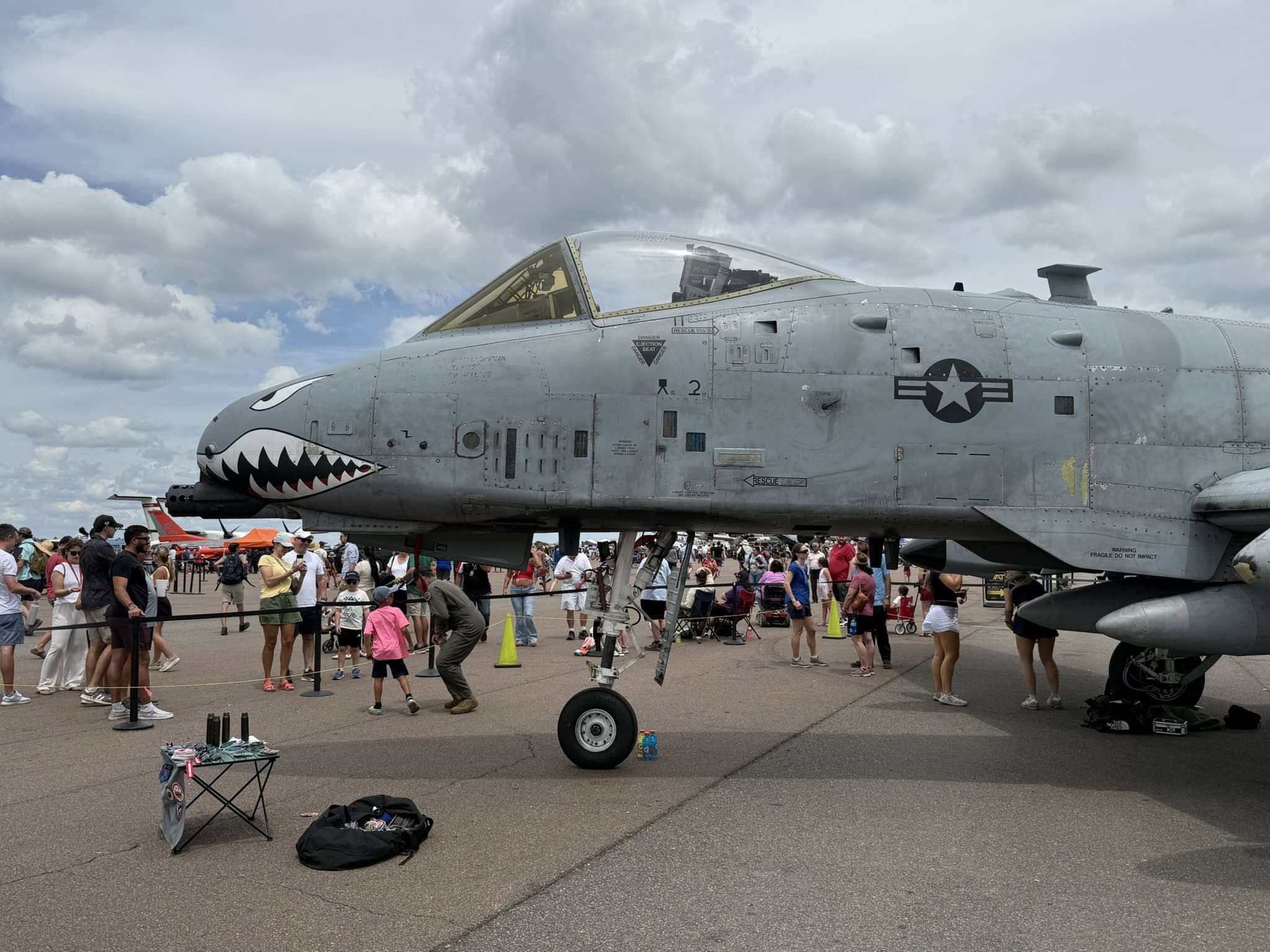
A-10 Warthog at Lakeland Air Show in Lakeland, Florida. Image by Harry J. Kazianis.
That integration explains why a gun malfunction could affect nearby panels, radios, and landing-gear systems.
The Failed Canopy
The failure of DeVries’s canopy, of course, made the situation significantly worse. An open cockpit at hundreds of miles per hour creates severe noise, wind blast, communication difficulty, risks of flying debris, and reduced pilot visibility and concentration.
The pilot cannot casually consult paper emergency checklists with a canopy blasted open. Ejection becomes uncertain as well, since the canopy must separate during the ejection sequence.
But an unexplained canopy loss raised questions about whether the ejection seat system itself might also be damaged—and a partially functioning ejection seat could injure or trap the pilot rather than save him.
DeVries therefore decided that a controlled landing was probably safer than ejection.
Cascading Breakdowns
The mishap also disabled both primary radios, leaving DeVries only with an emergency radio.
So personnel at Alpena Combat Readiness Training Center created an improved communications relay, with maintenance specialists at Selfridge Air National Guard Base speaking through Alpena tower personnel, and then Vickers relaying technical information to DeVries.
This incident and response served as a strong example of aviation emergency management, with the pilot flying the damaged aircraft, the wingman visually inspecting damage, controllers coordinating the airspace, and maintainers diagnosing systems remotely.
The nose gear failing to lock was obviously a problem.
The A-10’s nose landing gear sits beside the GAU-8 installation, so a gun malfunction could damage access panels and nearby systems.
With the nose gear unlocked, DeVries would have to land with two main wheels down and the nose wheel only partially deployed.
This could cause violent directional instability or collapse. DeVries wasn’t comfortable with that prospect, so he retracted the main gear, opting instead for a deliberate belly landing.
His objectives: keep the aircraft level, reduce asymmetric drag, and prevent the nose gear from digging into the runway.
Belly First
DeVries approached Alpena with flat altitude, low speed, and wings level, with the engines and control surfaces managed carefully.
He then contacted the runway on the lower fuselage. Fortunately, the aircraft slid rather than cartwheeled.
Fortunately, the aircraft did not depart the runway. DeVries exited the aircraft without injury.
The incident became a practical demonstration of the A-10’s design philosophy: extreme survivability. DeVries was able to land the aircraft safely because the damage was contained, redundant systems remained operational, and the pilot maintained control. This is exactly what the CAS-providing A-10 was designed for.
About the Author: Harrison Kass
Harrison Kass is a writer and attorney focused on national security, technology, and political culture. His work has appeared in Tablet, City Journal, The Hill, The Spectator, and The Cipher Brief. He holds a JD from the University of Oregon and a master’s in Global & Joint Program Studies from NYU. More at harrisonkass.com.