
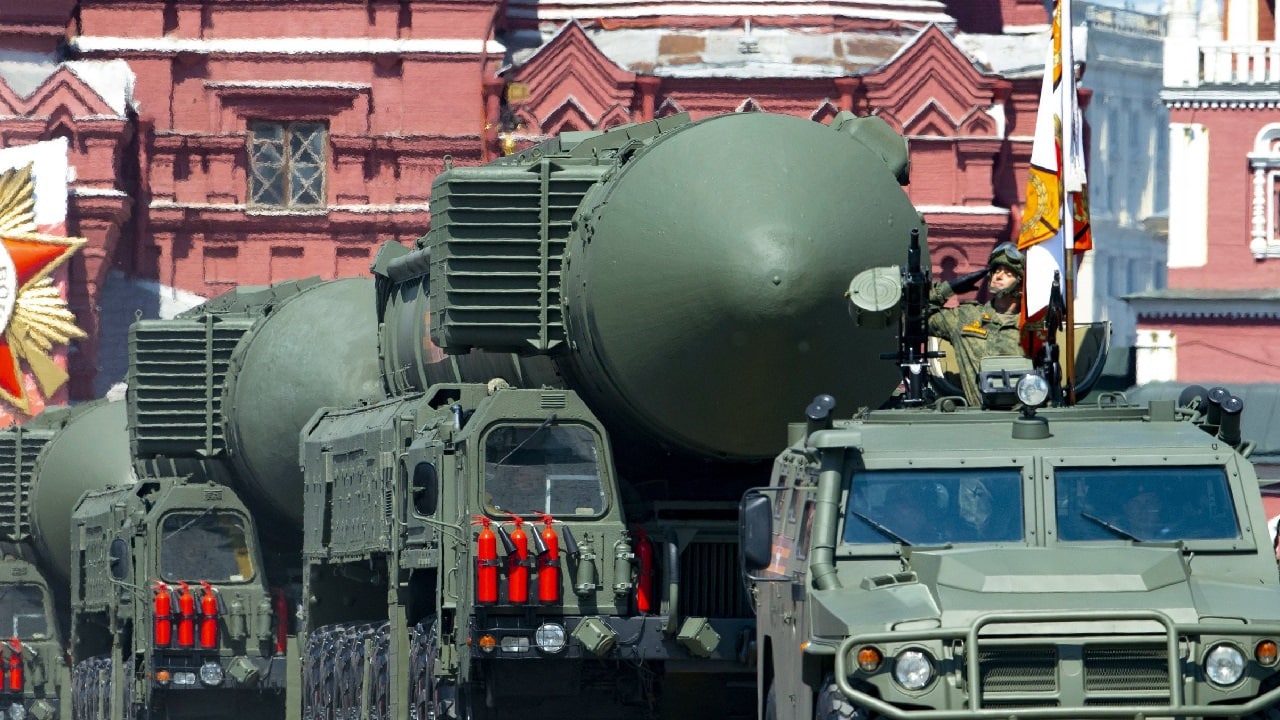
America is now building a missile shield whose price, depending on who you ask, varies by nearly a factor of seven. The president promised $175 billion. The general running the program says $185 billion. The Congressional Budget Office says $1.2 trillion over twenty years, and buried in its report is the number that matters most: the trillion-dollar space layer at the heart of the plan could engage about ten missiles at once. Whether that is a scandal or a bargain depends entirely on a question no one in Washington has answered out loud: which war is this shield supposed to win? Enter the Golden Dome controversy.
Golden Dome: The Price Nobody Can Name
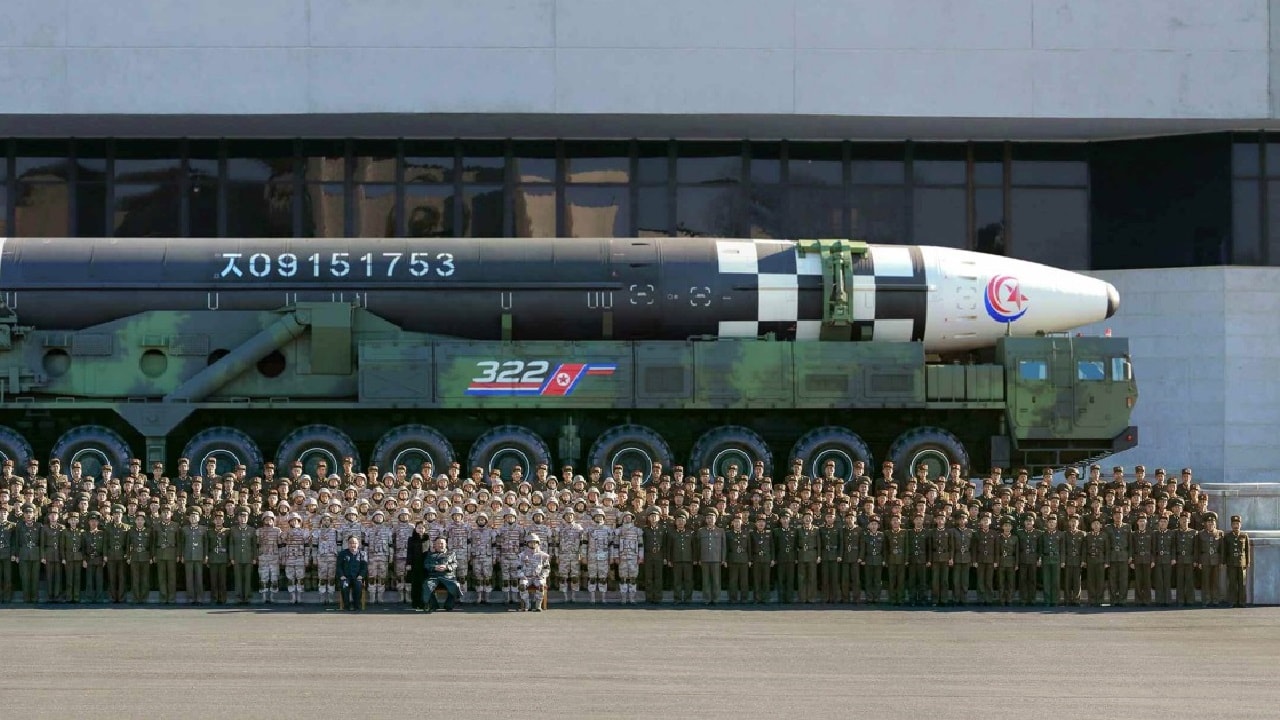
North Korea ICBM. Image Credit: KCNA.
The estimate ladder matters because the spread is itself the story. President Trump launched the program, promising $175 billion. Gen. Michael Guetlein, who has run the Office of Golden Dome for America since last summer, puts it at $185 billion. In May, the CBO priced the full twenty-year enterprise at roughly $1.2 trillion, about seven times the original promise and fifteen times the $79 billion the administration actually plans to spend over the next five years. The budget office was candid about why the estimates diverge so wildly: the Pentagon has provided so little detail about what it intends to deploy that the report calls it “impossible to estimate the long-term cost” of the system as described.
The Pentagon and its scorekeeper, in other words, may be pricing different machines, because the machine has never been fully specified. The money, meanwhile, is real but fragile: $25 billion is appropriated, and of the $17.5 billion requested for next year, just $398 million sits in the base budget, with the rest banking on Congress passing another reconciliation package that does not yet exist. A program this size, funded this way, inside a record $1.5 trillion defense request already facing congressional resistance, is one budget fight away from redesign.
What a Trillion Dollars Buys
The CBO’s report is worth reading for its architecture alone, because it shows where the money goes. The centerpiece is a constellation of 7,800 space-based interceptors at an average of $22 million per satellite, and because each has roughly a five-year life in orbit, the fleet must be perpetually re-bought, making the space layer less a purchase than a subscription. Around it sit three ground-interceptor fields with sixty next-generation interceptors each, four Aegis Ashore sites at nearly $4 billion apiece, new radars, and a regional air-defense layer.
And here is the return on that investment: even at 7,800 interceptors, the space-based layer could engage about ten targets simultaneously, by the CBO’s own math. Independent analysis lands in the same place. Todd Harrison of the American Enterprise Institute calculated last fall that roughly a trillion dollars buys enough space interceptors to defeat five missiles in the boost phase, fifty hypersonic gliders, and fifty midcourse warheads, plus the tracking satellites and ground batteries beneath them, and that the administration’s $185 billion buys nowhere close to that. Five, fifty, and fifty, against adversaries whose combined arsenals run to thousands of warheads. The arithmetic is not a detail but the whole question.
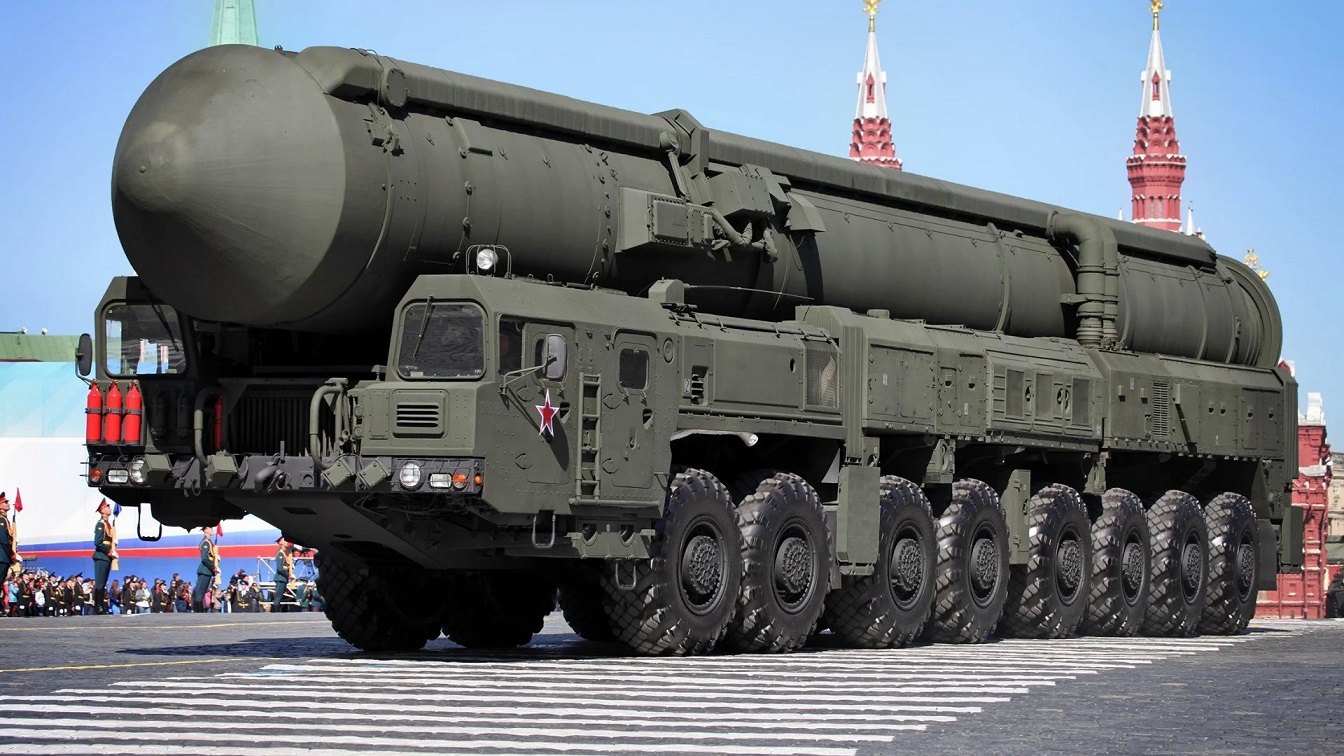
Russian mobile missile. Image Credit: Creative Commons.
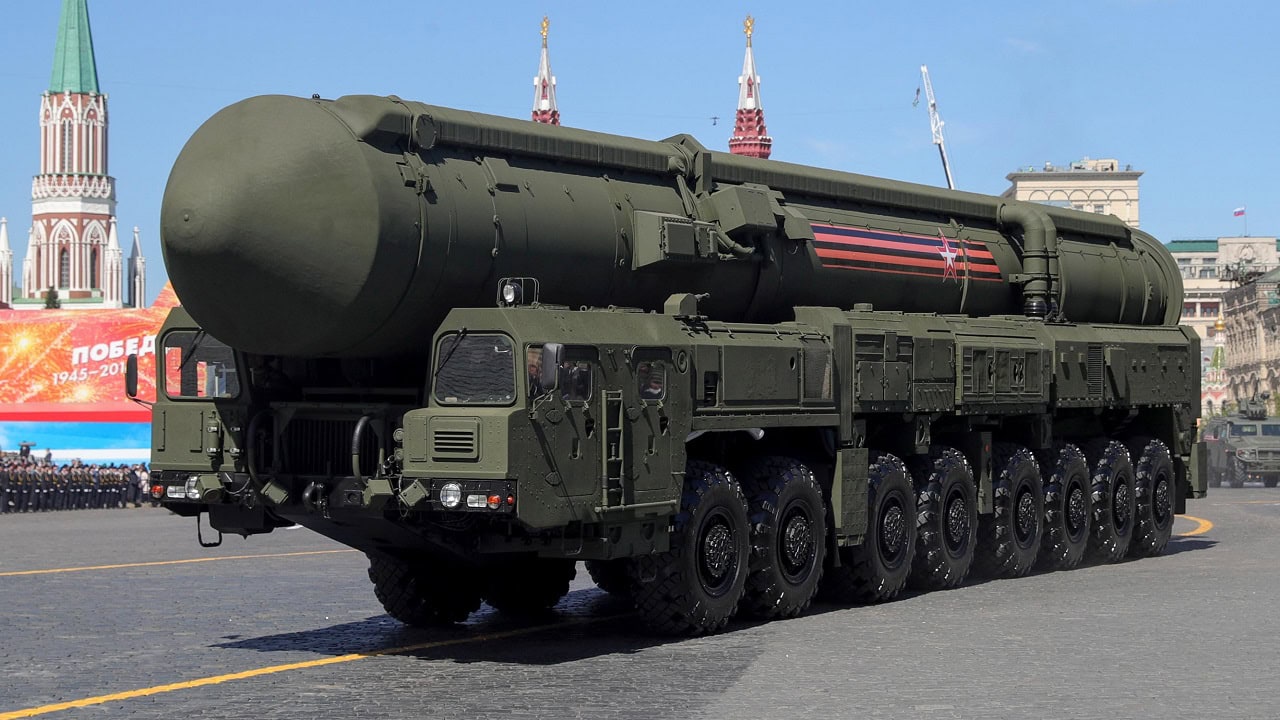
MAY 9, 2018: An RS-24 Yars mobile intercontinental ballistic missile system rolls down Moscow’s Red Square during a Victory Day military parade marking the 73rd anniversary of the victory over Nazi Germany in the 1941-1945 Great Patriotic War, the Eastern Front of World War II. Sergei Bobylev/TASS.
The Physics Problem
The reason the numbers are so brutal is not engineering timidity; it is orbital mechanics. Interceptors in low orbit circle the planet every ninety minutes, so at any moment, nearly all of them are somewhere useless, which is why Harrison’s math requires about 950 interceptors in orbit just to guarantee that one is in range of one launch site, a dilemma he summarizes plainly: “it’s not a technical problem, it’s a physics problem”.
This is not a critique from the program’s enemies. Tom Karako of CSIS, Washington’s leading missile-defense advocate, concedes that “the biggest problem is the absentee ratio” for exactly these constellation architectures. Michael Griffin, the former Pentagon research chief and a lifelong champion of advanced missile defense, has gone further, telling a missile-defense advocacy forum that timely intercept of ICBMs from space is “almost entirely limited by physics” and that a boost-phase space constellation is not worth the money.
And the record of the system Golden Dome would scale up counsels humility: the existing national shield fields 44 ground-based interceptors with a test record of 11 intercepts in 19 attempts under scripted conditions, which critics call “no better than a flip of the coin”, a record now being modernized by Lockheed’s $17 billion next-generation interceptor. Sen. Mark Kelly, an astronaut and engineer, put the institutional worry on the record at a hearing: “I am not sure that the physics can get there,” he told the defense secretary, noting in the same breath that the Pentagon had cut nearly three-quarters of the independent test office that would verify whether any of it works before deployment.
The Case for Building It Anyway
The honest ledger has a second column, and it is not empty. The threat is real and growing: the intelligence community projects the combined Chinese and Russian ICBM force expanding by half within a decade, salted with hypersonic gliders and orbital-trajectory weapons built specifically to beat the current warning architecture, part of a missile buildup that already outguns American defenses across the Pacific. The technology has genuinely changed since the Star Wars era: launch costs have collapsed, mega-constellation manufacturing exists at scale, and former Space Development Agency officials argue that an interceptor that weighed 900 kilograms in 2004’s studies can now be built at 80.
The program is no longer a slide deck: the Space Force has awarded 20 contracts worth up to $3.2 billion to a dozen companies for interceptor prototypes, with demonstrations targeted inside two years, and this week added $1.75 billion for 36 missile-tracking satellites — sensors that are valuable no matter how the interceptor debate resolves.
And the program’s leadership is behaving more honestly than its critics sometimes allow: Guetlein has conditioned the hardest layer on its own economics, telling Congress, “If boost-phase from space is not affordable and scalable, we will not produce it,” with pivot paths built into the architecture. Against North Korea’s arsenal, or a limited coercive strike, a layered shield with modernized interceptors, better sensors, and real cruise-missile and drone defenses is not fantasy. It is arguably overdue.
The Question Nobody Has Answered
Which returns to the question underneath every disputed dollar. Harrison frames it as the program’s founding ambiguity: “How much homeland air and missile defense is enough?”
Against a rogue state, the answer is affordable, and the physics is close. Against the peer salvo the executive order’s “any foe” language gestures toward, the CBO’s ten simultaneous intercepts are a rounding error, offense remains permanently cheaper than defense, and every dollar spent chasing the impossible version is a dollar unavailable for the Pacific fight the wargames keep losing. The Atlantic Council’s verdict in May was that the program needs a price tag and a clear objective to succeed, and noted a wrinkle the enthusiasts skip: the interceptors themselves must be defended, which is partly why next year’s Space Force request carries $22 billion just for protecting things in orbit. Moscow and Beijing have already lodged their joint objection, warning the shield will ignite the arms race, its own Senate skeptics predict.
None of this makes Golden Dome a scam, and none of it makes it a shield; it makes it an unpriced answer to an unasked question. Define the mission as stopping the missiles a rogue state can throw, and the program is buildable, useful, and roughly affordable.
Define it as stopping what China and Russia can throw together, and the physics, the budget office, and the program’s own director have all, in their different vocabularies, given the same answer.
The most expensive decision in American defense is currently being made by not being made.
About the Author: Harry J. Kazianis
Harry J. Kazianis (@Grecianformula) was the former Senior Director of National Security Affairs at the Center for the National Interest (CFTNI), a foreign policy think tank founded by Richard Nixon based in Washington, DC. Harry has over a decade of experience in think tanks and national security publishing. His ideas have been published in the NY Times, The Washington Post, The Wall Street Journal, CNN, and many other outlets worldwide. He has held positions at CSIS, the Heritage Foundation, the University of Nottingham, and several other institutions related to national security research and studies. He is the former Executive Editor of the National Interest and the Diplomat. He holds a Master’s degree focusing on international affairs from Harvard University.

