

U.S. Navy Aircraft Carriers Face a Battleship Problem, but They Are Not Obsolete Yet: Battleships did not become useless overnight. Aircraft extended naval firepower beyond the reach of their guns, leaving the great ships too expensive and exposed for the mission once assigned to them. The aircraft carrier now faces a similar challenge. Long-range missiles, satellites, submarines, and drone swarms threaten the floating airfield from several directions.
The case against the carrier begins with China. The Pentagon’s 2025 China military report describes a surveillance-and-strike architecture capable of challenging American intervention across 1,500 to 2,000 nautical miles when fielded in sufficient volume. Anti-ship ballistic missiles, cruise missiles, aircraft, submarines, and space sensors all support one mission: find the carrier, hold the track, and overwhelm its defenses.
The target is enormously valuable. The Congressional Budget Office says the future USS Doris Miller is expected to cost $15.2 billion and carry about 60 aircraft. A carrier also brings escorts, supply ships, and thousands of sailors into the enemy’s targeting problem. One successful attack would carry consequences far beyond the loss of a hull.
Recent combat exposed the defensive burden. Across self-defense and offensive operations during its Red Sea deployment, the Dwight D. Eisenhower Carrier Strike Group fired 155 Standard missiles, 135 Tomahawks, and nearly 60 air-to-air missiles while defeating drones, cruise missiles, ballistic missiles, and surface threats. The group returned intact. It also showed how repeated low-cost attacks consume expensive weapons and crew endurance.
The Case Against the Aircraft Carrier Is Serious
China does not need to sink a carrier to reduce its value. Forcing the ship far enough from Taiwan or the Chinese coast might place targets beyond the comfortable reach of today’s F/A-18E/F and F-35C force. The Navy’s carrier air-wing range problem gives long-range missiles an effect before one reaches the ship.
Damage to the flight deck, catapults, arresting gear, or aviation-fuel system might halt sustained flight operations without sinking the vessel. Drones also serve as decoys, scouts, jammers, or attack weapons within a larger salvo, forcing defenders to reveal their radars and expend interceptors. The fear of a new battleship problem rests on harsh arithmetic: one side risks a national asset while the other launches weapons costing a fraction of its price.
Sinking a Moving Carrier Is Still an Extremely Hard Mission
The carrier is not a fixed air base. It moves hundreds of miles in a day, changes course, limits emissions, and operates under aircraft, electronic warfare, submarines, and Aegis-equipped escorts. An opponent must detect the group, identify the carrier, preserve an accurate track, transmit targeting data, and guide weapons through deception and jamming. Breaking one link breaks the shot.
The defensive battle starts far from the hull. E-2D Hawkeyes search the airspace, fighters intercept launch platforms, EA-18G Growlers attack sensors and communications, and destroyers use the Aegis weapon system against missiles and aircraft. Inner layers add shorter-range missiles, guns, decoys, and electronic countermeasures.
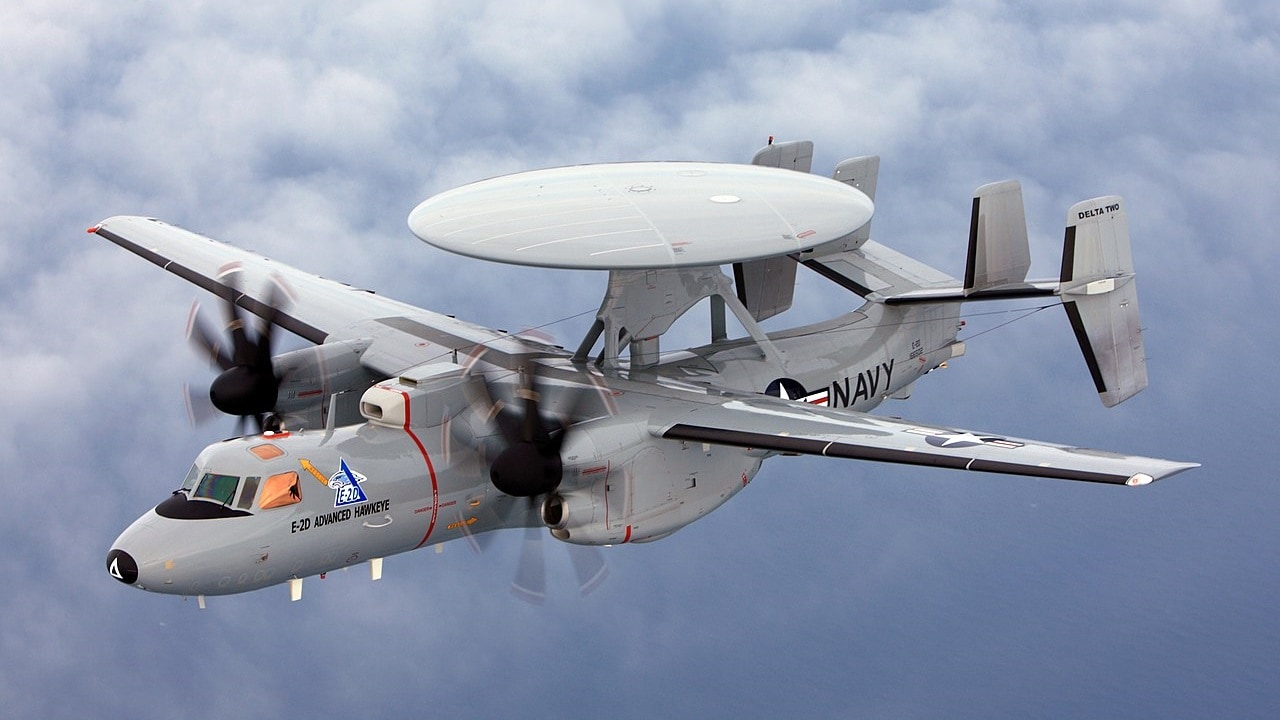
Dec. 9, 2009) E-2D Advanced Hawkeye aircraft conduct a test flight near St. Augustine, Fla. (Photo Courtesy Northrop Grumman/Released).
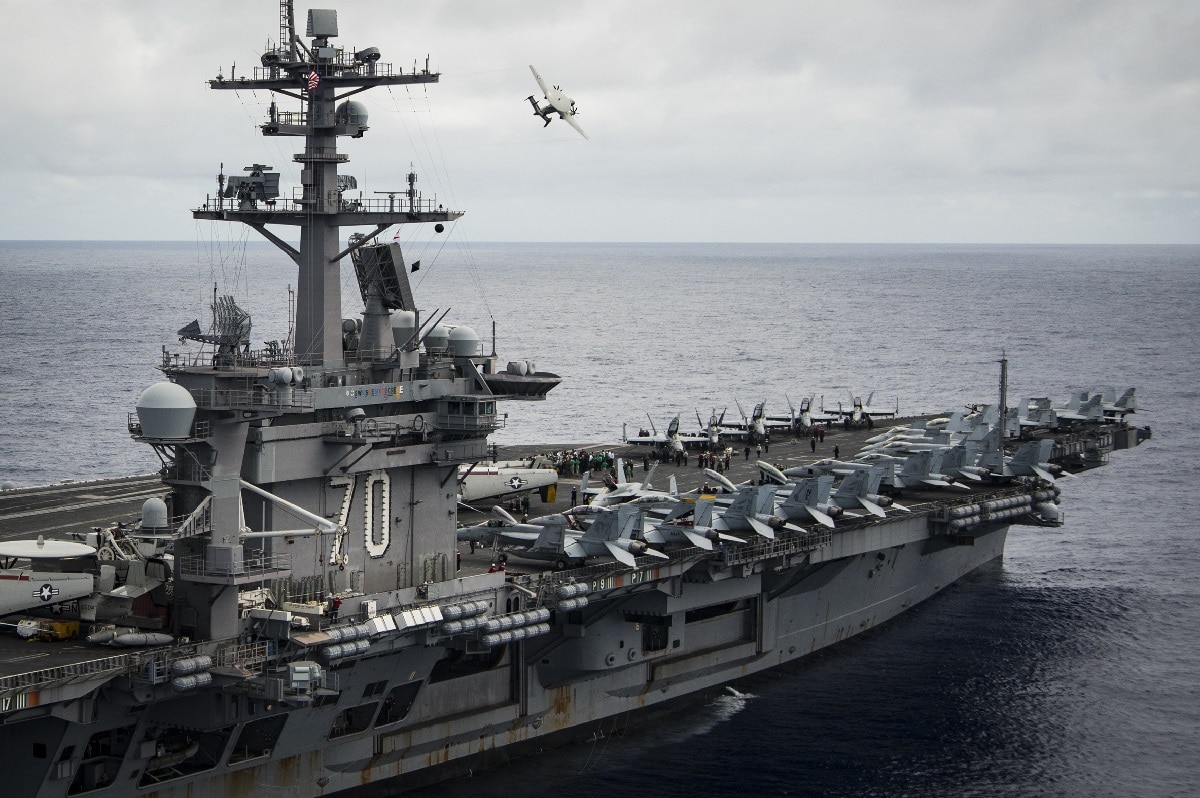
PACIFIC OCEAN (Feb. 9, 2017) An E-2C Hawkeye assigned to the “Black Eagles” of Carrier Airborne Early Warning Squadron (VAW) 113 flies over the aircraft carrier USS Carl Vinson (CVN 70) during a change of command ceremony. The ship’s carrier strike group is on a western Pacific deployment as part of the U.S. Pacific Fleet-led initiative to extend the command and control functions of U.S. 3rd Fleet. (U.S. Navy photo by Mass Communication Specialist 2nd Class Zachary Alan Landers/Released) 170209-N-GD109-194
The Red Sea proved those defenses work under fire, but it did not reproduce a Chinese attack. Houthi forces lacked China’s volume, satellite support, submarines, and advanced missile inventory. The carrier’s regional combat record supports confidence without settling the peer-war question.
Gerald R. Ford also completed shock trials involving three 40,000-pound underwater blasts and continued operating. Compartmentation, firefighting, redundancy, and a large crew offer resilience that is absent on commercial ships. No public test duplicates a modern anti-ship ballistic missile salvo.
The Real Aircraft Carrier Problem Is Range
A carrier stays relevant only when its aircraft reach the fight, while the ship stays outside the worst threat rings. Battleships lost their place because their main weapon no longer reached far enough. A carrier carries replaceable and upgradeable weapons in the form of aircraft, giving the platform room to evolve.
The Navy’s MQ-25A Stingray made its first test flight in April 2026. NAVAIR says the unmanned tanker will extend the carrier air wing’s combat range and strike reach. Longer-range weapons, unmanned aircraft, and a future fighter serve the same purpose: launch useful combat power from farther away.
A Nimitz-class hull designed in the 1960s now operates stealth fighters, airborne early-warning aircraft, and advanced electronic attack platforms. The flight deck accepts aircraft generations never imagined when the ship was drawn, supporting a central argument: the carrier is changing rather than disappearing.
The Navy Should Stop Treating the Carrier as the Whole Answer
The carrier is not obsolete, but the Navy creates unnecessary risk by placing the supercarrier at the center of every maritime plan. Submarines, land-based bombers, unmanned systems, Marine missile units, and allied air bases should share the burden of striking. The carrier belongs inside a wider network, not close to a defended coastline, carrying the campaign alone.
A debate over smaller or medium carriers deserves attention, although smaller flight decks sacrifice sortie capacity, fuel, maintenance space, and damage tolerance. Distributing aviation across more ships reduces concentration while increasing the number of escorts, crews, and logistics chains the fleet must support.
On April 25, the MQ-25 prototype flew for two hours over Illinois. It was not a replacement for the carrier. It was an effort to move the carrier’s reach farther from the missiles built to kill it. Before a Pacific strike package leaves the deck, tankers, electronic-attack aircraft, destroyers, submarines, and satellites will already be fighting over the enemy’s targeting chain.
About the Author: Harry J. Kazianis
Harry J. Kazianis (@Grecianformula) was the former Senior Director of National Security Affairs at the Center for the National Interest, a foreign policy think tank founded by Richard Nixon in Washington, D.C. Harry has more than a decade of experience in think tanks and national security publishing. His ideas have been published in The New York Times, The Washington Post, The Wall Street Journal, CNN and many other outlets worldwide. He has held positions at CSIS, the Heritage Foundation, the University of Nottingham and several other institutions related to national security research and studies. He is the former Executive Editor of The National Interest and The Diplomat. He holds a master’s degree focusing on international affairs from Harvard University.

