
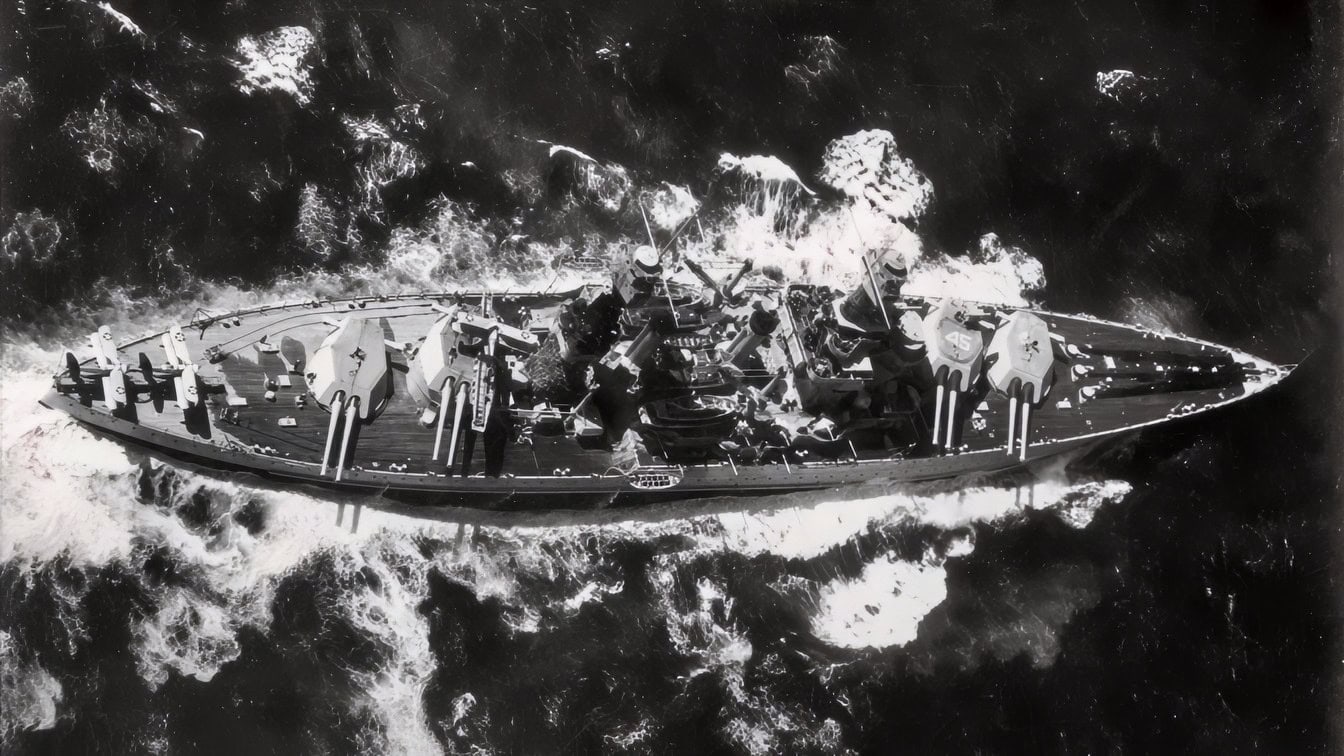
The USS Colorado (BB-45) entered service during the twilight of the dreadnought era, when naval planners believed future wars would be decided by massive battleships trading broadsides.
As the lead ship of the Colorado class, one of the famous American “Big Five” battleships, the USS Colorado represented the pinnacle of US battleship design before the Washington Naval Treaty froze construction.
Although the Colorado was built specifically to engage with and defeat enemy battleships, the vessel spent World War II doing something entirely different: supporting amphibious invasions with gunfire.
The USS Colorado, which never exactly served in the role she was designed for, speaks to how quickly naval warfare evolved in the mid-20th century, relegating battleships to a secondary role after decades spent as the cornerstone of naval power.
The Big Five
The Colorado led a class including the USS Maryland and USS West Virginia.
Together, along with the Tennessee and California classes, these battleships became known as the Navy’s “Big Five,” representing America’s most modern treaty-era battleships.
With a standard displacement of 32,600 long tons and a full load of nearly 35,000 tons, the USS Colorado could displace over 40,000 tons with wartime modifications due to additional anti-aircraft, radar, and equipment.
The platform also served to refine the Navy’s revolutionary armor philosophy.
On the Colorado, thick armor protected magazines, machinery spaces, and propulsion, while less critical sections received minimal protection.
By concentrating armor where it was most needed, the vessel could protect itself while keeping its overall weight down.
Armed to the Teeth
The Colorado was the first US battleship class armed with 16-inch/45 caliber guns. Configured with four twin turrets, the Colorado featured a total of eight main guns and could fire approximately 2,100-pound armor-piercing shells with a maximum range exceeding 20 miles.
With firepower designed specifically to penetrate heavily armored ships at long range, the Colorado class was built to be the most dominant vessel on the surface of the ocean.
For secondary battery, the Colorado featured 5-inch guns for defense against destroyers, while wartime additions included dozens of 40 mm Bofors and 20 mm Oerlikon anti-aircraft guns, reflecting the growing importance of defending against aircraft and not just other surface vessels.
Entering the War
Unlike many Pacific Fleet battleships, Colorado was not present during the attack on Pearl Harbor; she was undergoing an overhaul at Puget Sound Navy Yard on December 7, 1941, so she was fortunate to escape the destruction that crippled much of the US Navy’s battle line.
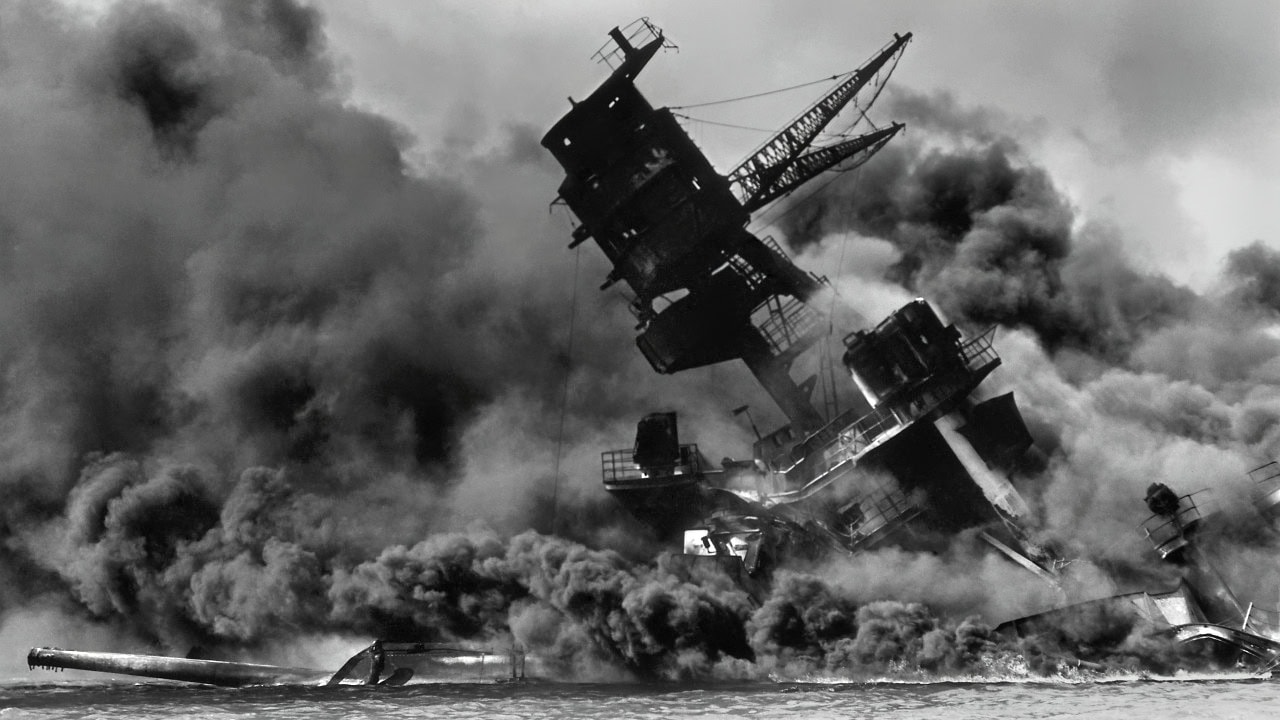
The USS Arizona (BB-39) burning after the Japanese attack on Pearl Harbor, 7 December 1941.
She returned to service as one of the Navy’s most capable heavy bombardment ships at a time when that capability was most needed.
But rather than fighting enemy battleships, the Colorado became an indispensable provider of naval gunfire support.
In 1943, Colorado shelled heavily fortified Japanese positions before Marine landings and demonstrated the growing importance of battleships in amphibious warfare.
At the Marshall Islands, she bombarded Kwajalein and Eniwetok, helping to suppress coastal defenses ahead of invasion forces.
During the Marianas Campaign, Colorado supported landings on Saipan and Tinian.
Notably, during Tinian, Japanese shore batteries struck Colorado 22 times, inflicting 43 deaths and more than 90 wounded. Despite the damage, the vessel remained on station and continued firing.
In the Philippines, Colorado supported the liberation of Leyte and Luzon, even surviving two kamikaze strikes in November 1944, and returning to action after receiving repairs.
At Okinawa, Colorado spent weeks bombarding cave complexes, artillery positions, and defensive fortifications.
By this point in the war, battleships had fully evolved, effectively becoming floating artillery batteries supporting troops ashore. Curiously, the Colorado never fought another battleship—the very role she was built to fulfill.
End of an Era
The Colorado’s career mirrors the way naval warfare changed in the mid-20th century.
Designed to duel enemy battleships, the Colorado instead spent most of World War II bombarding shore targets, defending carriers, and providing anti-aircraft protection.
Ultimately, it was the aircraft carrier, not the battleship, that became the decisive capital ship of the Pacific War—a status the aircraft carrier still retains today, 80 years later, while battleships have long since been retired.
About the Author: Harrison Kass
Harrison Kass is a writer and attorney focused on national security, technology, and political culture. His work has appeared in Tablet, City Journal, The Hill, The Spectator, and The Cipher Brief. He holds a JD from the University of Oregon and a master’s in Global & Joint Program Studies from NYU. More at harrisonkass.com.