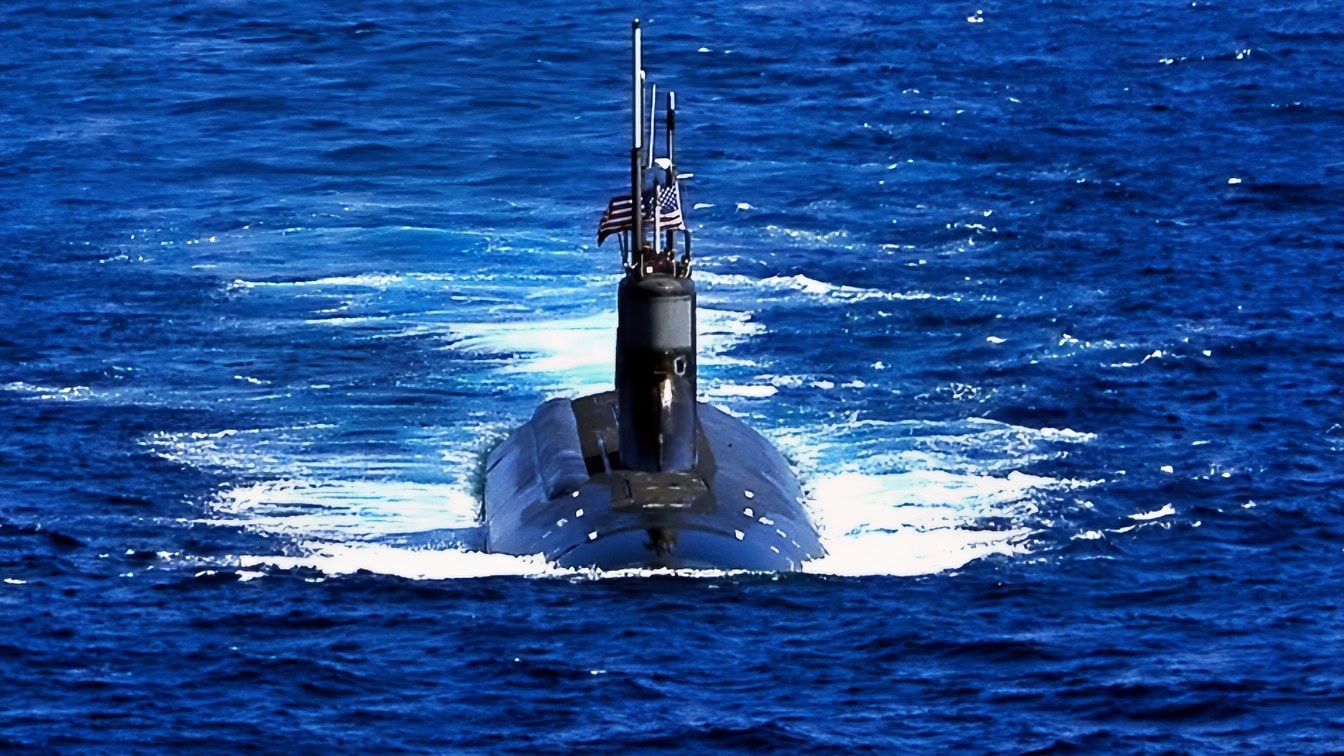
The United States Navy’s Seawolf-class attack submarines remain one of the most advanced submarine classes in the world, even though they’re 30 years old. In fact, these subs are called the F-22 Raptor of submarines for a reason—no more can be built, and the US military would love to have more of them.
Created to replace the Los Angeles-class attack submarine, the Seawolf-class was never allowed to fully embrace its intended future because Congress cut funding for the program prematurely once the Soviet Union collapsed and the Cold War ended.
Today, the Seawolf-class submarines are needed more than ever. But there are only three Seawolfs in existence–and the Navy will never build more.
What Might Have Been
America’s maritime branch originally planned to build Seawolf-class submarines over the course of a decade. That number was then reduced to 12. It never got above three.
General Dynamics Electric Boat in Groton, Conn., built all three Seawolf-class submarines. Construction of the namesake of this class, the USS Seawolf (SSN-21), began in 1989.
She was commissioned in 1997. Then came the USS Connecticut (SSN-22), which eventually entered service in 1998.
The last boat of this class was the USS Jimmy Carter (SSN-23). That last submarine featured a unique 100-foot hull extension known as the Multi-Mission Platform and entered service in 2005.
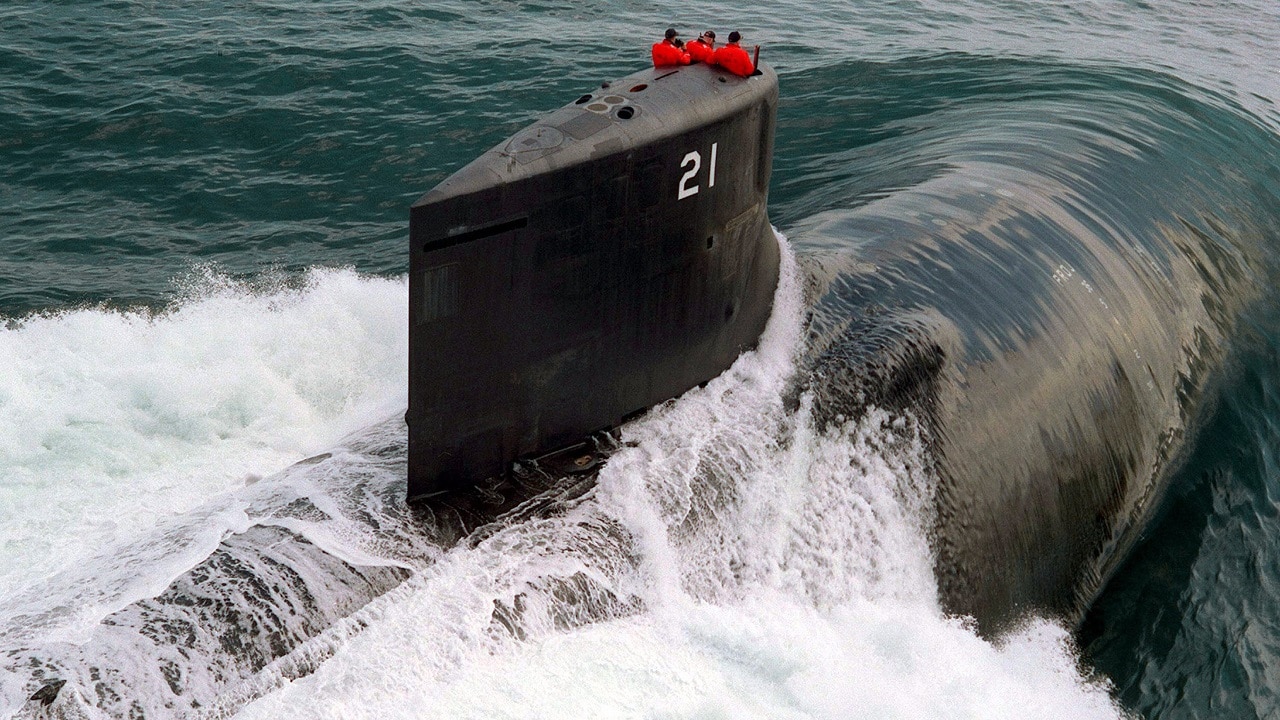
The U.S. Navy’s newest attack submarine, USS Seawolf (SSN 21), conducts Bravo sea trials off the coast of Connecticut in preparation for its scheduled commissioning in July 1997. The aerial image shows the sail from a starboard angle, looking forward, 9/16/1996. Jim Brennan. (OPA-NARA II-9/10/2015).
The first two boats in the Seawolf-class displace around 9,138 tons when submerged.
The Jimmy Carter, however, displaces around 12,158 tons because of the additional hull section that the Navy added.
Naval planners intended for the Seawolf-class submarines to take on the Soviet Navy at the height of the Cold War.
Compared with the Los Angeles-class attack submarines, these submarines featured a quieter propulsion system, greater weapons capacity (they carried eight torpedo tubes rather than four), and much better performance.
For example, Seawolf-class attack submarines had greater diving capability, higher sustained speed, and much greater survivability.
Capabilities
Seawolf-class submarines were the fastest and quietest attack submarines in the world at the time of their introduction.
Despite the Seawolfs’ incredible capabilities, the Navy never came close to its desired number of 29 units because Congress believed the end of the Cold War rendered the program obsolete.
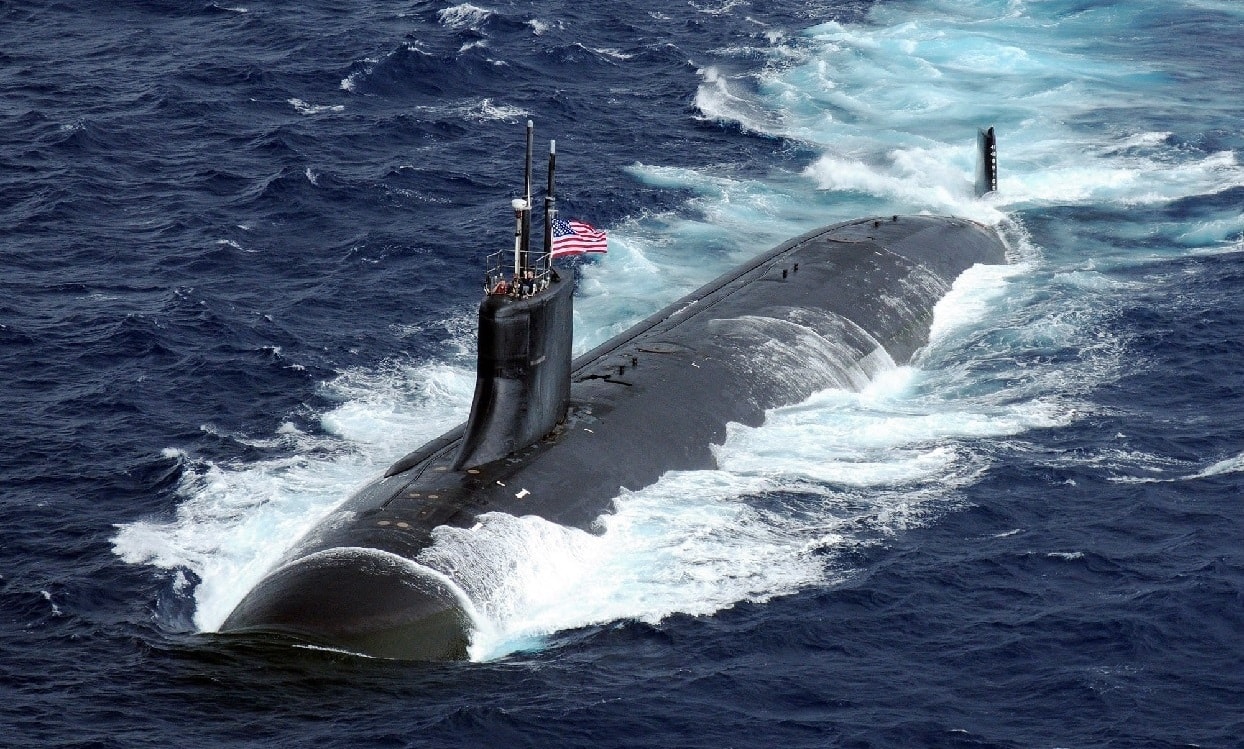
Image: Creative Commons.
They preferred the “Peace Dividend.” So, Congress massively reduced military spending and drastically cut programs that were originally designed to take the fight against the Soviet Union to the next level.
At roughly $3 billion or more per submarine–an enormous figure during the era of the Peace Dividend–the Seawolf-class became a persistent target for budget cuts.
Congress ordered the Navy to shift priorities away from the Seawolf-class submarine program and into the Virginia-class submarine program.
What Made Jimmy Carter So Special
The USS Jimmy Carter, which had been on the chopping block, survived because the Navy effectively argued that it needed to maintain the country’s submarine industrial base until the Virginia-class production began.
Rather than simply duplicating the first two Seawolf-class submarines, the Navy modified the Jimmy Carter to serve as the aforementioned Multi-Mission Platform.
So, Jimmy Carter was made to conduct classified surveillance; the submarine could support special operations missions, and it became a testbed for advanced technologies.
The most important mission that the Seawolf was designed for–that the modified Jimmy Carter really excelled at–was undersea cable exploitation.
This critical capability allowed the Navy to eavesdrop on or sabotage sensitive undersea telecommunications cables that the rest of the world, especially America’s rivals, depended upon.
Interestingly, the great power conflict that the Seawolf-class submarines were designed for never really vanished, despite what Congress believed at the end of the Cold War.
Russia retained one of the world’s most capable submarine fleets. Meanwhile, China has rapidly expanded both the size and sophistication of the People’s Liberation Army Navy (PLAN).
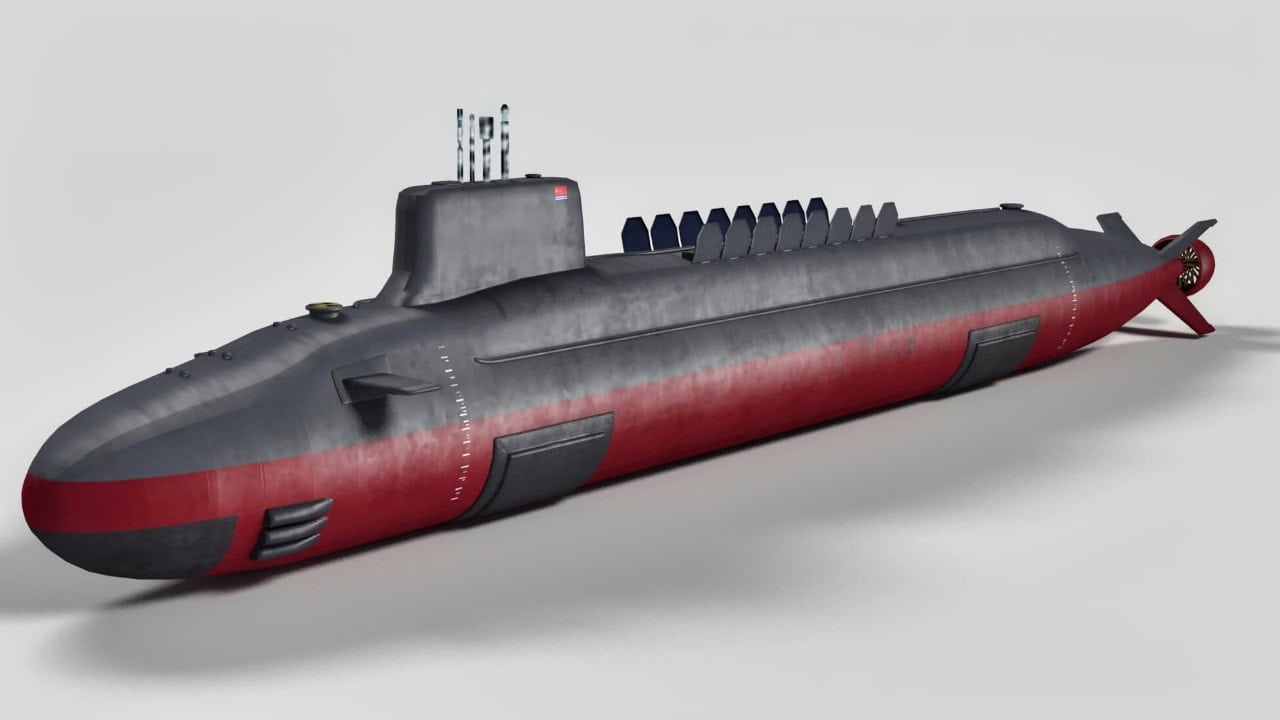
Type 096 Submarine from China. Image Credit: Creative Commons.
As undersea competition has intensified across the Indo-Pacific and North Atlantic, demand for highly capable attack submarines has surged just as the United States possesses only three Seawolf-class boats.
Paying the Price Today
Modern US Navy submarine production has struggled for years to meet demand. Industrial base challenges have slowed Virginia-class construction well below planned production rates while delaying maintenance on existing boats.
Analysts increasingly caution that America may soon face a submarine shortage in the 2030s, as older Los Angeles-class attack submarines retire faster than replacements enter service.
Had America maintained its production of the Seawolf-class as originally intended, much of today’s capability gap would likely be less severe.
MORE – The F-22 Raptor Can’t Be Built Anymore
About the Author: Brandon J. Weichert
Brandon J. Weichert is the Senior National Security Editor at 19FortyFive.com. He also manages The Weichert Brief on Substack. Weichert also hosts “National Security Talk” on Rumble. He is the author of four bestselling national security books, the most recent of which is A Disaster of Our Own Making: How the West Lost Ukraine (Encounter Books). Follow him via Twitter/X @WeTheBrandon.