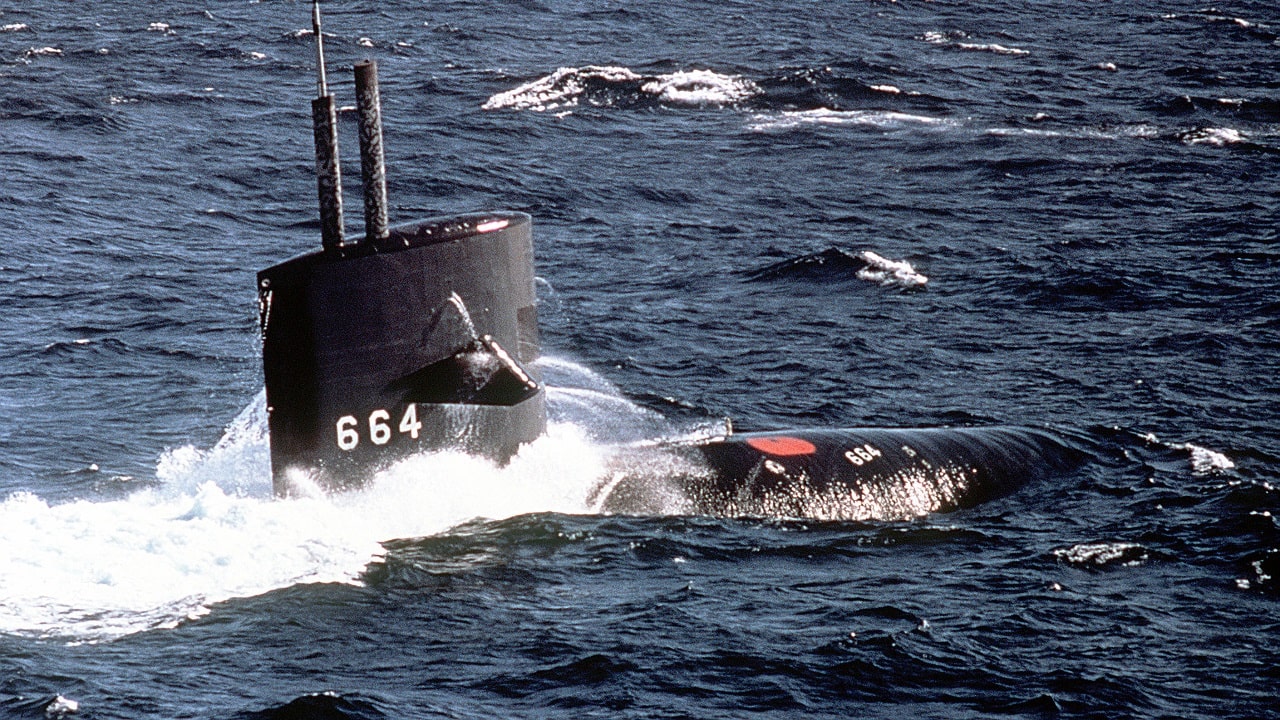
The United States Navy has the best submarine force in the world. But few submarines in that long history of undersea greatness match the reputation of the mysterious USS Parche (SSN-683).
While most attack submarines spent their careers tracking enemy vessels and preparing for combat, Parche was the kind of submarine America used for its Cold War undersea espionage mission.
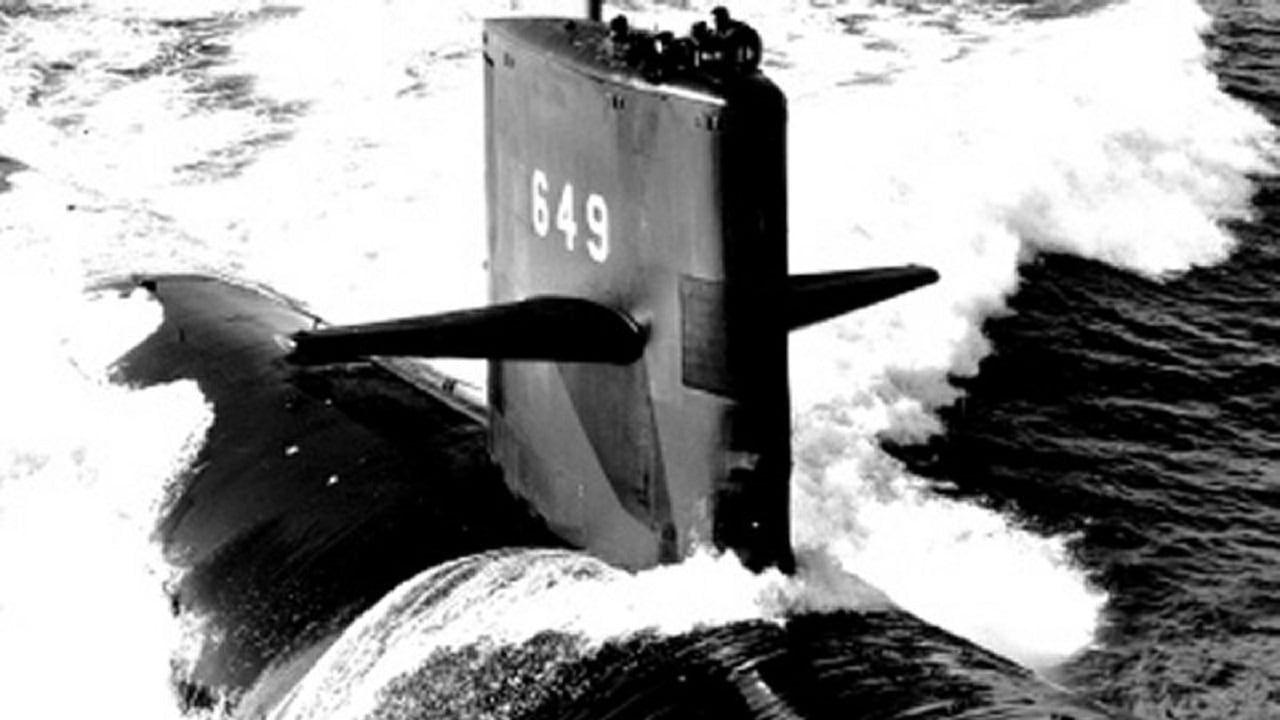
USS Sunfish SSN-649. Sturgeon-Class Submarine.
This boat carried out missions so secretive that many of its missions remain classified even today, decades after they occurred.
The Impressive Legacy the Parche Left
In fact, the Parche has more unit citations than any other vessel in US Navy history.
USS Parche was the second US Navy vessel to carry the name.
Unlike the original World War II-era Balao-class submarine, the nuclear-powered Parche of the Cold War belonged to the Sturgeon-class of America’s fast attack submarines.
She was ordered on June 25, 1968, by Ingalls Shipbuilding in Pascagoula, Mississippi, and had her keel laid on December 10, 1970. The Parche launched in 1973 and entered service a year thereafter.
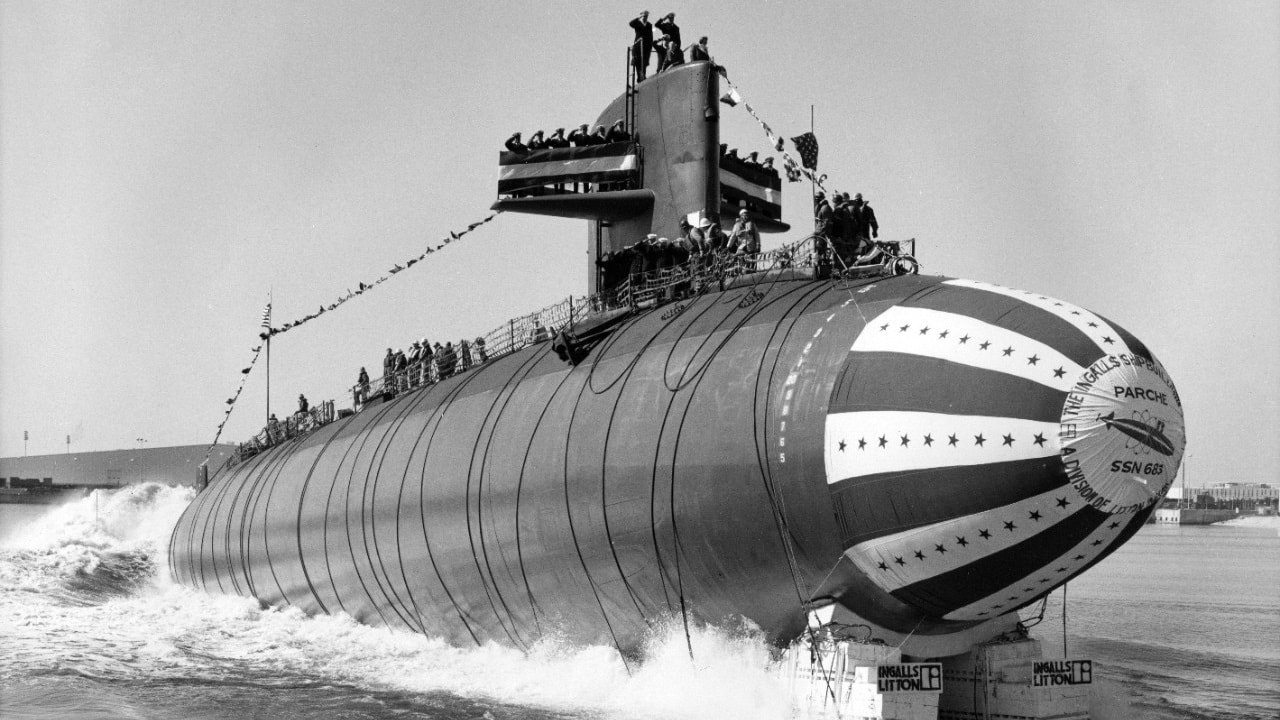
USS Parche (SSN 683) from the early 1970s.
As originally built, Parche displaced around 4,270 tons when submerged and measured 302 feet long.
She carried a crew of roughly 112 sailors and was powered by a single S5W nuclear reactor, enabling underwater speeds exceeding 25 knots. Parche was armed with four 21-inch torpedo tubes typical of the Sturgeon-class.
Initially, she served as a conventional fast attack submarine.
By the 1970s, though, the Navy had identified the boat as an ideal candidate for a radically different mission set.
Rather than hunting Soviet subs, Parche would quietly infiltrate Soviet waters to collect intelligence that satellites and aircraft could not obtain.
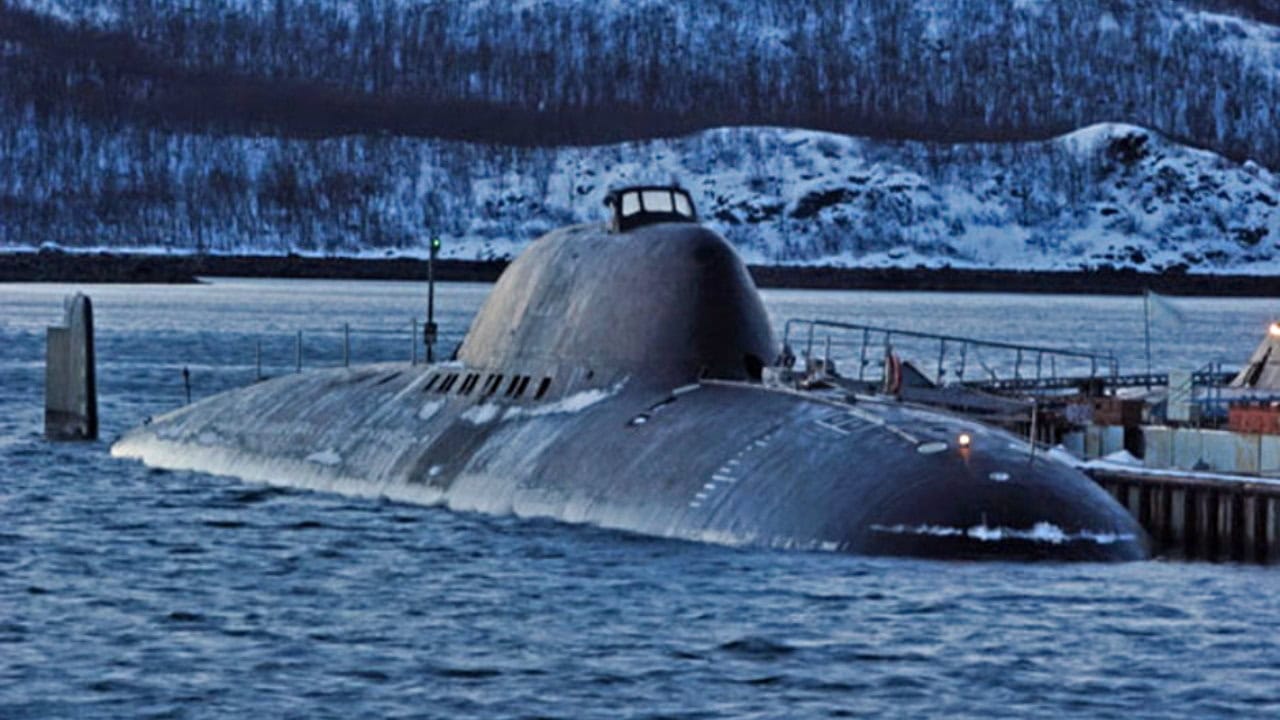
Alfa-Class Russian Navy. Image Credit: Creative Commons.
Between 1987 and 1991, the Parche underwent a major overhaul at the Mare Island Naval Shipyard in California.
Engineers inserted a 100-foot hull section that increased the submarine’s length to roughly 401 feet.
That added space housed sophisticated electronic surveillance equipment.
The Navy gave that new section maneuvering thrusters, cameras, and advanced sonar systems.
The Parche also had landing skids installed so the submarine could “land” on the ocean floor!
The Mission History of the USS Parche
Parche took part in Operation Ivy Bells, US intelligence’s mission to tap and install sophisticated listening devices onto seabed cables carrying communications between Soviet naval commands.
Those recordings provided Washington with invaluable insight into Soviet military operations during the height of the Cold War.
But wiretapping represented only part of Parche’s workload.
The submarine reportedly recovered Soviet missile fragments from the ocean floor following Soviet missile tests.
Parche retrieved military hardware, she deployed surveillance equipment in hostile waters, and conducted critical intelligence missions beneath the Arctic ice.
Many of these operations remain officially classified.
The Parche even possessed a nasty self-destruct capability, designed to be activated if it appeared that the submarine and all its advanced surveillance gear might be captured.
During her 30 years of service, the Parche accumulated nine Presidential Unit Citations, ten Navy Unit Commendations, 13 Navy Expeditionary Medals, and numerous Battle Efficiency Awards, making it the most highly decorated vessel in US Navy history.
Such awards are exceptionally rare for any warship.
So, the presence of these awards in the official record of the Parche indicates just how significant the submarine’s service to the Navy and the United States really was.
The Long Goodbye
USS Parche was ultimately decommissioned in 2004. Her mast was preserved and remains today in Washington state as a memory of the sailors who bravely served aboard her during the Cold War.
Once Parche was gone, the Navy knew they needed to preserve her capabilities.
So, they made the Seawolf-class submarine, USS Jimmy Carter (SSN-23), able to carry out the same kinds of covert undersea missions that the Parche used to conduct.
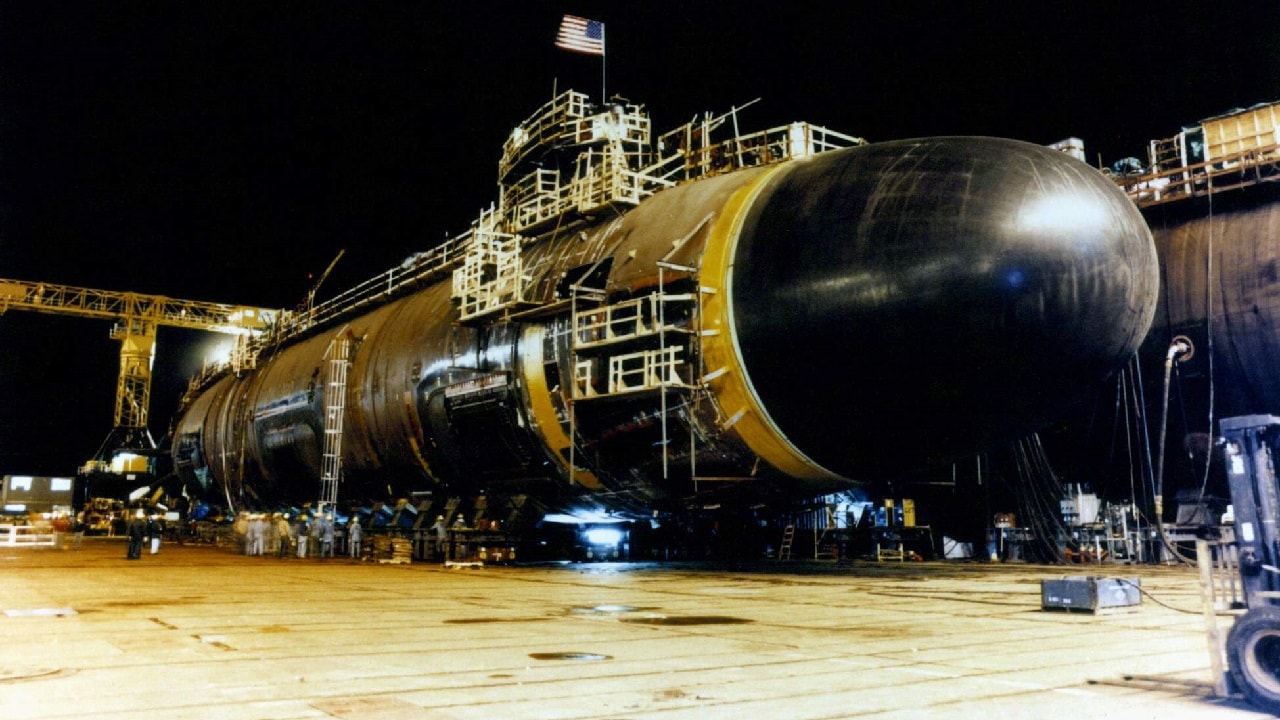
The first of a revolutionary new class of fast attack submarine, the Seawolf (SSN-21). Shown during construction at the Electric Boat Division of General Dynamics Corporation in Groton, Conn. She was christened by Margaret Dalton, wife of Secretary of the Navy John H. Dalton, on June 24, 1995.
The Parche is a reminder that the real advantage of submarines is not their ability to launch missiles or fire torpedoes in undersea combat. Instead, it is their ability to run silent and run deep while spying on America’s enemies.
About the Author: Brandon J. Weichert
Brandon J. Weichert is the Senior National Security Editor at 19FortyFive.com. He also manages The Weichert Brief on Substack. Weichert also hosts “National Security Talk” on Rumble. He is the author of four bestselling national security books, the most recent of which is A Disaster of Our Own Making: How the West Lost Ukraine (Encounter Books). Follow him via Twitter/X @WeTheBrandon.