

Iran and Oman are again signaling that an agreement over the governance of the Strait of Hormuz is close, days after the White House said a deal was imminent. Both sides continued to indicate through Friday, August 7, that a deal was imminent, even as Tehran insisted that any arrangement would not merely restore the pre-war status quo and that continued U.S. pressure could prevent the waterway from opening at all.
Iranian state media continues to report that negotiations with Oman are nearing completion of a new system for managing commercial traffic through the strait.
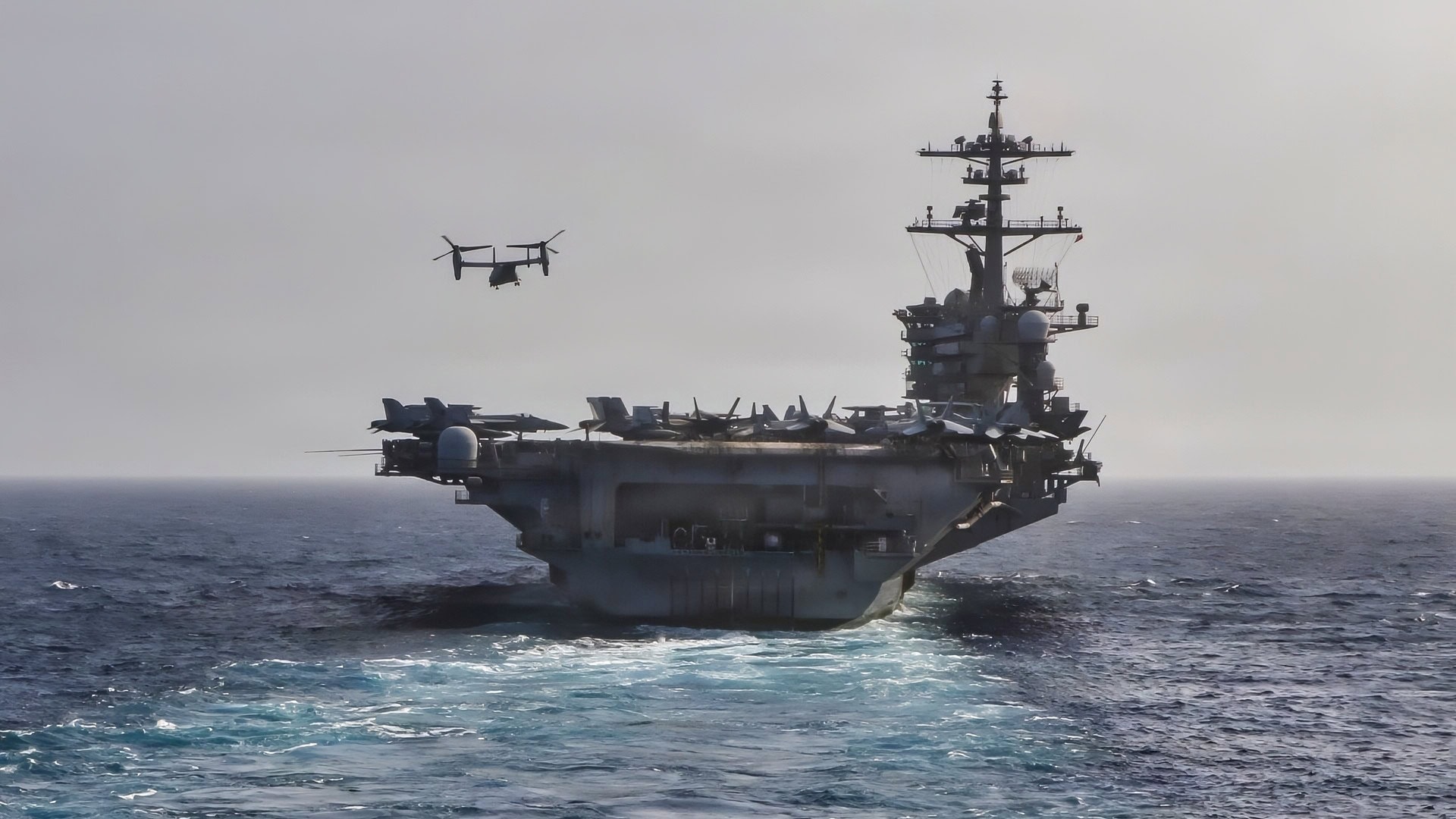
Navy Nimitz-Class Supercarrier USN Photo
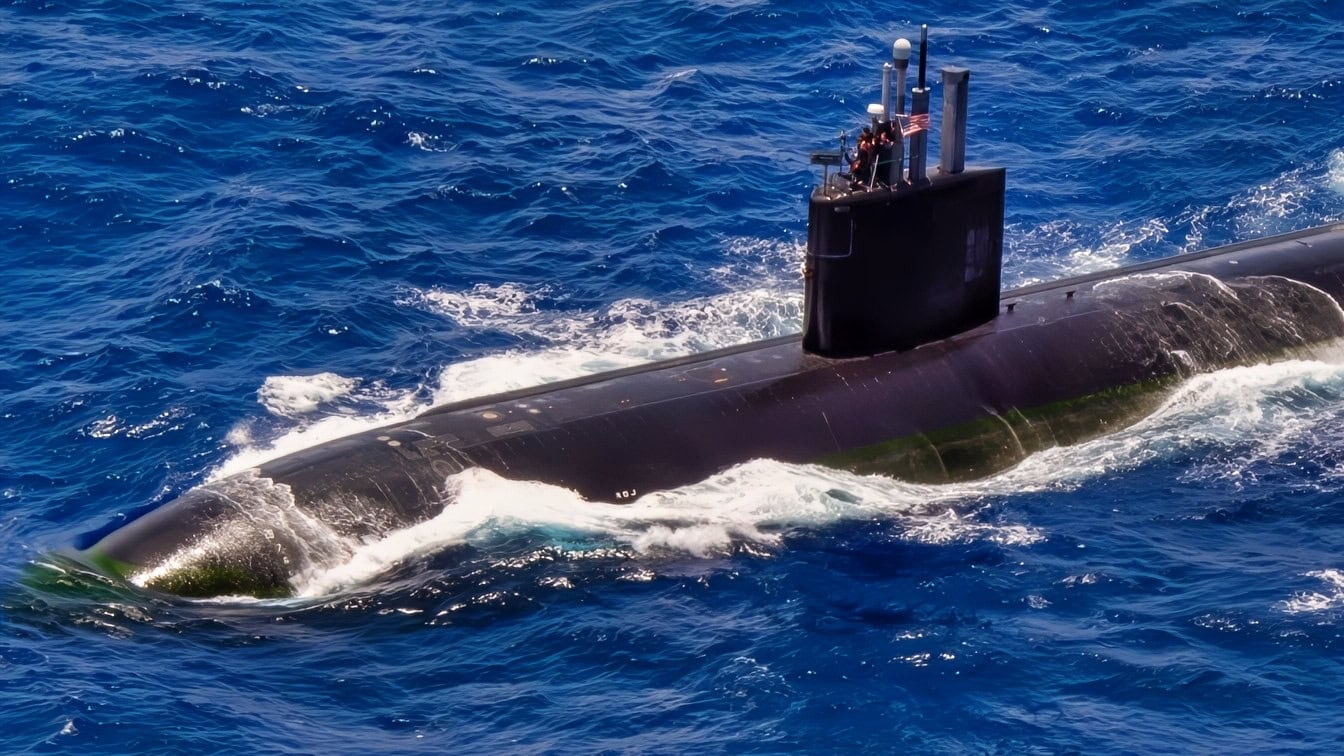
Virginia-class submarine USS North Carolina (SSN-777) sails during the at-sea phase of Exercise Rim of the Pacific (RIMPAC) 2024. Twenty-nine nations, 40 surface ships, three submarines, 14 national land forces, more than 150 aircraft and 25,000 personnel are participating in RIMPAC in and around the Hawaiian Islands, June 27 to Aug. 1. The world’s largest international maritime exercise, RIMPAC provides a unique training opportunity while fostering and sustaining cooperative relationships among participants critical to ensuring the safety of sea lanes and security on the world’s oceans. RIMPAC 2024 is the 29th exercise in the series that began in 1971. (U.S. Navy photo by Mass Communication Specialist 2nd Class Terrin Hartman)
The deal would allow ships to enter through Iranian waters and exit through Omani waters, replacing the old system in which commercial vessels largely passed through the waterway without Iranian interference.
But as the world awaits a potential deal, Tehran is now signaling that continued U.S. interference could see the waterway closed completely – a move that would cripple the global economy at a time when Washington doesn’t have the ammunition stockpile it needs to fight another large-scale war.
Officials Have Been Predicting A Deal All Week
While reports on Friday suggest that Oman and Iran believe a deal is imminent, the fact remains that a deal has been expected imminently for a week now.
Treasury Secretary Scott Bessent said that a deal was due as soon as August 4, telling CNBC the same day that there was a chance it might arrive “today or tomorrow.” He also confirmed that Washington was engaged in discussions with Tehran over freedom of navigation, while Iran claimed that no such negotiations were taking place.
U.S. President Donald Trump also reinforced those expectations later that same day, telling reporters that he believed an announcement could happen within a day or two and adding that a lot of “progress” had been made.
By Wednesday, Iranian officials were also publicly suggesting that negotiations were entering their final phase.
Iranian Foreign Ministry spokesman Esmail Baghaei said that Muscat and Tehran had already agreed on the geographical coordinates of a new shipping route and that a joint statement was now in the final review and drafting stage, provided that “certain third parties” – a clear nod to Washington – did not obstruct the process.
The announcement, however, has not arrived yet.
What We Know
Despite days of speculation and lingering uncertainty about whether the deal will even come to fruition, a rough picture of what the agreement could look like has gradually emerged.
On Thursday, IRNA reported that, under the deal, commercial vessels would enter the Strait through waters controlled by Iran before exiting via routes near the Omani coast.
The Iranian news agency described the new model as a replacement for a “60-year-old practice” that previously saw the Strait open to all commercial traffic.
Earlier proposals reportedly envisioned a more neutral shipping corridor passing through the center of the strait, but it appears Iranian negotiators have rejected those ideas.
Iran Is Keeping the U.S. Out Of It
While the world awaits a deal, Iranian representatives continue to harden their public position against the United States – and legislation moving through the Iranian parliament even suggests that vessels linked to the U.S. and Israel may be permanently blocked from entering the Strait.
Iranian lawmakers are currently reviewing legislation that would block U.S., Israeli, and other vessels belonging to countries that Tehran considers hostile from entering the Strait of Hormuz, while officials still insist that there is no reason that the waterway should fully reopen as long as the United States maintains military pressure on the region.
On Thursday, Behnam Saeedi, the first secretary of Iran’s parliamentary National Security and Foreign Policy Commission, said that the negotiations with Oman were “in no way about” reopening the Strait itself, and argued that any future shipping arrangements would operate under Iranian regulations and authority until Washington completely ends its military presence in the region and lifts the naval blockade.
Trump Knows the U.S. Is Vulnerable
Tehran is maintaining its hard negotiating position for several reasons.
First, Iran has already endured enormous military pressure. While there is plenty left to lose, and the United States could still cause significant damage to Iranian energy infrastructure with additional strikes, Tehran has already endured major military defeats but can still use its control over the Strait of Hormuz as leverage.
The Islamic regime also likely calculates that the United States is unlikely to push ahead with additional strikes given the widely reported missile shortages.
Washington has used up vast amounts of its most valuable precision-guided long-range missiles, resulting in a reported bust-up between the president and Defense Secretary Pete Hegseth in Camp David in recent days.
Iran, it seems, can afford to keep up the pressure.
About the Author: Jack Buckby
Jack Buckby is a British researcher and analyst specializing in defense and national security, based in New York. His work focuses on military capability, procurement, and strategic competition, producing and editing analysis for policy and defense audiences. He brings extensive editorial experience, with a career output spanning over 1,000 articles at 19FortyFive and National Security Journal, and has previously authored books and papers on extremism and deradicalization.