
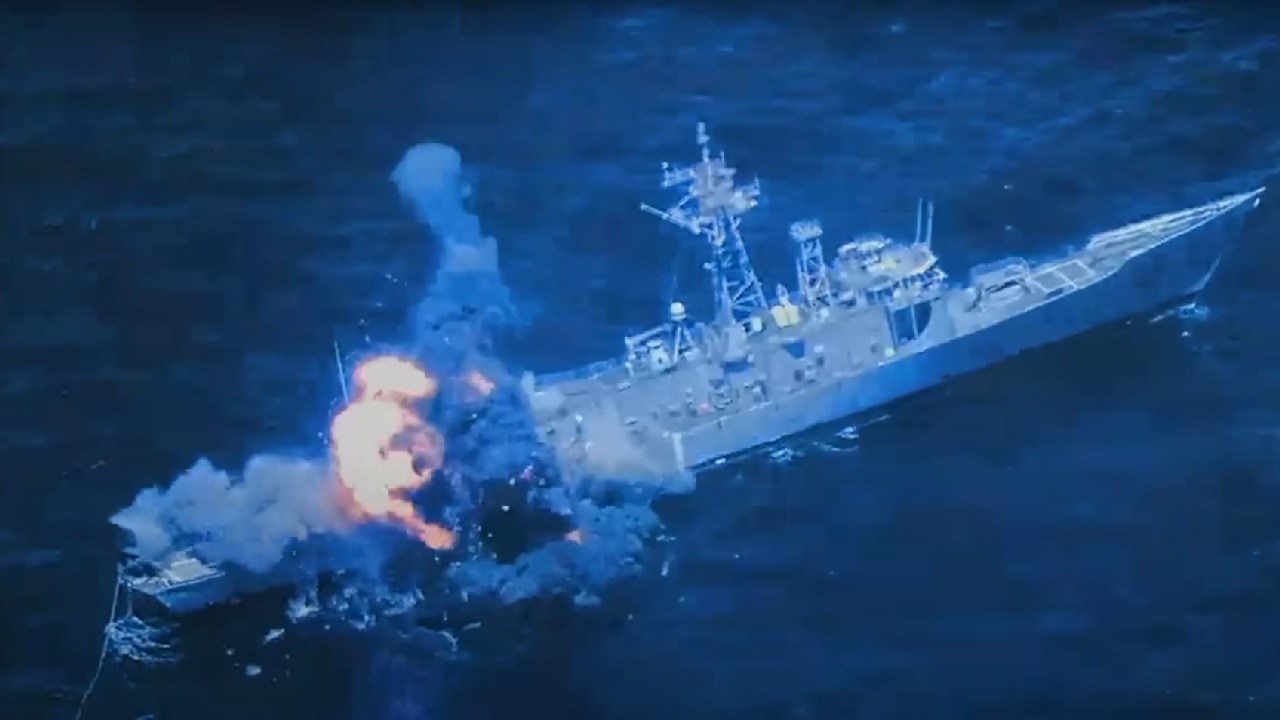
The United States Navy retired its last frigate, USS Simpson, in September 2015, and has not commissioned one since. For eleven years, the fleet that practically invented the modern ocean escort has operated zero of them, while China’s navy built itself the world’s largest fleet, including roughly fifty frigates. The ship meant to end the drought was the Constellation class, a program of at least twenty vessels based on a proven European design. On November 25, 2025, Navy Secretary John Phelan cut the program to no more than two ships, and even those two, he said, remain under review. Here is where things stand:
The Frigate Problem the US Navy Faces in 2026
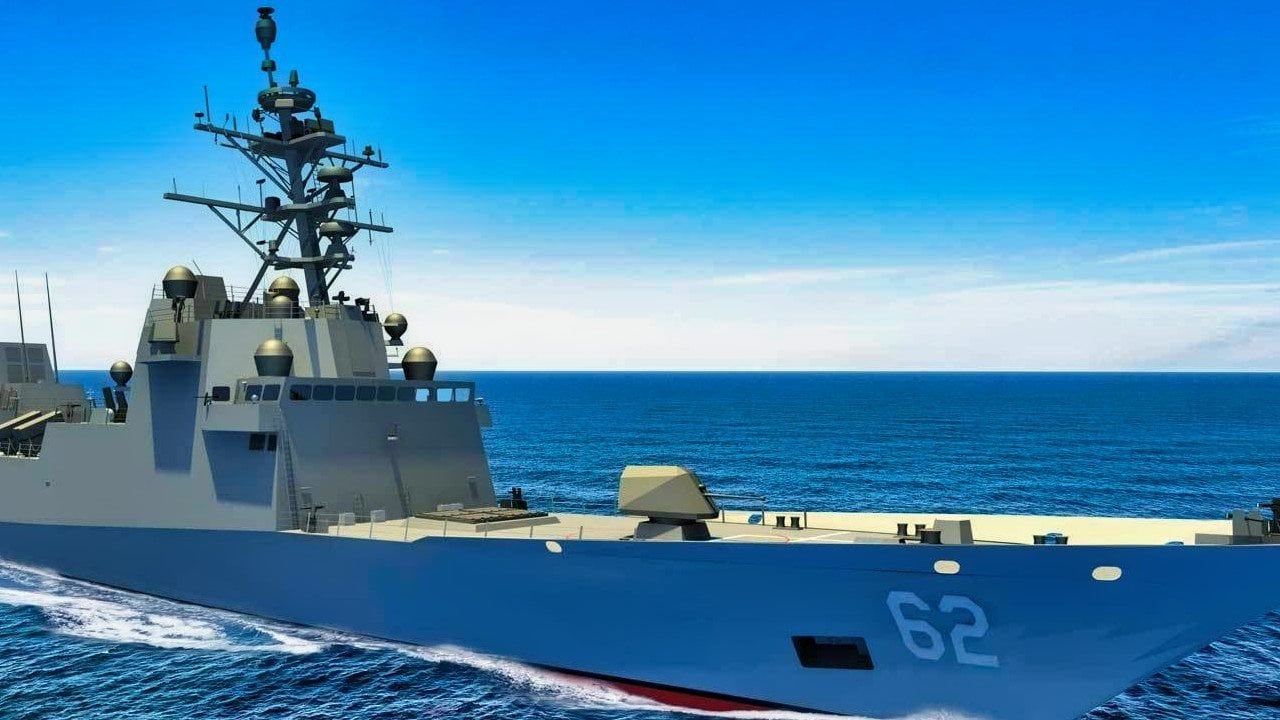
Constellation-Class Frigate. Image Credit: Creative Commons.
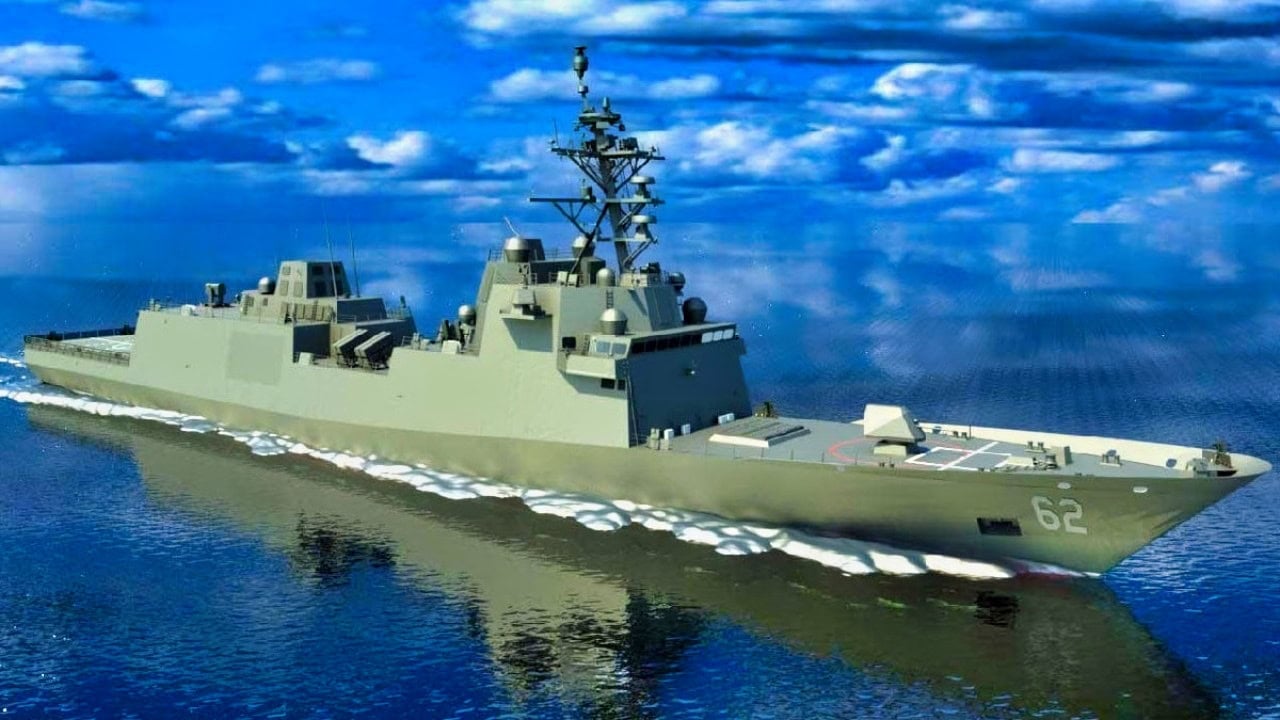
Constellation-Class Frigate. Image Credit: Creative Commons.
The announcement terminated, in the Navy’s own contract language, “for the Navy’s convenience,” the four ships under contract that had never begun construction, including the planned Chesapeake and Lafayette. The two hulls physically taking shape at Fincantieri’s Marinette Marine yard in Wisconsin, Constellation and Congress, will continue for now, preserving the yard’s workforce while a fleet design review decides what the Navy wants next.
Phelan framed the kill as discipline, saying it was time to deliver ships at “a pace that matches the threat environment, not the comfort level of the bureaucracy.” Defense Secretary Pete Hegseth had set the doctrine two weeks earlier: “Speed to delivery is now our organizing principle.”
Know this: The state of the lead ship at the moment of cancellation explains the impatience. Construction on Constellation began in August 2022. Thirty-nine months later, when the program was cut, the ship stood at roughly 12 percent complete, according to accounts published around the decision. The documented trajectory was worse than the snapshot: the Government Accountability Office reported that as of September 2023, the builder had completed 3.6 percent of the lead ship against a scheduled 35.5 percent. Delivery, promised for 2026 when the contract was signed, had slipped 36 months to 2029, according to the Congressional Research Service, and most of the class was not projected to enter service until the mid-2030s and beyond, a timeline that had quietly erased the program’s founding premise of a frigate fielded fast.
How a proven design got there is the part the Navy will have to live with. The service selected the Franco-Italian FREMM frigate in April 2020 precisely because it existed, was operational, and was in service, with a goal of 85 percent commonality between the parent and the American version.
Then the Navy changed the design, and kept changing it, lengthening the hull by more than twenty feet, swapping the weapons, sensors, generators, and superstructure to meet American survivability standards, and authorizing steel cutting while the design was incomplete.
Commonality with the parent collapsed to 15 percent. The GAO’s assessment was that the two ships now resemble nothing more than distant cousins. The weight told the same story in metal: the builder reported growth of more than 10 percent over its 2020 estimate by October 2023, and by October 2024 the figure reached 759 metric tons, nearly 13 percent, enough that the Navy weighed cutting the frigate’s speed requirement to live with it.
The Gap the US Navy Failed to Close Twice
The Constellation was already the second attempt to fill the same hole. The littoral combat ship was supposed to replace the retiring frigates a decade earlier, and its failure, dozens of hulls short on survivability and mission capability, several decommissioned young, is what created the frigate requirement the Constellation inherited.

Littoral Combat Ship from Fleet Week 2025. Image Credit: Stephen Silver/19FortyFive.com
The GAO drew the direct line: the LCS was also built concurrently, before its design settled, and the Navy repeated the method on the program meant to correct it. The result is that a requirement the Navy itself puts above seventy small surface combatants is now backstopped by two ships under review and a canceled contract, while the eleven-year frigate gap has no announced end date.
What the Money and the Years Bought
The financial wreckage is quantifiable and quite shocking when viewed over any term you wish.
The six ships under contract represented about 5.5 billion dollars of work; completing the first two, plus the indemnities negotiated with Fincantieri, is worth roughly 3 billion, and the design changes alone had added more than a billion dollars and three years before the cancellation.
Fincantieri, publicly gracious, says it expects amphibious and icebreaker work in compensation. The strategic cost is harder to book. The Navy spent five and a half years turning a working foreign frigate into a paper American one, and the follow-on it now proposes, a fast-tracked frigate variant of the Coast Guard’s Legend-class cutter, restarts the clock on an aggressive schedule of its own with the industrial base that failed it.
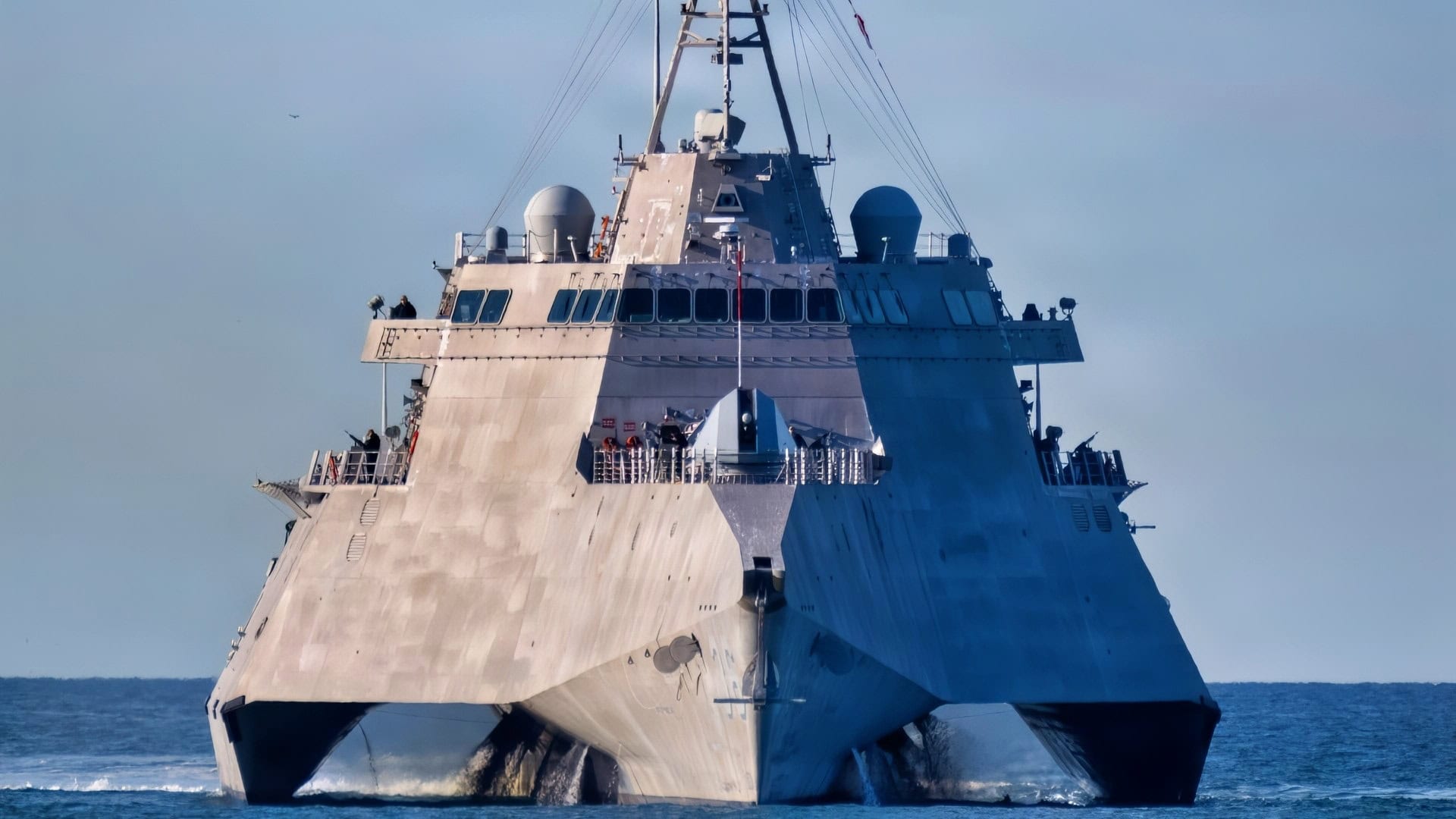
USS Kingsville (LCS 36) points its bow toward the harbor at Naval Surface Warfare Center, Port Hueneme Division in California on a recent morning as the ship arrives from its homeport of San Diego. The Independence-variant littoral combat ship features a trimaran hull design, which allows it to reach speeds much greater than destroyers and cruisers, as well as to operate in shallower waters closer to shore. (U.S. Navy photo by Eric Parsons)
The two surviving hulls sit in Wisconsin, twelve percent and less built, awaiting a review with no published deadline, and the last American frigate to join the fleet remains one commissioned during the Reagan administration.
About the Author: Harry J. Kazianis
Harry J. Kazianis (@Grecianformula) was the former Senior Director of National Security Affairs at the Center for the National Interest (CFTNI), a foreign policy think tank founded by Richard Nixon based in Washington, DC. Harry has over a decade of experience in think tanks and national security publishing. His ideas have been published in the NY Times, The Washington Post, The Wall Street Journal, CNN, and many other outlets. He has held positions at CSIS, the Heritage Foundation, the University of Nottingham, and several other institutions related to national security research and studies. He is the former Executive Editor of the National Interest and the Diplomat. He holds a Master’s degree focusing on international affairs from Harvard University.

