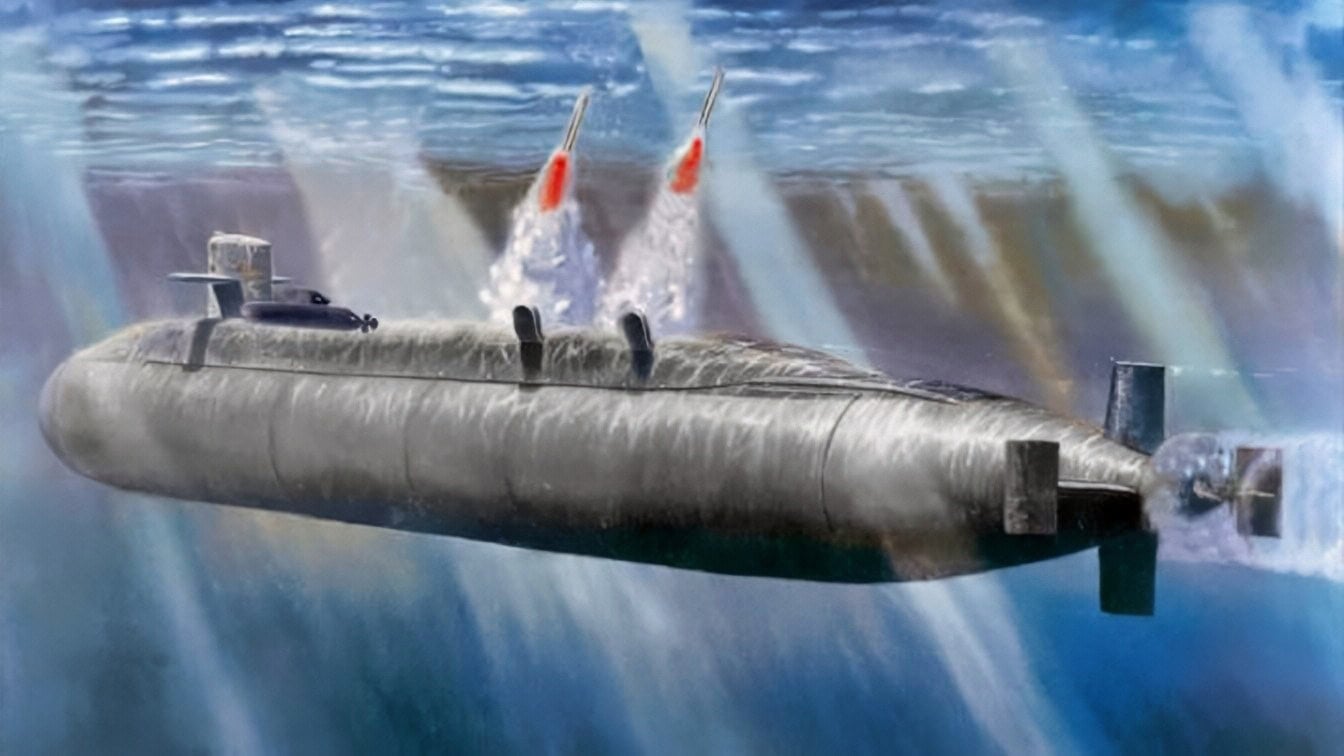
The Iran war proved that any platforms armed with dozens of Tomahawk cruise missiles are clearly something we need a lot of. And yet, the US Navy’s Ohio-class SSGNs, stacked with such weapons, are about to be retired. The solution: rename Virginia-class boats as ‘SSGNs’ that have nothing close to the same Tomahawk numbers.
The Virginia-Class to SSGN Rename
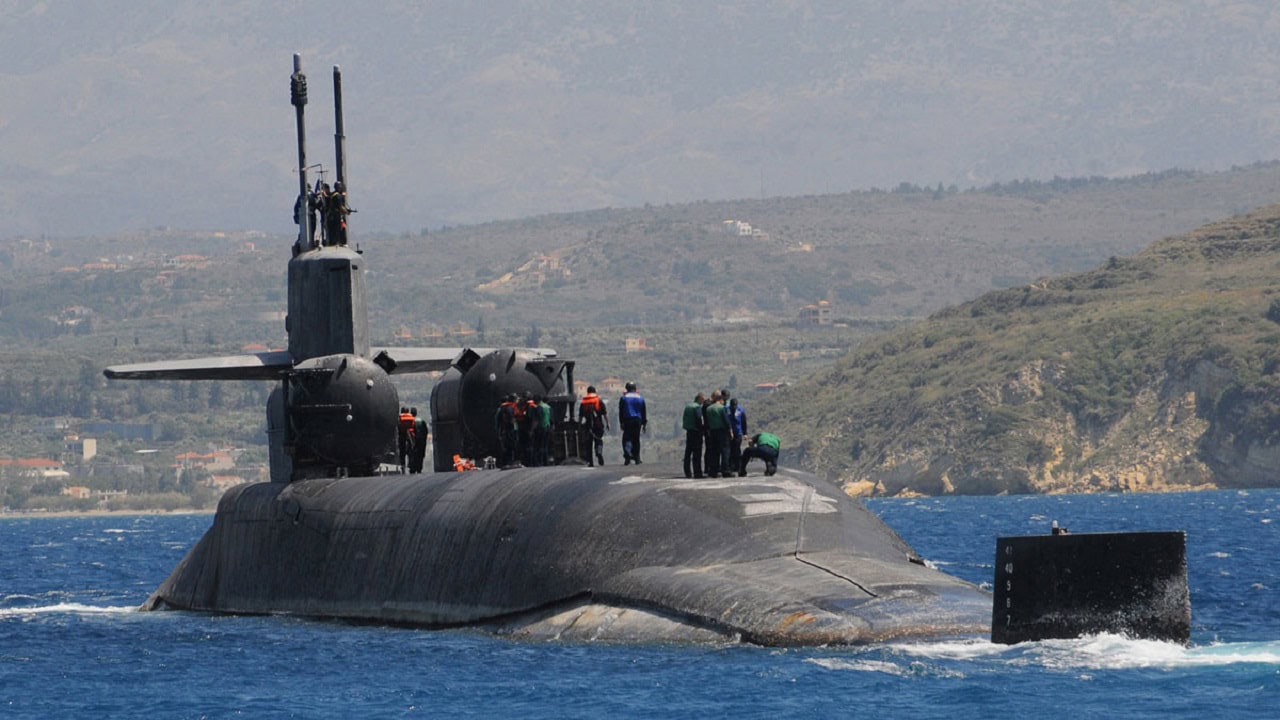
Ohio-Class SSGN. Image Credit: U.S. Navy.
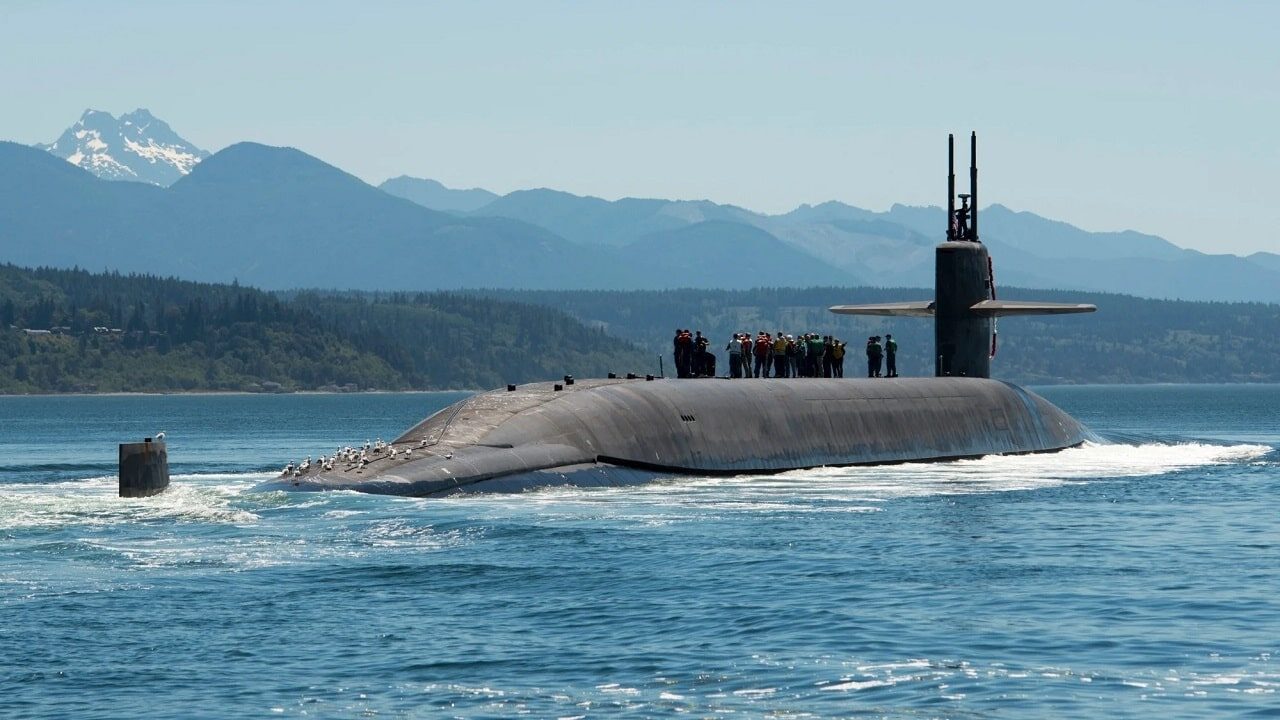
Ohio-Class. Image Credit: U.S. Navy.
The United States Navy is reclassifying 19 of its pending Block V Virginia-class attack submarines as guided missile submarines (SSGNs). The idea is that this move will augment the US Navy’s declining fleet of four aging Ohio-class SSGNs. But experts are pointing out the absurdity of this move.
After all, it’d take 22 Virginia-class submarines to replace just four Ohio-class SSGNs.
That’s because the Virginia-class was never meant to replace the Ohio-class SSGNs and is totally different in size and armament-carrying capacity.
But that isn’t stopping the U.S. Navy from playing fast and loose with its submarine designations.
By reclassifying these Virginia-class submarines, the Pentagon is effectively cooking the books. Well, at least if you can’t count, that is.
Everyone knows that the United States military, as painfully demonstrated in the Iran War, is essentially a paper tiger that is massively depleted.
That’s not an indictment of the fighting men and women of the US Armed Forces. It’s a pox on the two political parties and the bureaucrats at the Pentagon who all allowed this situation to arise.
Compare and Contrast
Let’s go back to the Ohio-class SSGN.
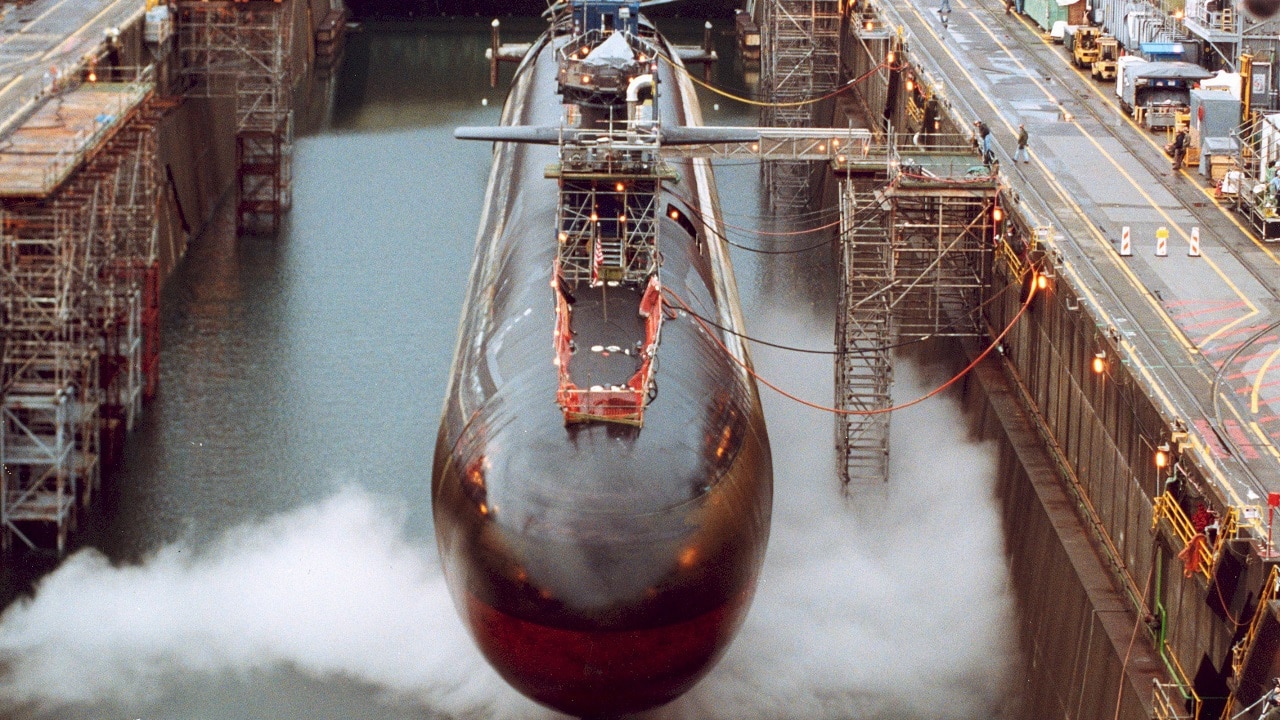
Puget Sound Naval Shipyard, Wash. (Aug. 14, 2003) — USS Ohio (SSGN 726) is in dry dock undergoing a conversion from a Ballistic Missile Submarine (SSBN) to a Guided Missile Submarine (SSGN) designation. Ohio has been out of service since Oct. 29, 2002 for conversion to SSGN at Puget Sound Naval Shipyard. Four Ohio-class strategic missile submarines, USS Ohio (SSBN 726), USS Michigan (SSBN 727) USS Florida (SSBN 728), and USS Georgia (SSBN 729) have been selected for transformation into a new platform, designated SSGN. The SSGNs will have the capability to support and launch up to 154 Tomahawk missiles, a significant increase in capacity compared to other platforms. The 22 missile tubes also will provide the capability to carry other payloads, such as unmanned underwater vehicles (UUVs), unmanned aerial vehicles (UAVs) and Special Forces equipment. This new platform will also have the capability to carry and support more than 66 Navy SEALs (Sea, Air and Land) and insert them clandestinely into potential conflict areas. U.S. Navy file photo. (RELEASED)
Originally designed as ballistic missile submarines (SSBNs) to fight the Cold War (and hold the Soviet Union hostage with America’s second-strike nuclear weapons strike capability), the US redesigned four Ohio-class subs to carry as many as 154 Tomahawk cruise missiles per submarine instead.
Together, those four Ohio-class submarines (the USS Ohio, USS Michigan, USS Florida, and USS Georgia) carry a total of 616 Tomahawk cruise missiles.
That is unprecedented conventional firepower for a submarine.
But those subs are aging. USS Georgia completed its final deployment on July 27 and is undergoing inactivation.
The Ohio will be offline by 2027, with the USS Florida following in 2028, and the USS Michigan in 2029.
The Navy will be going from 616 potential submerged Tomahawk positions to zero in a few years.
So, redesignating some Block V Virginia-class submarines as SSGNs allows the Navy to replenish (some) of its losses on paper.
But the Virginia-class does not allow the Navy to replace the Ohio-class SSGNs in practice.
Why Can’t the Virginia-Class Block V Replace the Ohio-Class?
The Navy says it’s building larger Virginia-class attack submarines equipped with the new Virginia Payload Module (VPM). The VPM inserts four additional large-diameter payload tubes into the submarine.
Each VPM adds space for 28 Tomahawks. Combined with the Virginia-class submarine’s forward payload tubes, a VPM-equipped Virginia-class can carry up to 40 Tomahawks.
Let’s do some basic arithmetic here.
An Ohio-class SSGN carries 154 Tomahawks per unit.
A Block V Virginia-class loaded with a VPM carries 40. In other words, you’d need four Virginia-class submarines to equal the missile capacity of one of America’s iconic Ohio-class SSGNs.
I might be from Florida, but the math involved here simply isn’t mathing, as the kids would say today.
If the Navy wanted to match the firepower of an Ohio-class SSGN, they’d need 22 VPM-enabled Block V Virginia-class SSGNs to provide a combined 616 additional missile positions.
To be fair to the Navy’s bean counters, it is true that by reclassifying 19 of the maritime branch’s planned VPM-equipped Virginia-class submarines as SSGNs, the Navy would have a total of 760 Tomahawk launch positions.
Over time, the Navy’s decision will lead to greater Tomahawk carrying capacity.
Yet, the Navy is nowhere near being able to build 19 Block V Virginia-class submarines.
In fact, the first of these 19 submarines, the USS Arizona (SSGN-803), won’t be delivered until FY2029. The remaining boats might be delivered around FY2038.
Let’s hope no adversary picks a fight with America in the meantime, requiring the US to have a massive number of Tomahawks deployed at sea.
The Shipyard Crisis
And there’s another problem. That’s the shipyard problem. Adding another dozen Block V Virginia-class submarines to the existing (smaller) order of Block Vs isn’t something America’s ailing naval shipyards can do at the click of one’s heels.
Under current conditions, Virginia-class production has been running at around 1.3 submarines per year.
The Navy wants industry to meet a paltry two submarines per year around 2032.
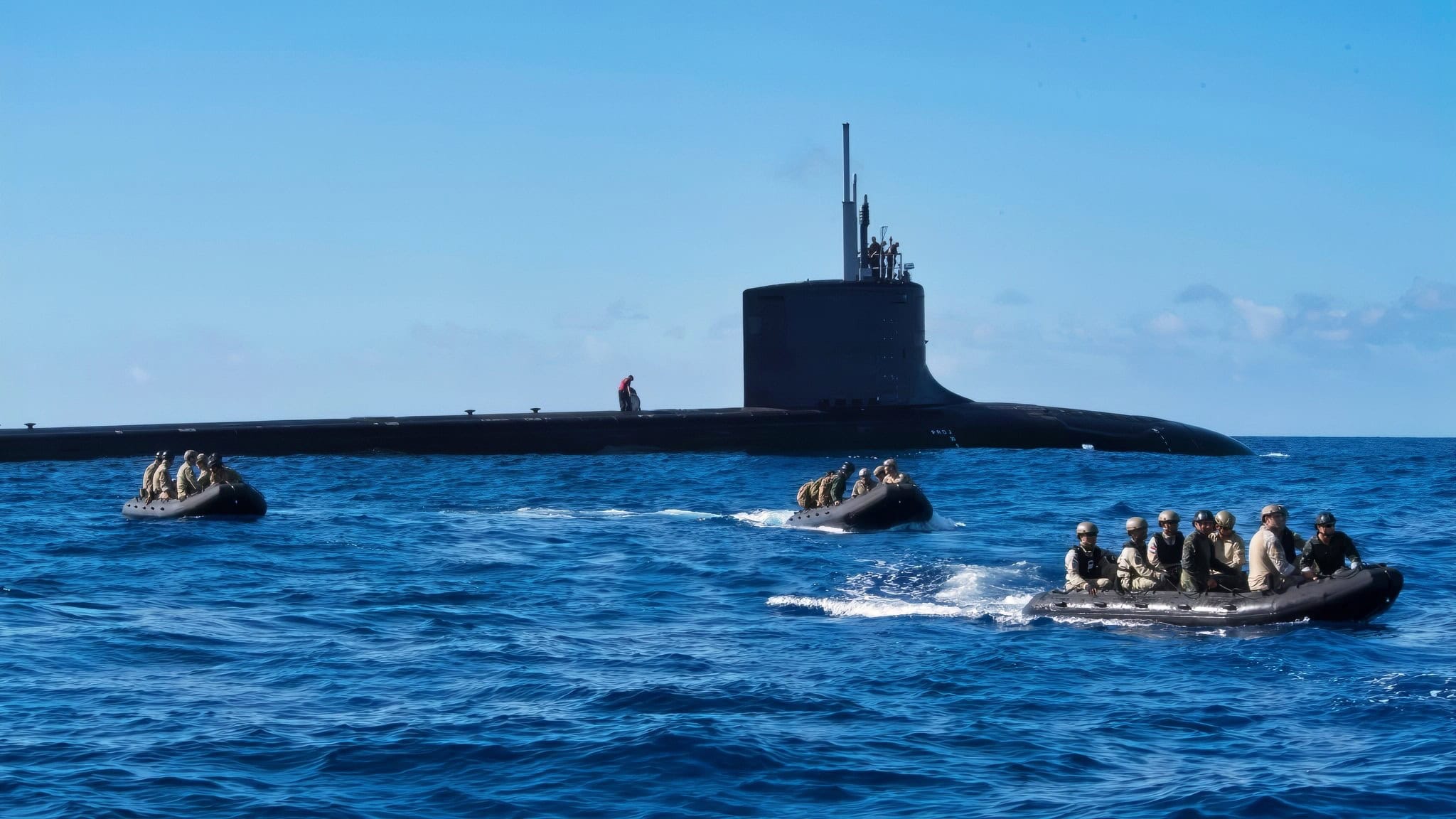
PEARL HARBOR (July 9, 2018) – Multi-national Special Operations Forces (SOF) participate in a submarine insertion exercise with the fast-attack submarine USS Hawaii (SSN 776) and combat rubber raiding craft off the coast of Oahu, Hawaii during Rim of the Pacific (RIMPAC) exercise, July 9. Twenty-five nations, 46 ships and five submarines, about 200 aircraft, and 25,000 personnel are participating in RIMPAC from June 27 to Aug. 2 in and around the Hawaiian Islands and Southern California. The world’s largest international maritime exercise, RIMPAC provides a unique training opportunity while fostering and sustaining cooperative relationships among participants critical to ensuring the safety of sea lanes and security of the world’s oceans. RIMPAC 2018 is the 26th exercise in the series that began in 1971. (U.S. Navy photo by Lt. j.g. Michelle Pelissero)
But even these numbers are in doubt, as General Dynamics Electric Boat and Newport News Shipbuilding are also building Columbia-class ballistic-missile submarines.
The Navy is prioritizing the construction of the Columbia-class, as well. All that is putting a serious strain on the Navy’s desire to have 19 Block V Virginia-class SSGNs prowling the seas anytime soon.
That’s to say nothing of the reality that current shipyard capacity is so strained it cannot reliably maintain the Navy’s existing submarine force.
Adding all these new units without increasing naval shipyard capacity will cause significant complications for the Navy’s plans for its new Block V Virginia-class SSGNs.
The Navy Is Gutting Its Tomahawk Strike Capacity
It gets worse for the Navy, as the maritime branch is mothballing its Ticonderoga-class cruisers, which accounted for 854 Mk 41 vertical-launch system (VLS) cells.
The three operational Ohio-class SSGNs represented 462 potential Tomahawk positions.
When looking at the combined decline of the Ohio-class SSGNs and the Ticonderoga-class cruisers, that’s 1,316 missile-launch positions taken off the board without any near-term meaningful replacement.
What this really means isthat the Navy is retiring its densest concentrations of conventional precision-strike firepower at sea with no serious replacement, at a time when the United States is more challenged militarily than it has been in decades.
Then, of course, there’s the overall problem of the rapid depletion of America’s Tomahawk cruise missile arsenal because of the Iran War. Replacing those spent systems will take time, too.
So, between the loss of missile capacity that the decommissioning of the Ohio-class SSGNs and Ticonderoga-class cruisers posed to the Navy, paired with the obvious inability of the new Block V Virginia-class SSGNs to make up for that lost capacity anytime soon, and all the concomitant shipyard woes, what you’re looking at is a permanent collapse of the Navy’s conventional strike capacity.
MORE – Iran Can’t Stop the US Air Force
About the Author: Brandon J. Weichert
Brandon J. Weichert is the Senior National Security Editor at 19FortyFive.com. He also manages The Weichert Brief on Substack. Weichert also hosts “National Security Talk” on Rumble. He is the author of four bestselling national security books, the most recent of which is A Disaster of Our Own Making: How the West Lost Ukraine (Encounter Books). Follow him via Twitter/X @WeTheBrandon.