
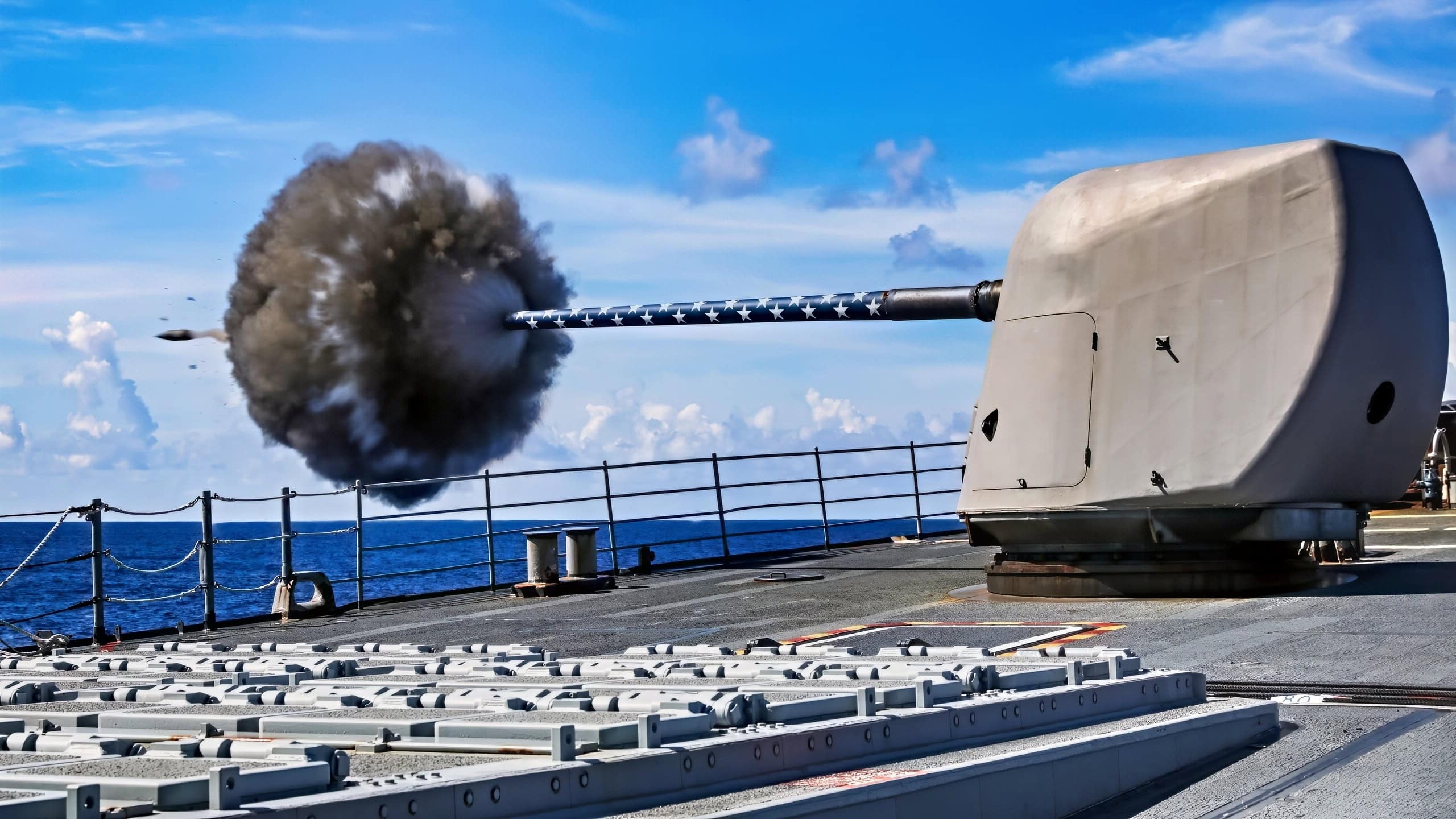
The US Navy’s efforts to extend the service life of the aging Ticonderoga-class guided-missile cruisers have become a costly modernization failure.
According to December 2024 GAO findings cited in the supplied material, the Navy spent $3.7 billion modernizing seven cruisers.
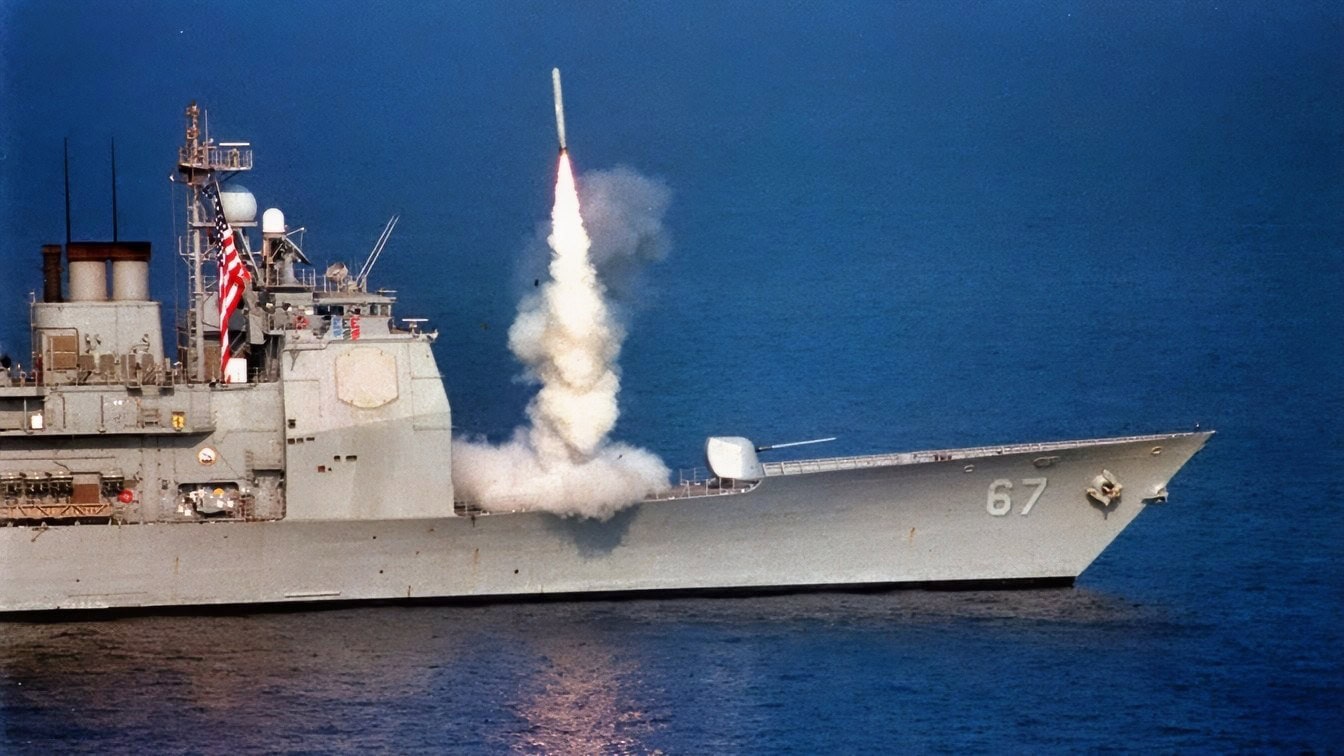
A Tomahawk cruise missile launches from the forward vertical launch system of the USS Shiloh (CG 67) to attack selected air defense targets south of the 33rd parallel in Iraq on Sept. 3, 1996, as part of Operation Desert Strike. The attacks are designed to reduce risks to the pilots who will enforce the expanded no-fly zone. President Clinton announced an expanded no-fly zone in response to an Iraqi attack against a Kurdish faction. The larger no-fly zone in Southern Iraq will make it easier for U.S. and coalition partners to contain Saddam Hussein’s aggression. The U.S. Navy Ticonderoga Class cruiser launched the missiles as it operated in the Persian Gulf.
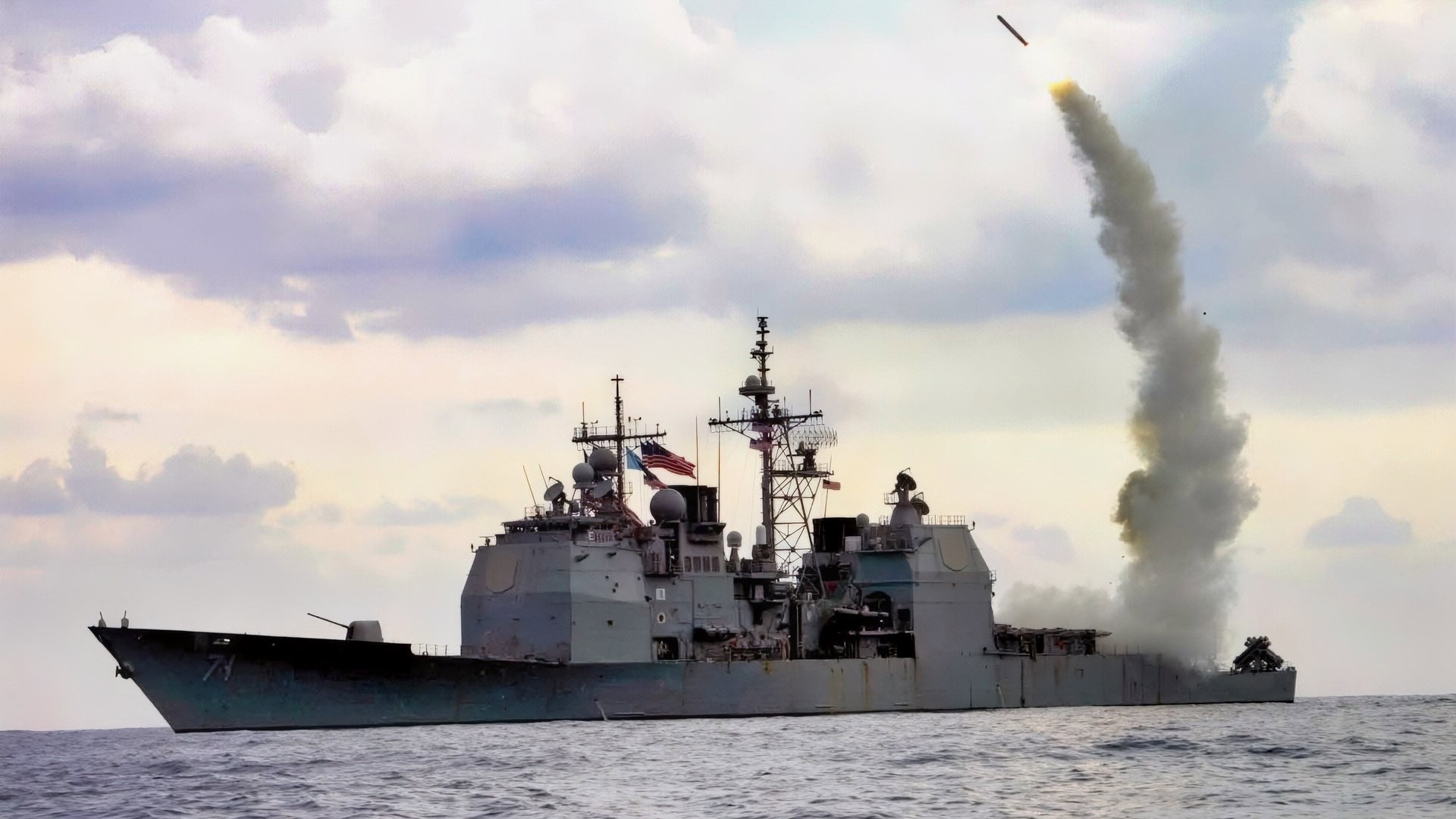
ABOARD USS CAPE ST. GEORGE (CG 71) AT SEA — A Tomahawk cruise missile launches from USS Cape St. George, operating in the eastern Mediterranean Sea in support of Operation Iraqi Freedom. (Photo by IS1 Kenneth Moll, USS Cape St. George) (Released by Sixth Fleet Public Affairs)
But $1.84 billion was spent on four of the ships, which were then retired before ever deploying again. Of course, this represents a massive waste of money.
But the desperation of the effort also speaks to the Navy’s broader need to keep pace with China as it rapidly expands its naval capabilities.
Saving the Ticonderoga
The Ticonderoga entered service in 1982 and became a central component of carrier strike group defensive architecture.
Built around the Aegis Combat System, later versions of the ship carry the 122 Mk 41 Vertical Launch System cells, which can accommodate combinations of SM-series surface-to-air missiles, Tomahawk land-attack missiles, ASROC anti-submarine weapons, and ESSM air-defense missiles.
These large magazines made the Ticonderoga valuable as air-defense command ships that could accompany aircraft carriers.
So keeping the Ticonderoga-class in service was an attractive stopgap—a way to avoid waiting years for replacements to be developed and fielded while losing the Ticonderoga’s unique capabilities during those years.
The Realities of Modernization
Upgrading the Ticonderoga looked all right on paper.
But in reality, upgrading the 30-year-old warship was far more complicated than just installing new electronics.
The Ticonderoga-class had been weathered; years at sea had broken the ships down structurally through saltwater exposure, vibration, thermal cycles, and just the rhythm of deployment.
Specifically, the vessels were suffering from corrosion, cracking, worn piping, electrical degradation, machinery problems, and general structural fatigue.
Notably, many of the Ticonderogas incorporated substantial amounts of aluminum in their superstructures, leading to difficult long-term corrosion and cracking issues.
Once shipyard workers began opening these ships, new problems emerged, leading to more work, higher expenses, and longer timelines.
Shockingly, the GAO counted an astonishing 9,000 contract changes associated with the modernization effort.
The USS Vicksburg
The USS Vicksburg became the poster child for the problems.
The U.S. Navy reportedly spent $754.1 million on the cruiser before ultimately deciding to retire it.
At some point, the Navy decided it was better to just eat the costs—three-quarters of a billion dollars—than to keep pushing another couple hundred million into a hull from the 1980s.
But canceling the ship late created the worst possible outcome, as the Navy paid so much of the modernization bill without receiving the additional deployments that the bill was supposed to fund.
The Navy essentially lit the money on fire.
And while the Vicksburg was the worst example, it was hardly the only one.
The USS Cowpens ate $678.6 million; USS Anzio $250.5 million; and USS Hue City $161.2 million. All of these vessels were retired before deploying again.
Lost Missile Magazines
The problem with losing Ticonderogas: magazine depth.
Theoretically, just four Ticonderogas represent 488 Mk 41 VLS cells.
This is a lot. For comparison, an Arleigh Burke-class Flight III destroyer carries 96 cells.
Granted, raw cell count isn’t the same thing as actual combat power—the ships need crews, sensors, readiness, and missiles to fill those launchers.
But the numbers still speak to what is lost through the Ticonderogas’ retirement.
Modern naval warfare increasingly revolves around magazine depth; once a VLS magazine is depleted, the Navy typically cannot reload it at sea under combat conditions. So losing large-magazine cruisers puts more burden on the Burke fleet.
Moving Forward
The takeaway is not that the Navy needed to keep every Ticonderoga. Aging ships eventually become money pits that are increasingly unreliable at sea under combat conditions.
The physical realities of life at sea—the rigorous conditions and exposure to the elements—mean that these vessels have finite shelf lives.
The Ticonderoga-class was right around its shelf life.
But the problem is that the Navy spent enormous sums before determining whether these particular hulls could be refurbished sufficiently for combat.
The tension between needing ships so badly that refurbishing Cold War boats becomes a viable option, and being unwilling to invest in new ships—yet spending nearly $2 billion in modernization efforts that never yielded another deployment—is deeply concerning and raises readiness questions about a future conflict in the Pacific.
MORE – Iran Can’t Stop the US Air Force
About the Author: Harrison Kass
Harrison Kass is a writer and attorney focused on national security, technology, and political culture. His work has appeared in Tablet, City Journal, The Hill, The Spectator, and The Cipher Brief. He holds a JD from the University of Oregon and a master’s in Global & Joint Program Studies from NYU. More at harrisonkass.com.